A simple recording sheet for the Block Builder Task Cards. It features large, numbered boxes for students to write their answers and a self-evaluation section at the bottom.
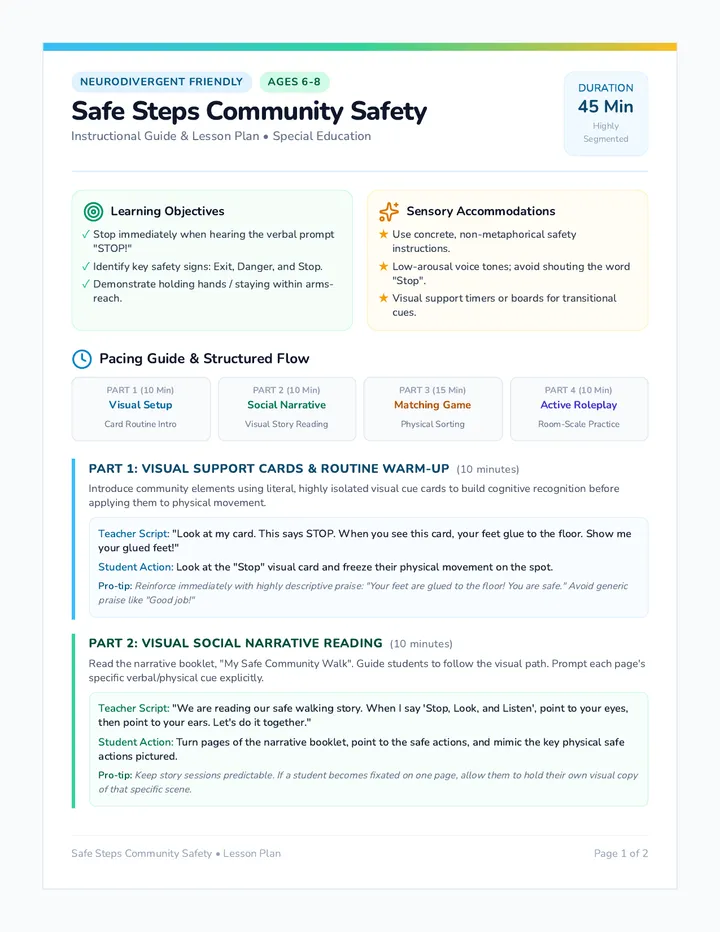
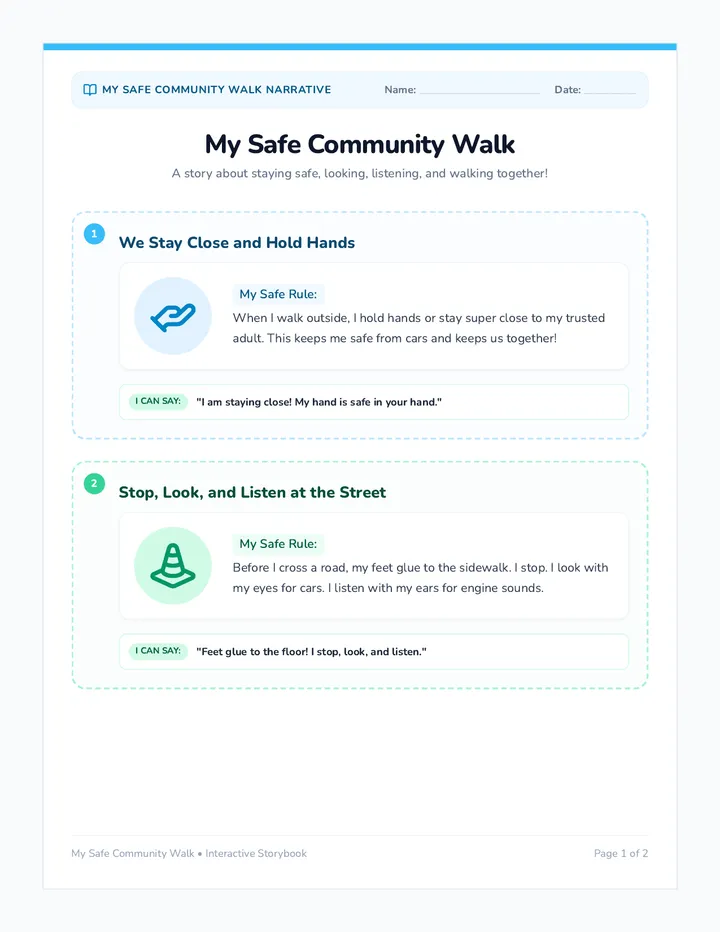
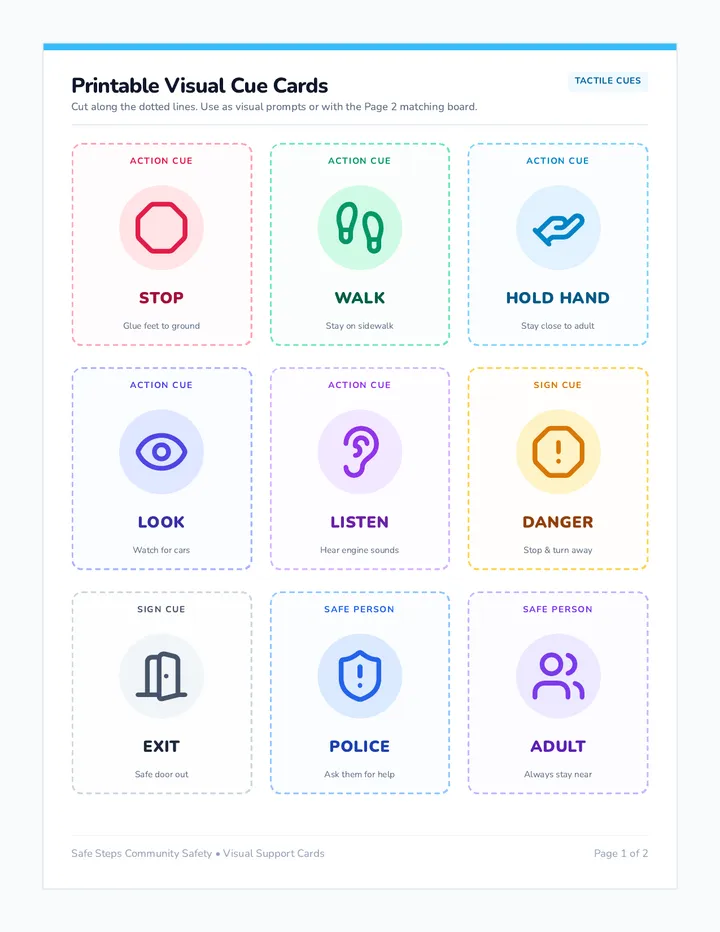
A comprehensive, sensory-friendly community safety sequence designed for young learners with autism, covering walking safety, traffic rules, getting lost, and parking lot awareness.
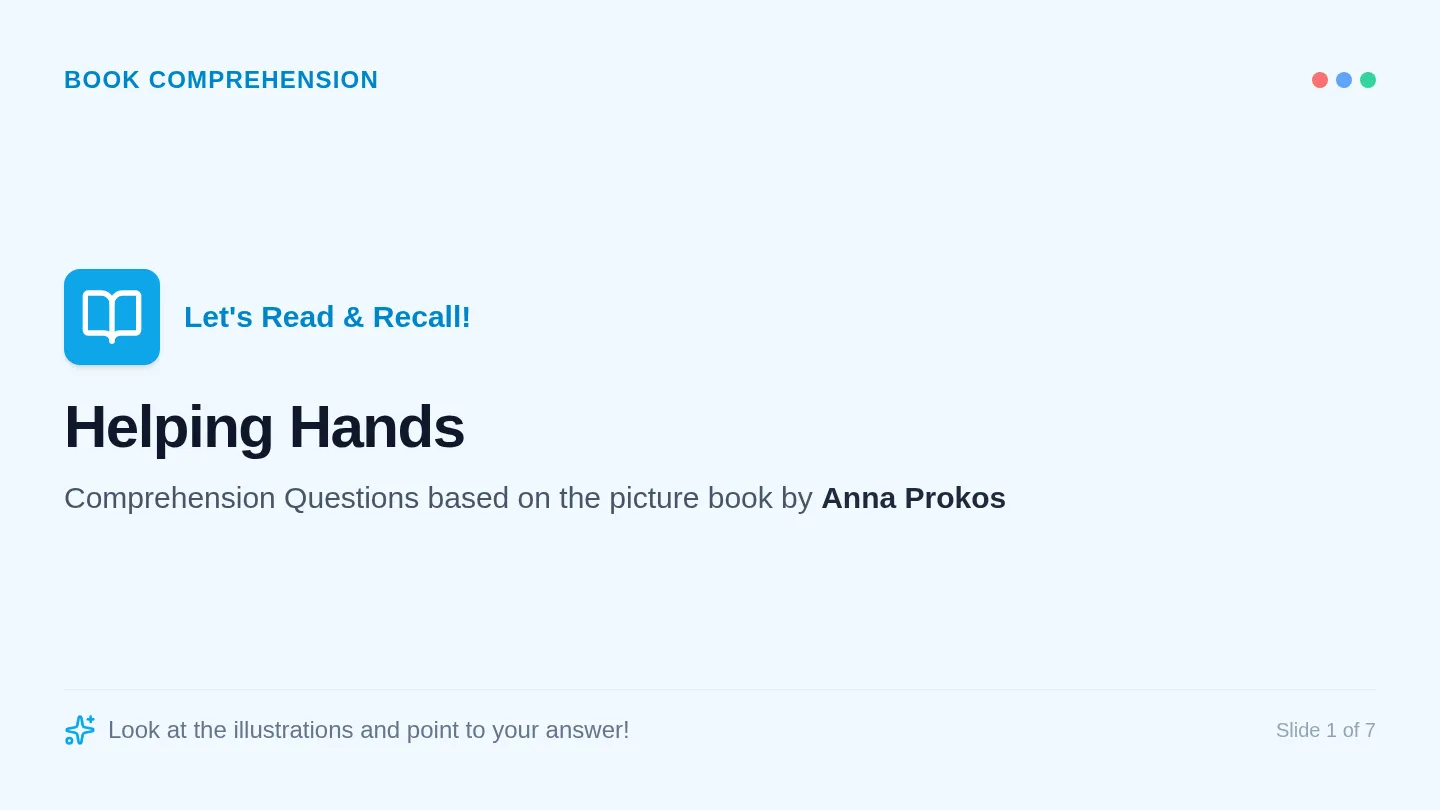
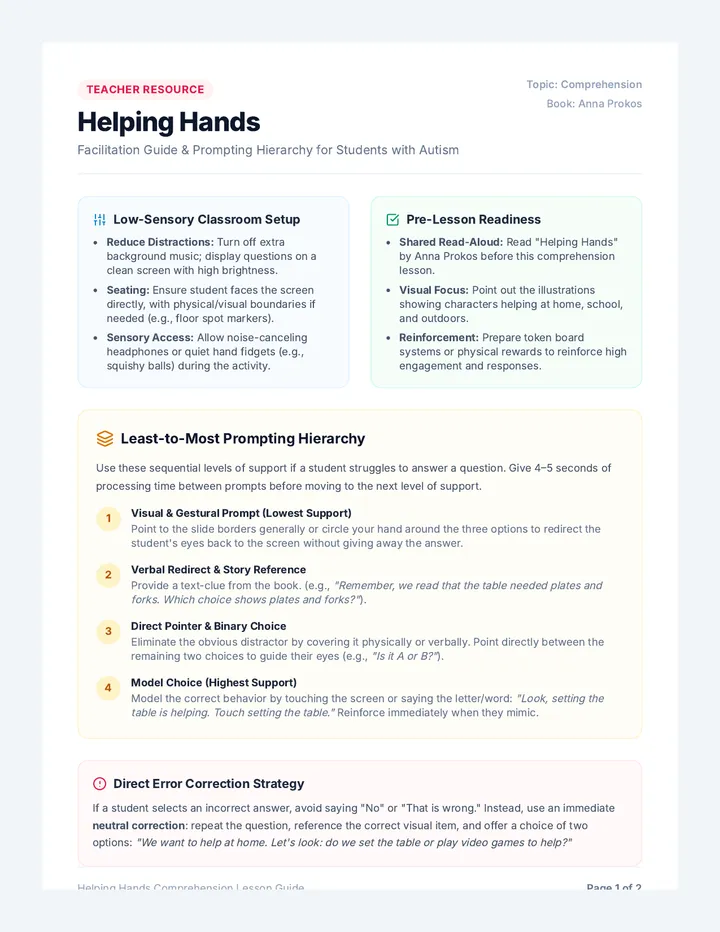
A comprehension lesson based on the book 'Helping Hands' by Anna Prokos, designed specifically for students with autism. It includes visual-supported question slides and a teacher facilitation guide with structured prompting hierarchies.
A comprehensive teacher facilitation guide and answer key based on the picture book 'Helping Hands'. Includes structured prompting hierarchies, error-correction procedures, autism-specific behavioral supports, and visual lesson cues.
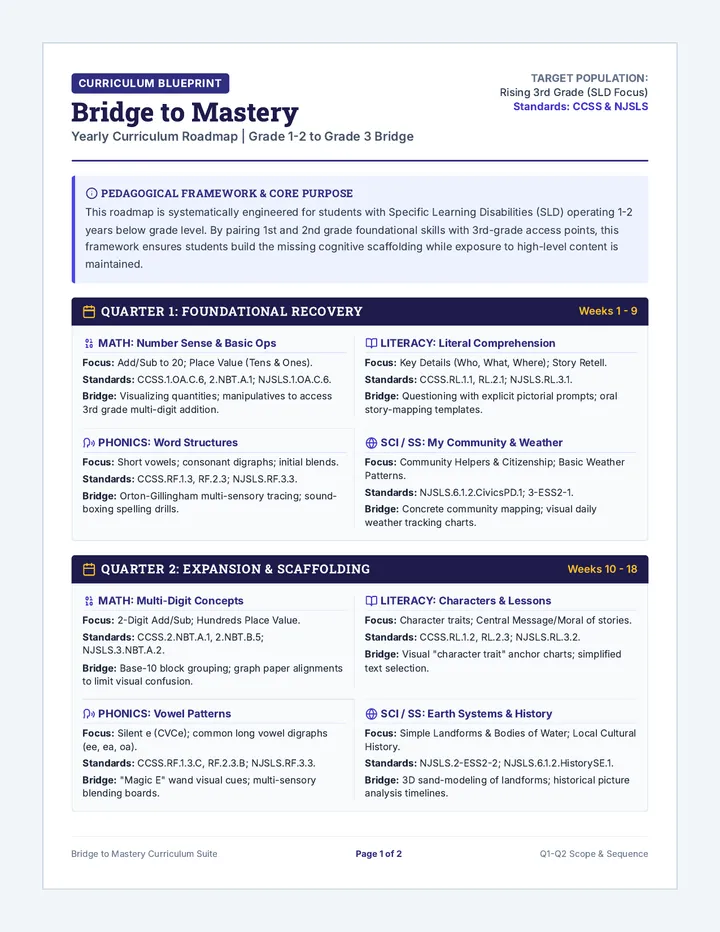
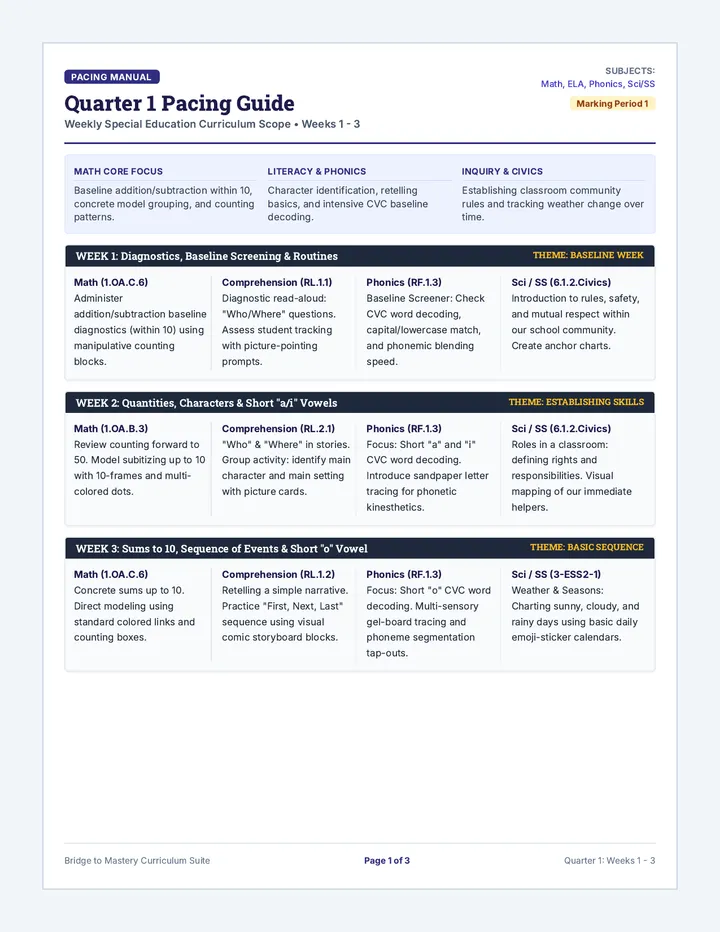
A comprehensive curriculum roadmap and detailed Quarter 1 pacing guide designed for rising 3rd-grade students with SLD operating at a 1st-to-2nd grade level. It includes diagnostic baseline screens and specialized lesson templates for self-contained special education settings, bridging CCSS and NJSLS.
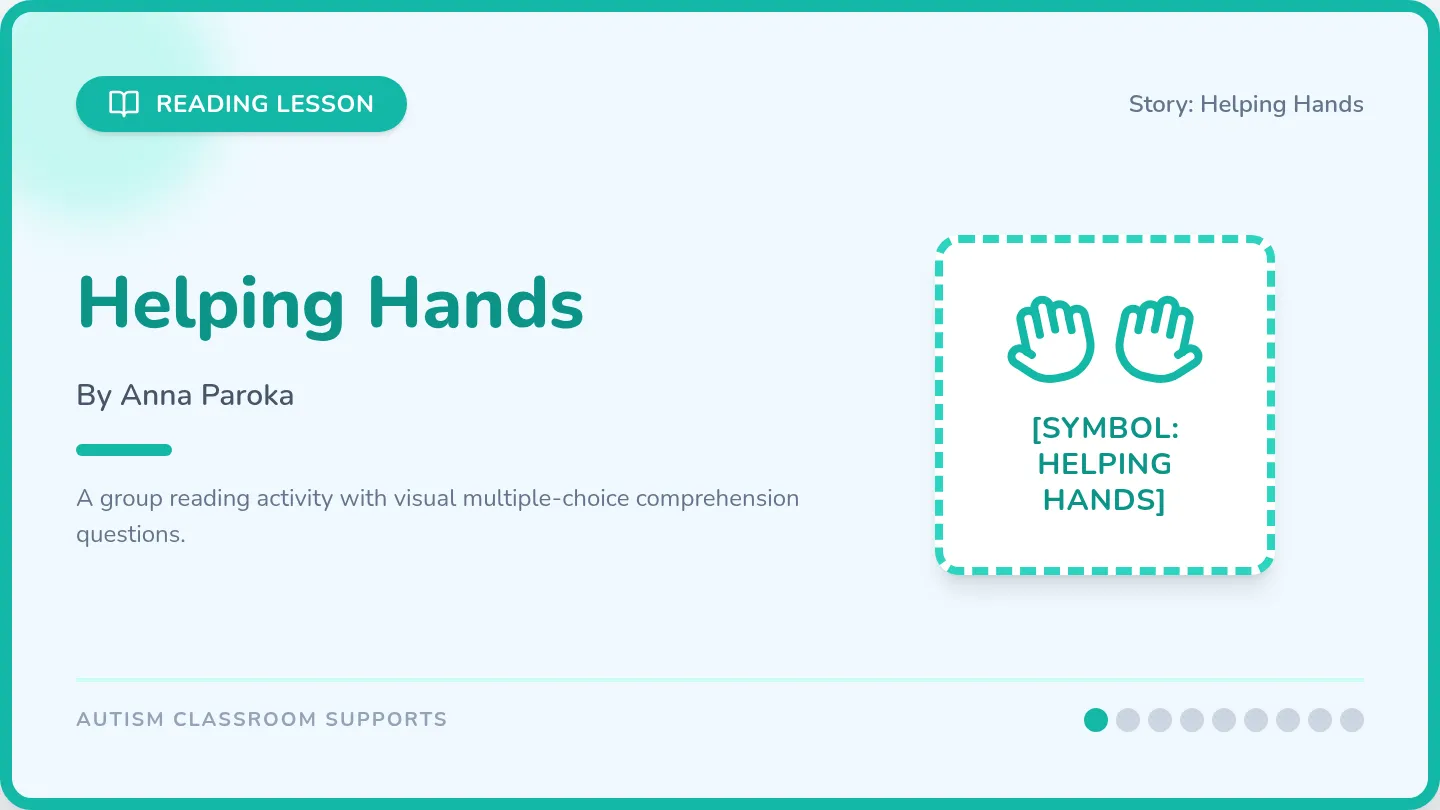
A comprehension lesson based on the story 'Helping Hands' by Anna Paroka, designed specifically for students with autism. It includes visual supports, clear structures, and highly readable materials.
High-contrast visual comprehension slides designed for students with autism, based on the picture book 'Helping Hands' by Anna Prokos. Features large typography (32px+), color-coded option blocks with clear visual icons, and explicit page-illustration references.
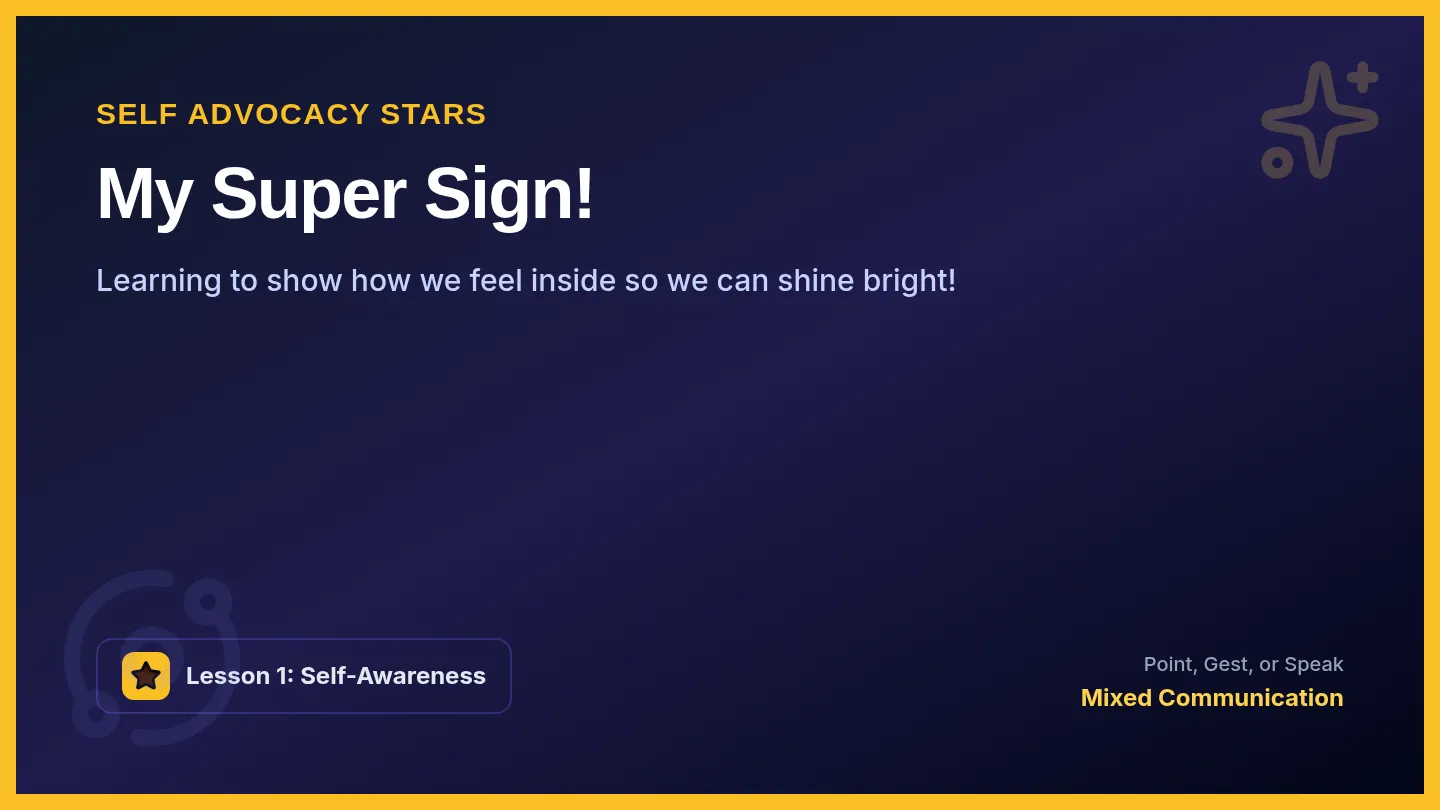
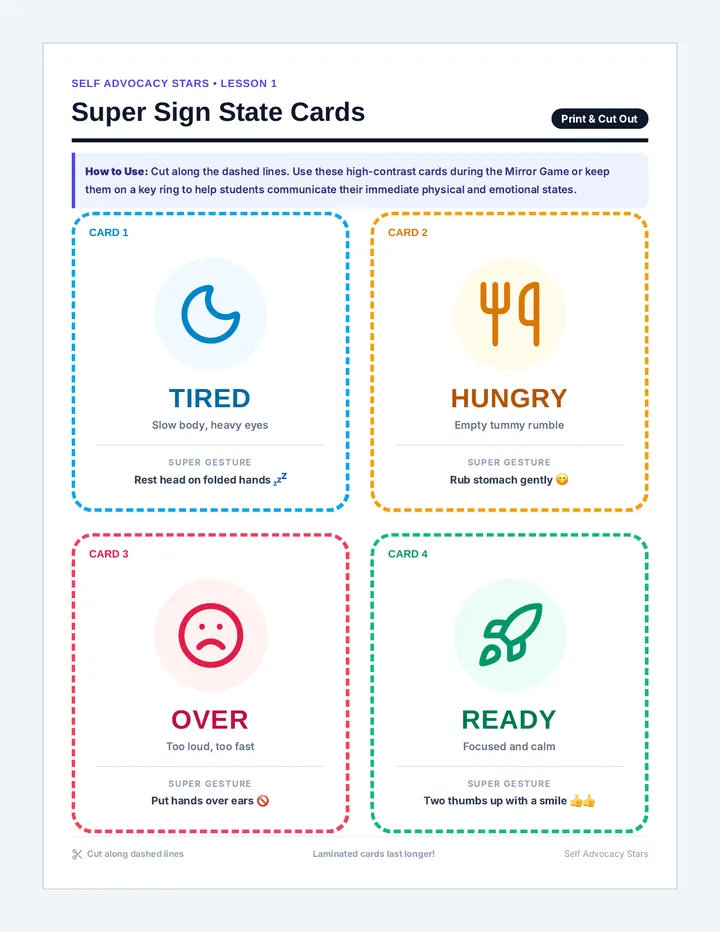
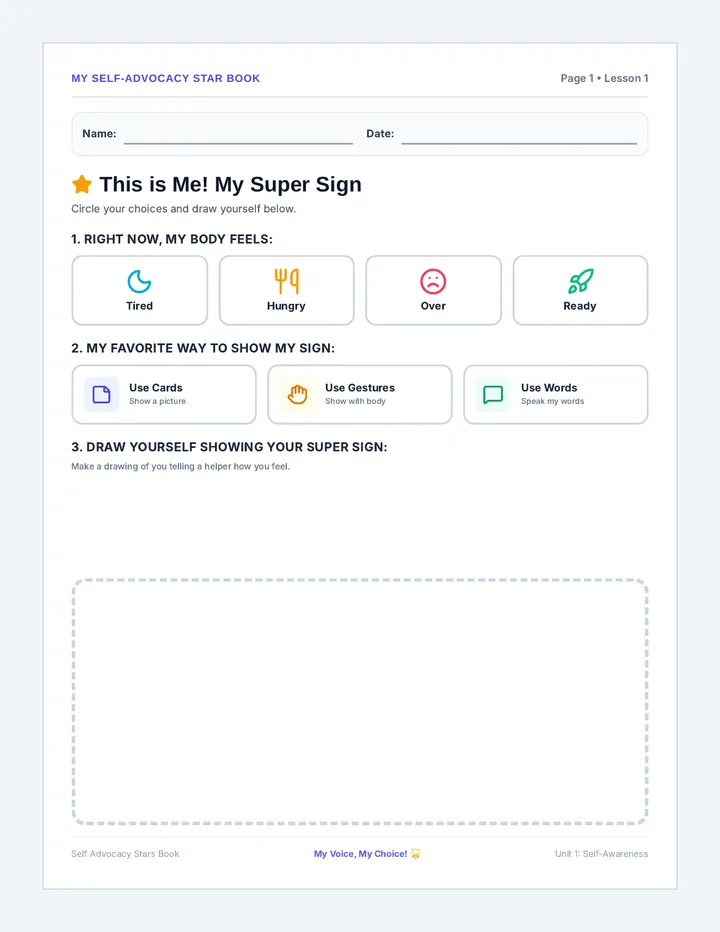
A visual and interactive self-advocacy curriculum designed specifically for students with intellectual disabilities and diverse communication styles. This foundational series empowers students to express feelings, request assistance, and make independent choices through highly structured group games, partner interactions, and individual visual communication books.
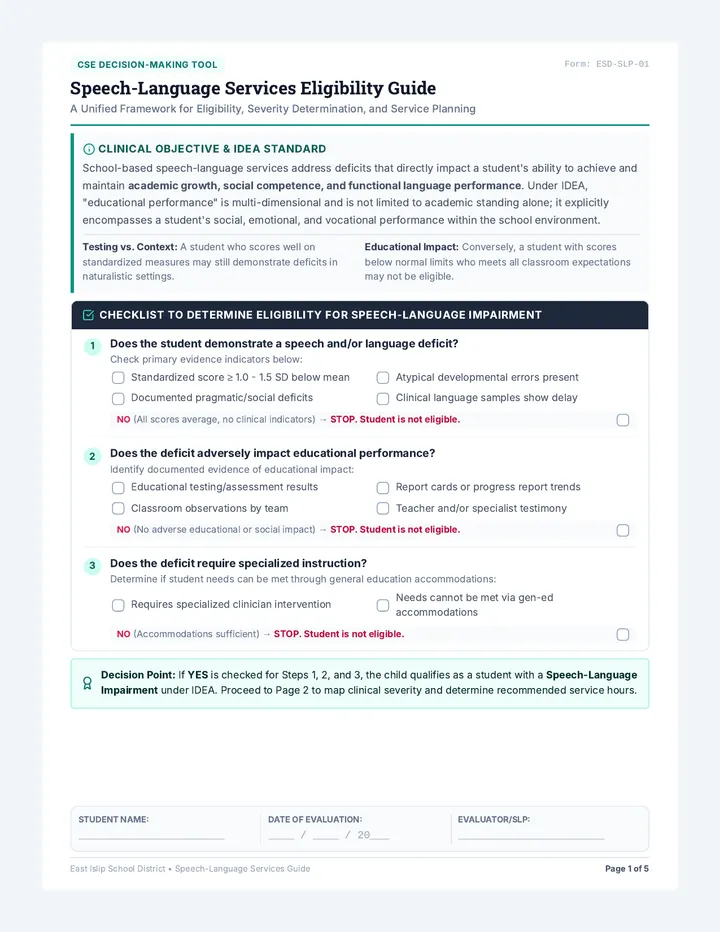
A comprehensive framework and unified decision-making guide for CSE members to determine eligibility, severity, and discontinuation of speech-language services.
An interactive, high-contrast slide deck with 5 multiple-choice comprehension questions based on 'Helping Hands' by Anna Paroka. Designed specifically for students with autism, it features simplified language, a predictable layout, large text sizes (minimum 24px), and Boardmaker-style visual support placeholders using Lucide icons.
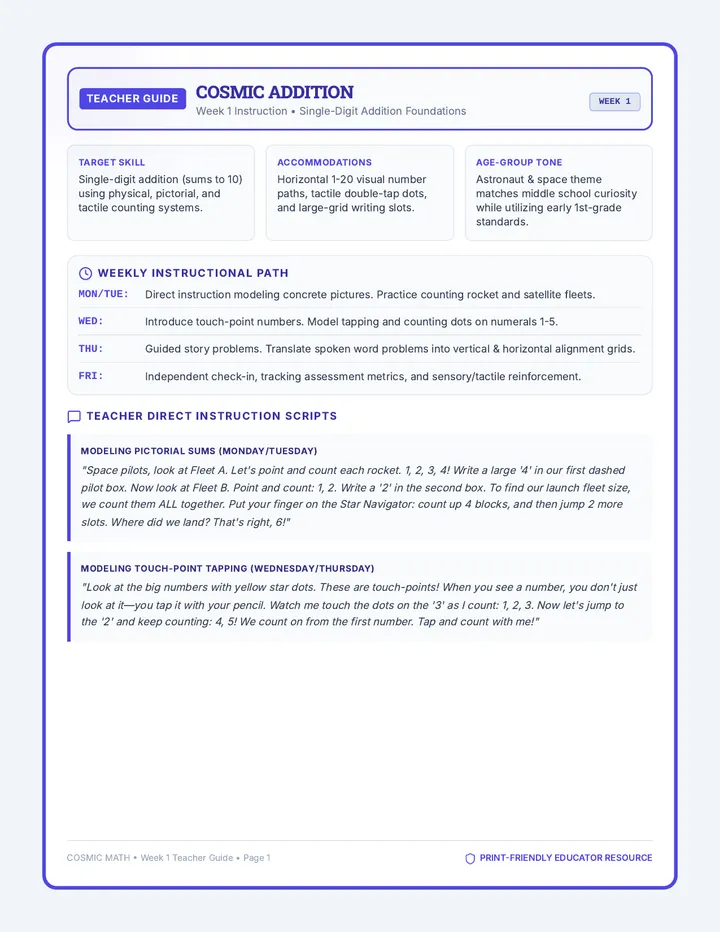
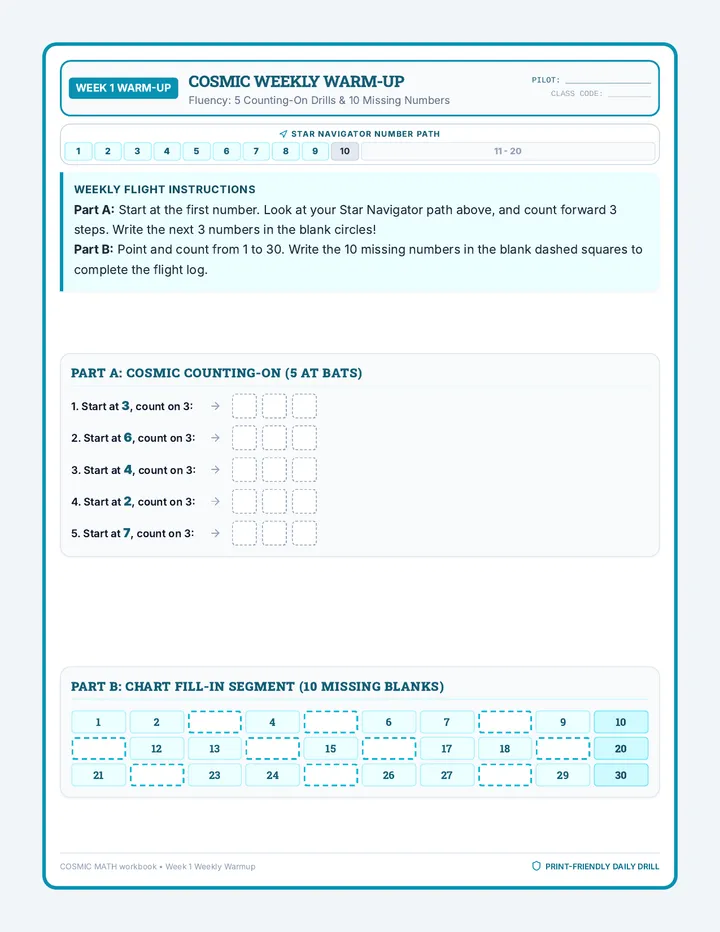
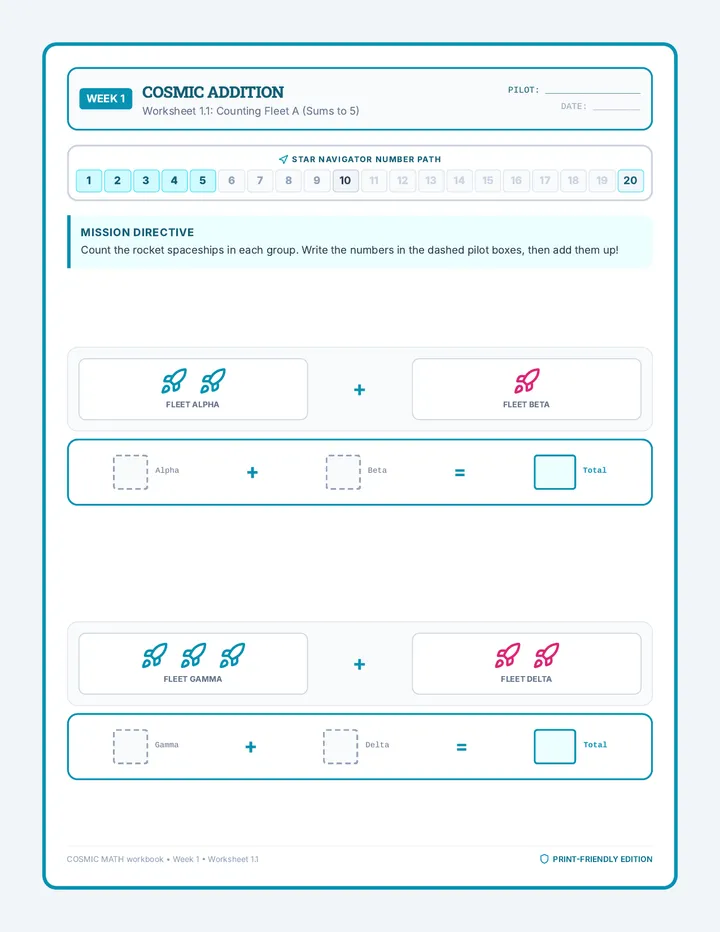
A 4-week math workbook and instructional sequence themed around outer space exploration, specifically designed for middle school students with disabilities (SWDs) working at an early 1st-grade level. Features embedded touch-points, base-ten icons, visual number paths, and age-appropriate space exploration visuals to teach single-digit operations, place value, and patterns.
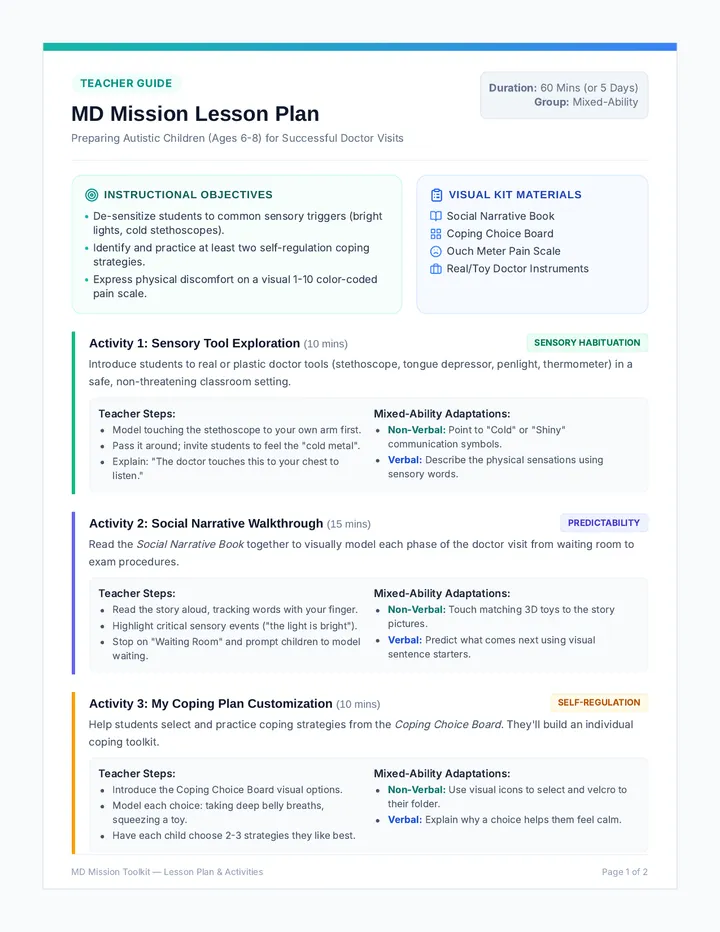
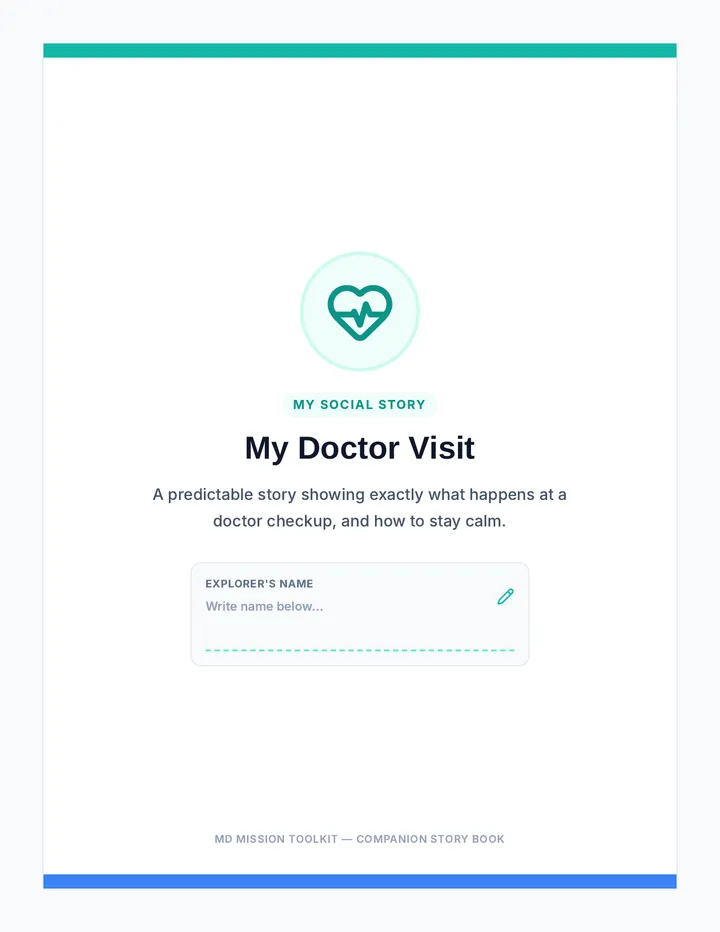
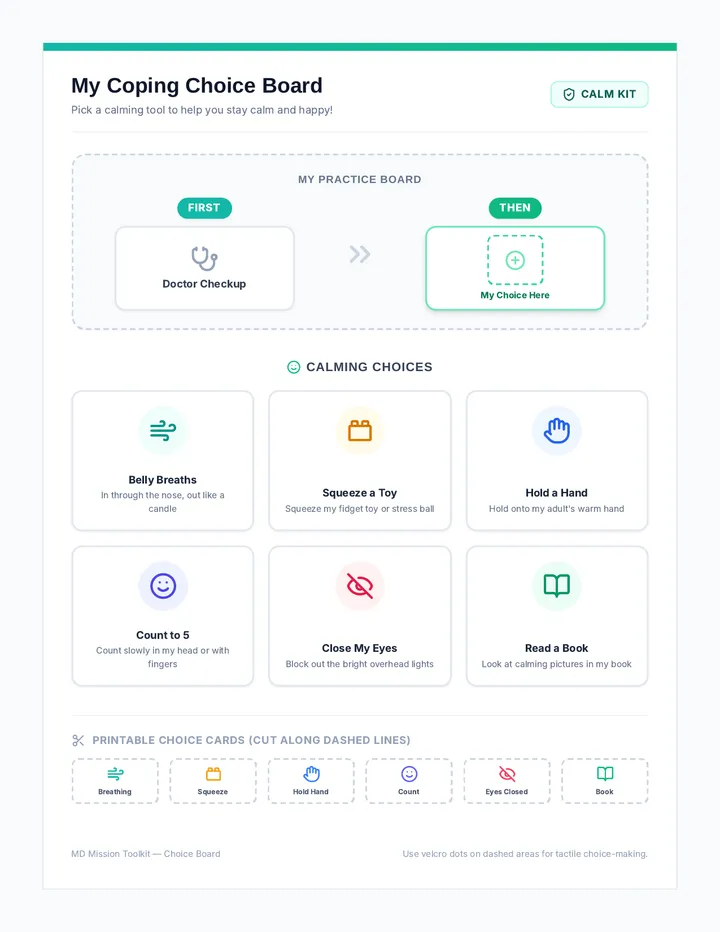
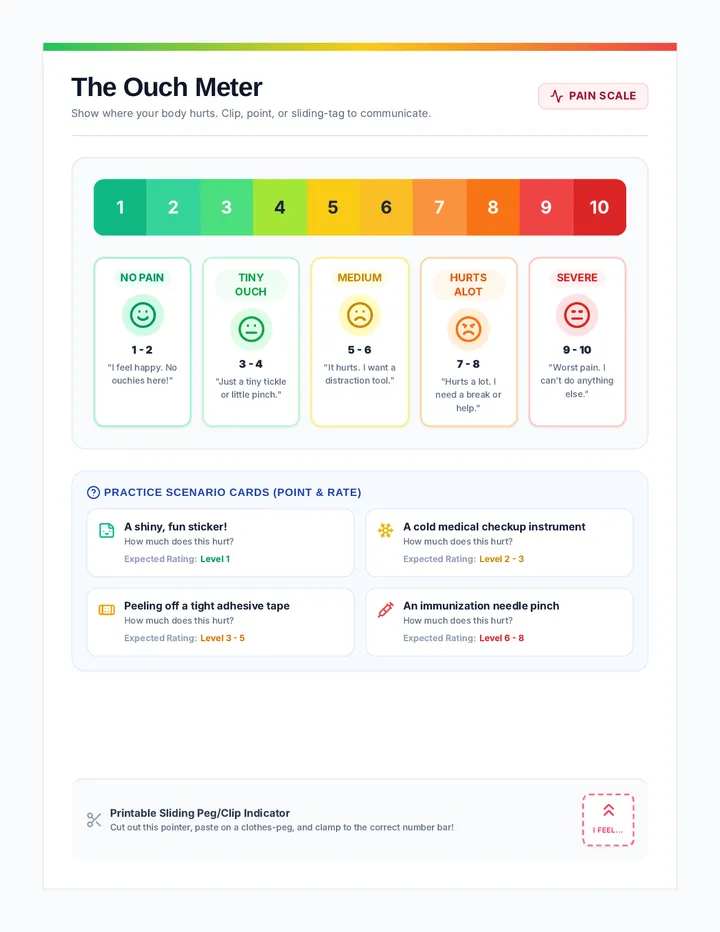
A comprehensive lesson containing visual supports and activities to prepare children with autism (ages 6-8) for doctor visits, focusing on sensory expectations, coping strategies, and pain communication.
An expanded five-page professional decision-making guide and clinical framework for CSE members to determine speech-language eligibility, severity, and service continuation. Features significantly larger fonts, structured severity matrices, clear exit standards, and an improved educational effect assessment worksheet with generous writing space.