Guides and structures for teachers to design and modify reading comprehension lessons with Lenny. Includes both visual flowcharts and classic academic table formats.
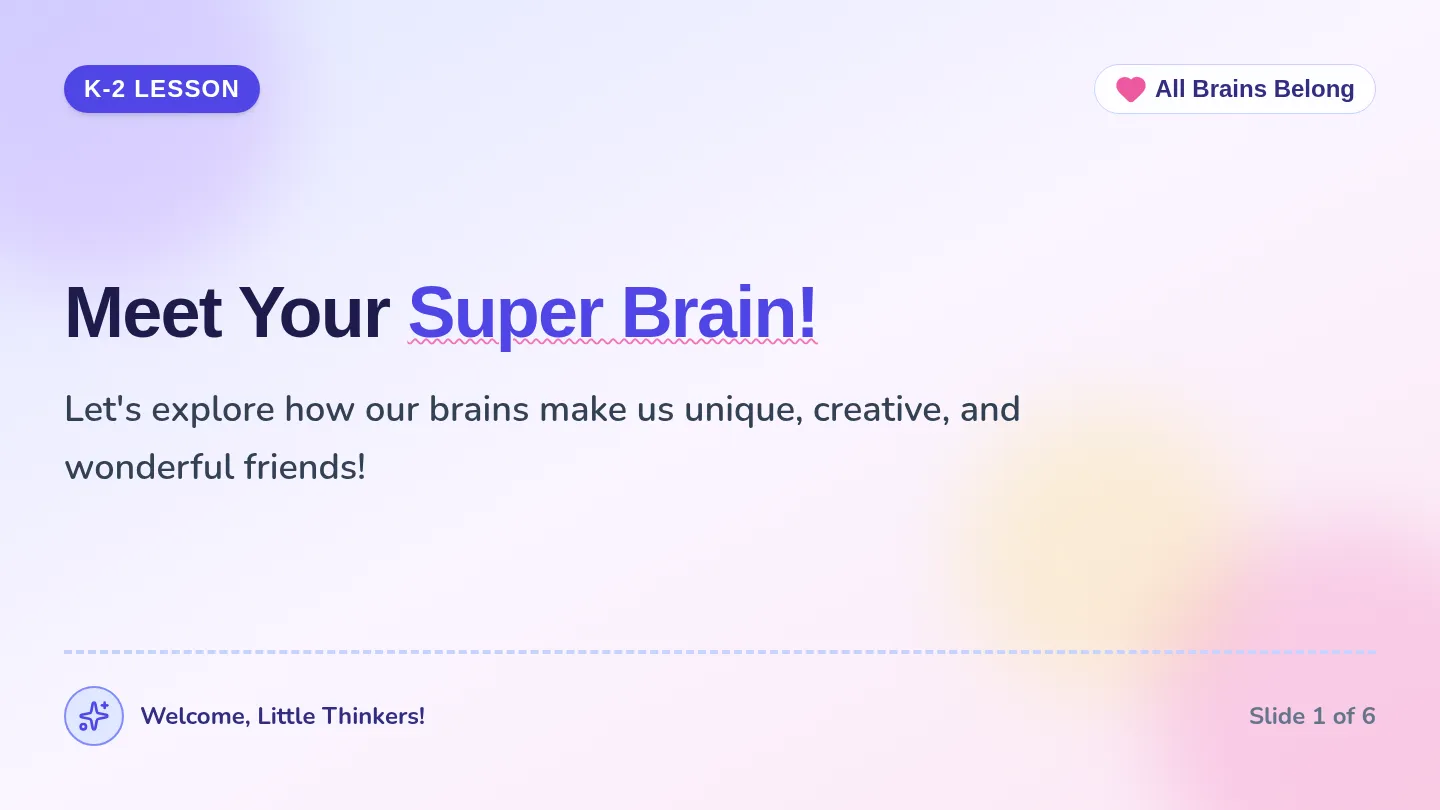
A comprehensive educational unit celebrating neurodiversity, acceptance, and inclusive communication across elementary grades. It equips educators with slide presentations and reflection tools tailored for K-2 and 3-5 students to cultivate empathetic classrooms.
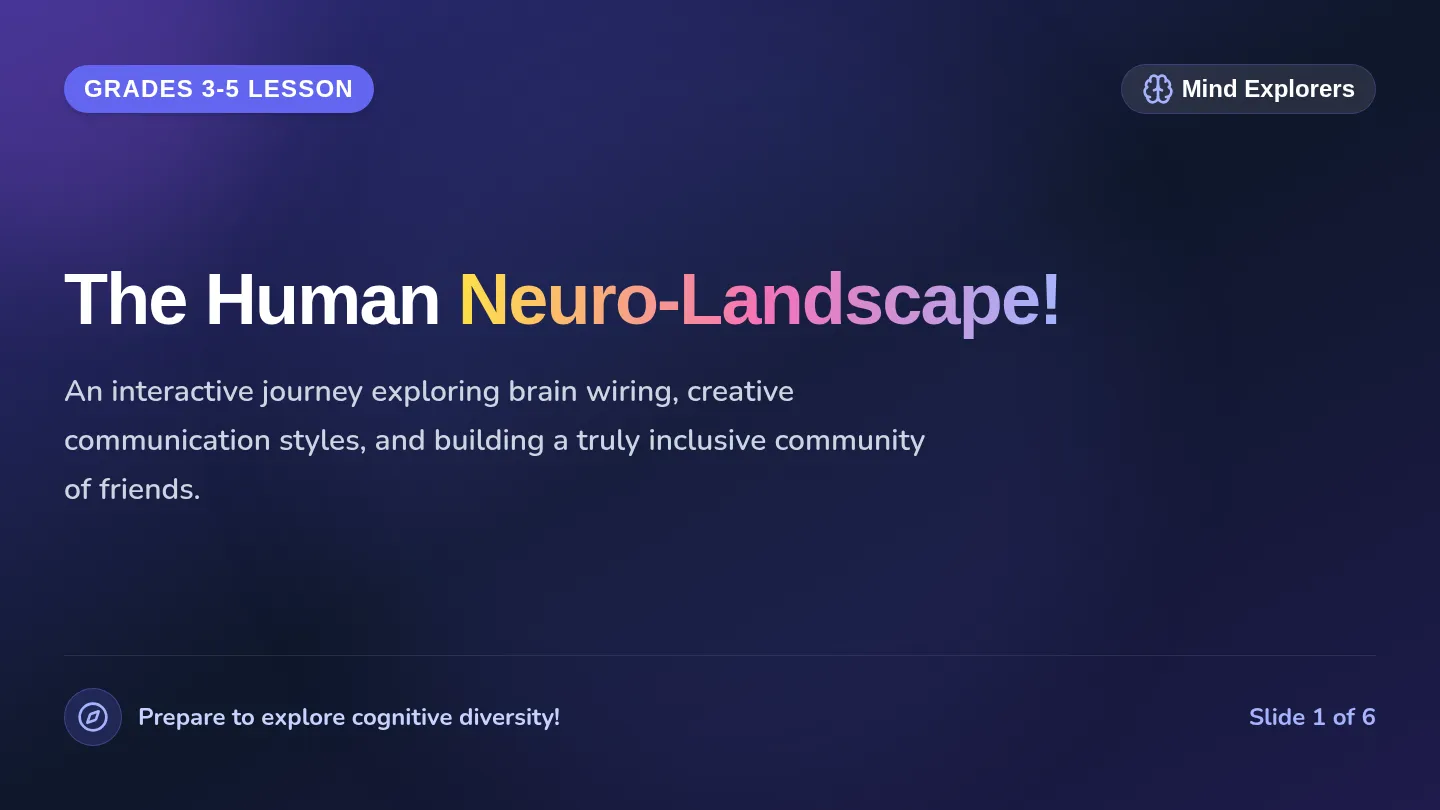
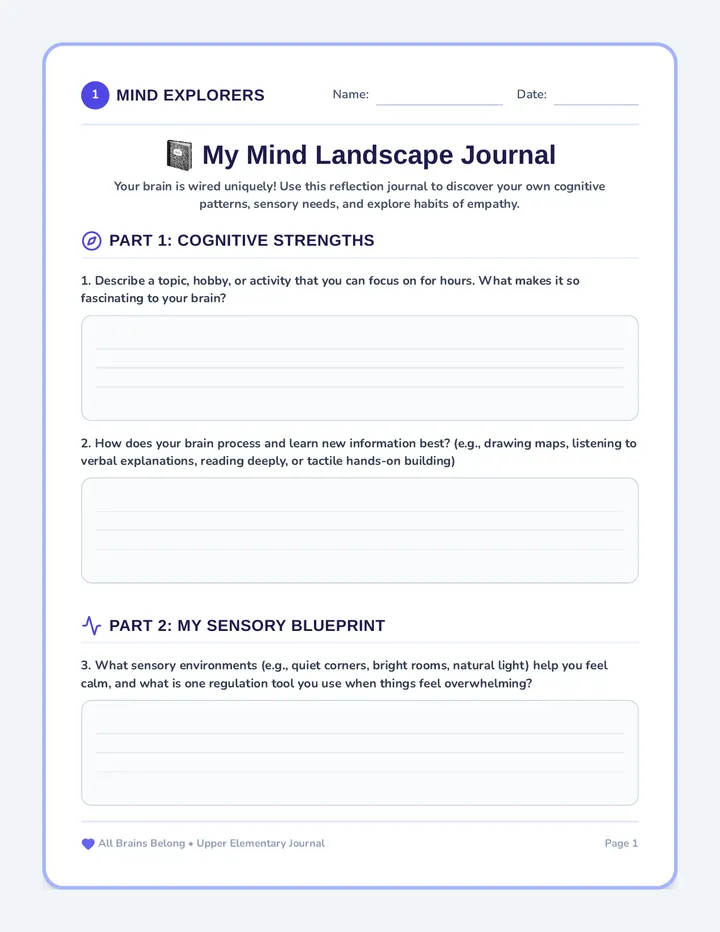
An interactive lesson for upper elementary students to explore brain wiring, diverse communication styles, and emotional self-regulation. Emphasizes empathy, constructive friendship habits, and written self-reflection.
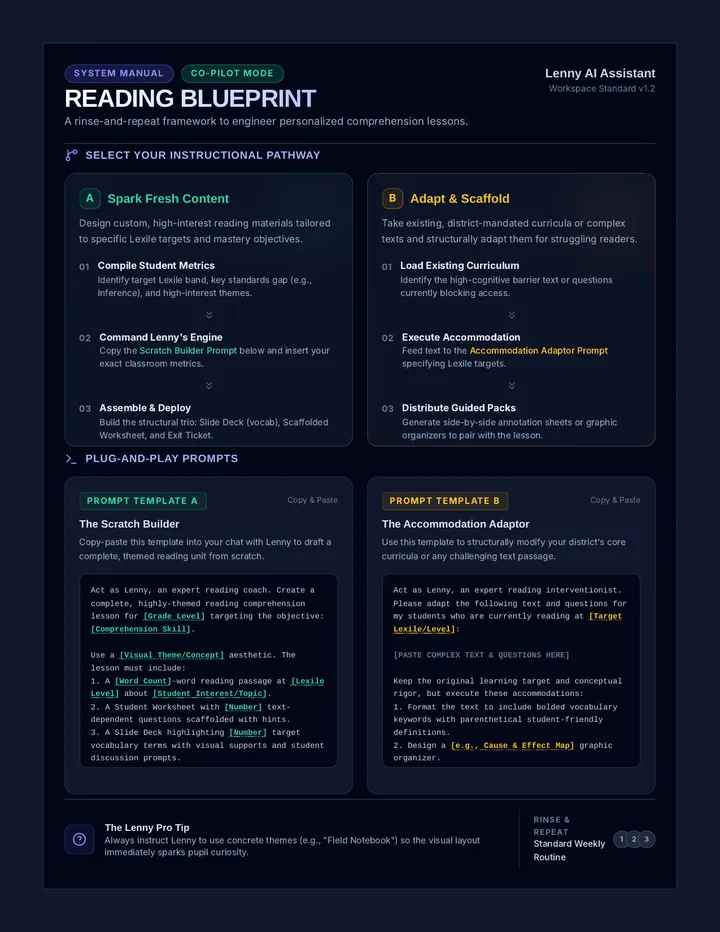
A highly visual, step-by-step flowchart mapping out creation and adaptation processes with plug-and-play prompt templates, formatted in a premium dark blueprint style.
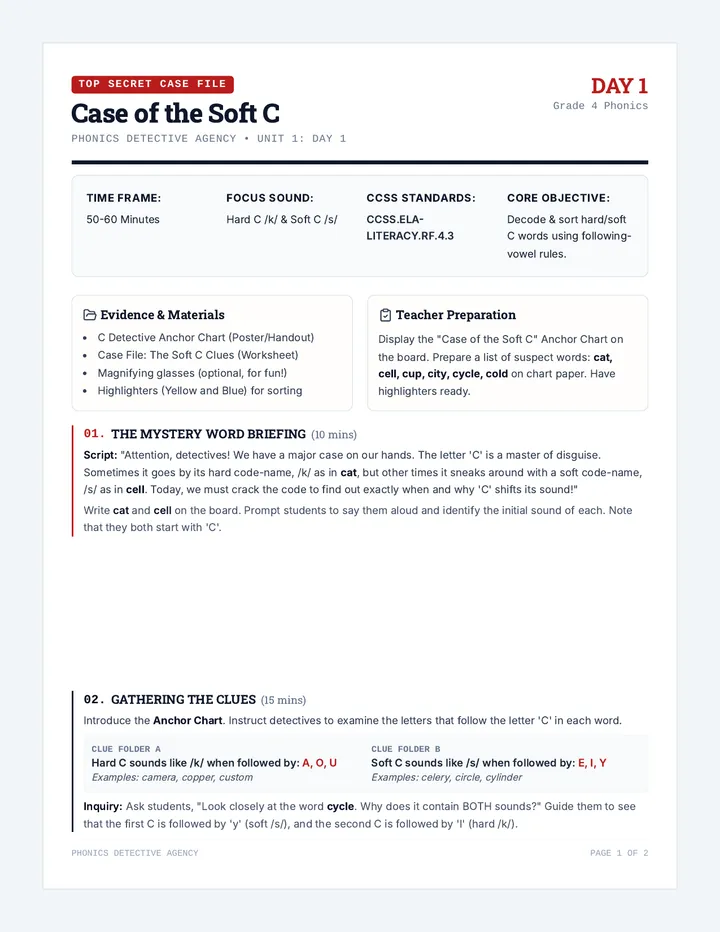
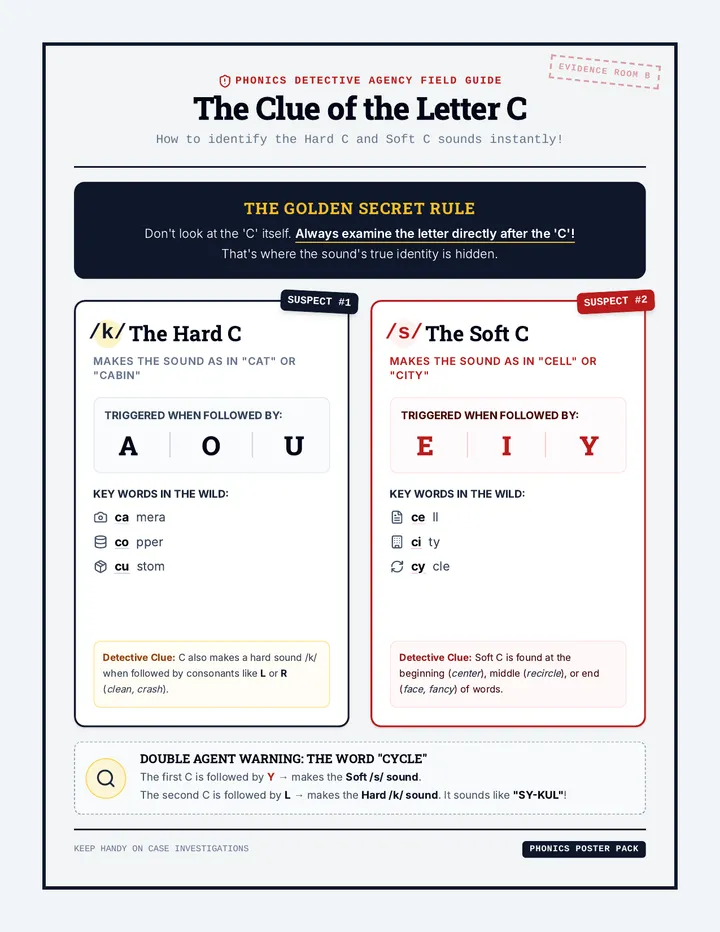
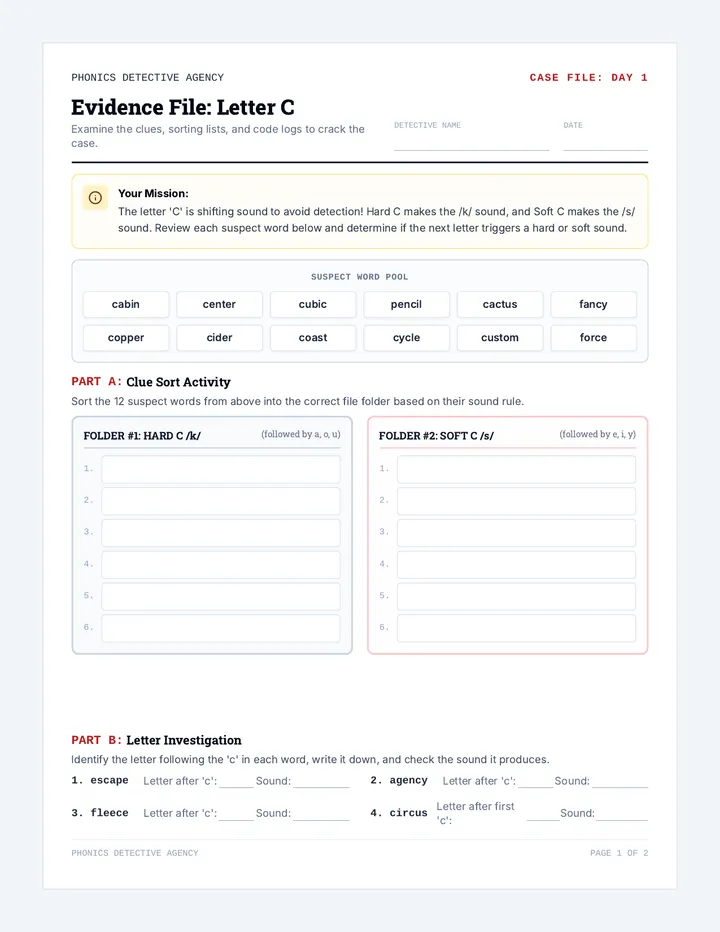
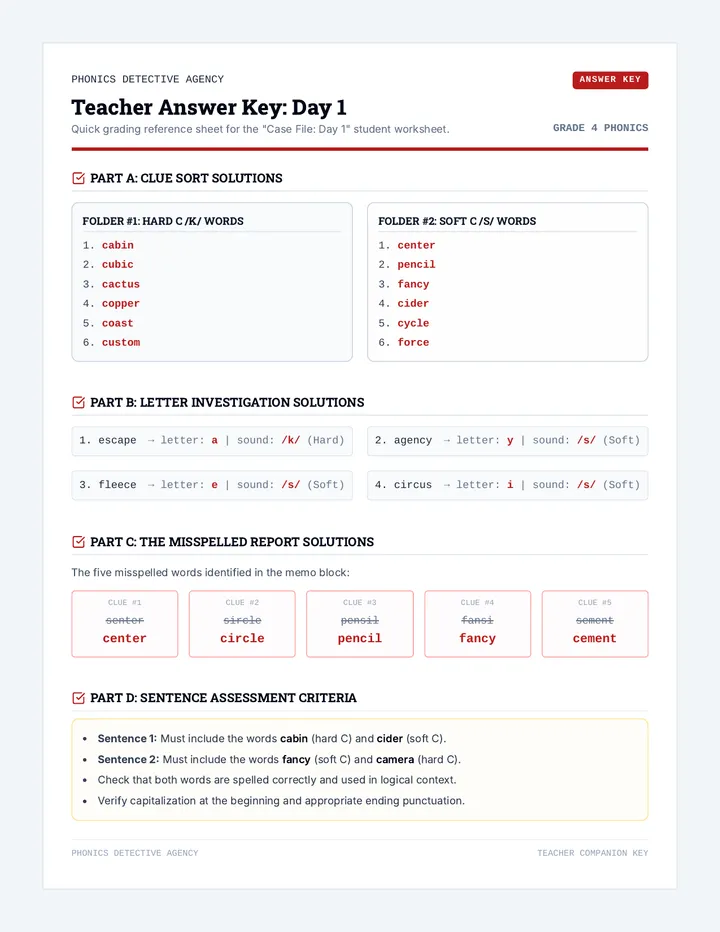
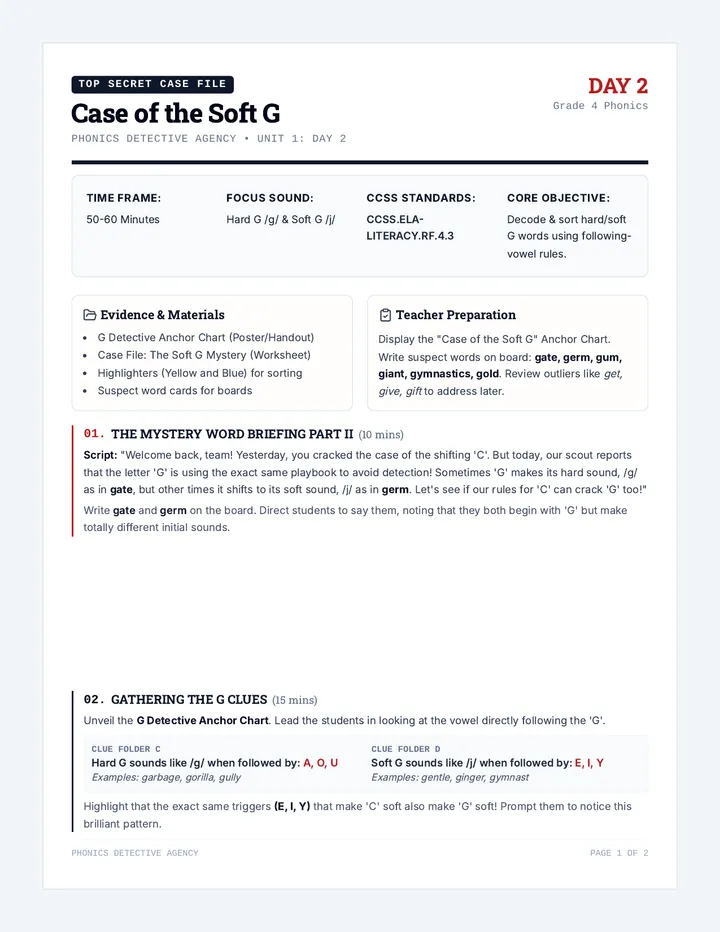
A comprehensive, detective-themed 2-day phonics unit for 4th graders to master the hard and soft sounds of 'c' and 'g' using structured inquiry, visual anchor charts, and scaffolded practice worksheets.
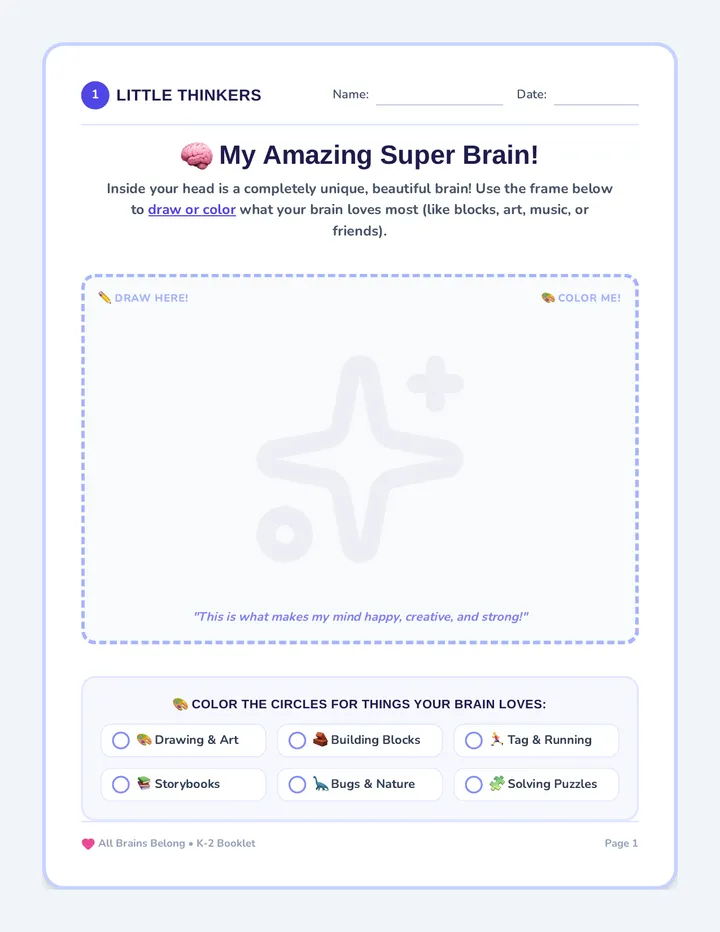
A gentle, highly visual introduction to brain differences, play styles, and sensory needs for early primary students. Focuses on peer acceptance, welcoming classrooms, and creative expression through drawing.
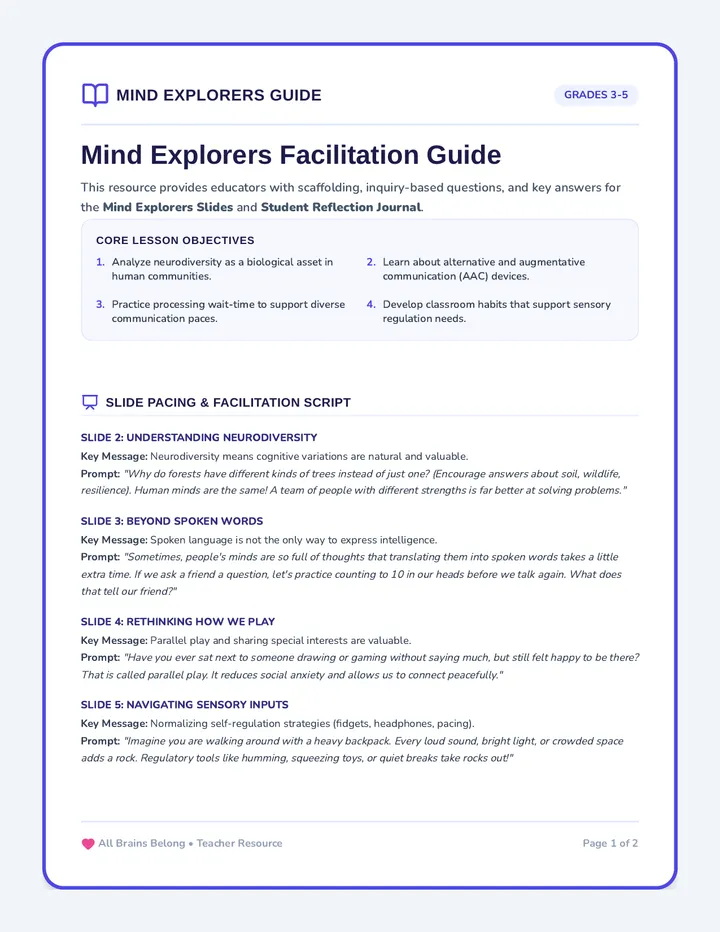
A comprehensive 2-page facilitation guide for teachers delivering the 3-5 neurodiversity lesson. Page 1 outlines slide-by-slide discussion prompts and active inquiry strategies, while Page 2 provides journal response analysis, key answers, and classroom culture integration tips.
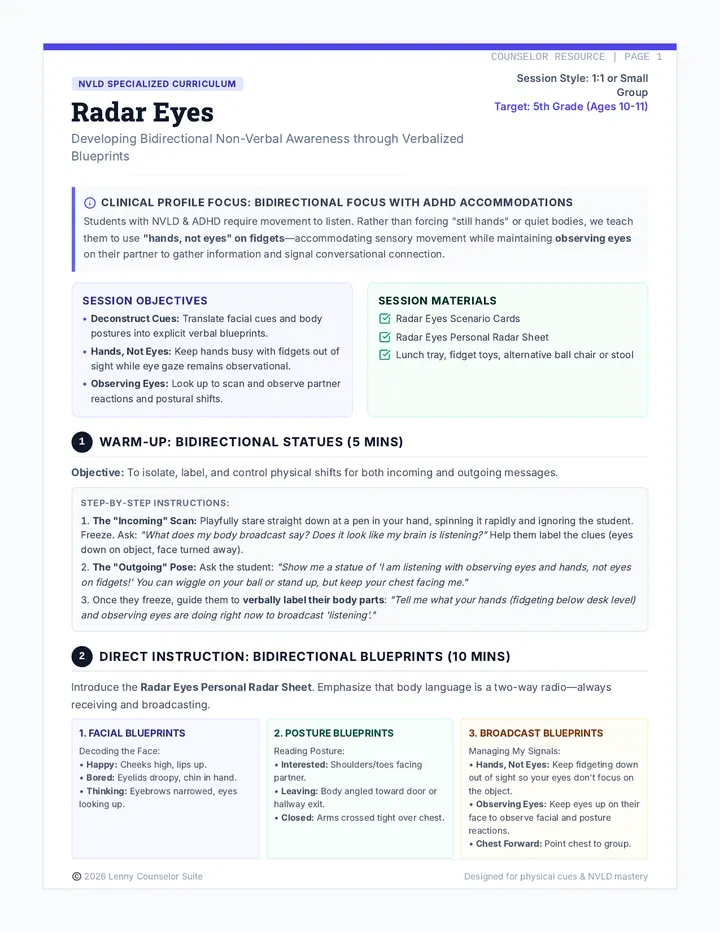
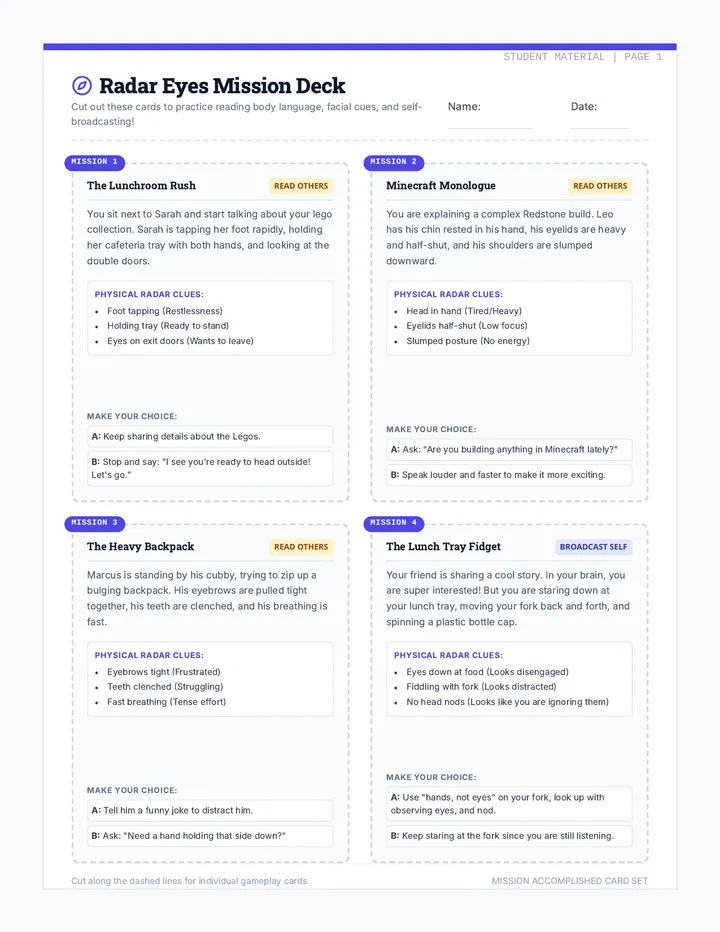
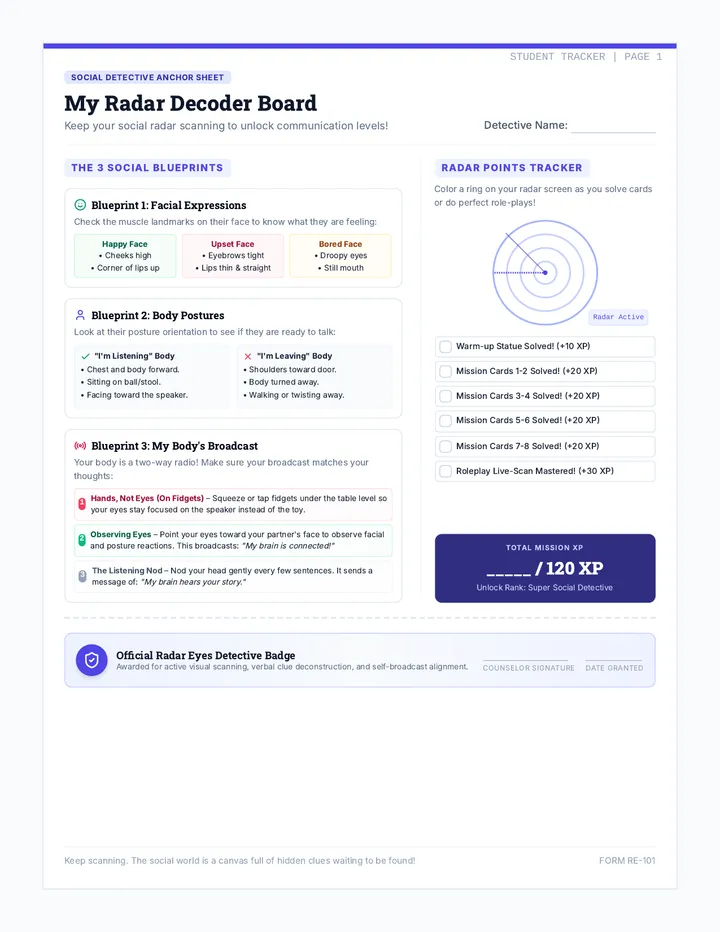
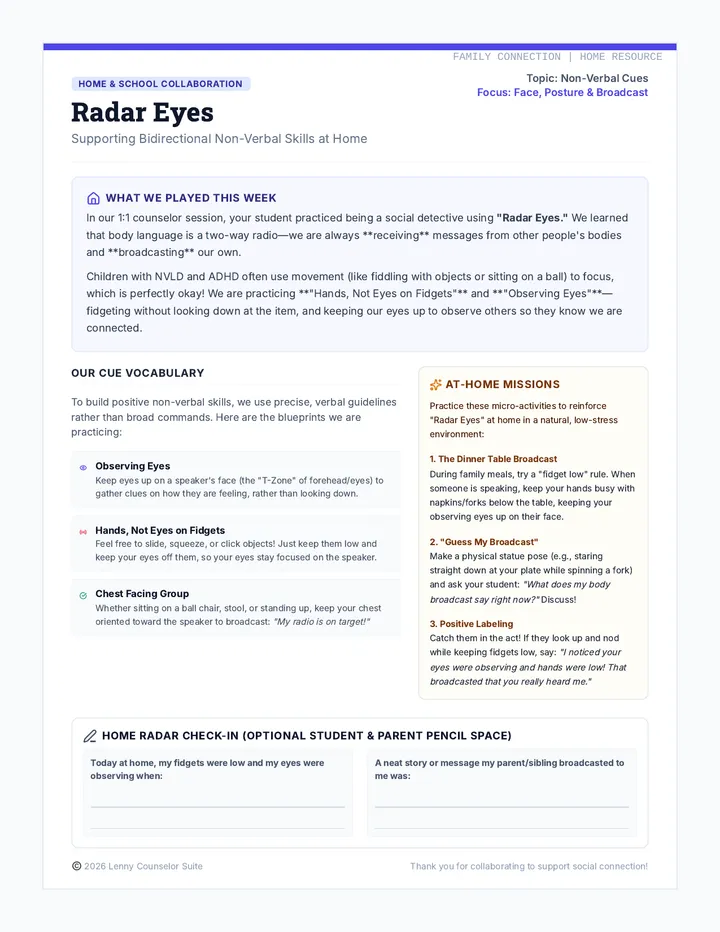
A sequential social skills program designed for 5th-grade students with NVLD. Focuses on bidirectional nonverbal cue decoding, eye gaze alignment, conversation turn-taking, and self-monitoring strategies.
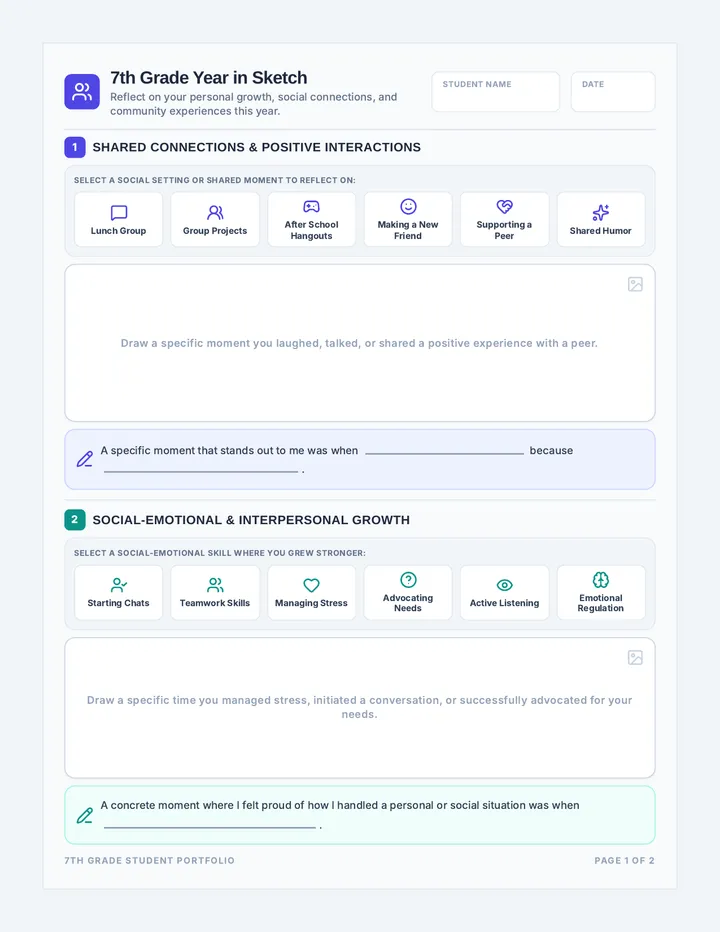
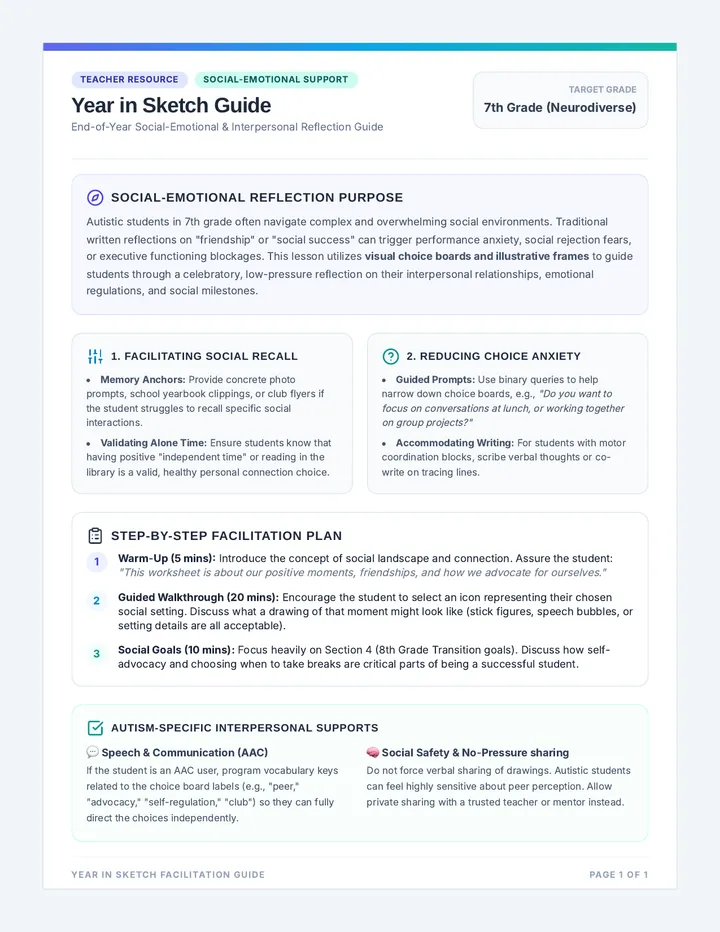
An end-of-year reflective drawing lesson designed for a 7th-grade student with autism, featuring structured drawing prompts, visual choice boards, and sentence starters to minimize writing fatigue while maximizing self-expression.
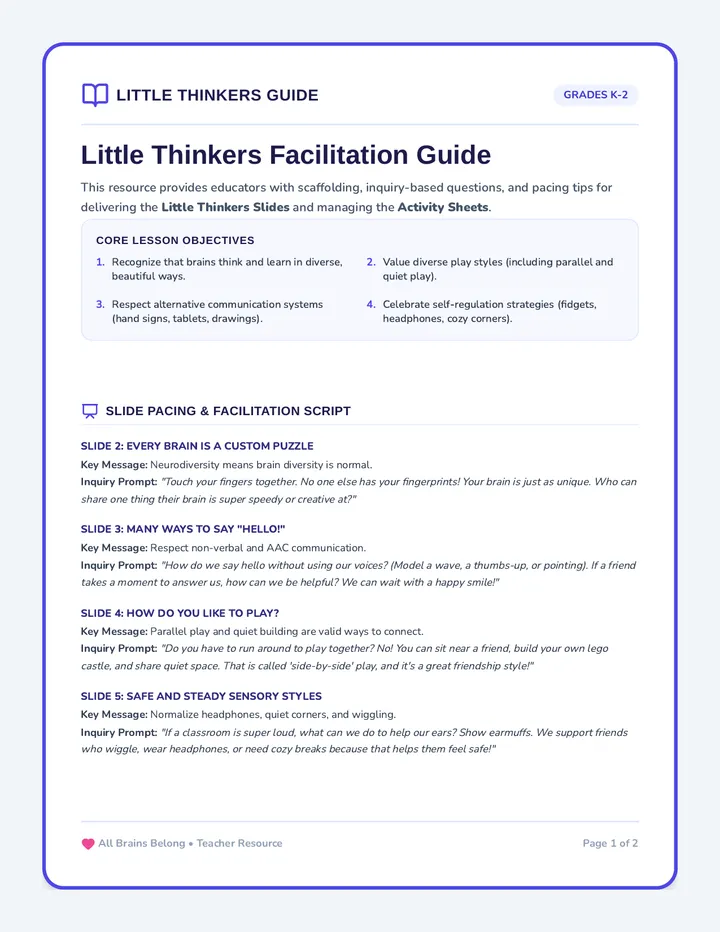
A comprehensive 2-page facilitation guide for teachers delivering the K-2 neurodiversity lesson. Page 1 outlines slide-by-slide discussion prompts and active inquiry strategies, while Page 2 provides activity sheet facilitation, inclusion tips, and differentiation strategies.
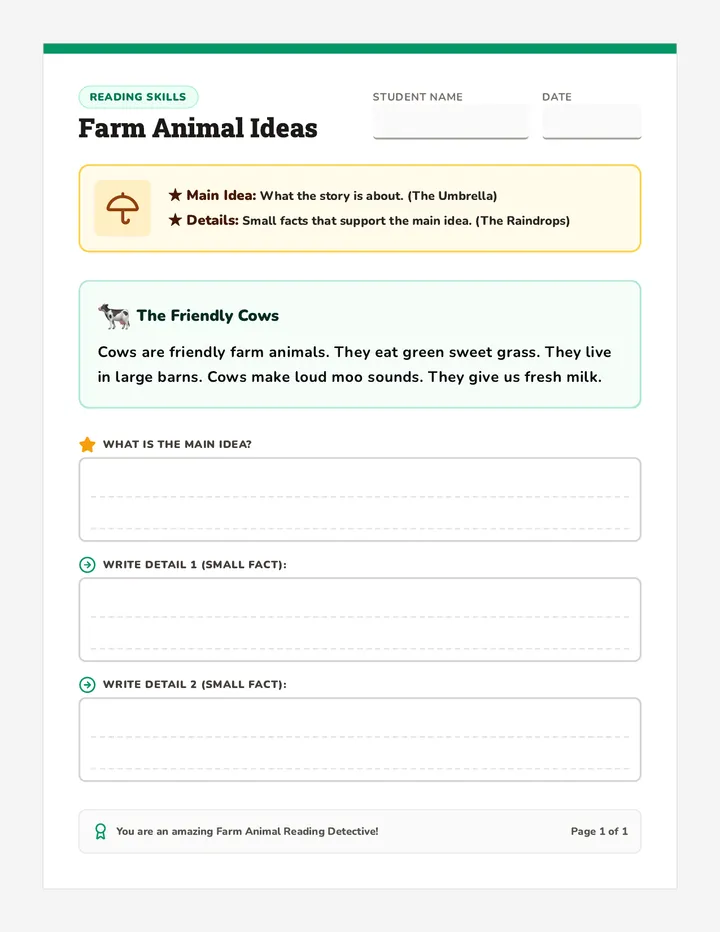
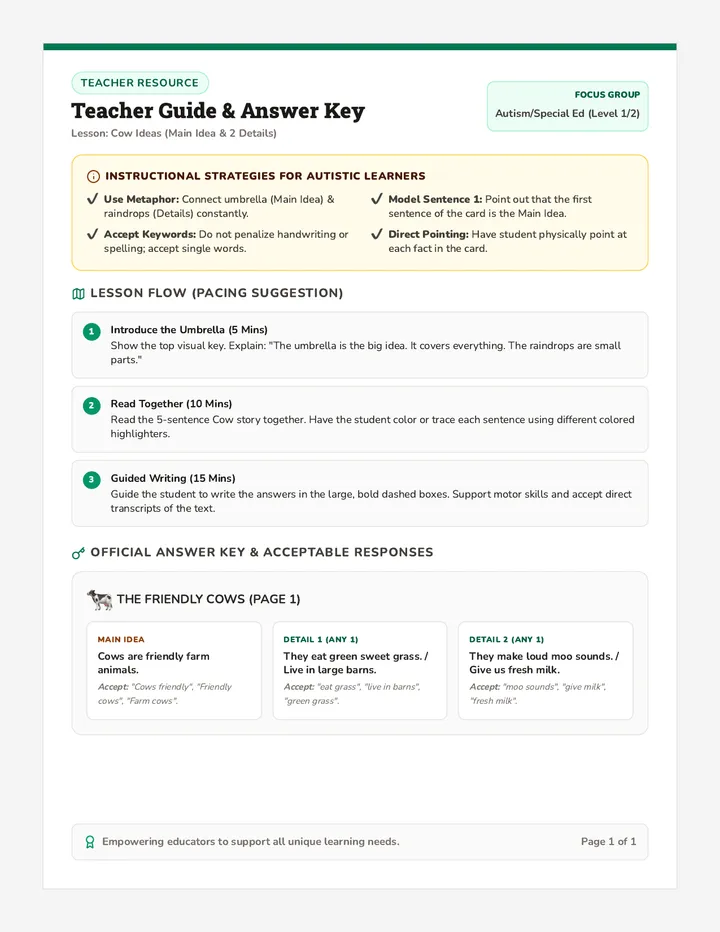
A structured reading comprehension sequence designed for students with autism to practice identifying the main idea and supporting details using highly recognizable farm animals like cows, pigs, and chickens. Each lesson focuses on a single animal to keep cognitive load low and handwriting spaces large.
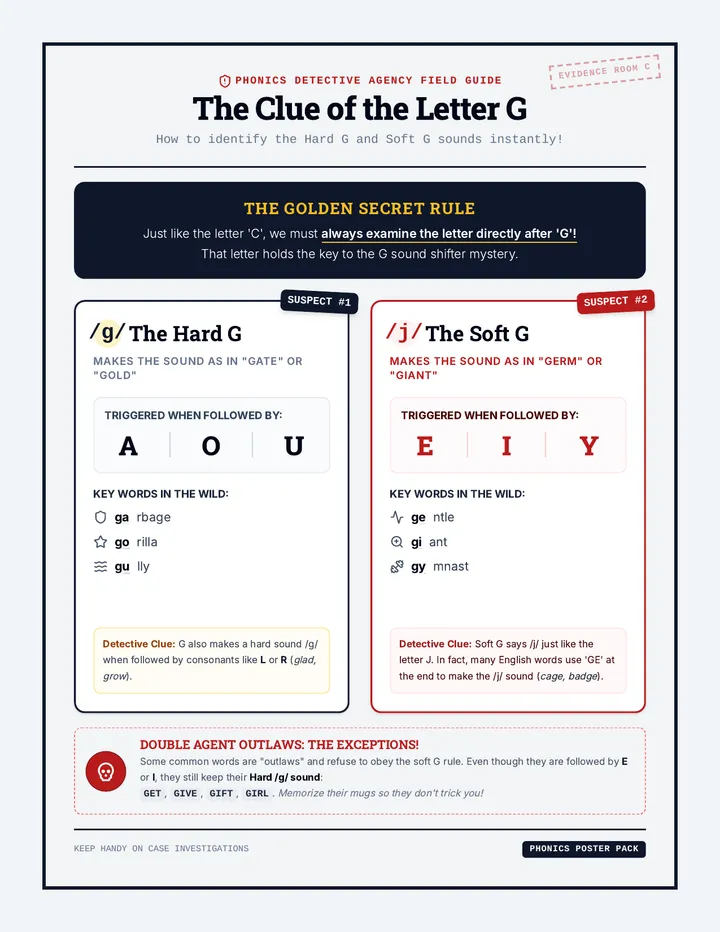
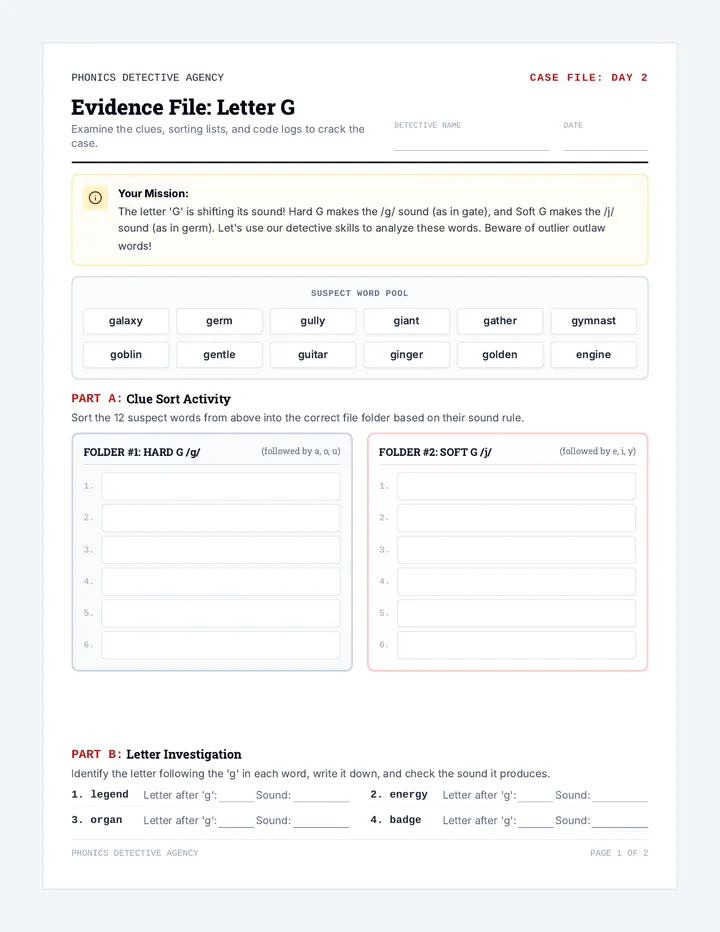
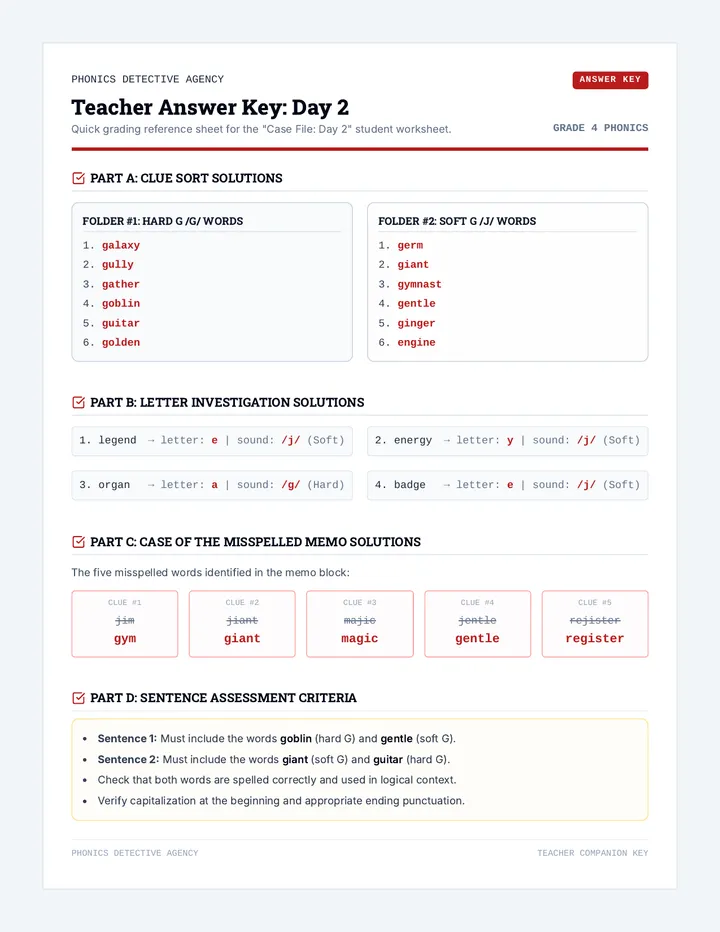
Students investigate the letter 'g', discovering when it makes its hard /g/ sound versus its soft /j/ sound, followed by interactive detective decoding and contextual word-sorting practice.
A structured 2-page student reflection journal designed for grades 3-5. Page 1 contains self-discovery prompts on cognitive strengths and sensory mapping, while Page 2 guides students through real-world scenarios on inclusive communication and peer empathy.