Integrates psychological principles, civic structures, and economic theories to analyze human decision-making and societal organization. Addresses ethical frameworks and the spatial relationships between populations and their physical environments.
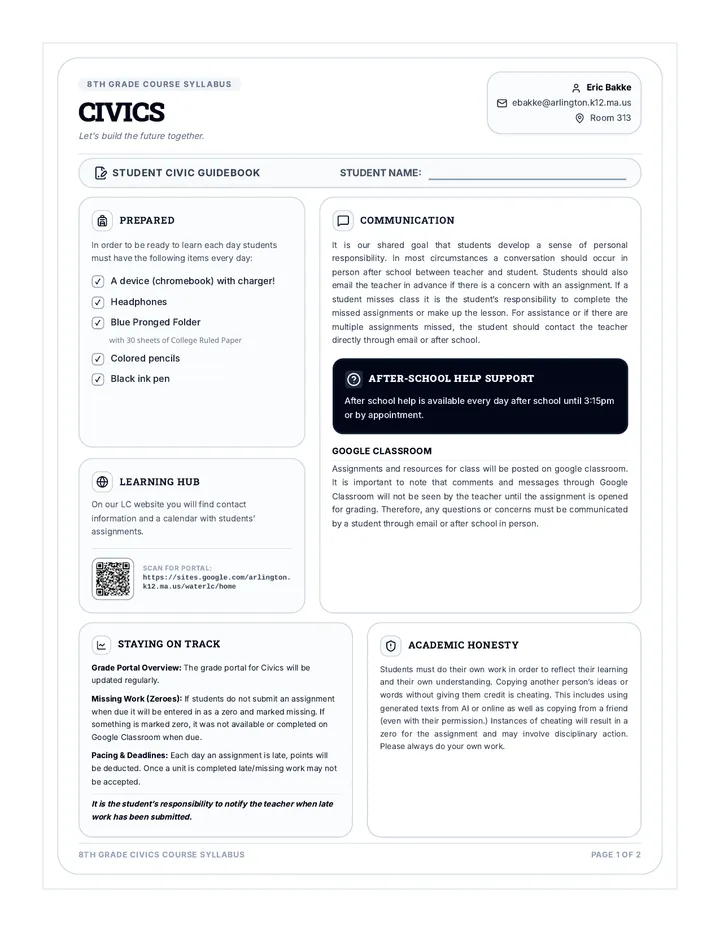
Civics Class Syllabus updated with an extra large QR code filling approximately half of the Digital Spaces container for maximum visibility and effortless scanning.
3-page scaffolded student inquiry packet fully aligned to lesson objectives (why learn history, classroom procedures, and historical thinking skills) streamlined for native English students with clear procedural guides, stacked-traits analogies, and IDCV graphic organizers.
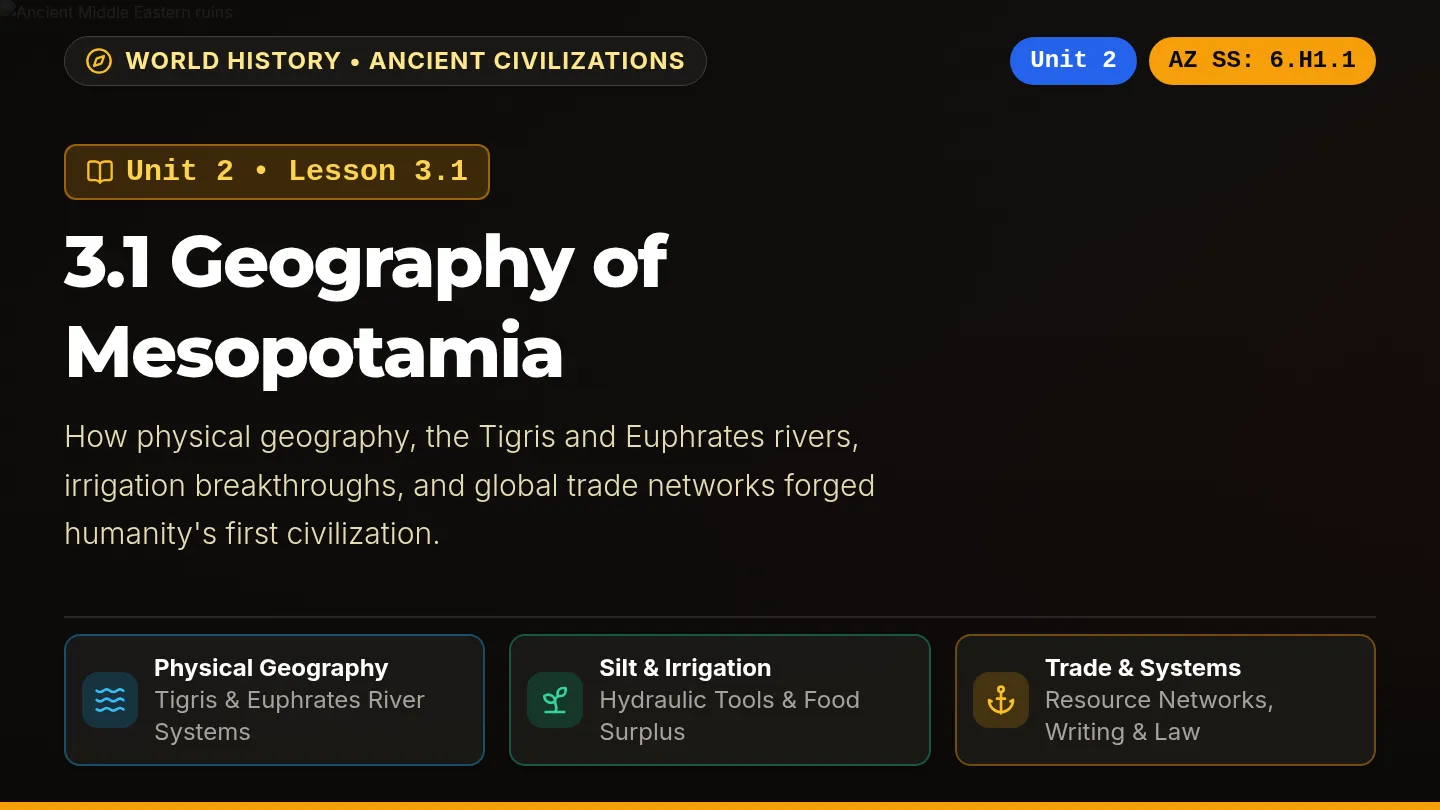
A dark-themed, visually vibrant classroom slide deck labeled Unit 2: Lesson 3.1 Geography of Mesopotamia, aligned with Arizona History and Social Science standards on every slide, featuring rich photography, high-contrast color-coded cards, and interactive review prompts.
A printable horizontal mini-composition notebook interactive vocabulary toolkit for Ohio 6th Grade Social Studies. Features wide horizontal inserts for dual-coding icon vaults, relational analogy engines, geographic semantic webs, and historical context decoders with cut lines and glue tabs.
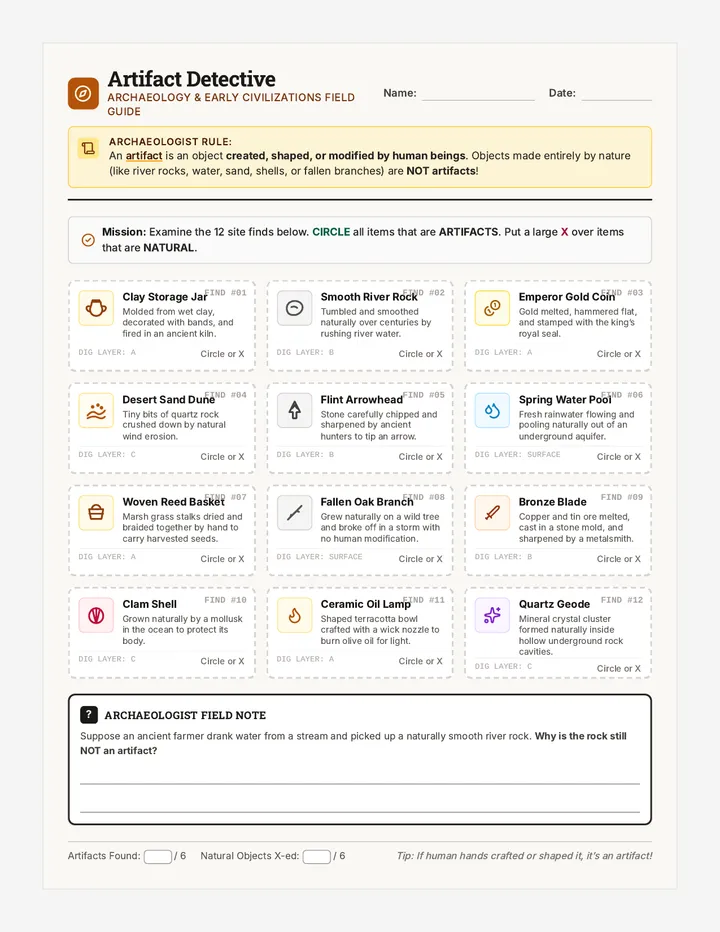
An archaeology worksheet where students differentiate between human-made ancient artifacts and natural non-artifacts. Students inspect illustrated field discoveries, circling true artifacts and crossing out natural objects.
A comprehensive Back to School Night slide for 7th Grade US History taught by Austin Nowak. Features classroom policies, course scope from Pre-Columbian societies through Reconstruction with New York State integration, and core historical thinking skills in a rich Americana visual theme.
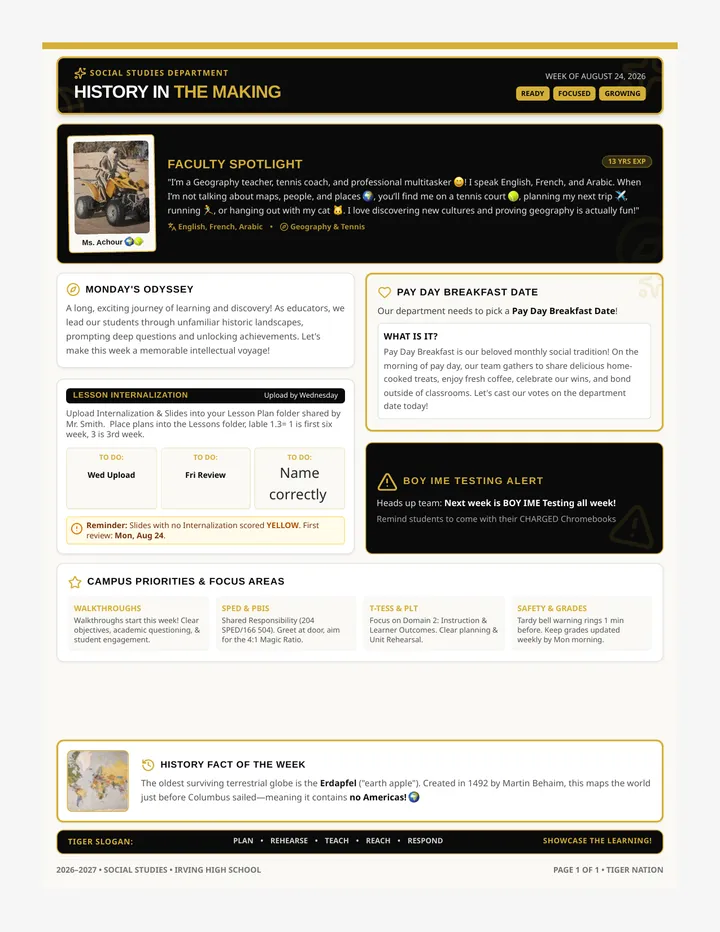
A beautiful single-page Social Studies newsletter titled 'History in the Making' in landscape orientation (960x720px), featuring a customized spotlight on Ms. Achour, a rebranded 'Monday's Odyssey' weekly focus section, instructional guidelines for lesson internalization, and campus priorities in a gorgeous black-and-gold design.
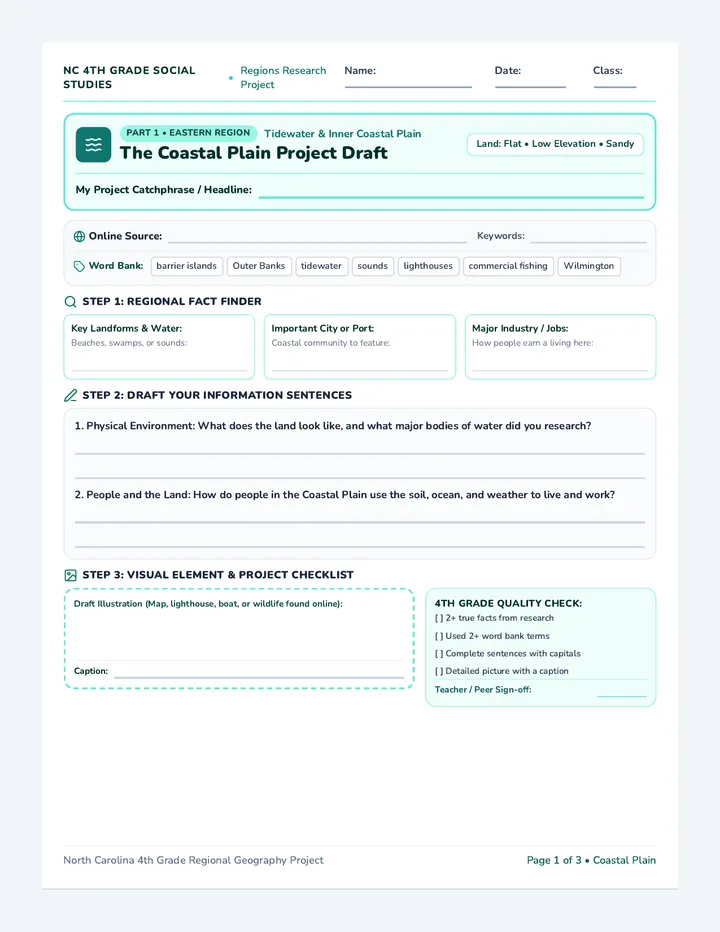
A three-page printable project draft sheet for 4th grade students researching North Carolina's regions. Includes both an online research source tracker and regional academic word banks, structured fast-fact cards, guided drafting lines, an illustration workspace with captions, and a 4th grade quality check.
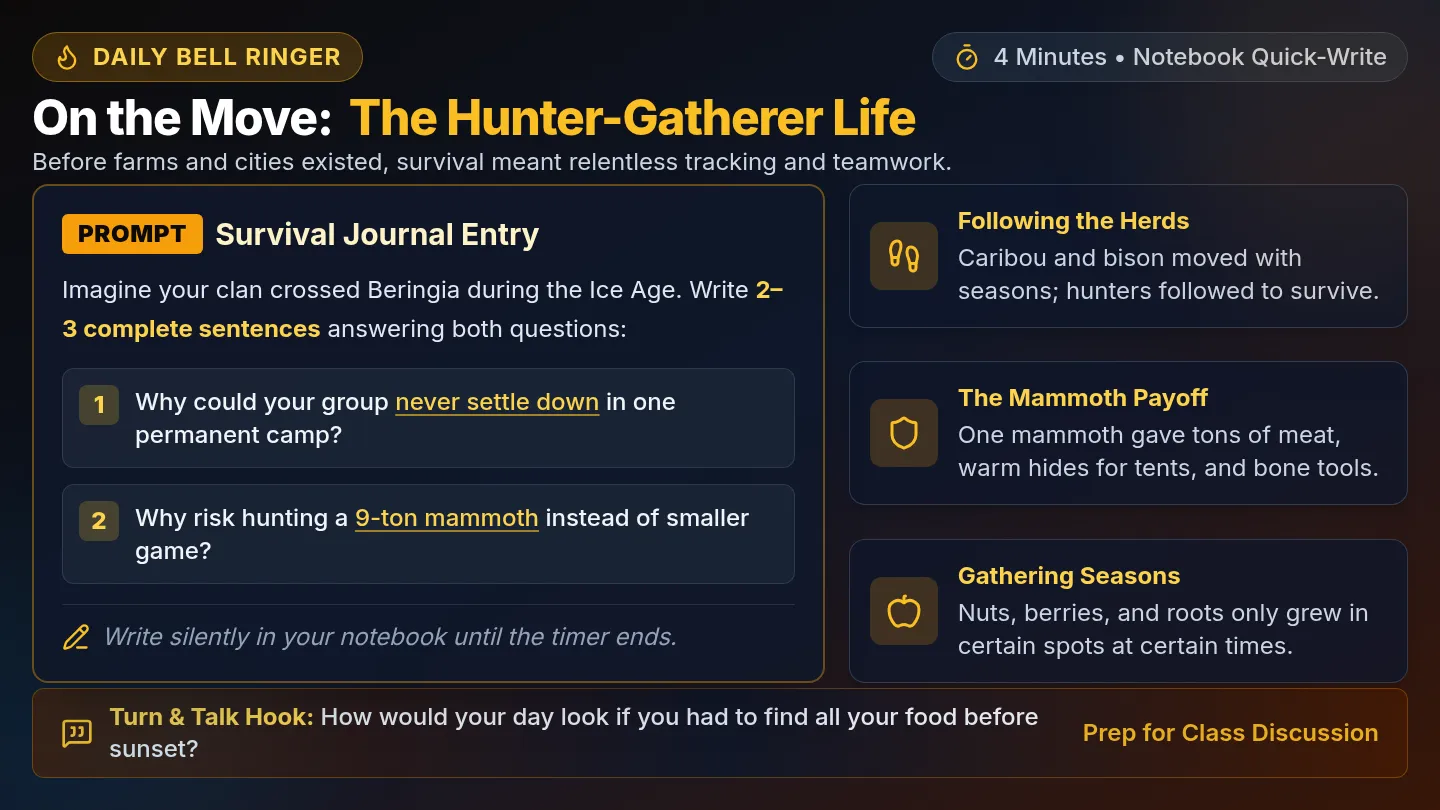
A 2-slide introductory deck for early American history featuring a nomadic survival bell ringer and a structured 'What We Will Learn' roadmap covering migration, megafauna hunting, and the agricultural revolution.
A Grade 8-9 dual-language reading and multiple-choice worksheet covering Central American Independence Day (September 15, 1821). Features a 4-paragraph parallel English and Spanish text alongside 6 standards-aligned bilingual multiple choice questions assessing key historical concepts, leaders, and civic traditions.
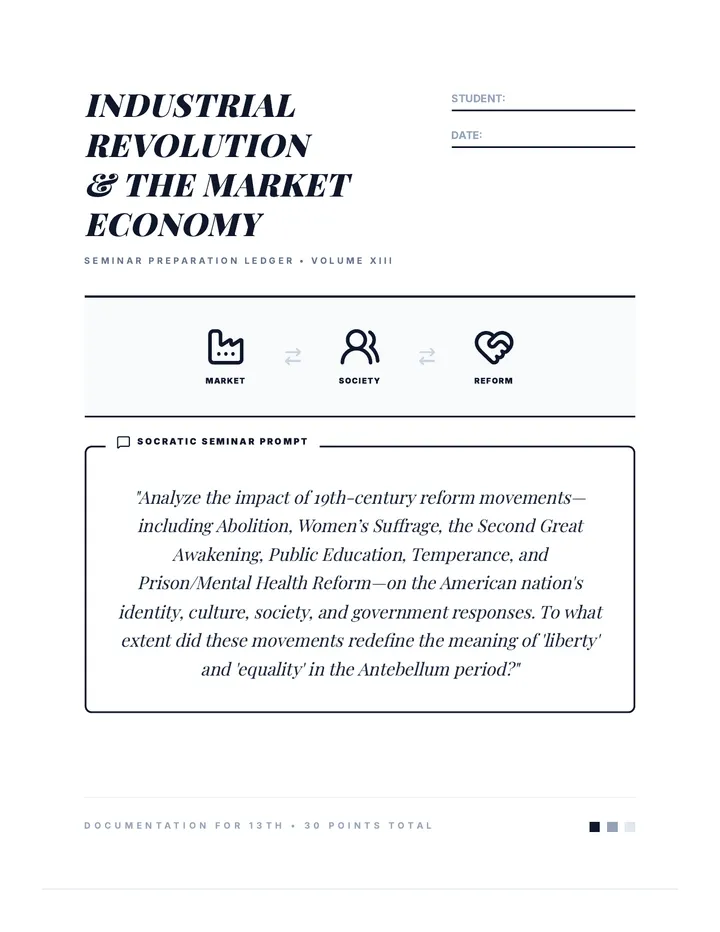
A detailed 5-page seminar preparation ledger for the Industrial Revolution and Market Economy lesson. Features a dedicated cover page with relevant historical icons and a prominent Socratic prompt, three separate article analysis pages, and a final synthesis evaluation. Writing lines are darkened for optimal print quality.
A six-page executive analytical report evaluating the Classical Five leadership paradigms: Trait, Behavioral, Situational, Transformational, and Transactional. The text is crafted with original, natural scholarly prose, dynamic sentence burstiness, nuanced case examples, APA 7th edition in-text citations, and structured four-sentence minimum paragraphs to ensure academic integrity and authenticity.
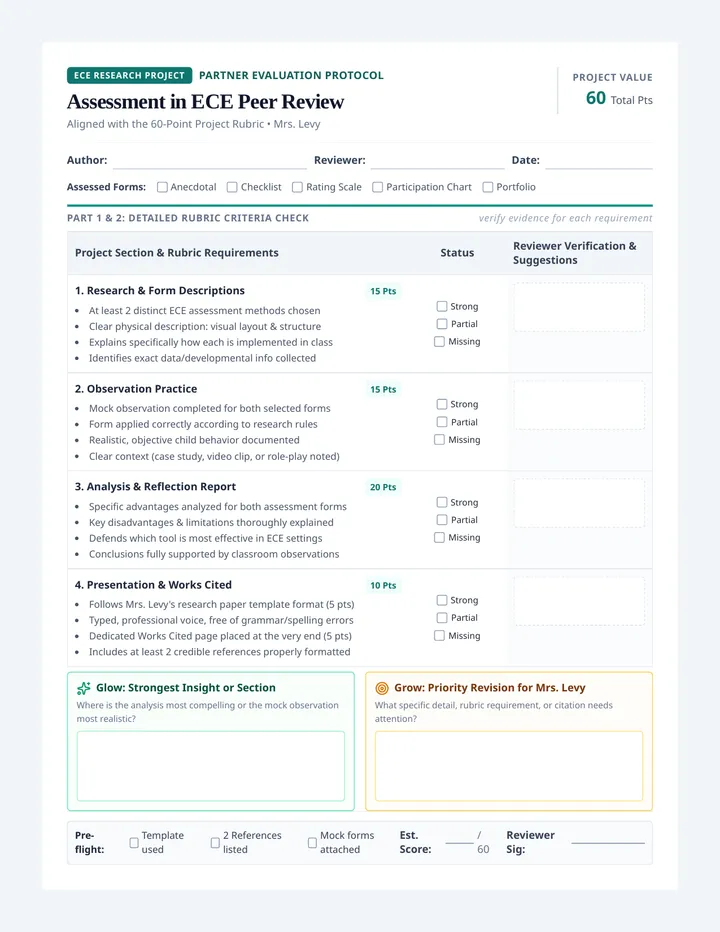
A targeted one-page peer review protocol aligned with Mrs. Levy's 60-point Early Childhood Education assessment project rubric. Guides partners through evaluating research descriptions, mock observation practice, comparative analysis, and works cited formatting.
Updated outline slide with a navy blue background and sky blue text/accents for a professional look.
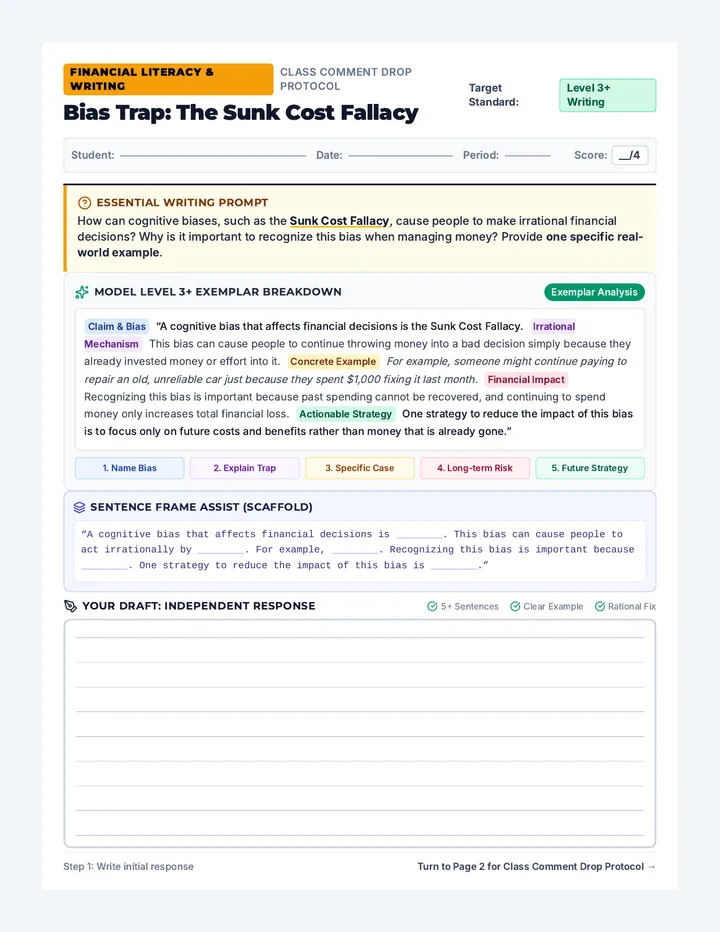
A two-page behavioral economics and writing worksheet exploring the Sunk Cost Fallacy and financial cognitive biases. Features a deconstructed Level 3+ model response, sentence frame scaffolds, independent writing lines, and a structured Class Comment Drop peer review protocol with Accountable Talk stems.
A 13-day journey through modern American history, from the Industrial Revolution to the present day, focusing on key historical figures and major conflicts as outlined in the 5th Grade TEKS. Each lesson is designed for a quick 30-minute block, integrating multimedia and primary source analysis.
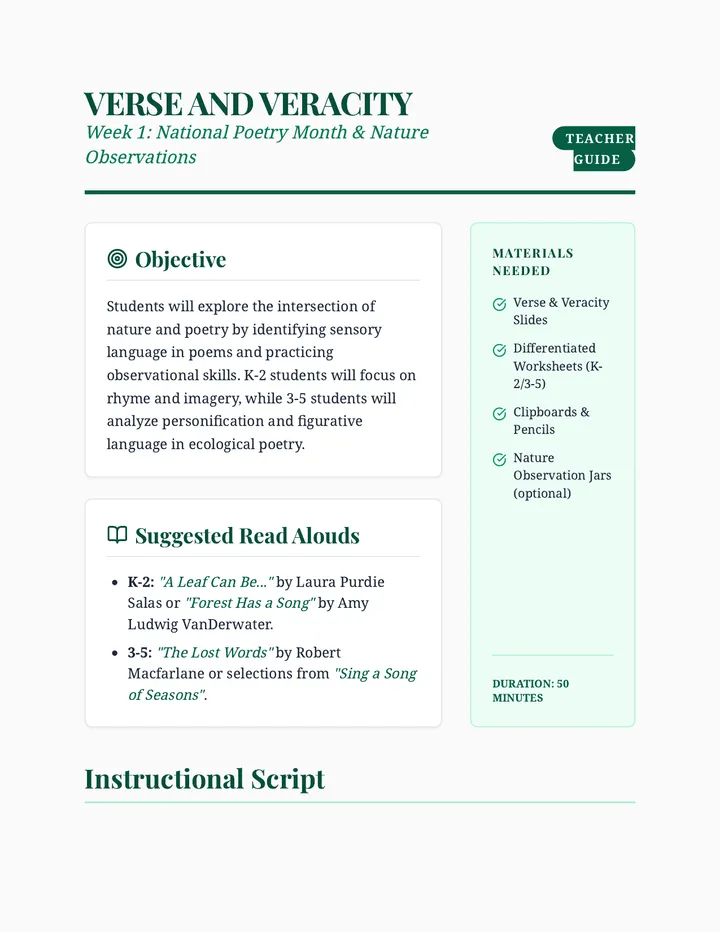
A comprehensive K-5 Media Center curriculum spanning August to May. Each month features a thematic unit integrating library skills (Dewey Decimal System, research, digital citizenship), literacy (poetry, biographies, informational texts), and STEM/Maker Space challenges. Resources are differentiated for K-2 and 3-5.
A comprehensive 3rd-grade curriculum exploring global diversity through identity, traditions, food, music, and clothing, fostering empathy and cultural appreciation.
A 4-part exploration of the deep-seated tensions and pivotal events that led the United States to the brink of the Civil War, focusing on economic shifts, legislative compromises, and political flashpoints.
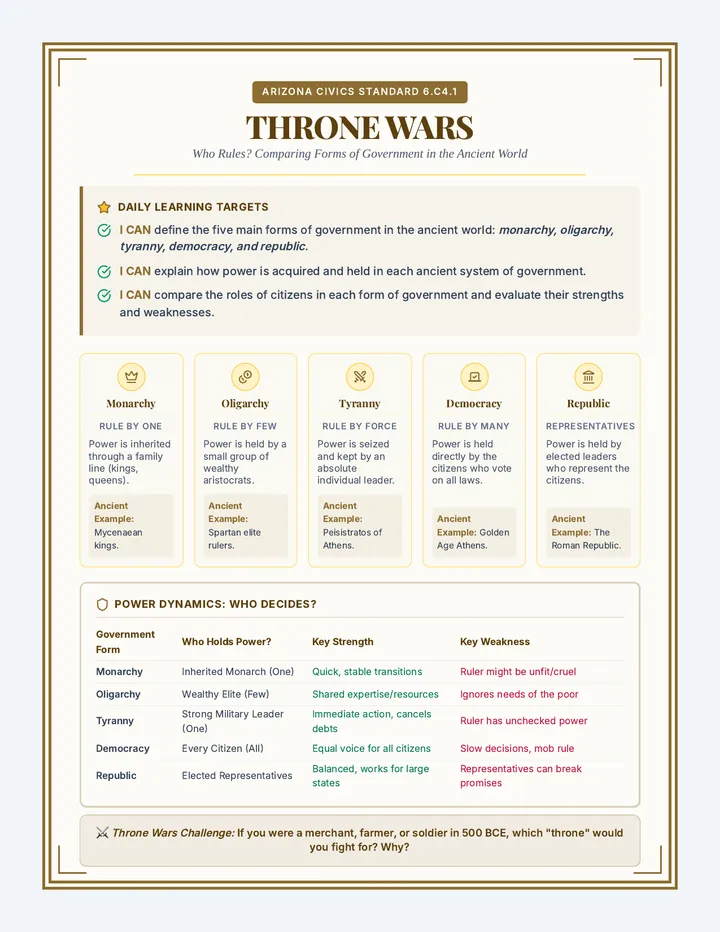
A comprehensive 6th-grade social studies unit exploring the trajectory of human history, from nomadic hunter-gatherers and the cognitive evolution of early humans, to the agricultural revolution, and finally the development of structured ancient governments.
A comprehensive 4-lesson unit for 5th grade exploring the pivotal figures, major conflicts, and the courageous escape routes of the American Civil War. Students engage with historical primary-source styles while learning about leadership and the quest for freedom.
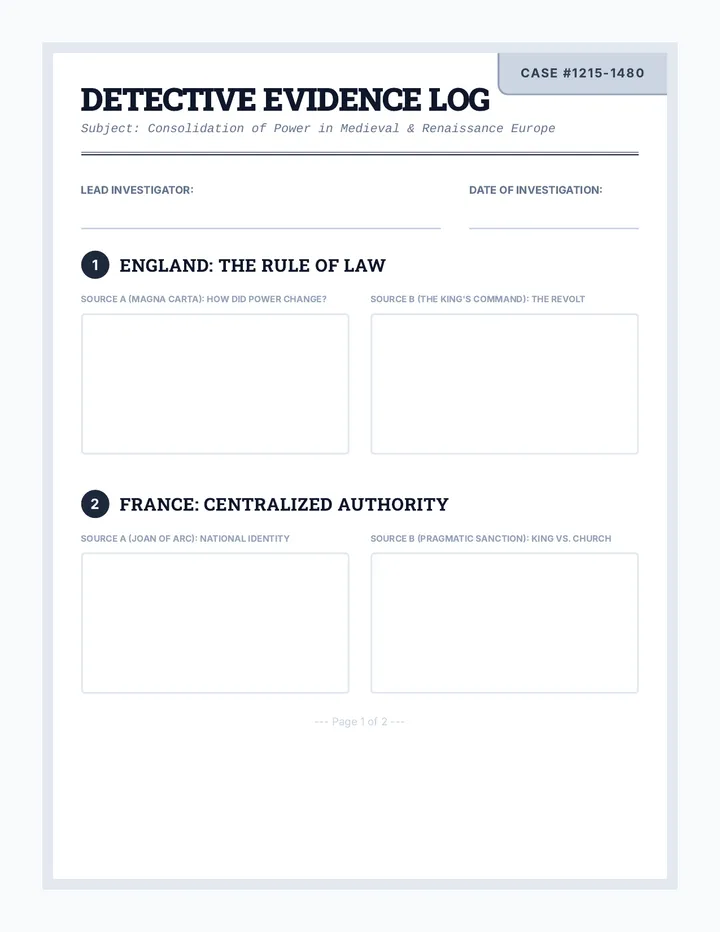
A comprehensive middle school history unit where students act as 'history detectives' to investigate the rise of nation-states in England, France, Spain, and Russia through primary source analysis.
An exploration of Earth's dynamic physical and ecological systems in 9th-grade World Geography. This sequence covers natural hazard dynamics followed by an interactive study of global biomes, their geographical importance, and ecological distributions.
This sequence explores the development of feudalism in Japan, contrasting the theoretical power of the Emperor with the actual power of the Shogunate. Students will analyze the social hierarchy, the code of Bushido, the chaos of the Sengoku period, and the eventual stability of Tokugawa isolationism.
A 5-lesson sequence for 2nd graders exploring significant American landmarks including the Statue of Liberty, the White House, the Washington and Lincoln Memorials, and Mount Rushmore. Students learn about the geography, history, and purpose of these monuments in honoring leaders and values.
This high-stakes diplomacy sequence immerses 12th-grade students in the Paris Peace Conference. Students navigate the conflicting motivations of the 'Big Four', dissect the Treaty of Versailles, redraw global borders, and evaluate why the settlement ultimately failed to prevent further conflict.
This sequence explores the arrival, spread, and transformative impact of the Black Death on medieval Europe. Students analyze geographic routes, compare medieval and modern medicine, simulate economic shifts, and evaluate how the pandemic triggered the collapse of the feudal system.
A 7-day remediation packet for 12th-grade economics focusing on fundamental concepts like scarcity, supply and demand, economic systems, and international trade, scaffolded for accessibility.
A modified Modern US History curriculum (Founding to Present) for Tier 2 and 3 special education students, based on Grade 11 Social Studies standards. Focuses on government, industrialization, world wars, and civil rights.
A comprehensive introduction to business fundamentals, financial literacy, and entrepreneurship. Students explore the core purpose of enterprises, navigate roles and decisions, build business plans, and master pricing and profit dynamics.
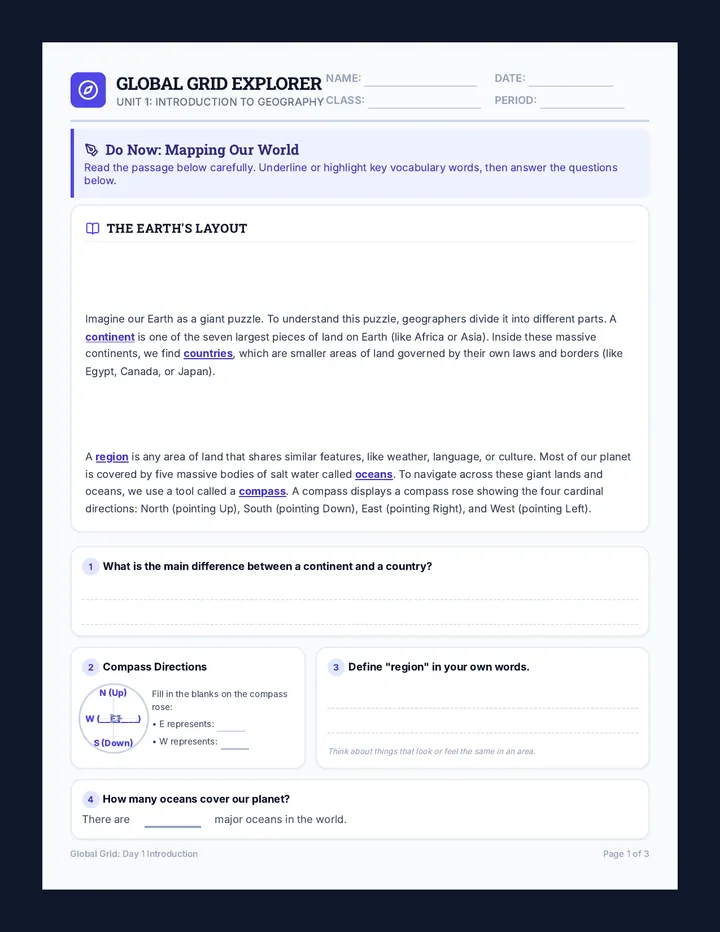
A 4-day introductory world history sequence exploring how geographic location, natural barriers, and famous trade routes shaped the rise, wealth, and power of global empires.
This sequence immerses students in the economic mechanisms that led to the Great Depression, focusing on speculation, market failure, banking panics, and global contraction. Students move beyond memorizing dates to analyzing systemic failures through simulations, primary source analysis, and causal mapping.
This sequence explores the economic drivers of the 1920s, focusing on mass production, the rise of consumer culture, and the systemic risks of credit and installment buying. Students analyze how industrial efficiency led to a middle-class boom while also creating structural weaknesses that contributed to the Great Depression.
A 5th-grade history sequence exploring the transition from the feudal Middle Ages to the early modern period. Students analyze how the devastation of the Black Death triggered economic shifts, the rise of the merchant class, and the growth of towns, setting the stage for the Renaissance.