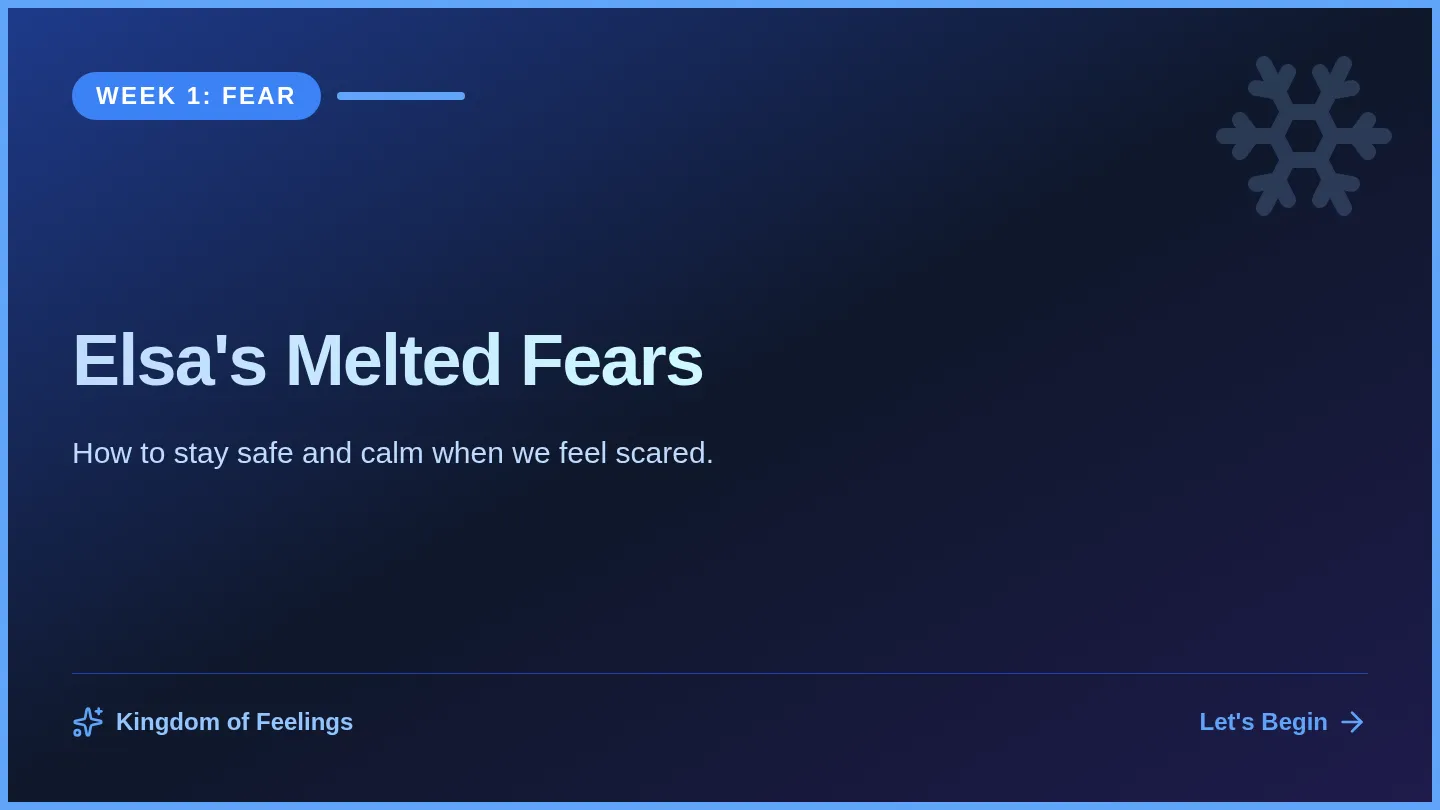
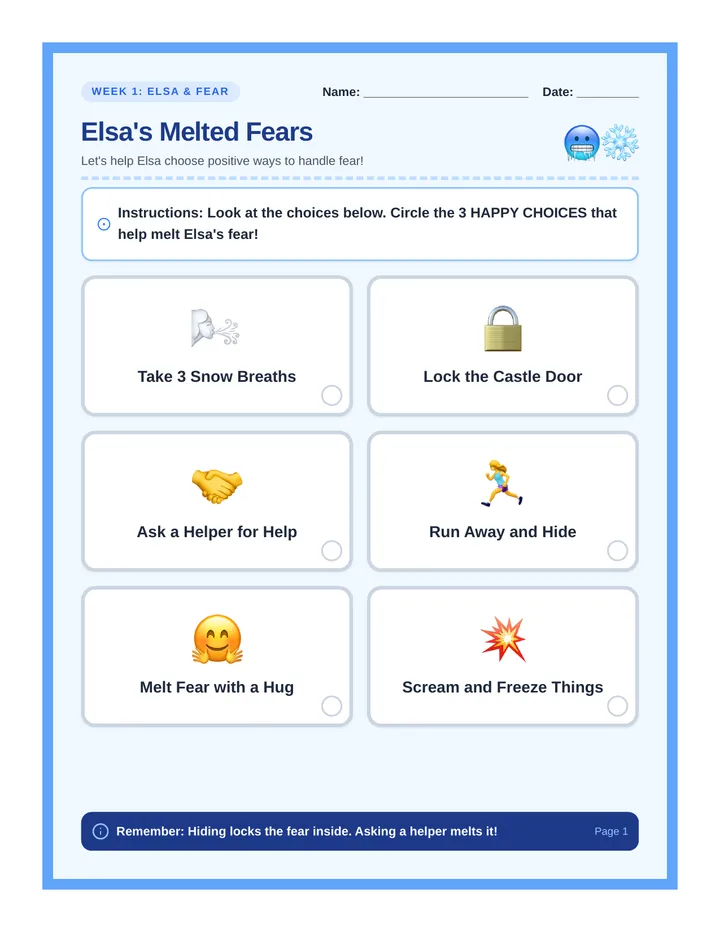
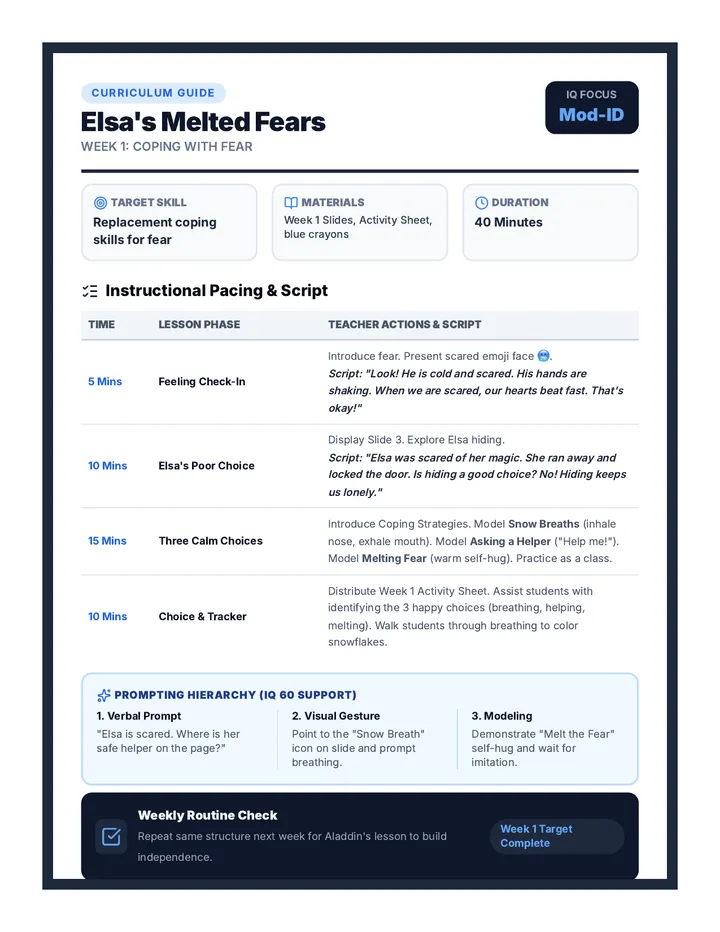
Week 1 focuses on Elsa and the feeling of fear. Students learn how Elsa shut people out and hid her magic (poor coping), and learn concrete replacement behaviors: taking deep 'snow' breaths, asking a trusted helper, and melting their fears.
A 5-week emotional regulation curriculum for students with moderate intellectual disabilities (approx. 60 IQ). Using beloved animated characters (Elsa, Aladdin, Ursula, Wreck-It Ralph, and Po from Kung Fu Panda), students learn to identify poor coping choices and practice concrete, positive replacement behaviors through highly visual slide decks, consistent routine-based teacher guides, and simple visual choice activities.
A neurodiversity-affirming social skills and cues lesson utilizing visual-heavy, comic-strip style social stories. Students explore conversations, reading facial expressions, personal boundaries, and coping with unexpected changes through interactive activities.
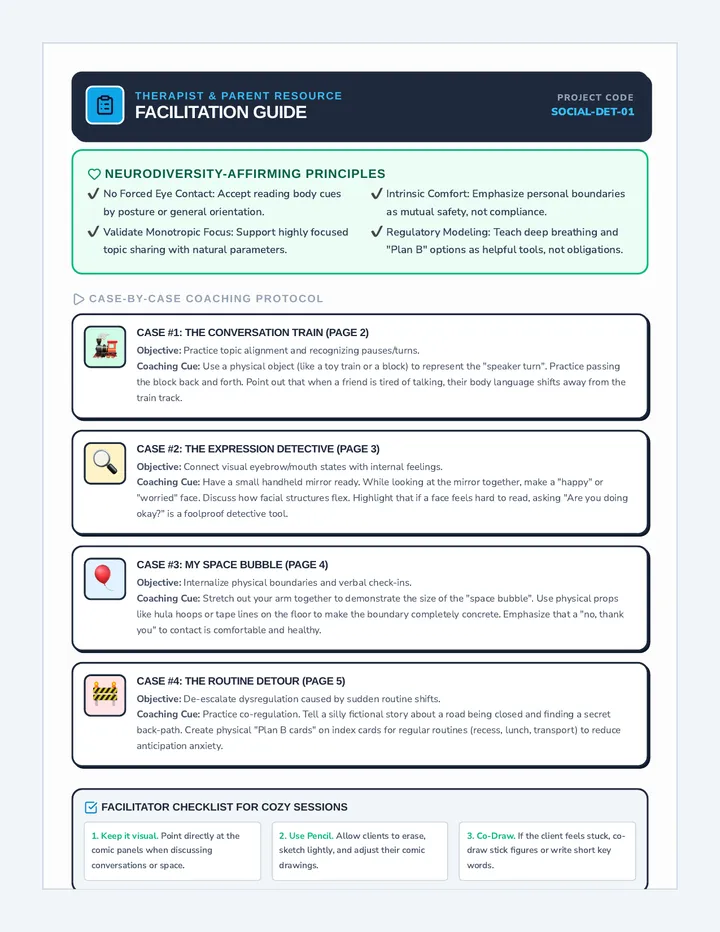
A parent and therapist facilitation guide for the Social Detective Comic Booklet. Provides pacing suggestions, neurodiversity-affirming interaction guidelines, and sensory-friendly extension activities.
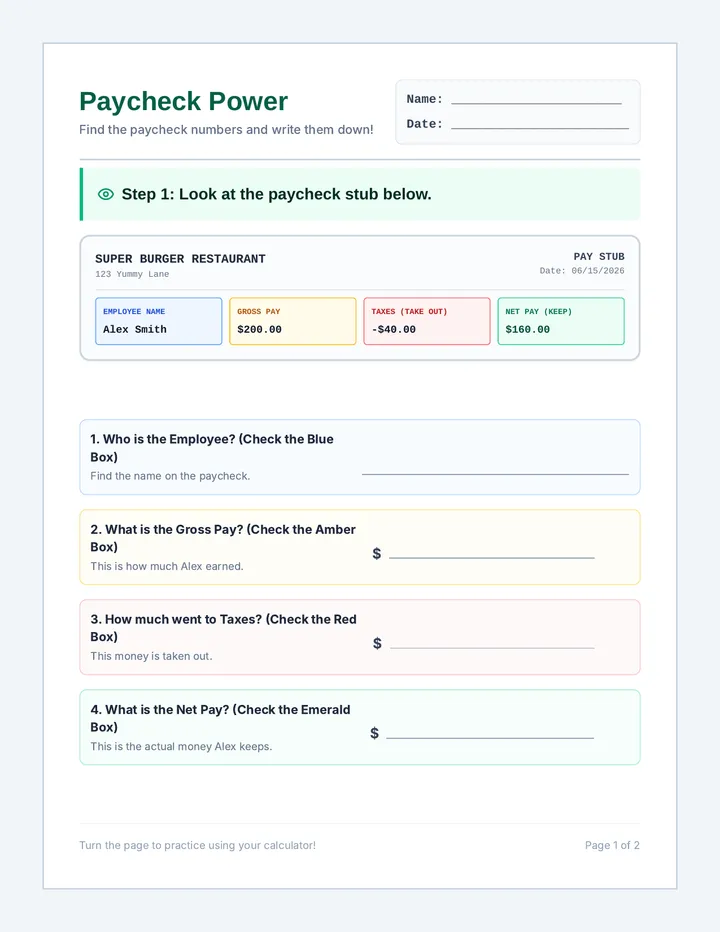
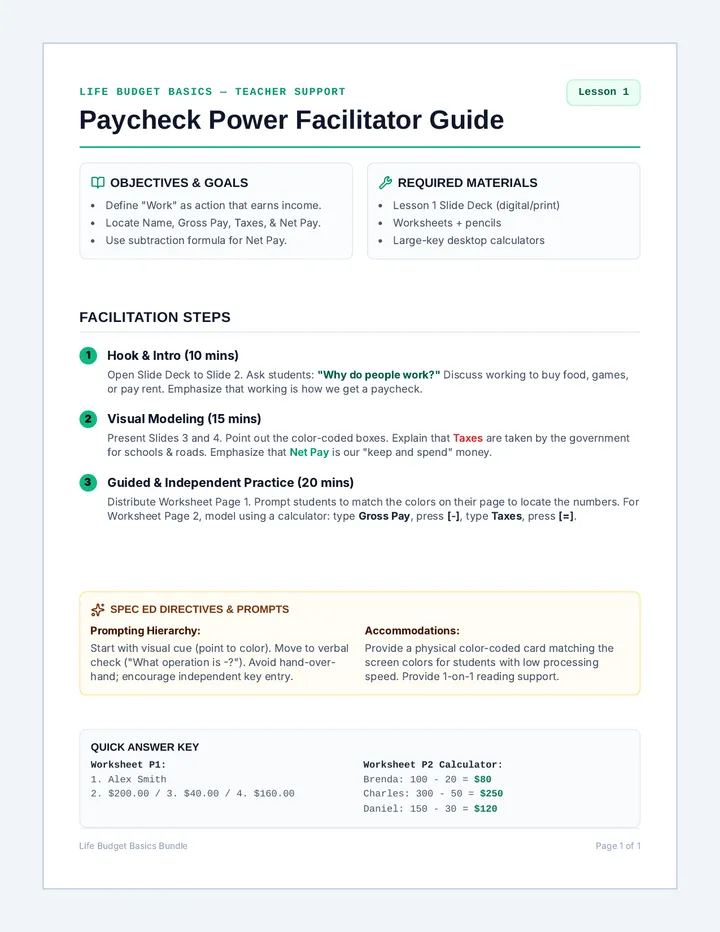
A highly visual, step-by-step budgeting unit designed for high school students with severe special needs. It focuses on earning income, distinguishing wants from needs to save money, and using a calculator to pay bills.
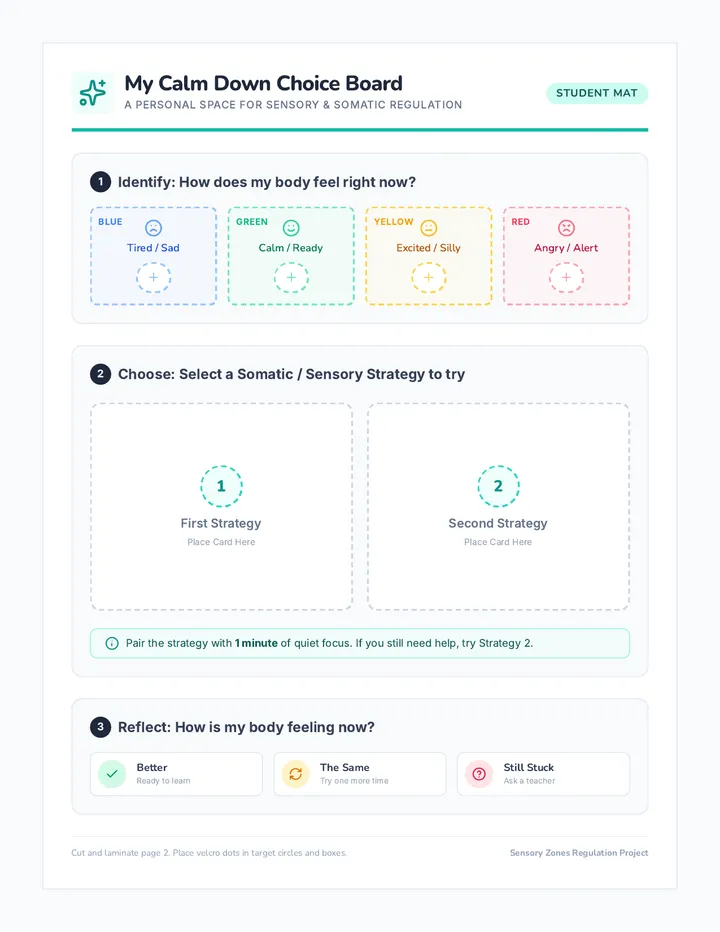
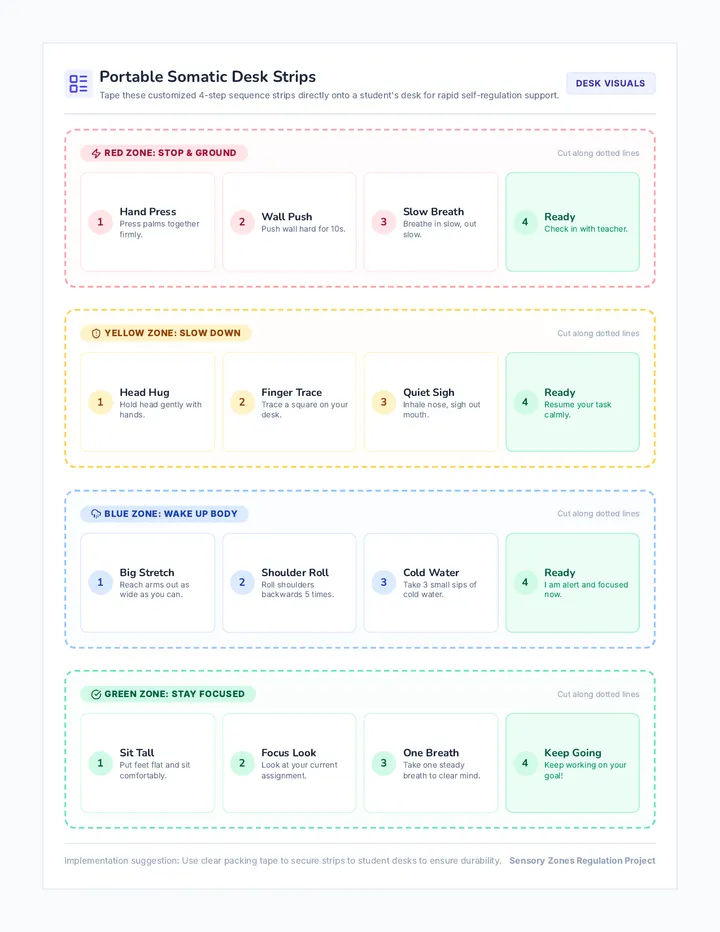
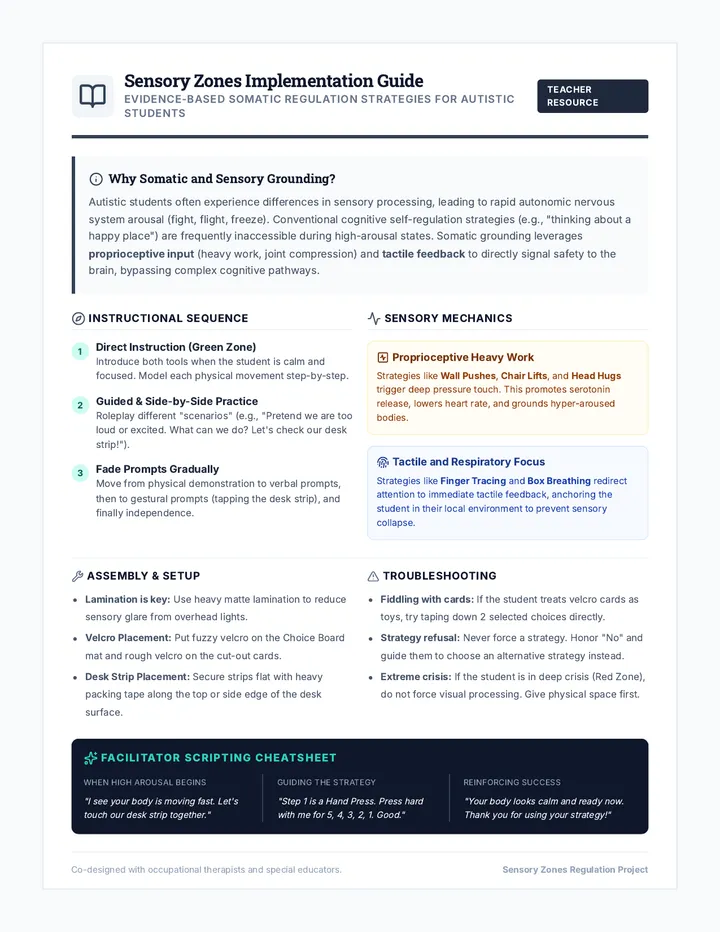
An autism-friendly collection of sensory and somatic self-regulation materials that combine the Zones of Regulation with physical grounding techniques. Includes interactive strategy choice boards, portable desk-sized visual strips, and a comprehensive teacher implementation guide.
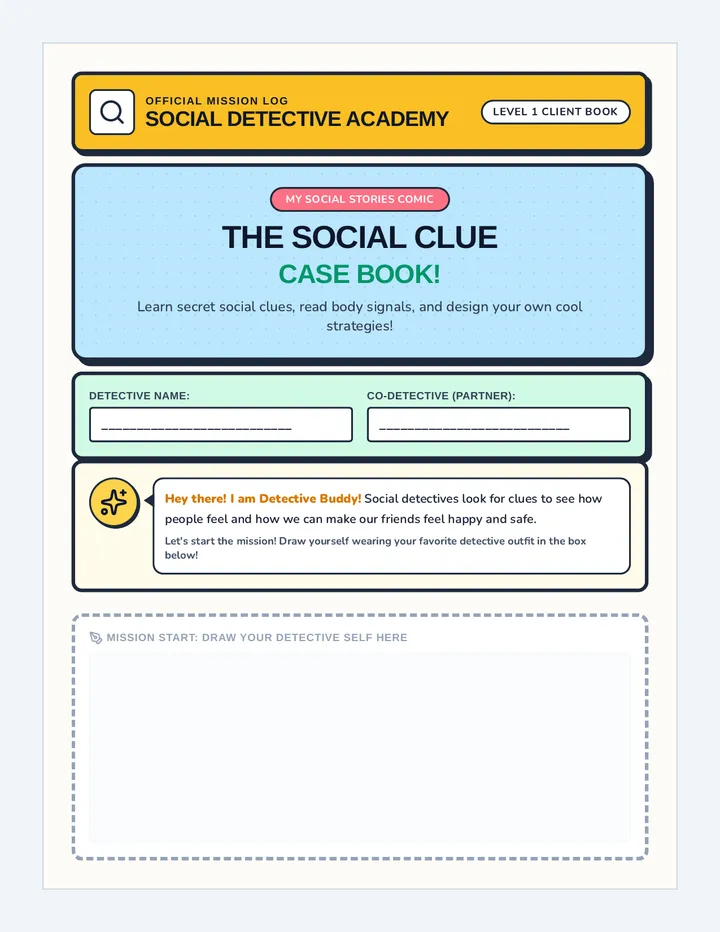
An interactive, visual-heavy comic-strip style social stories booklet for autistic clients. Features stories and writing/drawing spaces for Conversation Cues, Reading Expressions, Personal Space, and Handling Unexpected Changes.
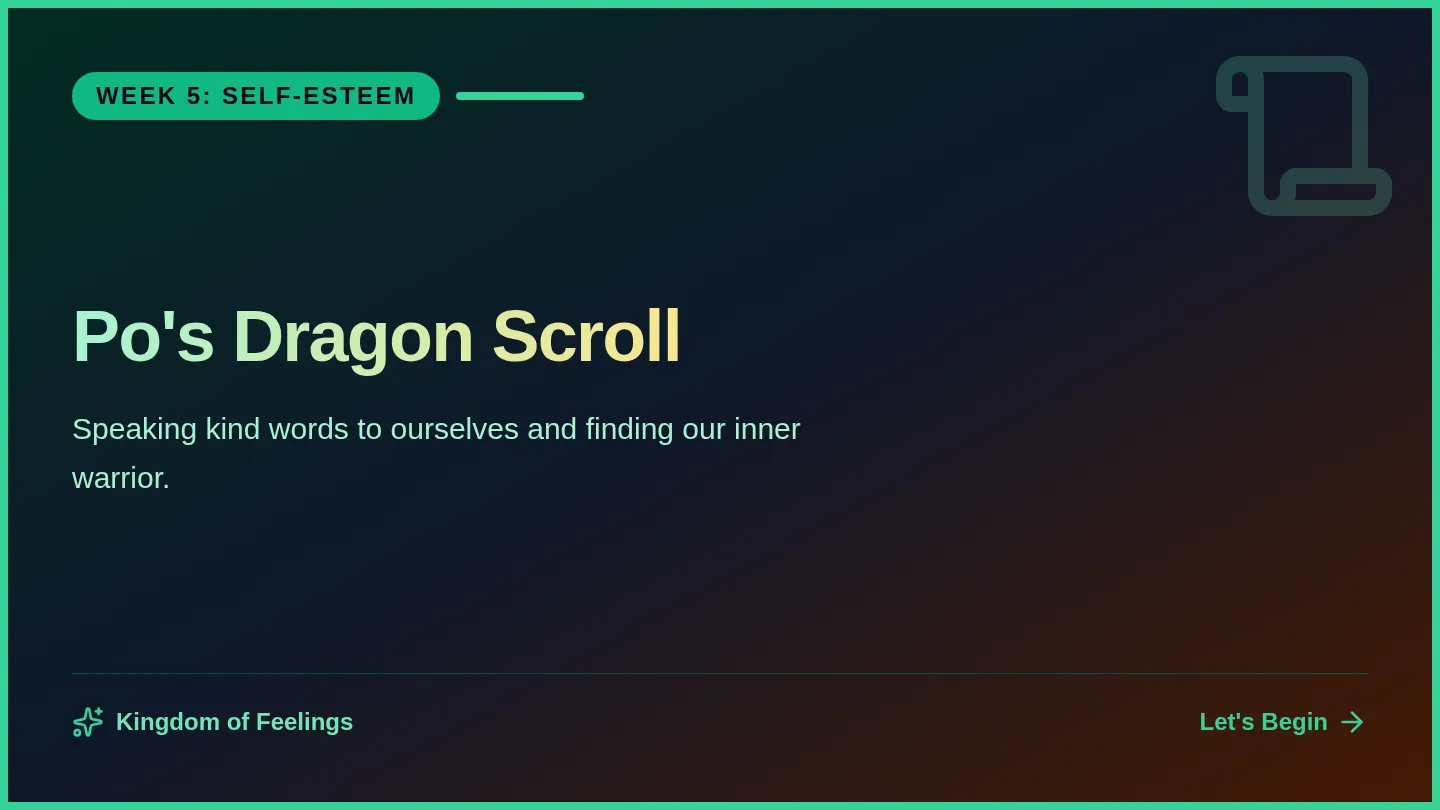
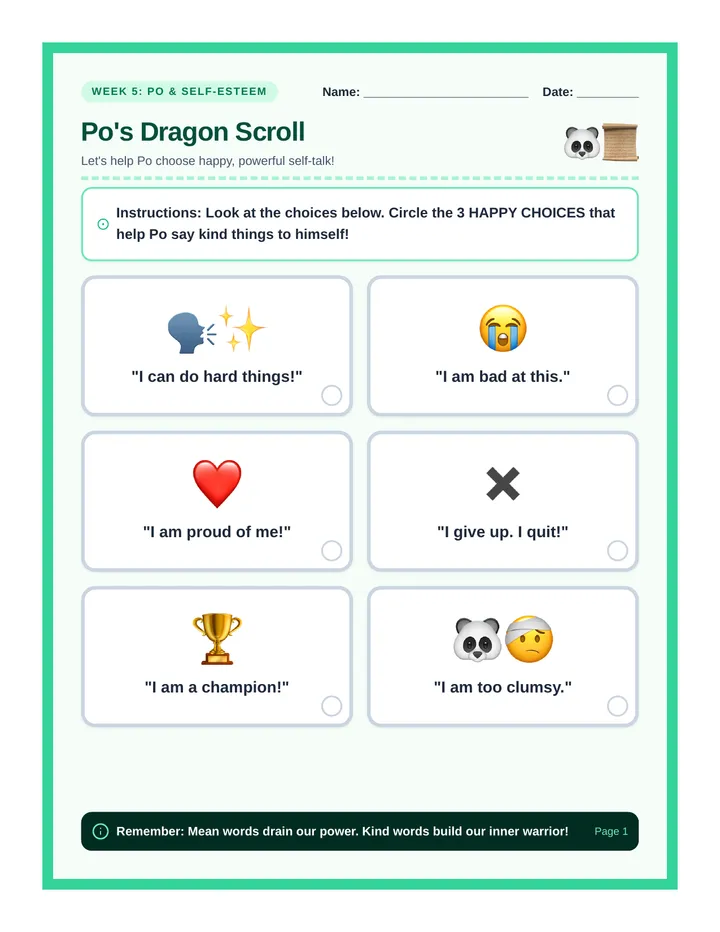
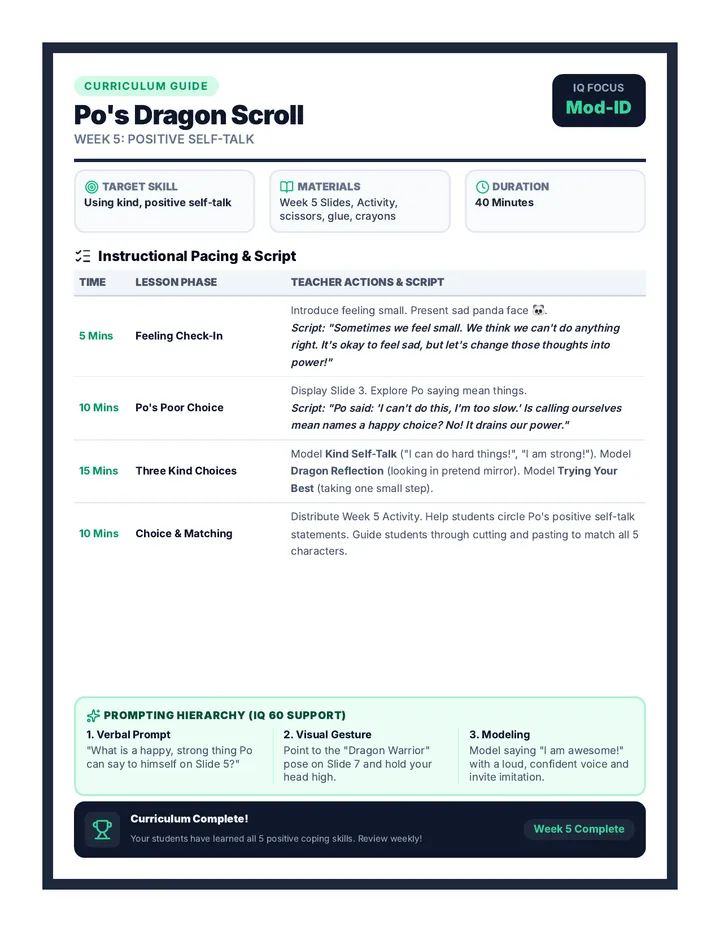
Week 5 focuses on Po and low self-esteem. Students explore how Po felt clumsy and said mean things to himself (poor coping), and learn replacement behaviors: positive self-talk, looking in the mirror to find their inner strength, and trying their best.
A comprehensive teacher implementation guide explaining how to introduce, model, and maintain sensory choice boards and desk-sized visual strips. Features evidence-based instructional strategies and troubleshooting tips for autistic students.