Shift Log Worksheet
An adult-themed CVC decoding worksheet using workplace scenarios, now split across two pages for better readability and focus.
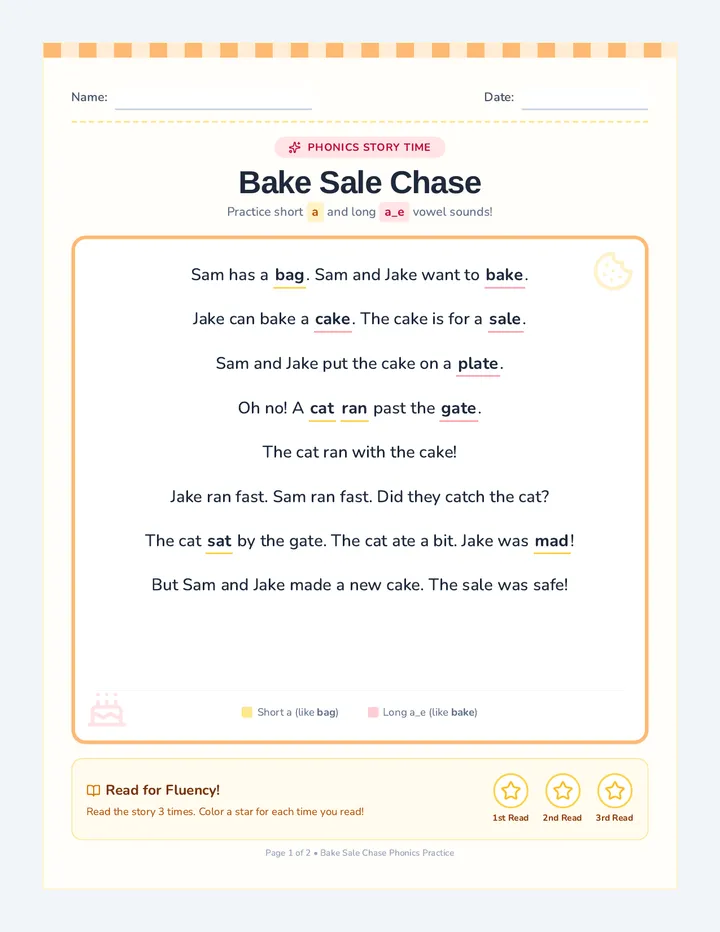
New Job Story
A decodable short story for adults about a character named Sam starting a new job, now split onto two pages for better readability and a thorough reading check.
Office Task Cards
Task cards featuring functional sight words and CVC phonics families with adult-themed example sentences. Expanded to two pages for additional practice.
Career Paths Worksheet
A worksheet focusing on consonant digraphs (sh, ch, th) using professional vocabulary and workplace contexts. Now split into two pages for easier reading and writing.
Silent E Code Story
A reading passage and matching activity focusing on CVCe (silent e) words like 'late', 'time', and 'save' within a daily life context. Now split onto two pages.
Phonics Independent Practice
An independent phonics practice log for adults, featuring daily tasks like word families, digraph identification, and functional sight word speed drills. Now formatted across two pages for better daily focus.
Adult Literacy Teacher Guide
A teacher-facing resource providing instructional scripts, facilitation strategies, and diagnostic tips for using phonics materials with adult learners. Now split into two pages for clarity and better pacing.