My Brain Toolkit Slides Faceup My Brain Toolkit
Your Meds, Your Voice, Your Success
The ADHD Edge
Your ADHD brain isn't "broken"—it's wired for intensity and creativity. Check out these superpowers:
Creativity
Thinking outside the box and finding unique solutions.
Hyperfocus
Deep diving into the things you are truly passionate about.
Empathy
Being super-tuned to how other people are feeling.
Tuning Your Engine
Think of medication like a tuning kit . It doesn't take away your personality or your creativity.
It just helps "dial in" the focus so your superpowers can shine in places like math class or during tests!
Precision Tools
Your Toolkit
The Spotlight
(Methylphenidate)
It boosts Dopamine . This helps you ignore the loud hallway or the bird outside and stay "locked in" on your math or reading.
The Brakes
(Guanfacine)
It strengthens your Prefrontal Cortex . This gives you that split-second to think before you react when you're frustrated or excited.
Taking Ownership
Track It
Notice how you feel. Does your "spotlight" feel bright or dim?
Report It
Tell an adult how the tools are working. Your voice is the most important data.
Partner Up
You are the MVP of your health team. We need you to lead!
Your Brain is a Powerhouse
"Medication is like glasses for your brain. It doesn't change what you see, it just helps you see it clearly."
Ready to Launch?
My Brain Toolkit Worksheet Strength-Based The Ownership Project
My Brain, My Tools, My Voice
Explorer Name:
Goal Date:
The ADHD Edge
ADHD brains are wired for intensity! Which of these superpowers do YOU have? (Check all that apply)
"Out of the Box" Creativity
High Energy & Enthusiasm
Hyperfocus (When I'm into it!)
Deep Empathy for Others
My unique strength is:
Section 1: Tuning My Engine
The Spotlight (Methylphenidate)
Helps my superpowers focus on one thing at a time.
Impact Check:
How does "The Spotlight" help me in school?
The Brakes (Guanfacine)
Helps me steer my high-energy brain in the right direction.
Impact Check:
How do "The Brakes" help me with friends?
Section 2: Why I Use These Tools
Everyone has goals. Check the 3 goals that are most important to YOU this year:
Getting homework done faster
Staying out of trouble/arguments
Improving my grades or test scores
Feeling more "ready" for sports/clubs
Getting better sleep at night
Feeling proud of my work
Section 3: My Advocacy Plan
Using Your Voice
When you use these tools, you are the CEO . If something feels off, tell a partner!
Scenario: You feel extra tired today.
Write what you would say to your teacher or parent:
My Support Team
Parent/Guardian
Doctor
Teacher/Psych
*Celebrate your brain—it's one of a kind!
ADHD Support Teacher Guide Ownership Guide
Empowering Student Voice
Instructional Strategies for Student Responsibility in Med Management
Self-Advocacy Focus
Instructional Objectives
Personal Impact
Students will describe how ADHD medication impacts their specific learning and behavioral goals in 6th grade.
Ownership
Students will identify themselves as the "MVP" of their health team and understand their role in reporting data.
Advocacy
Students will practice scripts for communicating side effects and efficacy to trusted adults.
The "Ownership Pivot"
Instead of teaching medication as something "done to" the student, frame it as a tool they use . Shift the language from clinical labels to functional metaphors.
Clinical Term
"Stimulant Rebound"
Student Ownership Term
"The 4:00 PM Frizzles" or "Spotlight Dimming"
Clinical Term
"Dopaminergic Dysregulation"
Student Ownership Term
"Radio Static" or "Fuzzy Focus"
How to Build Responsibility
1
Incorporate Student Voice in Data Collection
When collecting Conners or BASC-3 rating scales, hold a 5-minute "Student Briefing." Ask: "How would you rate your spotlight this week?"
2
The "Health Partner" List
Help the student identify specific adults at school (School Psych, Counselor, Nurse) who are "Safe to Script" with before they talk to their doctor.
Facilitator Scripts
Teaching Importance
"Your brain is like a high-performance engine. Methylphenidate is like the high-grade fuel that makes it zoom through hard work. Guanfacine is like the steering and brakes that keep you on the track. If you didn't have your fuel or your brakes, you'd still be a great engine, but it would be a lot harder to win the race. You deserve to have tools that work."
Teaching Responsibility
"The doctor is the mechanic, but you are the driver. The mechanic can look at the engine all day, but they don't know how it feels when you're taking a sharp turn at 2:00 PM. Your job is to come back and tell the mechanic: 'Hey, the brakes feel a little sticky in the afternoon.' That's how we make the car faster."
Signs of Student Ownership
Reminding parents of dose times
Describing side effects specifically
Linking med use to academic goals
Asking questions during doctor visits
My Brain Toolkit Log My Brain Toolkit Log
Weekly Performance & Balance Tracker
Week Of:
Use this log to track how your "Tools" are working each day. Your data helps your health team find the perfect balance for your brain.
Spotlight: Focus
Brakes: Calm
Day The Spotlight (1 = Dim, 5 = Bright) The Brakes (1 = Loose, 5 = Strong) Body Check Check any felt Daily Win MONDAY
|
Tired[ ] Appetite[ ] Crabby[ ]
|
|
| TUESDAY |
|
|
Tired[ ] Appetite[ ] Crabby[ ]
|
|
| WEDNESDAY |
|
|
Tired[ ] Appetite[ ] Crabby[ ]
|
|
| THURSDAY |
|
|
Tired[ ] Appetite[ ] Crabby[ ]
|
|
| FRIDAY |
|
|
Tired[ ] Appetite[ ] Crabby[ ]
|
|
Weekly Observation
Look at your scores above. Was there a specific time of day when your "Spotlight" felt the best?
Advocacy Check-In
Did you tell an adult about how you were feeling this week? If so, who?
I talked to:
"Speaking up is how you stay in the driver's seat!"
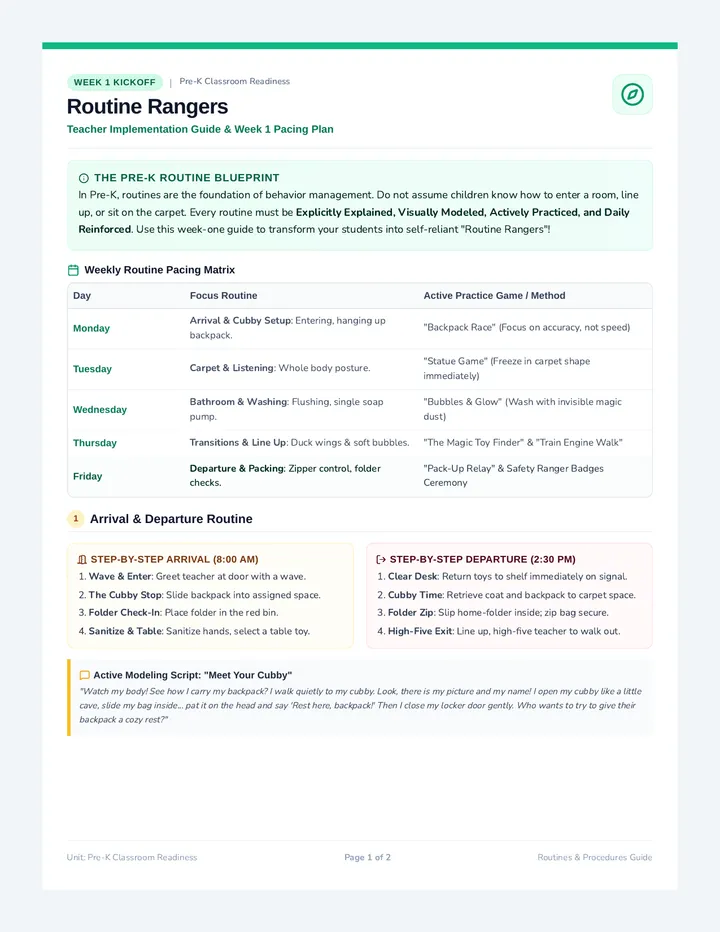
ADHD Support Parent Guide Partnering for
Brain Balance
A Parent's Guide to ADHD Medication Support
Home Guide
Your child is participating in the "My Brain Toolkit" lesson. This program empowers 6th graders to understand their ADHD medications—not as something "done to them," but as tools they can master.
1
Understanding the Tools
Methylphenidate
The "Spotlight" Tool
Boosts Dopamine to help your child filter out distractions and stay focused on academic tasks.
Guanfacine
The "Brakes" Tool
Strengthens the Prefrontal Cortex to help with impulse control, emotional regulation, and working memory.
2
The Logic
Doctors often prescribe these together because they target different parts of the brain. While one helps with learning/focus , the other helps with behavior/emotions .
Why it works:
• Smoother transitions when stimulants wear off
• Better all-day emotional balance
• Improved classroom participation
*This guide is for educational purposes. All medical decisions should be made in consultation with your child's provider.
Brain Toolkit Quiz Brain Toolkit Quiz
Knowledge Check: Focus & Regulation
Name:
Date:
Section 1: The Tools
1. Which medication is often called the "Spotlight" because it increases Dopamine to help you focus?
Guanfacine (Intuniv)
Methylphenidate (Concerta)
2. Where in the brain does Guanfacine (the "Brakes") primarily work to help with impulse control?
The Visual Cortex
The Prefrontal Cortex
3. Why do doctors sometimes prescribe a "Tag-Team" of both medications together?
Because one helps with focus while the other helps with emotions and behavior.
Because they are exactly the same and you just need more of them.
Because it makes the medication taste better.
Section 2: Truth Check
True or False:
4. It is the student's responsibility to notice side effects like fatigue and tell an adult.
T F
5. School psychologists recommend the exact dose and type of medicine for students.
T F
6. Feeling "extra crabby" or not hungry can be important "data" for your health team.
T F
Side Effect Match:
Draw a line to match the medication to its common side effect:
Methylphenidate Feeling Sleepy / Tired
Guanfacine Not Feeling Hungry
Section 3: Self-Advocacy
7. Scenario: You are in science class and you realize your "Spotlight" (focus) has worn off and you're feeling very distracted. What is one specific thing you could do or say to take ownership of this situation?
*Knowledge is power! Great job taking charge of your brain tools.
Brain Toolkit Quiz Answer Key Answer Key
Brain Toolkit Quiz
Facilitator Scoring Guide
Scoring Guide
Section 1: Multiple Choice
1
Correct Answer: Methylphenidate (Concerta)
2
Correct Answer: The Prefrontal Cortex
3
Correct Answer: Because one helps with focus while the other helps with emotions and behavior.
Section 2: Truth Check & Matching
T/F Answers:
4. True
5. False (Psychologists monitor; they don't prescribe.)
6. True
Matching Key:
• Methylphenidate → Not Feeling Hungry
• Guanfacine → Feeling Sleepy / Tired
Section 3: Scenario Response
7
Self-Advocacy Acceptable Responses:
• "I would tell my teacher that my focus tool (medication) feels like it's wearing off."
• "I would make a note in my Brain Toolkit Log to show my parents and doctor."
• "I would tell my health partner at school (nurse/psychologist) so they can track the data."
Scoring Note
This quiz is designed to verify that the student understands their role in the medication management process. The most important answers are 4, 5, and 7, as they directly relate to self-advocacy and school-based monitoring .
ADHD Support Teacher Guide Strength-Based Ownership Guide
Strength-Based Advocacy
Integrating ADHD Strengths into Medication Management
Growth Mindset
The Strength-First Approach
The Paradigm Shift
"Medication is not a 'fix' for a broken brain. It is a 'tuner' for a high-performance engine."
When students view ADHD as a set of strengths (Creativity, Hyperfocus, Empathy), they are more likely to engage in medication management as a form of **self-optimization** rather than **shame-based compliance**.
Key Superpowers to Highlight:
Hyperfocus (Deep Interest)
Divergent Thinking
High Social Sensitivity
Resilient Problem Solving
Facilitator Talking Points
On ADHD Strengths
"Did you know some of the world's greatest inventors and artists have ADHD? It's because their brains can jump between ideas faster than anyone else's. Your brain is like a race car—it's fast, it's powerful, and it's designed to win. But a race car needs a specialized team and the right fuel to stay on the track. That's what your toolkit is for."
On Responsibility
"The best race car drivers in the world talk to their team during the whole race. They don't just sit there and drive. They say, 'Hey, the left tire feels a bit shaky,' or 'I need more fuel.' When you tell us how your tools are working, you are being the professional driver of your own brain."
Student Success Check
Encourage students to identify **when** their ADHD strengths are most helpful. This helps them understand that medication doesn't suppress their "spark," but rather supports them in using it at the right moments.
Example Question:
"When does your 'Hyperfocus' help you outside of school?"
Example Question:
"How does having 'Big Emotions' make you a better friend?"
Facilitator Key
Refining the "Why"
Ensure students understand the "Glasses Analogy" : Medication doesn't change your brain, it just clarifies the signal. If a student says medication makes them feel "flat" or "not like themselves," that is critical data to report to the doctor immediately.
The Self-Advocacy Script
Goal: Transition from "I don't like my meds" to specific, actionable feedback.
Vague Statement
"I'm just tired."
Ownership Statement
"My 'Brakes' (Guanfacine) feel a little too heavy after lunch. I'm having a hard time staying awake for science."
My Brain Toolkit Handout My Brain Toolkit
Student Reference Handout
The ADHD Edge
Creativity
Thinking of ideas others might miss.
Hyperfocus
Deep diving into things you love.
Empathy
Tuned into people's feelings.
Energy
Bringing passion to projects.
How Your Tools Work
The Spotlight
Methylphenidate
Boosts Dopamine to help your "Spotlight" stay focused while filtering out the noise.
The Brakes
Guanfacine
Strengthens your Prefrontal Cortex to help you steer your reactions and stay calm.
Being the CEO
You are the expert on how your brain feels. Your voice is the most important "data"!
When to speak up:
• If you feel "flat"
• If tools wear off early
• If you feel extra tired
Who to tell:
• Parents/Guardians
• Your Doctor
• Your Teacher
*Celebrate your unique brain!