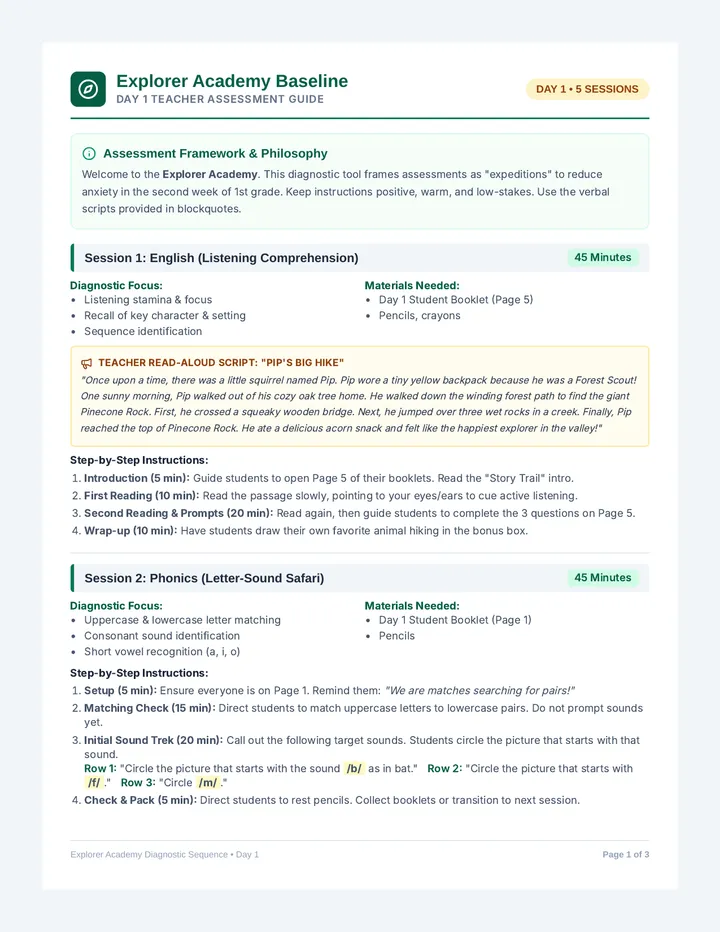
A systematic, multi-sensory phonics module designed to build foundational literacy skills through tactile, auditory, and visual reinforcement. This module supports learners of all ages in mastering decoding and early comprehension.
A comprehensive unit focused on teaching 3rd-grade students how to ask and answer questions using textual evidence, specifically focused on the high-interest topic of Extreme Weather.
A unit focused on RI.3.1 (Asking and Answering Questions) using historical biographies to build reading comprehension and evidence-based writing skills.
A collection of parent-facing resources for supporting sensory processing and proprioception at home for students across all age ranges, from elementary to high school.
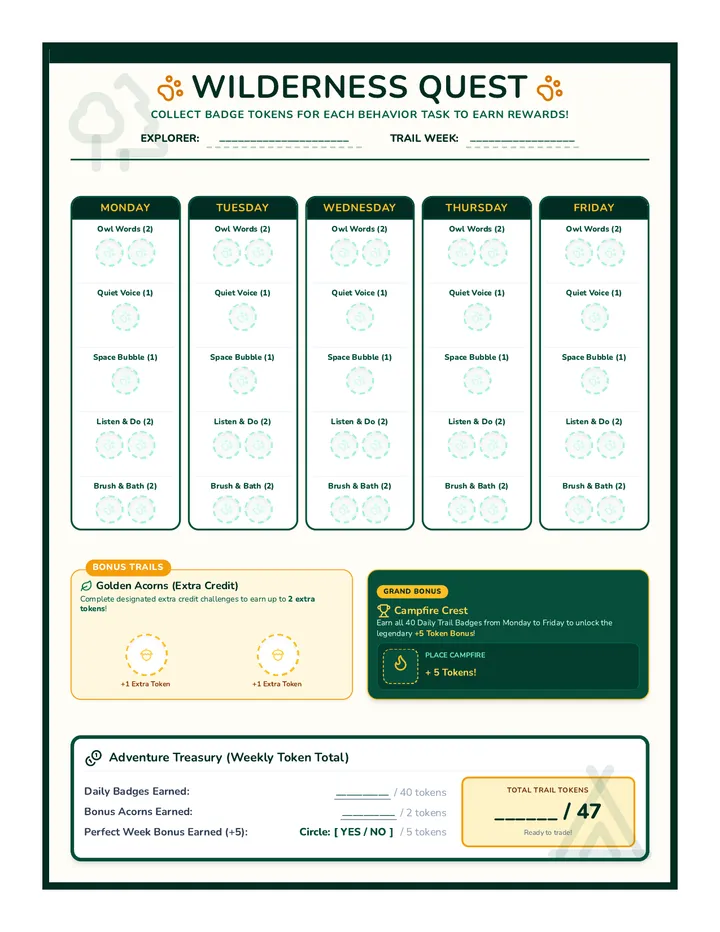
A comprehensive set of visual and physical resources to implement a non-food, non-toy reward system in a second-grade classroom.
A mastery-based sequence designed to turn students into dictionary experts. Covering navigation basics, guide word logic, and the nuances of multiple definitions.
A 4-day small group intervention focused on using context clues (definition, example, synonym, and antonym) supported by visual illustrations to determine the meaning of unknown words. Students act as 'Word Detectives' to solve vocabulary mysteries.
A 5-day EOG review sequence for NC RL.3.3, focusing on character traits, motivations, and how their actions drive story events through an architectural 'blueprint' theme.
A 9-day novel study for Number the Stars centered on 5th Grade ELAR TEKS, focusing on character development, plot analysis, and historical context through the lens of a Resistance Secret File.
A comprehensive guide to identifying and coding open and closed syllables using the Orton-Gillingham approach, designed specifically for first-grade English Language Learners.
A 3rd-grade vocabulary sequence focused on helping multilingual learners distinguish between synonyms, antonyms, and related-but-not-similar words (thematic associations).
A multi-sensory phonics sequence designed for preschool special education students to master letter recognition through a fun detective-themed curriculum.
A unit focused on play structure, fluency, and social-emotional problem solving through mystery-themed scripts. Students analyze plot elements while practicing performance skills.
A foundational literacy series focusing on individual letter recognition, phonics, and formation for early learners.
A series of three progressive lessons for special education students to master money word problems, from basic change-making to multi-step calculations with tax. Includes visual aids and simplified vocabulary to support diverse learners.
A set of visual supports and interactive activities designed to help students with ASD understand the consequences of elopement and learn safe replacement behaviors.
A collection of resources designed to help students with autism navigate difficult transitions and maintain safe body behaviors through visual supports and social narratives.
A collection of simplified Greek myths designed for early readers and students with IEPs, focusing on foundational reading skills and basic comprehension through symbol-supported text.
An introductory unit on William Shakespeare designed for 2nd grade students, focusing on character, setting, and plot in simplified versions of his famous plays.
A two-day instructional sequence for 2nd grade focusing on author's purpose, paragraph structure, and figurative language in fiction and informational texts. students act as "Meaning Makers" to decode how authors build stories and facts using specific structural and linguistic tools.
A unit focused on mastering pointer words (demonstratives) to help students describe location and quantity with precision in their writing and speech.
A developmental fluency program designed to guide a student from 30 WCPM to 85 WCPM. This sequence features four thematic levels focused on nature, emotional regulation, and self-confidence, aligned with late 1st and early 2nd-grade expectations.
A comprehensive alphabet recognition unit focusing on receptive identification of both uppercase and lowercase letters through engaging themes and randomized assessment.
A comprehensive 9-week listening comprehension curriculum designed for 1st-grade self-contained special education students, focusing on visualizing, predicting, sequencing, and retelling.
A 9-week ELA Phonics and Reading curriculum designed for 2nd-grade special education students. It uses a nature-themed 'Word Woods' metaphor to guide students through CVC words, blends, and long vowels with multi-sensory support.
An intensive investigative unit on Franz Kafka's *The Metamorphosis* following the North Star/Uncommon Schools instructional model. The unit focuses on the thematic intersection of labor, identity, and dehumanization. Students analyze Gregor's alienation from his family and society through a structured rigorous framework including vocabulary acquisition, character identification, and thematic synthesis.
A comprehensive 3-week behavioral intervention designed for a kindergarten student struggling with physical aggression and impulsivity. The plan uses a 'Hero Training' theme to build empathy, teach gentle play, and improve social interactions through visual supports and structured reflection.
A two-lesson small group sequence for 3rd grade English Learners focusing on multiple-meaning words, synonyms, and antonyms. The sequence uses a 'Word Lab' theme to engage students in scientific word analysis through visuals, sentence stems, and decodable texts.
A foundational skills unit covering literacy progress tracking and early numeracy strategies for decomposition and missing addends.