An engaging 8-slide presentation for whole-class or small-group instruction. Features high-contrast visuals, interactive sound-identification games, and a gross motor "stomp" break to introduce the /t/ sound.
A simplified scenario-based practice worksheet for students using AAC or who are minimally verbal. Features clear icons and single-choice answers to reinforce the best Peace Petal for common conflicts.
A parent handout designed to support inclusive conflict resolution at home, providing tips for families of students who use AAC or are minimally verbal to practice the 'Peace Petals' framework.
An inclusive, highly visual slide deck for the 'Peace Petals' lesson, featuring simplified text, large icons, and symbol support to engage students who are minimally verbal or use AAC.
Visual scenario cards designed for students who are minimally verbal or use AAC. Each card features a clear, icon-based conflict and a selection of the four Peace Petals for easy communication and choice-making.
A specialized communication board for recess, featuring key vocabulary for conflict resolution, the four Peace Petals, and basic playground needs. Ideal for students using AAC or who are minimally verbal.
A visual-choice worksheet for students who are minimally verbal or use AAC, featuring large icons and simplified options for communicating recess problems and solutions.
A visual poster and a set of mini-reminders featuring high-contrast symbols and simplified text to support students who are minimally verbal or use AAC.
A teacher-facing facilitator guide for the inclusive 'Peace Petals' lesson, providing specific strategies for supporting students who are minimally verbal or use AAC.
A hands-on cut-and-paste sorting activity where students categorize visual cards into 'Body Clues' (physical signs of anger) and 'Expected Choices' (appropriate calm-down actions). Cards use neutral colors to ensure students sort based on meaning rather than color-matching.
A high-contrast, step-by-step visual poster for classroom display. It outlines a four-step process (Stop, Feel, Breathe, Choose) to help students manage anger, using large numbered icons and simple directives. All steps fit on a single page for optimal visibility.
A multi-page social story designed for students with low cognitive functioning. It uses simple language, large icons, and clear visual cues to explain what anger feels like in the body and how to make calm, expected choices.
A bank of SMART IEP goals focused on reducing peer conflict and defiance, aligned with the Conflict Commanders BIP strategies.
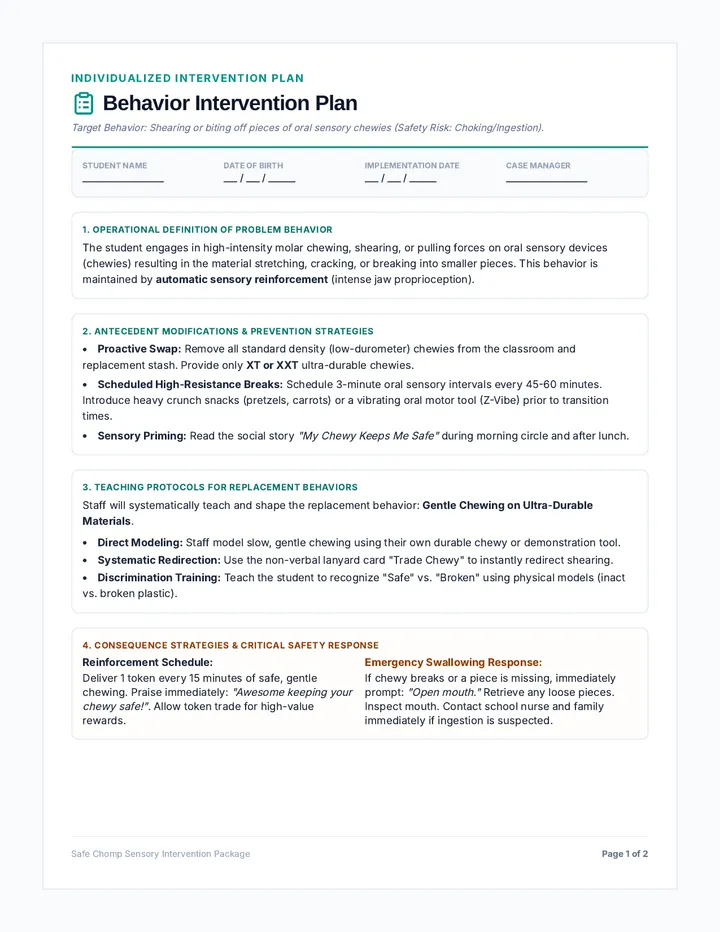
A formal Behavior Intervention Plan (BIP) document formatted for IEP inclusion, organizing strategies into target behaviors, antecedents, and replacement skills.
A tracking sheet designed for educators to record the frequency and intensity of defiant behaviors and peer arguments, with space for qualitative analysis.
A student-facing visual aid and reference sheet providing a 4-step framework for navigating peer disagreements and practicing self-regulation.
A comprehensive teacher-facing guide outlining antecedent, teaching, and consequence strategies for students struggling with defiance and peer conflict.
An answer key for teachers, providing correct responses for all expanded reading, math, and phonics activities in the Animal Friends packet.
A math worksheet focused on subtraction up to 20, using arctic animal and ice emojis as visual counting supports. Fixed counts and visibility issues.
A math worksheet focused on addition up to 20, using forest animal and plant emojis as visual counting supports. Difficulty progresses from sums of 9 to sums of 20.
A simple reading comprehension page featuring a short passage about a giraffe with three multiple-choice questions.
A simple reading comprehension page featuring a short passage about a hippo with three multiple-choice questions.
An answer key for teachers, providing correct responses for all reading, math, and phonics activities in the Animal Friends packet.
A subtraction worksheet focused on numbers up to 20, using swamp animal emojis for visual 'take away' practice and numerical equations.
A phonics activity for CVC word blending, featuring animal images and letter boxes for students to practice spelling 'cat', 'pig', 'dog', and 'hen'.
A math worksheet focused on addition up to 20, using animal emojis as visual counting supports and numeric equations for practice.
A simple reading comprehension page featuring a short passage about a lion with three multiple-choice questions supported by visual emojis.
The cover page for the Animal Friends packet, featuring student name fields and a simple warm-up activity.
A student activity sheet for counting frogs and identifying numbers, designed with high-contrast visuals, a bonus matching section, and large name/date fields for accessibility.
A two-page printable game board featuring large numbered lily pads for tactile counting practice with frog manipulatives. Optimized for visibility and physical space for up to 10 manipulatives.
A high-contrast, visual-heavy slide deck for teaching 1-10 counting with pond themes, optimized for students with cognitive delays. Includes step-by-step numbers 1-5 and a summary for 6-10.
A detailed teacher guide for a multisensory math lesson focusing on 1:1 correspondence and number recognition 1-10 using frog-themed activities.
A teacher-facing data recording sheet for the LNF assessment, including a matching scoring grid, performance summary, and qualitative observation tools.
A student-facing letter naming fluency chart featuring a randomized grid of mixed uppercase and lowercase letters for LNF assessment.
Tactile task cards with visual syllable markers designed for hands-on articulation practice and quick drills.
An articulation practice sheet featuring tiered sentence challenges for 3 and 4-syllable words, including tracking markers and a creative writing prompt.
A comprehensive word list featuring 3 and 4-syllable words with visual syllable markers to aid articulation and phonological awareness.
Nonsense word flashcards for NWF practice, categorized by difficulty (CVC, digraphs, and blends) to support decoding and recoding skills.
Instructional workshop mats featuring 3- and 4-sound Elkonin boxes and a visual finger-tapping guide for phoneme segmentation scaffolding.
A 40-week master plan for reading intervention, outlining quarterly goals, weekly focuses, and specific scaffolding tools for PSF and NWF.
A comprehensive skill checklist for assessing student progress in PSF and NWF, covering letter naming, phoneme segmentation, and decoding levels.
A visual progression chart for tracking growth in Phoneme Segmentation Fluency (PSF) and Nonsense Word Fluency (NWF) over 40 weeks, including milestone goals.
A formal service log for tracking 40 weeks of intervention sessions, including space for dates, objectives, and student performance data.
A teacher-facing tracking sheet for speech-language therapy sessions. Includes space to monitor articulation accuracy for s-blends and sentence structure mastery for plural present progressive frames. Optimized for single-page printing.
A set of 16 action verb flashcards featuring initial s-blends. Each card depicts multiple people or icons to support plural sentence structures, with a clear label for speech practice. Updated with improved visuals for 'Swinging'.
An expanded set of printable activity cards featuring 10 different 1-minute executive functioning missions to efficiently fill printing space and provide several sessions of material.
A high-energy slide deck featuring 9 high-energy 60-second missions (total of 10 including title) to practice executive functioning skills like working memory, inhibition, and cognitive flexibility.