A 20-slide interactive choose-your-own-adventure story targeting /sh/ and vocalic /r/ sounds at a 3rd-grade reading level. Includes specific choice points and heavy target density for speech therapy sessions.
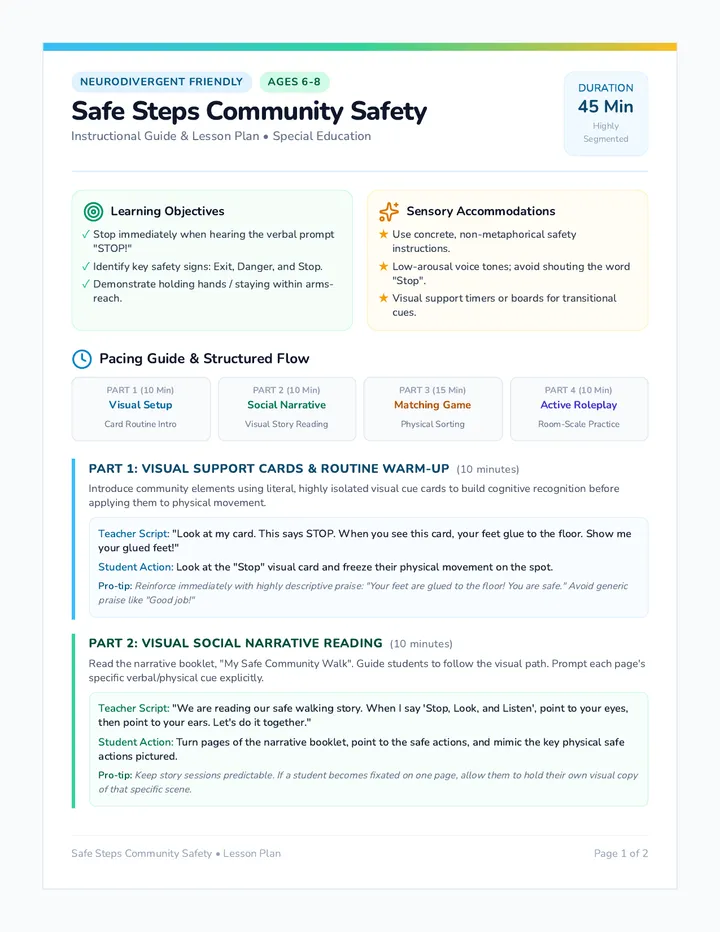
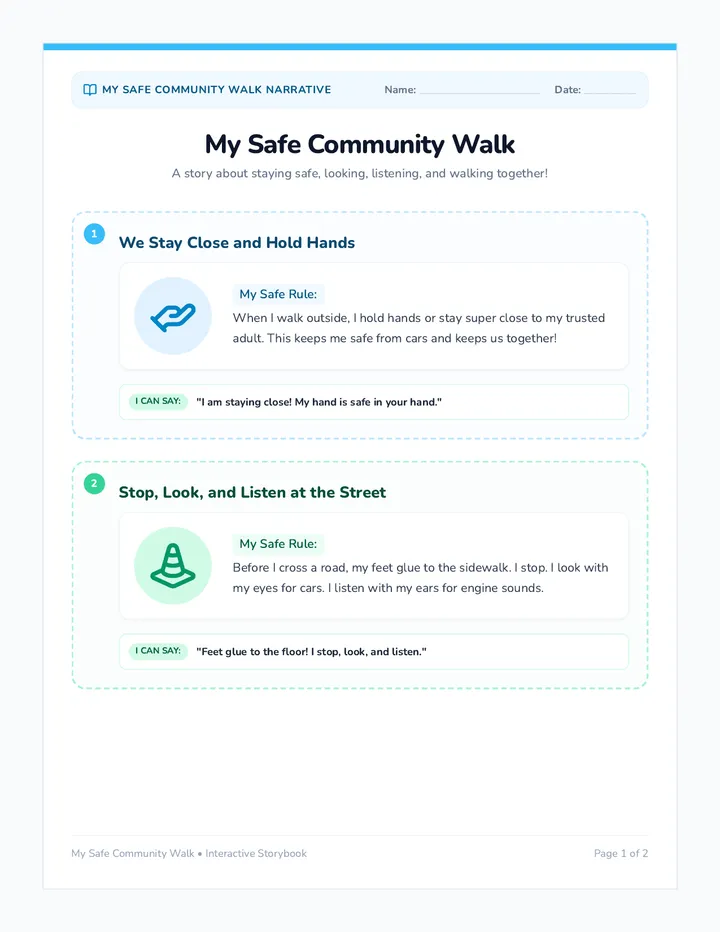
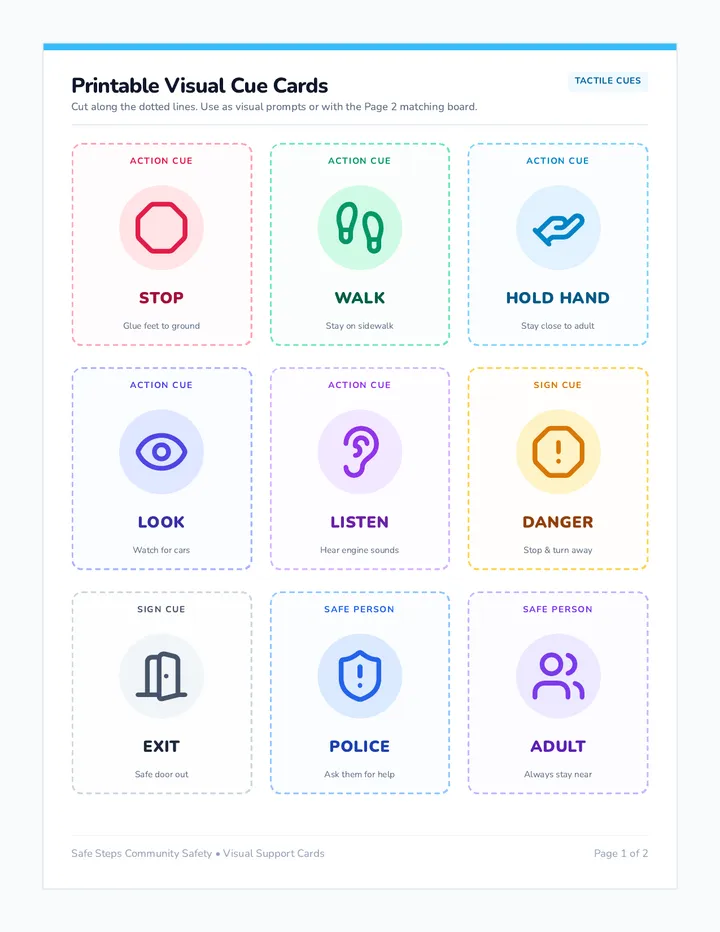
A comprehensive, sensory-friendly community safety sequence designed for young learners with autism, covering walking safety, traffic rules, getting lost, and parking lot awareness.
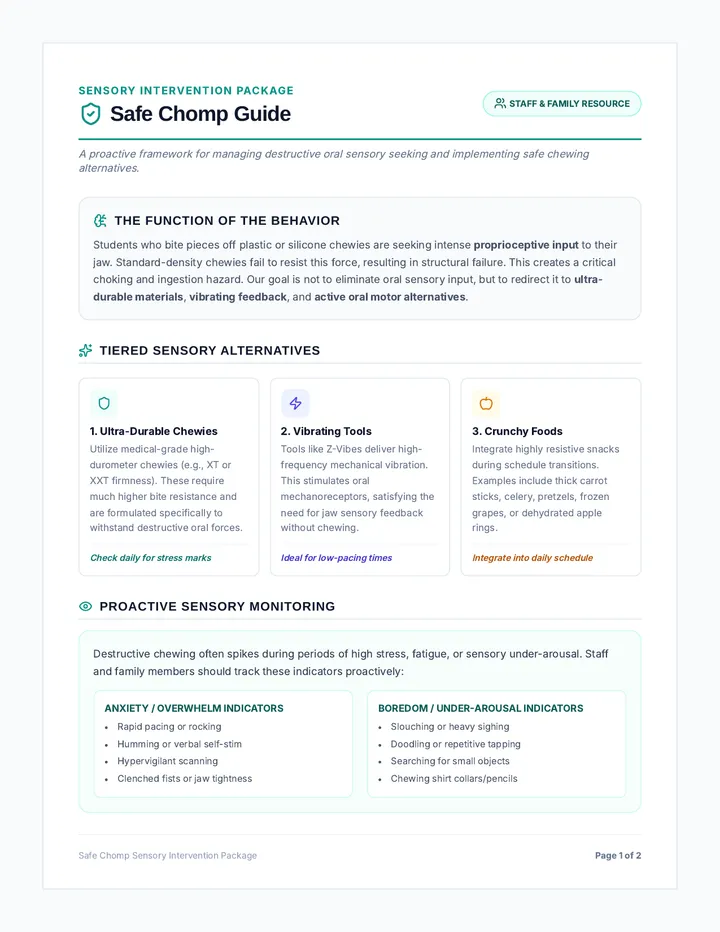
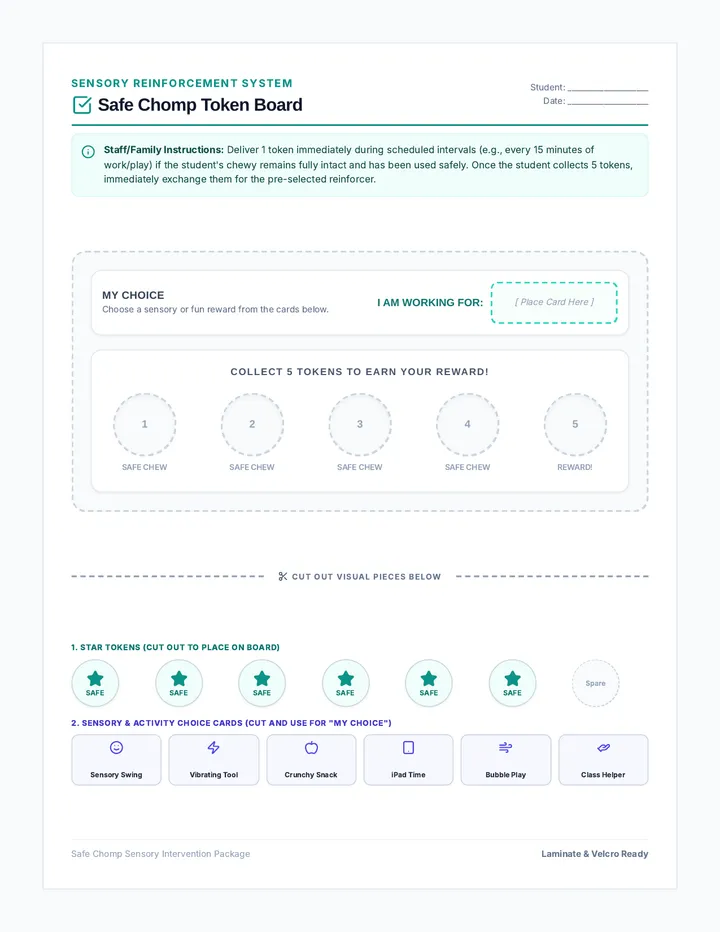
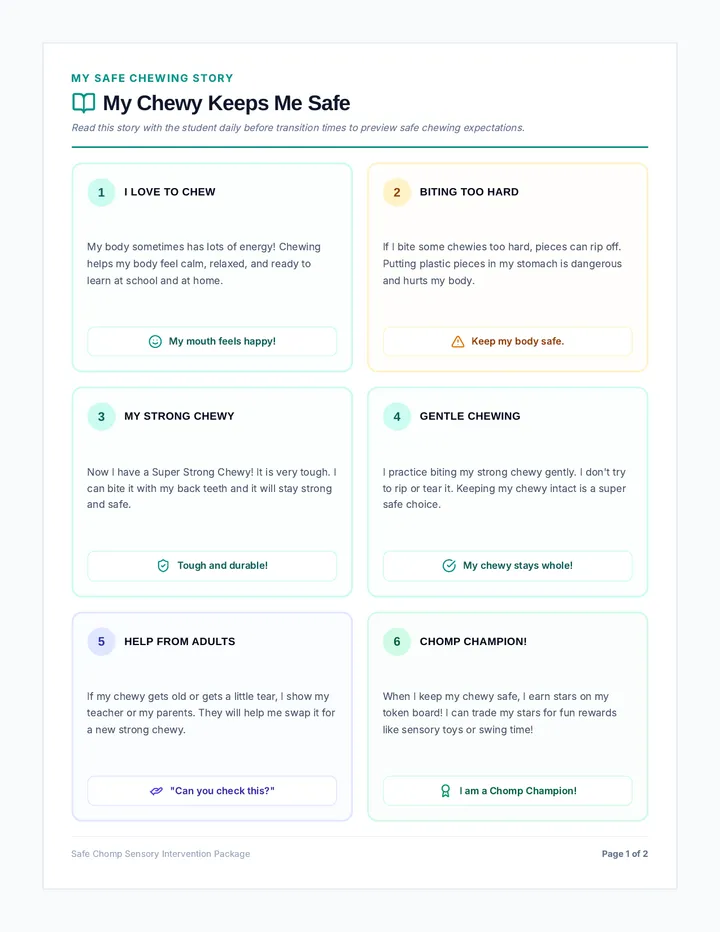
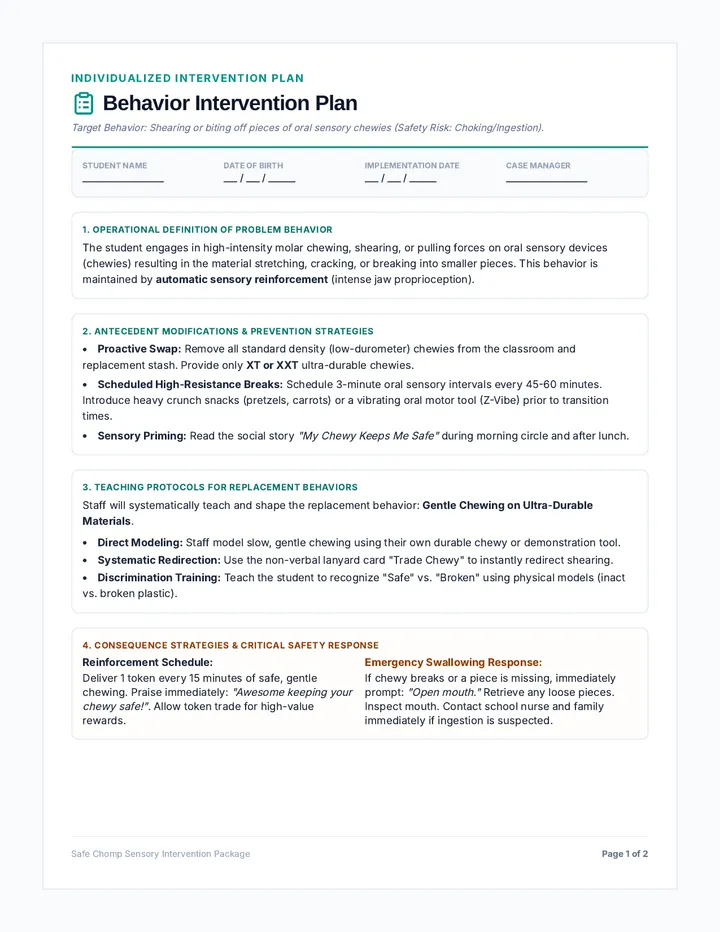
A comprehensive sensory intervention package for students with ASD who bite off pieces of their chewies. This package includes a behavior intervention plan, a staff and family guide, a social narrative with visuals, and a token board system to teach and reinforce safe replacement behaviors.
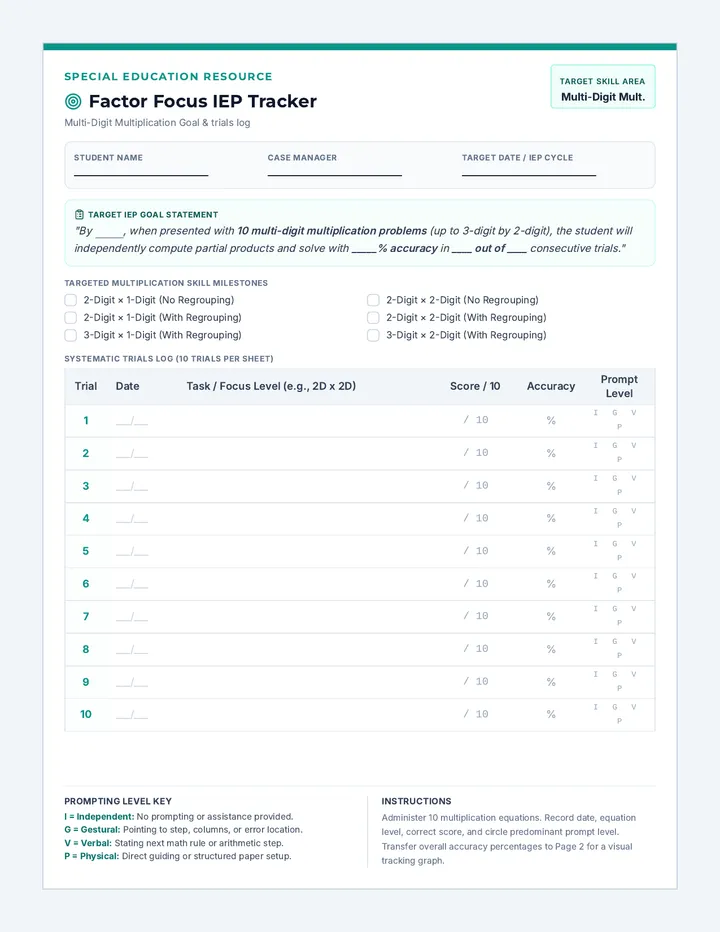
An Individual IEP Goal Tracker for multi-digit multiplication, featuring detailed trials tables, printable progress graphing, and a systematic error analysis key.
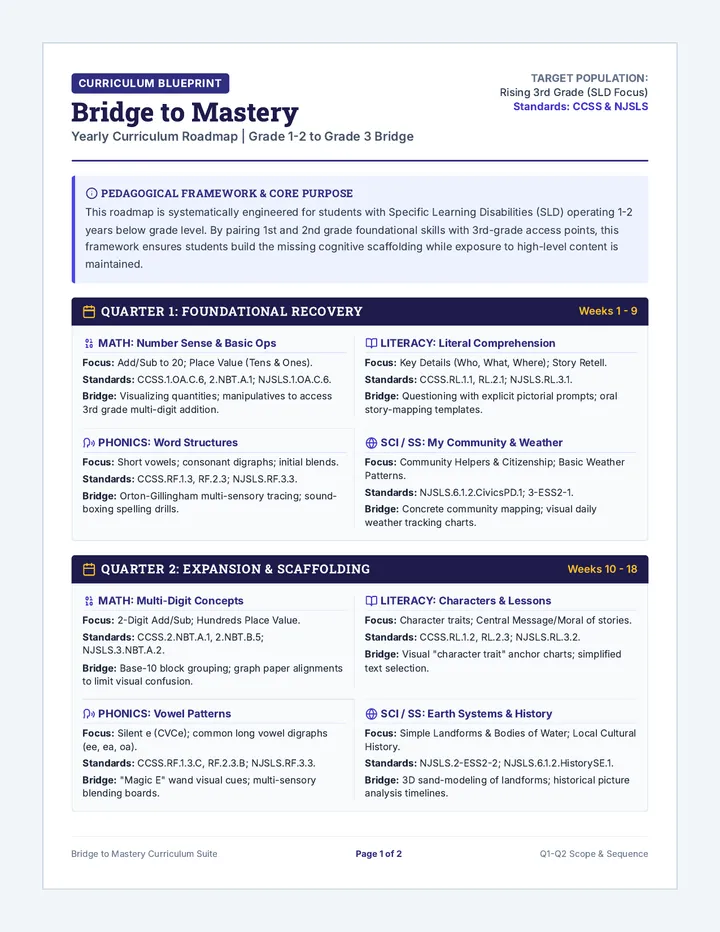
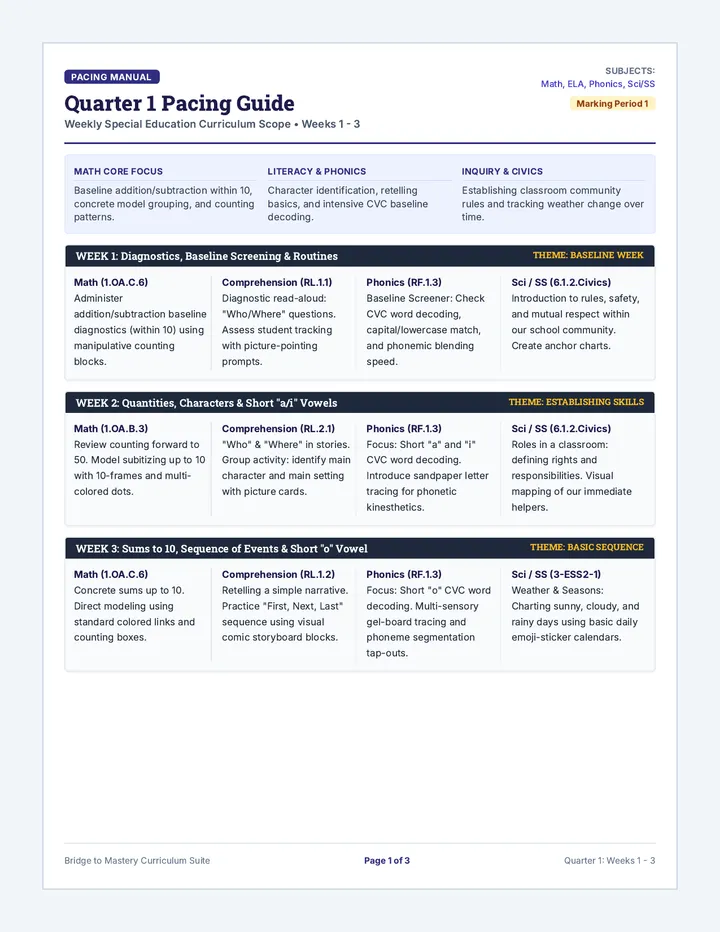
A comprehensive curriculum roadmap and detailed Quarter 1 pacing guide designed for rising 3rd-grade students with SLD operating at a 1st-to-2nd grade level. It includes diagnostic baseline screens and specialized lesson templates for self-contained special education settings, bridging CCSS and NJSLS.
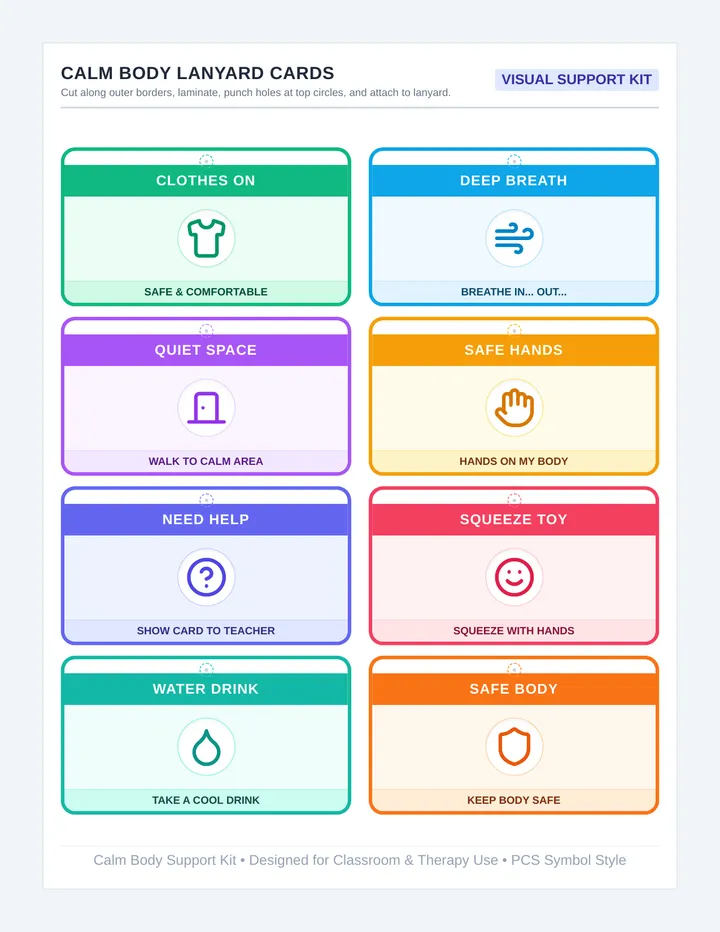
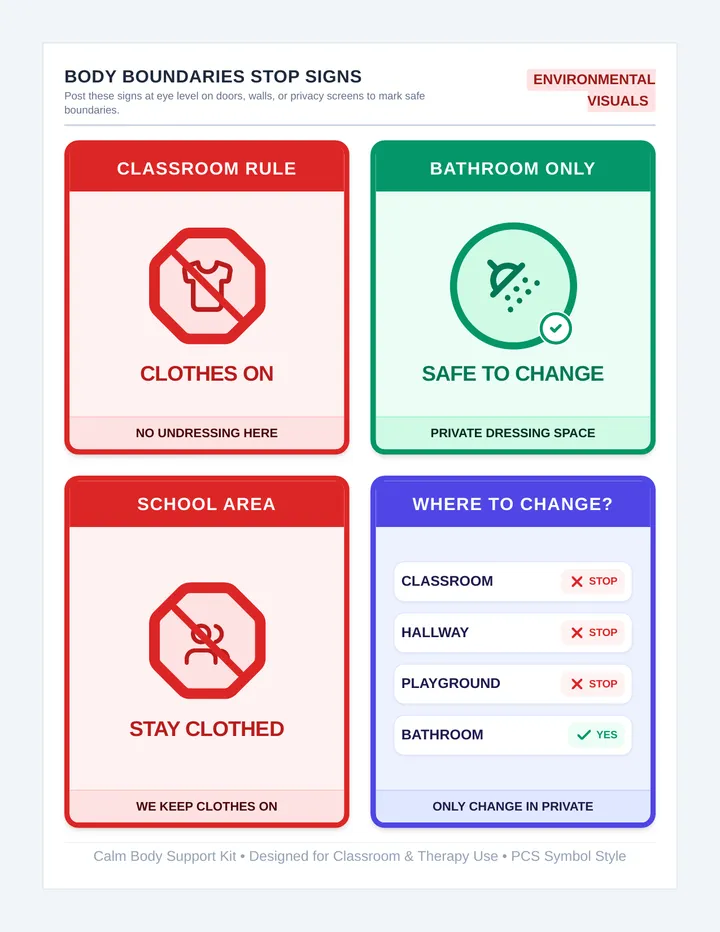
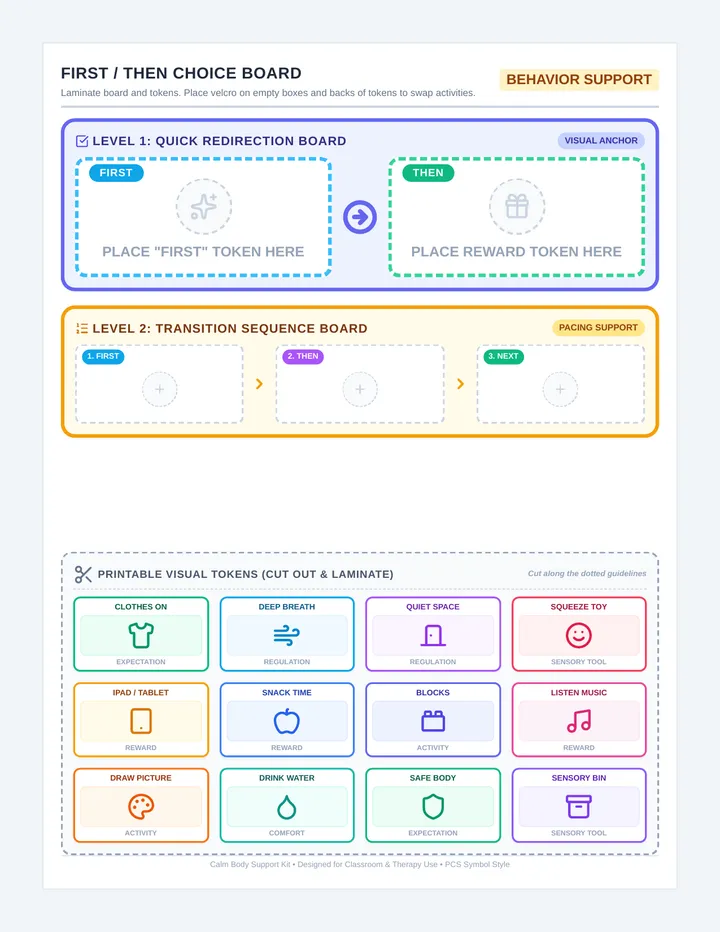
A visual support kit designed to assist autistic students who remove their clothing when upset or overwhelmed. This kit provides clear, immediate non-verbal cues including portable lanyard cards, environmental stop signs, and structured first-then boards to promote sensory regulation and safety.
A 2-page behavior intervention plan (BIP) and daily data tracking template, including a formal replacement behavior protocol and an easy-to-use school/home data logging sheet.
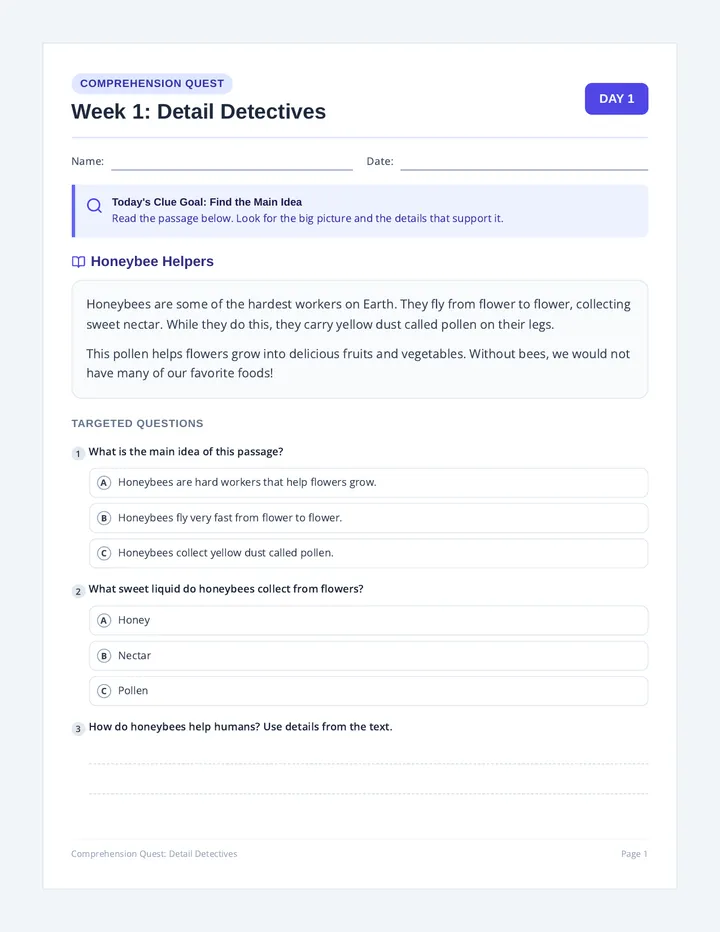
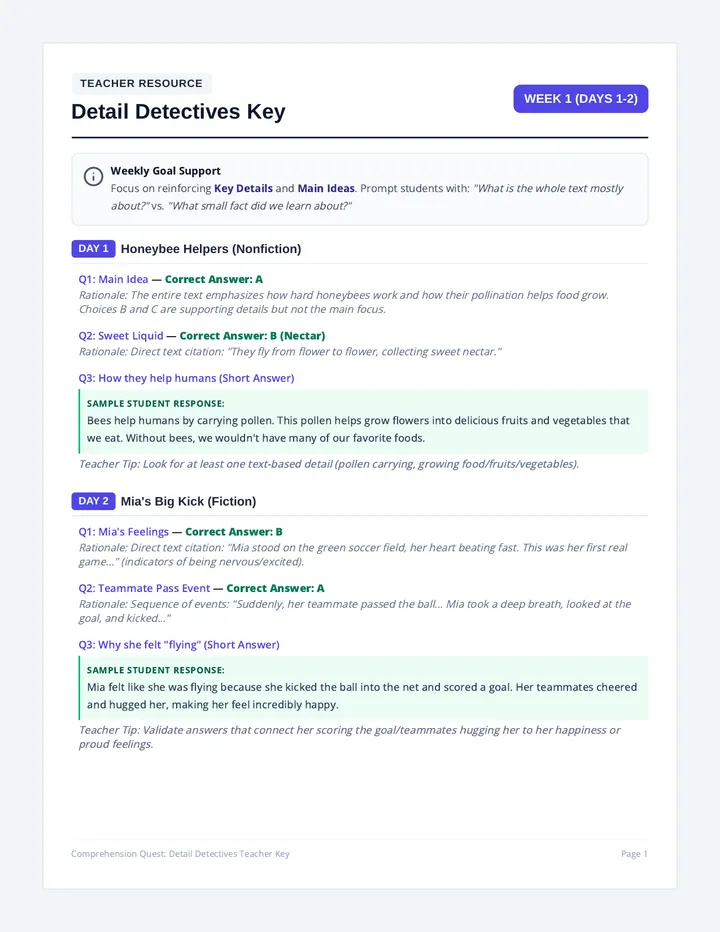
A comprehensive 16-day reading comprehension practice packet designed for third-grade special education students. Each day features an on-level passage (Level N-P) with targeted questions focusing on key details, making inferences, text structure, and vocabulary.
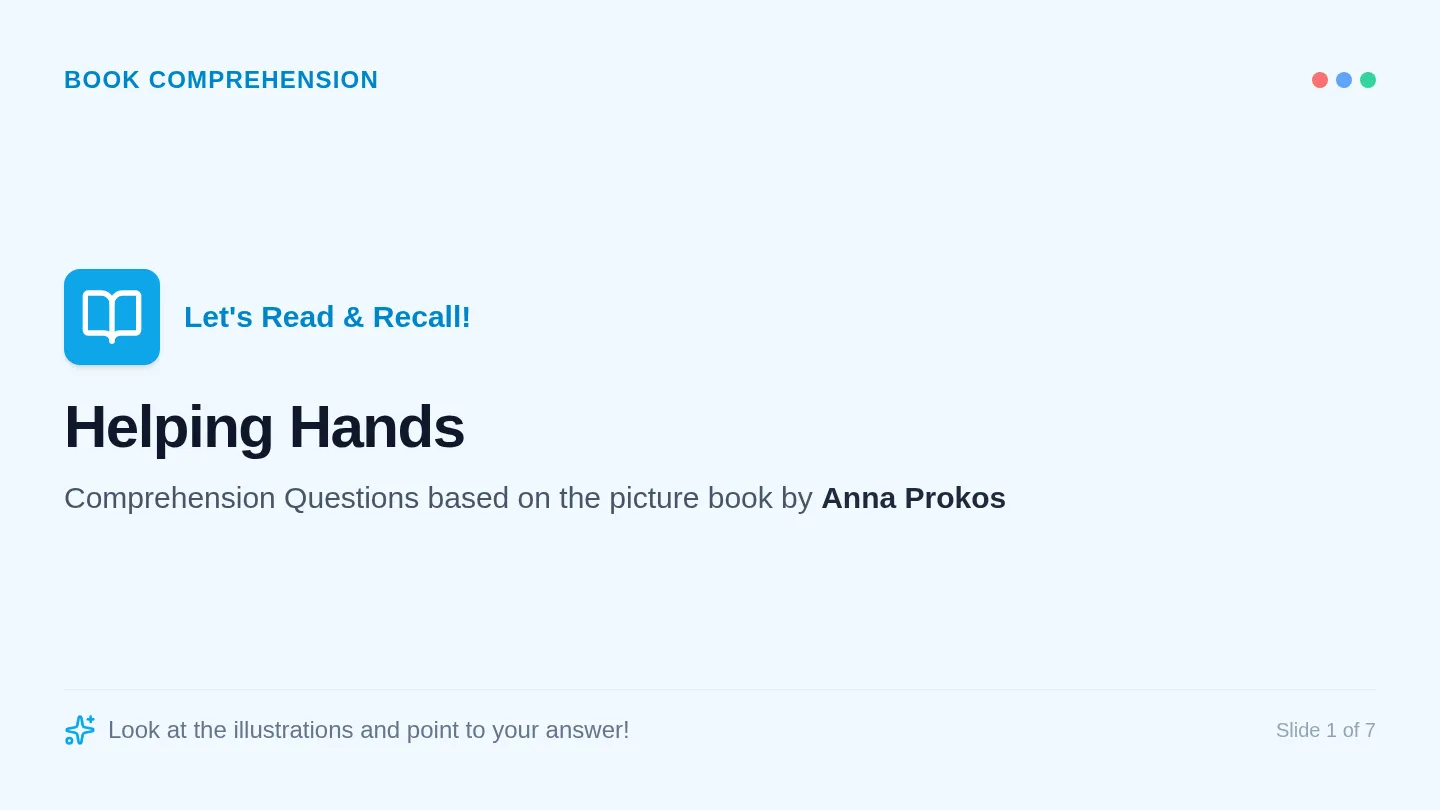
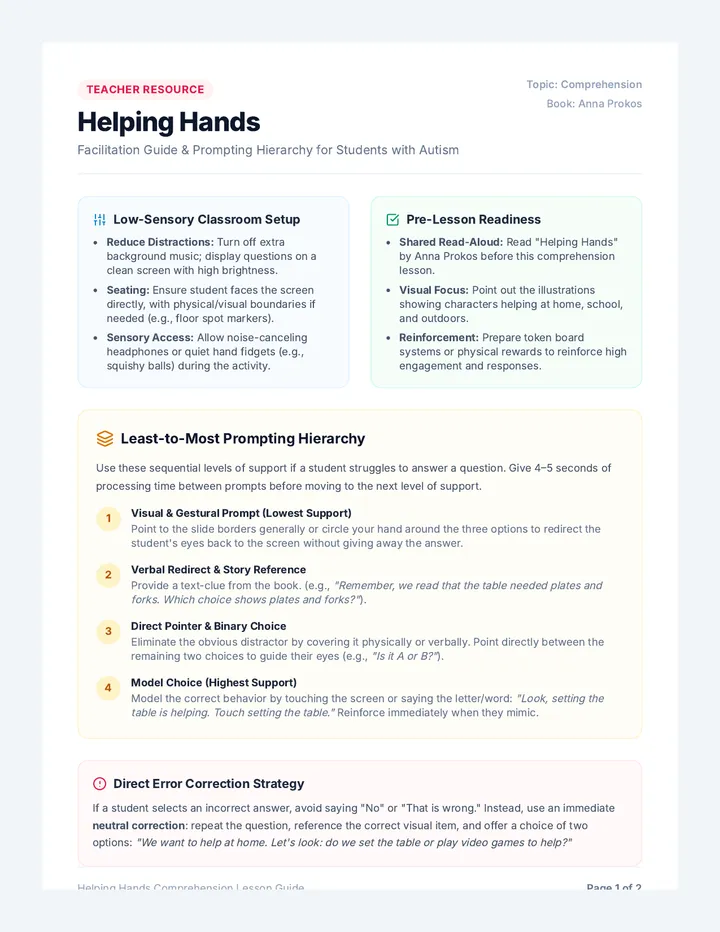
A comprehension lesson based on the book 'Helping Hands' by Anna Prokos, designed specifically for students with autism. It includes visual-supported question slides and a teacher facilitation guide with structured prompting hierarchies.
A 2-page student-facing social narrative and visual support pack. Page 1 contains a 6-panel illustrated social story, and Page 2 provides printable desk visual strips and staff lanyard cards to reinforce safe chewing in real-time.
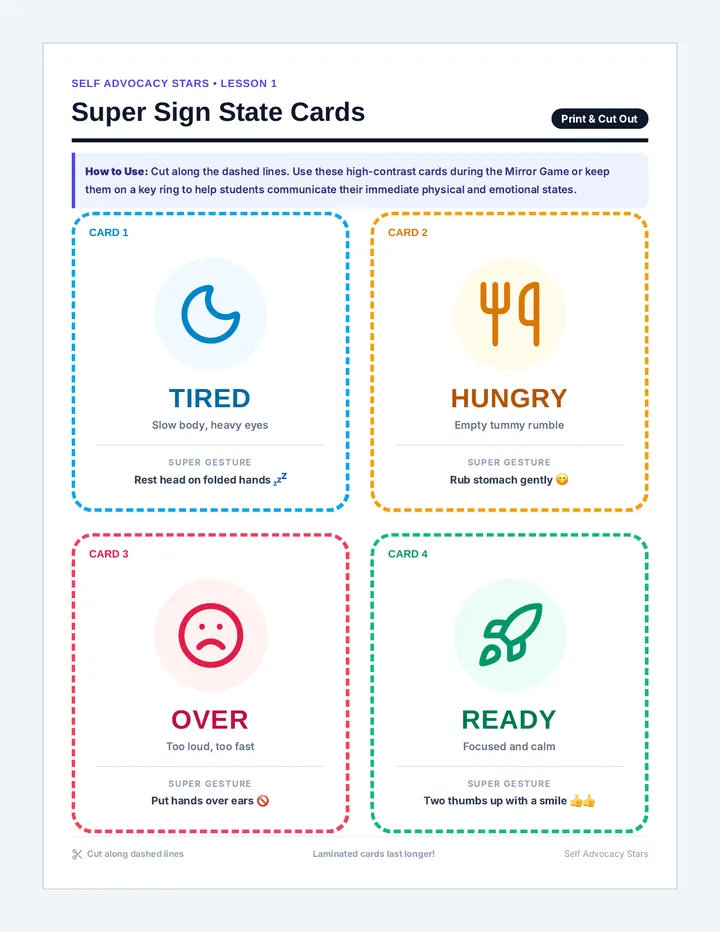
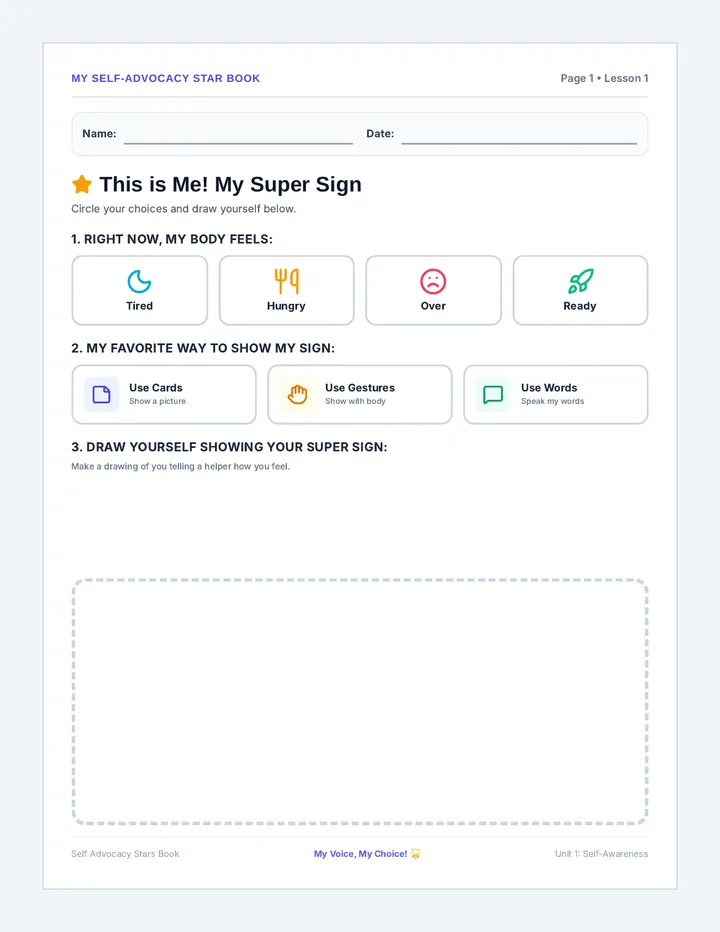
A visual and interactive self-advocacy curriculum designed specifically for students with intellectual disabilities and diverse communication styles. This foundational series empowers students to express feelings, request assistance, and make independent choices through highly structured group games, partner interactions, and individual visual communication books.
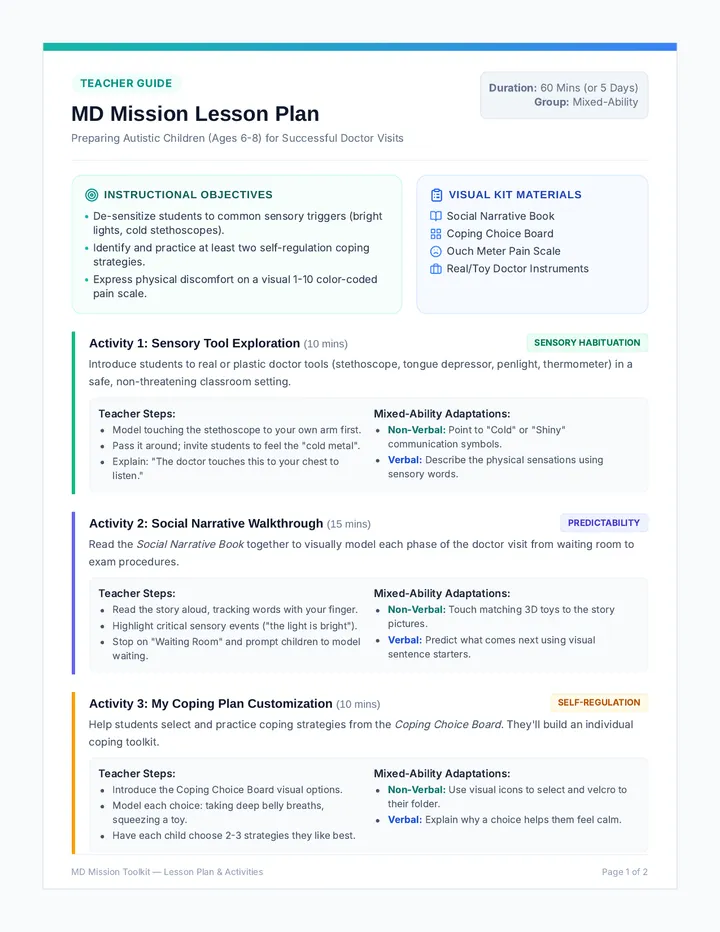
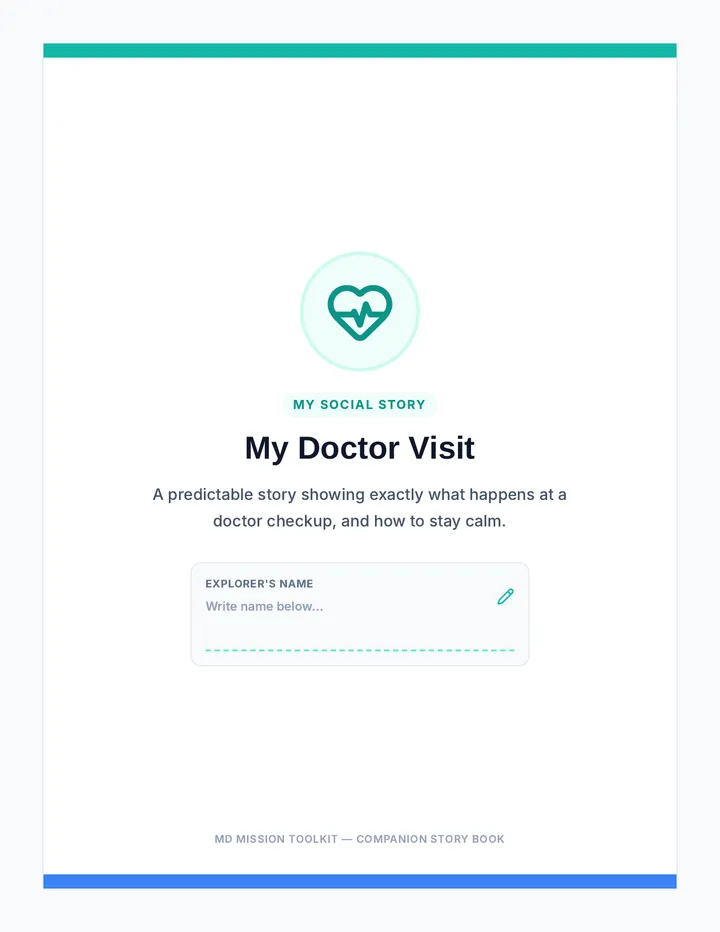
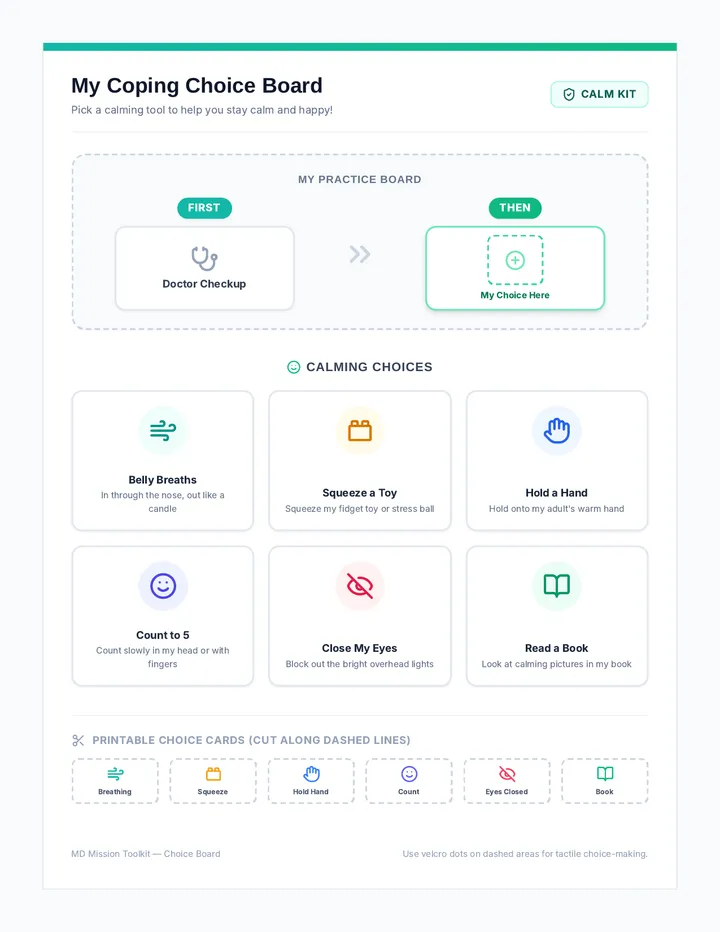
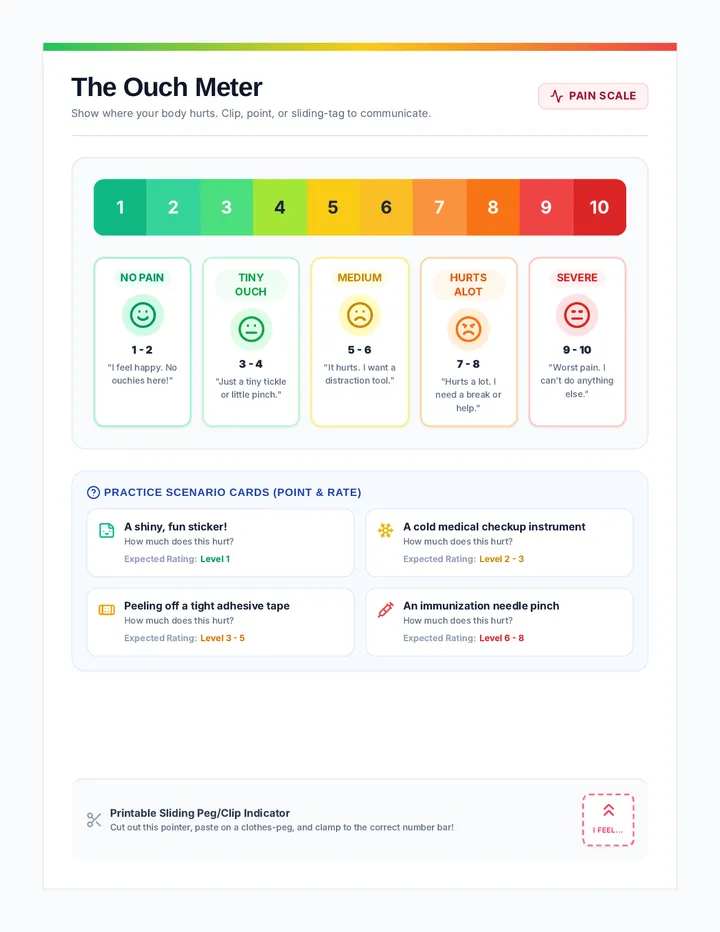
A comprehensive lesson containing visual supports and activities to prepare children with autism (ages 6-8) for doctor visits, focusing on sensory expectations, coping strategies, and pain communication.
A printable 1-page token board system designed to reinforce safe chewing habits, including a 5-star reward chart, cut-out tokens, and customizable reinforcer choice cards.