A tactile sorting board for quarters and nickels. It provides large, color-coded designated areas for students to place real coins, reinforcing the "Big/Small" and "Bumpy/Smooth" concepts from the anchor chart.
A teacher/parent implementation guide designed for older students, focusing on collaborative debriefing and a tactical approach to implementing the 'Commute Protocol' social story.
A mature, tactical 'Commute Protocol' social story booklet designed for a 14-year-old boy, using respect-based language and a high-tech blueprint aesthetic to address school transitions and refusal.
A simplified scenario-based practice worksheet for students using AAC or who are minimally verbal. Features clear icons and single-choice answers to reinforce the best Peace Petal for common conflicts.
A parent handout designed to support inclusive conflict resolution at home, providing tips for families of students who use AAC or are minimally verbal to practice the 'Peace Petals' framework.
An inclusive, highly visual slide deck for the 'Peace Petals' lesson, featuring simplified text, large icons, and symbol support to engage students who are minimally verbal or use AAC.
Visual scenario cards designed for students who are minimally verbal or use AAC. Each card features a clear, icon-based conflict and a selection of the four Peace Petals for easy communication and choice-making.
A specialized communication board for recess, featuring key vocabulary for conflict resolution, the four Peace Petals, and basic playground needs. Ideal for students using AAC or who are minimally verbal.
A visual-choice worksheet for students who are minimally verbal or use AAC, featuring large icons and simplified options for communicating recess problems and solutions.
A visual poster and a set of mini-reminders featuring high-contrast symbols and simplified text to support students who are minimally verbal or use AAC.
A teacher-facing facilitator guide for the inclusive 'Peace Petals' lesson, providing specific strategies for supporting students who are minimally verbal or use AAC.
A hands-on cut-and-paste sorting activity where students categorize visual cards into 'Body Clues' (physical signs of anger) and 'Expected Choices' (appropriate calm-down actions). Cards use neutral colors to ensure students sort based on meaning rather than color-matching.
A high-contrast, step-by-step visual poster for classroom display. It outlines a four-step process (Stop, Feel, Breathe, Choose) to help students manage anger, using large numbered icons and simple directives. All steps fit on a single page for optimal visibility.
A multi-page social story designed for students with low cognitive functioning. It uses simple language, large icons, and clear visual cues to explain what anger feels like in the body and how to make calm, expected choices.
A simplified, high-visual social story for 2nd graders with low cognitive function, teaching the emotional and behavioral steps of waiting for a turn.
Large, high-contrast visual cue cards for classroom use, featuring "Stop," "Wait," "Go," and "Breathe" signals to support turn-taking transitions.
A teacher guide for the 'Waiting for a Turn' lesson, featuring learning objectives, material lists, and a multi-part instructional sequence including a hands-on 'Wait and Go' game.
A printable card game where students combine onset 'color threads' with rime 'base threads' to weave new words, reinforcing phoneme blending and word family recognition.
A student practice worksheet where they segment phonemes into 'thread boxes' and then blend them together to write the full word in 'woven cloth' boxes, featuring CVC and digraph words.
A presentation deck that introduces the weaving metaphor for word blending, providing visual models of phoneme synthesis for CVC and digraph words with clear guidance on 'never breaking the thread'.
A comprehensive teacher guide for the Word Weaver's Loom intervention, featuring a loom metaphor to explain phoneme blending, step-by-step instructional procedures, and multisensory strategies for struggling readers.
A bank of SMART IEP goals focused on reducing peer conflict and defiance, aligned with the Conflict Commanders BIP strategies.
A comprehensive master unit plan for the 'Ring of Respect' curriculum, integrating the definition of autism, WWE comparisons, and a roadmap for both lessons on a single professional page.
A formal Behavior Intervention Plan (BIP) document formatted for IEP inclusion, organizing strategies into target behaviors, antecedents, and replacement skills.
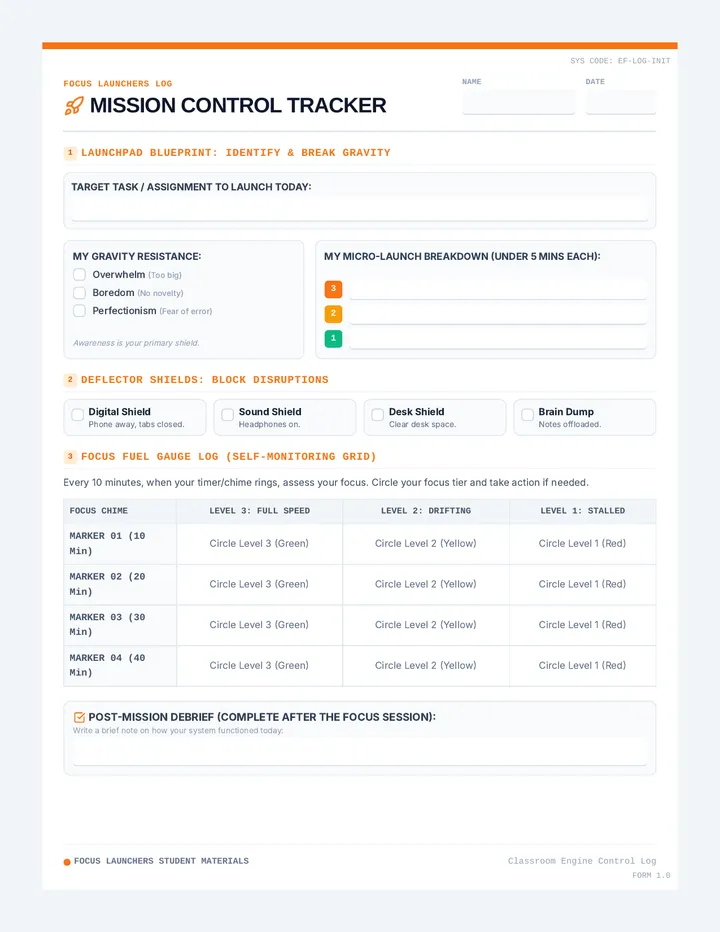
A visual strategy toolkit and selection worksheet that helps students identify and plan the use of specific executive functioning tools.
A comprehensive executive functioning self-reflection worksheet for students, covering task planning, initiation, focus strategies, organization, and goal setting.
An upbeat, WWE-themed Bingo icebreaker designed to introduce autism traits by reframing them as 'Superstar Traits' shared by icons like Roman Reigns, Cody Rhodes, Bianca Belair, and Becky Lynch. It encourages student interaction and builds a positive connection to neurodiversity.
A tracking sheet designed for educators to record the frequency and intensity of defiant behaviors and peer arguments, with space for qualitative analysis.
A student-facing visual aid and reference sheet providing a 4-step framework for navigating peer disagreements and practicing self-regulation.
A comprehensive teacher-facing guide outlining antecedent, teaching, and consequence strategies for students struggling with defiance and peer conflict.
A set of eight printable trading-card-style icebreakers featuring themes from stars like Roman Reigns, Cody Rhodes, Bianca Belair, Gunther, Becky Lynch, and Seth Rollins. Students fill in their personal stats to introduce themselves through the lens of unique superstar profiles. It includes explicit connections to neurodiversity strengths. It now features larger cards and improved contrast.
A high-impact, teen-focused social advocacy poster for 'Zap' candy, redesigned to remove explicit diagnosis naming and ensure a polished, printable layout.
A facilitator's guide for the second lesson, focusing on 'Tag Team' advocacy. It includes discussion prompts for 'masking' using Rey Mysterio's imagery and strategies for handling bullying in a high-energy Brooklyn classroom setting.
A creative worksheet where students design a 'Championship Belt' representing the values of autism acceptance. It includes sections for defining side-plate values (like patience and advocacy) and a main event pledge for being an ally.
A second slide deck focusing on social interaction and advocacy. It uses the concept of 'Tag Teams' (The Rock, Seth Rollins, New Day) to teach students how to be allies to their autistic peers, covering masking and diverse communication styles.
A facilitator's guide for the first lesson, providing pacing, hook ideas (using John Cena's music), and instructional strategies for teaching neurodiversity using WWE metaphors in a Brooklyn classroom.
A student activity worksheet for creating a personal 'Superstar Profile.' Students identify their sensory preferences, special interests (hyper-focus), and communication styles to understand neurodiversity through the lens of individual character traits.
A high-energy, WWE-themed slide deck designed for middle schoolers in Brooklyn. It introduces the concept of autism through the lens of neurodiversity, featuring stars like John Cena and Roman Reigns to frame different traits as 'Superstar' strengths. It now includes a transition slide explaining that we value wrestlers for their unique styles, just as we should value individual differences.
An answer key for the 'Syllable Slasher' and 'Sentence Sleuth' worksheets, providing correct syllable divisions and word choices for the '-ce' word study lesson.
A detailed teacher facilitation guide containing learning objectives, specialized scaffolding strategies for SPED students, and a clear lesson pacing guide for the 'Soft C Mystery' unit.