A focused lesson on Wilson Step 4.4 (suffix -ive), featuring fluency drills, games, and word-level activities centered around a 'bee hive' theme.
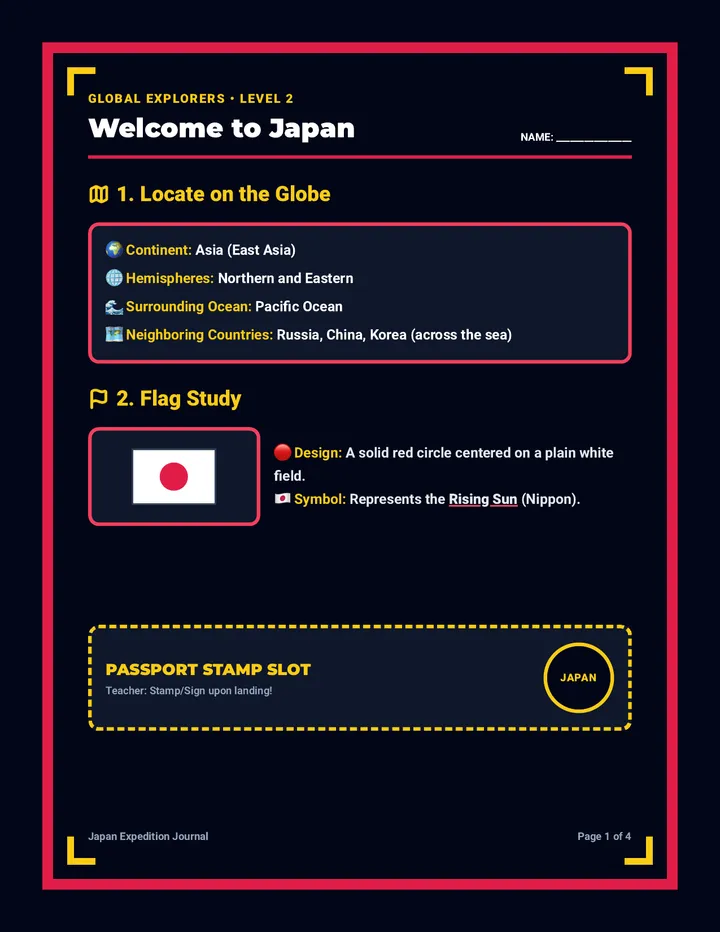
An integrated, high-interest unit plan for a 1:1 student with physical accommodations, spanning five countries (Japan, Egypt, Kenya, Brazil, and France). Each country features a complete CVI-friendly integrated unit integrating reading, writing, 5th-grade math, science, music, food, and animals, tailored to a 3rd-grade decoding and 6th-grade comprehension profile.
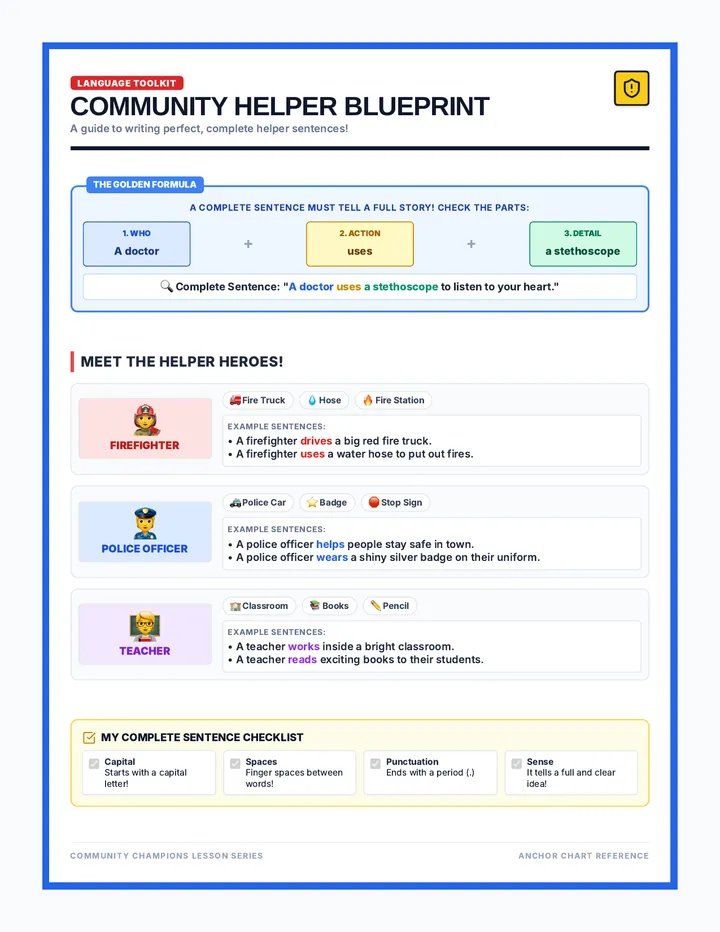
A comprehensive, differentiated lesson designed to help early learners describe community helpers, their tools, and their roles using complete sentences. Includes visual slides, a visual anchor chart, differentiated worksheets, and portable sentence-building task cards.
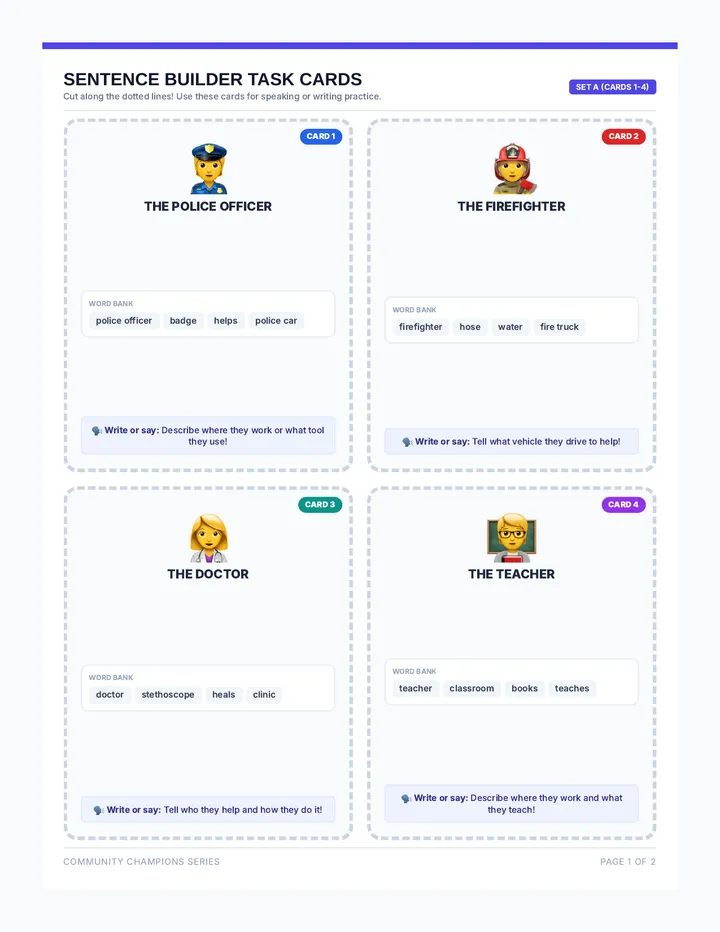
Portable task cards featuring helper illustration prompts and helpful custom word banks to scaffold independent verbal or written sentence generation.
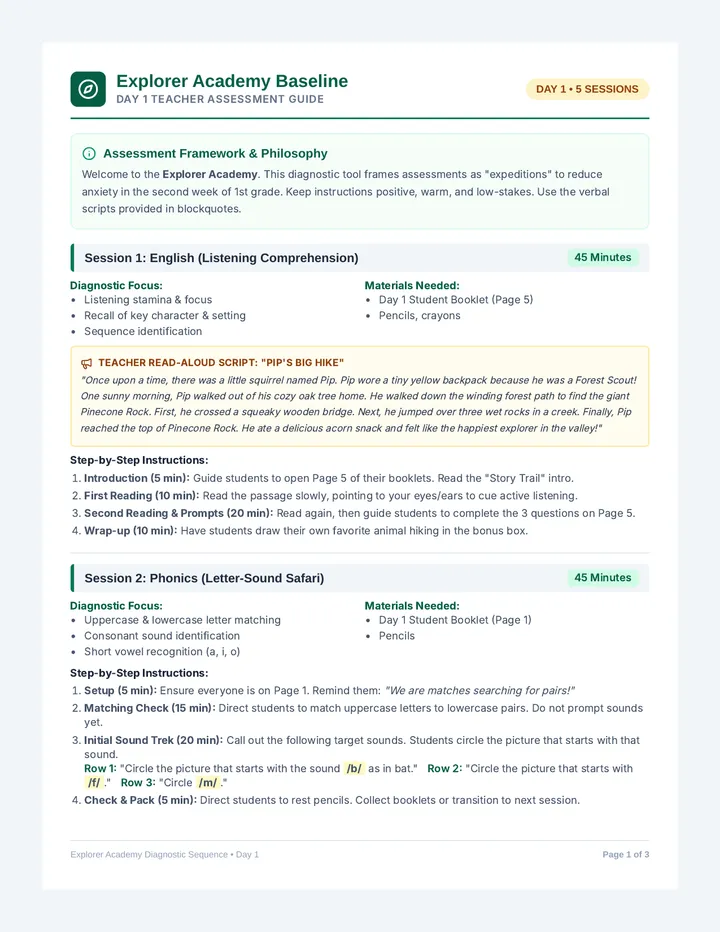
A comprehensive diagnostic assessment sequence designed for the second week of first grade. Spanning two days, it evaluates Kindergarten readiness and first-grade baseline performance across English, Phonics, Writing, Math, and Science in structured 45-minute sessions.
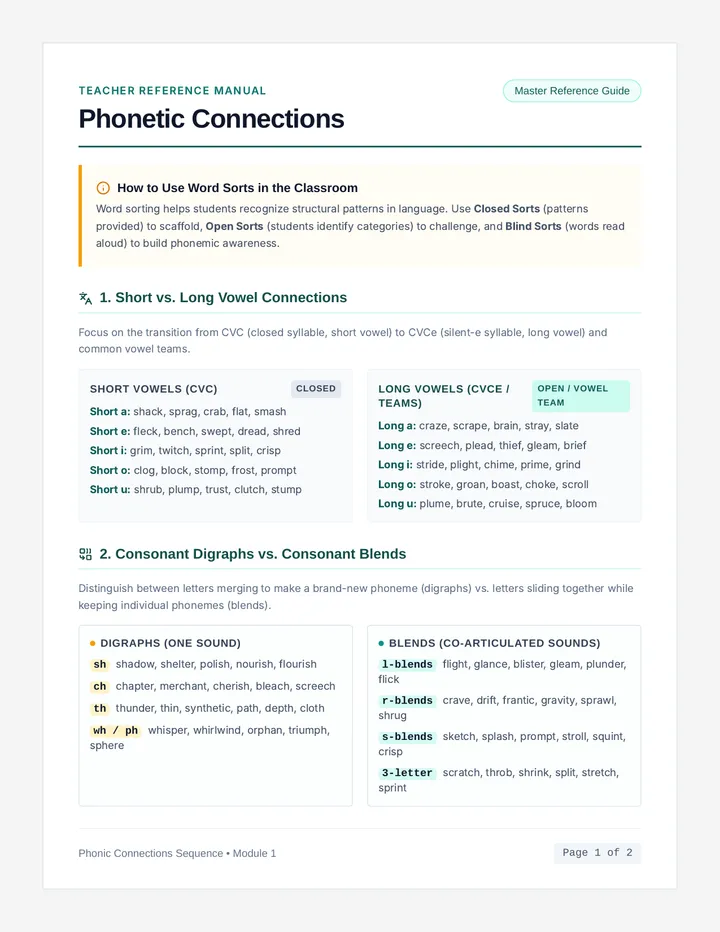
A foundational phonics lesson centered around sorting words by their phonetic connections, including vowel patterns, digraphs, blends, and complex spelling rules. Includes a master reference guide for teachers and a clean, versatile student sorting activity sheet.
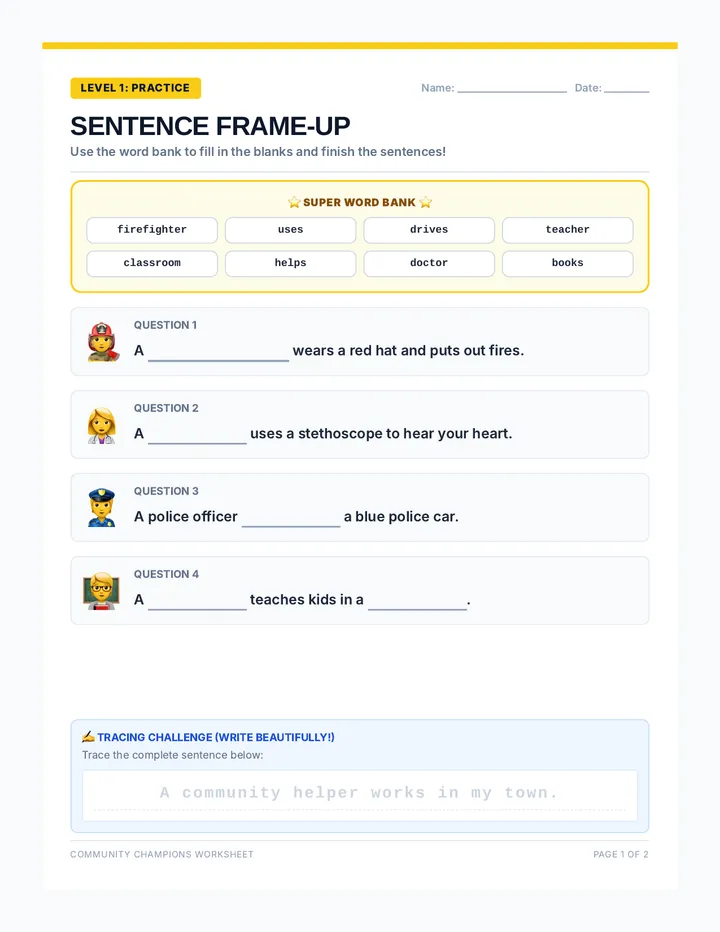
A two-tiered differentiated student worksheet featuring structured sentence frames for level 1 (scaffolded) and picture-prompted original sentence writing for level 2 (independent).
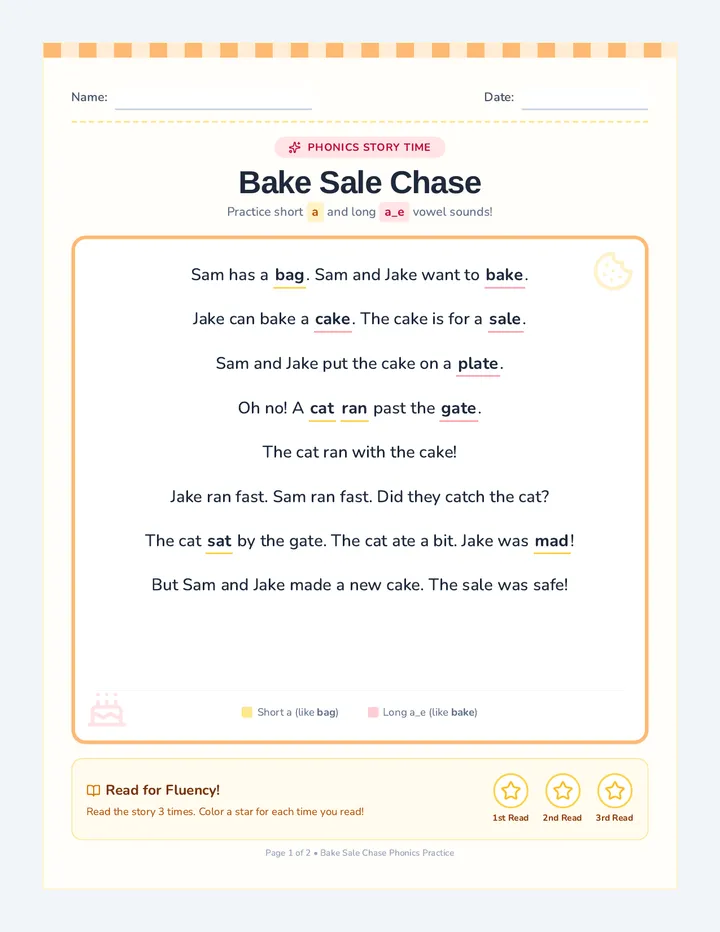
An engaging introductory phonics unit teaching first-grade students to identify, read, and write short and long vowel sounds with silent magic 'e'.
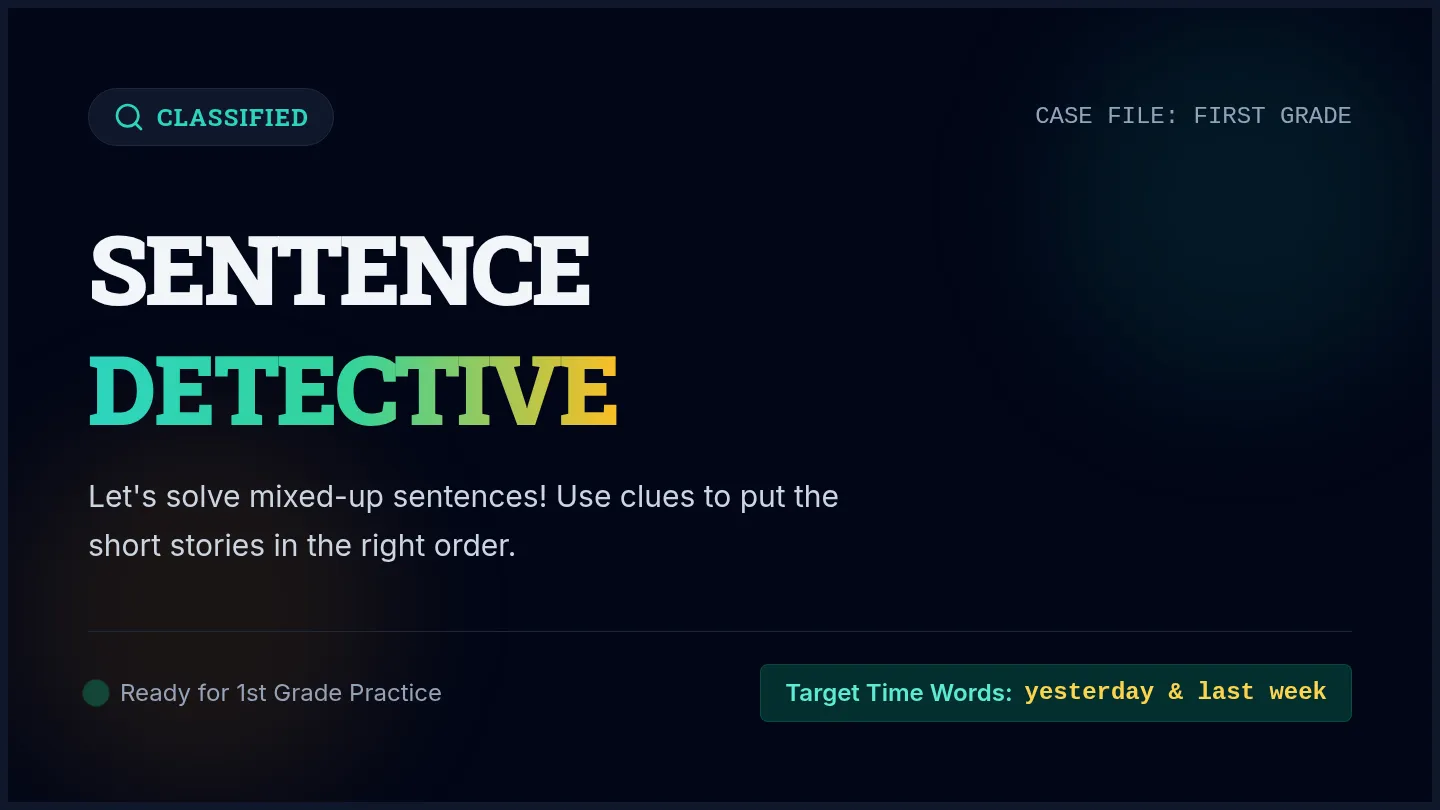
An engaging grammar lesson designed to help early learners master past-tense sentences using 'yesterday' and 'last week'. Students unscramble simple past-tense sentences using visual slides, a word-by-word guided worksheet, and a creative drawing activity to demonstrate comprehension.
A highly visual printable anchor chart highlighting helper profiles, their essential tools, and a clear, color-coded complete sentence anatomy blueprint.
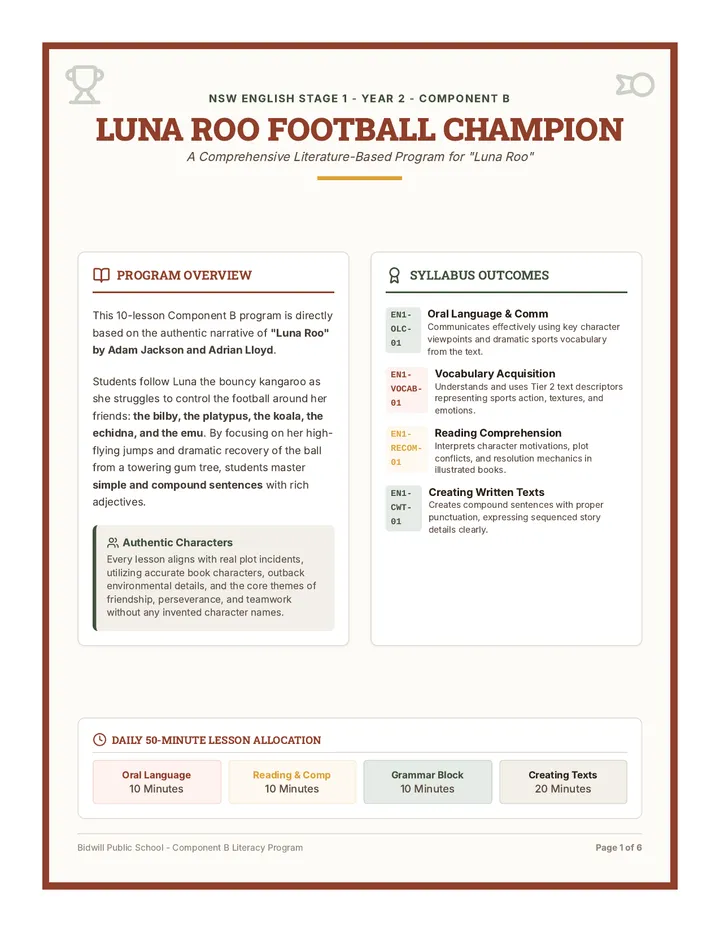
A 10-lesson Stage 1 Year 2 English Component B program based on the book 'Luna Roo' by Adam Jackson and Adrian Lloyd. The sequence explicitly teaches simple and compound sentences enriched with descriptive adjectives focused on Luna's outback soccer matches, animal teammates, and dusty playing fields.
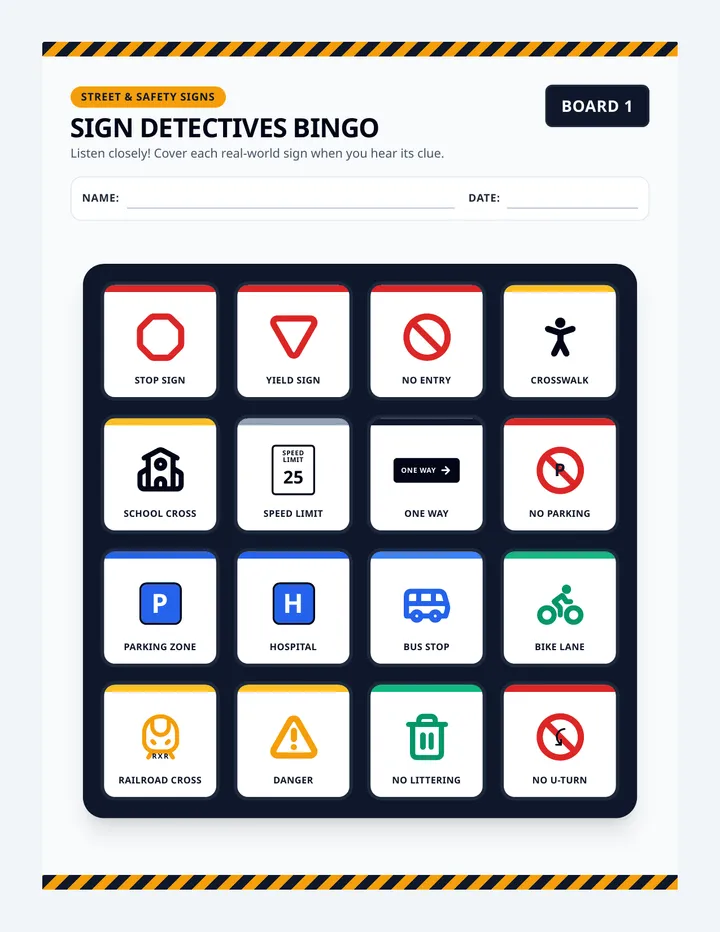
A high-contrast, visual-first community helper and safety sign bingo game designed for young learners and special education. Includes 4 unique 4x4 student boards with bold symbols and simple labels, plus a matching cut-and-draw caller deck.
Interactive classroom slides with vibrant community helper visual guides, sentence building blocks, and guided sentence frames for whole-group instruction.