Students use a three-panel storyboard to capture the beginning, middle, and end of a story. This lesson focuses on sequencing events and creating a visual summary for recall.
A reading intervention unit targeting the critical spelling changes that occur at suffix boundaries, designed for older struggling readers. The sequence covers final consonant doubling and silent-e dropping logic.
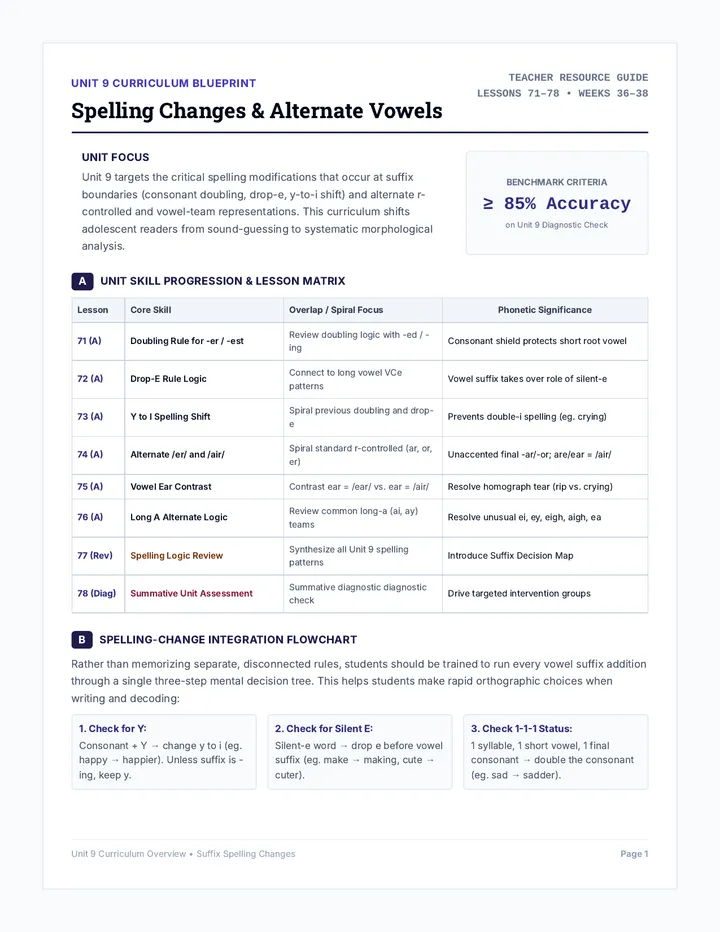
An overall curriculum overview and teacher preparation guide for Unit 9 (Lessons 71–78). This resource maps out the core skills, spiral pathways, cumulative benchmarks, and pacing guides for spelling-change rules and alternate vowel patterns.
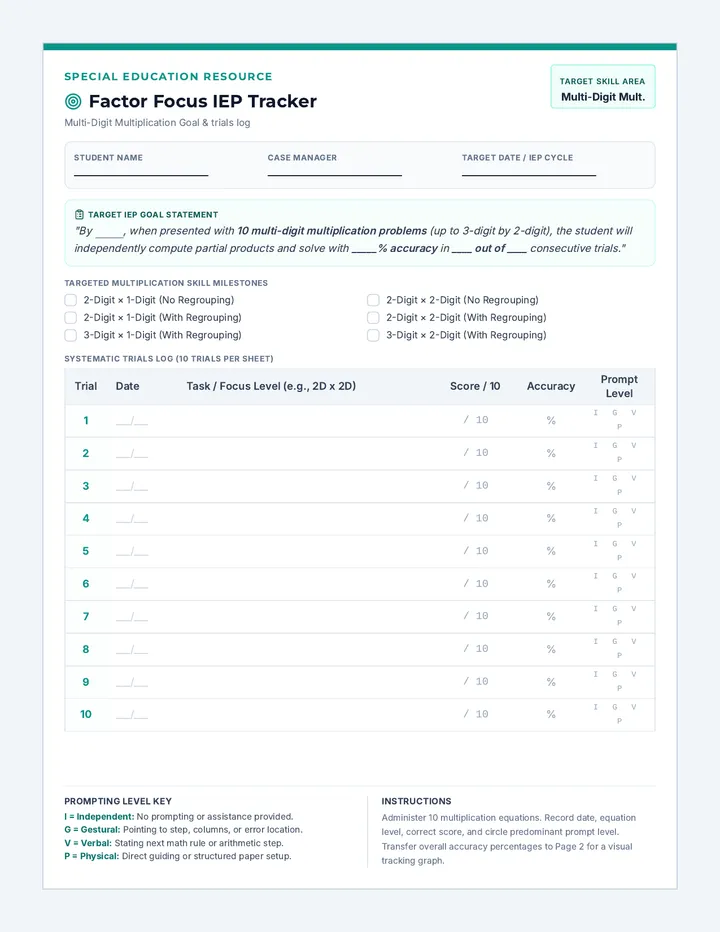
An Individual IEP Goal Tracker for multi-digit multiplication, featuring detailed trials tables, printable progress graphing, and a systematic error analysis key.
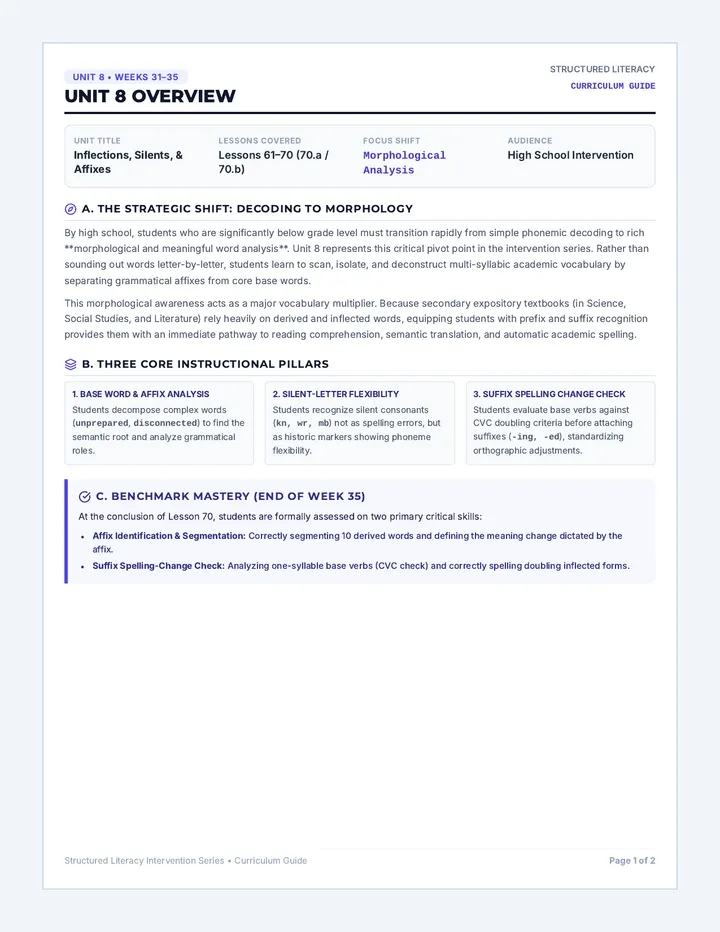
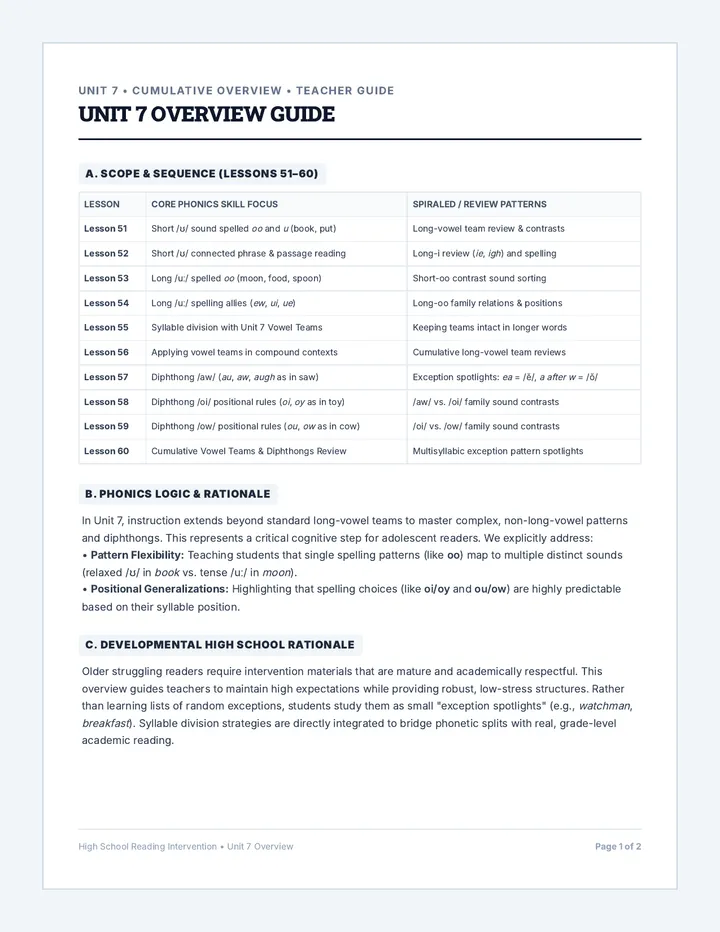
A structured high school reading intervention sequence focusing on silent consonants, orthographic markers, pluralization rules, and academic spelling structures.
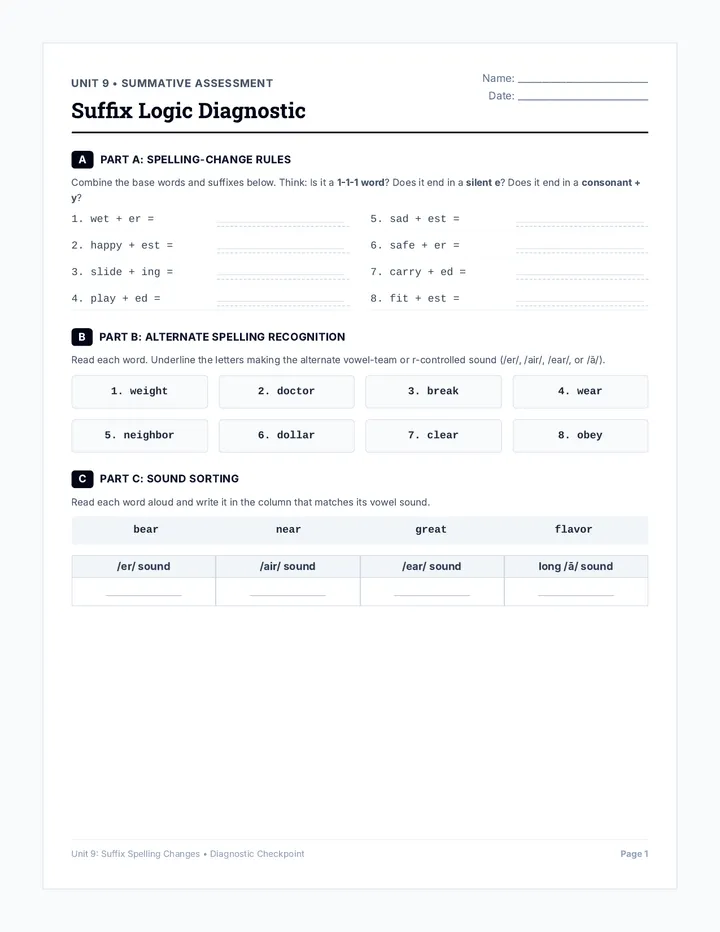
A comprehensive Unit 9 spelling and decoding diagnostic assessment for high school readers. It includes student test sections for spelling-change rules, alternate-spelling recognition, sound-sorting, and sentence reading.
A comprehensive 2-page curriculum overview and teacher preparation guide for Unit 9 (Lessons 71–78). It maps out unit pacing, skill progressions, cumulative spelling benchmarks, and spiral pathways.
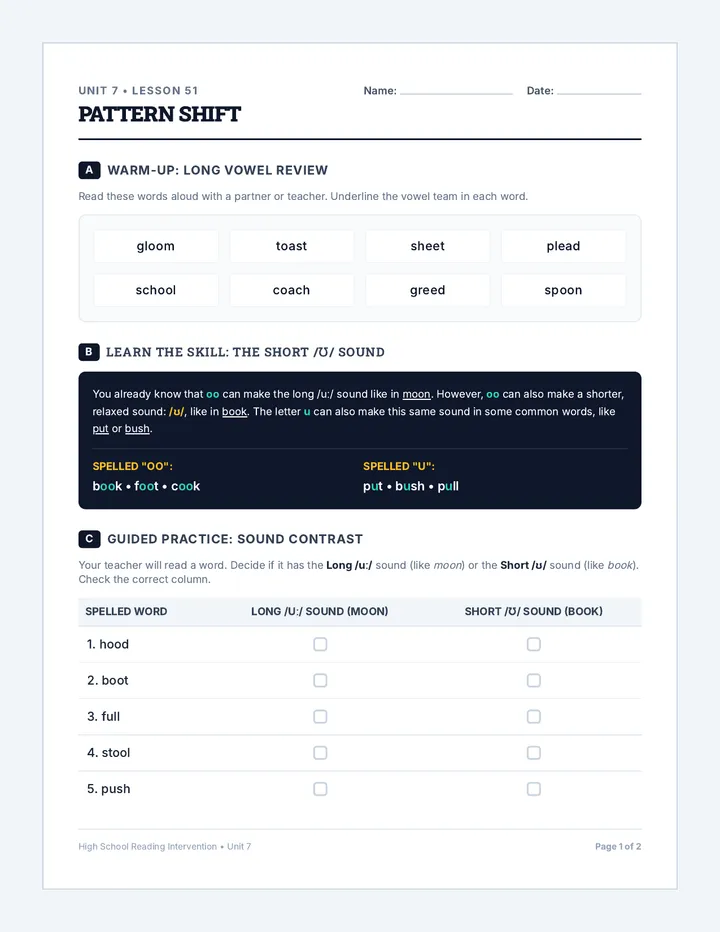
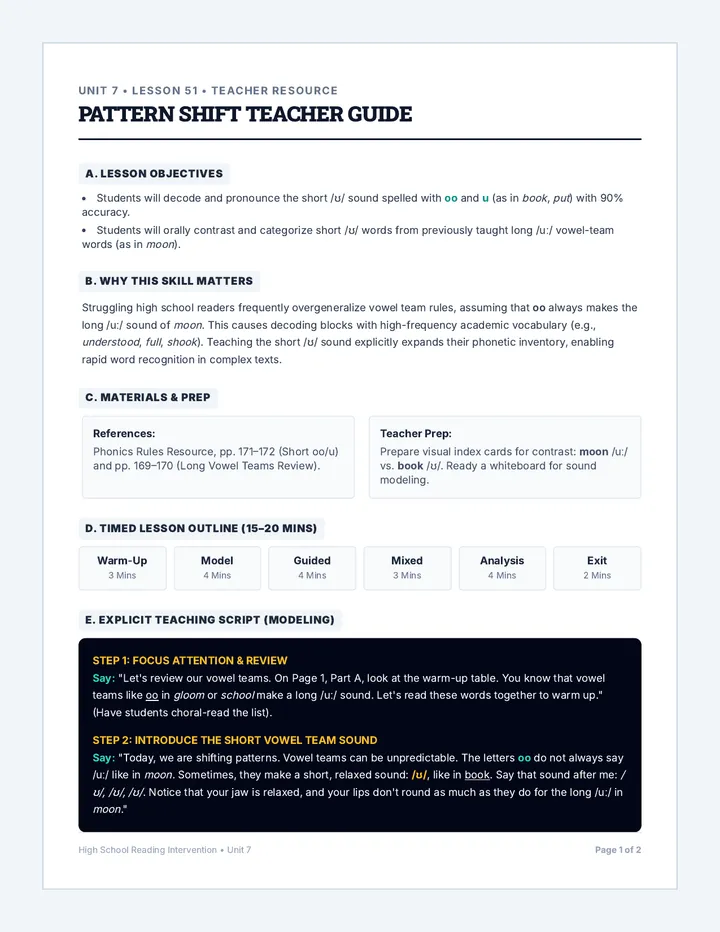
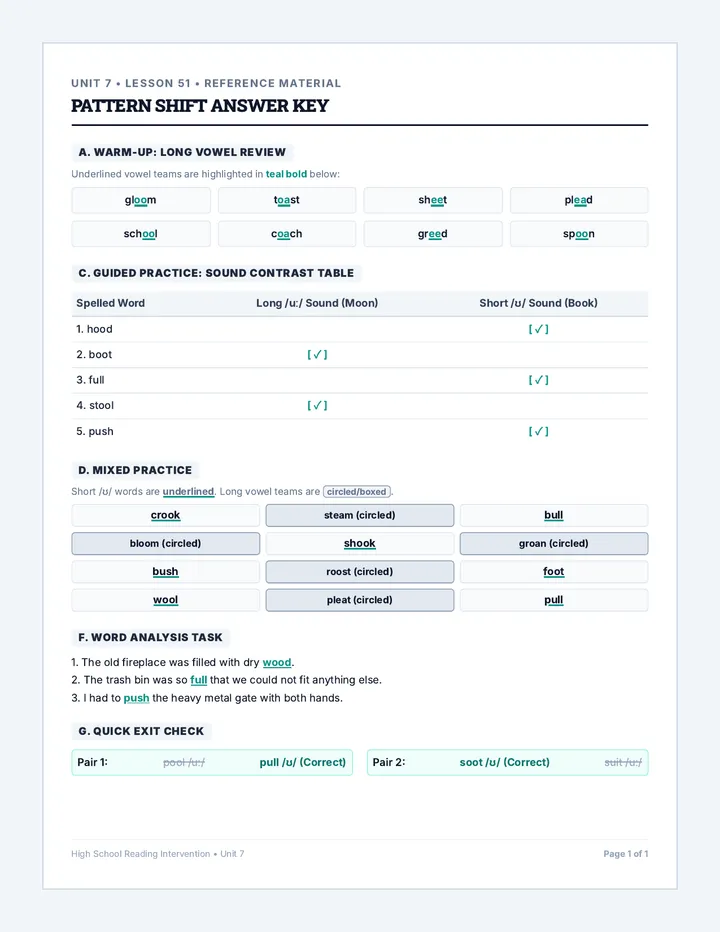
A phonics intervention unit for high school readers focusing on short oo patterns, sound contrasts, and spelling application.
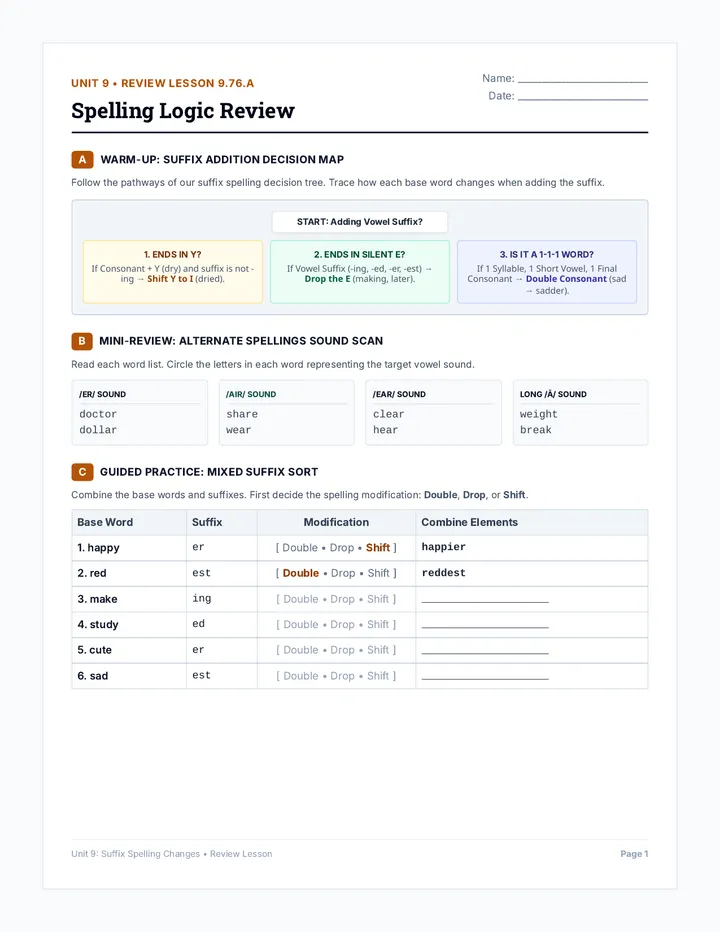
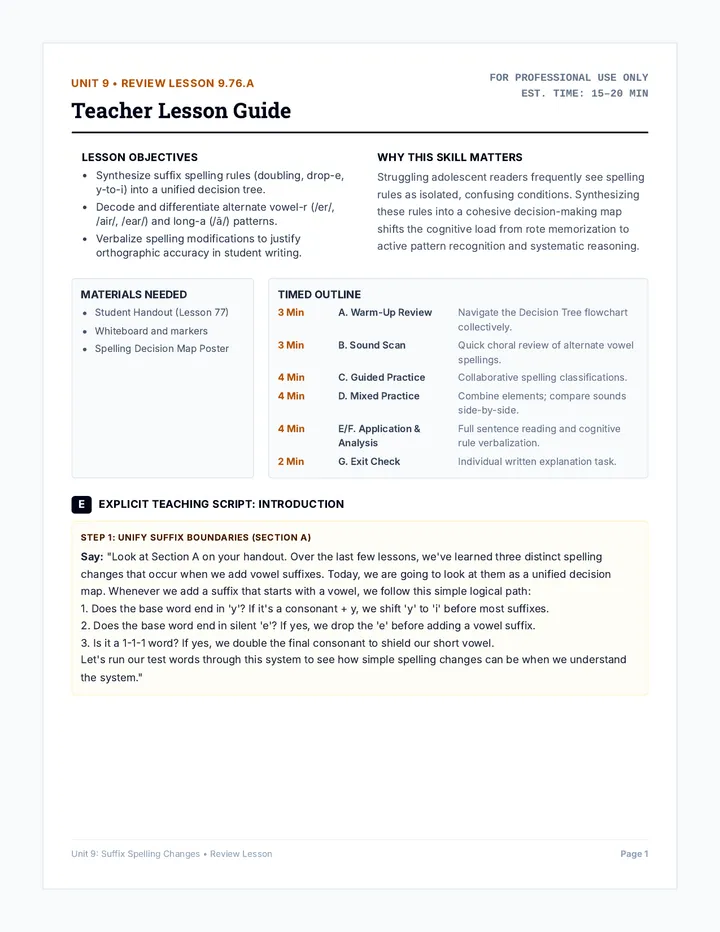
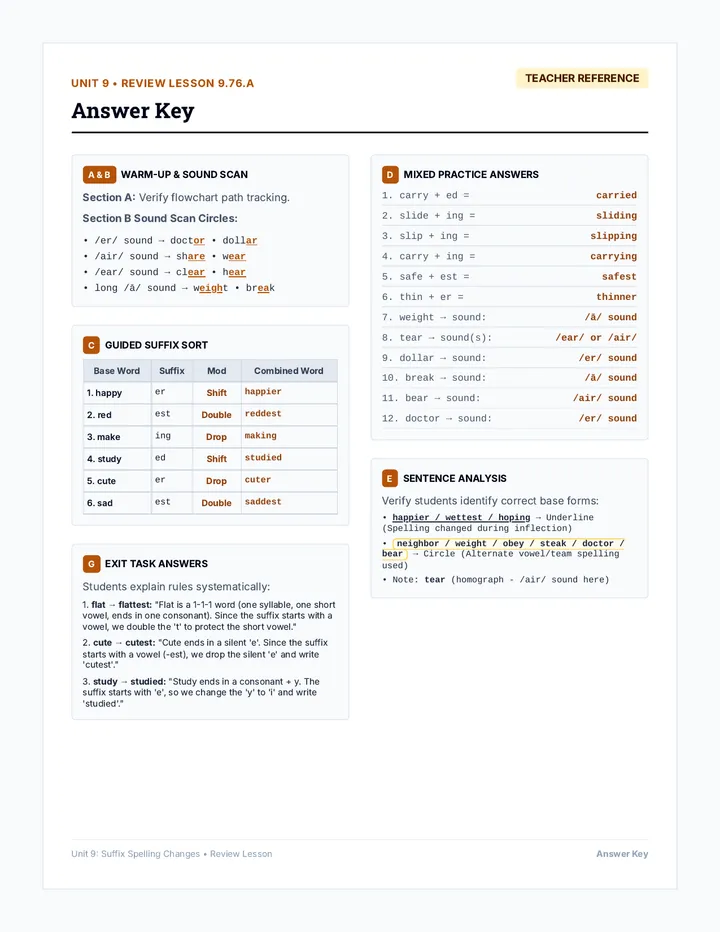
A comprehensive Unit 9 review lesson for high school readers. This lesson synthesizes and reinforces the consonant doubling rule, drop-e rule, y-to-i shift, unaccented final -ar/-or, alternate /air/ and /ear/ vowel contrasts, and alternate long-a spellings.
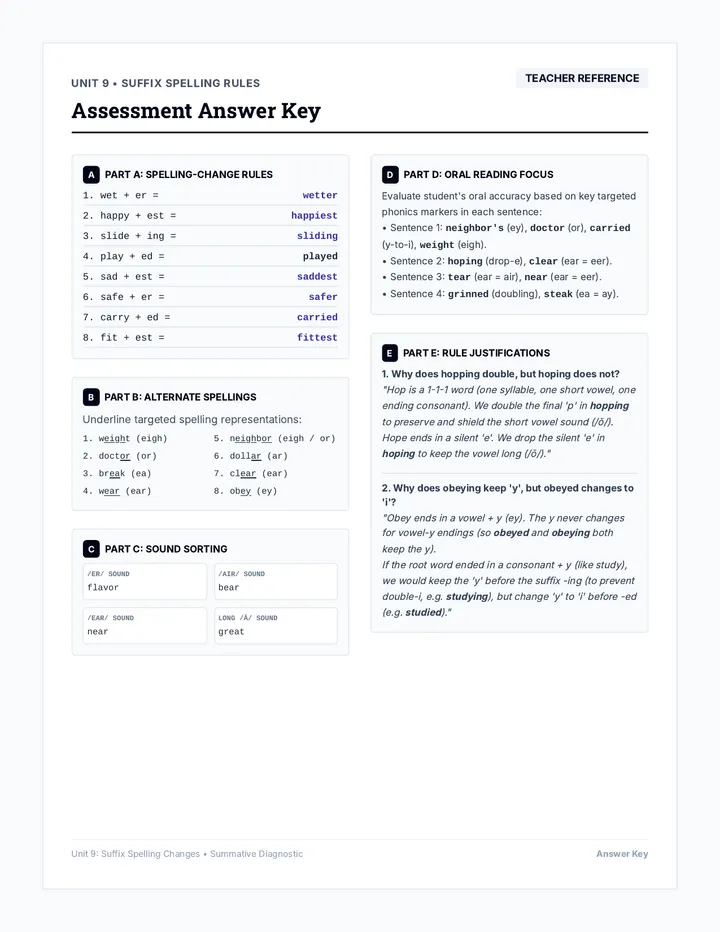
A clean, print-ready 1-page Answer Key for Unit 9 Student Assessment. It provides explicit answers for all student handout sections, utilizing bold colors and clear typography to make grading simple and fast.
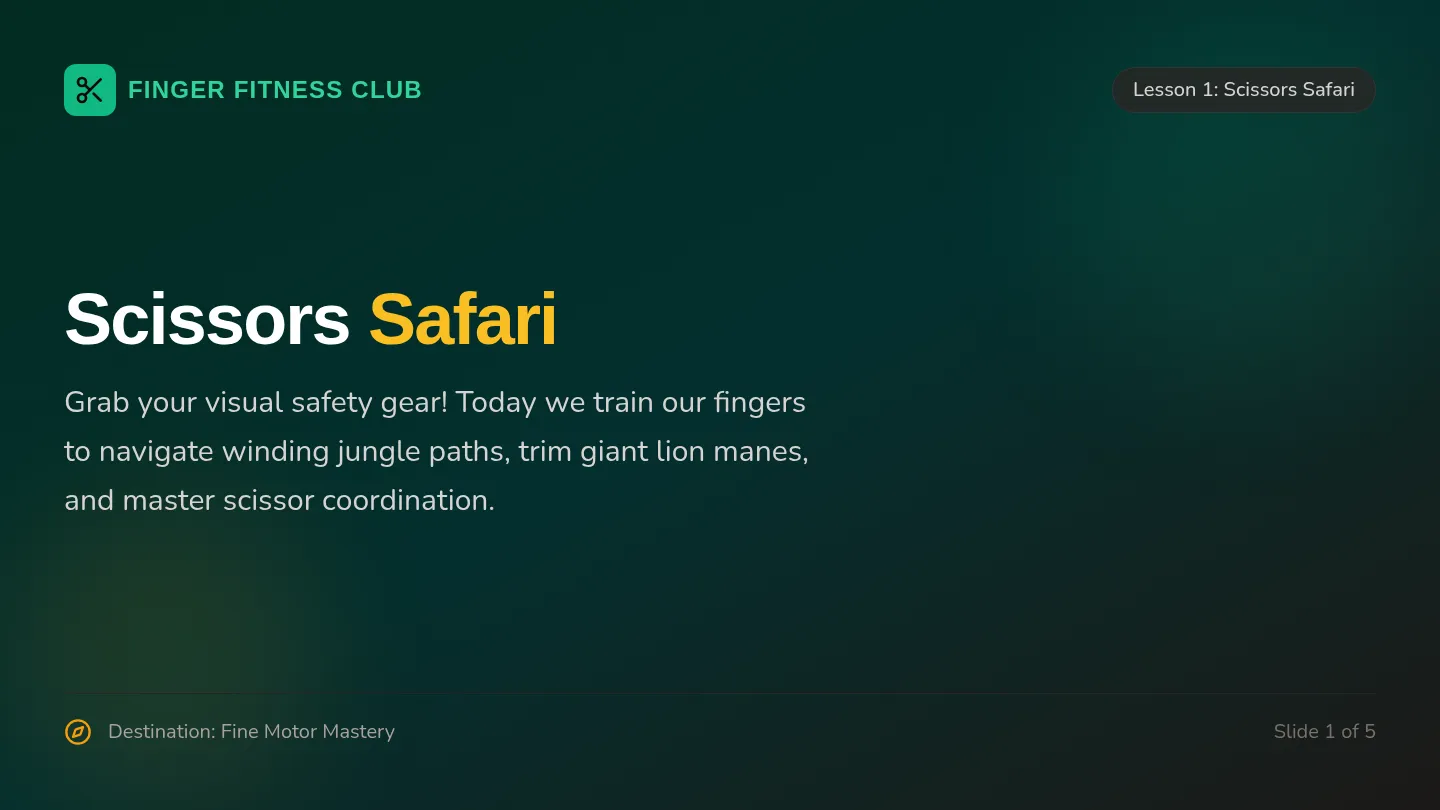
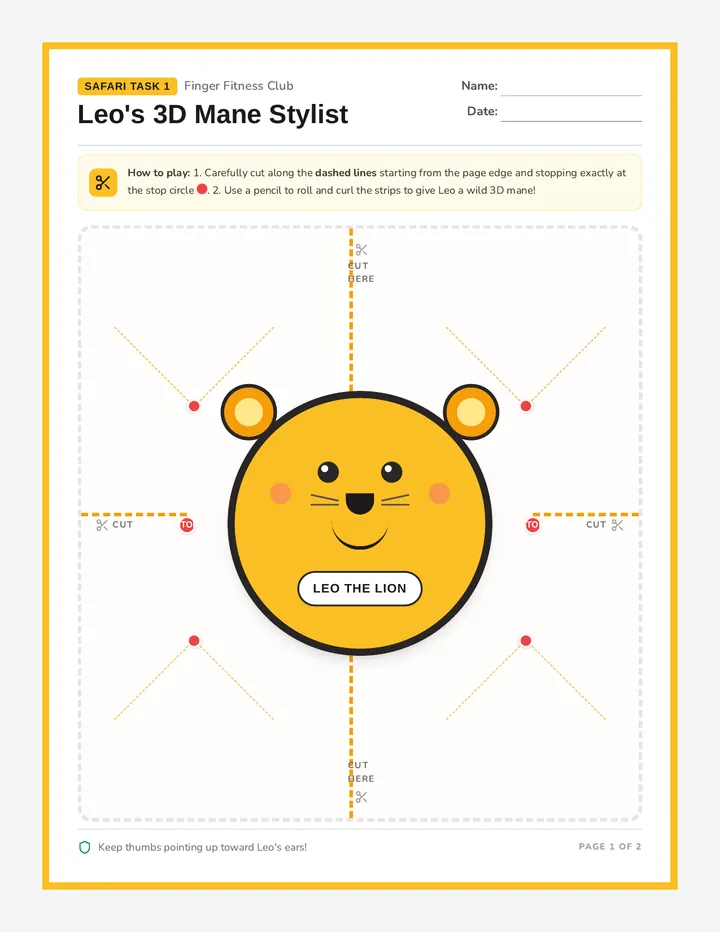
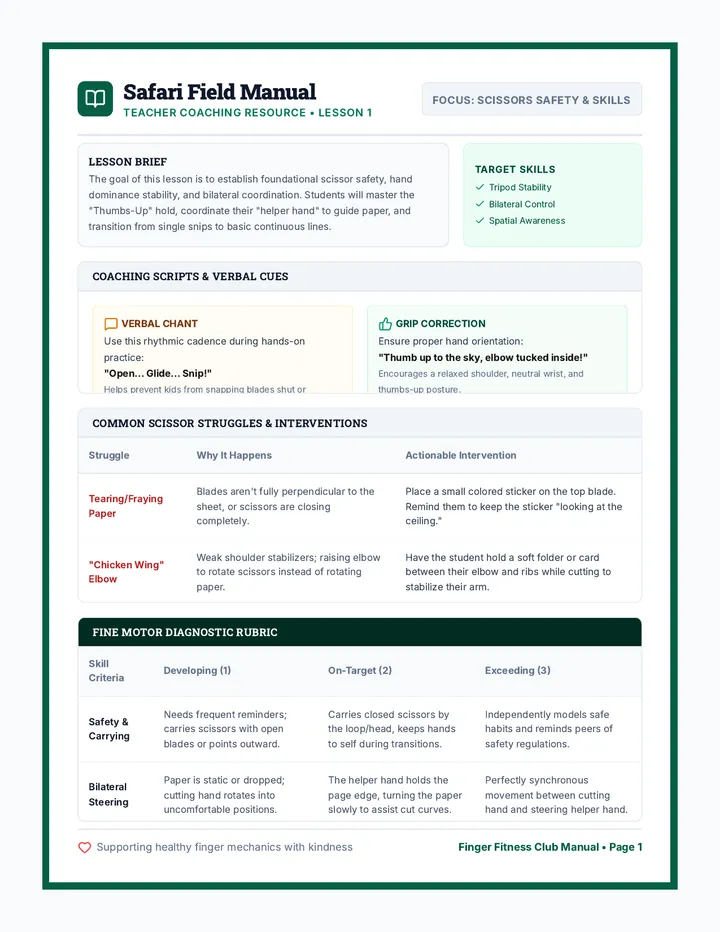
A playful and highly engaging fine motor development unit targeting scissor mastery, tripod pencil grip, and sensory-driven finger strengthening through hands-on adventures. This week-long progression includes immersive student guides, gamified practice mats, and detailed teacher coaching resources.
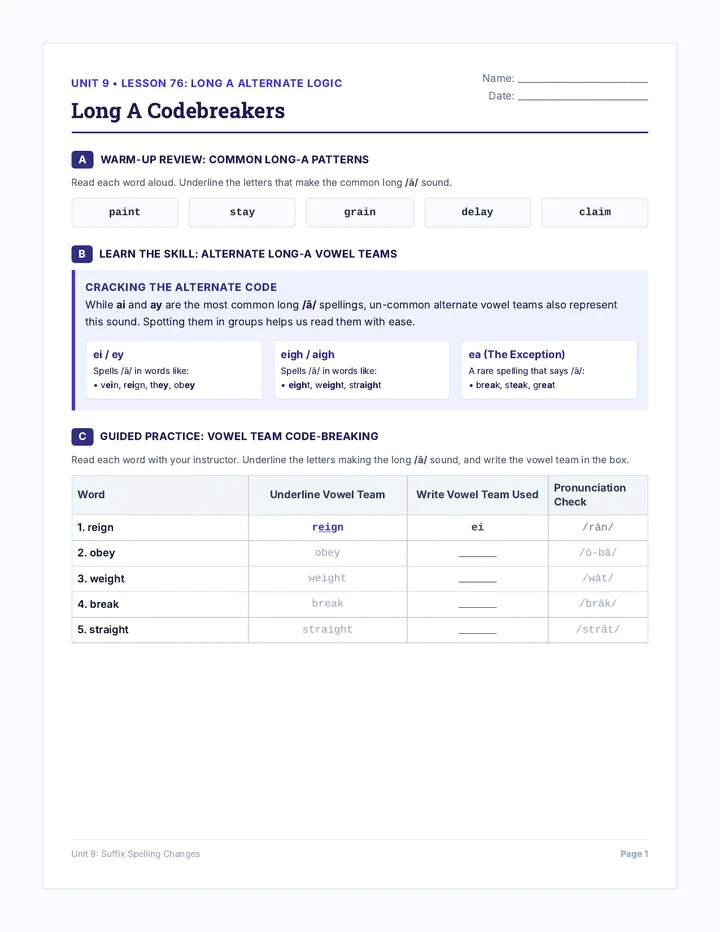
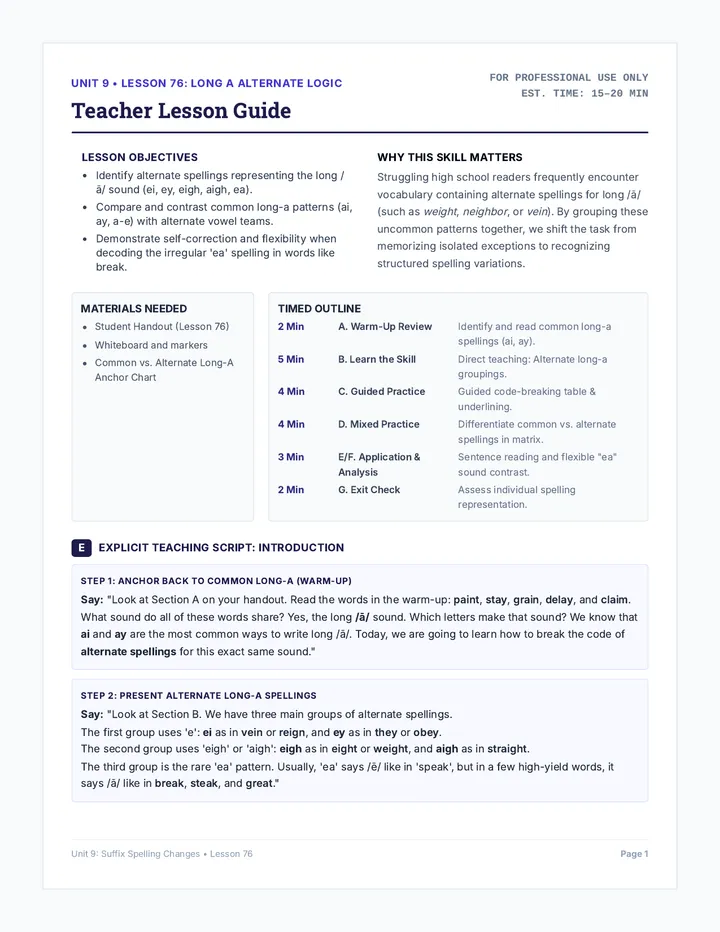
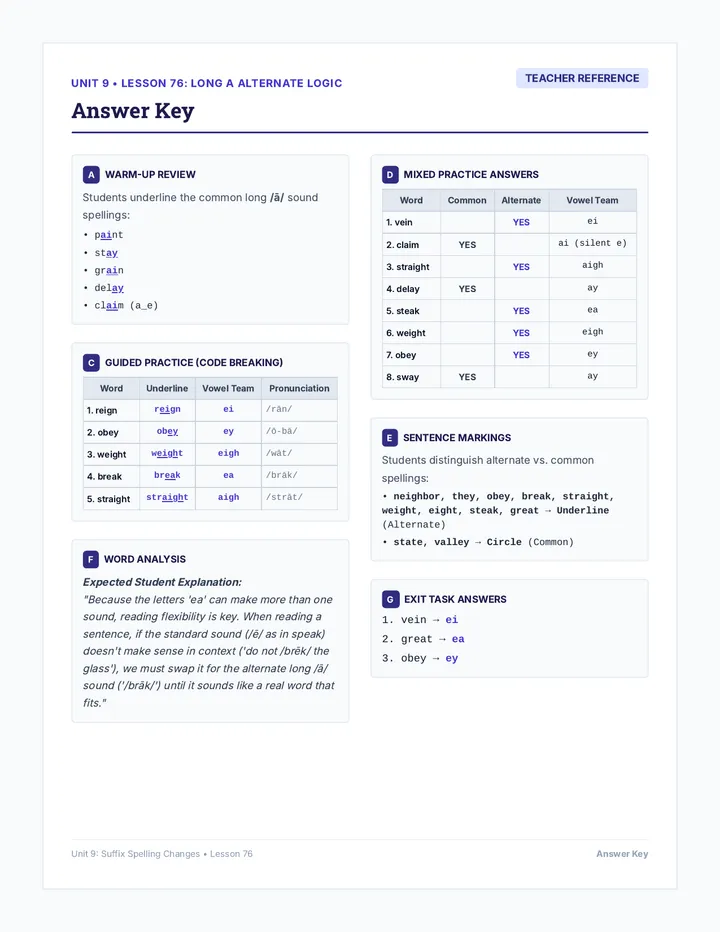
A structured, age-appropriate reading intervention lesson designed for high school readers. This lesson explicitly teaches alternate spellings for the long /ā/ sound (such as ei, ey, eigh, aigh, ea), while spiraling and reinforcing common long-a spellings like ai and ay.
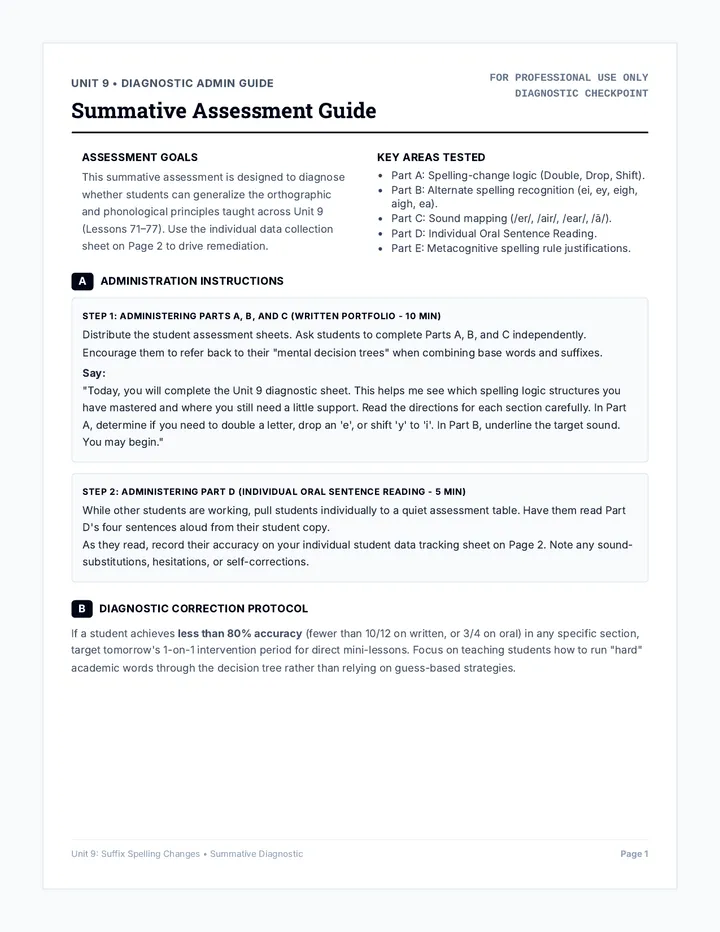
A comprehensive, professionally formatted 2-page Teacher Guide to support delivery of Lesson 78 (Summative Assessment). It includes teacher administration scripts, error diagnostics, remediation protocols, and an extensive individual student diagnostic recording sheet.