A vocabulary-focused station activity for Chapter 1 of 'Night' by Elie Wiesel, designed for 10th-grade students with ADHD and SLD. The lesson uses multisensory approaches to reinforce meaning, context, and visual representation of key terms.
A high-energy, game-based lesson designed to reinforce RI.9 standards. Students engage in a multi-modal 'Double Take' challenge involving a board game, bingo, and a scavenger hunt to analyze how different authors present the same non-fiction topics.
Learning the 'Energy Accounting' system to track withdrawals and deposits to prevent burnout and manage emotional capacity.
Understanding energy levels, the battery concept, and the difference between energy-draining and energy-giving activities.
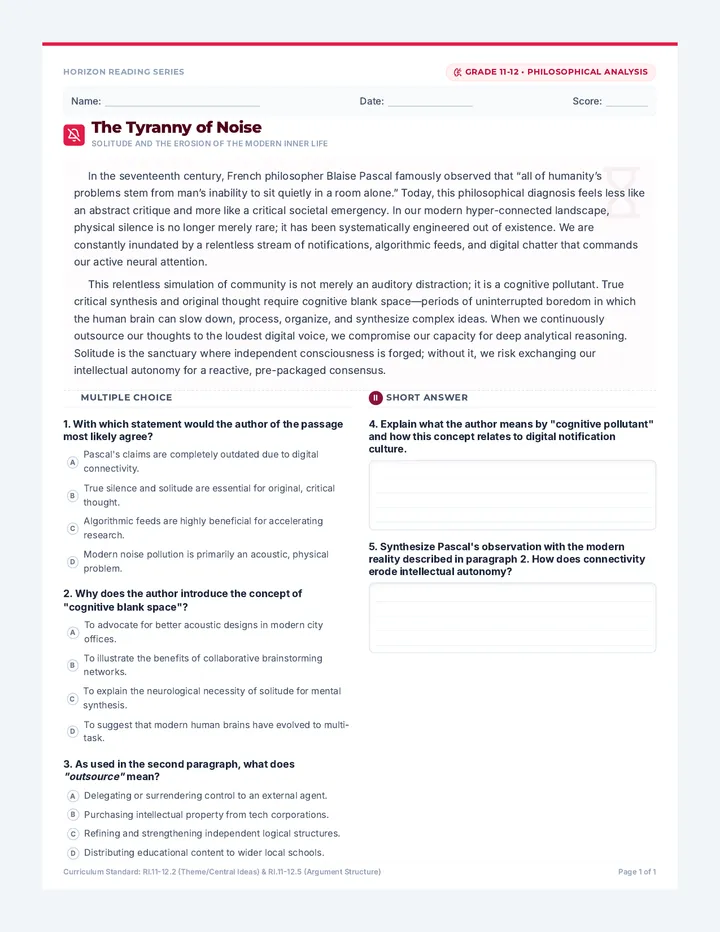
A comprehensive lesson focusing on the mechanics of evidence integration, specifically targeting plagiarism avoidance, evidence selection, and the use of signal phrases.
A comprehensive lesson for middle and high school students on finding, evaluating, and integrating research sources effectively using the CRAAP test and the 'Quote Sandwich' method.
A comprehensive lesson designed to help high school students with autism identify and respond to unsafe situations across various environments including school, home, the community, and interactions with strangers.
Introduces the concepts of personal boundaries and the importance of clear, enthusiastic consent.
Teaches the components of healthy friendships and effective communication strategies.
Explores the distinction between public and private spaces and behaviors, emphasizing personal space (the 'bubble').
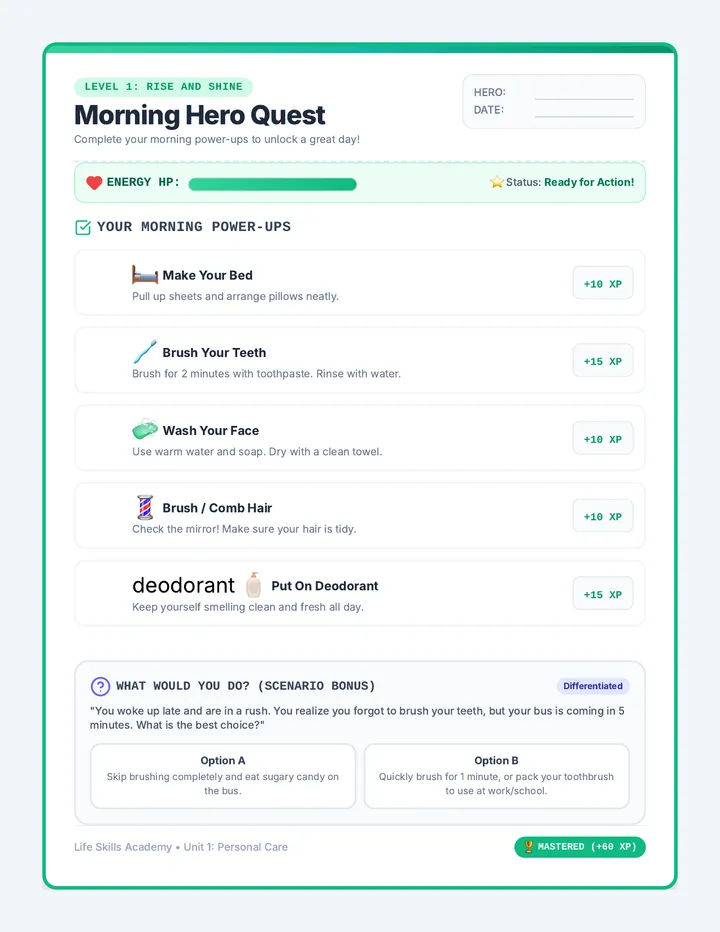
Focuses on the importance of personal hygiene and daily self-care routines for health and social confidence.
A 30-minute speech and language activity focused on comprehension and critical thinking using paired fiction and nonfiction texts. Designed for high school special education students with a "Case File" investigation theme.
An introductory lesson on CER structure using a graphic organizer approach. Students practice developing claims and supporting reasons across four different prompt types: argumentative, informational, text-based, and comparative.
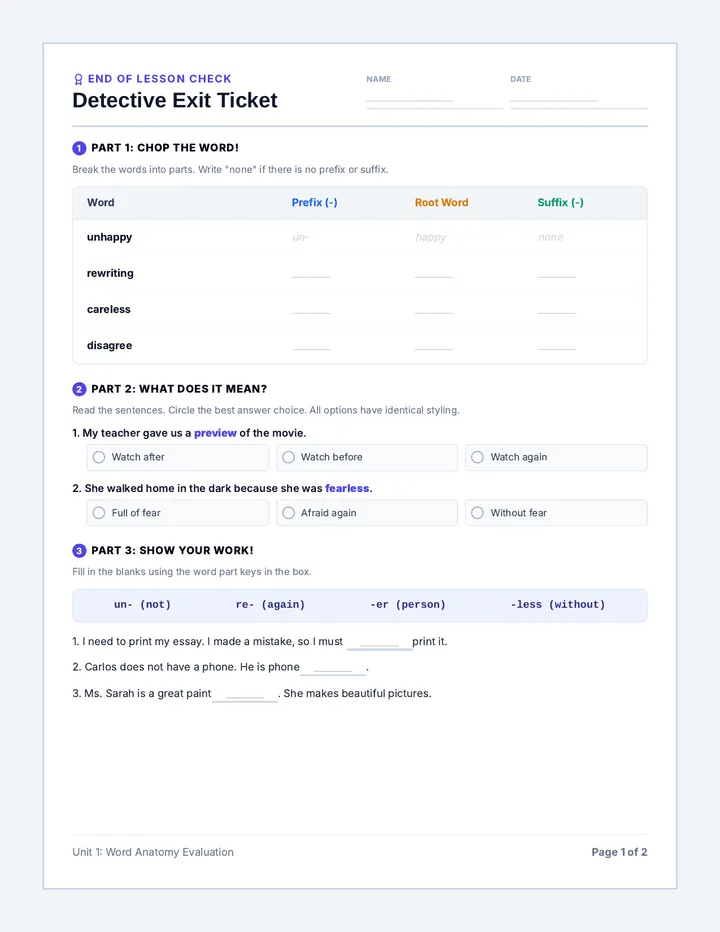
A comprehensive practice module for advanced secondary students to master irregular English verbs through contextual narratives, error analysis, and sentence transformations.
A 15-minute high-impact session focusing on identifying and repairing run-on sentences, sentence fragments, and vague pronoun-antecedent relationships. This lesson provides students with a 'repair manual' for common syntax glitches.
A quick exploration of theme and moral within the classic Brothers Grimm tale 'Briar Rose', featuring a focused bell ringer and exit ticket.
A comprehensive 30-45 minute lesson on the past perfect tense, featuring explicit instructions, a time-travel themed worksheet, and a detailed teacher guide. This lesson helps students understand how to sequence two past events using the 'past before the past' structure.
Compiling all learned strategies into a personalized, visual regulation plan for long-term success.
Using social scripts to reconnect with others and move forward positively after a big feeling moment.
Identifying the 'fork in the road' when feelings get big and selecting specific coping strategies to manage frustration and anger.
Using stick-figure mapping to visualize the thoughts and feelings of others during social interactions to build perspective-taking skills.
Introduction to Carol Gray's Comic Strip Conversations, focusing on the difference between what we say (speech bubbles) and what we think (thought bubbles).
Identifying the physical sensations associated with anger, anxiety, and frustration to catch big feelings early.
A deep dive into the life, legacy, and dreams of Suyuan Woo, the founding mother of the Joy Luck Club. Students will explore her resilience in war-torn China and her enduring hope for her daughters.