Students generate adjectives for a personal topic of choice, focusing on the quantity of ideas and vocabulary development using their own printed bubble maps.
A lesson focusing on words with the 'ai' digraph: pain, stain, chain, and train. This lesson uses the Model-Practice-Review framework with strong visual cues and tactile cut-and-paste activities.
An introductory lesson focusing on building word recognition and spelling skills through letter sorting, matching, and tracing activities. This lesson provides differentiated support for learners with minimal language skills.
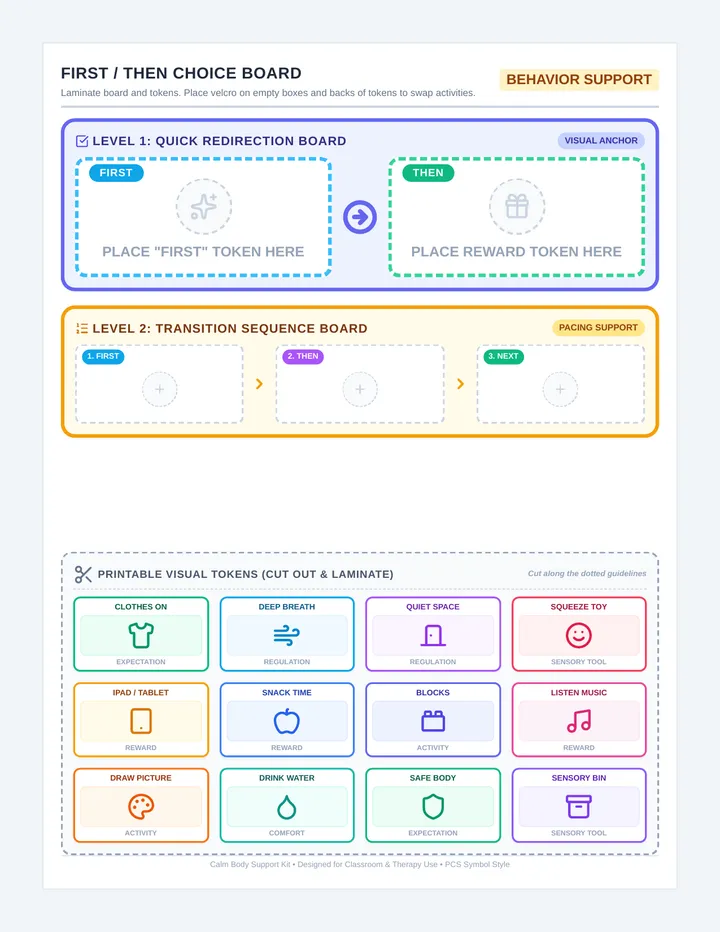
A lesson focused on helping students manage frustration when presented with non-preferred choices, providing a social story for perspective-taking and a reflection tool for post-meltdown processing.
A lesson introducing the seven continents with a special focus on North America, using symbol-supported text to help students identify global geography.
A foundational lesson introducing the Earth, water, land, and the people who live on our planet using core and fringe vocabulary symbols.
A 15-20 minute lesson for 4-5 students focused on advanced device responsibility, including proper closure, charging habits, and liquid-free zones.
A 15-20 minute lesson for 2-3 students on responsible Chromebook care, emphasizing clean environments and gentle handling, aligned with PBIS standards.
A 15-20 minute lesson for K-1 students focused on the basics of carrying and using Chromebooks responsibly, using positive framing and collaborative practice.
A gentle, flower-themed lesson for elementary students to learn social-emotional strategies for resolving conflicts during recess using the 'Peace Petals' framework.
A set of visual and interactive resources designed to help students with low cognitive functioning recognize the physical signs of anger and learn 'expected' calm-down behaviors through a social story, a visual poster, and a hands-on sorting activity.
A comprehensive set of tools for managing and reducing peer defiance and verbal conflict, focusing on proactive BIP strategies, student-facing visuals, and data collection.
An expanded student packet focused on basic reading comprehension, addition and subtraction within 20, and CVC word blending, all centered around a friendly animal theme for Kindergarten-level learners.
A multisensory math lesson using frog manipulatives and water-themed visuals to master one-to-one correspondence and number recognition up to ten, specifically designed for learners with cognitive delays.
A foundational reading comprehension lesson focused on identifying key details (Who, What, Where) from a short nautical-themed narrative. Designed with visual supports and clear structure to assist students with autism.
A set of materials focused on multisyllabic processing, helping students master the pronunciation of complex 3 and 4-syllable words through tiered practice and visual aids.
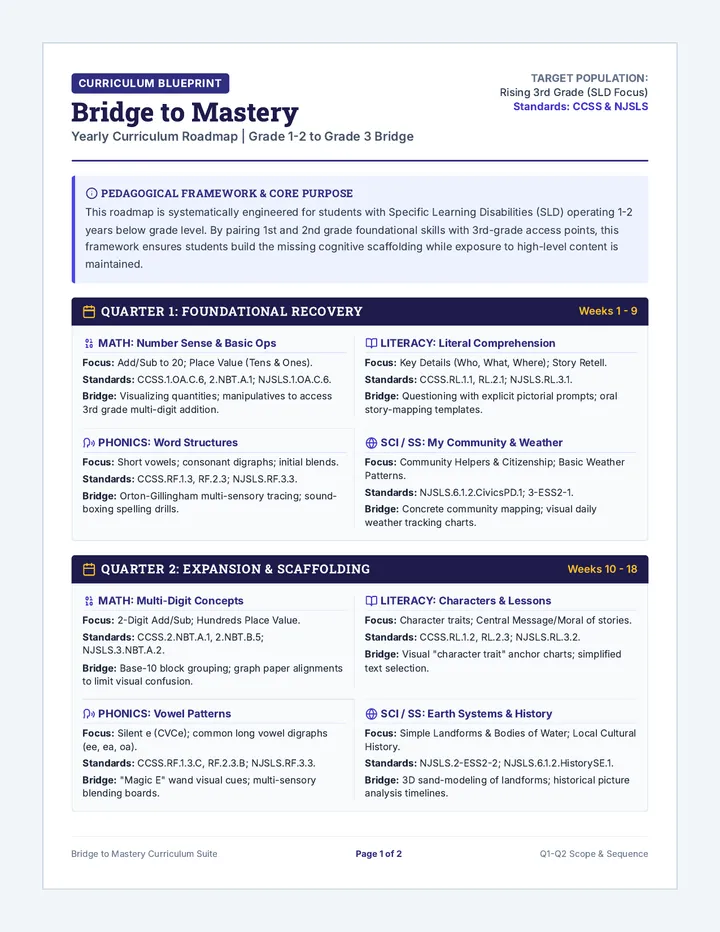
Practical activities and instructional materials for 40 weeks of intervention, including Elkonin boxes and nonsense word flashcards.
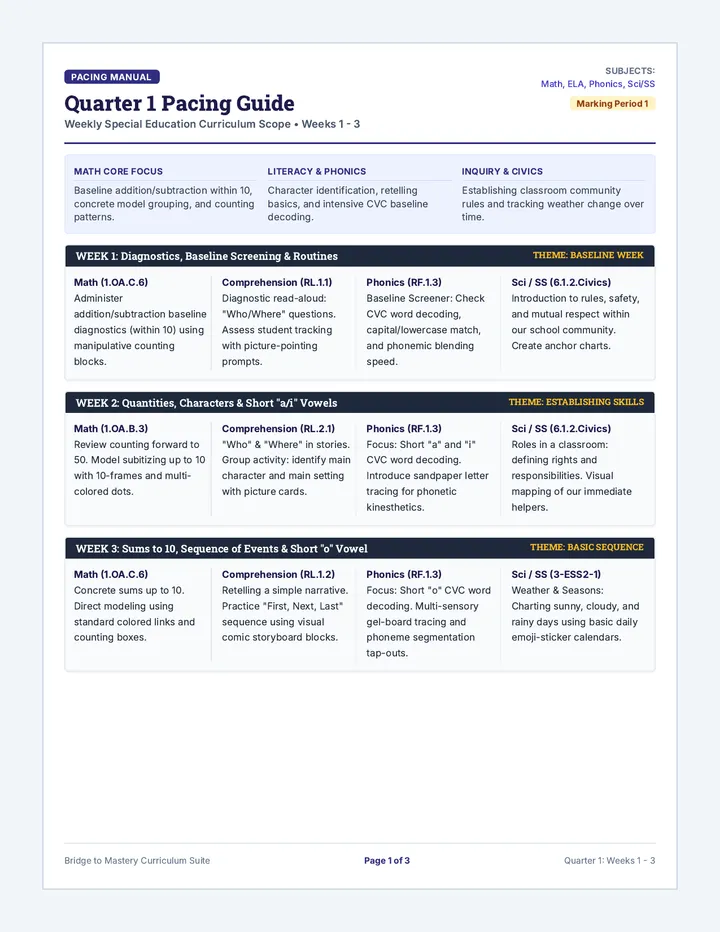
Administrative and tracking materials for monitoring student progress over 40 weeks of phonemic awareness and decoding instruction.
A speech-language therapy lesson focused on initial s-blends and the 'They are ___ing' sentence frame using interactive action visuals.
A collection of 10 rapid-fire executive functioning challenges designed to kickstart focus and mental agility at the start of any session.
A celebratory final session where students demonstrate their 'Master Pathfinder' skills and receive recognition for their growth in thinking and English.
Focuses on logic and decision-making by asking 'why' and 'how' questions about texts to understand cause and effect.
Deepens self-awareness through journaling and reflection, helping students recognize their own reactions and thoughts while reading and writing.
Encourages idea construction and creative writing, showing students how to fuel their mind machines with imagination to create original stories.
Develops information decoding skills by teaching students to search for facts and evidence within a text, much like a forensic scientist.
Introduces the growth mindset by comparing resilience to a gear that helps us keep moving forward even when we encounter 'rusty' mistakes.
Explores social understanding by teaching students how to use their 'internal compass' to interpret character feelings and perspectives in texts.
Uses story mapping to help students visualize narrative flow and understand how different parts of a story connect to form a whole.
Teaches basic grammar and sentence structure as the 'blueprints' that help us express ideas clearly so others can understand our thoughts.
Introduces vocabulary building through the lens of 'parts' for our mind machines, focusing on labeling emotions and objects with precision.
Focuses on phonics and pattern spotting in text, teaching students that reading is a form of detective work where we look for clues to unlock meaning.
An introductory lesson where students become 'Pathfinders,' learning that their minds are like incredible machines with gears they can control. Focuses on self-awareness and the basics of how we decode stories.
A collection of visual social stories, checklists, and activities designed to help autistic students navigate classroom expectations like listening, waiting, working, and taking breaks.
Strategies and quick-reference tools specifically designed for refocusing and redirecting students with ADHD and defiant behaviors in the Least Restrictive Environment.
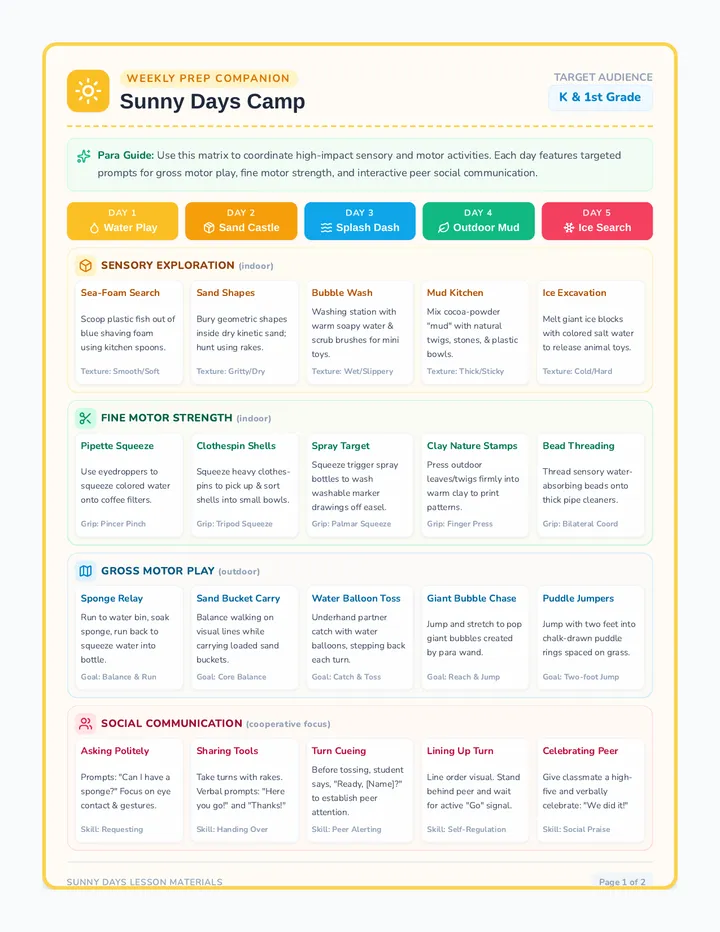
Sensory support strategies and proprioceptive activities designed for students in grades 3-5. Bridges the gap between play-based movement and functional household participation with age-appropriate "strength challenges."
Sensory support strategies and proprioceptive activities specifically designed for students in grades K-3. Focuses on play-based heavy work, animal walks, and simple household participation.
A comprehensive K-12 behavior management system that synthesizes best practices from MTSS, PBIS, and restorative justice frameworks. This lesson provides teachers with a clear decision-making flow and a detailed policy handbook for maintaining a positive school culture.
A comprehensive set of resources for parents of junior high and high school students, focusing on proprioception, sensory seeking behaviors, and practical home-based strategies.
A comprehensive parent training resource designed to support task initiation and sustained focus for students with autism using visual strategies and structured home routines.
A collection of video-based independent work stations for student rotation and self-paced learning.
A social story and support toolkit designed to help students navigate frustration, manage physical impulses, and choose safe alternatives to eloping or aggression.