A daily routine lesson for morning circle and daily work, reinforcing garden themes, calendar skills, and social-emotional awareness.
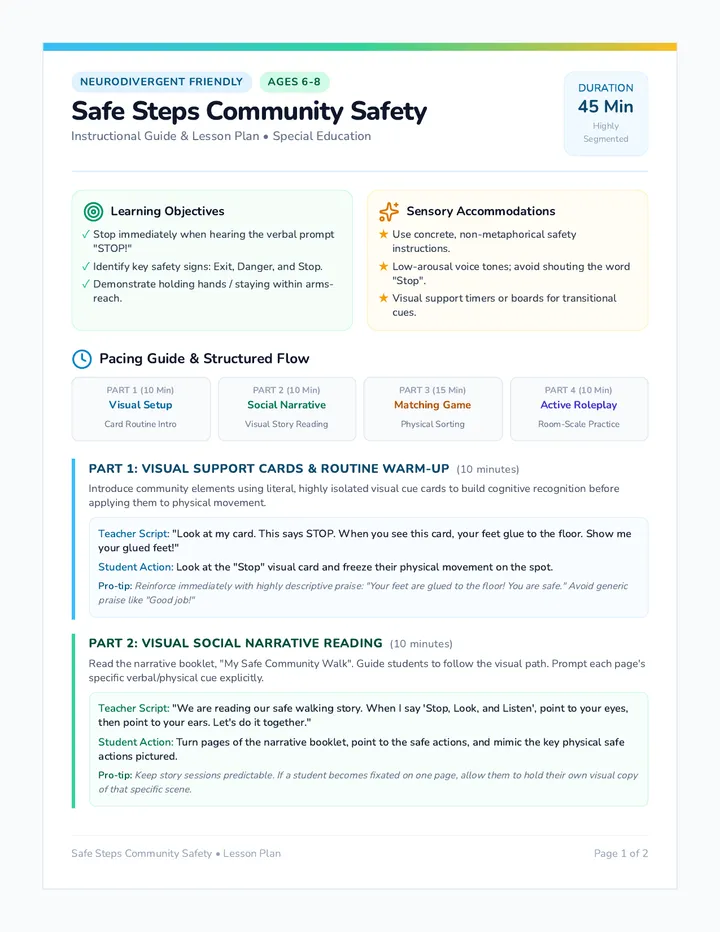
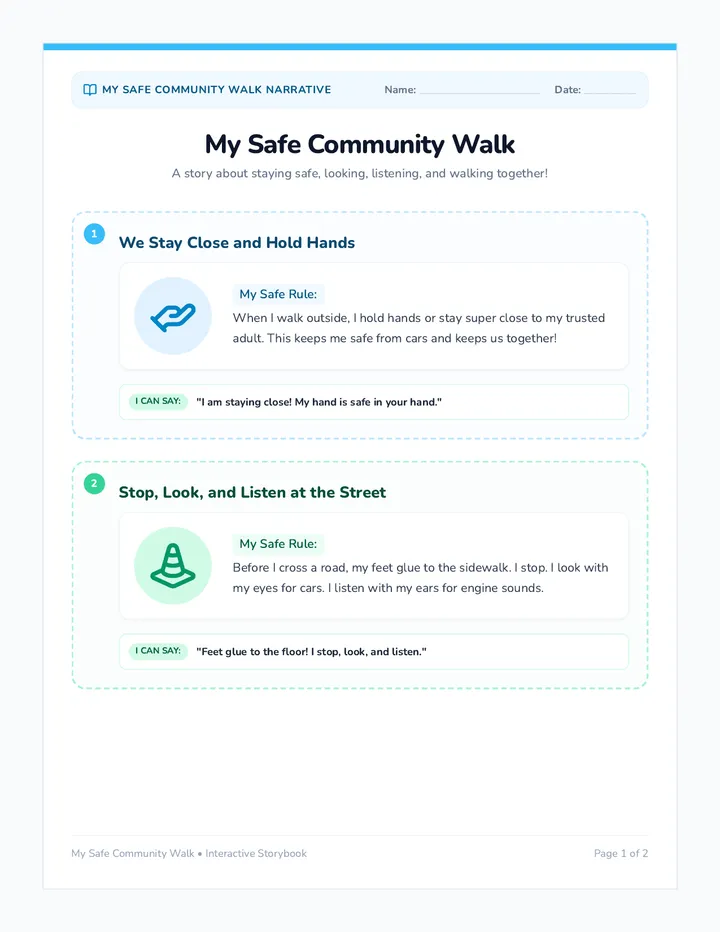
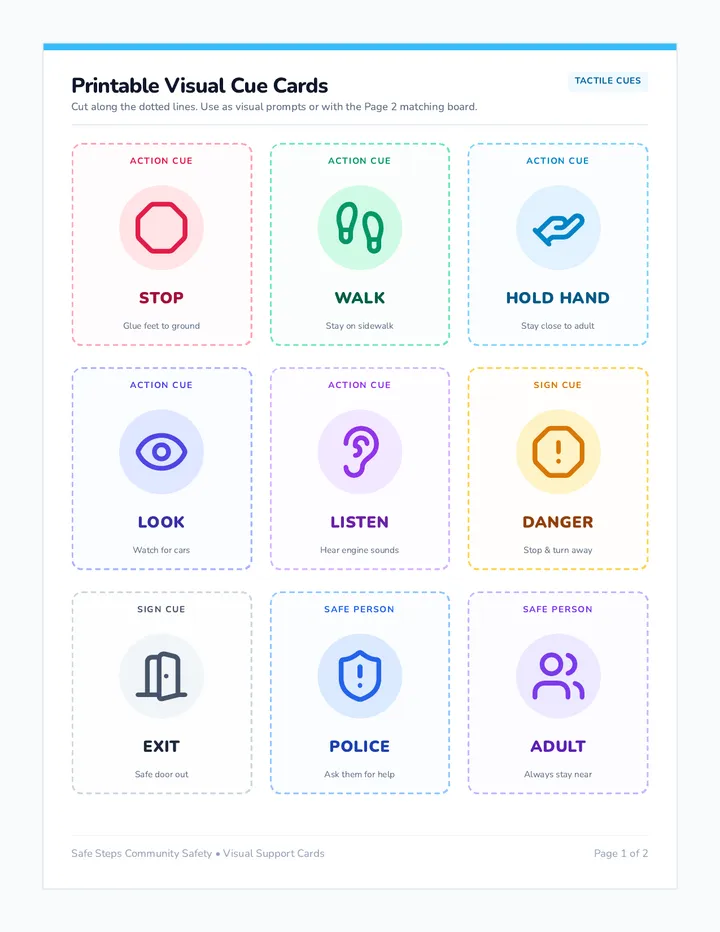
A comprehensive, sensory-friendly community safety sequence designed for young learners with autism, covering walking safety, traffic rules, getting lost, and parking lot awareness.
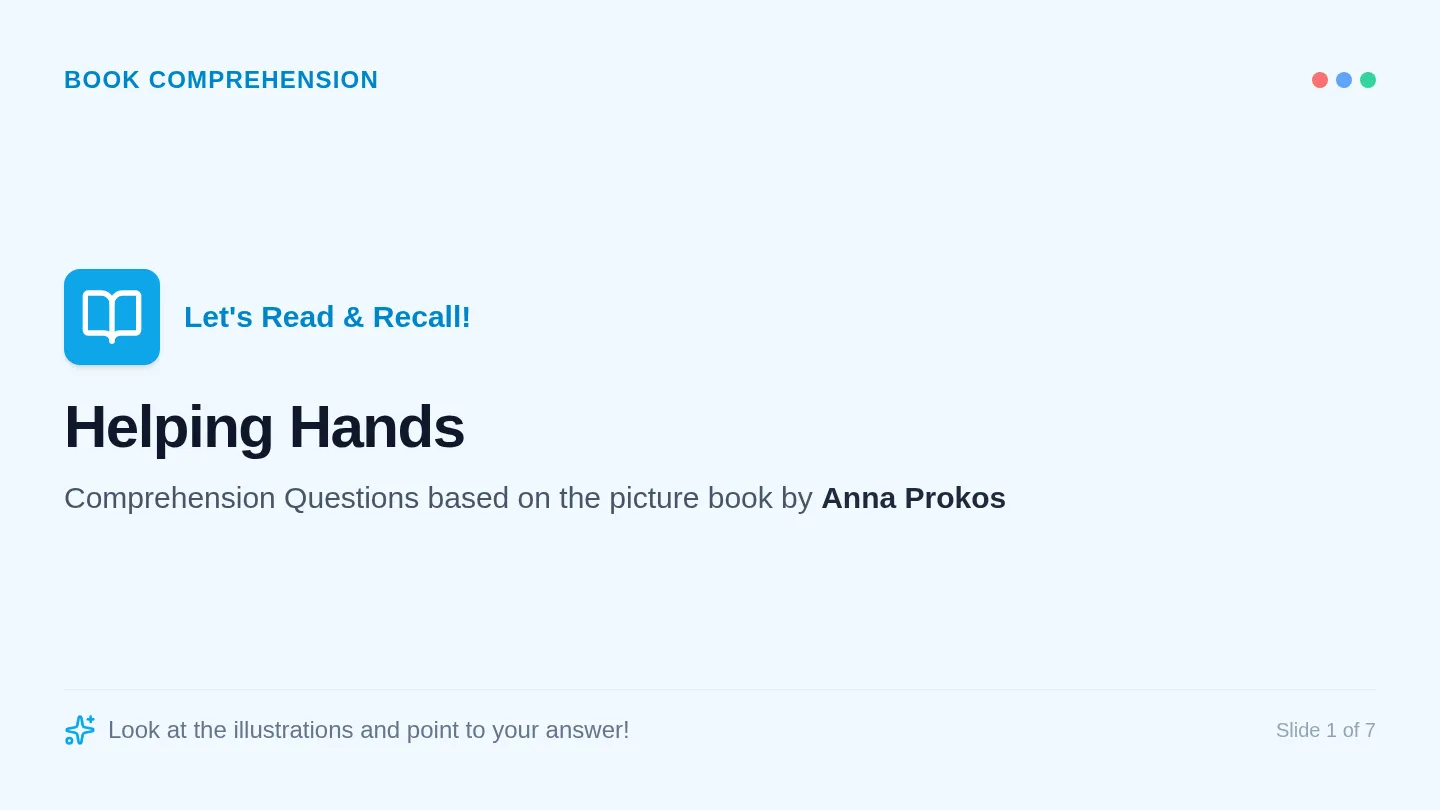
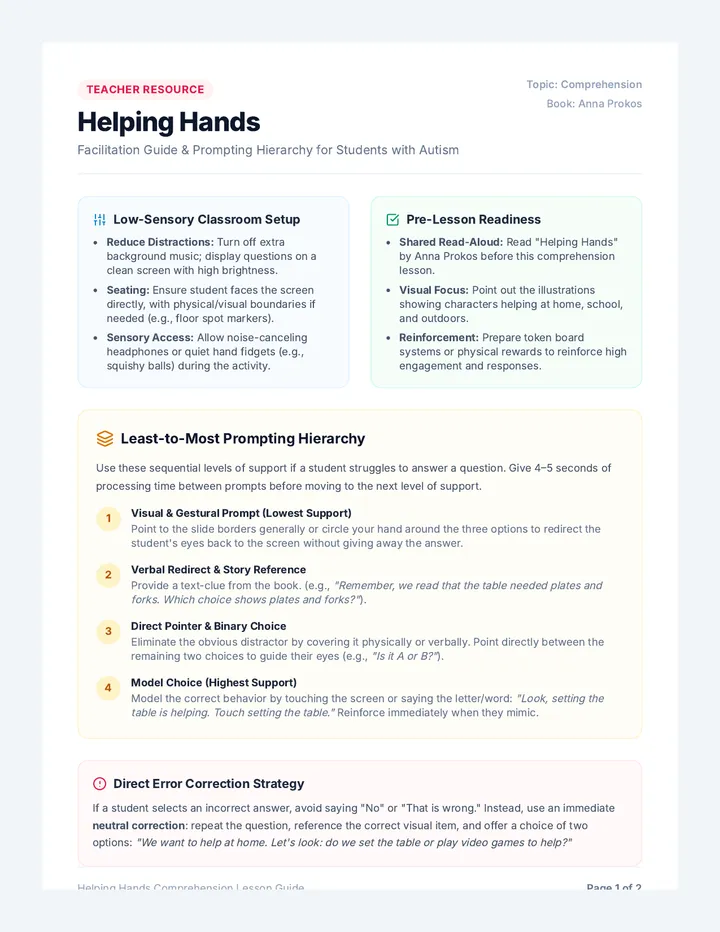
A comprehension lesson based on the book 'Helping Hands' by Anna Prokos, designed specifically for students with autism. It includes visual-supported question slides and a teacher facilitation guide with structured prompting hierarchies.
A comprehensive teacher facilitation guide and answer key based on the picture book 'Helping Hands'. Includes structured prompting hierarchies, error-correction procedures, autism-specific behavioral supports, and visual lesson cues.
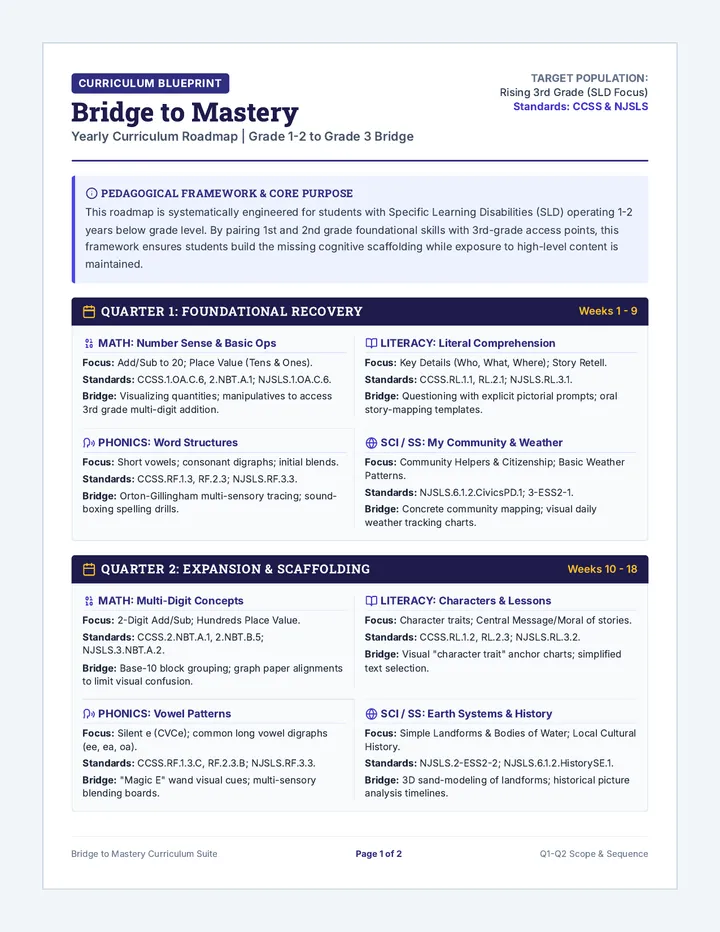
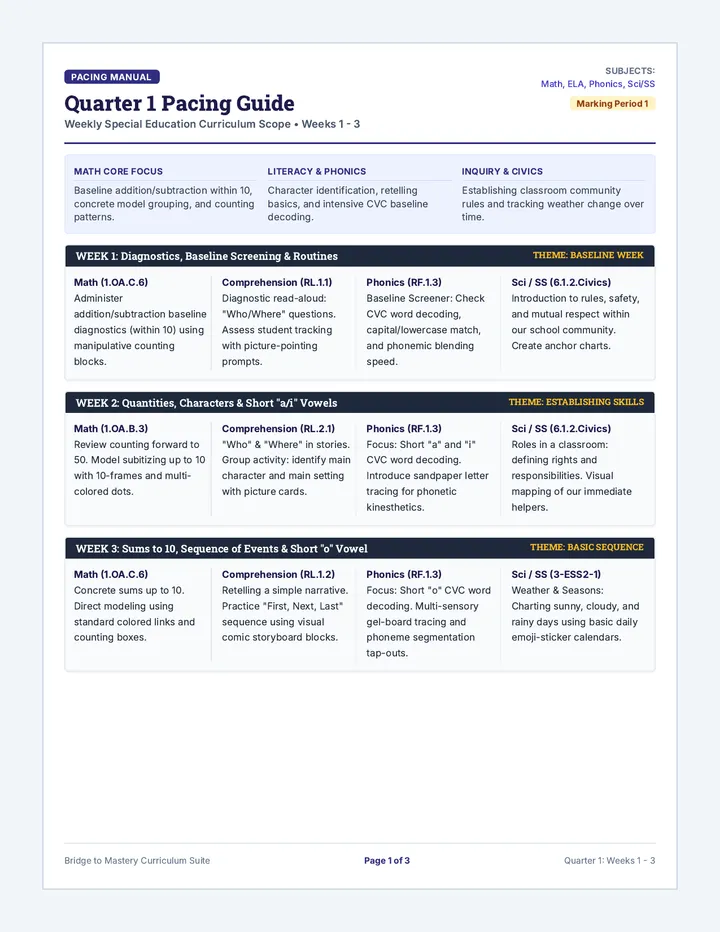
A comprehensive curriculum roadmap and detailed Quarter 1 pacing guide designed for rising 3rd-grade students with SLD operating at a 1st-to-2nd grade level. It includes diagnostic baseline screens and specialized lesson templates for self-contained special education settings, bridging CCSS and NJSLS.
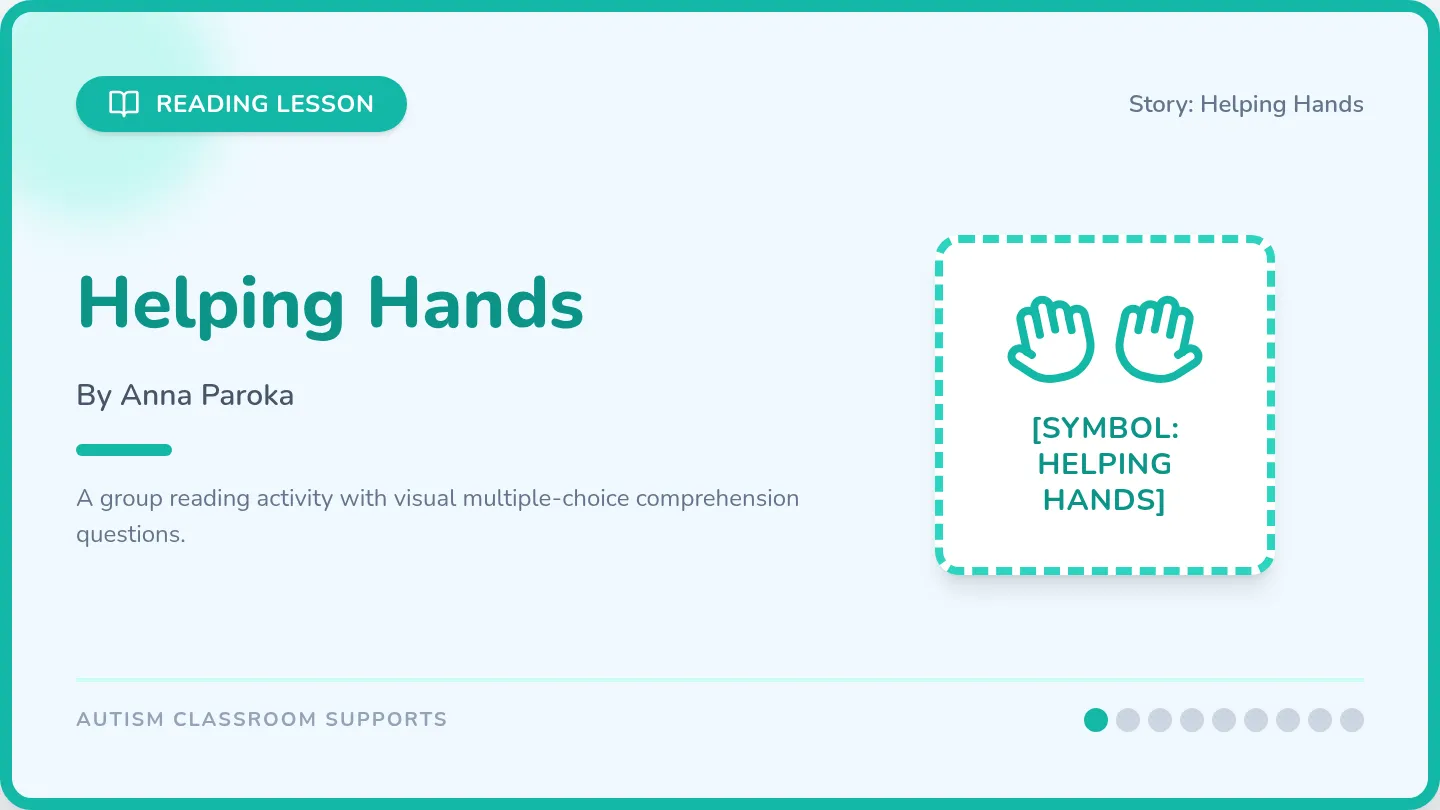
A comprehension lesson based on the story 'Helping Hands' by Anna Paroka, designed specifically for students with autism. It includes visual supports, clear structures, and highly readable materials.
High-contrast visual comprehension slides designed for students with autism, based on the picture book 'Helping Hands' by Anna Prokos. Features large typography (32px+), color-coded option blocks with clear visual icons, and explicit page-illustration references.
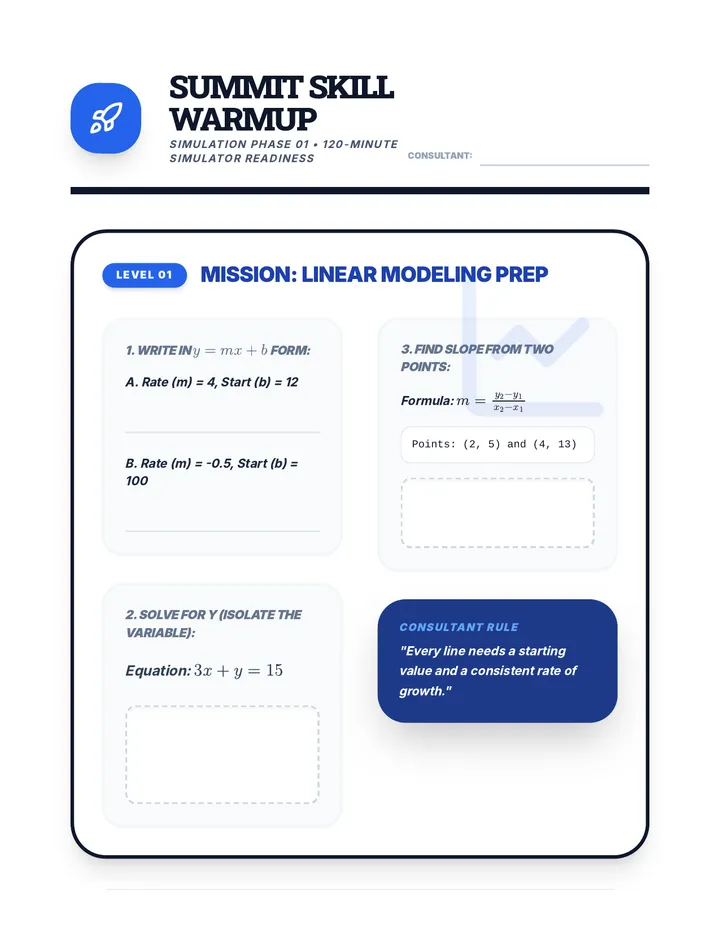
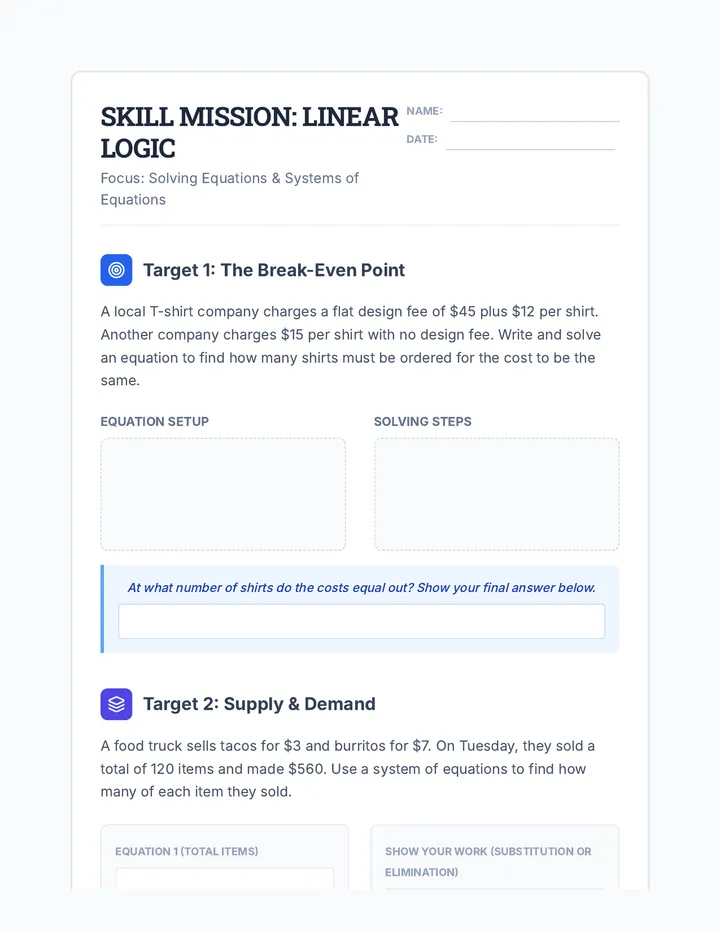
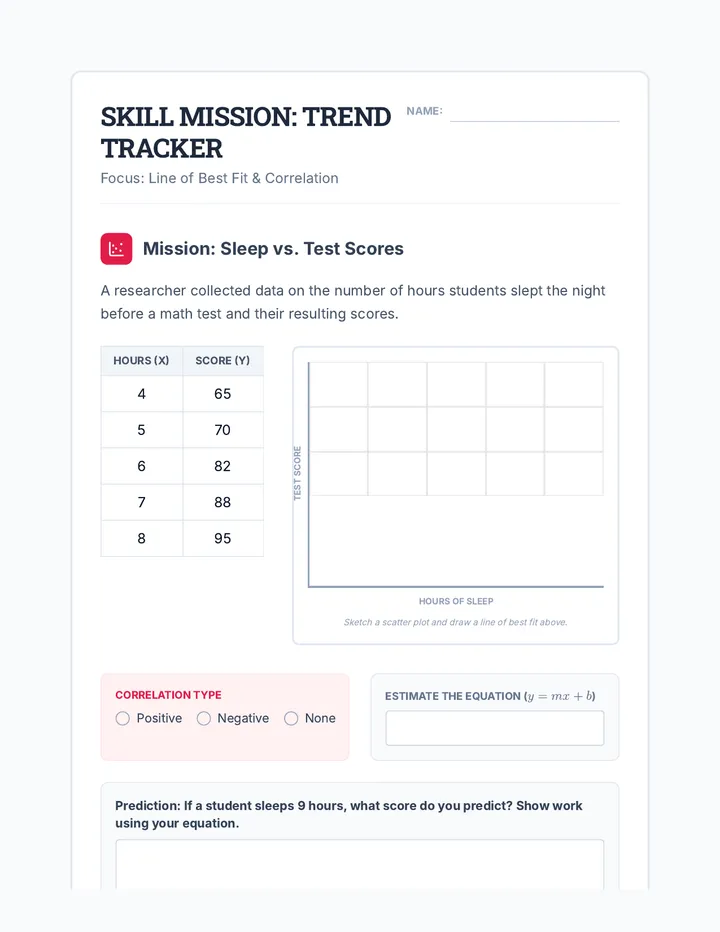
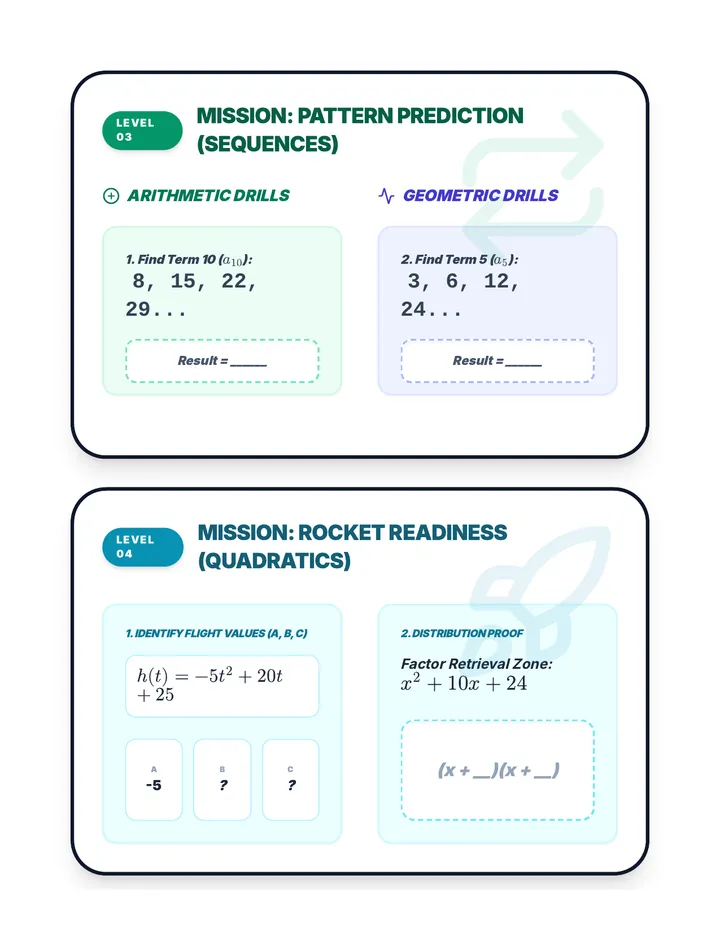
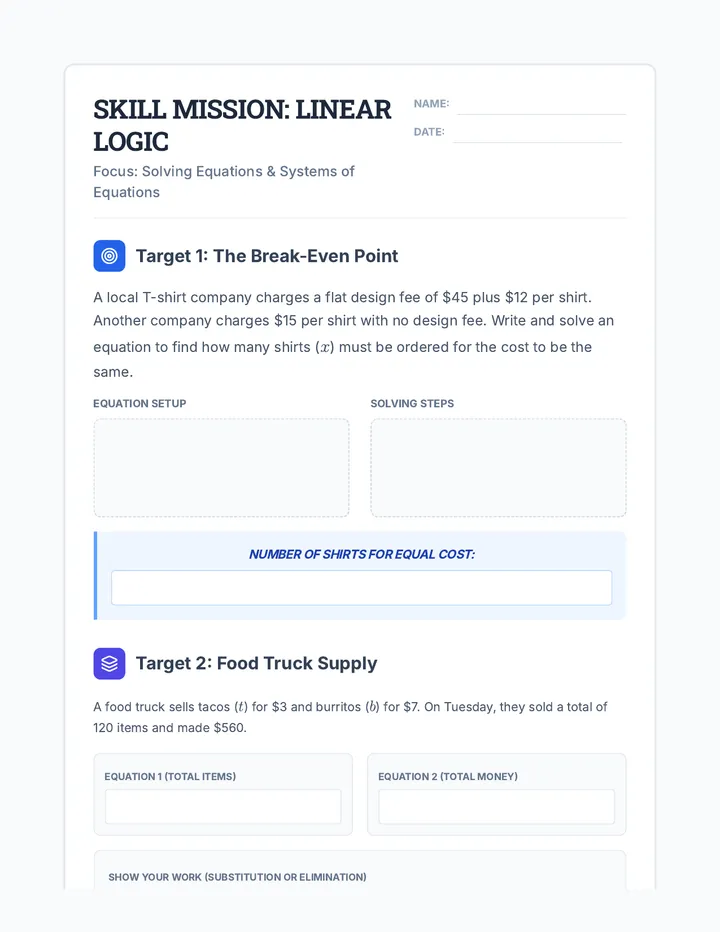
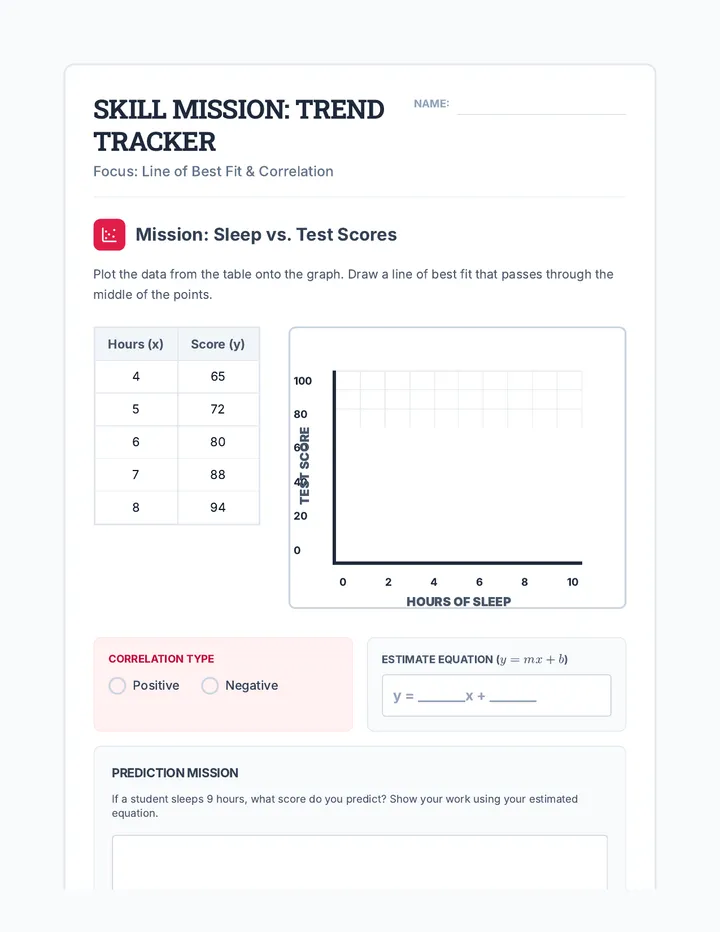
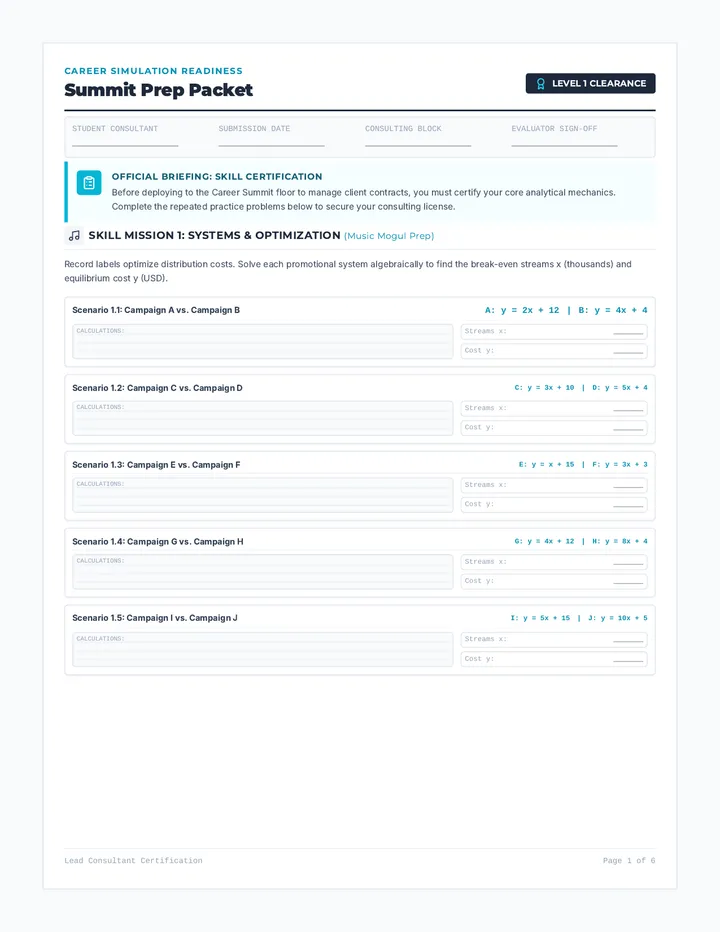
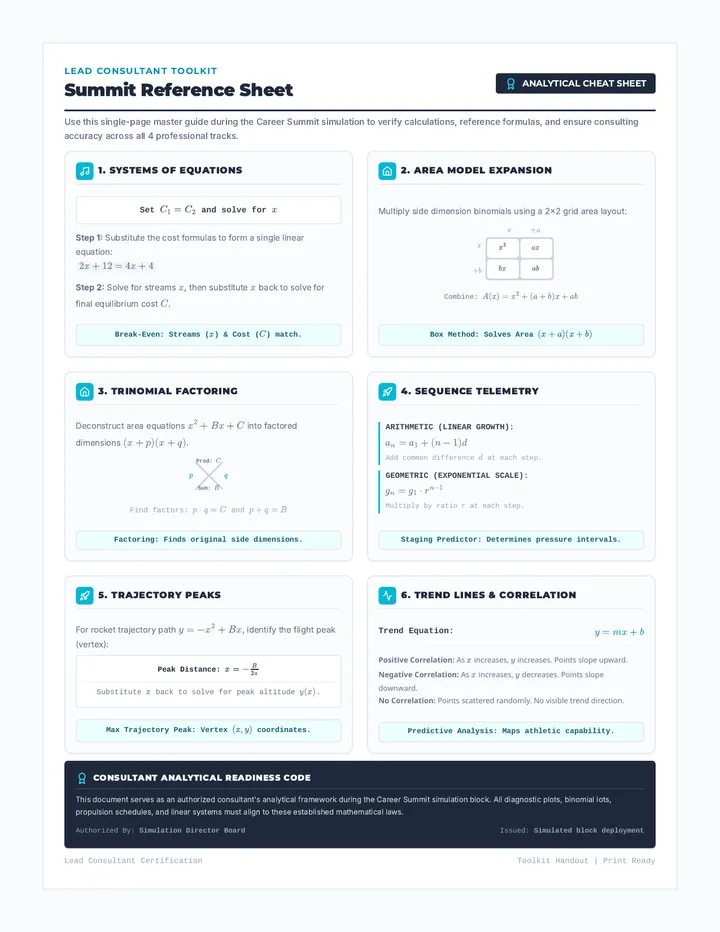
A high-intensity, 120-minute math simulation. Students act as lead consultants, completing a high-speed skill warmup before selecting a professional sector (Music, Urban Planning, Rocket Science, or Sports Analytics) to solve a series of complex work orders.
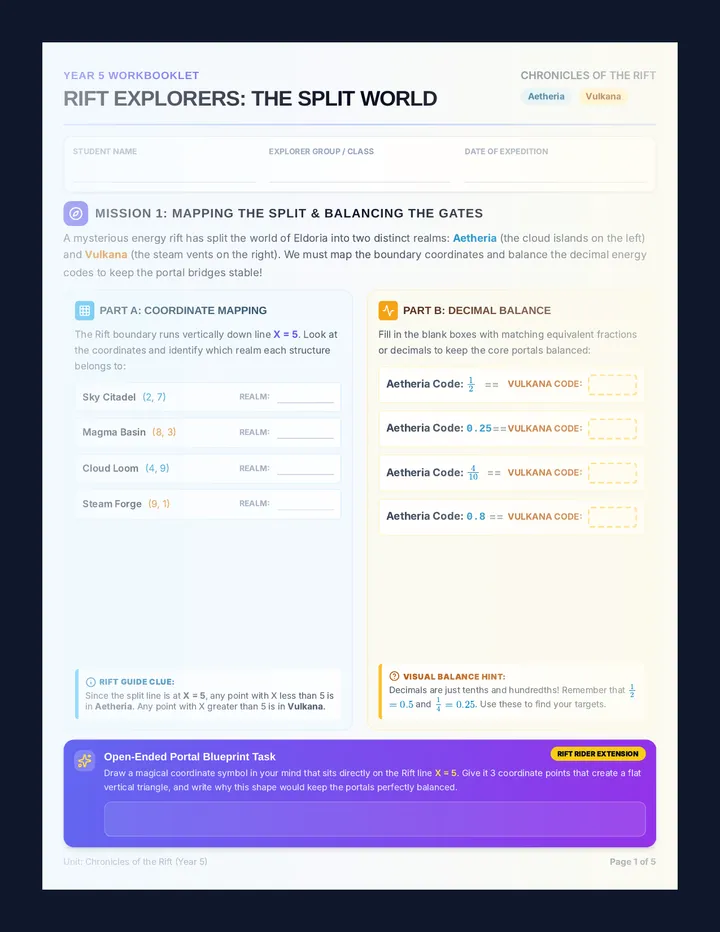
An immersive, five-part interdisciplinary workbook series where Year 5 students explore a world split in two. This booklet integrates mathematics, vocabulary, data handling, and science into a thrilling parallel-world narrative.
An interactive, high-contrast slide deck with 5 multiple-choice comprehension questions based on 'Helping Hands' by Anna Paroka. Designed specifically for students with autism, it features simplified language, a predictable layout, large text sizes (minimum 24px), and Boardmaker-style visual support placeholders using Lucide icons.
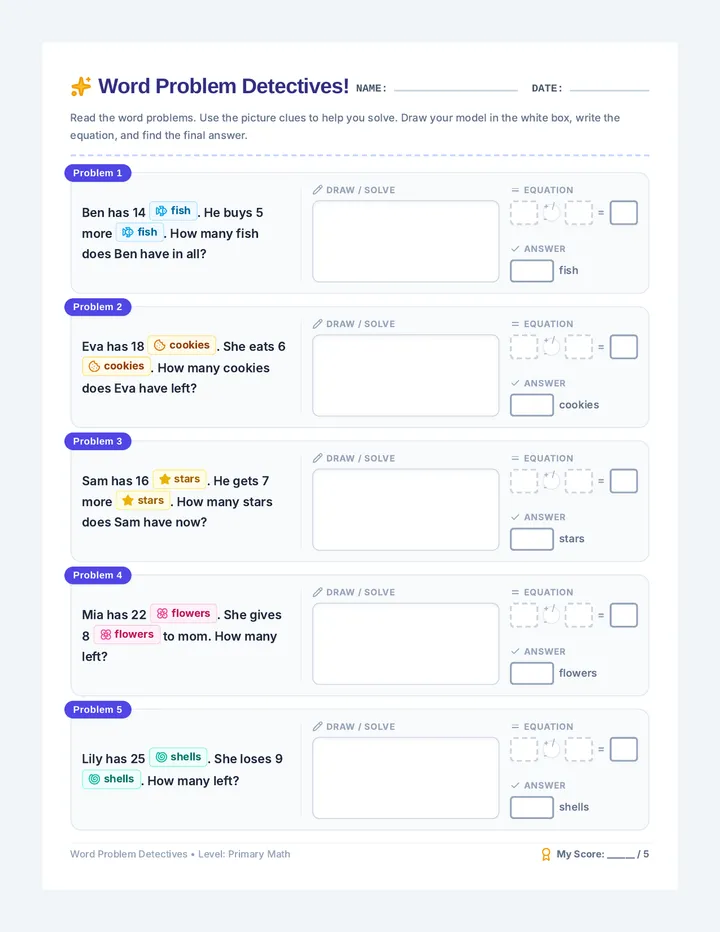
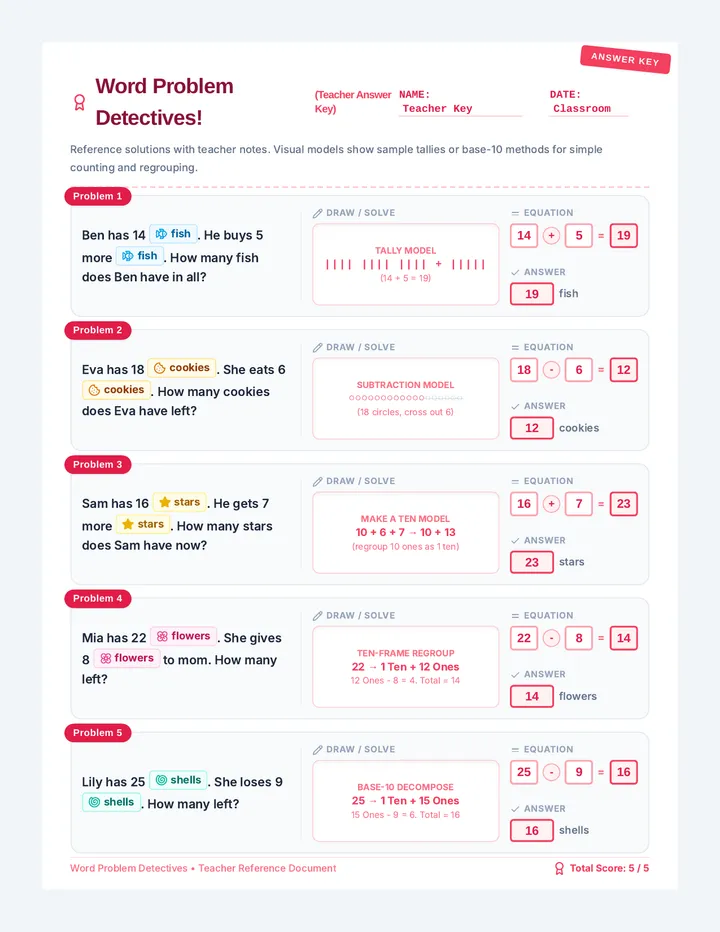
A primary math unit designed to build confidence in solving one-step addition and subtraction word problems. The sequence combines engaging visual cues, scaffolded modeling spaces, and explicit transition strategies between concrete and abstract math representation.
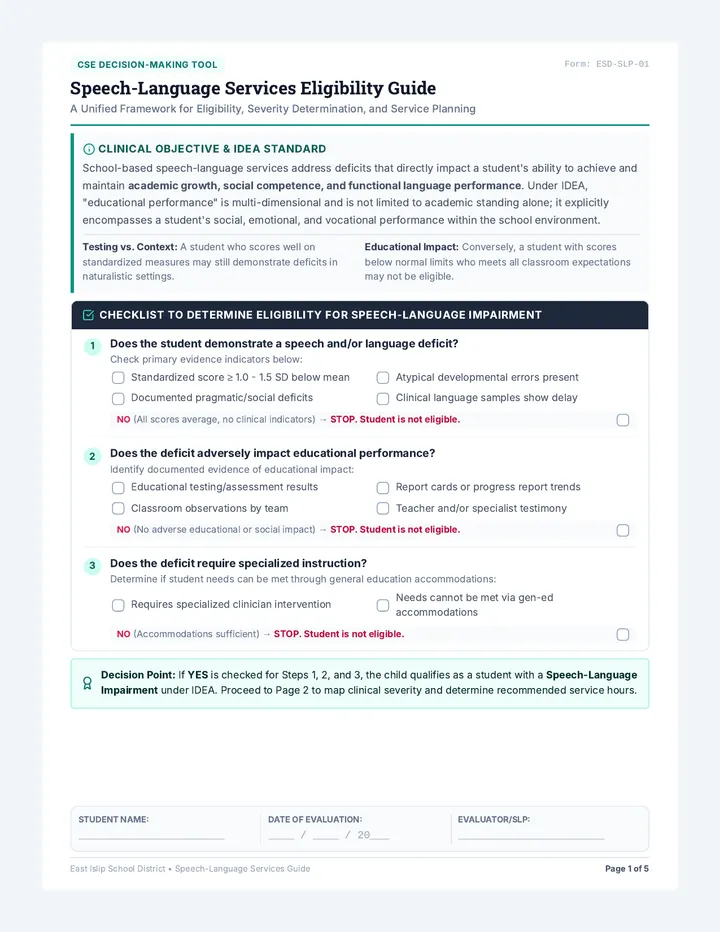
A comprehensive framework and unified decision-making guide for CSE members to determine eligibility, severity, and discontinuation of speech-language services.
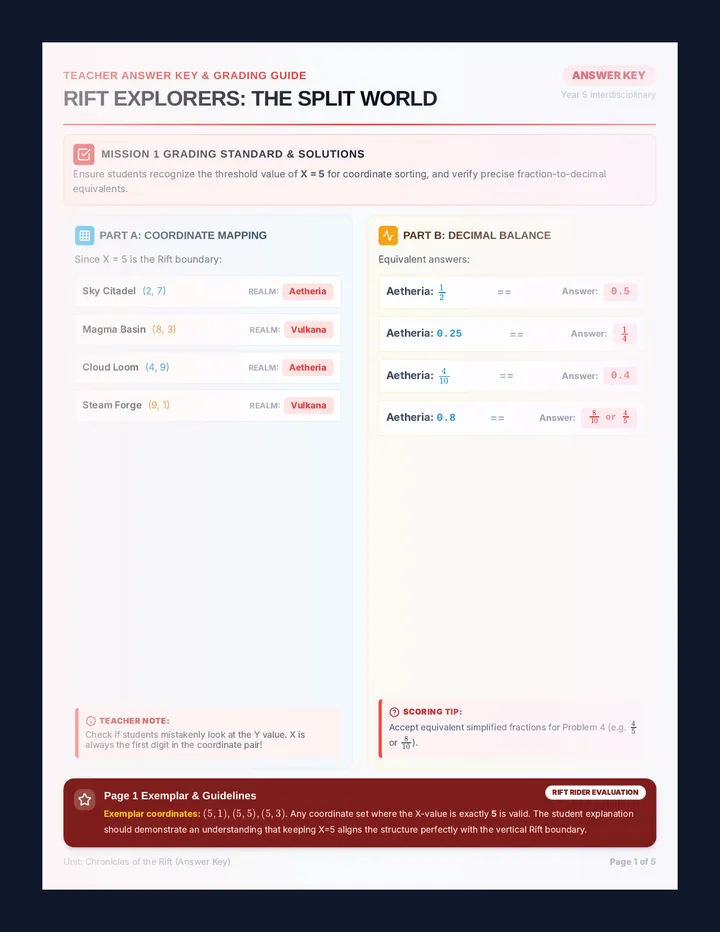
A comprehensive 5-page Teacher Answer Key matching the 'Rift Explorers Workbook'. It provides all correct mathematical solutions, completed vocabulary definitions, sorted science classifications, logical sequence keys, and exemplar student responses highlighted in clear pink/red text.