An interactive lesson designed for young learners with autism to identify basic emotions, recognize physical body signals, and build a personalized toolkit of coping strategies through visual supports and drawing activities.
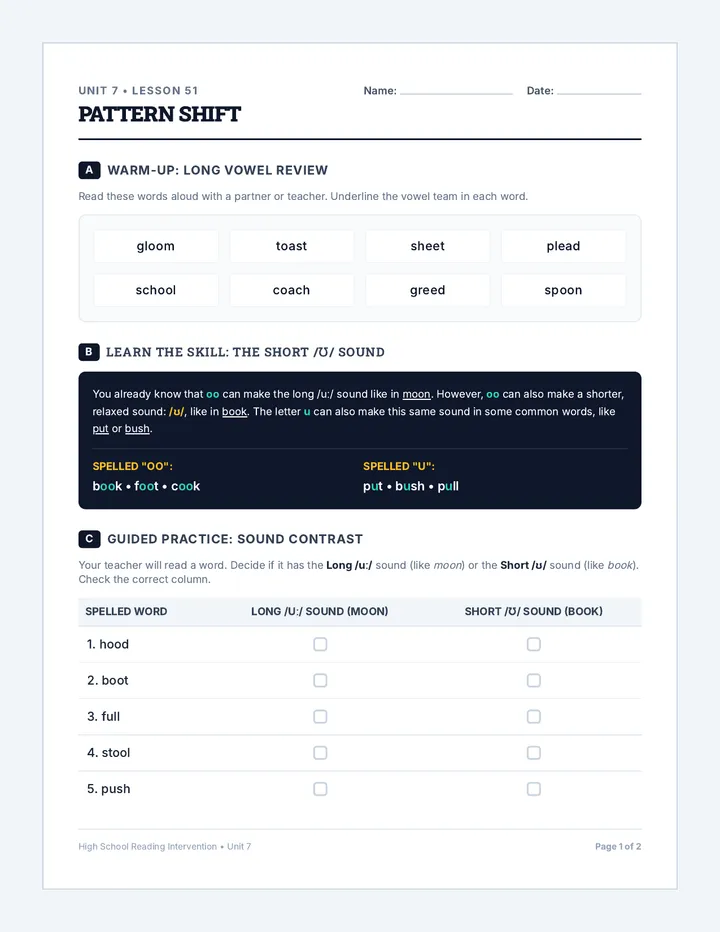
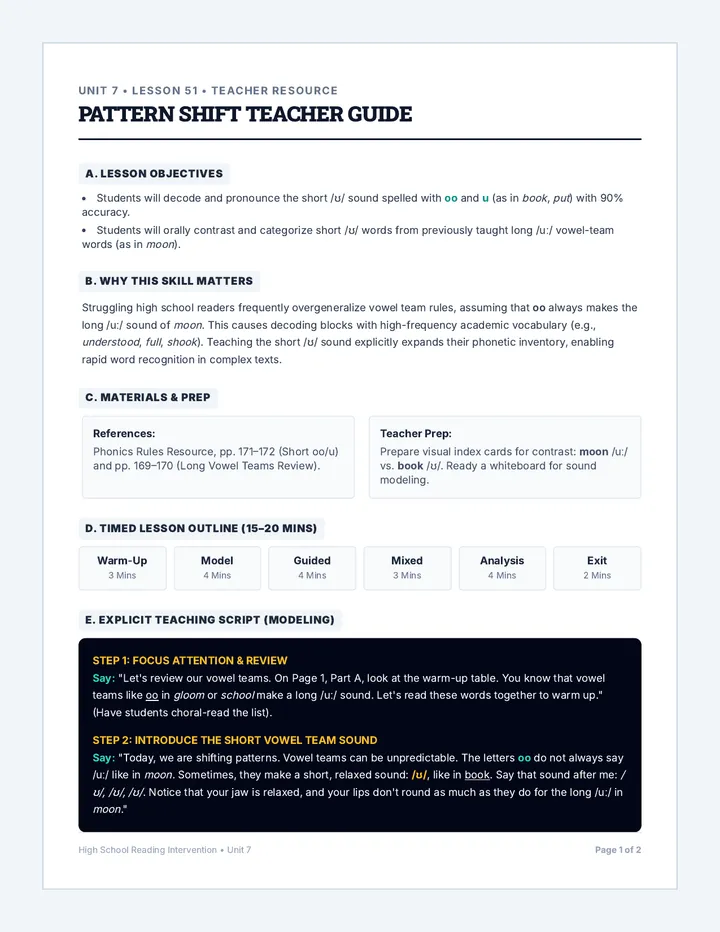
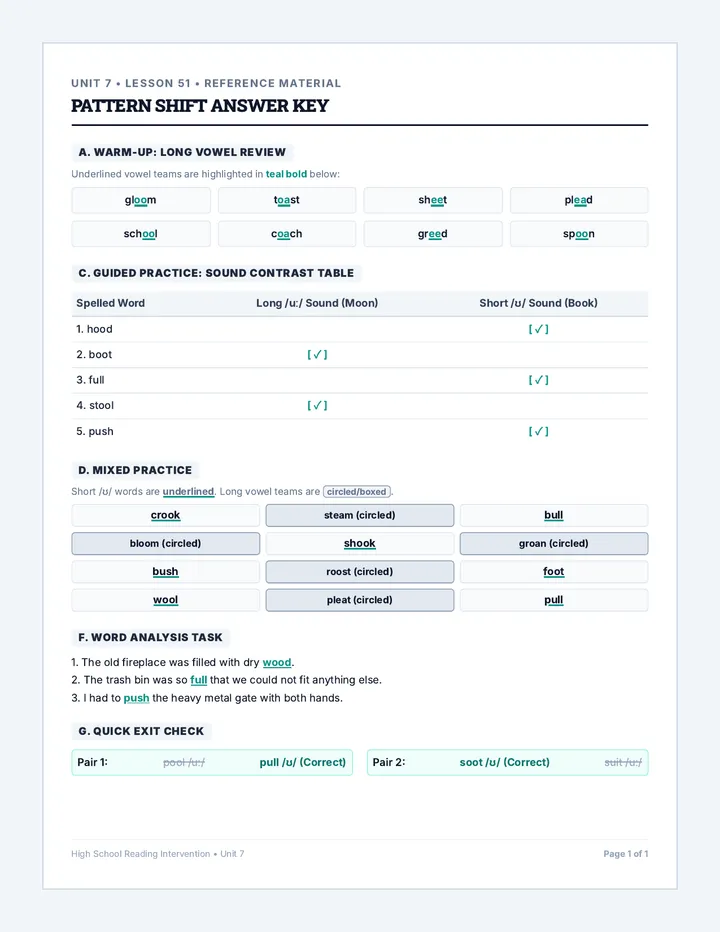
A phonics intervention unit for high school readers focusing on short oo patterns, sound contrasts, and spelling application.
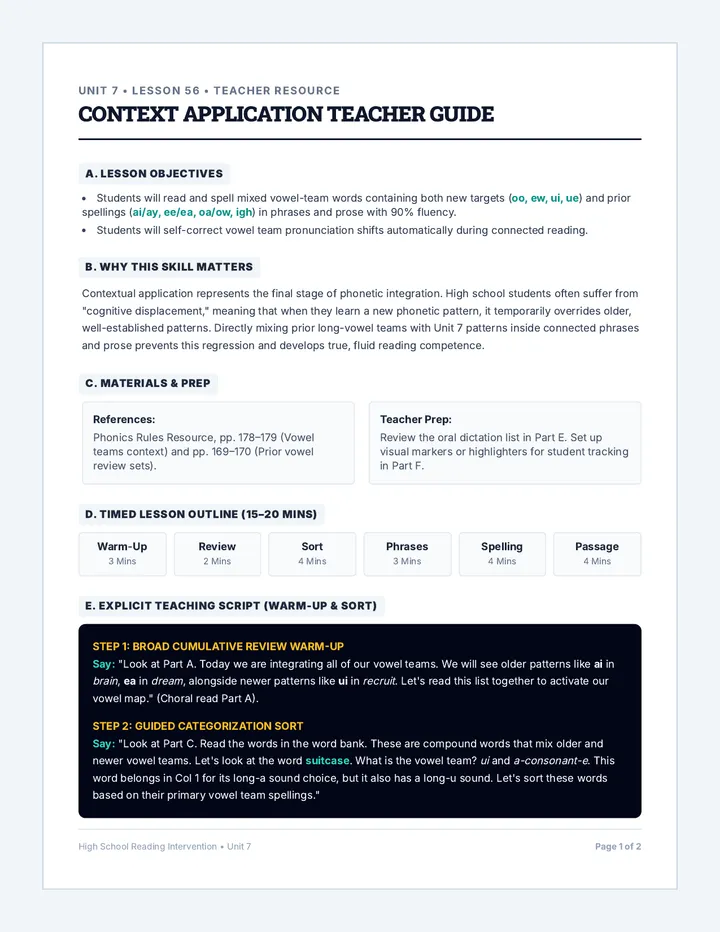
Lesson 56: Consolidating and applying Unit 7 vowel teams in phrases, sentences, dictation, and connected text while maintaining active recall of prior long-vowel teams.
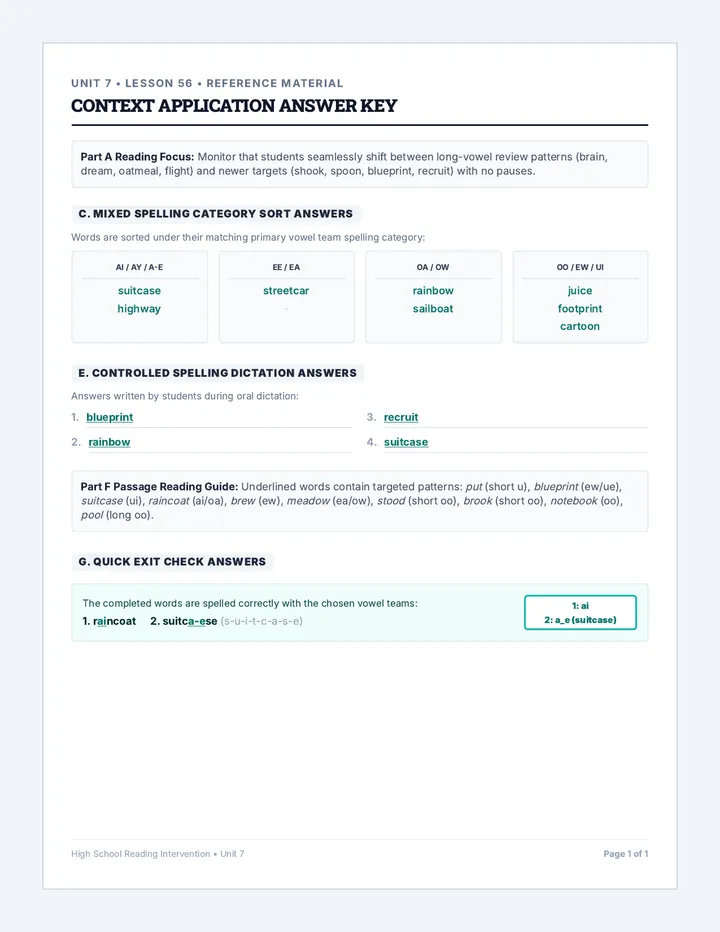
Complete answer key for the Connected Reading Student Handout (Lesson 56), with answers clearly marked and filled in for teacher reference.
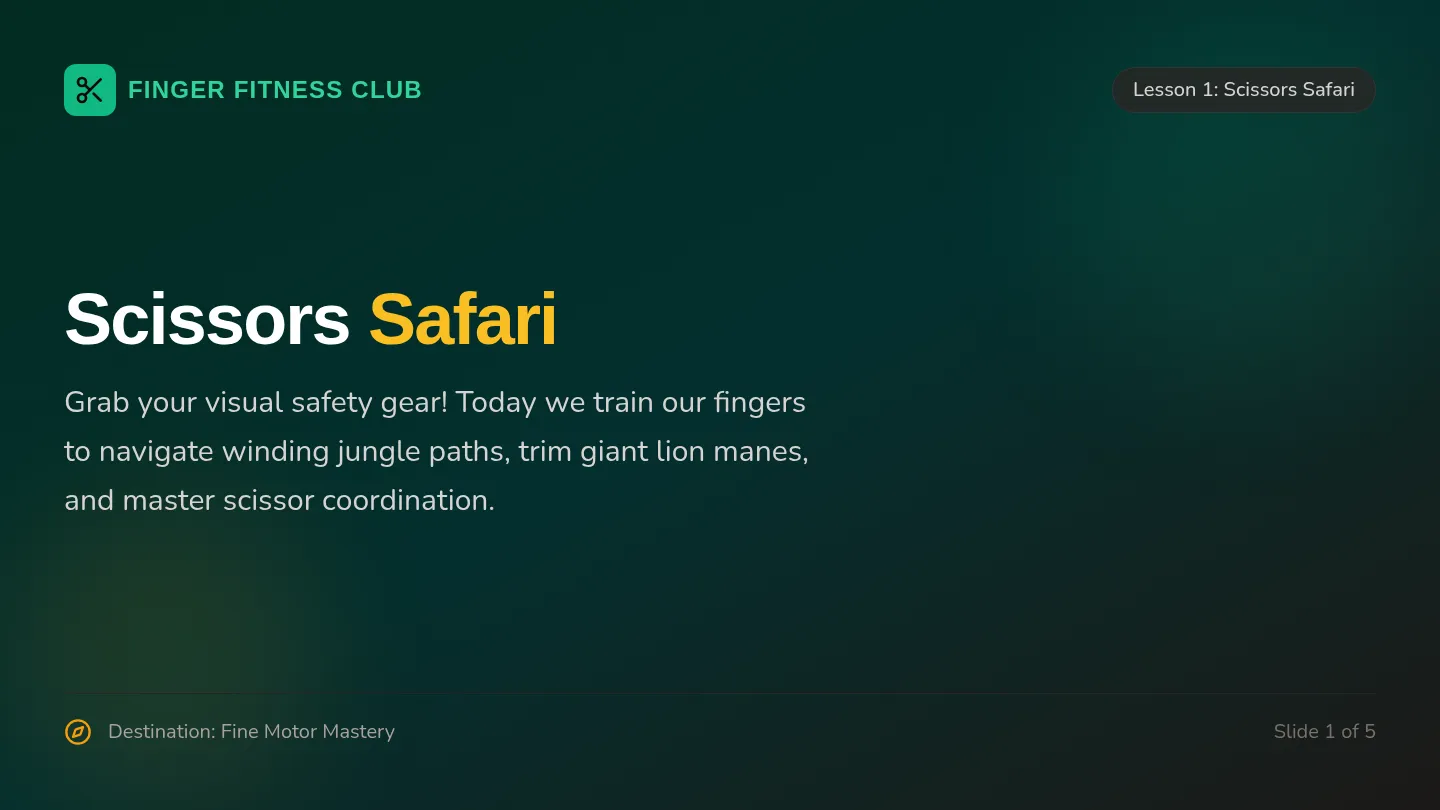
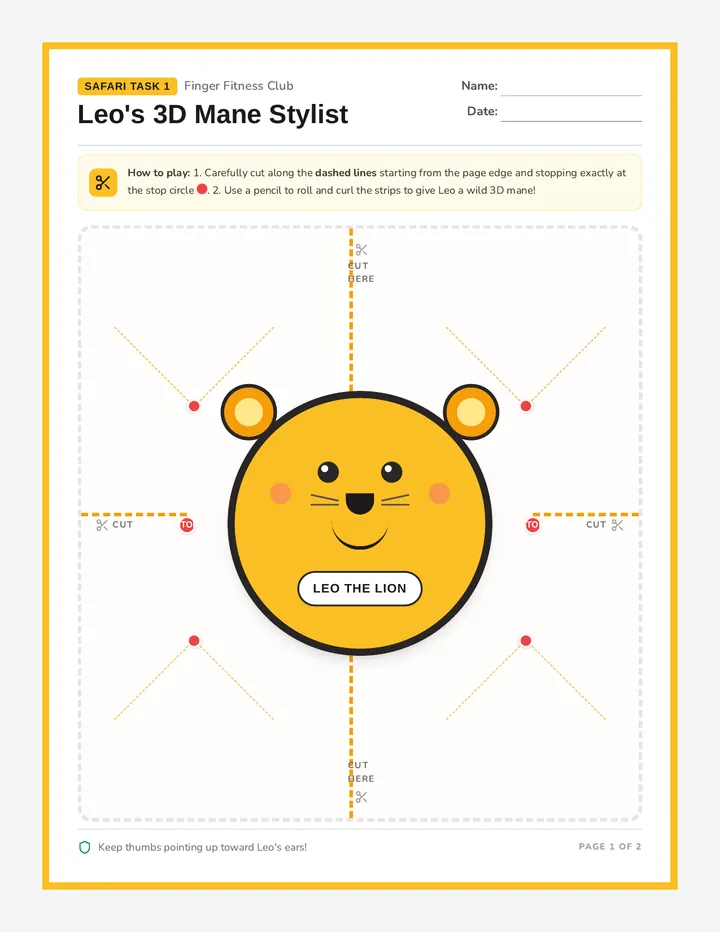
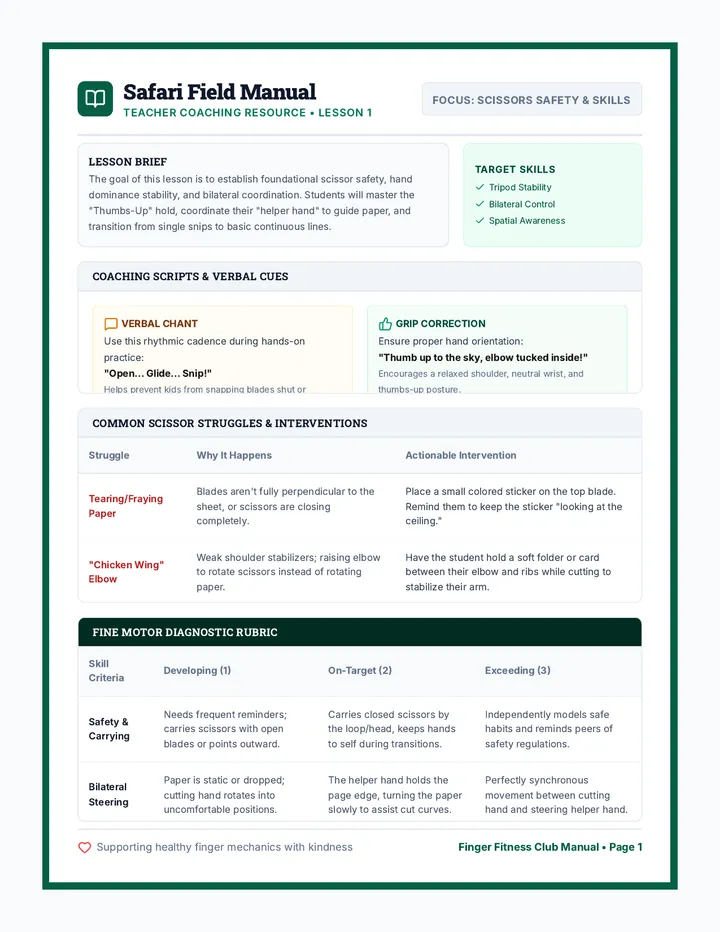
A playful and highly engaging fine motor development unit targeting scissor mastery, tripod pencil grip, and sensory-driven finger strengthening through hands-on adventures. This week-long progression includes immersive student guides, gamified practice mats, and detailed teacher coaching resources.
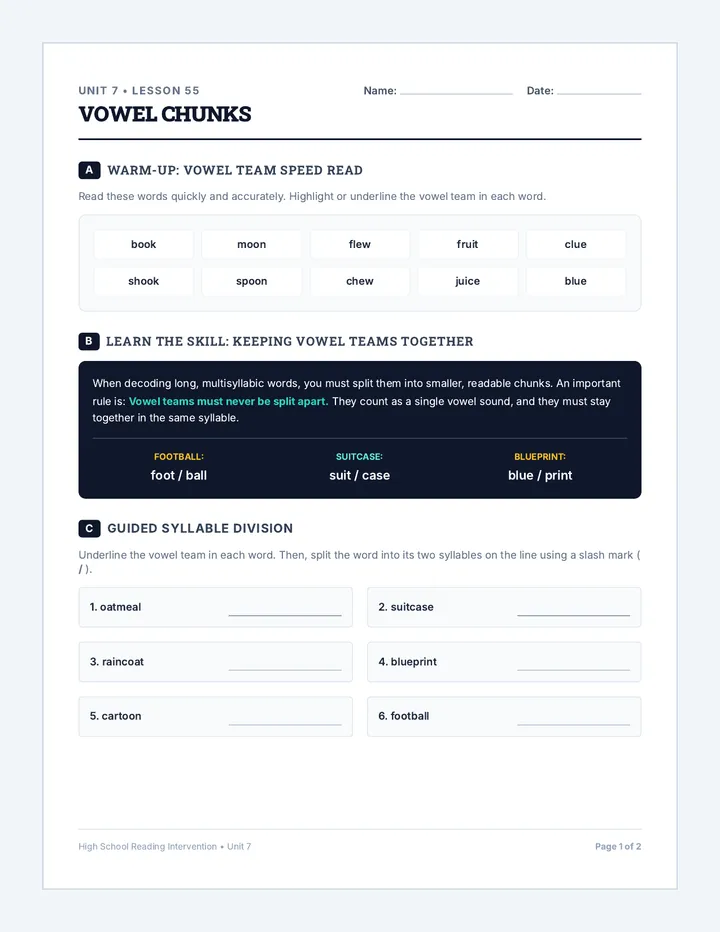
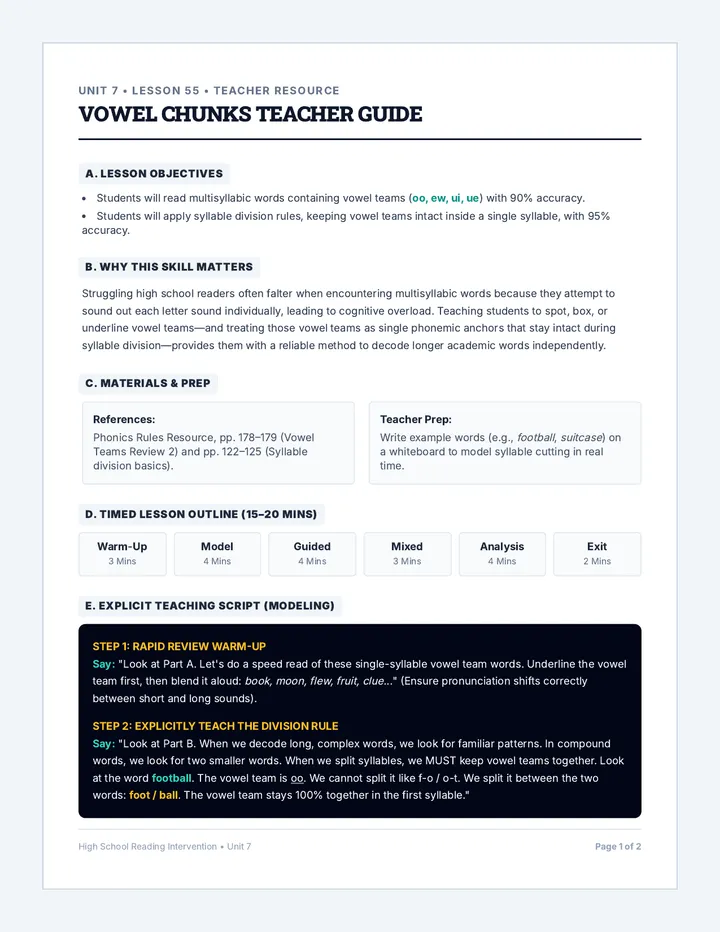
Lesson 55: Syllable division with vowel teams, reviewing oo /ʊ/, oo /uː/, and ew/ui/ue /uː/, while keeping vowel-team syllables intact.
Detailed teacher guide for Lesson 56 with dictation lists, explicit instruction scripts, diagnostic checklists, and progress monitoring cues.
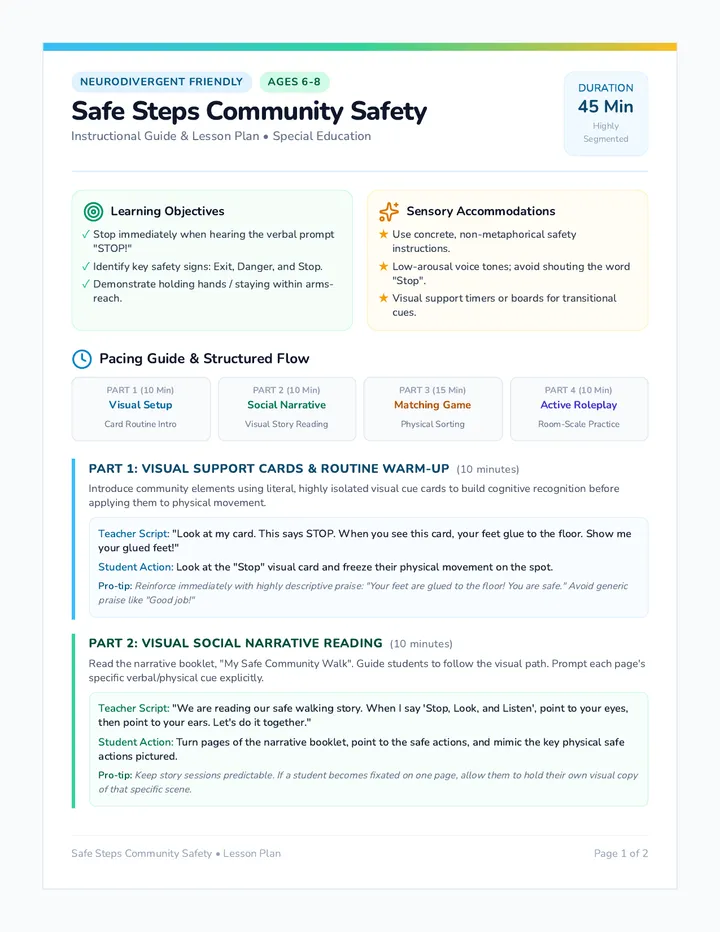
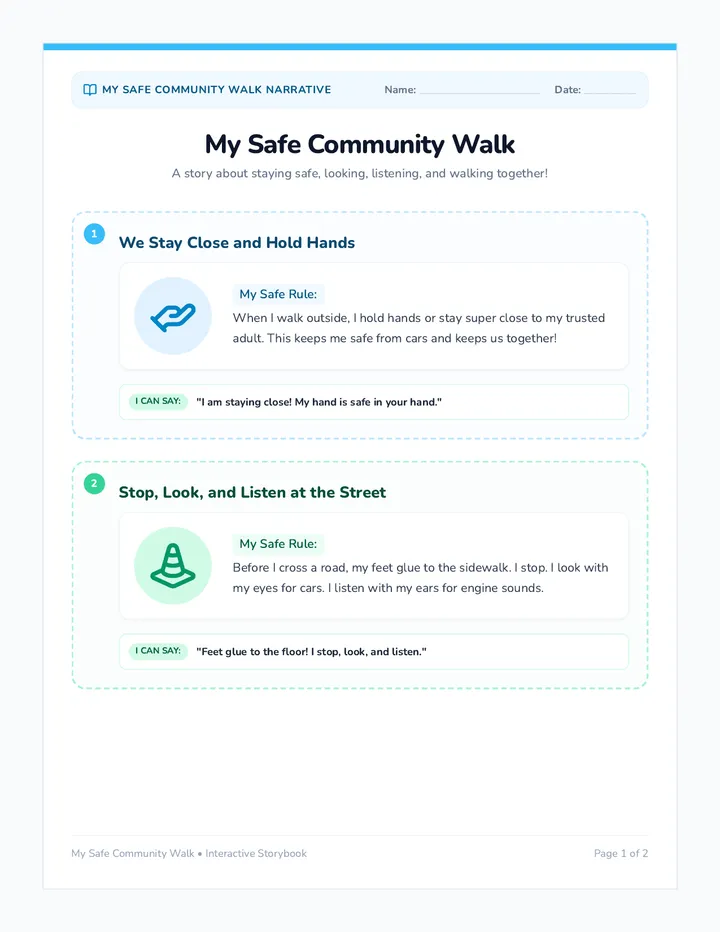
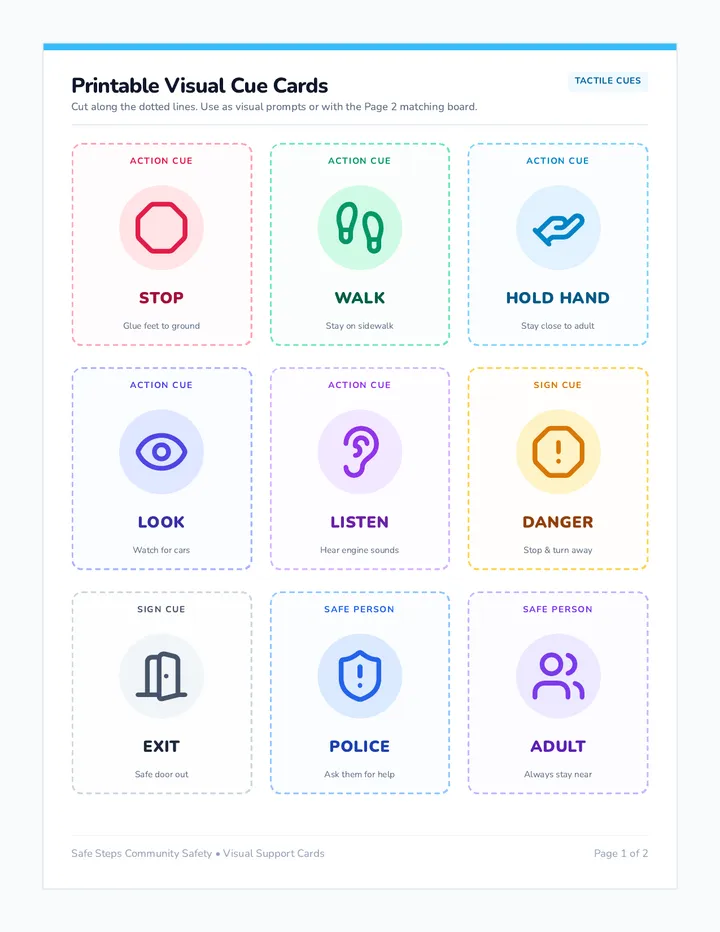
A comprehensive, sensory-friendly community safety sequence designed for young learners with autism, covering walking safety, traffic rules, getting lost, and parking lot awareness.
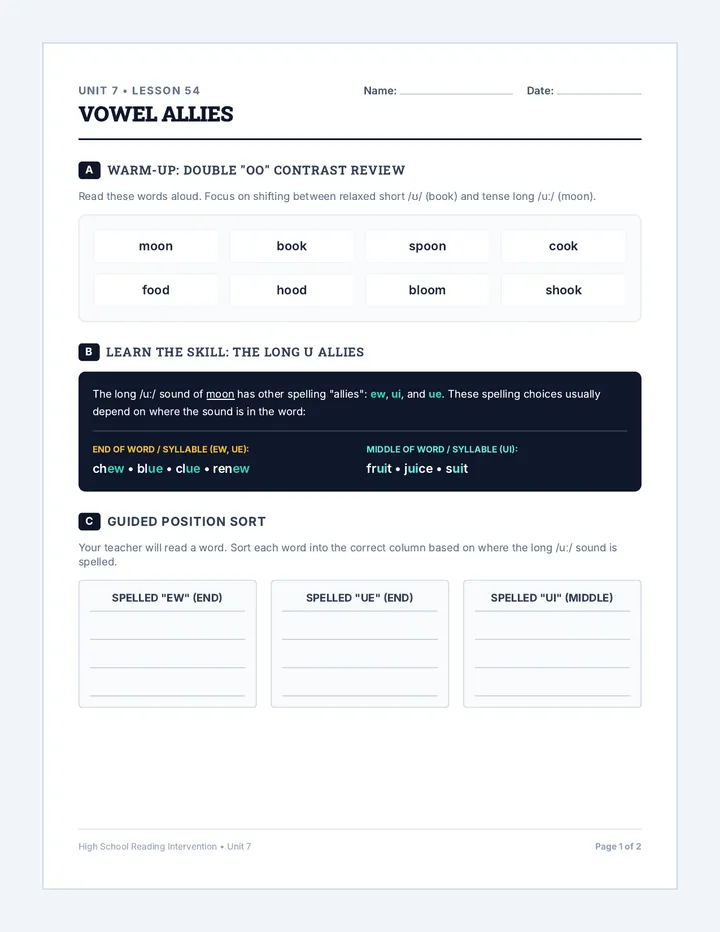
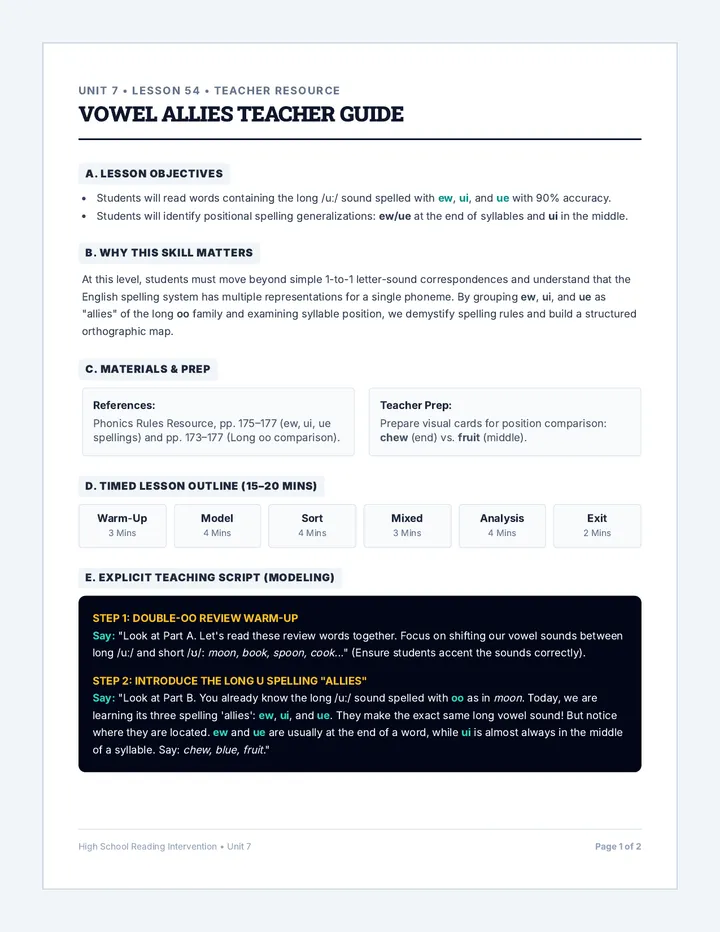
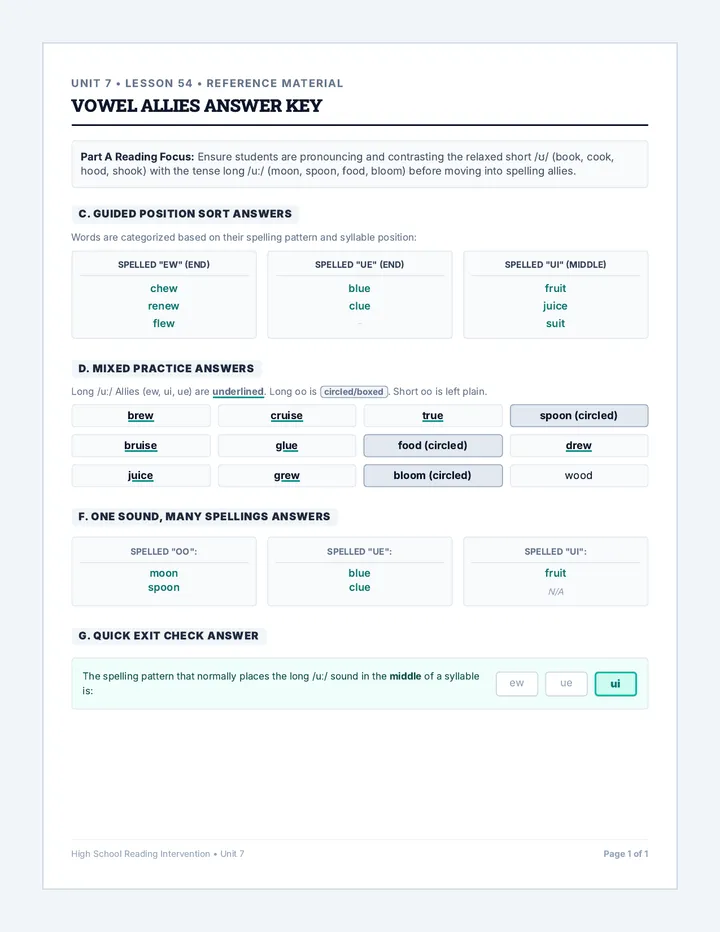
Lesson 54: Introducing ew, ui, ue for long /uː/, comparing positions, and spiraling long oo to show multiple spellings for one sound.
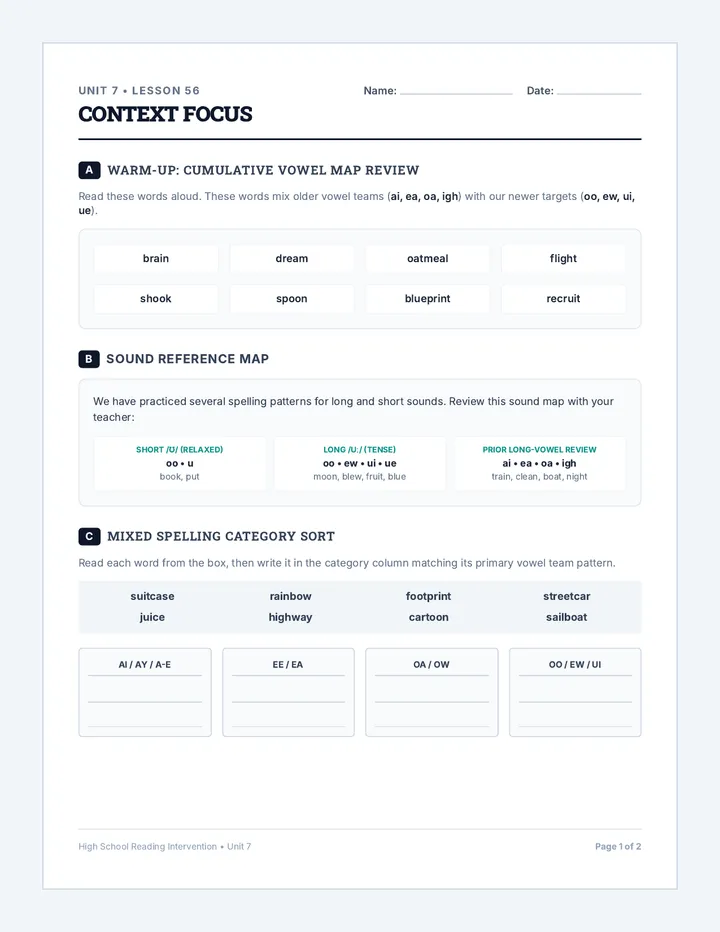
Student handout for Lesson 56 of high school phonics intervention. Consolidates several vowel-team spellings (oo, ew, ui, ue) alongside prior teams (ai/ay, ee/ea/ey, oa/ow/oe, ie/igh). Includes cumulative warm-up review, mixed sound categorization, fluent phrases, dictation fields, and a connected text passage.
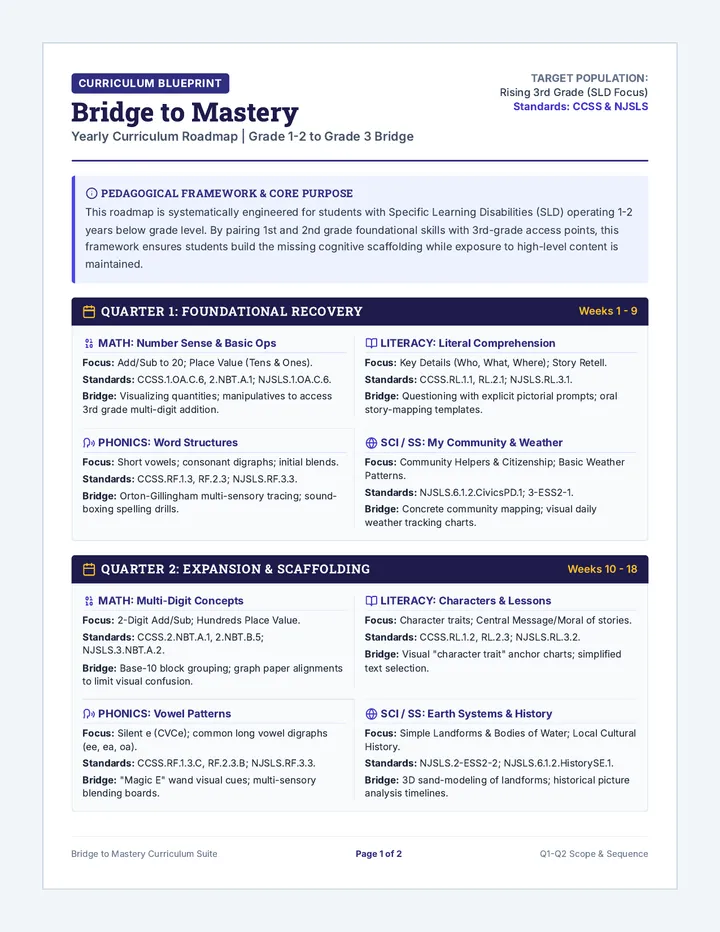
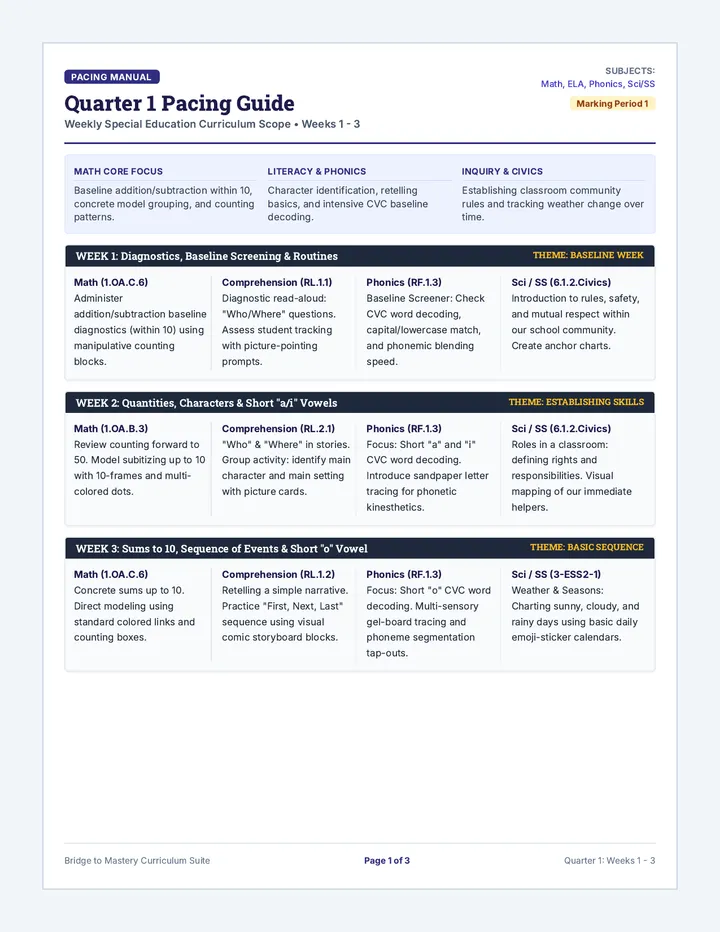
A comprehensive curriculum roadmap and detailed Quarter 1 pacing guide designed for rising 3rd-grade students with SLD operating at a 1st-to-2nd grade level. It includes diagnostic baseline screens and specialized lesson templates for self-contained special education settings, bridging CCSS and NJSLS.
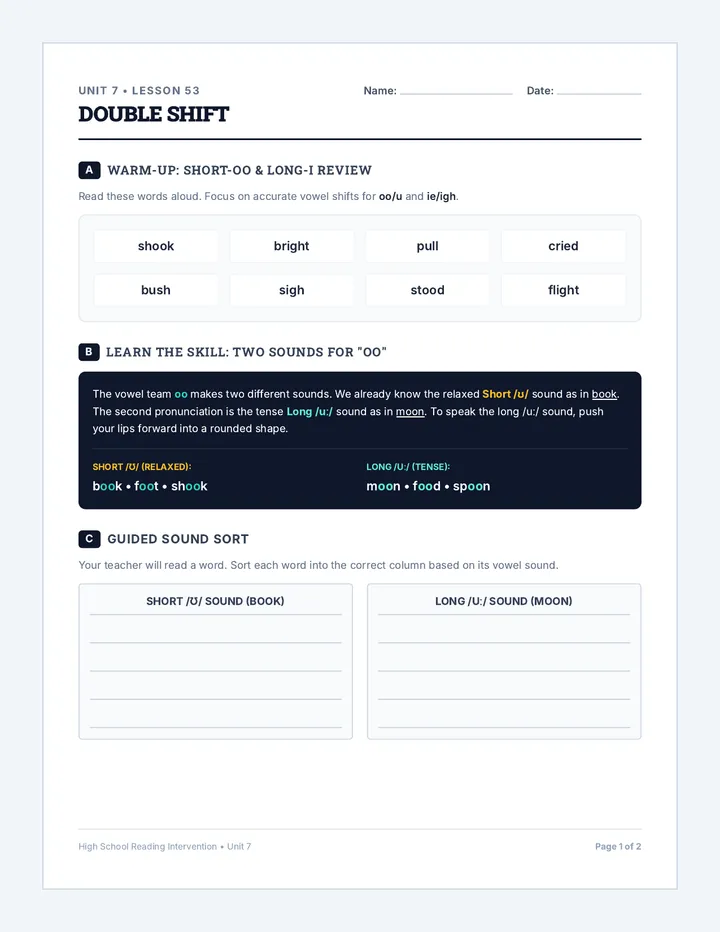
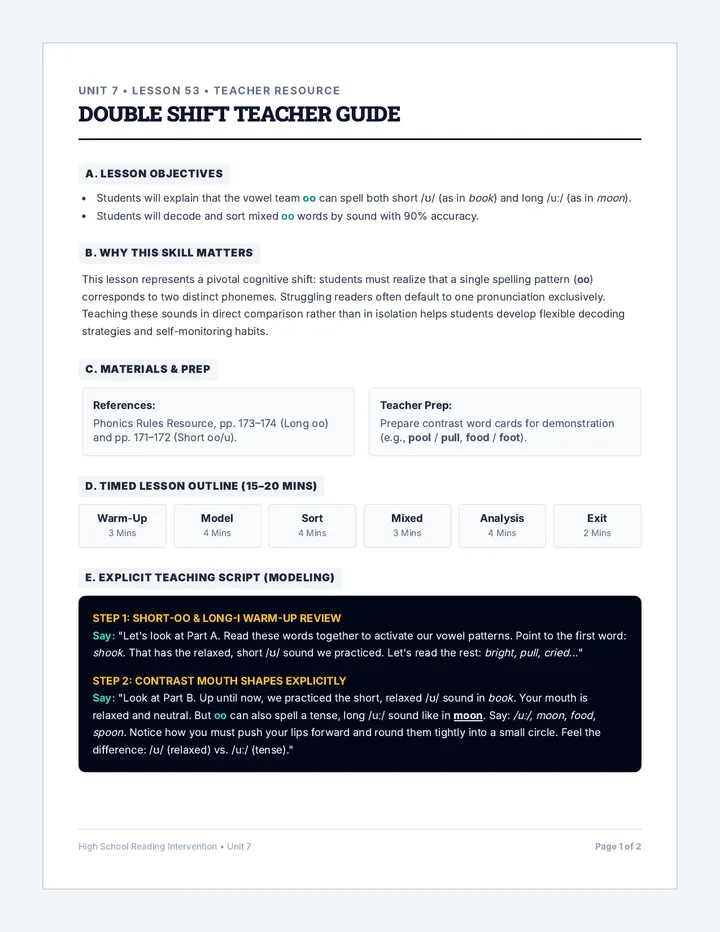
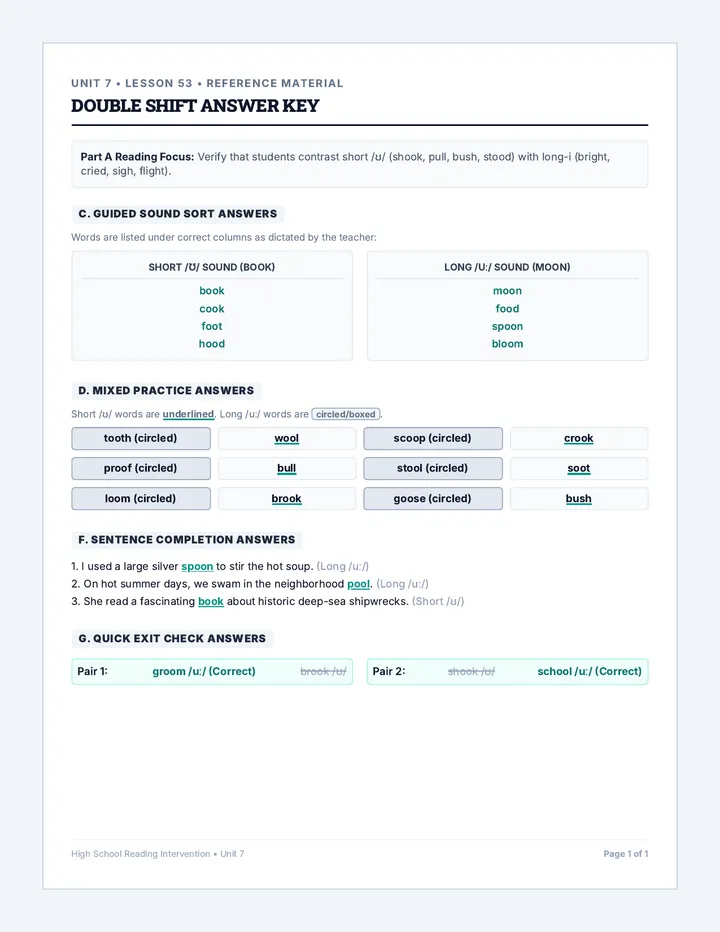
Lesson 53: Introducing long oo /uː/ as in moon, directly contrasted and sorted with short oo /ʊ/ as in book.
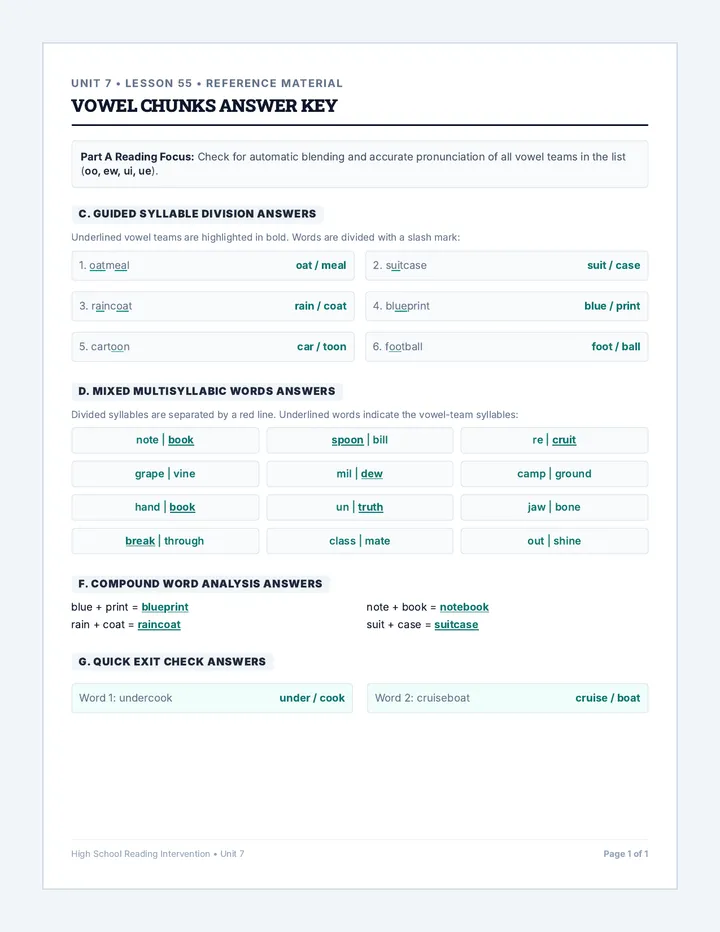
Complete answer key for the Vowel Teams Review Student Handout (Lesson 55), with answers clearly marked and filled in for teacher reference.