Parametric modeling, 3D sketching, and technical drawing techniques for product development. Incorporates AI-driven generative design and simulation to optimize structural integrity and manufacturing workflows.
A friendly, 4th-grade-accessible two-page printable engineering worksheet for designing a 3D-printed headphone cord wrap in Tinkercad. Features simple caliper and ruler prompts, playful concept sketch boxes, a millimeter drawing grid, a Tinkercad shape recipe builder, and an easy-to-follow 3D print checklist.
A printable student questionnaire for reflecting on a 3-D design teamwork project, featuring a 1-5 star rating scale for personal effort and open-ended sections with writing lines for collaboration feedback and future team project ideas.
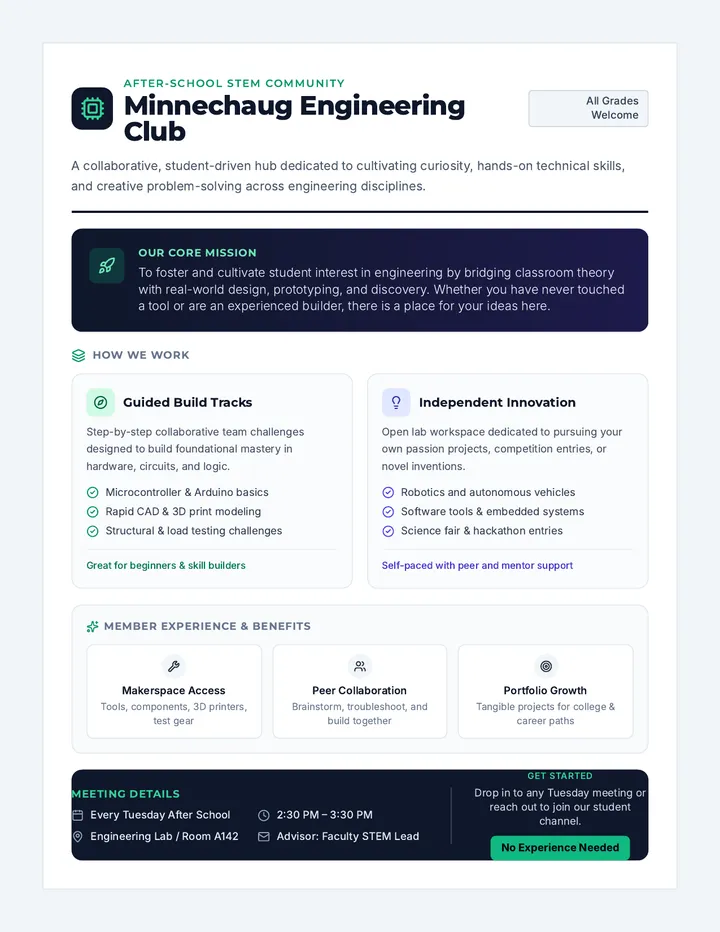
An informative one-page overview flyer for the Minnechaug Engineering Club, highlighting its STEM mission, guided build tracks, independent innovation opportunities, meeting details, and joining information.
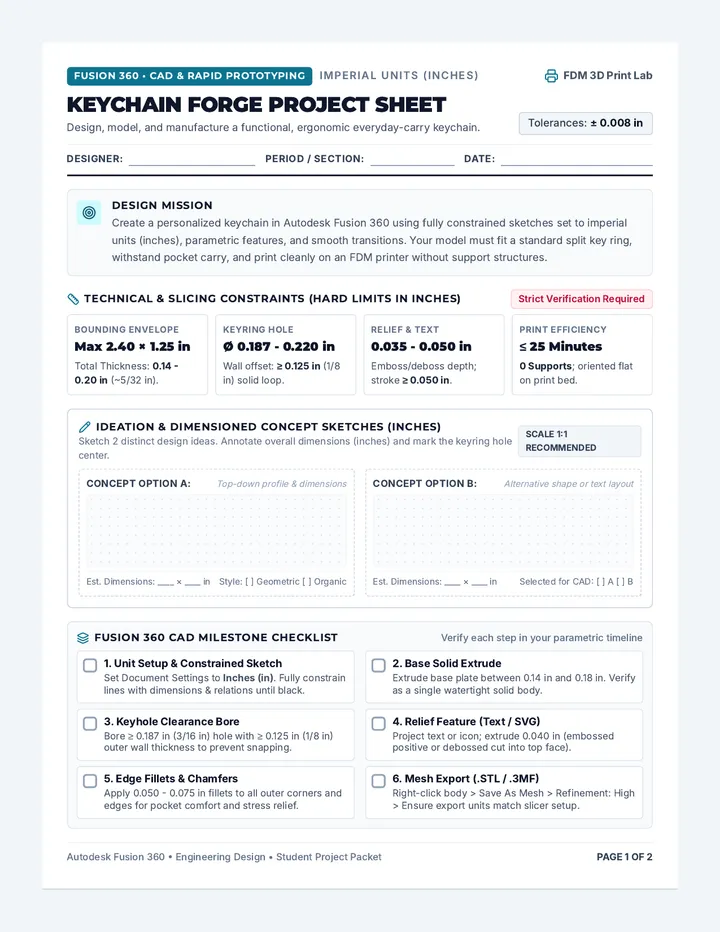
A comprehensive two-page student project sheet for designing a 3D-printed keychain in Autodesk Fusion 360 using Imperial units (inches). Includes design goals, manufacturing constraints in decimal and fractional inches, concept sketching spaces, CAD milestone tracking, slicing verification, physical caliper inspection, and engineering reflection prompts.
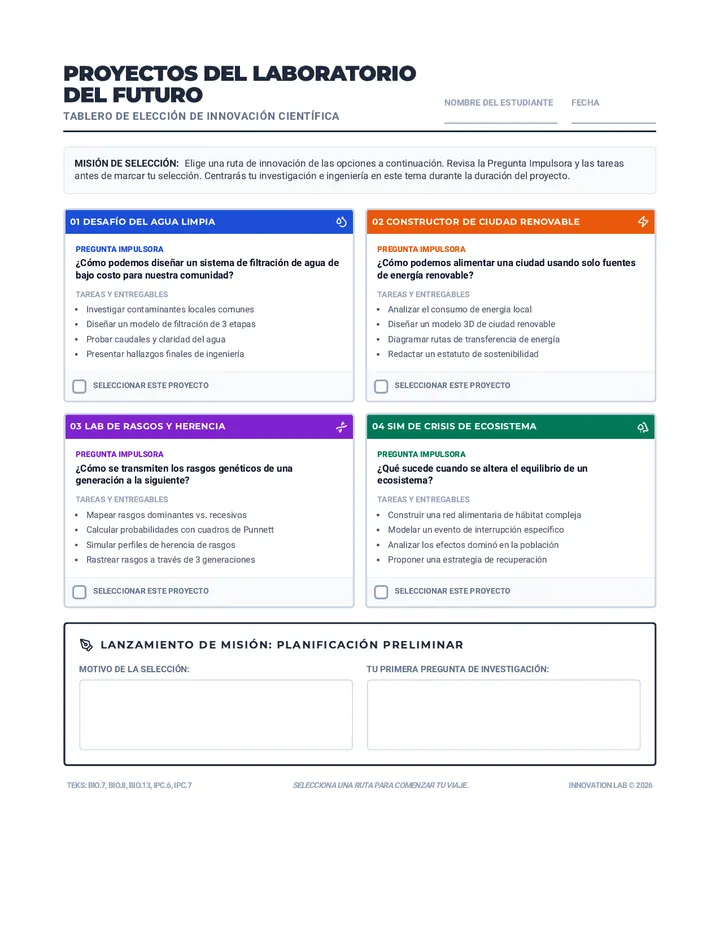
A highly compact, single-page student project choice board featuring four science PBL tracks. Optimized for print with a clear 2x2 grid, mission briefs, and a side-by-side planning area for efficient space usage.
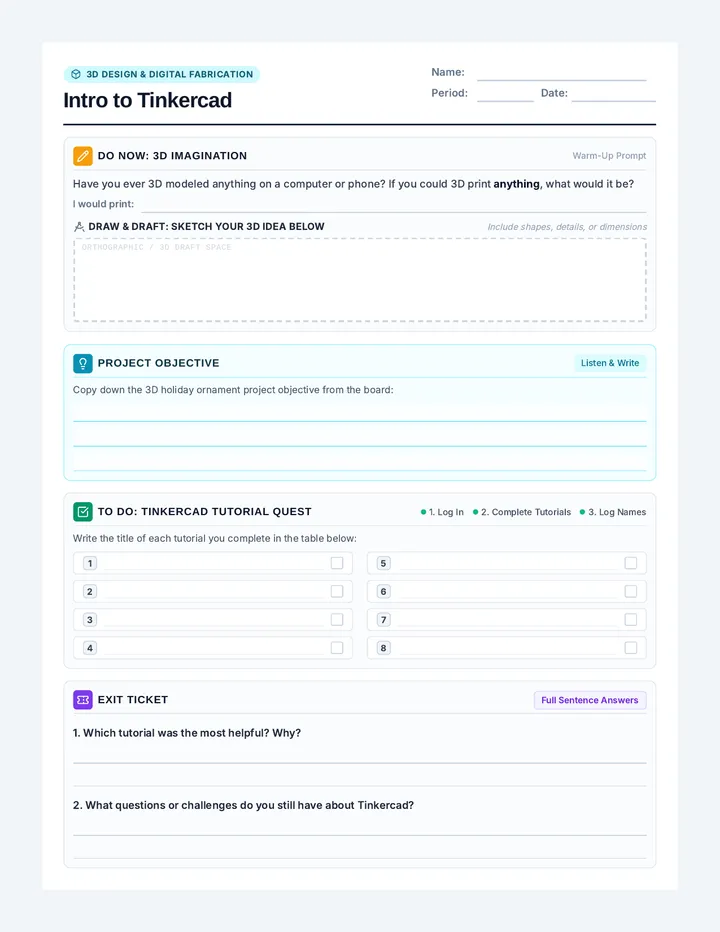
A student-ready, print-ready introductory 3D modeling worksheet for Tinkercad featuring a Do Now ideation warm-up and sketch grid, followed by a dedicated Project Objective section with writing lines to copy down the objective, an 8-part tutorial completion log, and an exit ticket.
A comprehensive Hi-Lo unit for 6th graders exploring the scale of the universe, our place in the Milky Way, the technology used to explore space, and the history of human spaceflight.
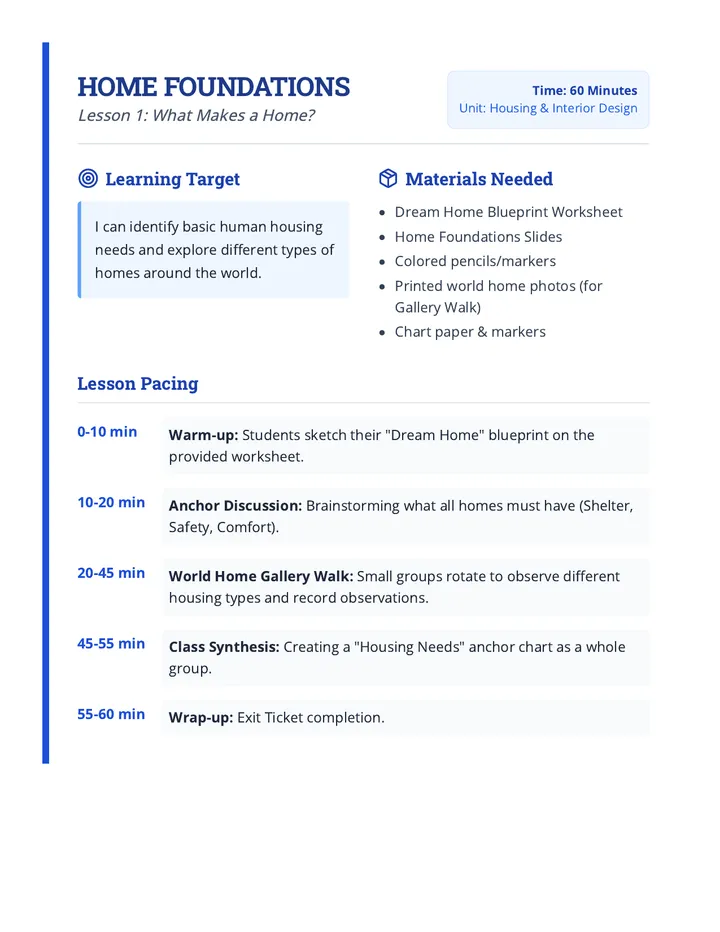
An introductory unit on Housing and Interior Design within the Human Services field. Students explore basic housing needs, sustainable green building, universal design for accessibility, the impact of local resources and climate on home construction, and residential energy efficiency.
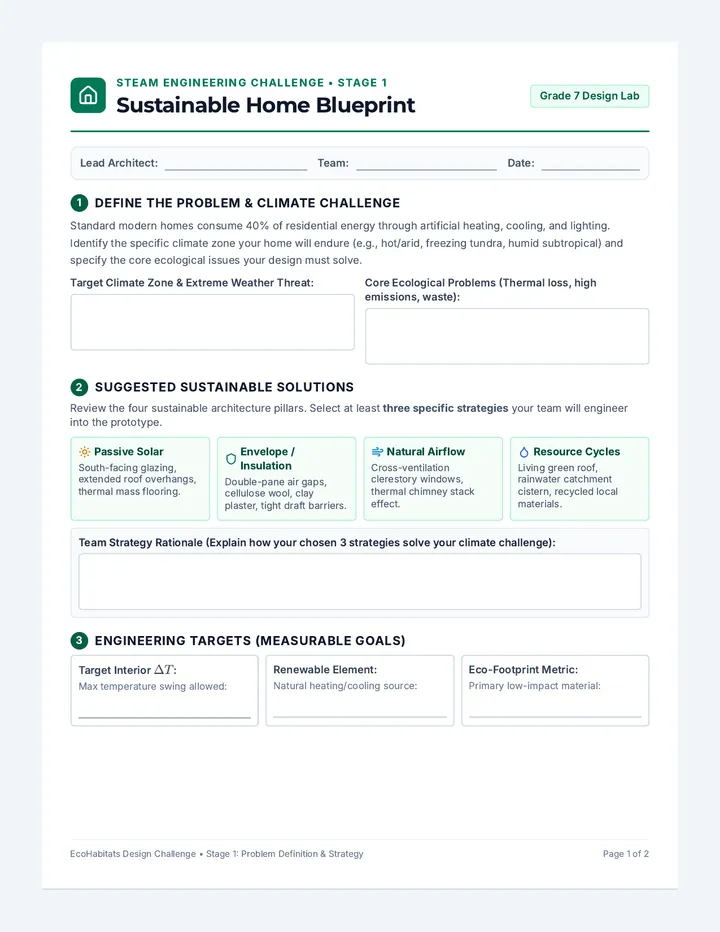
A comprehensive Grade 7 STEAM engineering sequence where students investigate climate housing crises, engineer passive sustainable architectural blueprints, construct functional prototypes, and rigorously test thermal efficiency for iterative refinement.
A comprehensive technical course on reading and interpreting commercial HVAC mechanical blueprints, focusing on symbol recognition, duct sizing, and system layout analysis.
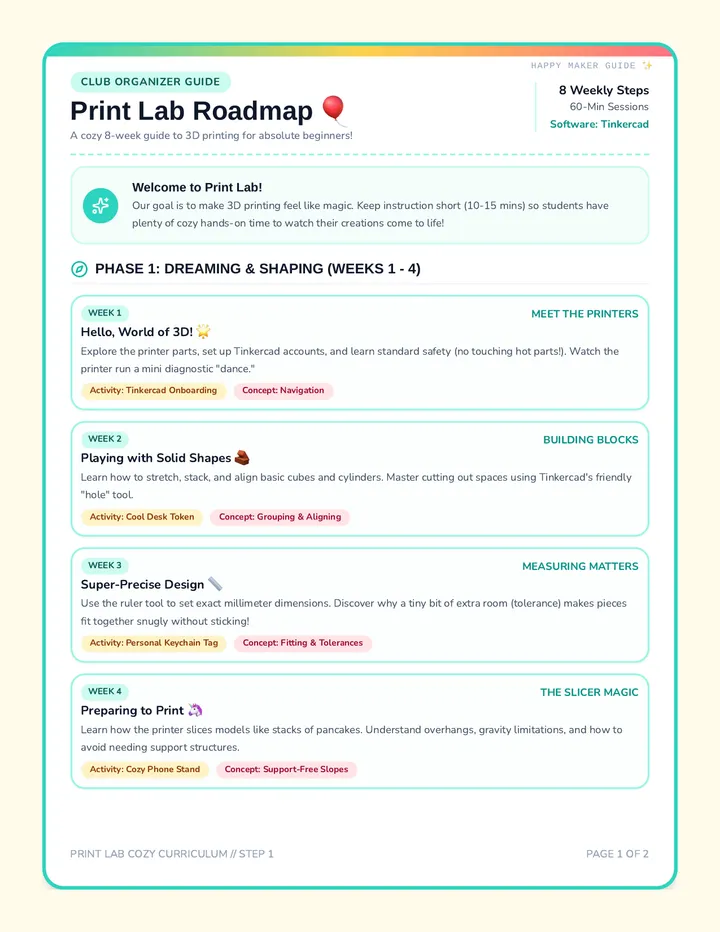
A comprehensive 3D printing after-school club curriculum, design guides, and promotional resources tailored for high school juniors and seniors using Tinkercad.
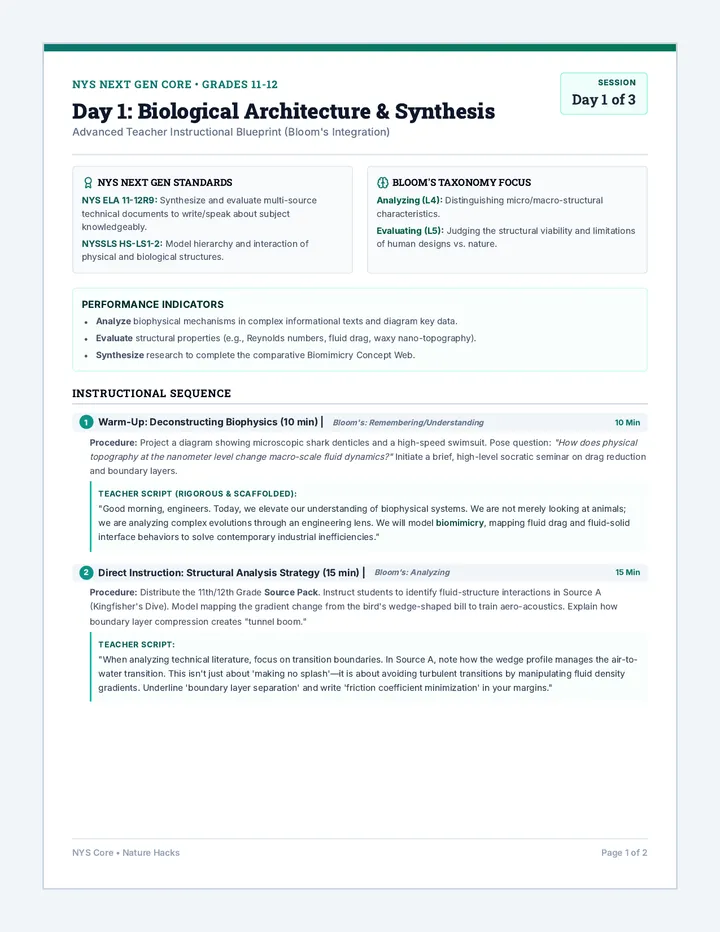
A 3-day cross-curricular STEAM unit where students research biological adaptations, design biomimetic engineering solutions, perform scale calculations, and write a synthesized informational article.
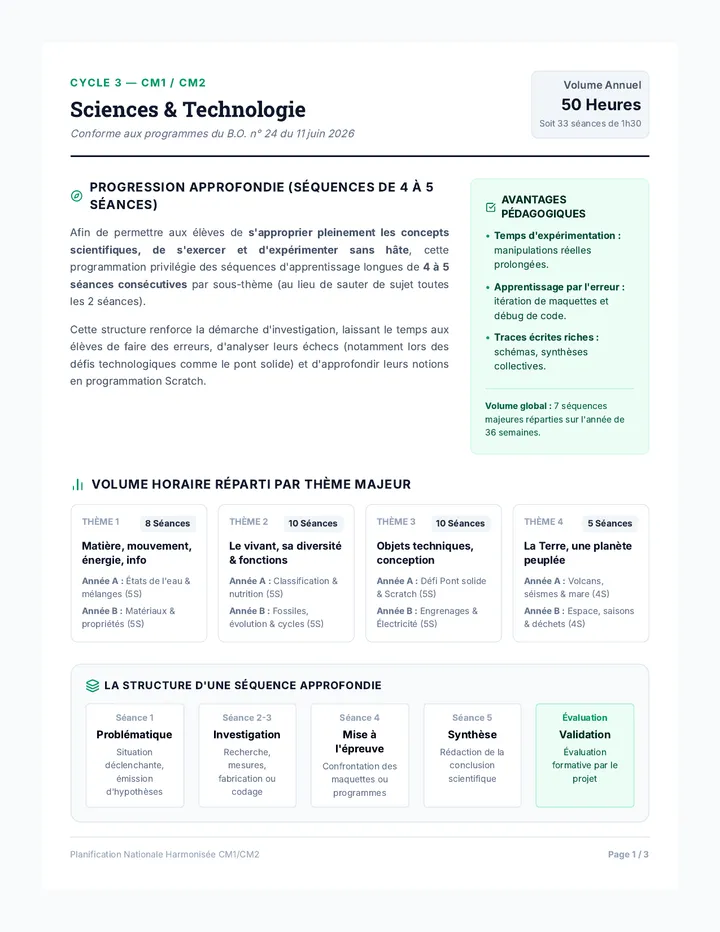
Outil de planification annuelle et de progression pour l'enseignement des sciences et technologies en classe de CM1/CM2, conforme au BO de juin 2026. Ce guide propose une répartition claire des volumes horaires et des thèmes entre l'année A et l'année B pour éviter les redondances dans les classes à double niveau.
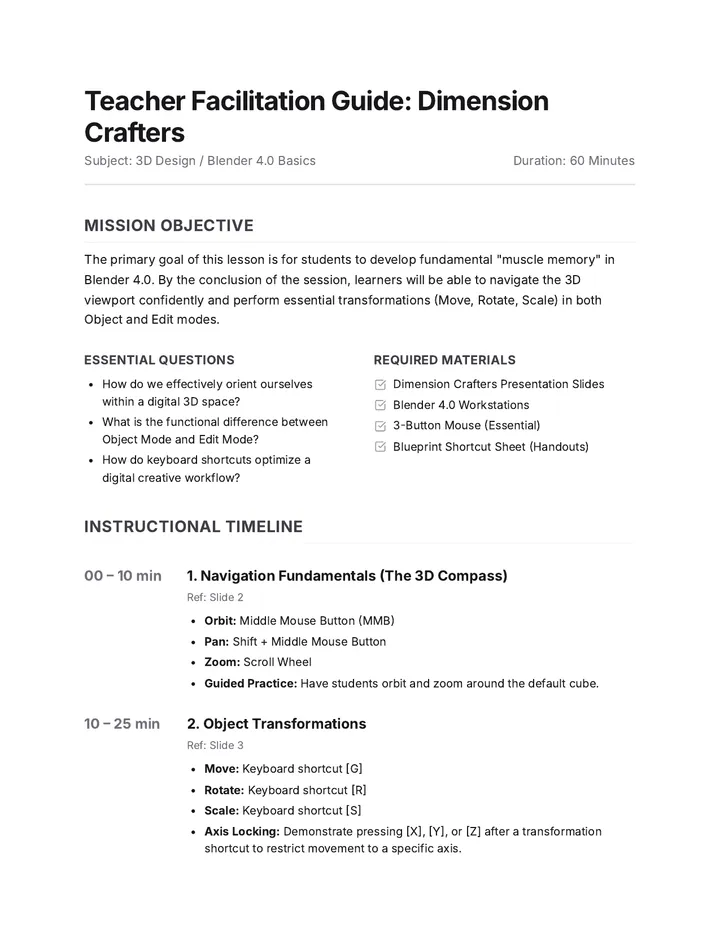
A beginner-friendly introduction to Blender 4.0, focusing on navigation, object transformations, and essential edit mode tools for 3D modeling.
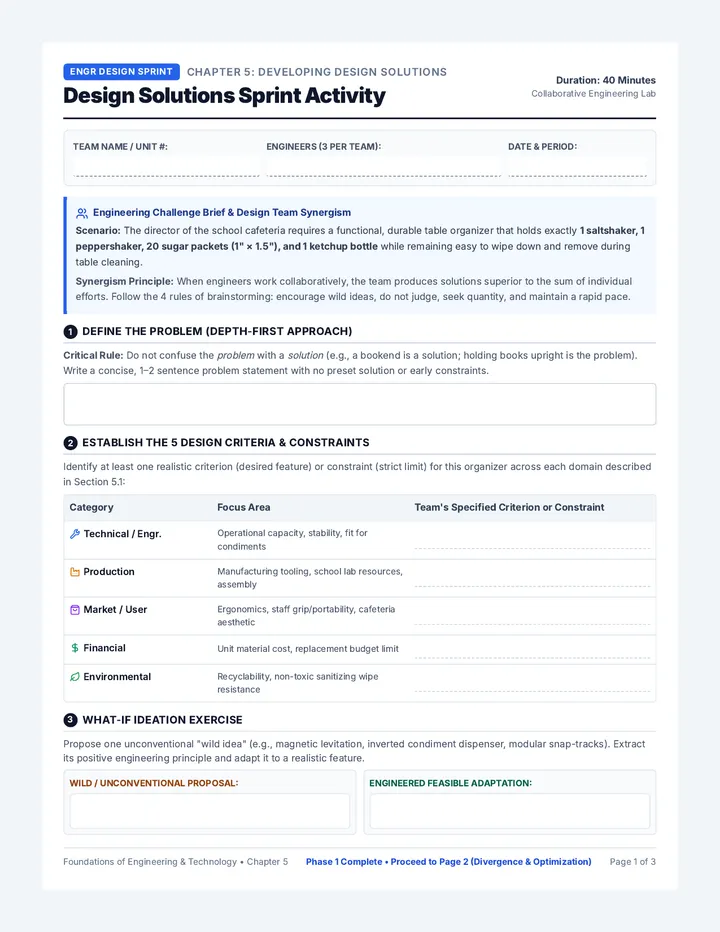
An introductory engineering design lesson where students apply problem definition, divergent brainstorming, convergent decision-making, and technical pictorial sketching. Structured for collaborative engineering teams to develop optimized design solutions for real-world criteria and constraints.
A rigorous GATE science and biomimicry engineering challenge aligned to NGSS 4-LS1-2. Fourth-grade students investigate animal sensory receptors, neural computation, and behavioral adaptations to engineer bio-inspired survival technology for extreme planetary and disaster frontiers.
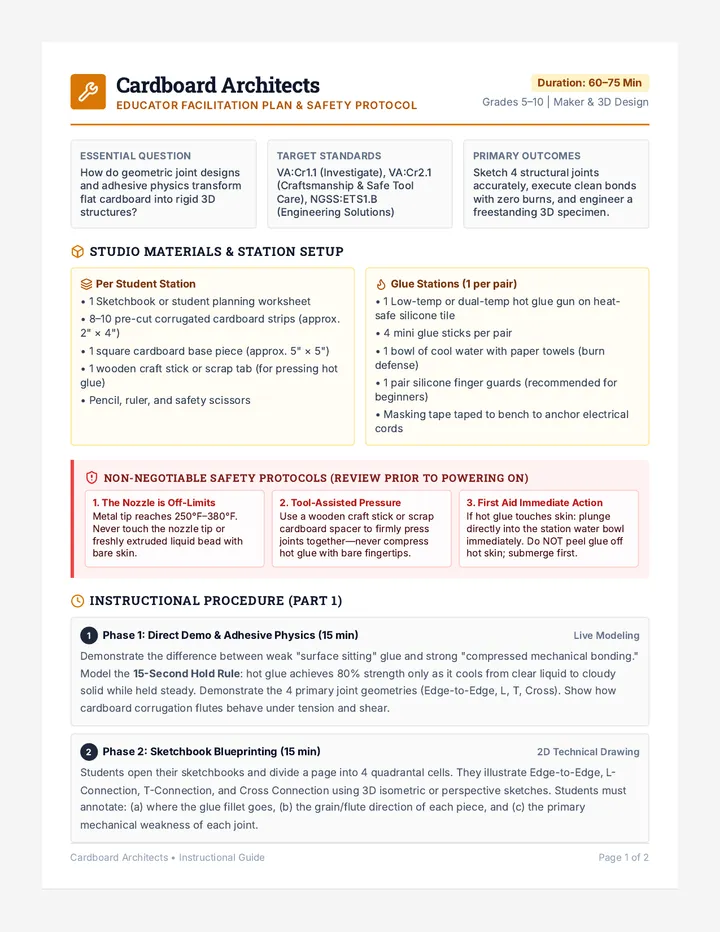
A hands-on maker lesson where students master hot glue safety and structural cardboard joinery techniques. Learners plan four essential mechanical joints in their sketchbooks and engineer a compact 3D sculpture demonstrating all connection styles.
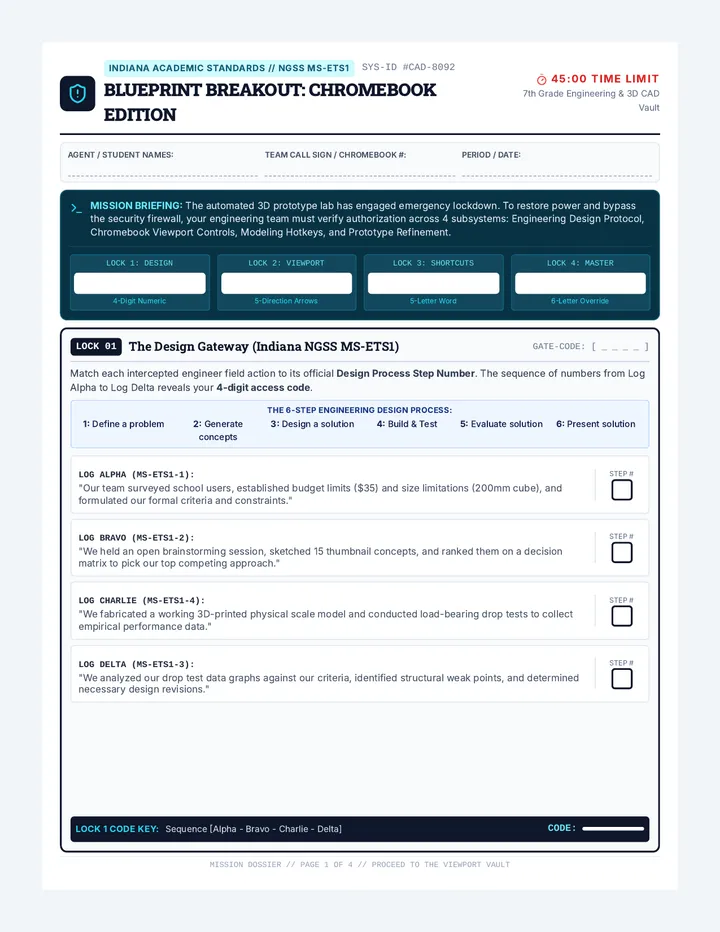
An immersive 7th-grade STEM escape room aligned to Indiana NGSS standards (MS-ETS1) where students apply the 6-step Engineering Design Process and Chromebook Tinkercad modeling tools and shortcuts to crack security codes and restore lab fabrication systems.