Lenny.com
Explore
Create
ActivitiesNewMathEnglish Language ArtsScience & EngineeringSocial StudiesGlobal LanguagesHealth & Physical EducationSpecial EducationCounseling & Life SkillsArts & CreativityESL
Lenny.com
Lenny.com
Explore
Create
ActivitiesNewMathEnglish Language ArtsScience & EngineeringSocial StudiesGlobal LanguagesHealth & Physical EducationSpecial EducationCounseling & Life SkillsArts & CreativityESL
Lenny.com
Lenny.com

Solutions

Lenny for EducatorsLenny for SchoolsLenny for Districts

Product

ExploreSign inCreateSupportAbout

Resources

Getting startedMTSS Acceleration Program

© 2026 Lenny Learning Inc.

TermsPrivacyAccessibility
LinkedInInstagramX
Lenny

Evolution

Natural selection, genetic drift, and mutation as mechanisms of biological change over time. Examines speciation, fossil evidence, and comparative genomics to understand common ancestry.

Science & EngineeringLife ScienceLiving ThingsAnimalsPlantsBody SystemsTraitsAdaptationsCellsEcosystemsHeredityGenes to TraitsCell DivisionPhysicsComparing MaterialsShapes and PropertiesMagnetsMagnetismLightSoundLight and SoundMatterStates of MatterChanges of StateMixturesPhysical and Chemical ChangeHeating and CoolingHeat and Thermal EnergyEnergyForce and MotionElectrical CircuitsAtoms and MoleculesPeriodic TableMotion in One DimensionMotion in Two DimensionsScalars and VectorsForces and Laws of MotionCircular Motion and GravityMomentum and ImpulseWork, Energy, and PowerWavesElectromagnetic WavesGeometric OpticsElectricity and MagnetismSimple Harmonic MotionThermodynamicsNuclear PhysicsEarth Science & AstronomyWeatherWater CycleRocks and MineralsFossilsEarth's FeaturesEarth's ResourcesEarth's StructureWeather and ClimateEarth EventsFossils and Geologic TimePlate TectonicsHuman ImpactsAstronomyChemistryUnits and MeasurementAtomic StructurePeriodic TrendsChemical BondingNomenclatureMolecular StructureIntermolecular ForcesThe MoleStoichiometryProperties of GasesSolutionsChemical ReactionsBalancing EquationsEnergy ChangesRates of ReactionsEquilibriumAcids and BasesQuantum ModelBiologyClassificationCell StructureThe Chemistry of LifeBiomoleculesCellular TransportCell EnergyCell Growth and DivisionDNAProtein SynthesisMeiosis and Sexual ReproductionPatterns of InheritanceMulticellular OrganismsEvolutionEcologyBiodiversityComputer ScienceAlgorithms and Computational ThinkingProgramming LanguagesComputing SystemsNetworks and InternetData AnalysisCybersecurityAI and Machine LearningSoftware Design and DevelopmentBlockchainEngineering & AIDesigning ExperimentsEngineering PracticesDesign ThinkingEngineering Design ProcessMechanical EngineeringElectrical EngineeringMaterials and StructuresCAD and 3D DesignRoboticsArtificial Intelligence BasicsVibe CodingMachine LearningAI Ethics and SocietySystems ThinkingEntrepreneurship & InnovationEntrepreneurial MindsetBusiness Idea DevelopmentBusiness Plan BasicsMarketing & Customer DiscoveryFinancial Management for Startups

Videos

Introduction to Genetics: Blue Lobsters and Sickle Cell Traits

Introduction to Genetics: Blue Lobsters and Sickle Cell Traits

This engaging biology video serves as an introduction to genetics, bridging the gap between DNA structure and observable traits. The narrator, B, reviews the concept of meiosis and gametes to explain how offspring receive half their genetic material from each parent. The video defines key terms such as genes and alleles, laying the groundwork for understanding inheritance patterns before diving into specific case studies. Key themes include genetic inheritance, mutations, and adaptation. The video uses two distinct real-world examples to illustrate these concepts: the rare genetic mutation that causes blue coloration in lobsters and the human condition of sickle cell anemia. It explains how recessive traits (like the blue lobster) require two copies of an allele, while also introducing the complex evolutionary relationship between sickle cell traits and malaria resistance, highlighting how mutations can be harmful, neutral, or contextually beneficial. This resource is excellent for introducing a genetics unit in middle or high school classrooms. It moves beyond abstract definitions by providing concrete, memorable examples that demonstrate probability and natural selection. Teachers can use the blue lobster segment to discuss recessive inheritance and the sickle cell segment to explore adaptations and the interaction between genetics and the environment.

Miacademy & MiaPrep Learning ChannelMiacademy & MiaPrep Learning Channel

7mins 16s

Exploring Birds of Prey: Adaptations and Survival

Exploring Birds of Prey: Adaptations and Survival

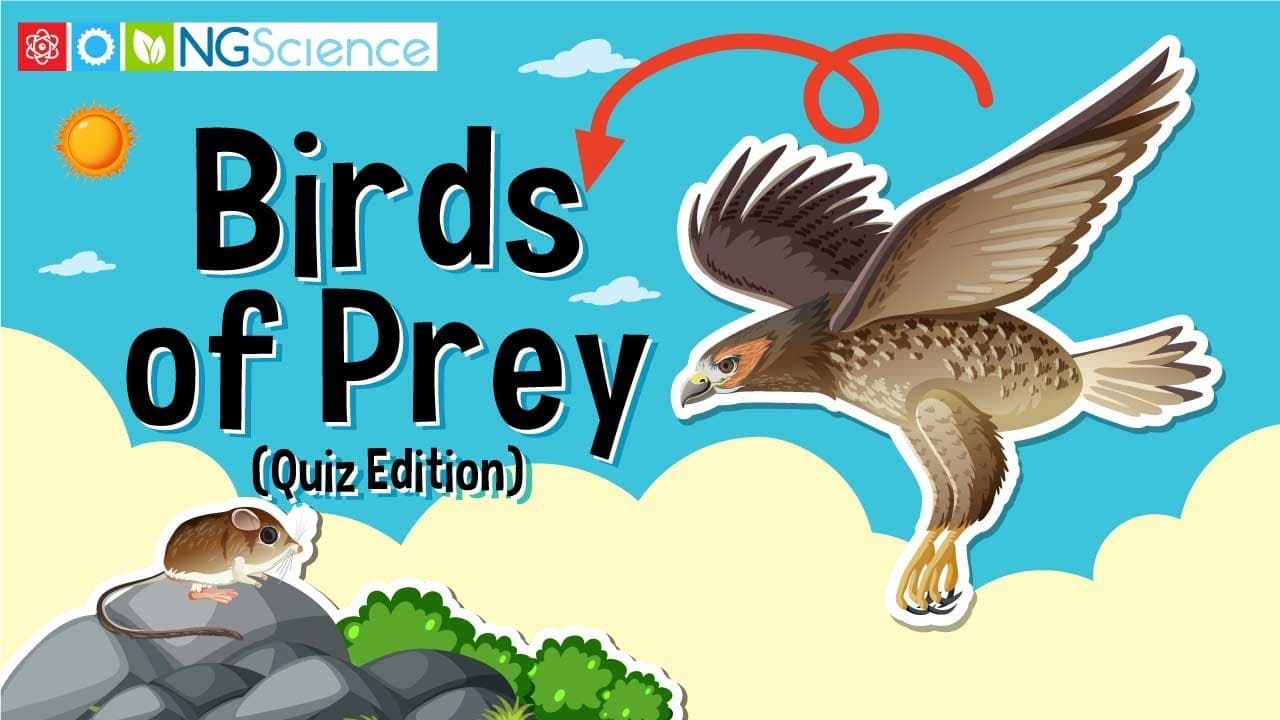
This educational video provides a comprehensive overview of birds of prey, also known as raptors, highlighting their unique physical adaptations and roles within ecosystems. It explores the defining characteristics of these birds, such as their keen eyesight, hooked beaks, and sharp talons, while showcasing a variety of species ranging from the small American Kestrel to the massive Andean Condor. Specific segments detail the hunting strategies and specialized traits of iconic birds like the Bald Eagle, Peregrine Falcon, and various owls and vultures. The video delves into key biological themes including adaptation, predator-prey relationships, and ecological niches. It explains how different raptors have evolved to survive, such as the owl's silent flight feathers for nocturnal hunting and the vulture's role as nature's cleanup crew. Furthermore, the content addresses the environmental challenges these birds face, including habitat loss and pollution, emphasizing the importance of conservation efforts to protect declining populations. For educators, this video serves as an excellent resource for Life Science units on animal adaptations and food webs. The clear narration and high-quality footage make complex biological concepts accessible to students. The video concludes with a 10-question interactive quiz, allowing teachers to immediately assess student comprehension and reinforce the material covered, making it a ready-made lesson component.

Next Generation ScienceNext Generation Science

7mins 33s

The Great White Shark: Guardian of the Ocean

The Great White Shark: Guardian of the Ocean

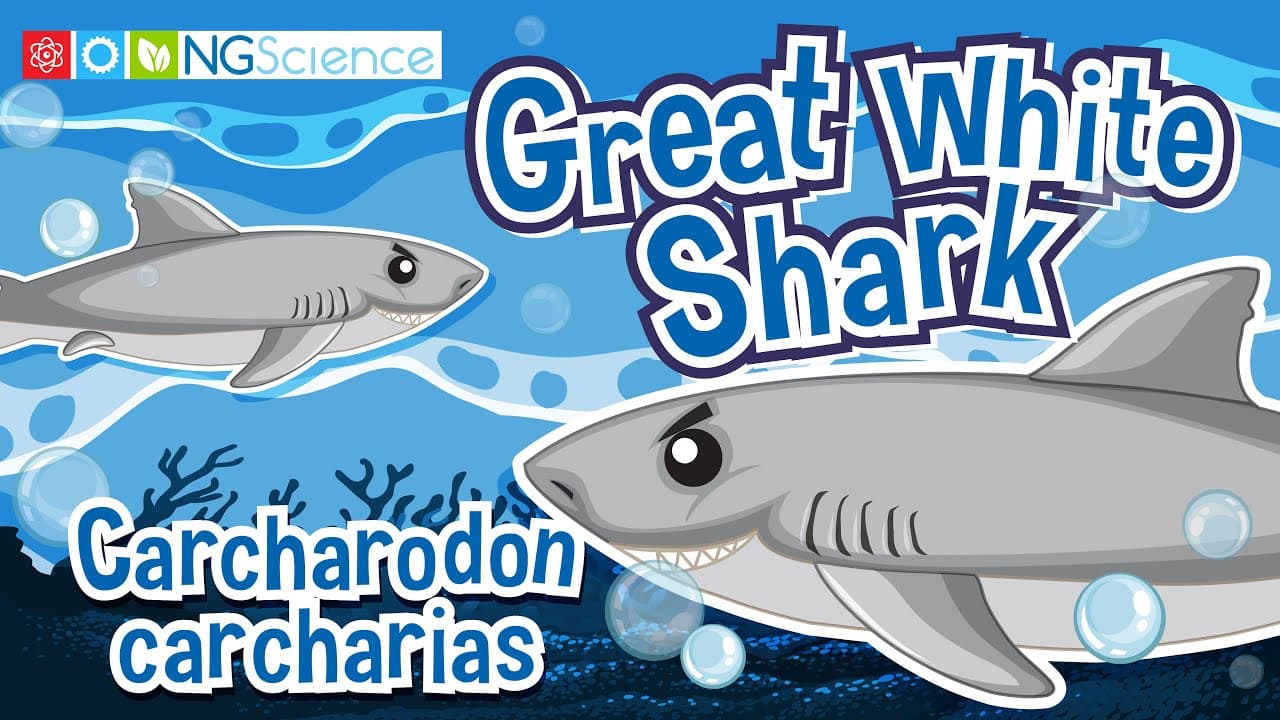
This educational video provides a stunning and scientifically rich exploration of the Great White Shark, reframing it from a movie monster to a vital component of marine ecosystems. Opening with a global perspective of Earth as the "pale blue dot," the video dives beneath the surface to explore the biodiversity of the ocean, eventually focusing on sharks as ancient, evolutionary masterpieces. It highlights the Great White's remarkable physical adaptations, including its cartilaginous skeleton, heightened senses, and hydrodynamic design that allows for explosive speed and breaching.

Next Generation ScienceNext Generation Science

5mins 19s

Traveling Through the History of Life on Earth

Traveling Through the History of Life on Earth

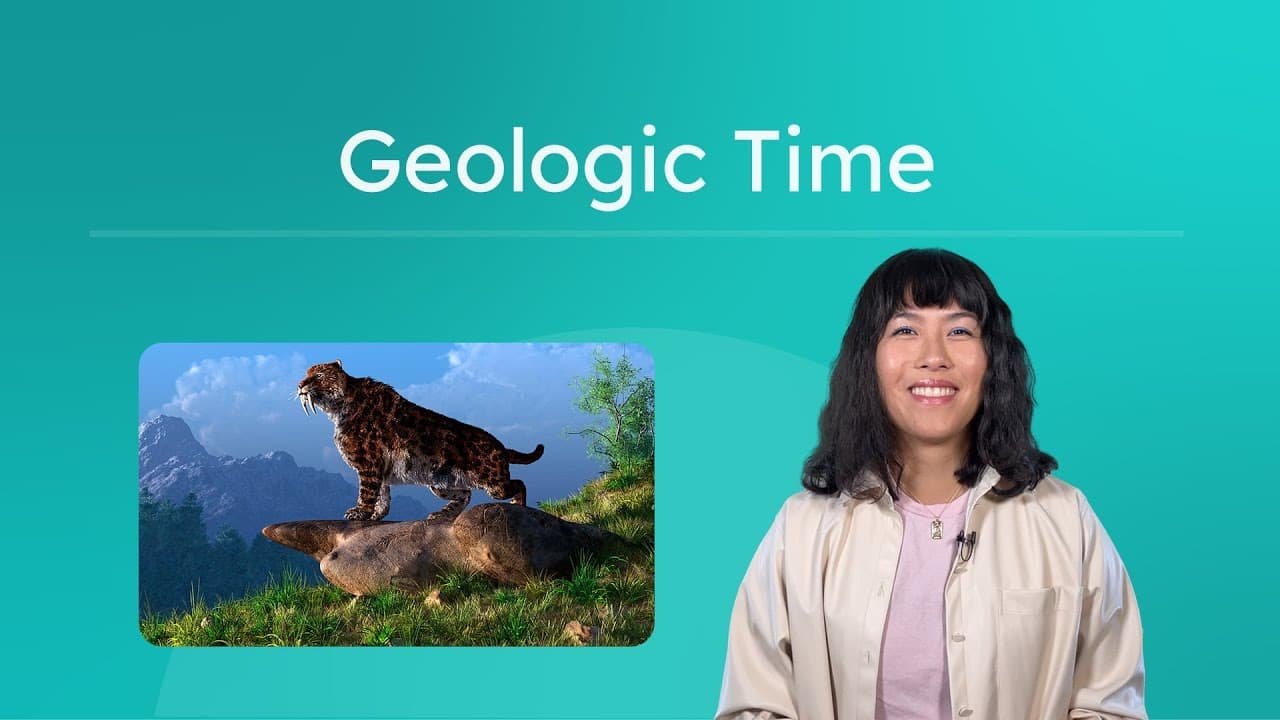
This engaging video takes students on a "time-traveling" journey through the history of life on Earth, breaking down the vast expanse of geologic time into understandable segments. Hosted by an energetic presenter, the video uses a recurring timeline graphic and rich visuals to illustrate the four major eons and eras: Precambrian, Paleozoic, Mesozoic, and Cenozoic. It explains how scientists divide time based on major shifts in life forms rather than equal time increments, providing a clear framework for understanding Earth's biological history. Key themes include the evolution of cellular life from prokaryotes to eukaryotes, the colonization of land by plants and animals, and the cyclical nature of mass extinctions followed by rapid diversification. The video details specific periods like the Cambrian Explosion, the Carboniferous period (source of fossil fuels), and the Age of Dinosaurs, while also highlighting critical evolutionary milestones like the development of oxygen by cyanobacteria and the rise of mammals. It emphasizes adaptation, environmental changes, and the relatively short time humans have existed compared to Earth's history. For educators, this video serves as an excellent anchor for units on evolution, Earth science, or biology. It visualizes abstract concepts like "deep time" through a proportional pie chart and linear timeline, making the billions of years of Earth's history graspable for students. The clear segmentation of eras allows teachers to pause and focus on specific time periods, while the discussion of mass extinctions provides natural entry points for exploring climate change and environmental stability.
Miacademy & MiaPrep Learning ChannelMiacademy & MiaPrep Learning Channel

14mins 7s

How Evolution and Adaptations Change Life Over Time

How Evolution and Adaptations Change Life Over Time

This educational video serves as a comprehensive introduction to the biological concept of evolution. It begins by defining evolution as change over time, specifically emphasizing the increase in diversity and complexity of life over Earth's 4.5 billion-year history. The narrator connects prior knowledge about cells to explain how life progressed from simple prokaryotic organisms to complex eukaryotic ones, highlighting the essential role of deep time in allowing small changes to accumulate.

Miacademy & MiaPrep Learning ChannelMiacademy & MiaPrep Learning Channel

10mins 45s

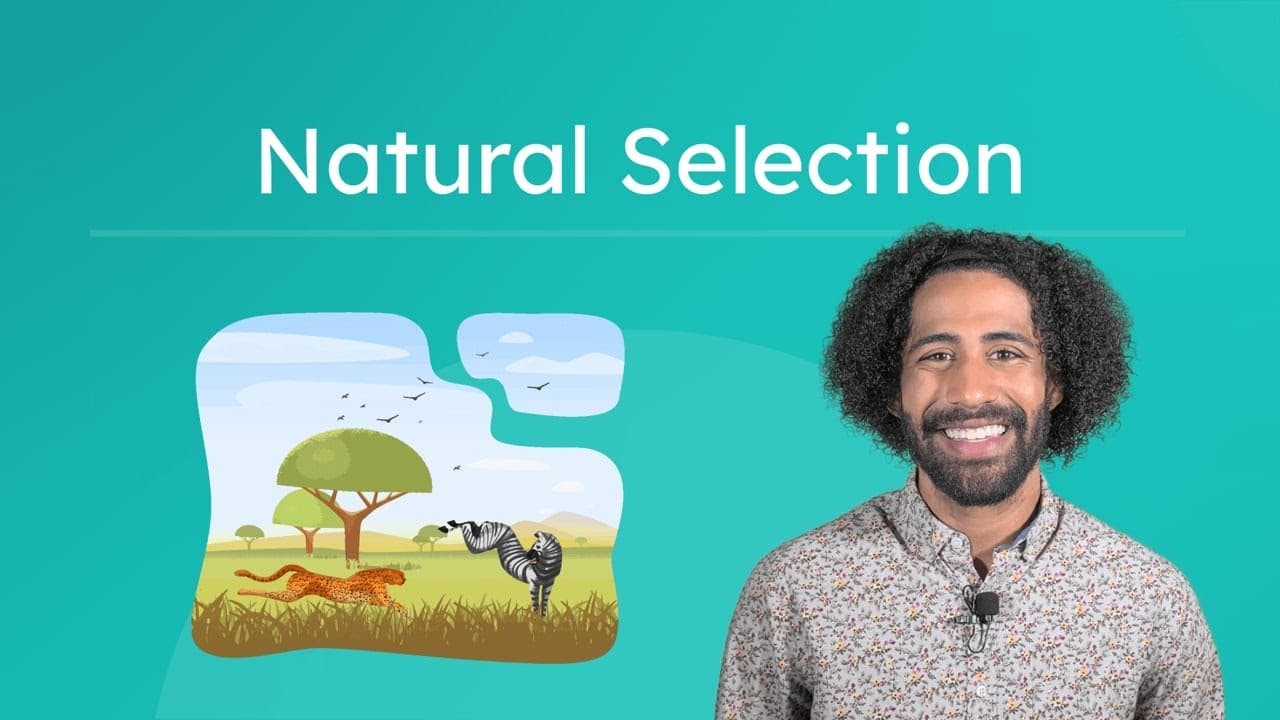
How Natural Selection Drives Adaptation and Survival

How Natural Selection Drives Adaptation and Survival

This educational video provides a clear and engaging introduction to the biological concepts of natural selection, adaptation, and genetic diversity. The host, Tony, begins by drawing an analogy between personal life changes—like moving schools—and the biological imperative for species to adapt to changing environments. The video connects previous lessons on DNA and heredity to the broader mechanism of evolution, explaining that traits are not random but serve specific purposes that enhance an organism's "fitness," defined here as the ability to survive and reproduce.

Miacademy & MiaPrep Learning ChannelMiacademy & MiaPrep Learning Channel

8mins 32s

Materials

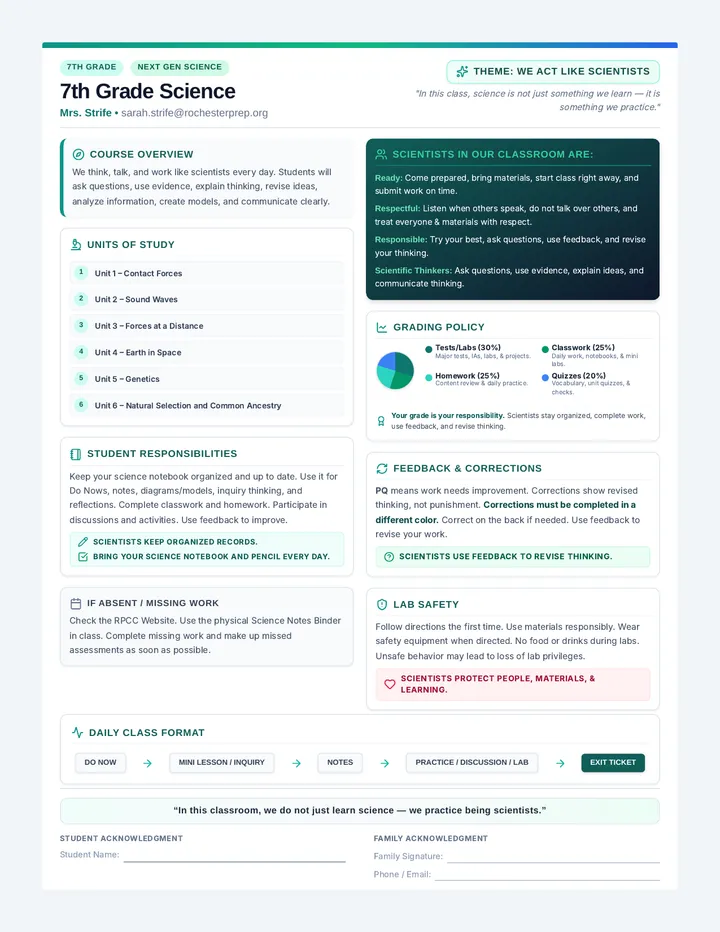
Science Action Syllabus

Science Action Syllabus

An updated 1-page 7th Grade Science Syllabus for Mrs. Strife. Formatted in a clean, professional, and visually engaging dual-column layout with organized boxes, bold headings, blue/green accent themes, and custom science icons. Includes a newly designed visual 'Grading Policy' section with a clean CSS-based donut chart. Perfect for student and parent onboarding.

SS

Sarah Strife

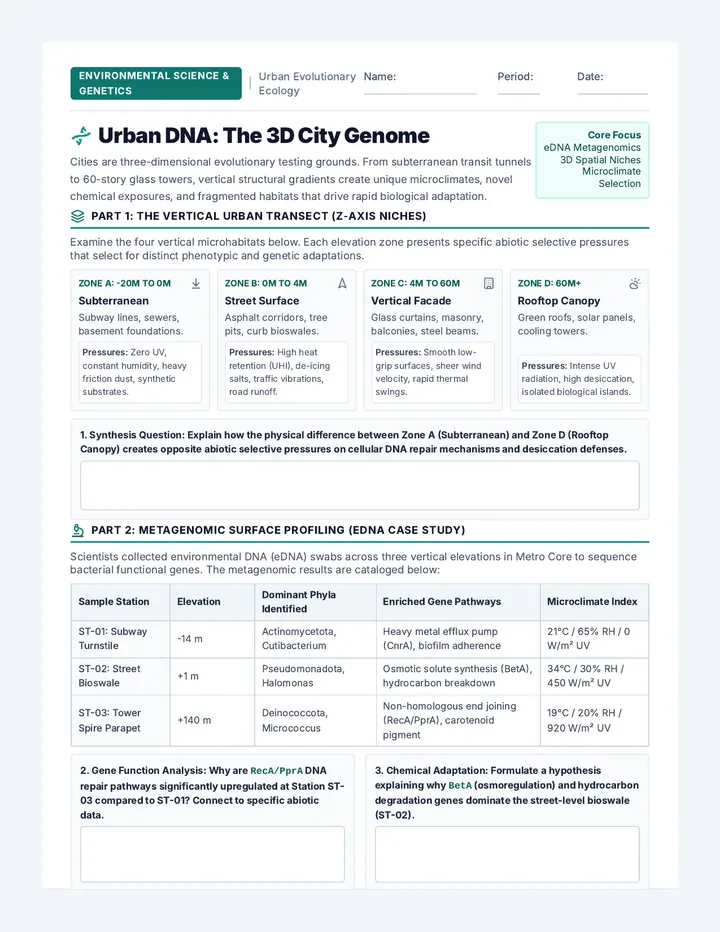
Urban DNA Worksheet

Urban DNA Worksheet

A comprehensive two-page high school biology and environmental science investigation exploring urban metagenomics, vertical microhabitats, and rapid evolutionary adaptation in cities. Students analyze 3D transect data, investigate eDNA swab profiles, and evaluate morphological traits in urban species.

V

Viaan

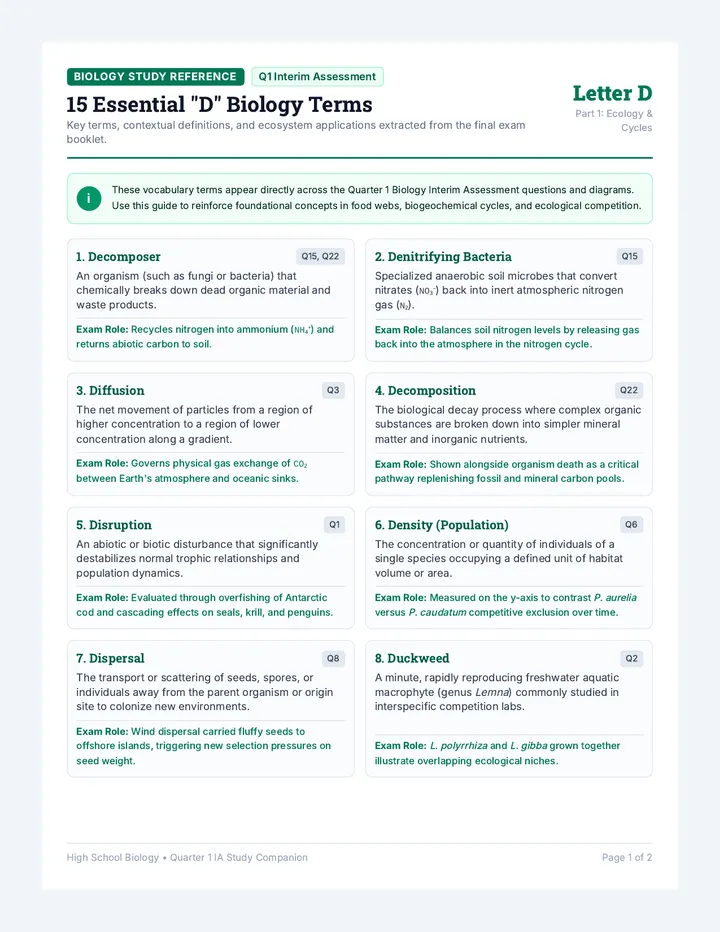
Exam D Terms Glossary

Exam D Terms Glossary

A comprehensive two-page biology vocabulary study guide highlighting 15 essential 'D' terms appearing in the Quarter 1 Interim Assessment. Each entry includes its targeted scientific definition, the assessment context and question reference, and its biological significance across ecology, evolution, and experimental analysis.

R

rubaiya.ahmed

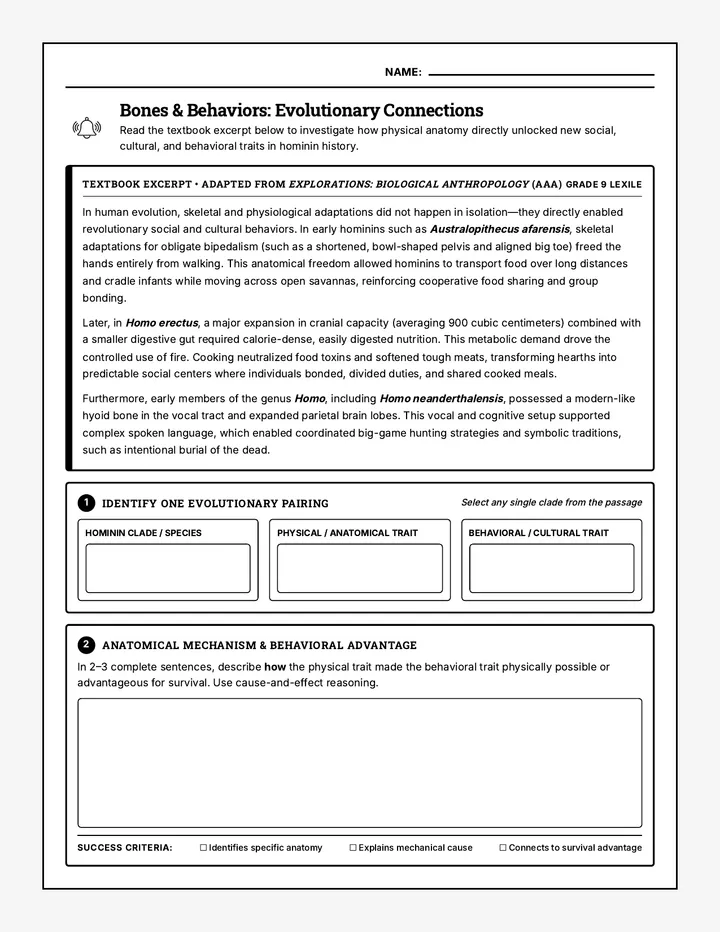
Hominin Adaptations Bellringer Worksheet

Hominin Adaptations Bellringer Worksheet

A 10-minute high-contrast black and white anthropology bellringer featuring an original textbook-style reading aligned with Explorations. High school students connect anatomical evolutionary traits with social and cultural behaviors across multiple hominin clades.

KT

Kyle Trocolla

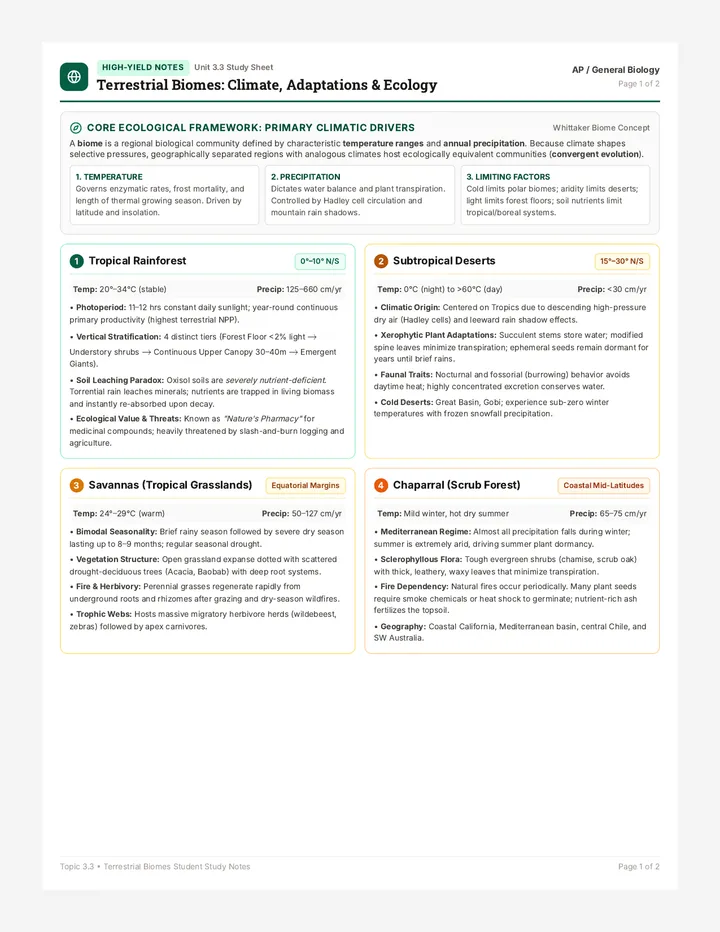
Terrestrial Biomes Student Notes

Terrestrial Biomes Student Notes

A condensed two-page high-yield student notes document summarizing all eight terrestrial biomes, climatic determinants, plant and animal adaptations, soil productivity, fire ecology, and global feedback loops.

MB

M. B.

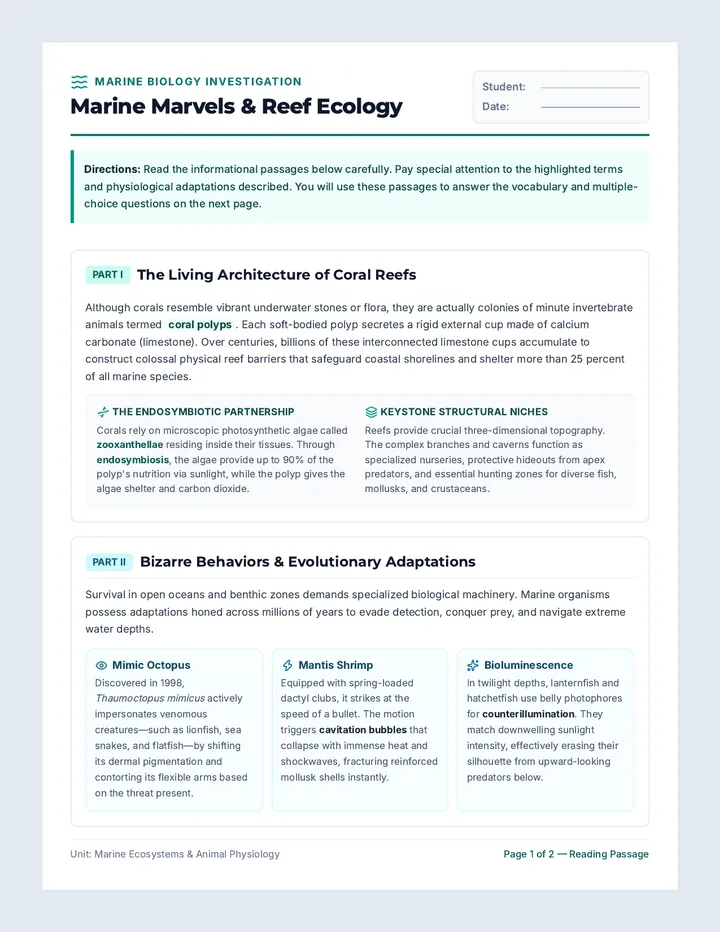
Marine Marvels Reading Comprehension

Marine Marvels Reading Comprehension

A two-page reading comprehension packet exploring coral reef formation, endosymbiosis, and extreme marine animal adaptations. Features an informational text followed exclusively by objective vocabulary matching with enlarged, legible definitions and multiple-choice comprehension questions.

MR

Maddy Roberts

Sequences

Wave Racer CER Bellringer

Wave Runners Sequence

A comprehensive physics unit covering the behavior of mechanical and electromagnetic waves. Students transition from hands-on slinky exploration to advanced optical modeling and mathematical derivations.

OM

Olutoyin Makinde

65
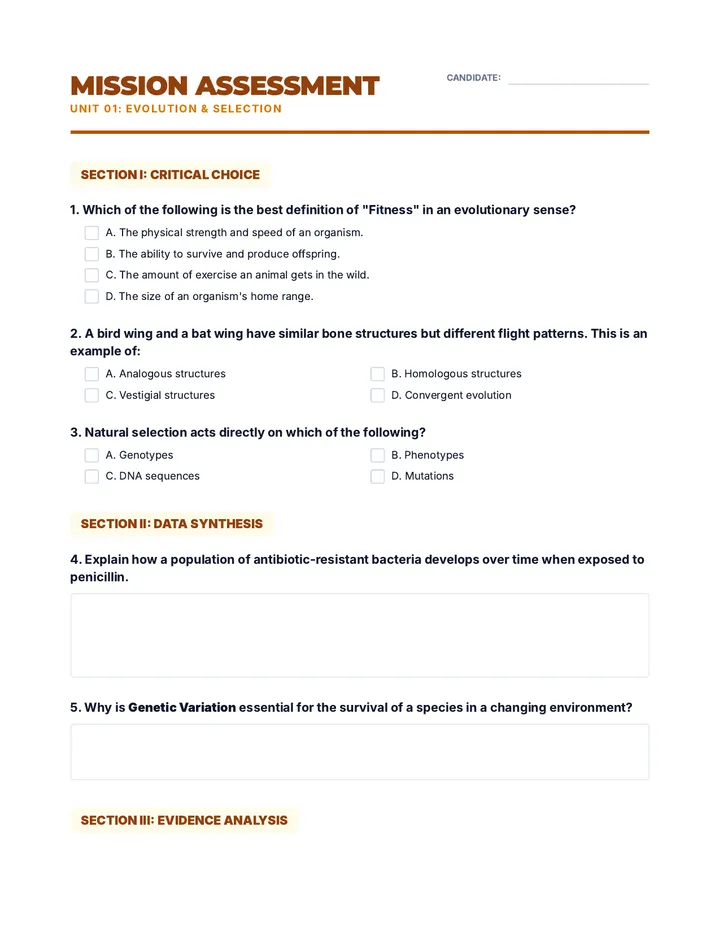
Evolution Assessment Quiz

Biology Recovery Sprint

A high-intensity biology credit recovery program focused on high-yield standards: Evolution, Systems, Viruses, and Cellular Genetics.

PB

Priyadarshini Bharath

15
Sea Parts Vocabulary Worksheet

Ocean Architects

A sequence of lessons exploring the specialized anatomy and physical structures of marine organisms, from basic fish biology to the complex adaptations that allow them to thrive in diverse oceanic environments.

JS

Jasmine Silva Villa

24
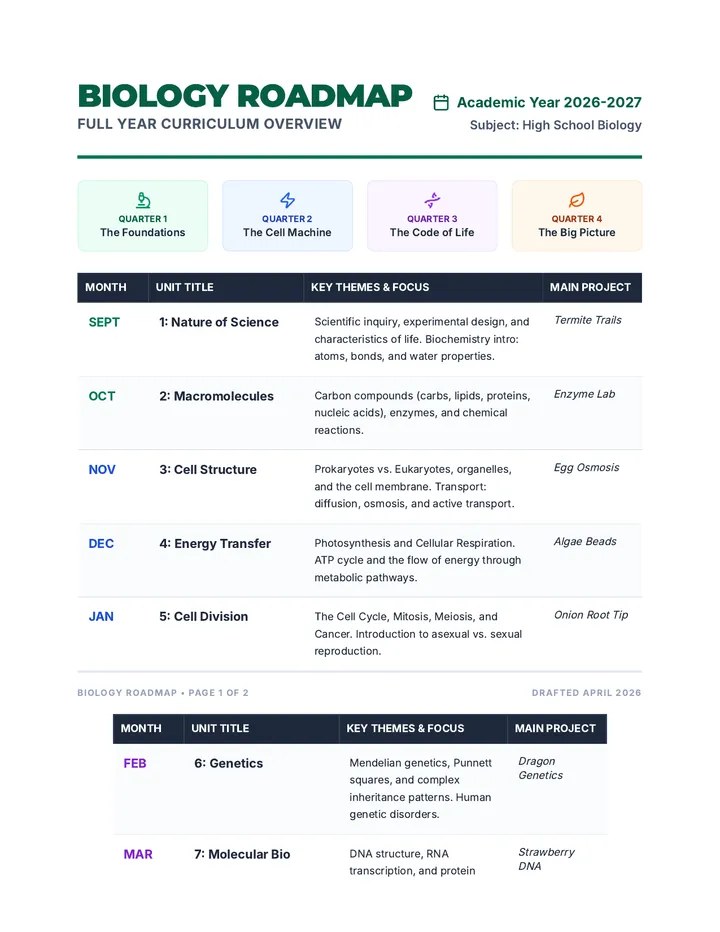
Biology Roadmap Document Trimmed

Biology Blueprint

A comprehensive full-year planning framework for high school Biology, including pacing, unit objectives, lab requirements, and assessment strategies.

A

AMY.MILLER

7
Bio Blueprint Curriculum Map

Indiana Biology Curriculum

A comprehensive biology curriculum aligned with Indiana Academic Standards, spanning twelve core units from the characteristics of living things to human impact, designed for 9th-grade on-level students.

M

MELANIE.ROBERTS

5
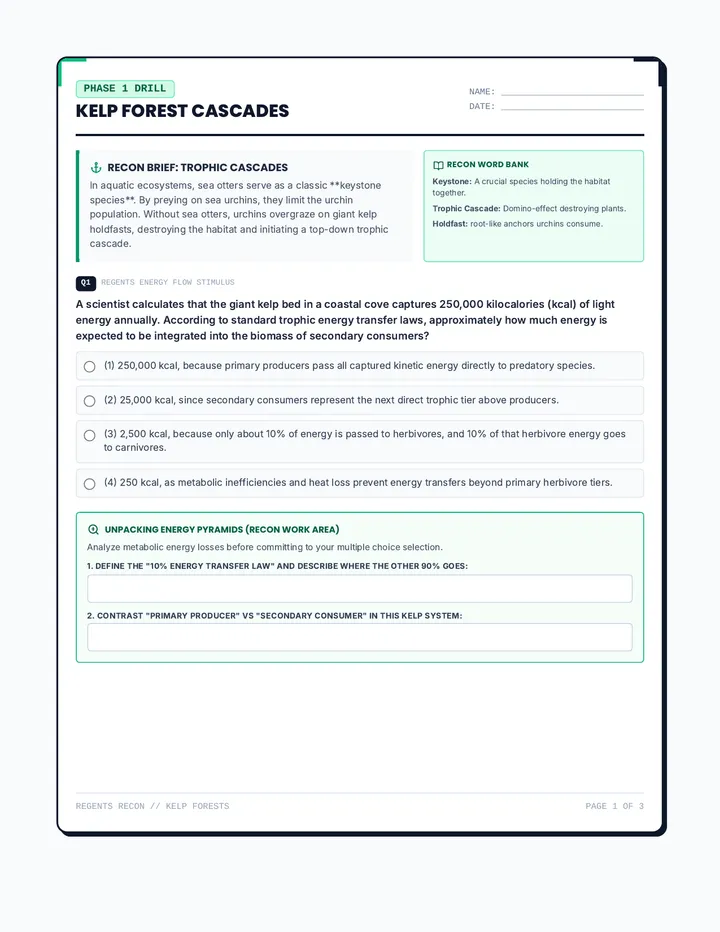
Kelp Cascades Practice

Regents Recon Biology Prep

A 19-day high-stakes Regents Biology test preparation sequence covering matter cycling, kelp forest trophic cascades, homeostatic feedback loops, and experimental design constraints and trade-offs.

CB

Charlotte Beckel

13

Lessons

Savanna Survival Report

Biome Builders

A creative project-based lesson where students research and design an educational poster about a specific global biome, focusing on adaptations, food webs, and conservation. Now expanded to include an informative research paper component.

S

sheenad

11
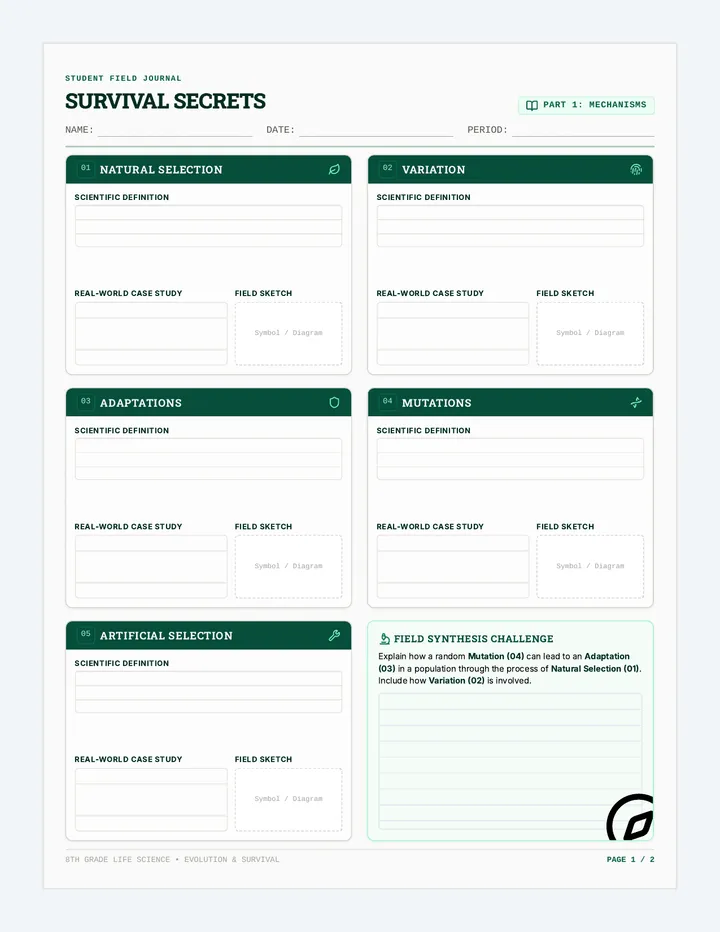
Evolution Essentials Organizer

Survival Secrets

An active-recall study unit on natural selection and evolutionary evidence, featuring graphic organizers, application activities, and a practice quiz.

JS

Jennifer Sundstrom

6
Mutation Lab Teacher Guide

Mutation Lab

A comprehensive lesson on genetic mutations, exploring how changes in DNA structure affect protein function and organism traits through a high-tech laboratory lens.

D

david_malio

7
Biology Syllabus Infographic

Course Launch

An introductory framework establishing course policies, Indiana state biology standards, and the integrated biochemistry roadmap for the academic year.

M

MELANIE.ROBERTS

4
Mission Eradication Packet v3

Tuberculosis Truths

A comprehensive study of John Green's 'Everything Is Tuberculosis', exploring the history, science, and advocacy surrounding the world's deadliest infectious disease. Students will analyze personal narratives, scientific discovery, and global health equity.

MJ

Mr. J. Pfluke

4
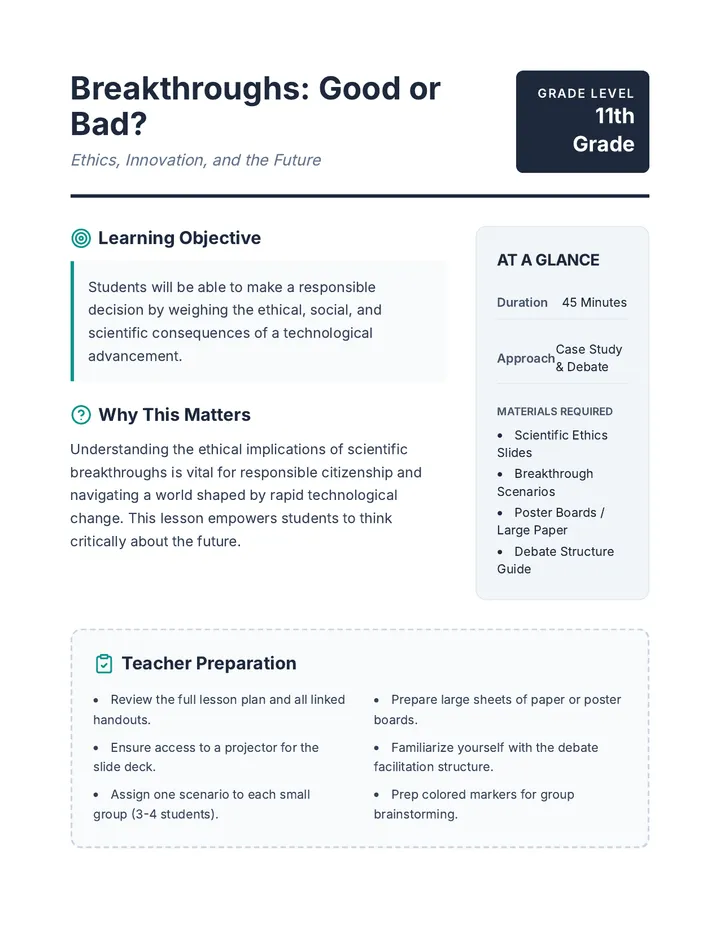
Breakthroughs Lesson Plan

Breakthroughs Good or Bad

An 11th-grade ethics and science lesson exploring the social and moral implications of technological advancements through case studies and debate.

J

jtoomey

6