Lenny.com
Explore
Create
ActivitiesNewMathEnglish Language ArtsScience & EngineeringSocial StudiesGlobal LanguagesHealth & Physical EducationSpecial EducationCounseling & Life SkillsArts & CreativityESL
Lenny.com
Lenny.com
Explore
Create
ActivitiesNewMathEnglish Language ArtsScience & EngineeringSocial StudiesGlobal LanguagesHealth & Physical EducationSpecial EducationCounseling & Life SkillsArts & CreativityESL
Lenny.com

Rocks and Minerals

Identification of igneous, sedimentary, and metamorphic rocks alongside physical properties of minerals like hardness and luster. Examines the rock cycle, crystallization processes, and the formation of geological structures.

Lenny.com

Solutions

Lenny for EducatorsLenny for SchoolsLenny for Districts

Product

ExploreSign inCreateSupportAbout

Resources

Getting startedMTSS Acceleration Program

© 2026 Lenny Learning Inc.

TermsPrivacyAccessibility
LinkedInInstagramX
Lenny
Science & EngineeringLife ScienceLiving ThingsAnimalsPlantsBody SystemsTraitsAdaptationsCellsEcosystemsHeredityGenes to TraitsCell DivisionPhysicsComparing MaterialsShapes and PropertiesMagnetsMagnetismLightSoundLight and SoundMatterStates of MatterChanges of StateMixturesPhysical and Chemical ChangeHeating and CoolingHeat and Thermal EnergyEnergyForce and MotionElectrical CircuitsAtoms and MoleculesPeriodic TableMotion in One DimensionMotion in Two DimensionsScalars and VectorsForces and Laws of MotionCircular Motion and GravityMomentum and ImpulseWork, Energy, and PowerWavesElectromagnetic WavesGeometric OpticsElectricity and MagnetismSimple Harmonic MotionThermodynamicsNuclear PhysicsEarth Science & AstronomyWeatherWater CycleRocks and MineralsFossilsEarth's FeaturesEarth's ResourcesEarth's StructureWeather and ClimateEarth EventsFossils and Geologic TimePlate TectonicsHuman ImpactsAstronomyChemistryUnits and MeasurementAtomic StructurePeriodic TrendsChemical BondingNomenclatureMolecular StructureIntermolecular ForcesThe MoleStoichiometryProperties of GasesSolutionsChemical ReactionsBalancing EquationsEnergy ChangesRates of ReactionsEquilibriumAcids and BasesQuantum ModelBiologyClassificationCell StructureThe Chemistry of LifeBiomoleculesCellular TransportCell EnergyCell Growth and DivisionDNAProtein SynthesisMeiosis and Sexual ReproductionPatterns of InheritanceMulticellular OrganismsEvolutionEcologyBiodiversityComputer ScienceAlgorithms and Computational ThinkingProgramming LanguagesComputing SystemsNetworks and InternetData AnalysisCybersecurityAI and Machine LearningSoftware Design and DevelopmentBlockchainEngineering & AIDesigning ExperimentsEngineering PracticesDesign ThinkingEngineering Design ProcessMechanical EngineeringElectrical EngineeringMaterials and StructuresCAD and 3D DesignRoboticsArtificial Intelligence BasicsVibe CodingMachine LearningAI Ethics and SocietySystems ThinkingEntrepreneurship & InnovationEntrepreneurial MindsetBusiness Idea DevelopmentBusiness Plan BasicsMarketing & Customer DiscoveryFinancial Management for Startups

Videos

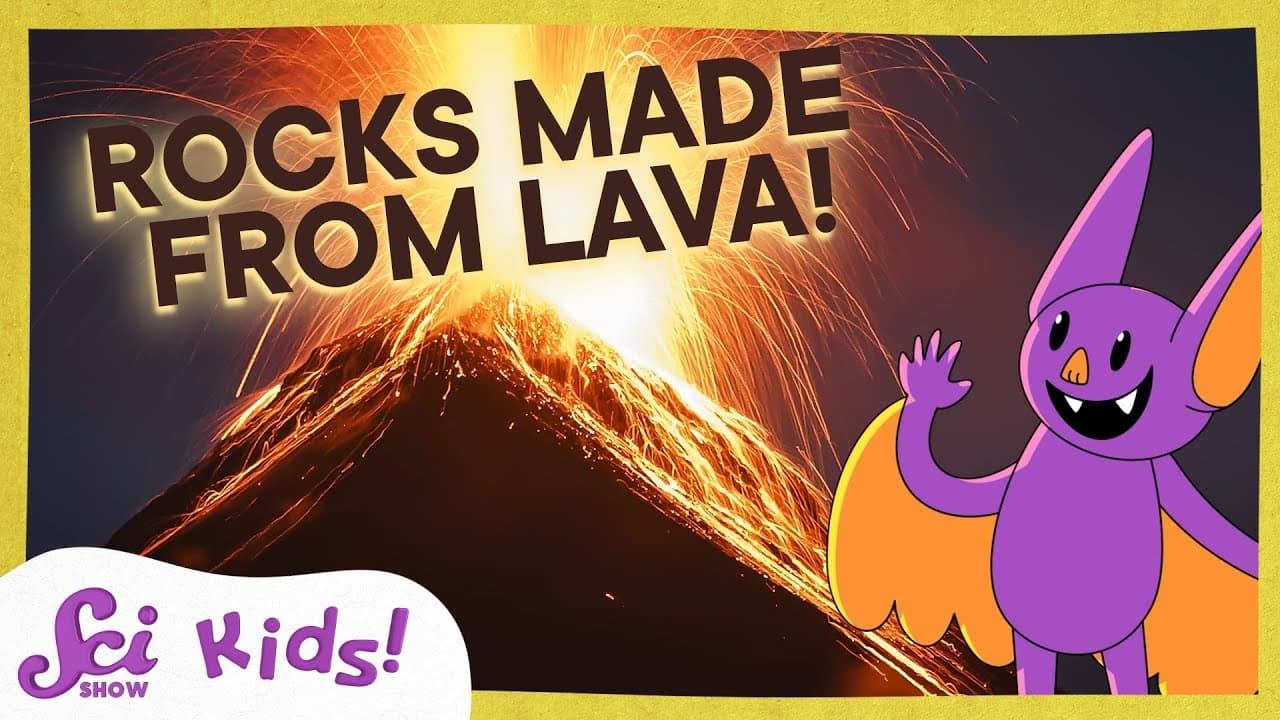
Exploring Igneous Rocks: From Lava to Countertops

Exploring Igneous Rocks: From Lava to Countertops

This engaging episode of Sci Kids! explores the fascinating world of igneous rocks, taking students on a geological journey from the moon's surface to their own kitchen countertops. Hosts Savannah and Sam (a puppet) investigate how different rocks form from cooling lava and magma, breaking down complex geological concepts into accessible, bite-sized lessons. The video uses clear visual analogies—like melting ice—and high-quality images of rock samples to demonstrate the transition from liquid to solid state.

SciShow KidsSciShow Kids

7mins 2s

How Nature Makes Soil: Rocks, Rot, and Time

How Nature Makes Soil: Rocks, Rot, and Time

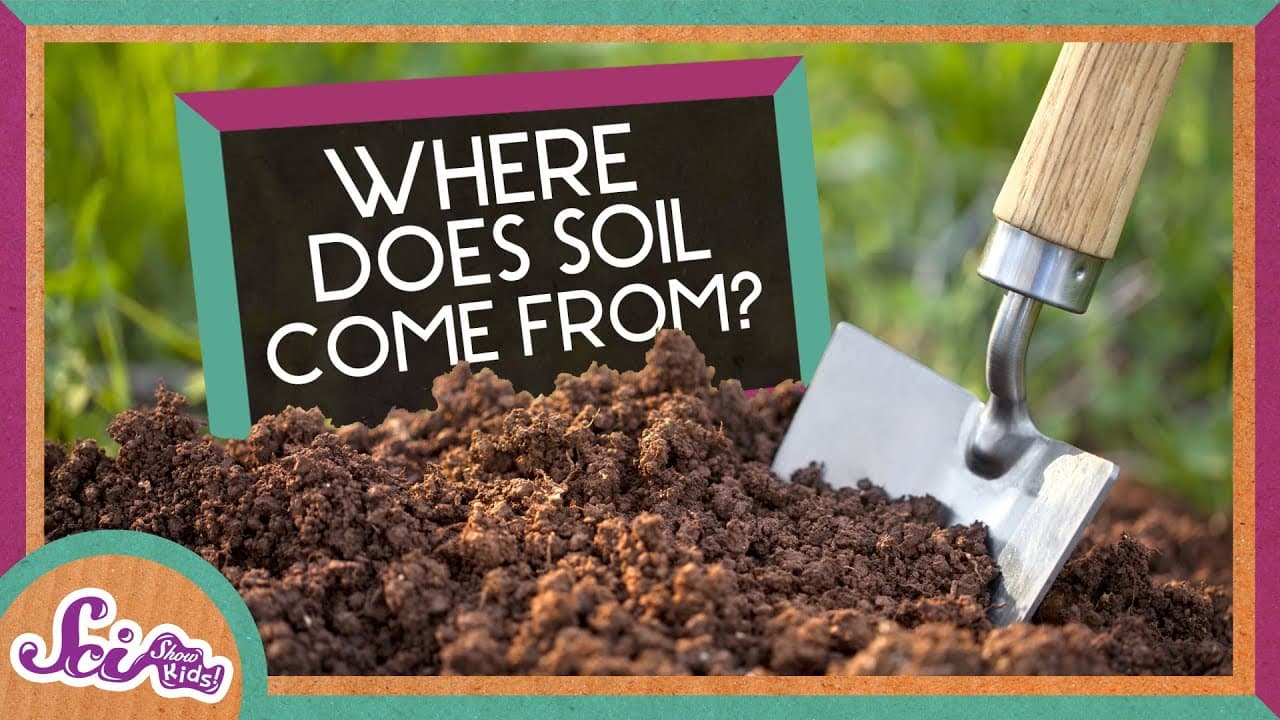
In this engaging episode of SciShow Kids, Jessi and her robot mouse friend Squeaks investigate a fundamental question about the ground beneath our feet: where does soil come from? While students might know that birds come from eggs and trees grow from seeds, the origin of soil is less obvious. The video breaks down the geological and biological recipes for making dirt, explaining how nature constantly manufactures soil through slow, powerful processes involving wind, water, and living organisms. Key scientific concepts explored include weathering—the breakdown of rocks into smaller particles—and the vital role of organic matter. The video details specific weathering agents like crashing waves, freezing ice, and plant roots, illustrating how massive boulders eventually become tiny grains of sand or clay. It also introduces the concept of nutrients derived from decomposing plant and animal matter, teaching students how to identify healthy, fertile soil based on its color and texture. This video is an excellent resource for early elementary earth science lessons. It simplifies abstract geological timescales and complex decomposition processes into concrete, observable examples. Teachers can use this video to launch outdoor inquiry activities, guiding students to act as "soil scientists" who examine local dirt for evidence of organic matter and weathering, thereby connecting classroom science to their immediate environment.

SciShow KidsSciShow Kids

5mins 29s

How Waterfalls Are Created by Erosion

How Waterfalls Are Created by Erosion

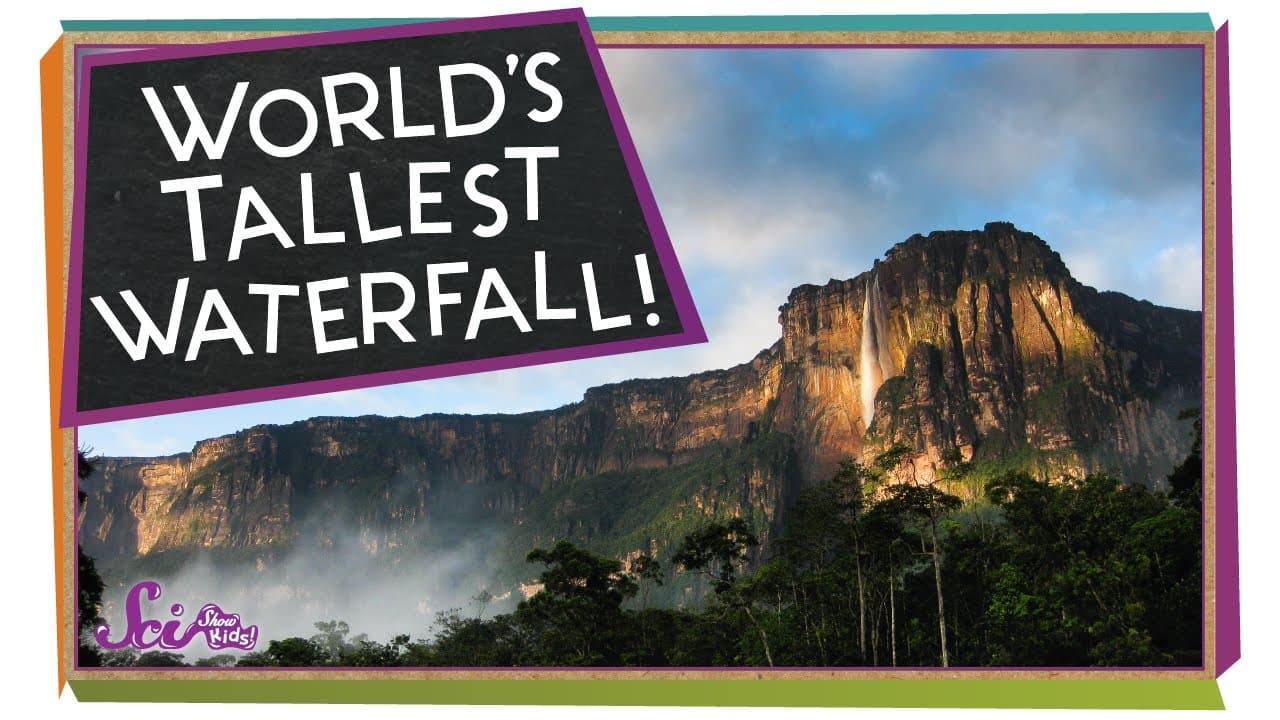
This educational video from SciShow Kids explores the geological formation of waterfalls, using the majestic Angel Falls in Venezuela as a primary example. Hosted by Jessi and her robot mouse companion Squeaks, the video begins by distinguishing between typical rivers that flow downhill and those that dramatically drop off cliffs. It highlights Angel Falls as the tallest waterfall in the world, providing a comparison to the Burj Khalifa to help students visualize its immense scale. The core of the video explains the scientific process of erosion in a way that is accessible to young learners. Through clear animations and analogies, it demonstrates how rivers flowing over layers of rock with different hardness levels can carve out cliffs over millions of years. The video introduces the concept of "erosion"—the wearing away of rock by water—and explains how water erodes soft rock faster than hard rock, eventually creating the vertical drop necessary for a waterfall to exist. For educators, this video serves as an excellent introduction to Earth science and geology concepts like landforms, erosion, and rock strata. It effectively simplifies the abstract concept of deep geological time and rock layering using concrete visual aids, such as a layer cake analogy and a sandcastle comparison. The video provides natural stopping points for classroom discussions about how water shapes the land around us and includes a specific case study (Angel Falls) that connects geography with physical science.

SciShow KidsSciShow Kids

3mins 2s

Identifying and Classifying Minerals, Crystals, and Gemstones

Identifying and Classifying Minerals, Crystals, and Gemstones

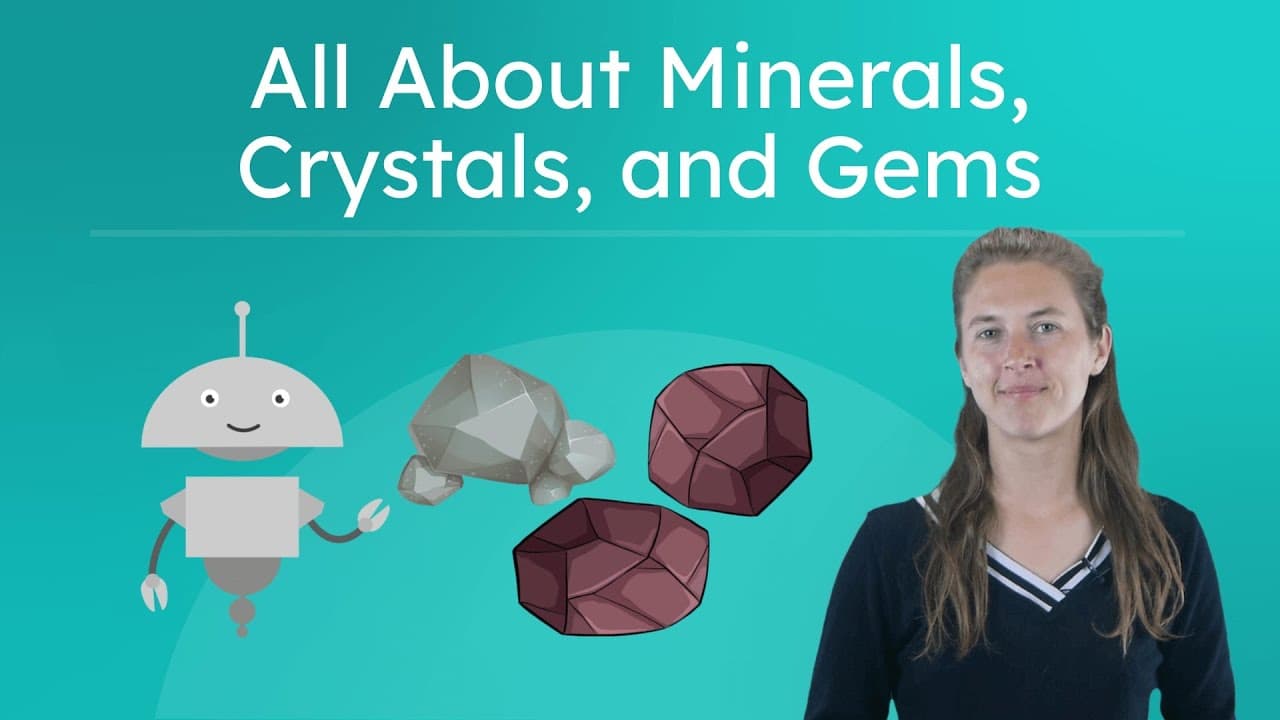
This comprehensive science video provides a detailed exploration of the geological building blocks of our planet: minerals, crystals, and gemstones. Hosted by Kylie, the lesson begins by distinguishing between these three often-confused terms, explaining that rocks are mixtures of minerals, while minerals are the building blocks that form crystals. The video establishes the five strict scientific criteria for a substance to be considered a mineral: it must be naturally occurring, solid, inorganic, have a fixed chemical formula, and possess an ordered crystalline structure. Viewers are guided through specific examples, such as why wood and sugar are not minerals (organic) while salt and quartz are. The content delves deep into mineral classification, introducing the eight major mineral groups: native elements, sulfides, oxides, phosphates, sulfates, carbonates, halides, and silicates. For each group, the video provides clear definitions, chemical compositions, and real-world examples like pyrite (fool's gold), turquoise, and quartz. The lesson also explores how crystals form through cooling lava, hardening liquids, or evaporation, and categorizes them by their geometric shapes, such as cubic, hexagonal, and triclinic structures. Ideal for Earth Science curriculums, this video serves as an excellent foundation for geology units. It bridges the gap between basic rock identification and introductory chemistry by explaining atoms, molecules, and chemical formulas in an accessible way. Teachers can use this resource to explain complex classification systems, discuss the difference between organic and inorganic matter, or introduce the geometry of natural structures. The video concludes with a look at gemstones and a demonstration of raw vs. polished specimens, encouraging students to start their own collections.
Miacademy & MiaPrep Learning ChannelMiacademy & MiaPrep Learning Channel

12mins 23s

How Diamonds Form and Why They Are So Strong

How Diamonds Form and Why They Are So Strong

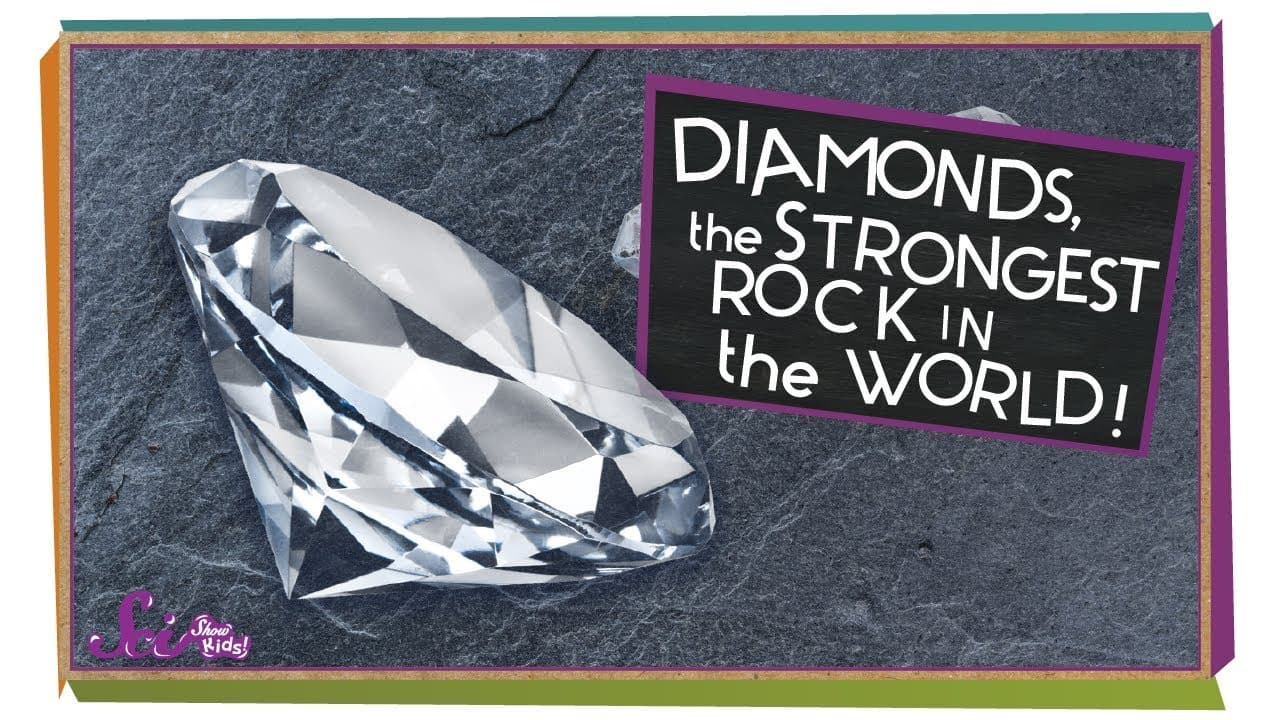
This educational video explores the geological origins and unique properties of diamonds, distinguishing them from ordinary rocks. Hosted by Jessi and her robot friend Squeaks, the video explains that diamonds are actually crystals made of carbon, formed under immense heat and pressure deep within the Earth. It uses accessible analogies, such as building blocks, to demonstrate how atomic arrangements affect material strength. The narrative covers the timeline of diamond formation, noting that most formed billions of years ago—long before dinosaurs existed. It details the specific conditions required for their creation, including depths of around 150 kilometers underground, and explains how violent, deep-source volcanic eruptions brought them closer to the surface where they could cool and eventually be discovered by humans. For educators, this video serves as an excellent resource for Earth Science units covering rocks and minerals, geological processes, and states of matter. It introduces concepts like crystalline structure, the element carbon, and the layers of the Earth in a way that is comprehensible for elementary students. The video also touches on practical applications of diamonds beyond jewelry, such as in industrial cutting tools, linking science to real-world technology.

SciShow KidsSciShow Kids

4mins 33s

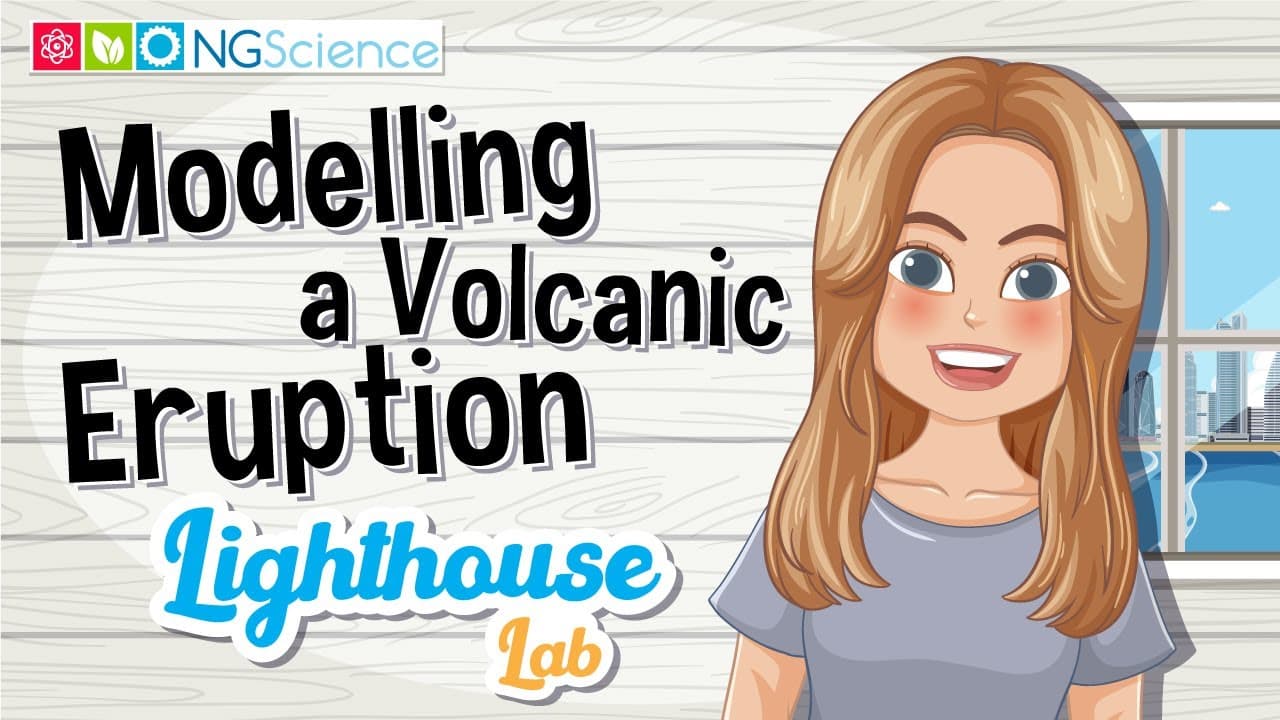
How to Make Model Volcanoes and Understand Eruptions

How to Make Model Volcanoes and Understand Eruptions

This educational video from the Lighthouse Lab introduces students to the science of volcanoes through engaging hands-on experiments. The host, Sophie, begins by defining what a volcano is—an opening in the Earth's crust—and showcasing footage of famous active volcanoes from around the world. She then transitions into a laboratory setting to demonstrate two distinct ways to model volcanic eruptions using safe chemical reactions: one creating solid 'lava bombs' that erupt when water is added, and another using the classic baking soda and vinegar reaction.

Next Generation ScienceNext Generation Science

6mins 53s

Materials

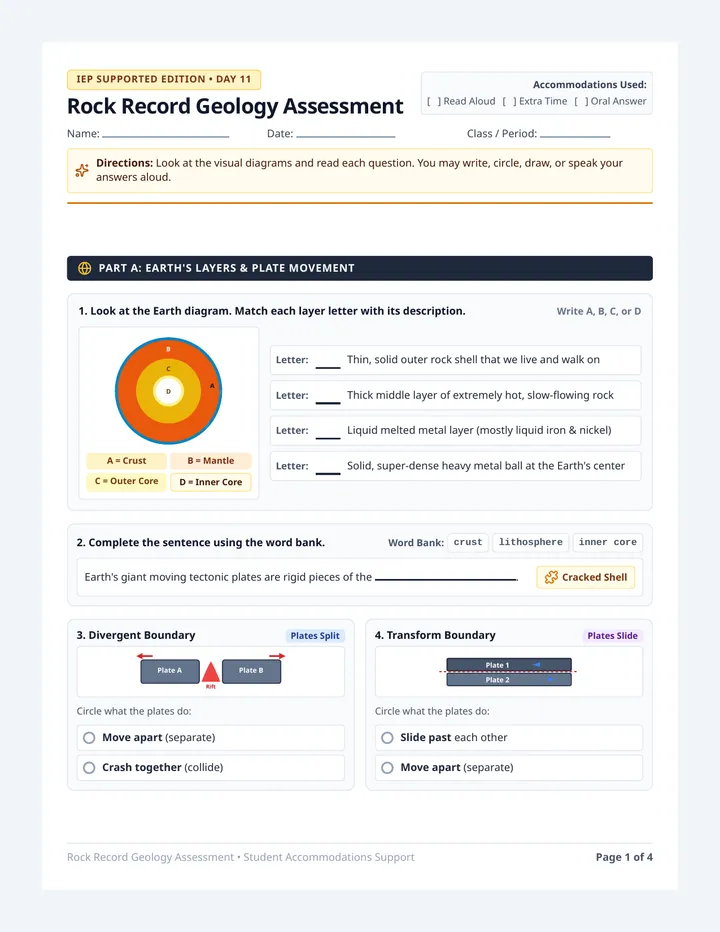
Rock Record IEP Assessment

Rock Record IEP Assessment

Enhanced 4-page IEP-adapted geology assessment featuring rich visual diagrams: Earth layer cross-sections, tectonic plate boundary arrows, subduction trench illustrations, 3-rock-type formation graphics, rock cycle flow paths, textured strata cross-sections, and earthquake safety icons.

CS

Courtney Scherer

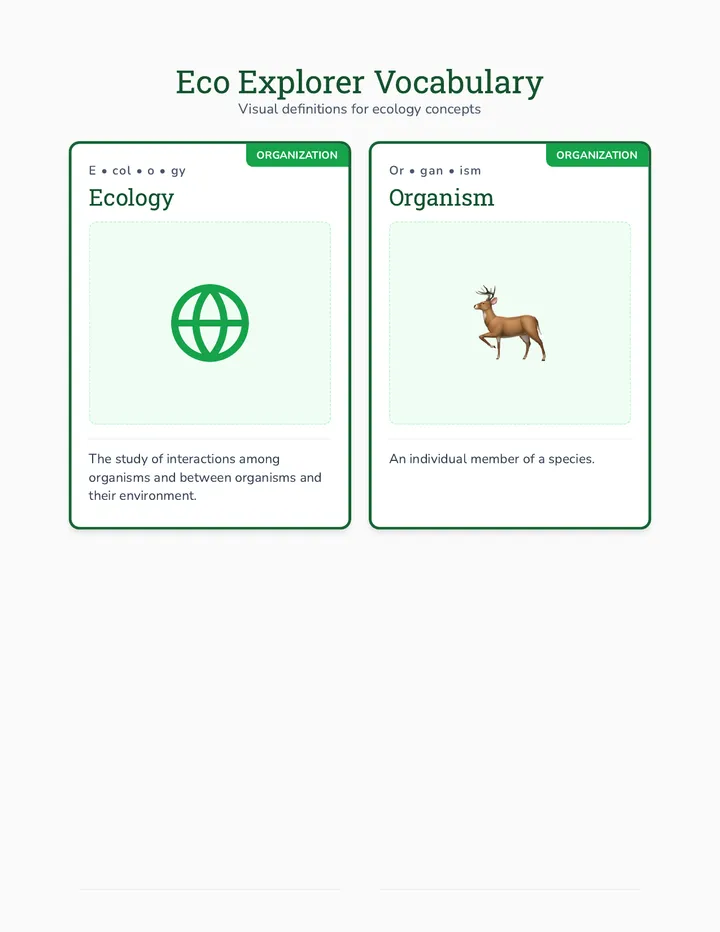
Eco Explorer Flashcards

Eco Explorer Flashcards

A comprehensive set of 29 visual vocabulary flashcards for Ecology. Each card features the term broken into syllables, a thematic visual icon or emoji, and a clear definition, categorized by Levels of Organization, Energy, and Biogeochemical Cycles. Updated to fix page break issues and chemical formula rendering.

J

Jodi.Denton

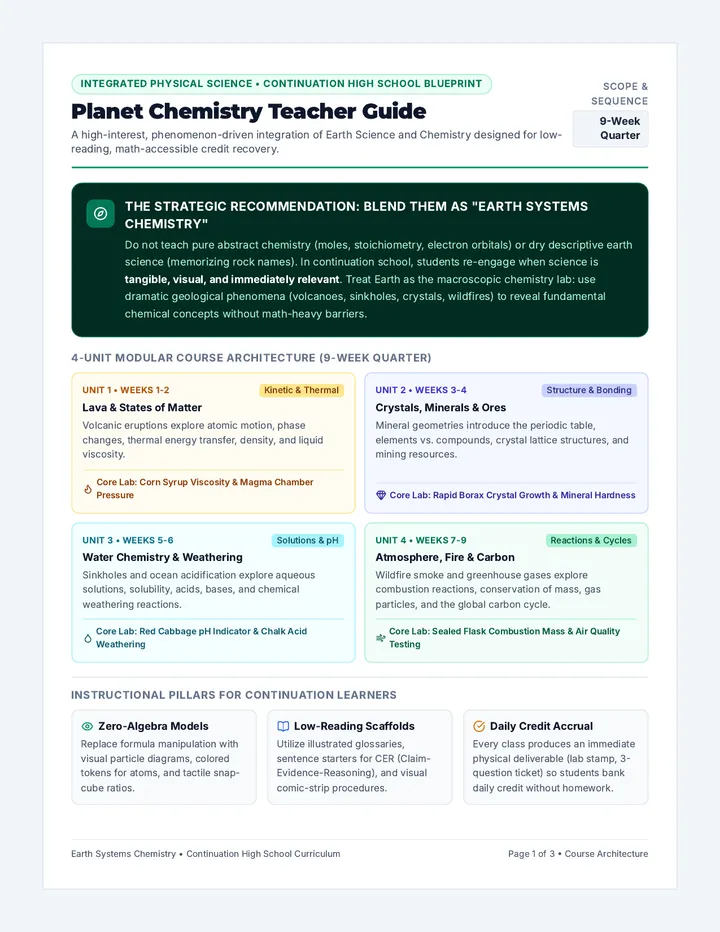
Planet Chemistry Teacher Guide

Planet Chemistry Teacher Guide

A comprehensive curriculum blueprint integrating chemistry and earth science specifically tailored for continuation high school students. Features four accessible, hands-on units, low-math lab investigations, and structured literacy supports for credit recovery.

MH

Meagan Hudson

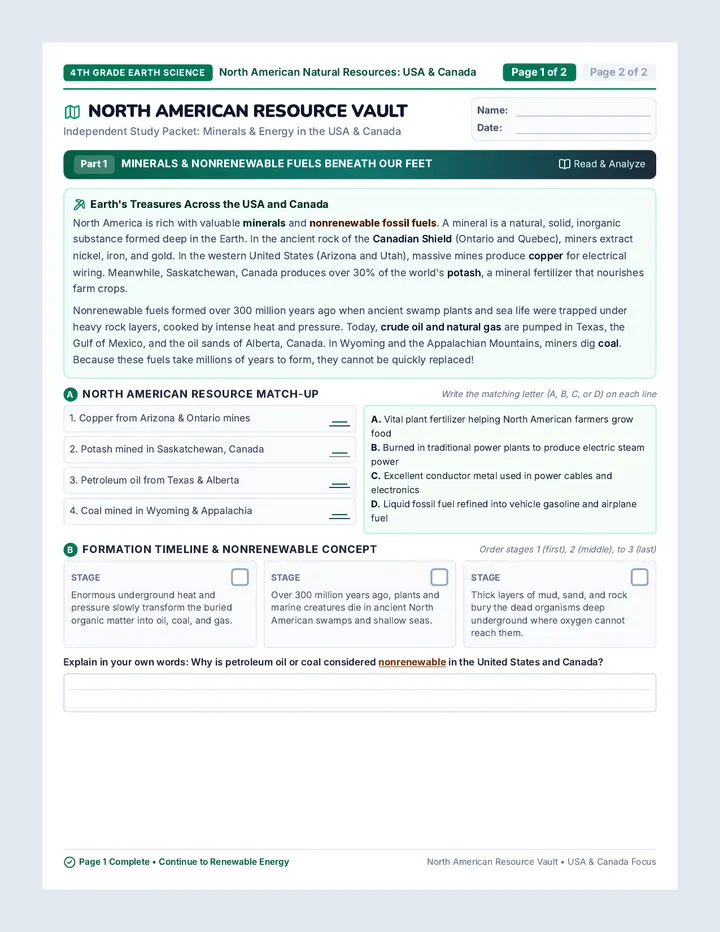
Earth Vault Packet

Earth Vault Packet

A 2-page independent weekly learning packet for 4th graders focused on mineral resources and energy in the USA and Canada. Page 1 explores minerals and fossil fuels. Page 2 is redesigned specifically for 4th graders with simplified language, visual icons, a scaffolded graphic organizer with a helpful word bank, two kid-friendly comprehension questions, and an interactive 'Energy Boss' choice activity.

NK

Navdeep Kaur

Earth Benchmark Flash Cards

Earth Benchmark Flash Cards

An 8-page ready-to-print double-sided flashcard set (24 cards total) engineered for duplex 2-sided printing (flip on long edge) with perfectly mirrored front-and-back grids so questions print on the front and answers on the reverse with no folding required.

A

Andrea.Golden

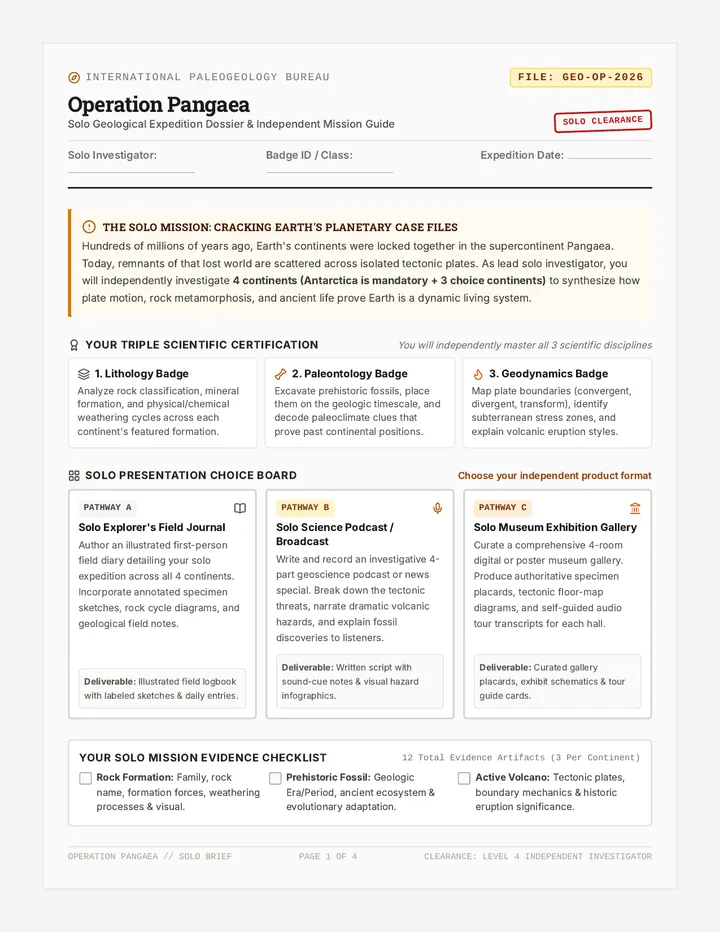
Continental Mystery Project Guide

Continental Mystery Project Guide

A completely independent 4-page geological expedition dossier and choice-based project guide engineered for solo student mastery, featuring triple scientific badge certifications, independent creative pathways, Antarctic mystery clues, global case files, and a self-audit verification rubric.

A

Andrea.Golden

Sequences

Mission Scoring Rubric

Physics Frontiers Research Project

A partner-based research project for 9th-grade conceptual physics students focusing on diverse topics from celestial mechanics to the physics of dance. Students move through a structured research process with mandatory teacher checkpoints for source reliability.

C

ckroeker

13
Science Squad Student Booklet

Science Literacy Journals

A multi-grade collection of scientific reading comprehension and response booklets designed to build disciplinary literacy in Earth, Life, and Physical sciences across elementary and middle school levels.

N

nmack

4
Foundations Starters Slides

Forensic Starters Collection

A comprehensive 42-day collection of class starters for an 8th-grade forensics course, covering foundations, physical evidence, biological evidence, and forensic reasoning.

S

schrauthb

4
Scout Mission Slides

Earth System Scouts

A foundational exploration of the four main branches of Earth Science through a multi-day digital scavenger hunt designed for accessibility and engagement.

S

Shelby.Toll

4
Rock Origins Slides

Earth Shapers

A comprehensive unit exploring how natural processes like rock formation and erosion work together to shape the Earth's surface over millions of years.

CN

Coleman Newell

19
Shards and Silts Slides

Trace Evidence Pursuit

A hands-on forensic science sequence focusing on the collection and analysis of trace evidence, specifically soil and glass fragments, through an outdoor scavenger hunt.

SW

Shelley Wright

4

Lessons

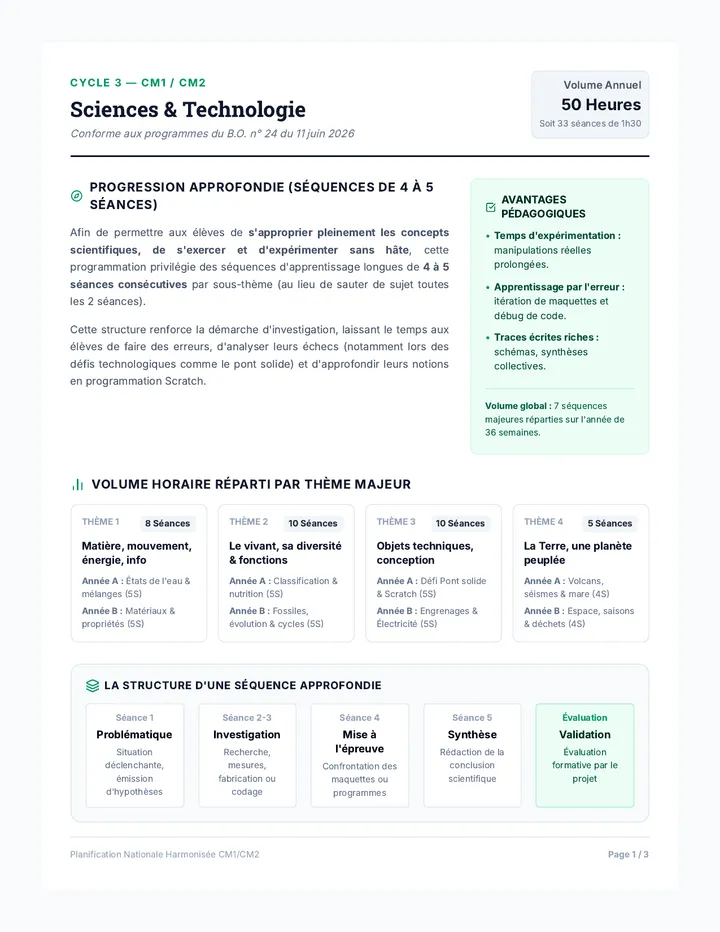
Tableau Progression Annuelle Sciences CM

Progression Sciences CM1 CM2

Outil de planification annuelle et de progression pour l'enseignement des sciences et technologies en classe de CM1/CM2, conforme au BO de juin 2026. Ce guide propose une répartition claire des volumes horaires et des thèmes entre l'année A et l'année B pour éviter les redondances dans les classes à double niveau.

LP

LAURENT PERCHE

40
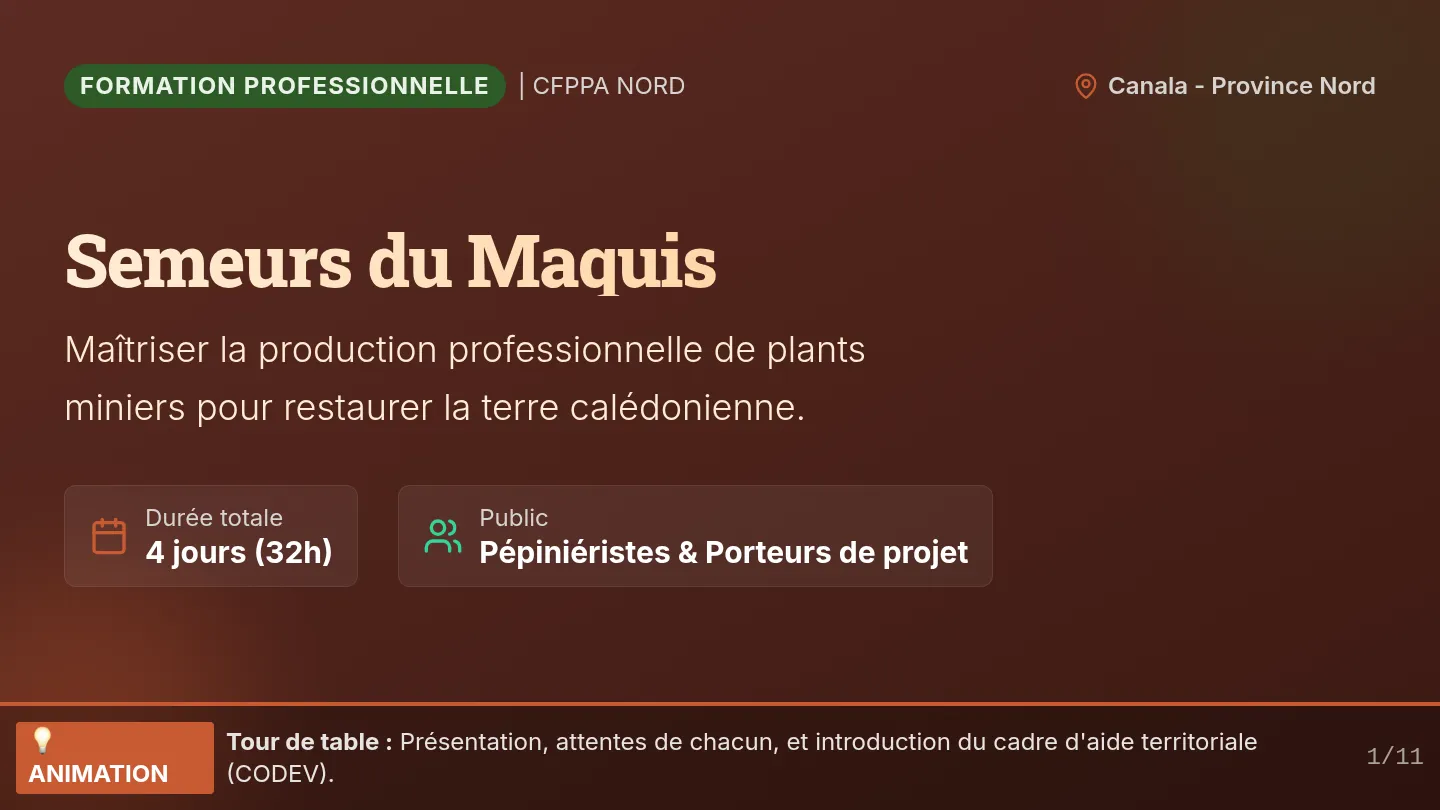
Semeurs du Maquis Slides

Semeurs du Maquis

Une formation de 4 jours (32 heures) destinée à un public de pépiniéristes, producteurs de plants et porteurs de projet en Province Nord pour maîtriser la production professionnelle de plants miniers pour la revégétalisation des sols latéritiques.

SV

Sévrine Valter

12
Physics Final Study Guide Packet

Conceptual Physics Final Prep

A comprehensive 3-page study guide covering Radioactive Decay, Geophysics, Waves, and Momentum for a 9th grade Conceptual Physics final exam.

C

ckroeker

3
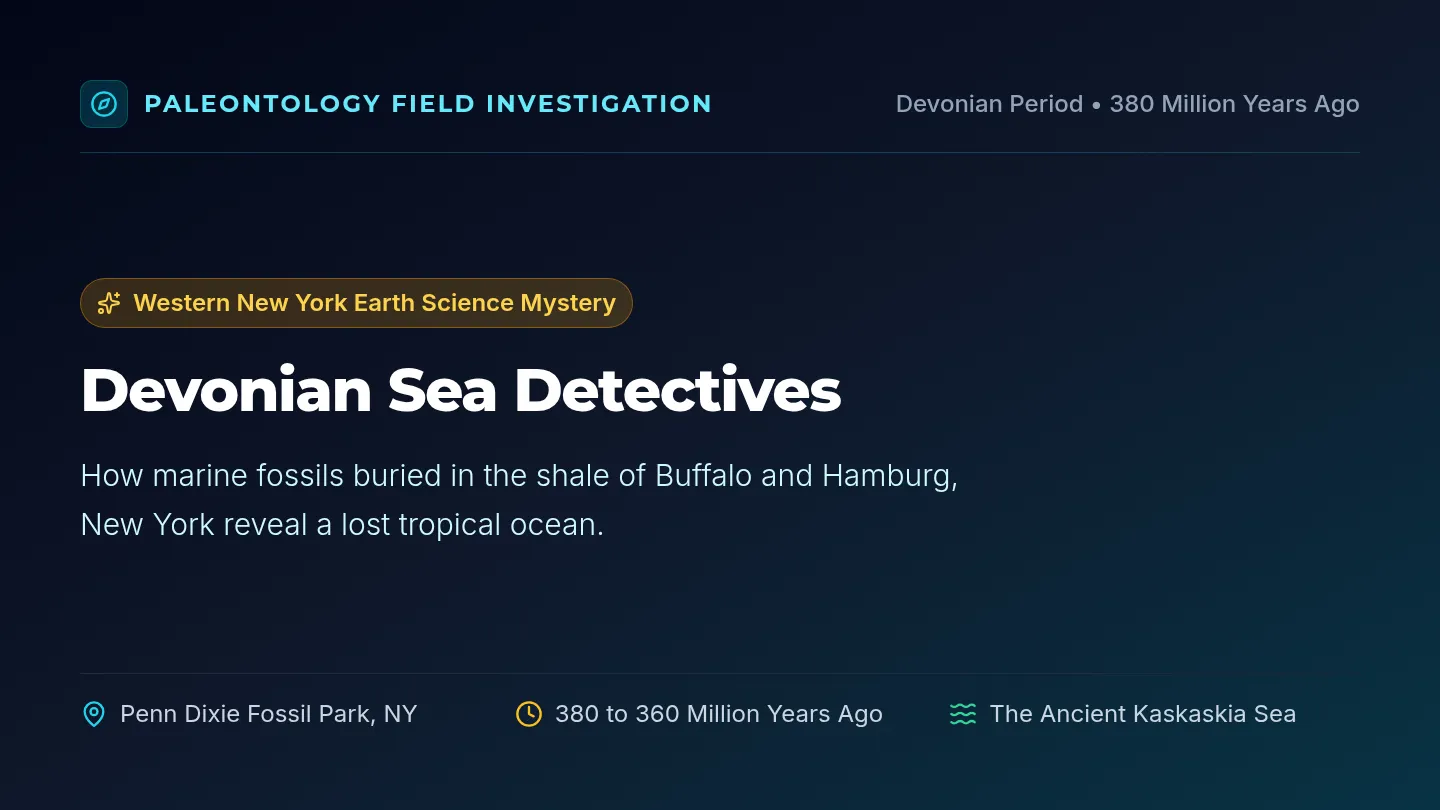
Devonian Sea Slides

Devonian Sea Detectives

A mini-lesson exploring how fossil evidence from Penn Dixie and Western New York reveals that the region was once a tropical shallow sea during the Devonian Period 380 million years ago.

S

sehrenberg

4
Sphere Systems Slideshow

Sphere Systems

A comprehensive lesson exploring Earth's four major systems: the geosphere, hydrosphere, atmosphere, and biosphere. Students will learn to identify each sphere and describe the complex ways they interact to sustain life and shape the planet.

MW

Mr Whitfield

6
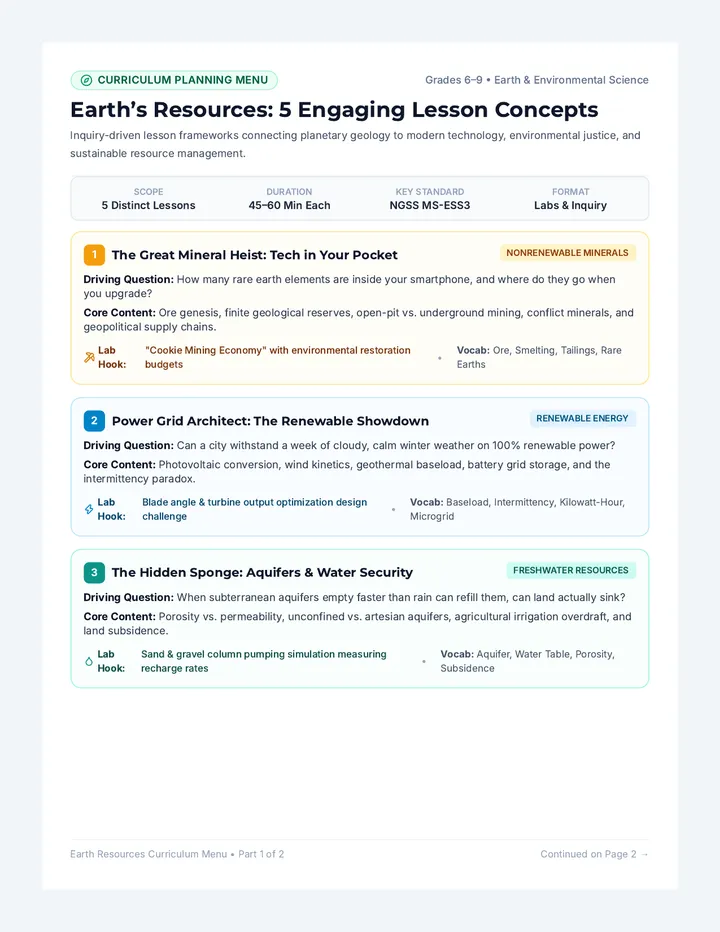
Earth Resources Lesson Guide

Mineral Heist

An inquiry-based science lesson exploring nonrenewable mineral extraction, ore geology, electronics manufacturing lifecycles, and the environmental trade-offs of modern technology.

JD

Jenny Daniels

7