Lenny.com
Explore
Create
ActivitiesNewMathEnglish Language ArtsScience & EngineeringSocial StudiesGlobal LanguagesHealth & Physical EducationSpecial EducationCounseling & Life SkillsArts & CreativityESL
Lenny.com
Lenny.com
Explore
Create
ActivitiesNewMathEnglish Language ArtsScience & EngineeringSocial StudiesGlobal LanguagesHealth & Physical EducationSpecial EducationCounseling & Life SkillsArts & CreativityESL
Lenny.com
Lenny.com

Solutions

Lenny for EducatorsLenny for SchoolsLenny for Districts

Product

ExploreSign inCreateSupportAbout

Resources

Getting startedMTSS Acceleration Program

© 2026 Lenny Learning Inc.

TermsPrivacyAccessibility
LinkedInInstagramX
Lenny

Business Plan Basics

Core elements of formal business planning such as market analysis, operational structures, and revenue models. Equips students with the framework to evaluate feasibility and pitch new ventures.

Science & EngineeringLife ScienceLiving ThingsAnimalsPlantsBody SystemsTraitsAdaptationsCellsEcosystemsHeredityGenes to TraitsCell DivisionPhysicsComparing MaterialsShapes and PropertiesMagnetsMagnetismLightSoundLight and SoundMatterStates of MatterChanges of StateMixturesPhysical and Chemical ChangeHeating and CoolingHeat and Thermal EnergyEnergyForce and MotionElectrical CircuitsAtoms and MoleculesPeriodic TableMotion in One DimensionMotion in Two DimensionsScalars and VectorsForces and Laws of MotionCircular Motion and GravityMomentum and ImpulseWork, Energy, and PowerWavesElectromagnetic WavesGeometric OpticsElectricity and MagnetismSimple Harmonic MotionThermodynamicsNuclear PhysicsEarth Science & AstronomyWeatherWater CycleRocks and MineralsFossilsEarth's FeaturesEarth's ResourcesEarth's StructureWeather and ClimateEarth EventsFossils and Geologic TimePlate TectonicsHuman ImpactsAstronomyChemistryUnits and MeasurementAtomic StructurePeriodic TrendsChemical BondingNomenclatureMolecular StructureIntermolecular ForcesThe MoleStoichiometryProperties of GasesSolutionsChemical ReactionsBalancing EquationsEnergy ChangesRates of ReactionsEquilibriumAcids and BasesQuantum ModelBiologyClassificationCell StructureThe Chemistry of LifeBiomoleculesCellular TransportCell EnergyCell Growth and DivisionDNAProtein SynthesisMeiosis and Sexual ReproductionPatterns of InheritanceMulticellular OrganismsEvolutionEcologyBiodiversityComputer ScienceAlgorithms and Computational ThinkingProgramming LanguagesComputing SystemsNetworks and InternetData AnalysisCybersecurityAI and Machine LearningSoftware Design and DevelopmentBlockchainEngineering & AIDesigning ExperimentsEngineering PracticesDesign ThinkingEngineering Design ProcessMechanical EngineeringElectrical EngineeringMaterials and StructuresCAD and 3D DesignRoboticsArtificial Intelligence BasicsVibe CodingMachine LearningAI Ethics and SocietySystems ThinkingEntrepreneurship & InnovationEntrepreneurial MindsetBusiness Idea DevelopmentBusiness Plan BasicsMarketing & Customer DiscoveryFinancial Management for Startups

Videos

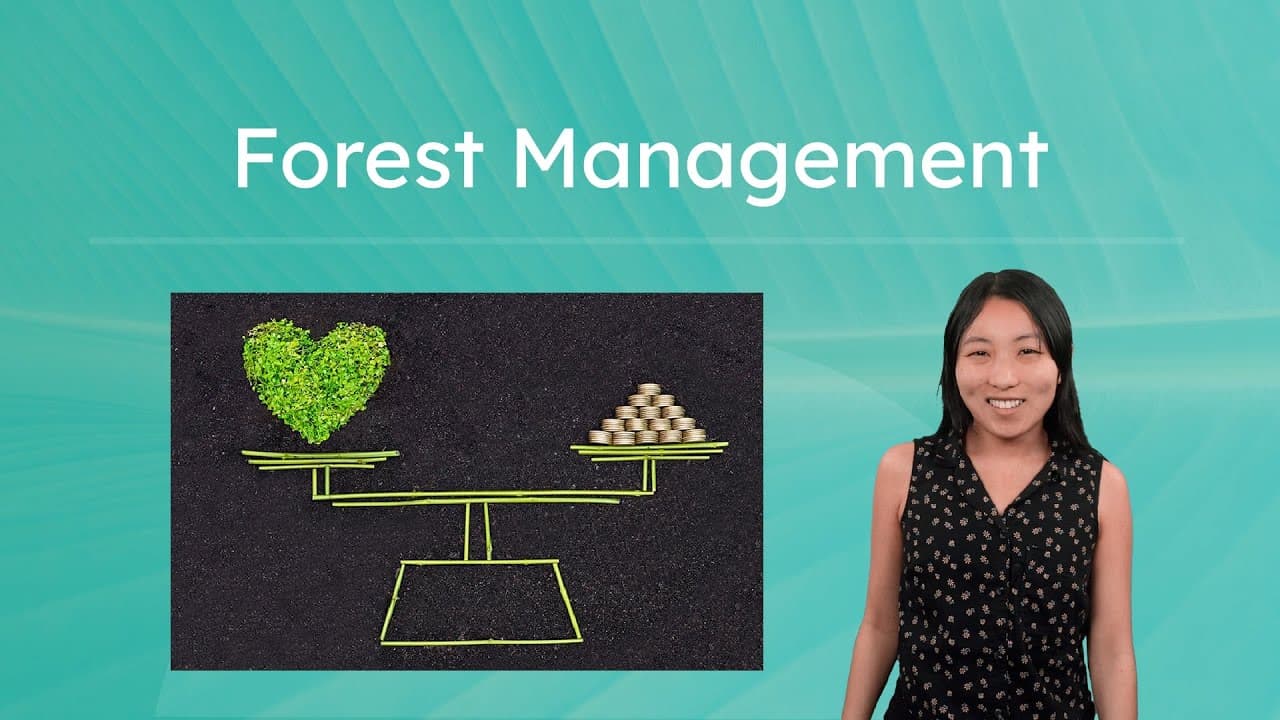
Sustainable Forestry and Conservation Explained

Sustainable Forestry and Conservation Explained

This comprehensive video explores the complex relationship between human industry and forest ecosystems, breaking down how we can balance economic needs with environmental preservation. It begins by identifying everyday products derived from trees, moving into the biological importance of forests for air quality, carbon capture, and water filtration. The narrative transitions to the challenges of deforestation and the "tragedy of the commons," setting the stage for a detailed look at forest management. Key themes include the mechanics of ecosystem services (photosynthesis, erosion control), the economic realities of the logging industry, and specific forestry methodologies. The video compares three distinct approaches to logging: clear-cutting, selective harvesting, and sustainable forest management using traditional methods. It weighs the efficiency, cost, and environmental impact of each, introducing concepts like biodiversity loss and soil compaction. For educators, this video serves as an excellent anchor for units on renewable resources, ecology, or environmental stewardship. It moves beyond simple messages to examine the trade-offs involved in resource management. The content supports lessons on critical thinking by asking students to evaluate different harvesting methods and empowers them with actionable steps for personal conservation, such as understanding FSC certification and reducing waste.

Miacademy & MiaPrep Learning ChannelMiacademy & MiaPrep Learning Channel

10mins 59s

Comparing Business Structures: From Sole Proprietorships to Corporations

Comparing Business Structures: From Sole Proprietorships to Corporations

This educational video provides a comprehensive overview of the three primary forms of business organization: sole proprietorships, partnerships, and corporations. Using relatable analogies like road trips and fast food chains, the narrator introduces the economic role of producers and the critical decisions entrepreneurs face when starting a venture. The video breaks down the complex legal and financial distinctions between these structures, focusing specifically on three major considerations: the level of control desired, the type of liability (limited vs. unlimited) involved, and the barriers to entry such as startup costs and complexity.

Miacademy & MiaPrep Learning ChannelMiacademy & MiaPrep Learning Channel

12mins 43s

Mastering the Business Plan: A Step-by-Step Guide

Mastering the Business Plan: A Step-by-Step Guide

This educational video provides a comprehensive guide to understanding and creating a business plan, essential knowledge for aspiring entrepreneurs and business students. Using a narrative framework featuring a robot named Mia who failed to secure investors for her lemonade stand, the host breaks down the necessity of planning before acting. The video systematically explains that a business plan acts as a roadmap, helping to set objectives, identify potential issues, and secure funding from investors. The content delves into the specific anatomy of a standard business plan, detailing eight critical components: Executive Summary, Company Description, Market Analysis, Organization/Management, Operations, Marketing/Sales, Funding Requests, and Financial Projections. It explains the purpose of each section, such as how a market analysis identifies target customers and competitors, or how financial projections demonstrate profitability. The video also highlights the "keys to success," emphasizing clear writing, realistic financial data, and a solid marketing strategy. Ideally the video serves as a foundational lesson for high school economics, business, or CTE (Career and Technical Education) classes. It moves beyond theory by including "check-in" questions that prompt students to apply concepts immediately. The lesson culminates in a practical critical thinking exercise where students must analyze a flawed sample business plan, identifying unrealistic assumptions and gaps in logic, which is an excellent classroom activity for developing analytical skills.
Miacademy & MiaPrep Learning ChannelMiacademy & MiaPrep Learning Channel

12mins 21s

The Four Key Functions That Make Businesses Run

The Four Key Functions That Make Businesses Run

This educational video demystifies the internal workings of a business by breaking down the four primary functions that keep companies running: Operations, Marketing, Finance, and Human Resources. Using relatable anecdotes and clear examples, the host explains that a business isn't just a "black box" that produces goods, but a complex system where different departments must collaborate to succeed. The content explores the specific responsibilities of each function, from creating products on an assembly line to managing budgets and hiring staff. A significant portion of the video is dedicated to the concept of "interdependence," illustrating how these departments rely on one another—like how Marketing needs Operations to actually make what they sell, and how Finance needs HR to manage payroll. The video also contrasts how these functions look in different business structures, from a simple sole proprietorship like a lemonade stand to complex multinational corporations. Teachers can use this video as a foundational lesson for economics, business studies, or career exploration units. It provides a clear framework for understanding organizational structures and introduces essential vocabulary. The built-in pause points with guiding questions allow for immediate classroom discussion and application, helping students connect abstract business concepts to the real-world jobs of adults they know.

Miacademy & MiaPrep Learning ChannelMiacademy & MiaPrep Learning Channel

10mins 42s

How Trademarks Protect Brands and Consumers

How Trademarks Protect Brands and Consumers

This educational video from Crash Course Intellectual Property explores the complex world of trademarks, explaining how they function not just as corporate assets but as vital consumer protection tools. Host Stan Muller breaks down the legal definitions of trademarks, service marks, and trade dress, illustrating how these intellectual property rights allow consumers to distinguish between sources of goods in a crowded marketplace. The video traces the history of trademarks from the days of local blacksmiths to the modern industrial economy where brand recognition is essential for trust and quality assurance. The content covers a wide range of legal concepts including the spectrum of distinctiveness (from generic to fanciful), the phenomenon of "genericide" where successful brands lose protection, and the specific legal tests courts use to determine infringement. Viewers learn about the rigorous registration process with the USPTO, the constitutional basis for trademark law under the Commerce Clause, and the concepts of dilution by blurring and tarnishment. The video uses engaging examples like the shape of Coca-Cola bottles, the sound of NBC chimes, and the color of UPS trucks to show that trademarks can be almost anything that carries meaning. For educators, this video serves as an excellent resource for Business Law, Civics, Economics, and Marketing classes. It provides a practical framework for understanding how businesses build value and how the legal system balances corporate rights with consumer clarity. The clear explanation of the "likelihood of confusion" test offers a perfect template for classroom case studies and critical thinking exercises regarding brand identity and fair competition.

CrashCourseCrashCourse

11mins 20s

Materials

Brand Blueprint Gallery Walk Worksheet

Brand Blueprint Gallery Walk Worksheet

A two-sided Brand Blueprint Gallery Walk worksheet featuring a simplified 8-company observational log on the front and an expanded 6-part Big Picture Reflection on the back with ample writing lines and guaranteed zero cutoff.

L

Landry.Stahl

Pitch Feedback Condenser Worksheet

Pitch Feedback Condenser Worksheet

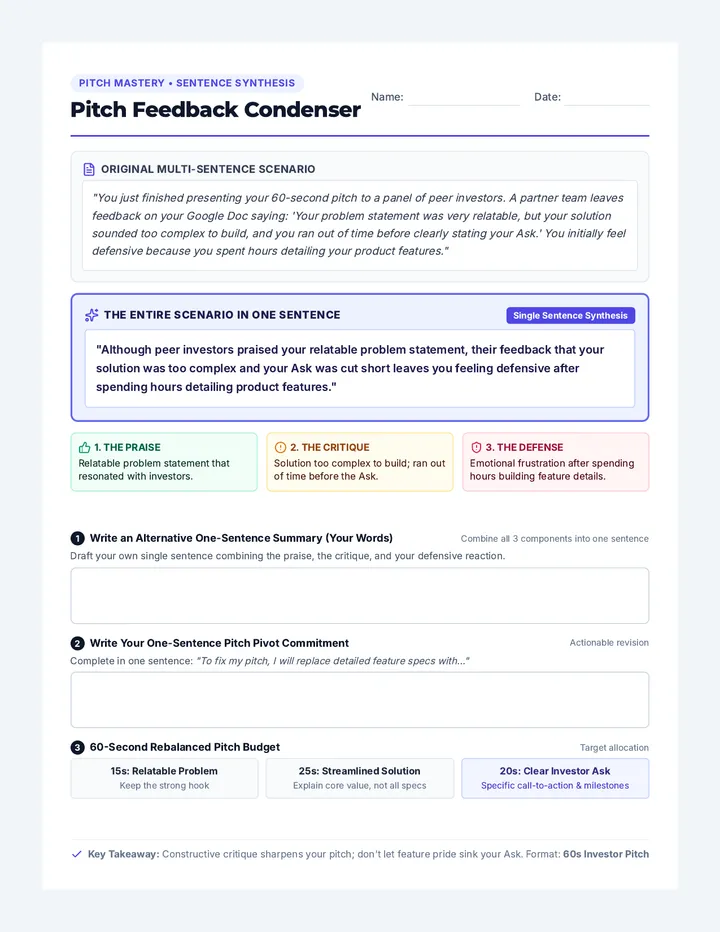
A concise entrepreneurship worksheet that transforms complex peer pitch feedback and initial defensiveness into clear, single-sentence revisions.

Sequences

Business Basics Slides

Business Blueprint

A comprehensive 7-day introduction to business and entrepreneurship. Students explore foundations, economic principles, ownership models, internal structures, and the mindset and process needed to launch a new business idea.

DJ

Dayna Jackson

16
LMS Bulldog Clothing Company Teacher Guide

LMS Bulldog Clothing Company

A 4-week project-based learning sequence for middle school students, connecting mathematics, marketing data, apparel scaling, and budget formulas through the real-world challenge of launching a school merchandise brand.

LM

Lydia McCracken

4
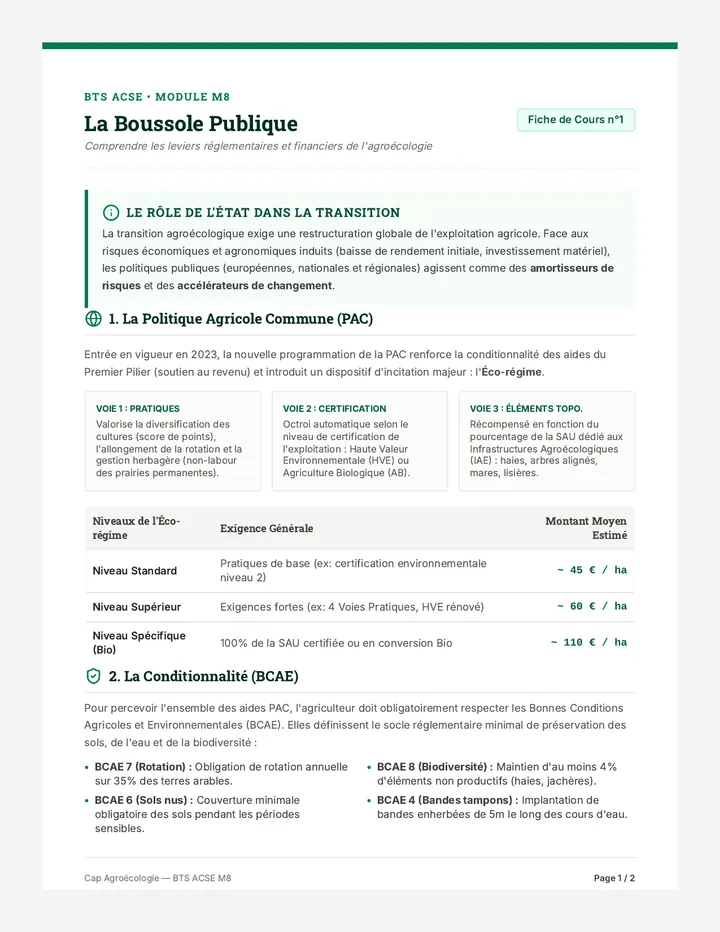
Boussole Publique Fiche

Cap Agroécologie

Un module complet de 10 heures pour le BTS ACSE (module M8) centré sur la transition agroécologique, l'analyse des politiques publiques (PAC, MAEC) et la conception d'un plan opérationnel d'accompagnement stratégique pour évaluer la capacité C8.3.

RM

Regis Mitard

6
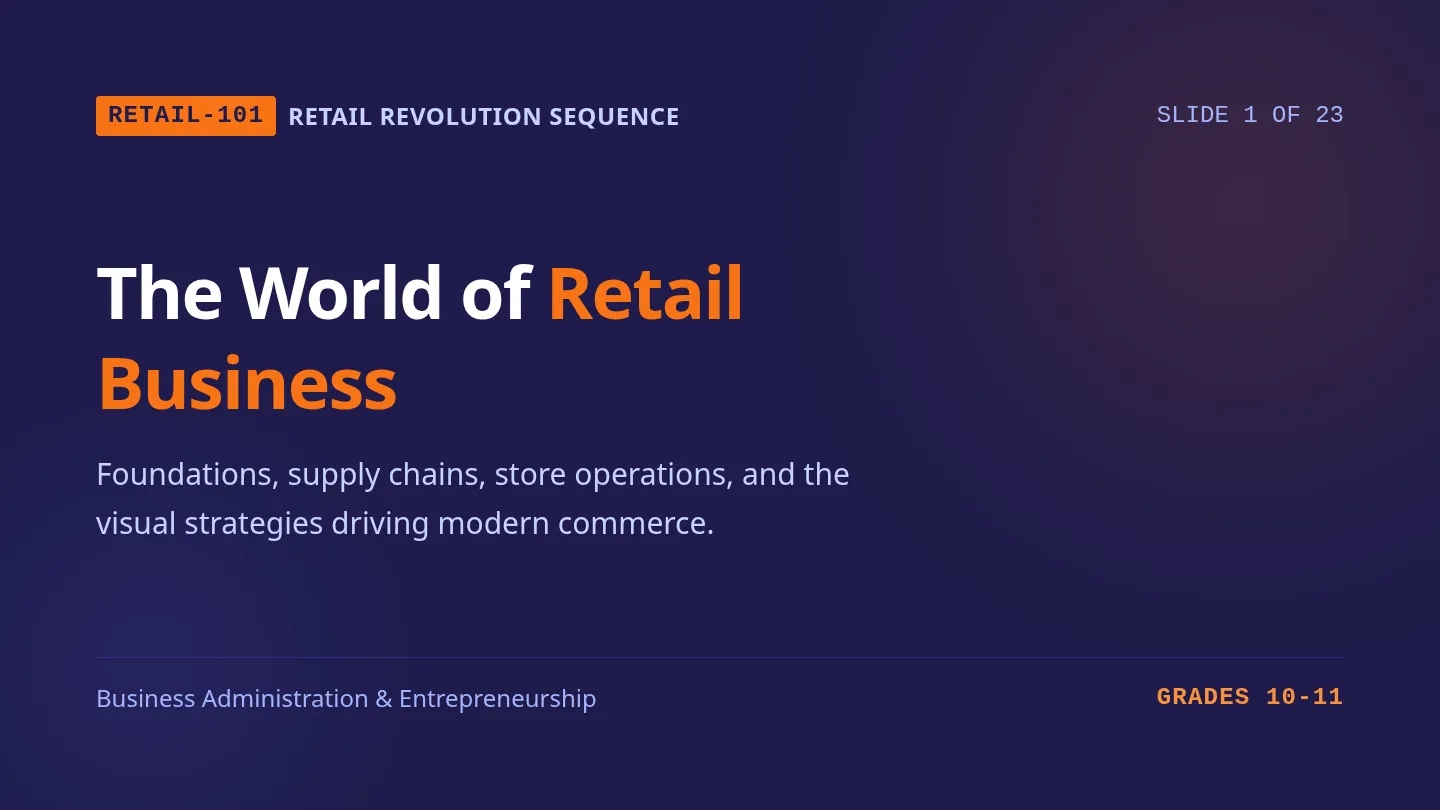
Retail Foundations Slides

Retail Revolution

A comprehensive introductory unit on the business of retail, designed for 10th and 11th grade business students. The unit covers fundamental retail concepts, the modern supply chain, physical store operations, visual merchandising, and culminates in a hands-on storefront pitch project.

MK

Marlyce Kemp

9
Innovation Lab Slides

Innovation Lab: Identity Studio

A comprehensive identity design unit where students explore the psychological and visual elements of branding, including color theory, typography, and logo composition.

B

brittaink@urbandaleschools.com

47
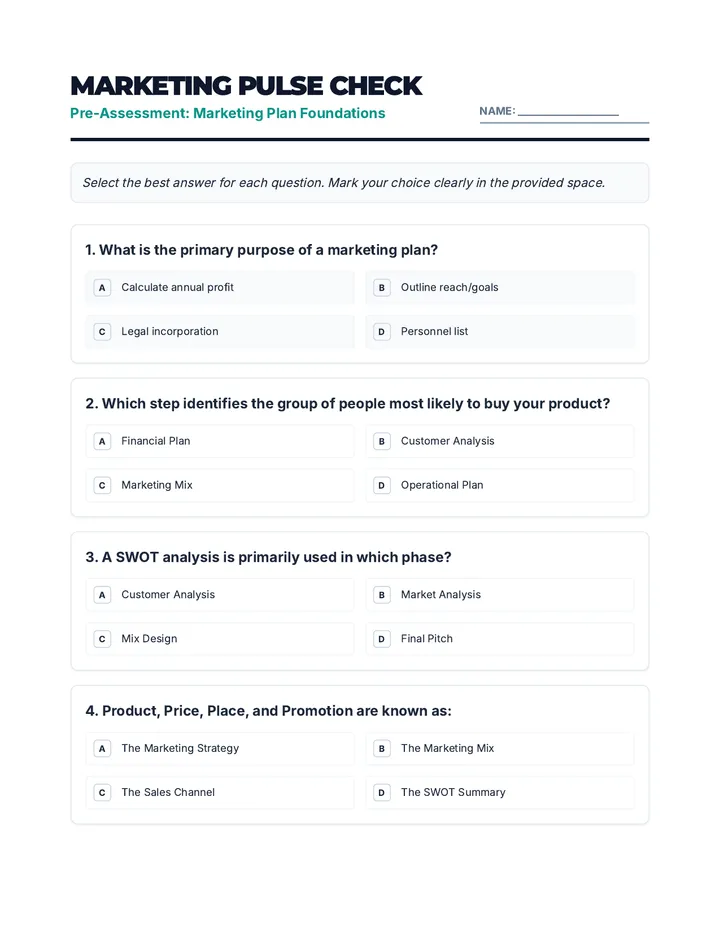
Marketing Pulse Check Pre Assessment

Blueprint for Success

A comprehensive unit focused on the foundational components of marketing strategy, specifically designed for Year 2 Business, Marketing, and Finance students preparing for the ESB V.2 certification. Students explore marketing plan design, competition analysis, and the strategic marketing mix.

AD

Adrian Dorsey

22

Lessons

Pitch Perfect Unit Exam

Pitching Mastery

This lesson concludes the unit on business presentation skills and company valuation, testing students on the FIT model, the Rule of Three, and core financial assessment concepts.

KB

Kayla Borozny

6
Management Passport Student Handout

Management in Motion

A hands-on, station-based simulation where students practice the five fundamental functions of business management: Planning, Organizing, Staffing, Leading, and Controlling. Students navigate interactive workplace challenges, respond to real-time management updates, and document strategic decisions in their Management Passport.

L

Landry.Stahl

4
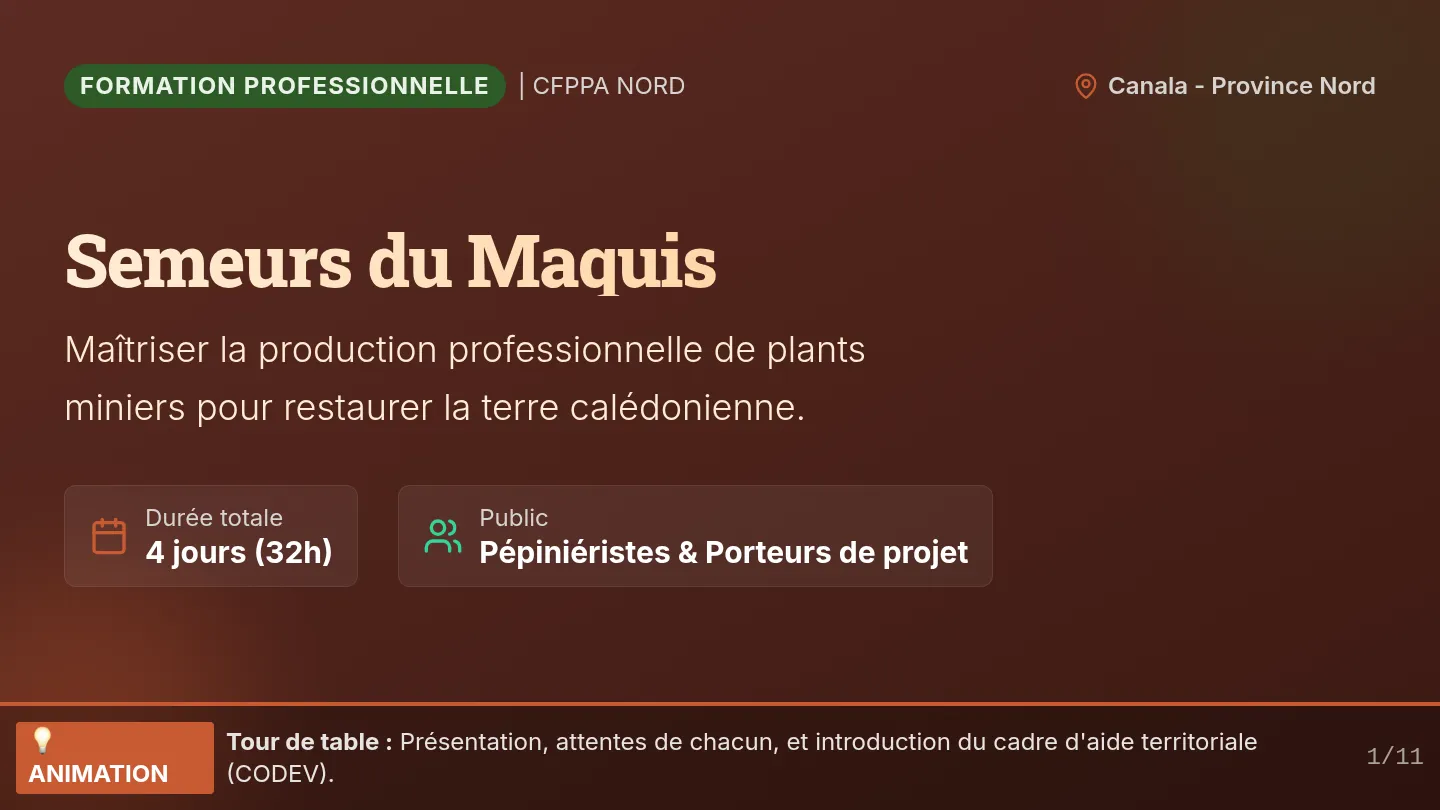
Semeurs du Maquis Slides

Semeurs du Maquis

Une formation de 4 jours (32 heures) destinée à un public de pépiniéristes, producteurs de plants et porteurs de projet en Province Nord pour maîtriser la production professionnelle de plants miniers pour la revégétalisation des sols latéritiques.

SV

Sévrine Valter

12
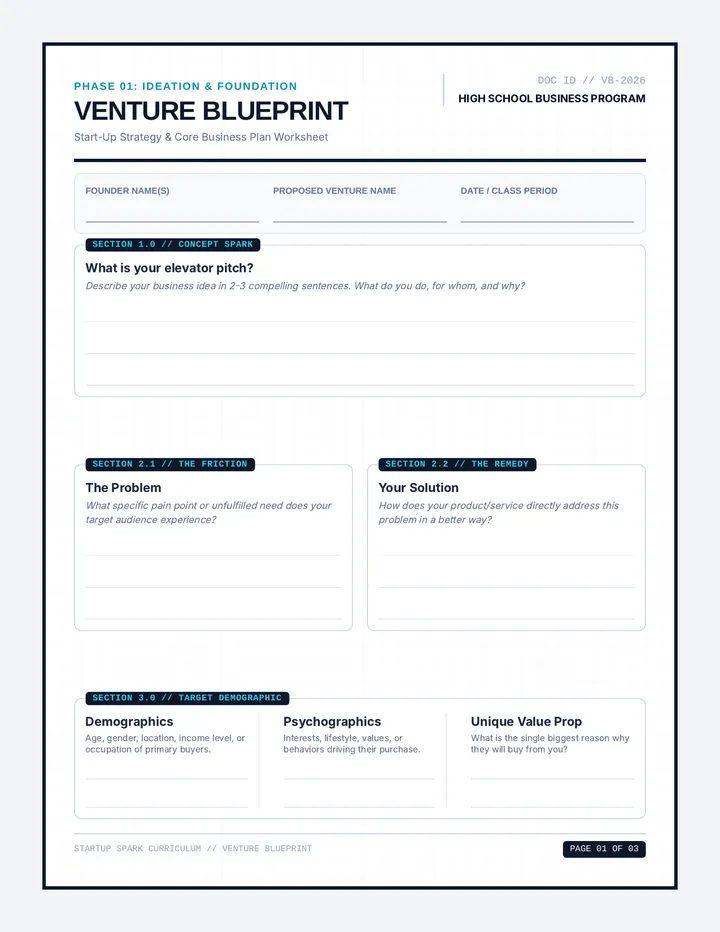
Venture Blueprint Document

Venture Blueprint

A comprehensive, step-by-step framework for high school students to design, structure, and refine a small business startup concept. Includes guided drafting templates, pacing checklists, and pitch preparation tools.

TI

Tom Ingram

4
Network Architect Guide

Ecommerce Engine

A comprehensive lesson on network topologies (Star, Mesh, Hybrid) applied to the real-world context of building a robust infrastructure for an e-commerce business. Students will analyze scalability, redundancy, and cost to design the 'backbone' of a digital store.

KW

Karen Wright

6
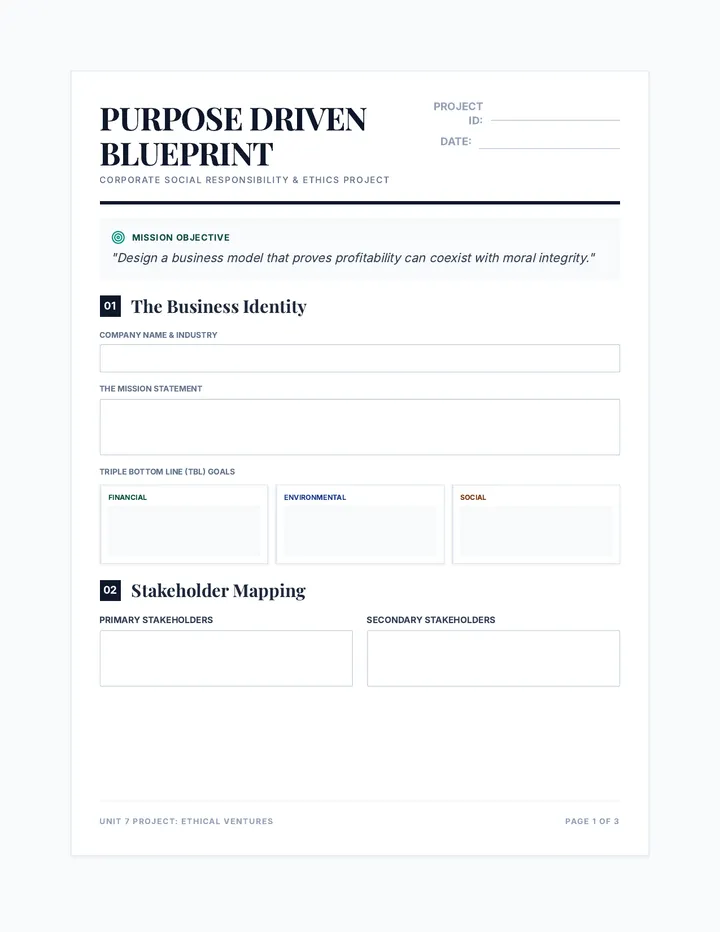
Purpose Driven Blueprint Document

Ethical Ventures

A comprehensive project where students design a socially responsible business from the ground up, focusing on the Triple Bottom Line, stakeholder mapping, and ethical decision-making.

KB

Kayla Borozny

3