Lenny.com
Explore
Create
ActivitiesNewMathEnglish Language ArtsScience & EngineeringSocial StudiesGlobal LanguagesHealth & Physical EducationSpecial EducationCounseling & Life SkillsArts & CreativityESL
Lenny.com
Lenny.com
Explore
Create
ActivitiesNewMathEnglish Language ArtsScience & EngineeringSocial StudiesGlobal LanguagesHealth & Physical EducationSpecial EducationCounseling & Life SkillsArts & CreativityESL
Lenny.com
Lenny.com

Solutions

Lenny for EducatorsLenny for SchoolsLenny for Districts

Product

ExploreSign inCreateSupportAbout

Resources

Getting startedMTSS Acceleration Program

© 2026 Lenny Learning Inc.

TermsPrivacyAccessibility
LinkedInInstagramX
Lenny

Earth's Structure

Composition and characteristics of the crust, mantle, and core, alongside the physical properties of the lithosphere and asthenosphere. Examines seismic wave data and plate tectonics to explain internal geological processes.

Science & EngineeringLife ScienceLiving ThingsAnimalsPlantsBody SystemsTraitsAdaptationsCellsEcosystemsHeredityGenes to TraitsCell DivisionPhysicsComparing MaterialsShapes and PropertiesMagnetsMagnetismLightSoundLight and SoundMatterStates of MatterChanges of StateMixturesPhysical and Chemical ChangeHeating and CoolingHeat and Thermal EnergyEnergyForce and MotionElectrical CircuitsAtoms and MoleculesPeriodic TableMotion in One DimensionMotion in Two DimensionsScalars and VectorsForces and Laws of MotionCircular Motion and GravityMomentum and ImpulseWork, Energy, and PowerWavesElectromagnetic WavesGeometric OpticsElectricity and MagnetismSimple Harmonic MotionThermodynamicsNuclear PhysicsEarth Science & AstronomyWeatherWater CycleRocks and MineralsFossilsEarth's FeaturesEarth's ResourcesEarth's StructureWeather and ClimateEarth EventsFossils and Geologic TimePlate TectonicsHuman ImpactsAstronomyChemistryUnits and MeasurementAtomic StructurePeriodic TrendsChemical BondingNomenclatureMolecular StructureIntermolecular ForcesThe MoleStoichiometryProperties of GasesSolutionsChemical ReactionsBalancing EquationsEnergy ChangesRates of ReactionsEquilibriumAcids and BasesQuantum ModelBiologyClassificationCell StructureThe Chemistry of LifeBiomoleculesCellular TransportCell EnergyCell Growth and DivisionDNAProtein SynthesisMeiosis and Sexual ReproductionPatterns of InheritanceMulticellular OrganismsEvolutionEcologyBiodiversityComputer ScienceAlgorithms and Computational ThinkingProgramming LanguagesComputing SystemsNetworks and InternetData AnalysisCybersecurityAI and Machine LearningSoftware Design and DevelopmentBlockchainEngineering & AIDesigning ExperimentsEngineering PracticesDesign ThinkingEngineering Design ProcessMechanical EngineeringElectrical EngineeringMaterials and StructuresCAD and 3D DesignRoboticsArtificial Intelligence BasicsVibe CodingMachine LearningAI Ethics and SocietySystems ThinkingEntrepreneurship & InnovationEntrepreneurial MindsetBusiness Idea DevelopmentBusiness Plan BasicsMarketing & Customer DiscoveryFinancial Management for Startups

Videos

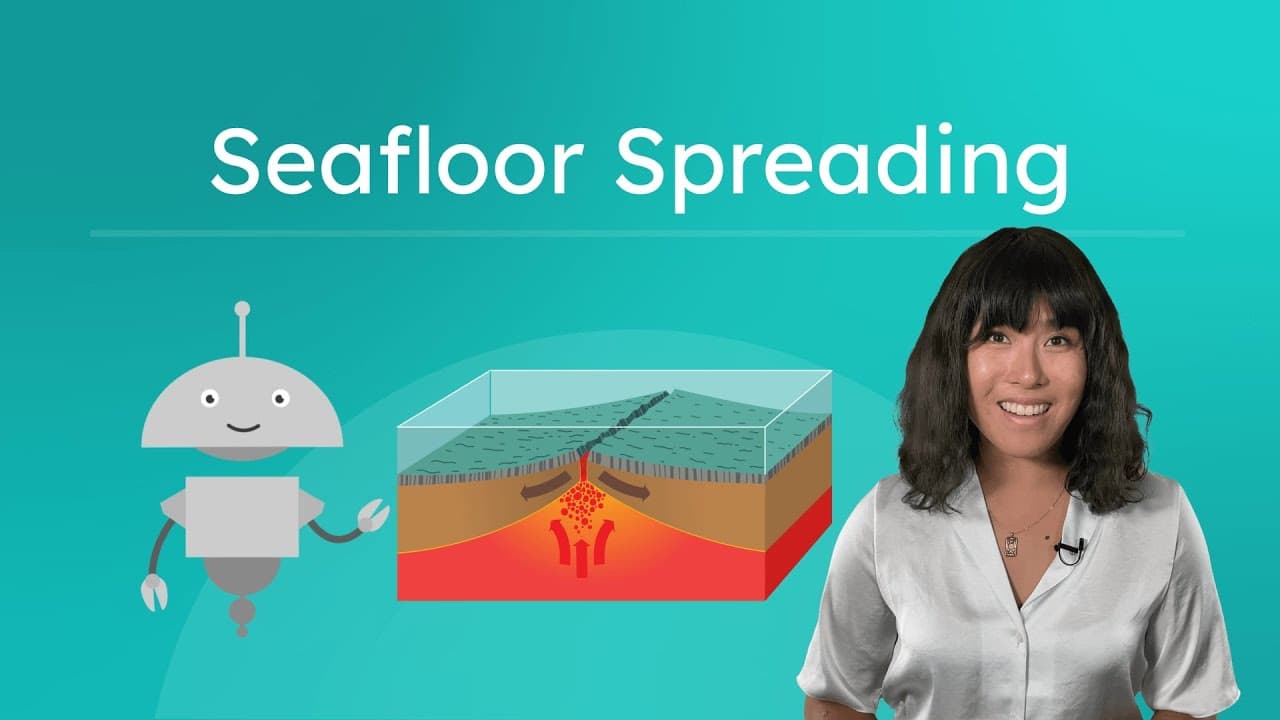
How the Seafloor Spreads and Recycles Itself

How the Seafloor Spreads and Recycles Itself

This educational video provides a comprehensive overview of the geological processes occurring beneath the ocean's surface, specifically focusing on plate tectonics, seafloor spreading, and subduction. The presenter explains how Earth's most extreme landscapes, such as the Mariana Trench and mid-ocean ridges, are formed through the movement and interaction of tectonic plates. The video uses clear animations and comparative examples to illustrate how new crust is created at divergent boundaries and destroyed at convergent boundaries.

Miacademy & MiaPrep Learning ChannelMiacademy & MiaPrep Learning Channel

7mins 47s

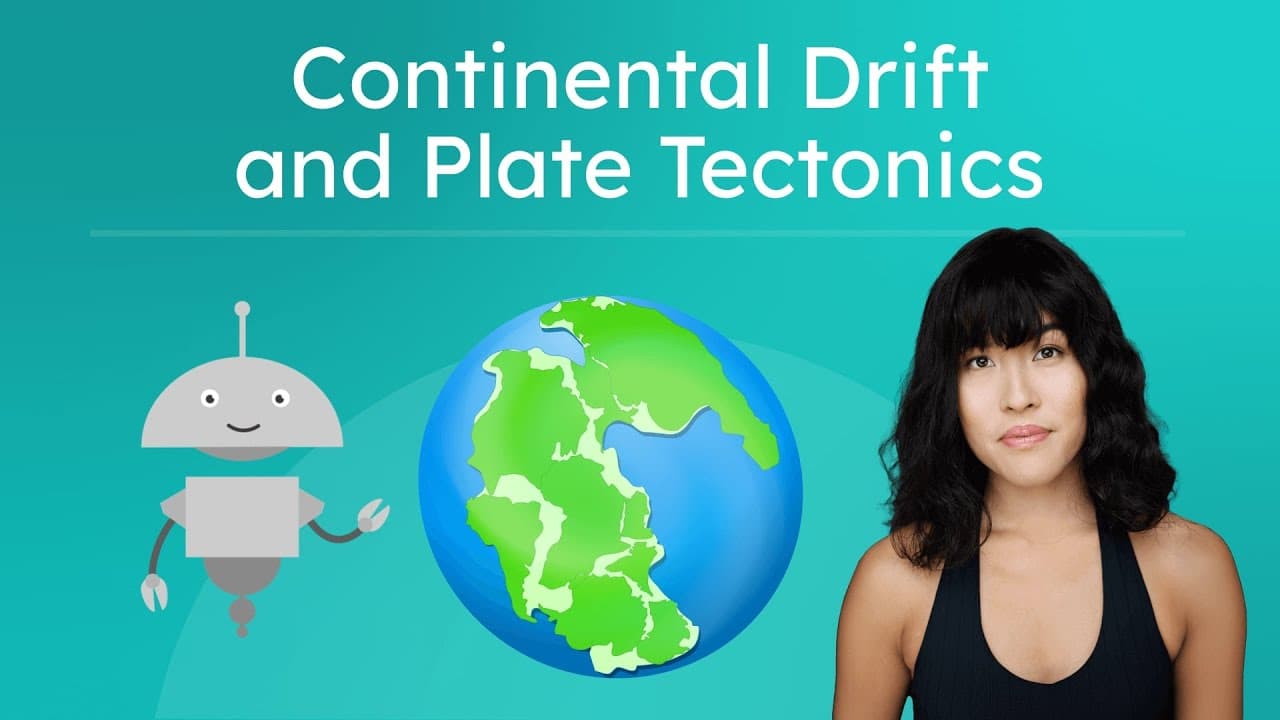
How Plate Tectonics Shape Our Planet

How Plate Tectonics Shape Our Planet

This engaging earth science video explores the fascinating geological history of our planet, specifically focusing on how the Earth's surface has changed over millions of years. It introduces students to the concept of the Earth as a giant puzzle, explaining the connection between the historical theory of Continental Drift and the modern theory of Plate Tectonics. The narrator guides viewers through the scientific journey of Alfred Wegener, whose initial hypothesis about a supercontinent called Pangaea was rejected until fossil and rock evidence later confirmed that continents do indeed move.

Miacademy & MiaPrep Learning ChannelMiacademy & MiaPrep Learning Channel

9mins 36s

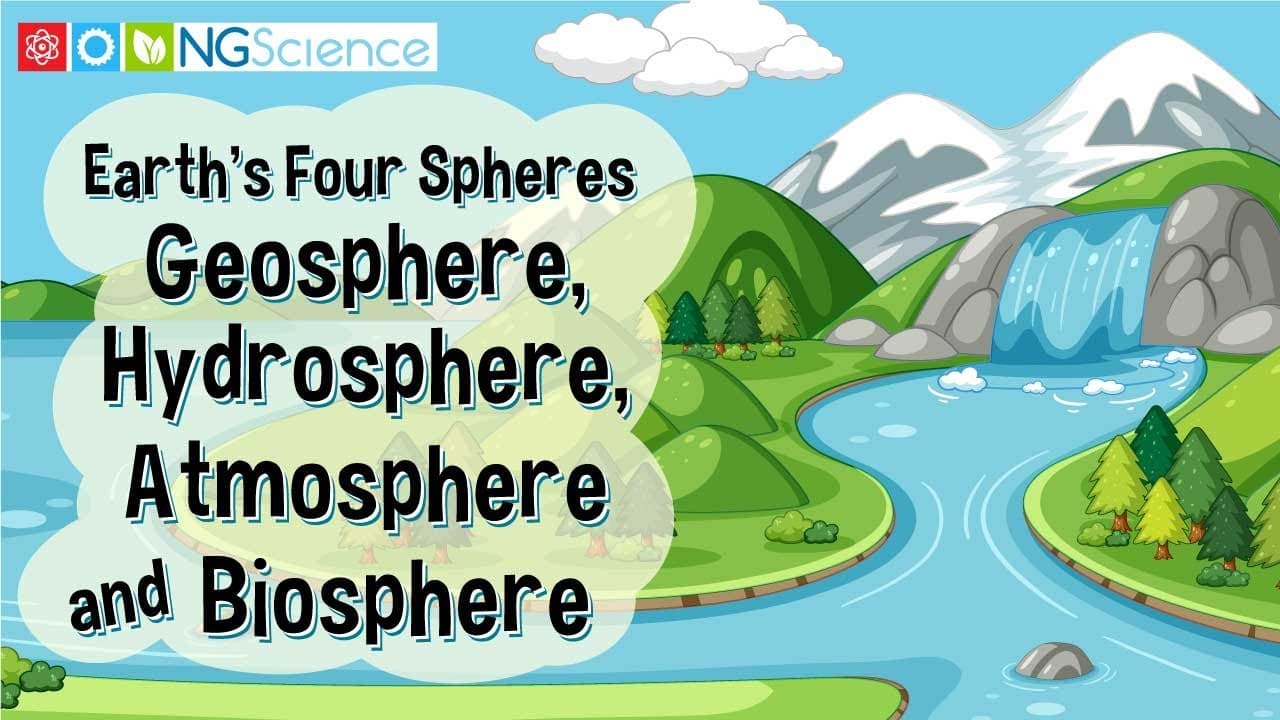
Exploring Earth's Four Spheres and Their Interactions

Exploring Earth's Four Spheres and Their Interactions

This comprehensive science video explores the four fundamental subsystems of Earth: the Geosphere, Hydrosphere, Atmosphere, and Biosphere. It begins by defining each sphere individually, establishing a clear understanding of the solid earth, water bodies, gaseous envelope, and living organisms that make up our planet. The narrative highlights that Earth's ability to sustain life is not a coincidence but the result of a delicate balance between these four distinct yet interconnected systems. The video delves deep into the complex interactions between these spheres, moving beyond simple definitions to systems thinking. It illustrates specific examples of interdependence, such as how volcanic eruptions (Geosphere) impact air quality (Atmosphere), how the water cycle (Hydrosphere/Atmosphere) distributes heat and moisture, and how photosynthesis (Biosphere) regulates atmospheric gases. Visuals range from diagrams of Earth's interior layers to footage of diverse ecosystems, weather phenomena, and geological processes. For educators, this resource serves as an excellent anchor for units on Earth Systems and Ecology. It supports Next Generation Science Standards (NGSS) regarding Earth's systems and their interactions. The clear segmentation of the video allows teachers to either show the entire overview or focus on specific spheres and their relationships. It is particularly useful for demonstrating cause-and-effect relationships in nature and introducing the concept of Earth as a dynamic, integrated system.

Next Generation ScienceNext Generation Science

16mins 21s

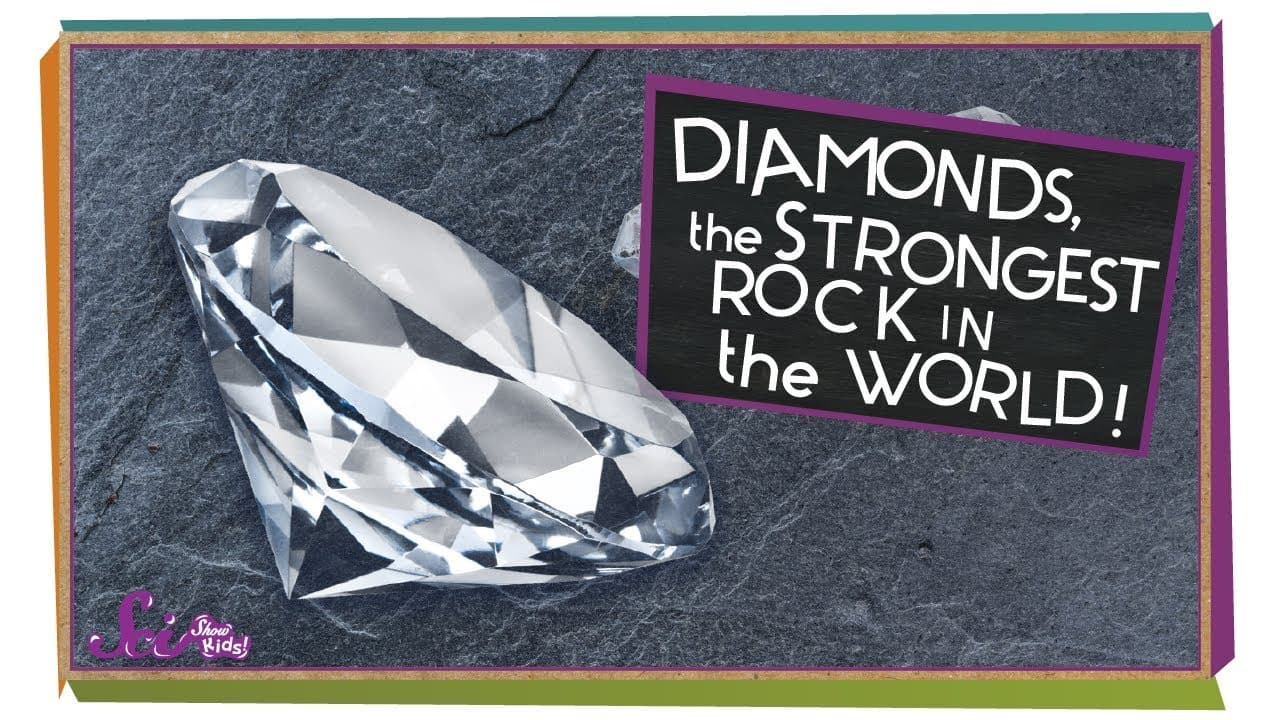
How Diamonds Form and Why They Are So Strong

How Diamonds Form and Why They Are So Strong

This educational video explores the geological origins and unique properties of diamonds, distinguishing them from ordinary rocks. Hosted by Jessi and her robot friend Squeaks, the video explains that diamonds are actually crystals made of carbon, formed under immense heat and pressure deep within the Earth. It uses accessible analogies, such as building blocks, to demonstrate how atomic arrangements affect material strength. The narrative covers the timeline of diamond formation, noting that most formed billions of years ago—long before dinosaurs existed. It details the specific conditions required for their creation, including depths of around 150 kilometers underground, and explains how violent, deep-source volcanic eruptions brought them closer to the surface where they could cool and eventually be discovered by humans. For educators, this video serves as an excellent resource for Earth Science units covering rocks and minerals, geological processes, and states of matter. It introduces concepts like crystalline structure, the element carbon, and the layers of the Earth in a way that is comprehensible for elementary students. The video also touches on practical applications of diamonds beyond jewelry, such as in industrial cutting tools, linking science to real-world technology.
SciShow KidsSciShow Kids

4mins 33s

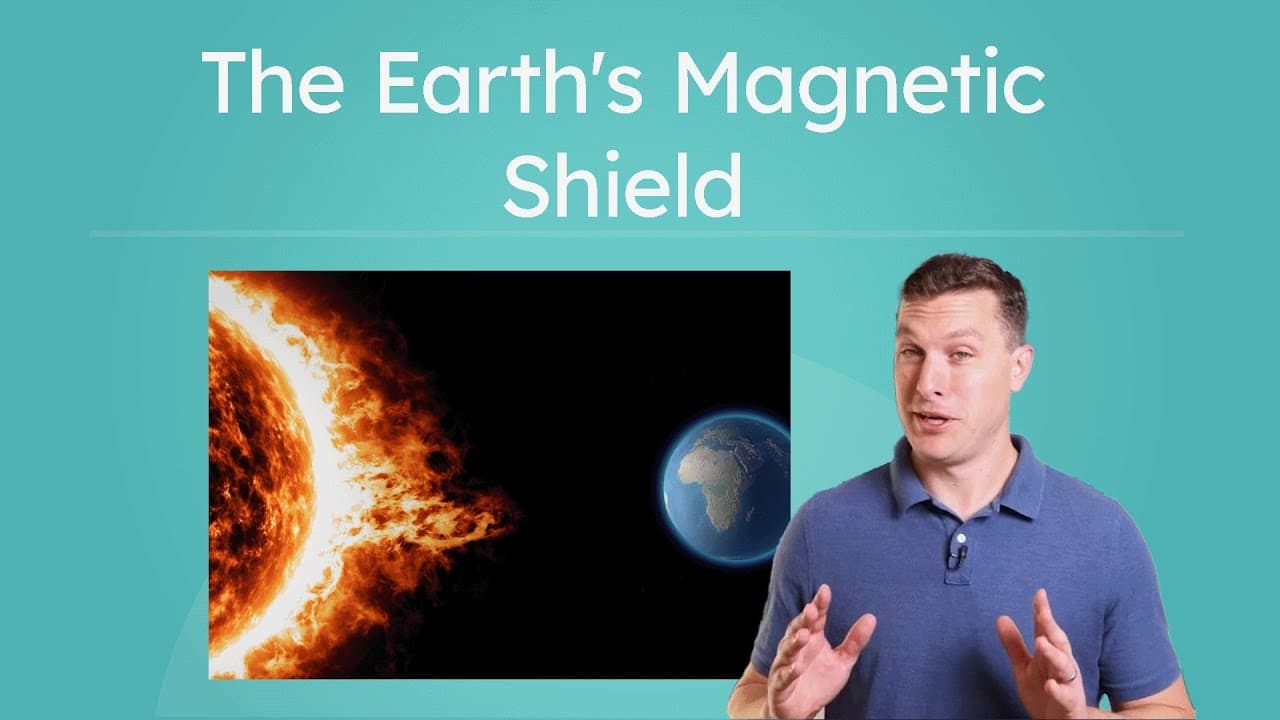
Earth's Magnetic Shield and the Right-Hand Rule

Earth's Magnetic Shield and the Right-Hand Rule

This educational video explores the critical role of Earth's magnetic field in protecting our planet from harmful solar radiation and introduces the physics concept of the Right-Hand Rule. The lesson begins by visualizing the sun as a massive nuclear reactor and explains how Earth's magnetic shield deflects solar wind, creating phenomena like the Aurora Borealis while preventing the radiation damage seen on barren worlds like the Moon and Mars. The second half of the video transitions into a practical physics tutorial on electromagnetism. It breaks down how magnetic fields exert force on moving charges and teaches students how to use the Right-Hand Rule to determine the direction of that force. The presenter uses clear, step-by-step examples with on-screen graphics to demonstrate how to position fingers to represent charge, field, and force vectors. For educators, this video serves as a bridge between Earth science and physics concepts. It provides a real-world application for abstract electromagnetic principles, making it an excellent resource for high school physics units on magnetism or earth science units on planetary habitability. The visual demonstrations of 3D spatial reasoning (using the hand) are particularly helpful for students who struggle with vector directions.

Miacademy & MiaPrep Learning ChannelMiacademy & MiaPrep Learning Channel

7mins 57s

What Causes the Ground to Shake?

What Causes the Ground to Shake?

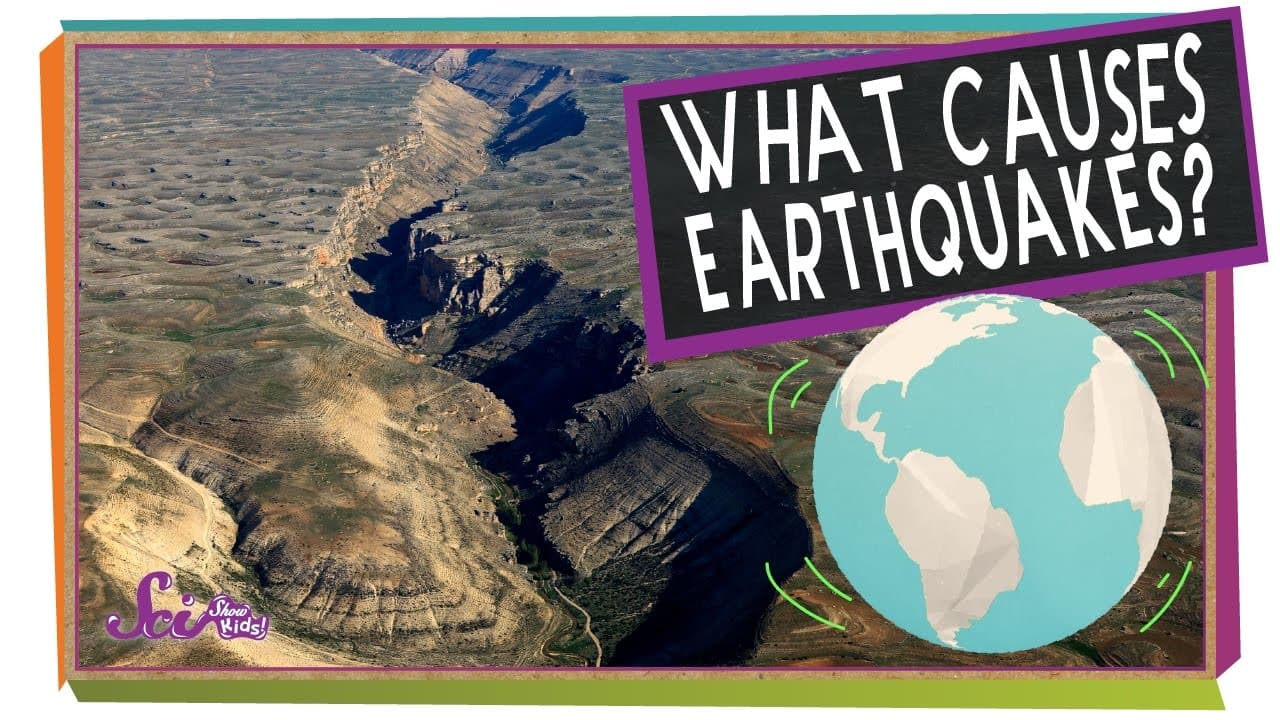
This engaging science video explains the geological causes of earthquakes for young learners using clear analogies and visual demonstrations. Hosted by Jessi from SciShow Kids, the video breaks down complex concepts like plate tectonics, faults, and seismic pressure into digestible segments suitable for elementary students. It transforms the scary concept of the ground shaking into a understandable scientific phenomenon driven by the movement of Earth's crust. The content covers key geological topics including the layers of the Earth, tectonic plates, fault lines, and how pressure builds up underground. It uses relatable comparisons—such as a jigsaw puzzle to explain tectonic plates and a stuck door to explain pressure release—to help students visualize processes they cannot see. The video also introduces specific vocabulary like "crust," "plates," "fault," and "pressure." Teachers can use this video as a perfect introduction to earth science units, specifically for lessons on geology, natural disasters, or changes to the Earth's surface. It provides excellent visual models that can be easily replicated in the classroom with simple manipulatives, making abstract large-scale concepts concrete for young minds.

SciShow KidsSciShow Kids

3mins 46s

Materials

Rock Record IEP Assessment

Rock Record IEP Assessment

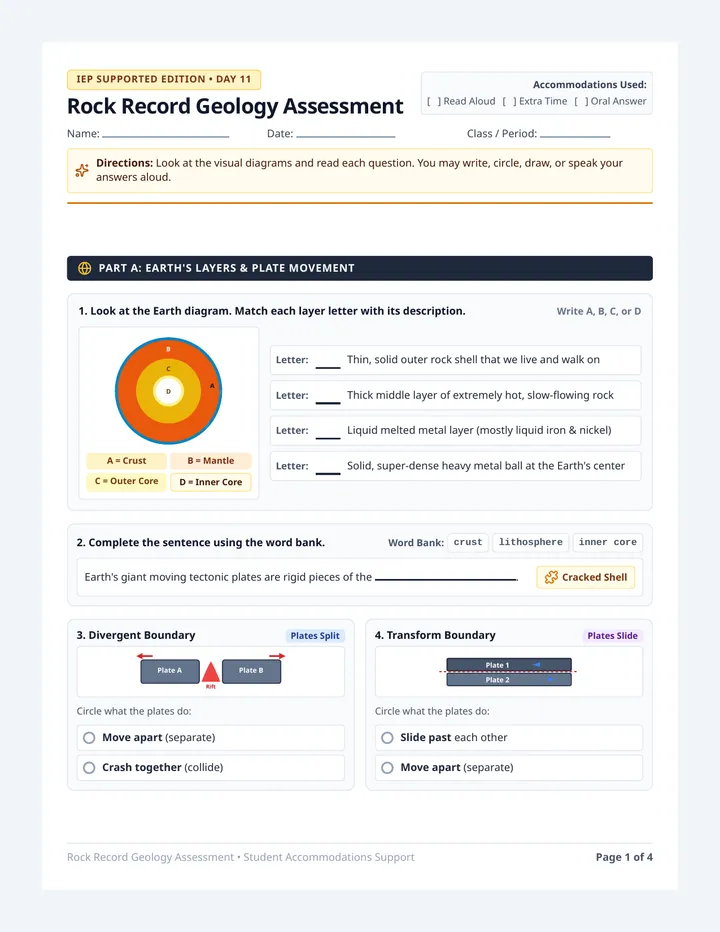
Enhanced 4-page IEP-adapted geology assessment featuring rich visual diagrams: Earth layer cross-sections, tectonic plate boundary arrows, subduction trench illustrations, 3-rock-type formation graphics, rock cycle flow paths, textured strata cross-sections, and earthquake safety icons.

CS

Courtney Scherer

Earth Spheres Reading Worksheet

Earth Spheres Reading Worksheet

A two-page printable reading comprehension worksheet on Earth's four spheres (geosphere, hydrosphere, atmosphere, and biosphere) and their interactions, featuring the reading passage and scaffolded short-answer questions with sentence frames.

EG

Emily Gianni

Ocean Realms Review Slides

Ocean Realms Review Slides

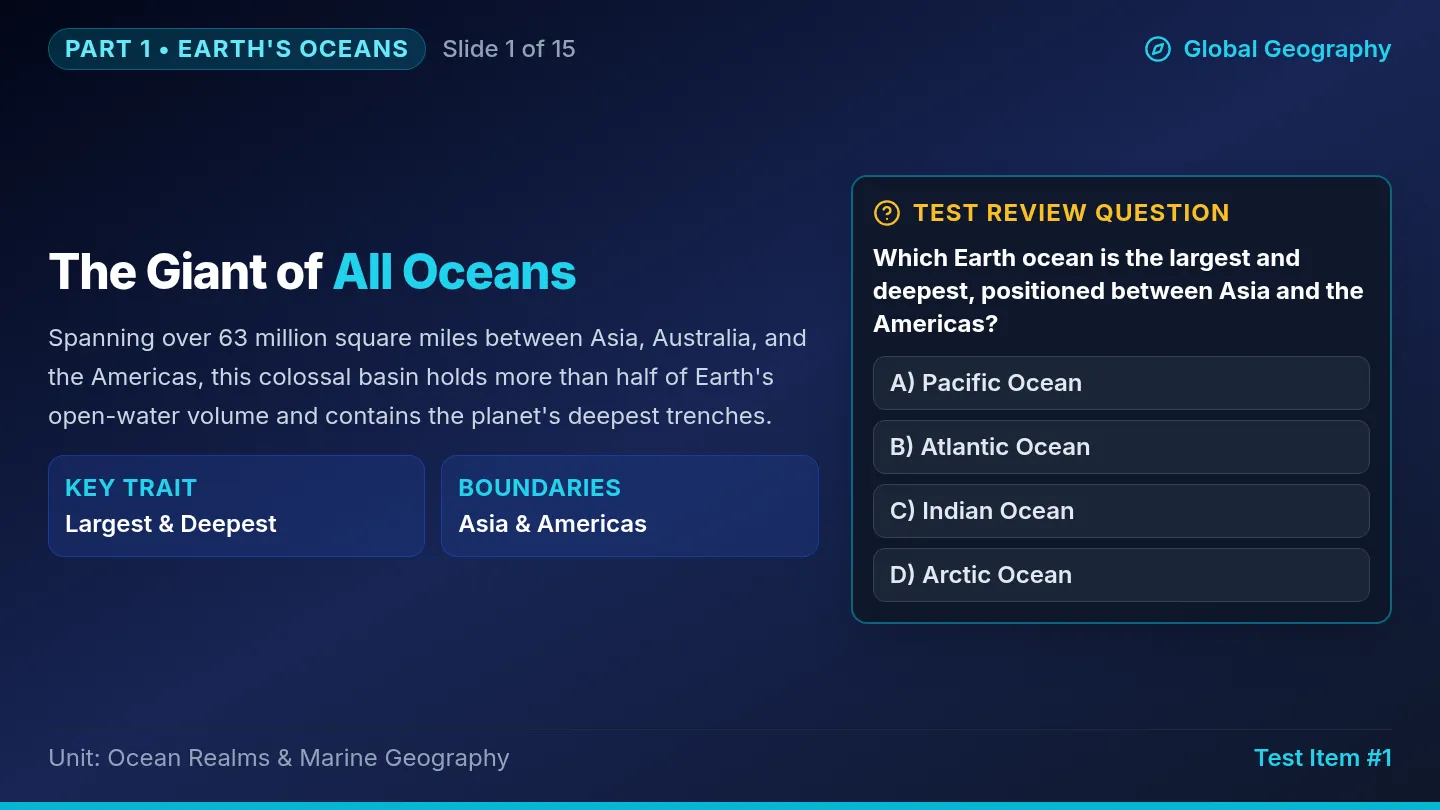
A comprehensive 15-slide review presentation for the Ocean Realms Assessment covering world ocean geography, pelagic vs. benthic realms, photic vs. aphotic divisions, vertical pelagic depth zones, and deep-sea trenches. Each slide concludes with an active, unanswered review question for classroom discussion or student response.

J

jrand

Earth Benchmark Flash Cards

Earth Benchmark Flash Cards

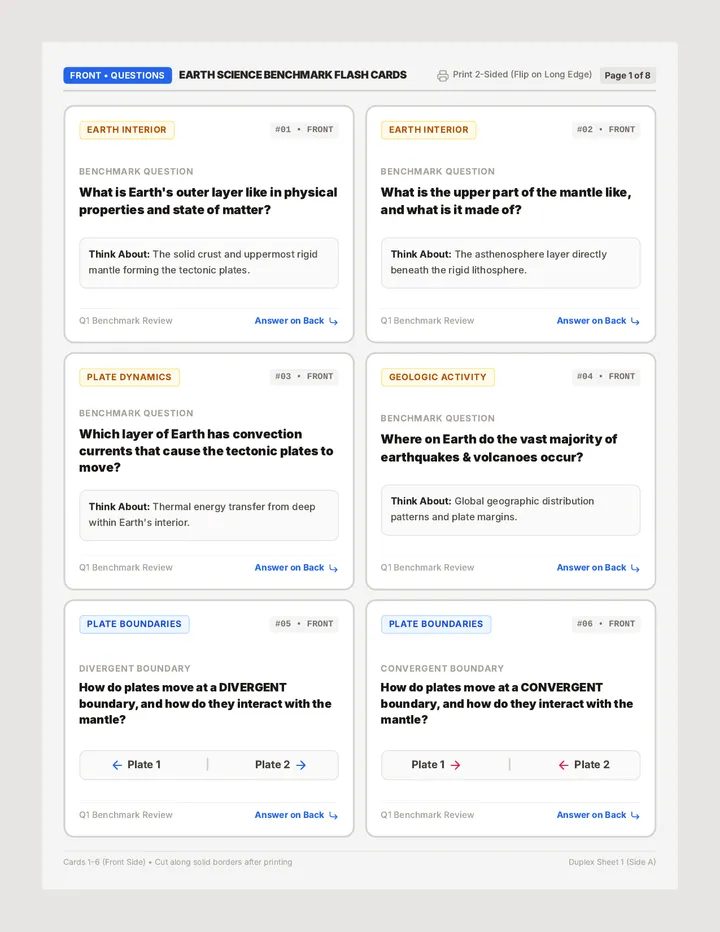
An 8-page ready-to-print double-sided flashcard set (24 cards total) engineered for duplex 2-sided printing (flip on long edge) with perfectly mirrored front-and-back grids so questions print on the front and answers on the reverse with no folding required.

A

Andrea.Golden

Solar System Trivia Cards

Solar System Trivia Cards

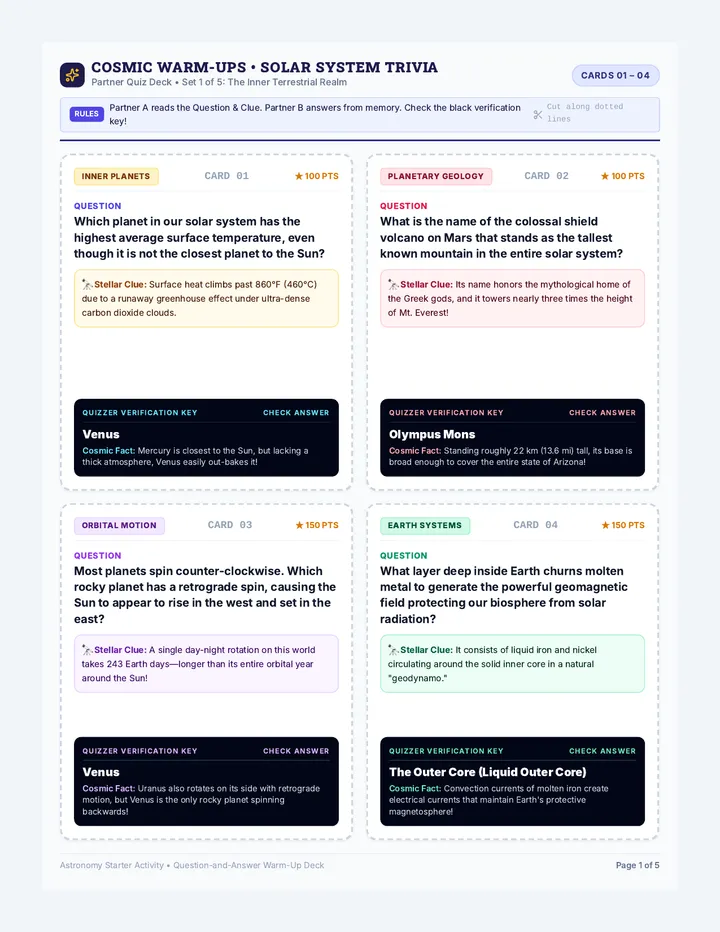
A set of 20 printable question-and-answer trivia cards designed for astronomy classroom warm-ups, partner quizzes, and small-group review. Each card features an engaging astronomical question, a targeted clue, an official verification answer, and a fascinating cosmic fact across five structured planetary themes.

M

Megan.Tanner

NYS Science Power Pack Study Guide

NYS Science Power Pack Study Guide

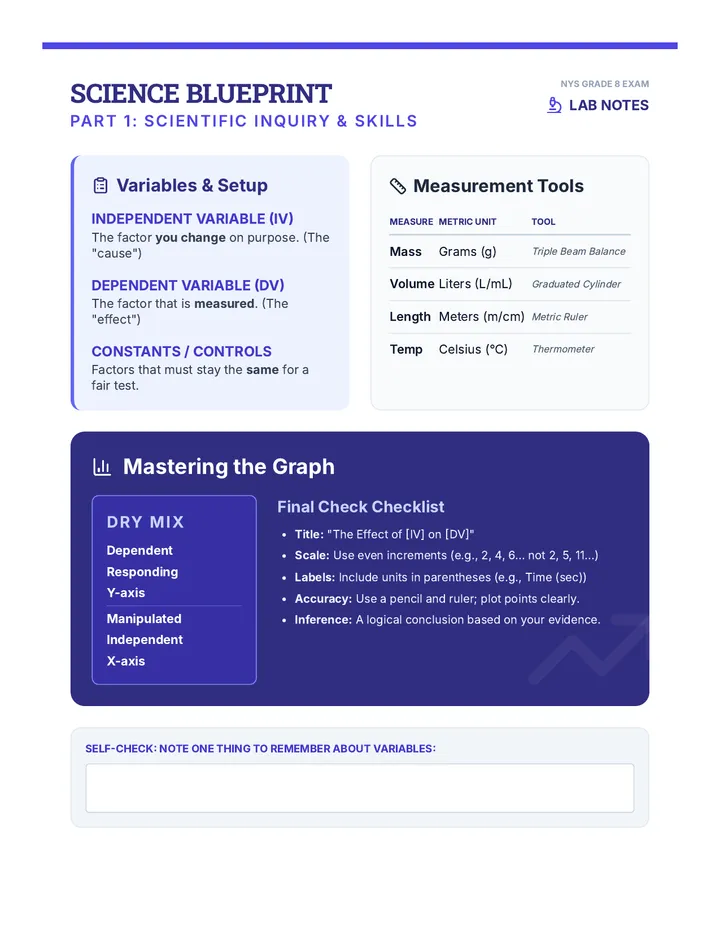
A fully optimized 4-page science study guide for the 8th-grade NYS science exam, featuring tight layout, fixed character encoding for chemical formulas with <sub> tags, improved student self-check areas, and clear domain summaries.

AW

Austin WIllis

Sequences

Planet Profile Slides

Infinite Frontier

A comprehensive Hi-Lo unit for 6th graders exploring the scale of the universe, our place in the Milky Way, the technology used to explore space, and the history of human spaceflight.

JS

Janette Sullivan

54
Induction Insight Map Handout

Magnetic Forces Investigation

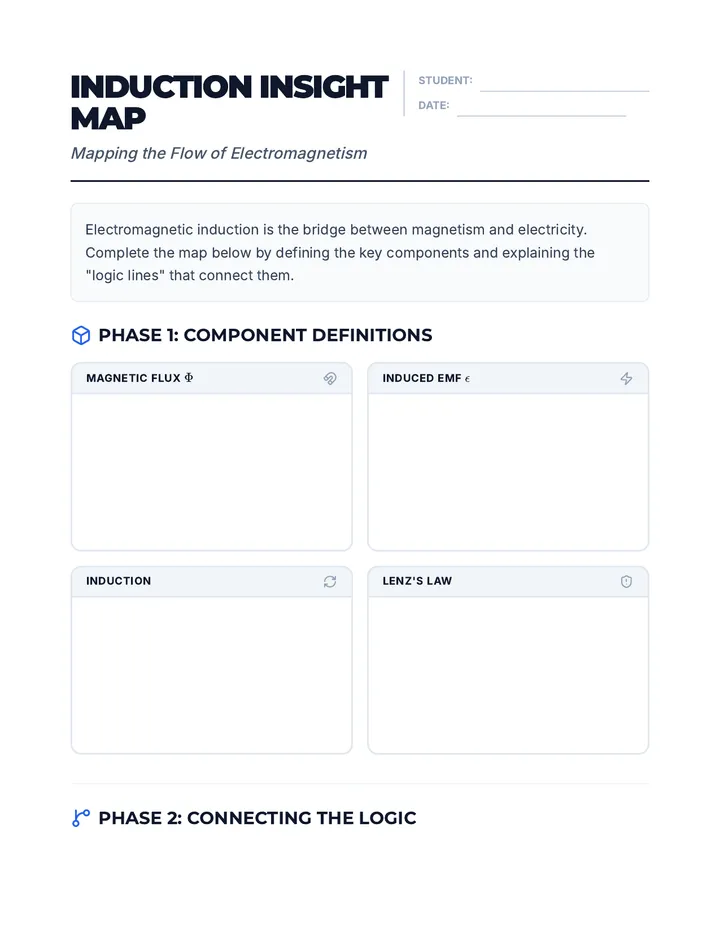
A 5-day intensive exploration of magnetic forces and fields, focusing on atomic-level causes, field interactions, and mathematical modeling of forces on charged particles. Students progress from anchoring phenomena to complex mathematical applications and a comprehensive unit review.

OM

Olutoyin Makinde

68
Water World Slides

Earths Dynamic Systems

A series of lessons exploring Earth's major systems, starting with the hydrosphere and its impact on the planet's processes.

JS

Janette Sullivan

36
Science Squad Student Booklet

Science Literacy Journals

A multi-grade collection of scientific reading comprehension and response booklets designed to build disciplinary literacy in Earth, Life, and Physical sciences across elementary and middle school levels.

N

nmack

4
Earthquake Anchor Chart

Disaster Detectives

A series of lessons focused on understanding different natural disasters, their causes, impacts, and safety protocols through structured writing and investigation.

CO

Catherine Onessimo

18
Volcano Quest Slides

Ring of Fire Detectives

A comprehensive 5E science sequence where students investigate global volcano patterns to discover the 'Ring of Fire' and evaluate the likelihood of volcanic activity in their own region. Students use data mapping, research, and CER (Claim, Evidence, Reasoning) to build their scientific arguments.

AN

Alexis Nelson

6

Lessons

Quake Coords Map Activity

Tectonic Tremors

A comprehensive GED science lesson on tectonic activity, focusing on seismic wave analysis, seismograms, and the Richter scale. Students will learn to calculate S-P intervals and interpret map data to locate epicenters and volcanic hotspots.

CL

Carmela Leone

5
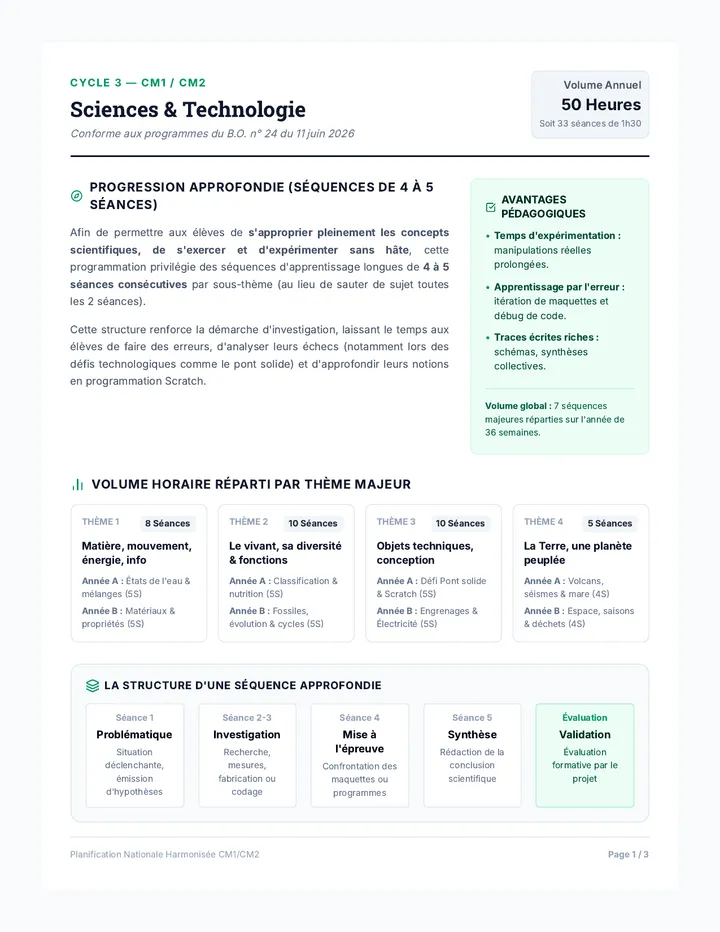
Tableau Progression Annuelle Sciences CM

Progression Sciences CM1 CM2

Outil de planification annuelle et de progression pour l'enseignement des sciences et technologies en classe de CM1/CM2, conforme au BO de juin 2026. Ce guide propose une répartition claire des volumes horaires et des thèmes entre l'année A et l'année B pour éviter les redondances dans les classes à double niveau.

LP

LAURENT PERCHE

40
Flow State Reading Guide Expanded

Flow State

This lesson explores the fundamental properties of fluids, including the molecular differences between solids, liquids, and gases, the concept of density, and the characteristics of ideal fluids. Students will learn to distinguish states of matter through atomic interactions and apply the density formula to various substances.

CM

Chuguna Murugesan

33
Terra Blueprint Organizer

Terra Blueprint

A high-impact, 10-minute vocabulary introduction exploring Earth's four spheres and the dynamic forces that shape our landscape, separating processes from physical features.

BJ

Brandon Jones

3
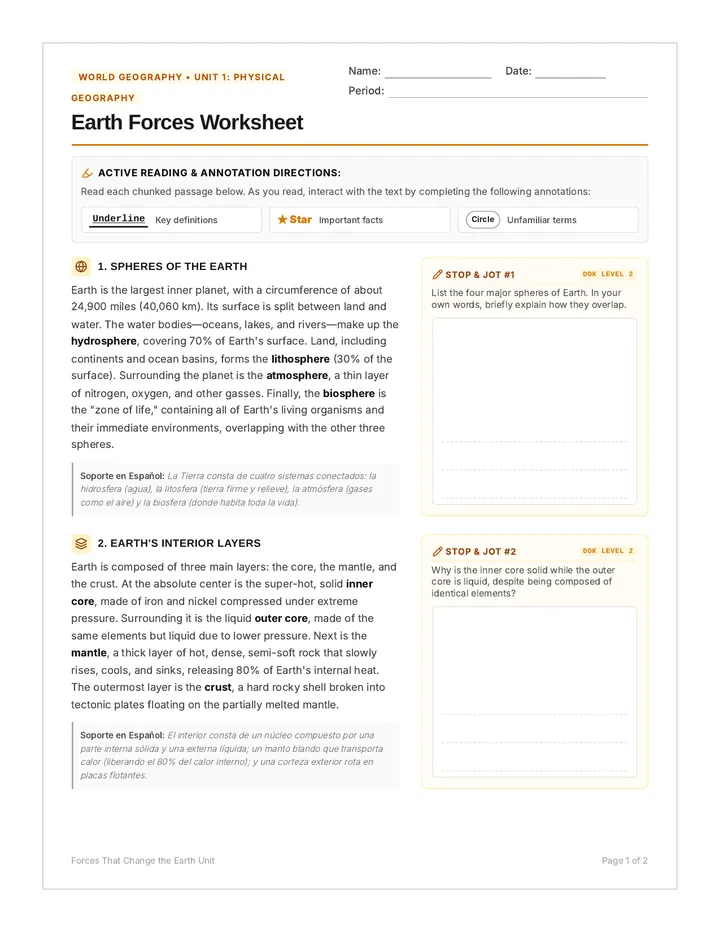
Earth Forces Worksheet

Restless Earth

Explore the dynamic geological forces of the Pacific Ring of Fire and how tectonic activity shapes physical geography and human adaptation.

OA

Oumhani Achour

5
Disaster Choice Board and Guide

Disaster Expert Research

A 5th grade research and presentation project based on EL Education Module 4. Students select a natural disaster focus, conduct research using provided expert articles, organize their findings, and choose to present via a Slide Show, Skit, or Newsroom report.

KT

Kimberly Tierney-Honan

6