Lenny.com
Explore
Create
ActivitiesNewMathEnglish Language ArtsScience & EngineeringSocial StudiesGlobal LanguagesHealth & Physical EducationSpecial EducationCounseling & Life SkillsArts & CreativityESL
Lenny.com
Lenny.com
Explore
Create
ActivitiesNewMathEnglish Language ArtsScience & EngineeringSocial StudiesGlobal LanguagesHealth & Physical EducationSpecial EducationCounseling & Life SkillsArts & CreativityESL
Lenny.com
Lenny.com

Solutions

Lenny for EducatorsLenny for SchoolsLenny for Districts

Product

ExploreSign inCreateSupportAbout

Resources

Getting startedMTSS Acceleration Program

© 2026 Lenny Learning Inc.

TermsPrivacyAccessibility
LinkedInInstagramX
Lenny

Robotics

Kinematics, sensor integration, and control systems for autonomous machines. Develops skills in mechanical design, circuit construction, and AI-driven navigation.

Science & EngineeringLife ScienceLiving ThingsAnimalsPlantsBody SystemsTraitsAdaptationsCellsEcosystemsHeredityGenes to TraitsCell DivisionPhysicsComparing MaterialsShapes and PropertiesMagnetsMagnetismLightSoundLight and SoundMatterStates of MatterChanges of StateMixturesPhysical and Chemical ChangeHeating and CoolingHeat and Thermal EnergyEnergyForce and MotionElectrical CircuitsAtoms and MoleculesPeriodic TableMotion in One DimensionMotion in Two DimensionsScalars and VectorsForces and Laws of MotionCircular Motion and GravityMomentum and ImpulseWork, Energy, and PowerWavesElectromagnetic WavesGeometric OpticsElectricity and MagnetismSimple Harmonic MotionThermodynamicsNuclear PhysicsEarth Science & AstronomyWeatherWater CycleRocks and MineralsFossilsEarth's FeaturesEarth's ResourcesEarth's StructureWeather and ClimateEarth EventsFossils and Geologic TimePlate TectonicsHuman ImpactsAstronomyChemistryUnits and MeasurementAtomic StructurePeriodic TrendsChemical BondingNomenclatureMolecular StructureIntermolecular ForcesThe MoleStoichiometryProperties of GasesSolutionsChemical ReactionsBalancing EquationsEnergy ChangesRates of ReactionsEquilibriumAcids and BasesQuantum ModelBiologyClassificationCell StructureThe Chemistry of LifeBiomoleculesCellular TransportCell EnergyCell Growth and DivisionDNAProtein SynthesisMeiosis and Sexual ReproductionPatterns of InheritanceMulticellular OrganismsEvolutionEcologyBiodiversityComputer ScienceAlgorithms and Computational ThinkingProgramming LanguagesComputing SystemsNetworks and InternetData AnalysisCybersecurityAI and Machine LearningSoftware Design and DevelopmentBlockchainEngineering & AIDesigning ExperimentsEngineering PracticesDesign ThinkingEngineering Design ProcessMechanical EngineeringElectrical EngineeringMaterials and StructuresCAD and 3D DesignRoboticsArtificial Intelligence BasicsVibe CodingMachine LearningAI Ethics and SocietySystems ThinkingEntrepreneurship & InnovationEntrepreneurial MindsetBusiness Idea DevelopmentBusiness Plan BasicsMarketing & Customer DiscoveryFinancial Management for Startups

Videos

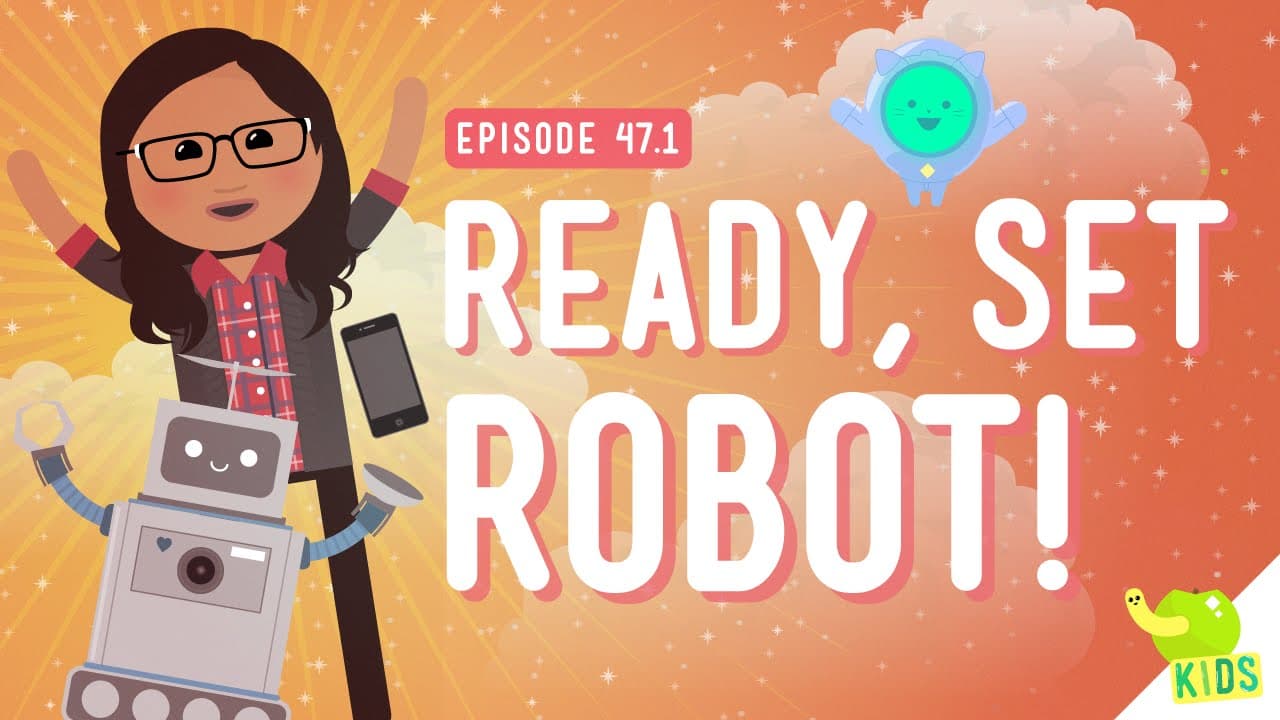
How to Engineer a Robot Rescue Mission

How to Engineer a Robot Rescue Mission

In this engaging episode of Crash Course Kids, host Sabrina Cruz introduces students to the engineering design process through a relatable real-world problem: she dropped her phone down a storm drain. Instead of panicking, she uses this scenario to demonstrate how engineers define problems, brainstorm solutions, and design technologies to overcome challenges. The video breaks down complex concepts like isolating variables and conducting trials into accessible, bite-sized explanations.

Crash Course KidsCrash Course Kids

4mins 27s

Searching for Ancient Oceans on Mars

Searching for Ancient Oceans on Mars

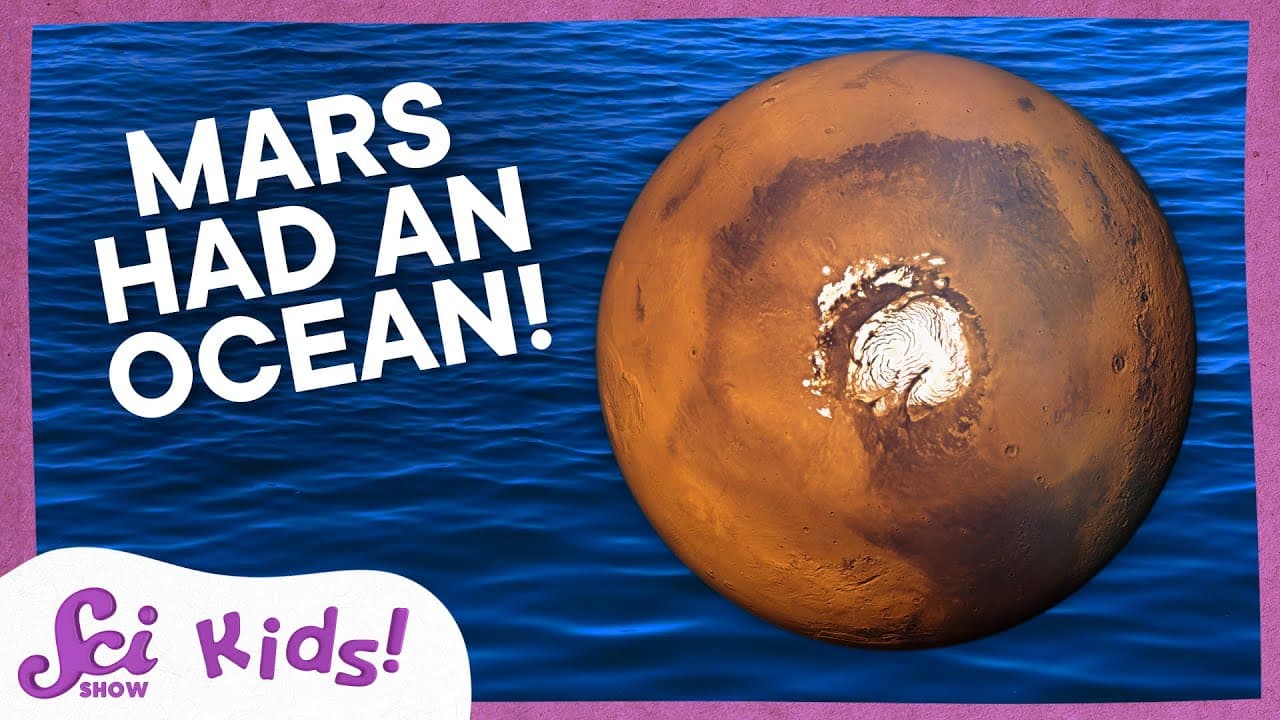
Join Anthony and his robot mouse friend Squeaks as they explore the Red Planet and the fascinating mission of the Perseverance rover. This engaging science video breaks down how scientists use robotic explorers to study Mars, specifically looking for evidence that the dry, dusty planet once hosted massive oceans of liquid water. Through clear comparisons between Earth and Mars, the video explains complex geological concepts in a way young learners can easily grasp. The content focuses on three main scientific themes: space exploration technology (rovers and helicopters), states of matter (water as ice vs. liquid), and geology (erosion and landforms). Viewers learn how scientists use 'Earth analogues'—like the Grand Canyon and river deltas—to interpret mysterious features on the Martian surface. The video visually demonstrates how water shapes land, explaining how ancient riverbeds and shorelines on Mars provide clues to its watery past. For educators, this resource is an excellent tool for connecting Earth science concepts to planetary exploration. It naturally bridges lessons on landforms, erosion, and the water cycle with excitement about space technology. The visual explanations of how deltas form and how erosion works serve as perfect introductions to hands-on stream table experiments or comparative planetology units.

SciShow KidsSciShow Kids

4mins 40s

How Different Spacecraft Help Us Explore the Universe

How Different Spacecraft Help Us Explore the Universe

This educational video introduces students to the diverse array of spacecraft used by astronomers and engineers to explore the universe. It categorizes space exploration technology into two main groups: uncrewed spacecraft (robots) and crewed spacecraft (humans). The presenter, Caroline, breaks down specific types within these categories, including satellites, probes, rovers, space shuttles, landers, and space stations, explaining the unique function and design of each.

Miacademy & MiaPrep Learning ChannelMiacademy & MiaPrep Learning Channel

8mins 55s

How We Explore Space: Telescopes, Satellites, and Rovers

How We Explore Space: Telescopes, Satellites, and Rovers

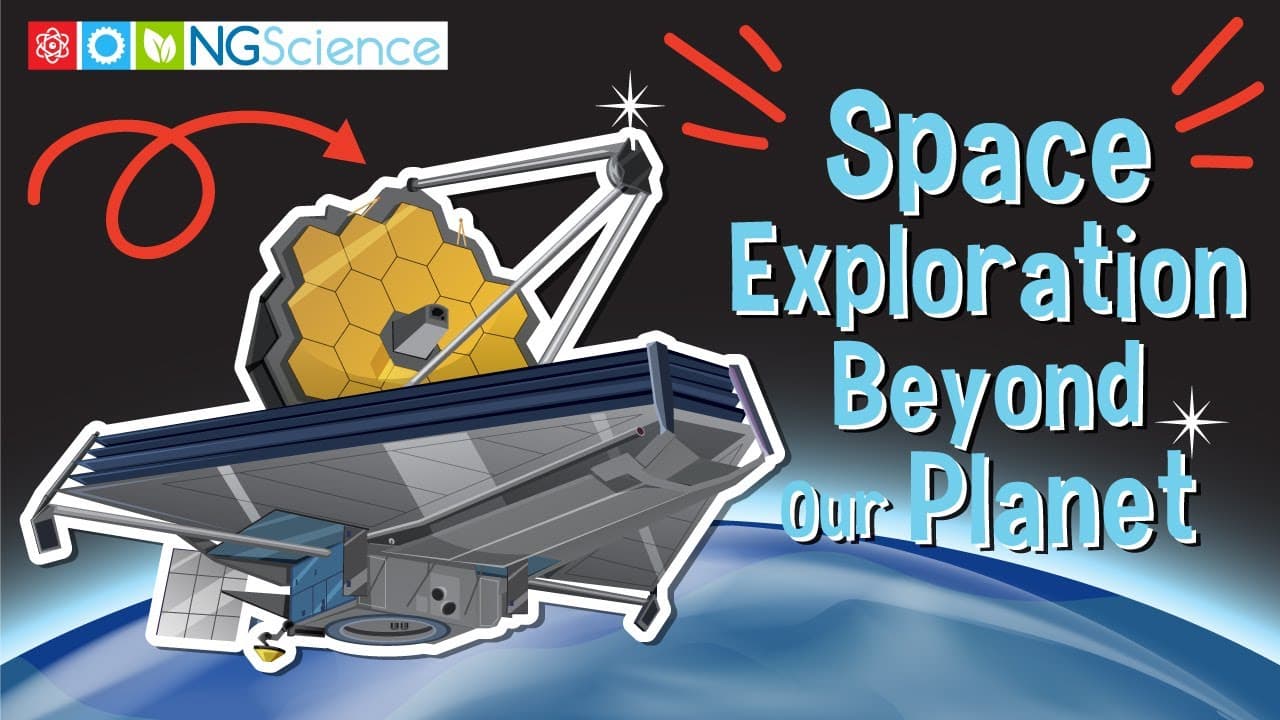
This educational video provides a comprehensive overview of the history, methods, and technologies humanity has developed to explore the cosmos. Starting with our innate curiosity about the stars, the narration guides viewers through the evolution of space exploration tools, from early optical telescopes to the advanced James Webb Space Telescope. It categorizes exploration into distinct methods: ground-based telescopes, orbiting satellites, deep-space probes, planetary rovers, and human space missions.

Next Generation ScienceNext Generation Science

12mins 4s

Solving Human Problems with Nature's Secrets: A Guide to Biomimicry

Solving Human Problems with Nature's Secrets: A Guide to Biomimicry

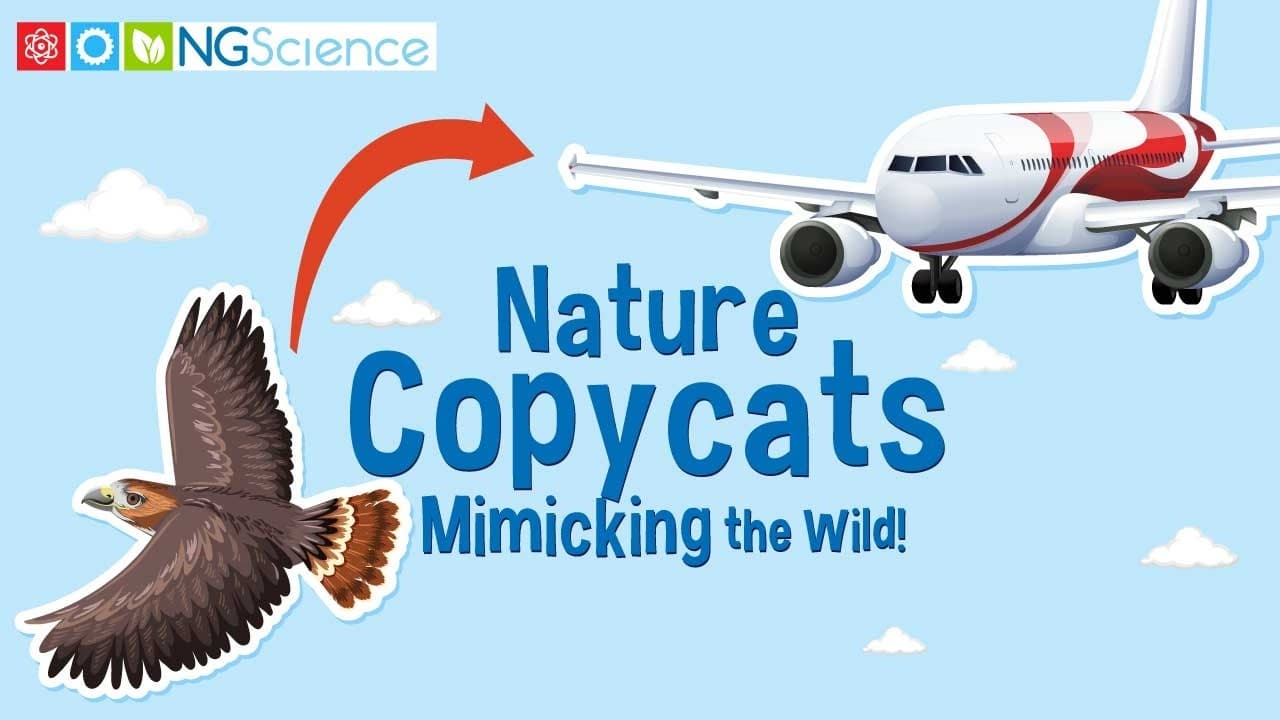
This video introduces the fascinating concept of biomimicry, exploring how scientists and engineers act as "nature's detectives" to solve complex human problems. It defines biomimicry as the process of taking inspiration from nature's time-tested strategies—perfected over millions of years—to innovate new technologies. The narrative connects the biological features of plants and animals directly to modern engineering marvels, demonstrating that the best ideas often come from the wild. The video covers several distinct examples of bio-inspired innovation. It explains how bird flight inspired early aviation and the principles of aerodynamics, how the bumps on humpback whale fins led to more efficient wind turbines, and how the kingfisher's beak helped solve noise pollution issues for Japanese bullet trains. Other examples include drones modeled after bees, antimicrobial surfaces inspired by shark skin, self-cleaning materials based on lotus leaves, and the invention of Velcro (hook-and-loop fasteners) derived from burrs. For educators, this video is an excellent resource for bridging the gap between biology and engineering (STEM). It encourages students to observe the natural world critically and ask questions about structure and function. The content supports lessons on adaptation, physics (aerodynamics), and the engineering design process, showing students that science is often interdisciplinary and that nature acts as a vast library of solutions waiting to be discovered.
Next Generation ScienceNext Generation Science

6mins 32s

Materials

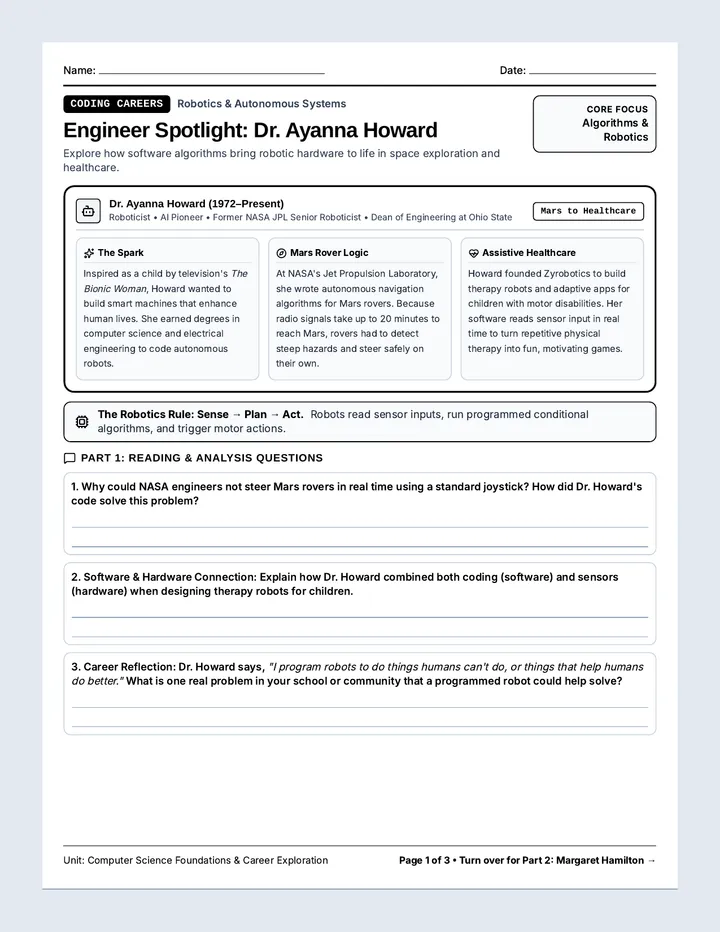
Coding Pioneers Worksheet

Coding Pioneers Worksheet

A printer-friendly black-and-white edition of the three-page computer science packet featuring Dr. Ayanna Howard (Page 1), Margaret Hamilton (Page 2), and an independent digital research lab (Page 3), optimized for crisp monochrome photocopying and minimal toner use.

M

Megan.Tanner

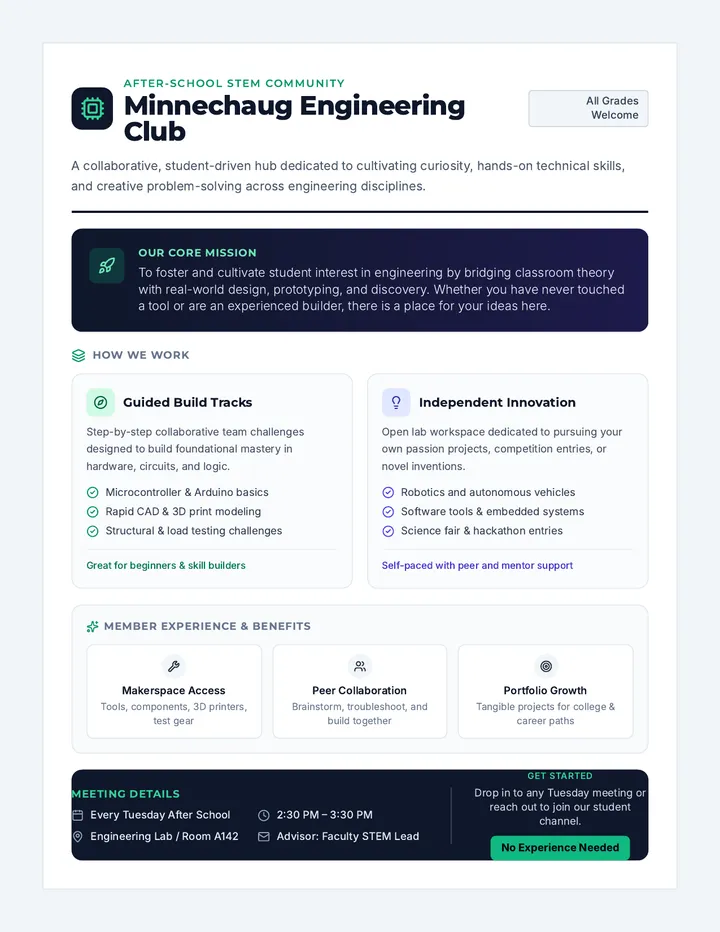
Minnechaug Engineers Info Sheet

Minnechaug Engineers Info Sheet

An informative one-page overview flyer for the Minnechaug Engineering Club, highlighting its STEM mission, guided build tracks, independent innovation opportunities, meeting details, and joining information.

J

jdembkowski

Sequences

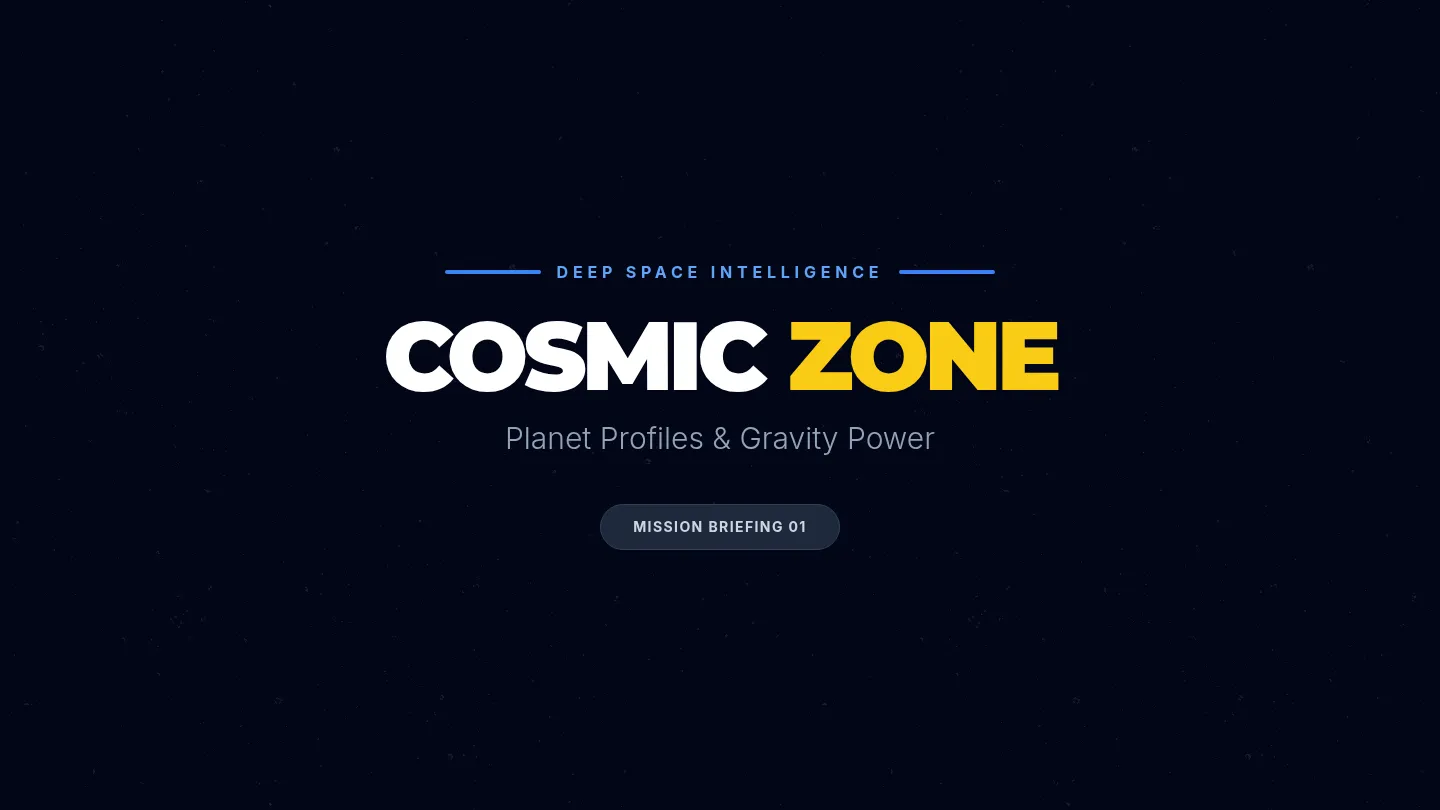
Planet Profile Slides

Infinite Frontier

A comprehensive Hi-Lo unit for 6th graders exploring the scale of the universe, our place in the Milky Way, the technology used to explore space, and the history of human spaceflight.

JS

Janette Sullivan

54
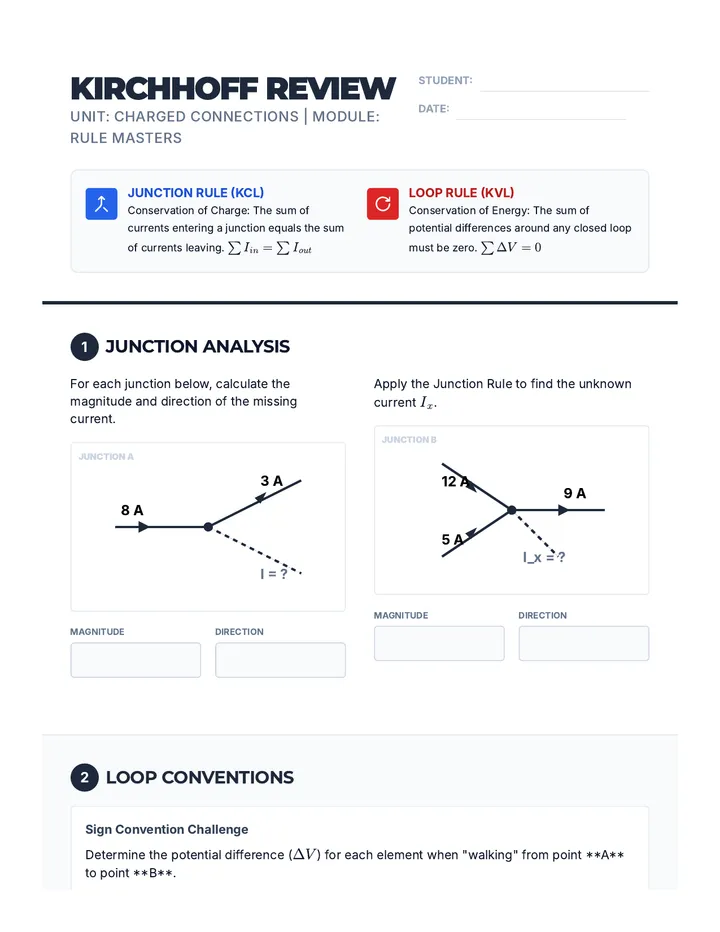
Kirchhoff Review Worksheet

Charged Connections

A modular physics unit focused on the principles of electricity, circuit design, and the mathematical laws governing energy flow in electrical systems.

OM

Olutoyin Makinde

42
Domestic Tech Plan Guide

Domestic Tech Lab

A 4-week exploration of technology through the lens of everyday household items, tracing their evolution from simple tools to complex smart systems. Students investigate what technology truly is beyond just electronics and how domestic innovations have changed human life.

LS

Linda Still

11
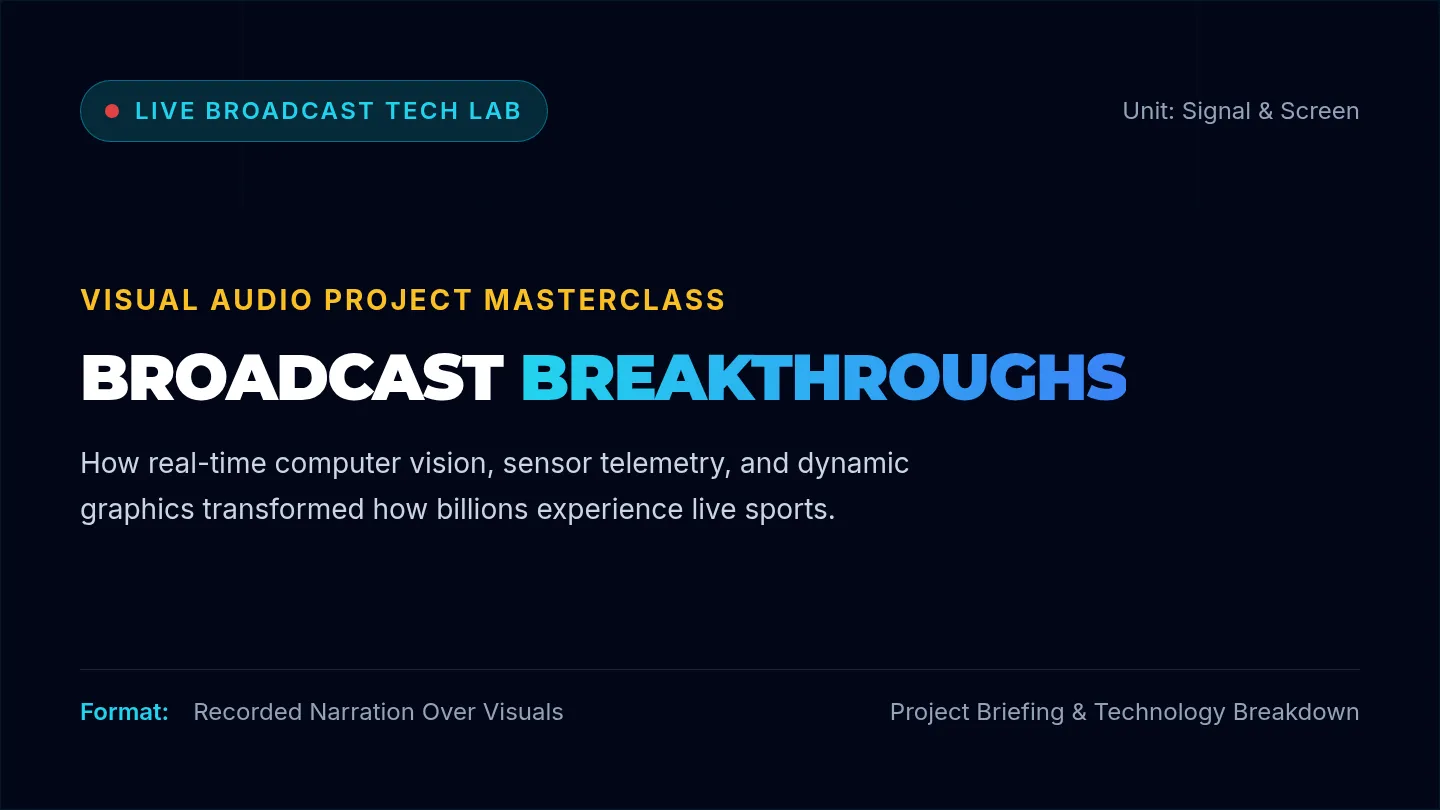
Broadcast Breakthroughs Slides

Broadcast Tech Spotlight

A dynamic multimedia project sequence where students investigate cutting-edge sports broadcasting technologies, craft scripted storyboards, and produce professional recorded voiceover presentations.

S

Stacy.Bogart

5
Space Bar Script Document

Access Tech Lab

A series of materials focused on building and programming assistive technology interfaces, specifically switch-based controls for accessibility.

GI

Gretchen Ivers

4
Portrait de Robot Présentation

Mission Robotique

Une séquence d'initiation à la robotique pour le cycle 3 (CM1-CM2), explorant la définition d'un robot, ses composants et les bases de la programmation algorithmique.

GT

Groupe TUIC53

7

Lessons

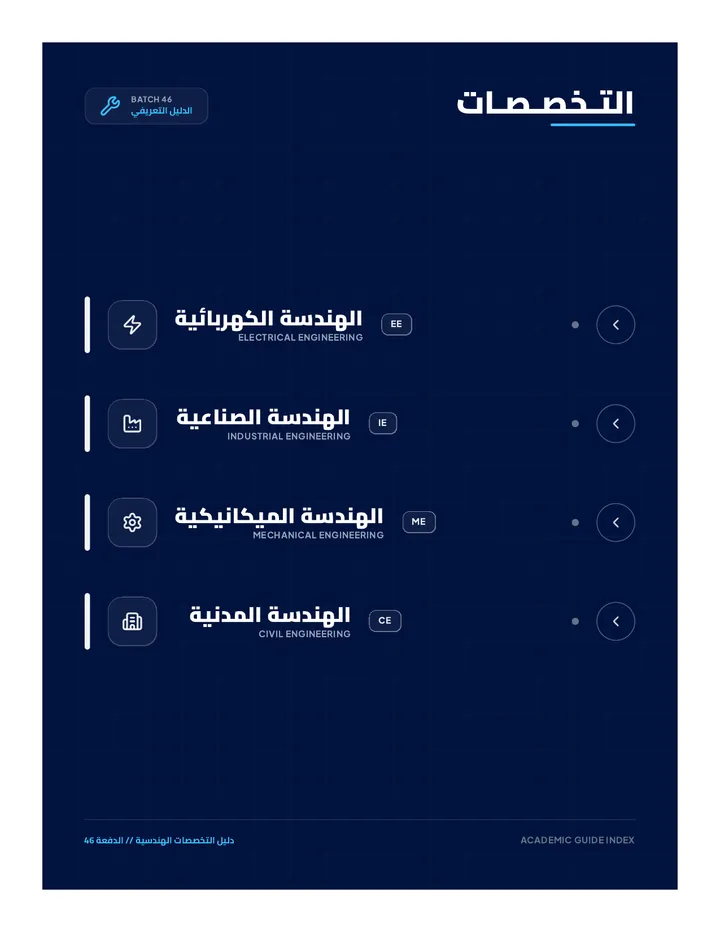
فهرس التخصصات الهندسية

تخصصات المستقبل الرقمي

دليل تعريفي لتخصصات الحاسب الآلي والتقنية يهدف إلى استعراض الفروع الرئيسية وتوجيه الطلاب نحو التخصص المناسب.

YA

Yara Alqwaizani

10
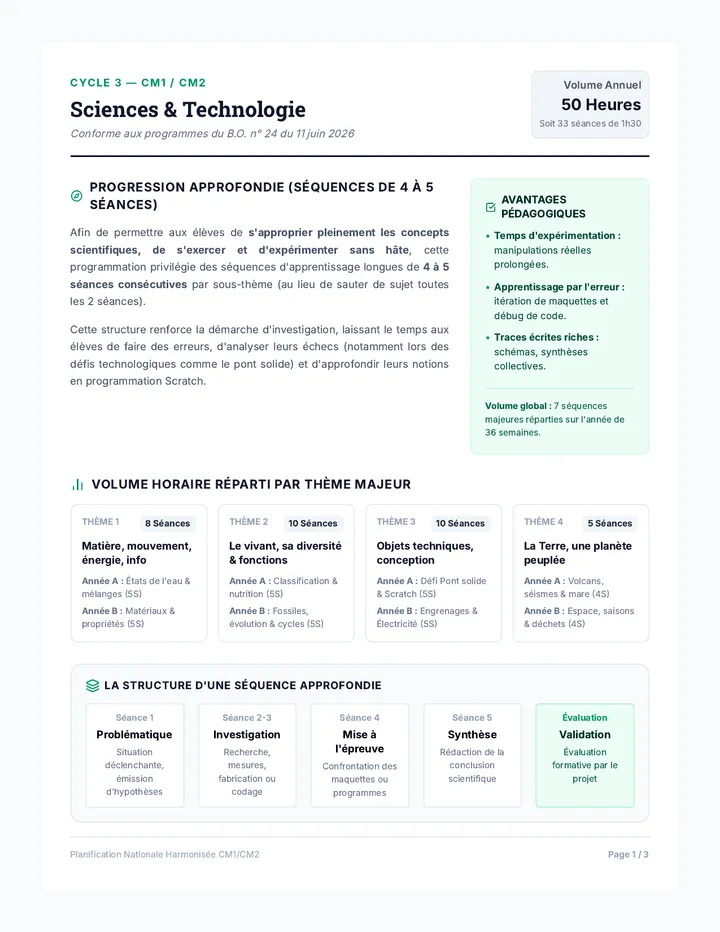
Tableau Progression Annuelle Sciences CM

Progression Sciences CM1 CM2

Outil de planification annuelle et de progression pour l'enseignement des sciences et technologies en classe de CM1/CM2, conforme au BO de juin 2026. Ce guide propose une répartition claire des volumes horaires et des thèmes entre l'année A et l'année B pour éviter les redondances dans les classes à double niveau.

L

Laurent

11
A+ Final Exam Student Exam

A+ Certification Finale

A comprehensive capstone assessment covering CompTIA A+ Core 1 (220-1101) and Core 2 (220-1102) domains, including multiple-choice questions and performance-based scenarios.

AG

Armand Gonzalez

3
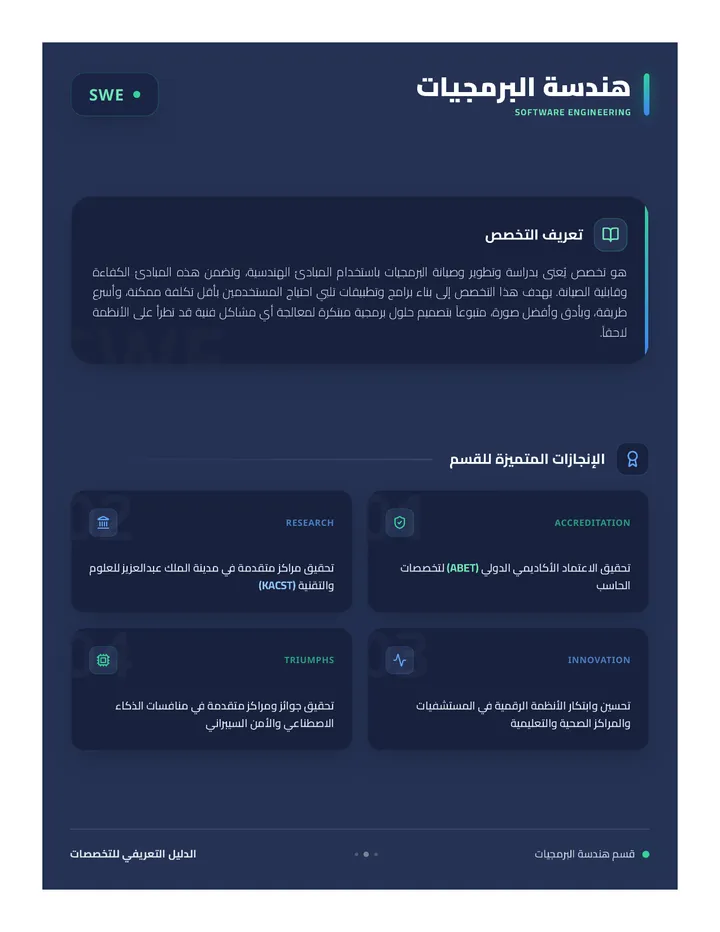
Software Engineering Poster

Computing Specializations Directory

A comprehensive set of premium promotional posters for computer-related specializations, specifically Software Engineering and Computer Science, designed to attract and inform students using a high-end visual Bento Grid template.

YA

Yara Alqwaizani

13
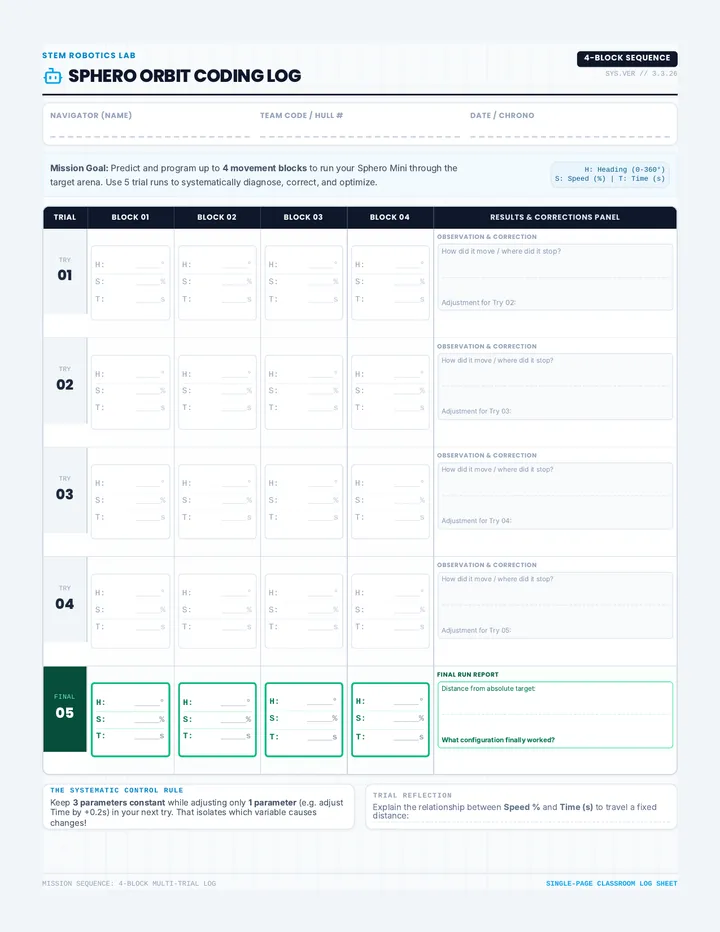
Sphero Orbit Coding Log

Sphero Orbit Trials

A hands-on coding lesson where students program Sphero Mini robots through physical challenges, using systematic trial-and-error analysis to refine their predictions of heading, speed, and duration.

BR

Brandon Ruffin

2
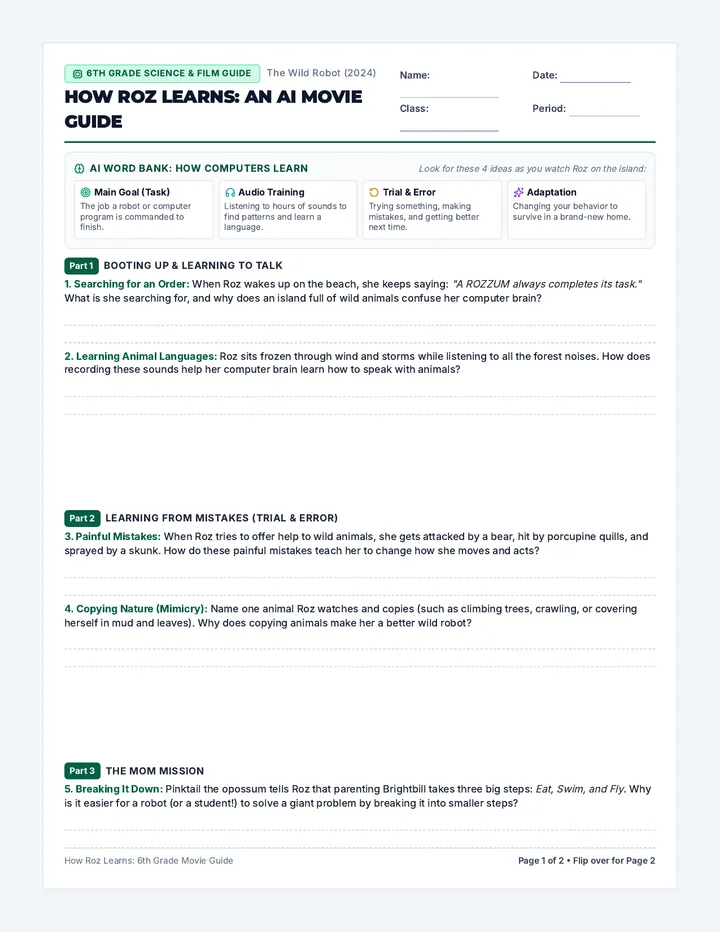
Wild Code Movie Guide

Wild Robot AI

A 6th-grade science and media literacy lesson examining core artificial intelligence concepts—such as machine learning, trial-and-error adaptation, and emergent behavior—through DreamWorks' The Wild Robot (2024).

W

wroberg

2