Lenny.com
Explore
Create
ActivitiesNewMathEnglish Language ArtsScience & EngineeringSocial StudiesGlobal LanguagesHealth & Physical EducationSpecial EducationCounseling & Life SkillsArts & CreativityESL
Lenny.com
Lenny.com
Explore
Create
ActivitiesNewMathEnglish Language ArtsScience & EngineeringSocial StudiesGlobal LanguagesHealth & Physical EducationSpecial EducationCounseling & Life SkillsArts & CreativityESL
Lenny.com
Lenny.com

Solutions

Lenny for EducatorsLenny for SchoolsLenny for Districts

Product

ExploreSign inCreateSupportAbout

Resources

Getting startedMTSS Acceleration Program

© 2026 Lenny Learning Inc.

TermsPrivacyAccessibility
LinkedInInstagramX
Lenny

Fossils and Geologic Time

Fossil formation processes, stratigraphy, and the division of Earth's history into eons and eras. Connects biological evolution to major geological shifts and mass extinction events.

Science & EngineeringLife ScienceLiving ThingsAnimalsPlantsBody SystemsTraitsAdaptationsCellsEcosystemsHeredityGenes to TraitsCell DivisionPhysicsComparing MaterialsShapes and PropertiesMagnetsMagnetismLightSoundLight and SoundMatterStates of MatterChanges of StateMixturesPhysical and Chemical ChangeHeating and CoolingHeat and Thermal EnergyEnergyForce and MotionElectrical CircuitsAtoms and MoleculesPeriodic TableMotion in One DimensionMotion in Two DimensionsScalars and VectorsForces and Laws of MotionCircular Motion and GravityMomentum and ImpulseWork, Energy, and PowerWavesElectromagnetic WavesGeometric OpticsElectricity and MagnetismSimple Harmonic MotionThermodynamicsNuclear PhysicsEarth Science & AstronomyWeatherWater CycleRocks and MineralsFossilsEarth's FeaturesEarth's ResourcesEarth's StructureWeather and ClimateEarth EventsFossils and Geologic TimePlate TectonicsHuman ImpactsAstronomyChemistryUnits and MeasurementAtomic StructurePeriodic TrendsChemical BondingNomenclatureMolecular StructureIntermolecular ForcesThe MoleStoichiometryProperties of GasesSolutionsChemical ReactionsBalancing EquationsEnergy ChangesRates of ReactionsEquilibriumAcids and BasesQuantum ModelBiologyClassificationCell StructureThe Chemistry of LifeBiomoleculesCellular TransportCell EnergyCell Growth and DivisionDNAProtein SynthesisMeiosis and Sexual ReproductionPatterns of InheritanceMulticellular OrganismsEvolutionEcologyBiodiversityComputer ScienceAlgorithms and Computational ThinkingProgramming LanguagesComputing SystemsNetworks and InternetData AnalysisCybersecurityAI and Machine LearningSoftware Design and DevelopmentBlockchainEngineering & AIDesigning ExperimentsEngineering PracticesDesign ThinkingEngineering Design ProcessMechanical EngineeringElectrical EngineeringMaterials and StructuresCAD and 3D DesignRoboticsArtificial Intelligence BasicsVibe CodingMachine LearningAI Ethics and SocietySystems ThinkingEntrepreneurship & InnovationEntrepreneurial MindsetBusiness Idea DevelopmentBusiness Plan BasicsMarketing & Customer DiscoveryFinancial Management for Startups

Videos

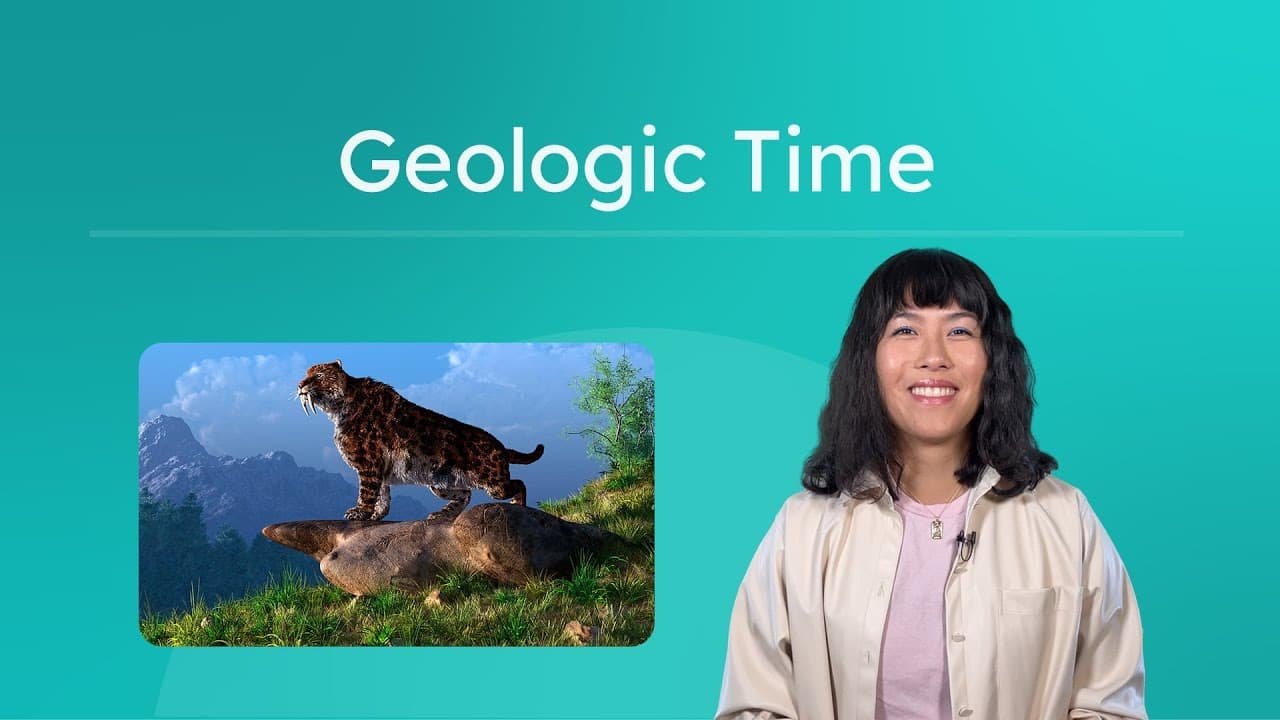
When Did Dinosaurs Live? A Timeline Guide

When Did Dinosaurs Live? A Timeline Guide

In this engaging episode of SciShow Kids, host Jessi and her friends Squeaks the Robot Mouse and Dino the Bird explore the vast concept of 'deep time' through the lens of dinosaur history. The video tackles the common misconception that all dinosaurs lived together simultaneously, explaining instead that the 'Age of Dinosaurs' was so long that species like Stegosaurus and Tyrannosaurus Rex were separated by millions of years—more time than separates T-Rex from humans today. The video breaks down the Mesozoic Era into three distinct periods: Triassic, Jurassic, and Cretaceous. To help young learners visualize these abstract timescales, Jessi introduces a kinesthetic learning model using the human body to map out history, from the soles of the feet (Triassic) to the chest (extinction event). It also introduces the concept of stratigraphy (rock layers) using a recycling bin analogy to explain how paleontologists determine the age of fossils based on their depth in the ground. This resource is highly valuable for early elementary science classrooms as it simplifies complex geological concepts into tangible, age-appropriate analogies. It provides excellent opportunities for active learning, allowing students to use their own bodies to understand timelines and everyday objects to understand fossil dating. The video seamlessly blends paleontology, math (timelines), and scientific modeling.

SciShow KidsSciShow Kids

5mins 57s

Traveling Through the History of Life on Earth

Traveling Through the History of Life on Earth

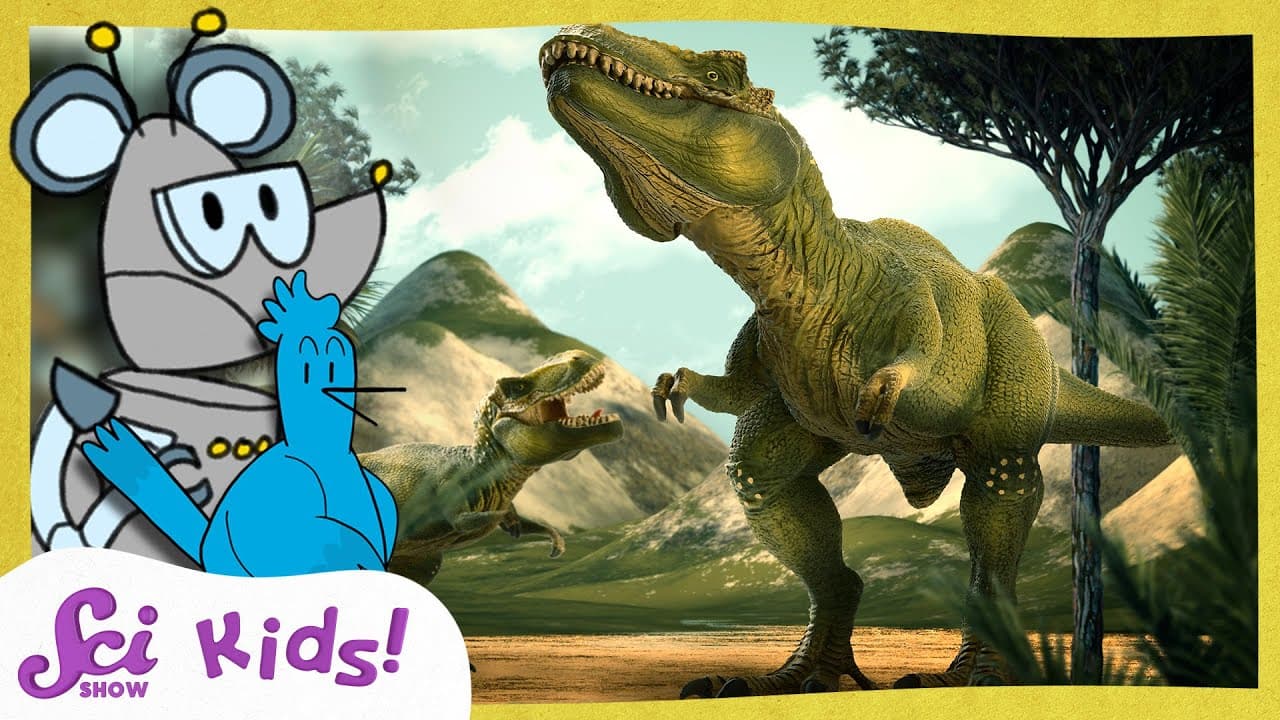
This engaging video takes students on a "time-traveling" journey through the history of life on Earth, breaking down the vast expanse of geologic time into understandable segments. Hosted by an energetic presenter, the video uses a recurring timeline graphic and rich visuals to illustrate the four major eons and eras: Precambrian, Paleozoic, Mesozoic, and Cenozoic. It explains how scientists divide time based on major shifts in life forms rather than equal time increments, providing a clear framework for understanding Earth's biological history. Key themes include the evolution of cellular life from prokaryotes to eukaryotes, the colonization of land by plants and animals, and the cyclical nature of mass extinctions followed by rapid diversification. The video details specific periods like the Cambrian Explosion, the Carboniferous period (source of fossil fuels), and the Age of Dinosaurs, while also highlighting critical evolutionary milestones like the development of oxygen by cyanobacteria and the rise of mammals. It emphasizes adaptation, environmental changes, and the relatively short time humans have existed compared to Earth's history. For educators, this video serves as an excellent anchor for units on evolution, Earth science, or biology. It visualizes abstract concepts like "deep time" through a proportional pie chart and linear timeline, making the billions of years of Earth's history graspable for students. The clear segmentation of eras allows teachers to pause and focus on specific time periods, while the discussion of mass extinctions provides natural entry points for exploring climate change and environmental stability.
Miacademy & MiaPrep Learning ChannelMiacademy & MiaPrep Learning Channel

14mins 7s

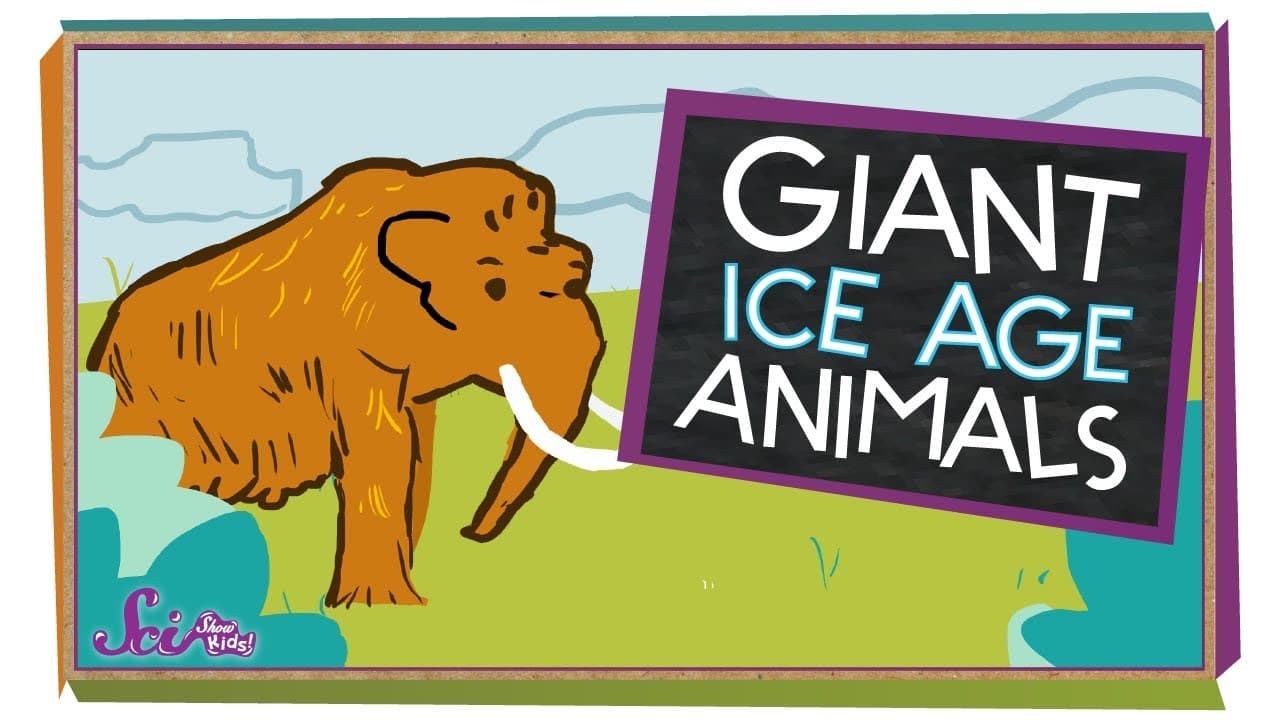
Meeting the Giants of the Ice Age

Meeting the Giants of the Ice Age

In this engaging episode of SciShow Kids, host Jessi and her robot rat friend Squeaks transport students back in time to explore the Ice Age, a period when the Earth was much colder and covered in ice. The video explains what an Ice Age is and introduces the concept of extinction through the lens of "megafauna"—giant versions of animals we recognize today. Students meet fascinating creatures like the car-sized Glyptodon, the bear-sized Giant Beaver, and the fearsome Smilodon (Saber-toothed Tiger). The video provides a comparative biology lesson by examining the differences between Mastodons and Mammoths, using accessible analogies like comparing teeth to traffic cones versus potato chips. It covers essential biological concepts such as herbivores versus predators, physical adaptations (like fur and specialized teeth), and the distinction between living species and extinct ones. The narrative also touches on scientific inquiry, discussing theories about why these animals went extinct, including human hunting and climate change. This resource is highly valuable for elementary science classrooms as it simplifies complex paleontological concepts into digestible, visual examples. It encourages critical thinking about how animals adapt to their environments and introduces the idea that Earth's climate changes over time. Teachers can use this video to spark discussions about fossils, animal adaptations, food chains, and the impact of environmental changes on living things.

SciShow KidsSciShow Kids

4mins 55s

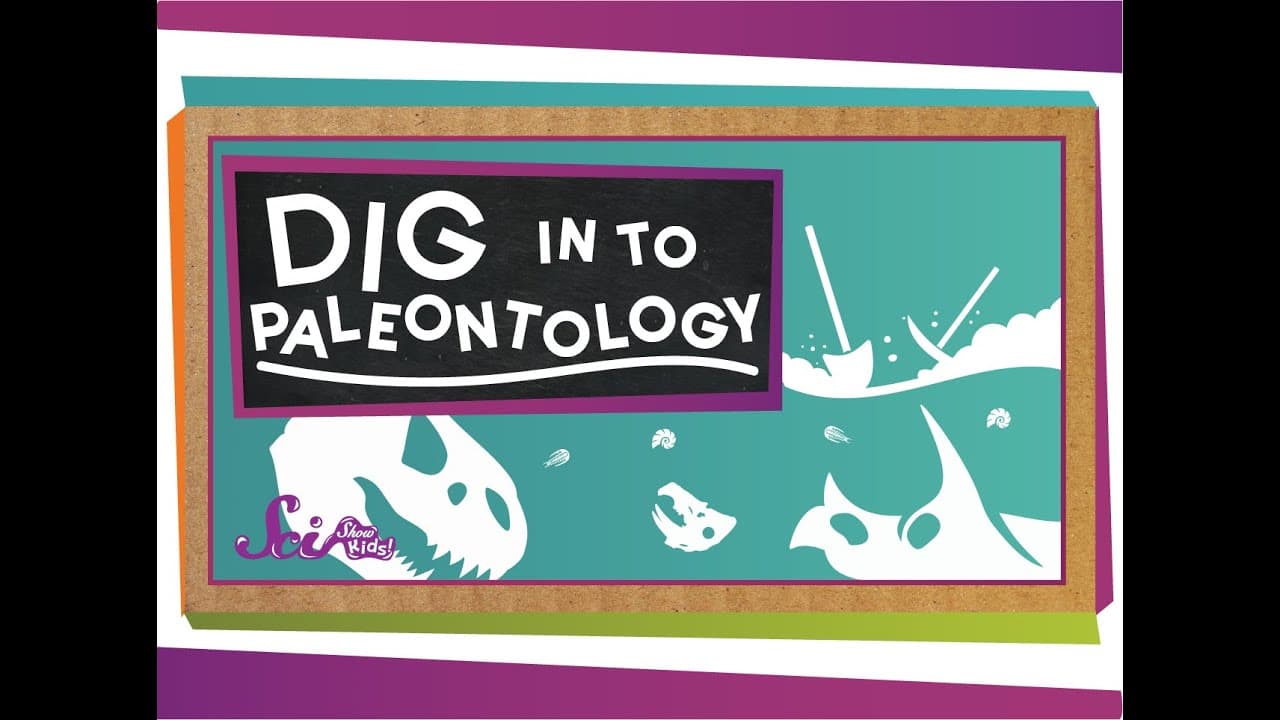
How Paleontologists Use Fossils to Study the Past

How Paleontologists Use Fossils to Study the Past

In this engaging episode of SciShow Kids, host Jessi introduces students to the fascinating world of paleontology. The video explains that while many children love pretending to be dinosaurs, there are scientists called paleontologists whose actual job is to study ancient life. Jessi breaks down complex concepts like extinction and fossilization into age-appropriate terms, explaining how scientists use clues left behind in rocks to reconstruct the history of life on Earth. The video moves from the definition of fossils to the practical tools and methods scientists use to find, excavate, and study them. Key themes include the definition and formation of fossils, the concept of extinction, and the scientific process of gathering evidence to draw conclusions. The video emphasizes that paleontology isn't just about dinosaurs; it covers all ancient life including plants, mammals, and even bacteria. It details the step-by-step process of a paleontologist's work: exploring promising sites, carefully digging with specific tools, using advanced technology like CT scanners in the lab, and sharing discoveries with the world through museums. For the classroom, this video serves as an excellent launchpad for units on Earth history, dinosaurs, or scientific careers. It models critical thinking by showing how scientists infer behavior (like diet or living in groups) from physical evidence (like teeth shape or fossil density). The visual metaphors—comparing fossil reconstruction to solving a giant puzzle—help students grasp abstract concepts about deep time and scientific inquiry. It connects natural childhood curiosity about dinosaurs to real-world scientific practice.

SciShow KidsSciShow Kids

4mins 12s

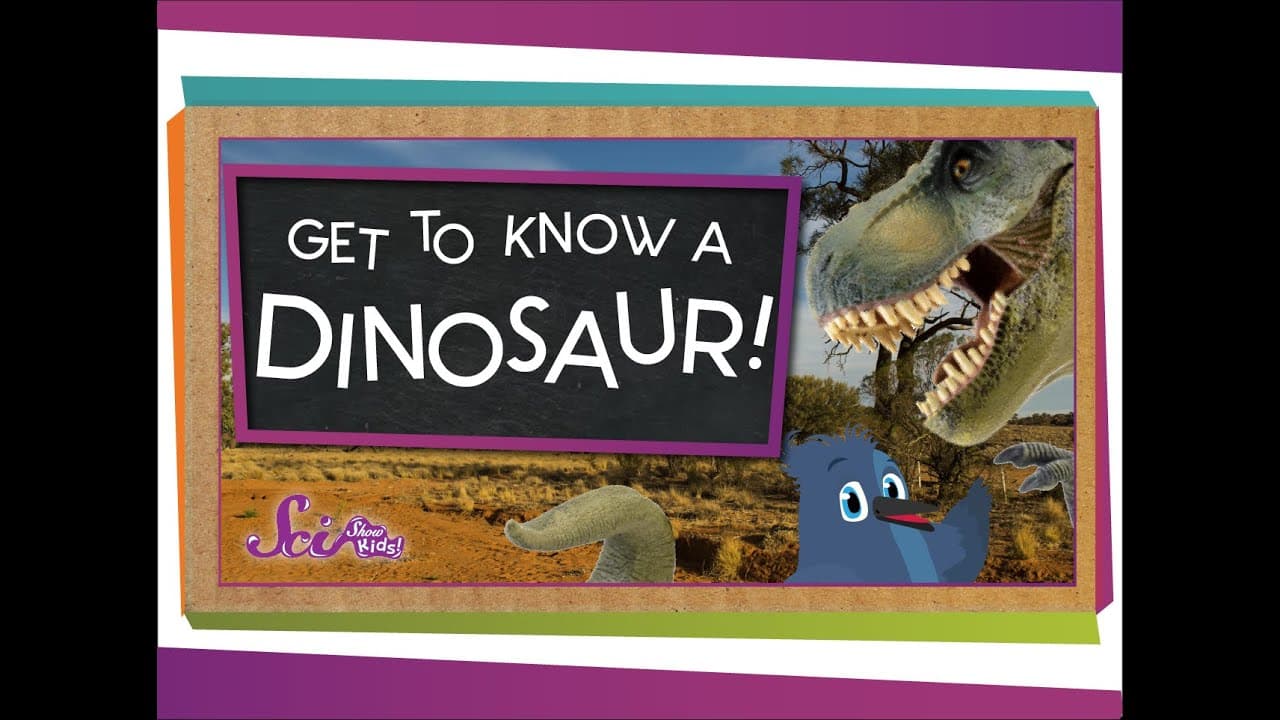
How to Tell if It's Really a Dinosaur

How to Tell if It's Really a Dinosaur

In this engaging episode of SciShow Kids, host Jessi and her friend Dino (a bird puppet) explore the specific scientific characteristics that classify an animal as a dinosaur. While many large, ancient reptiles are often grouped together in popular culture, the video explains that true dinosaurs have distinct anatomical and lifestyle features that set them apart from other prehistoric creatures like flying pterosaurs and swimming plesiosaurs. The video breaks down complex biological classifications into simple, observable rules for young learners. Key themes include anatomical structure (specifically leg positioning relative to the body) and habitat limitations (land-dwelling vs. air or water). Using clear diagrams and comparisons between modern lizards like Komodo dragons and ancient skeletons like the Stegosaurus, the video makes the concept of biological adaptation and classification accessible. For educators, this resource is excellent for correcting common misconceptions about prehistoric life. It moves students beyond memorizing names to understanding the 'rules' of nature. It provides a perfect launchpad for lessons on animal classification, adaptation, vertebrate anatomy, and the work of paleontologists, encouraging critical observation skills rather than just rote learning.

SciShow KidsSciShow Kids

4mins 14s

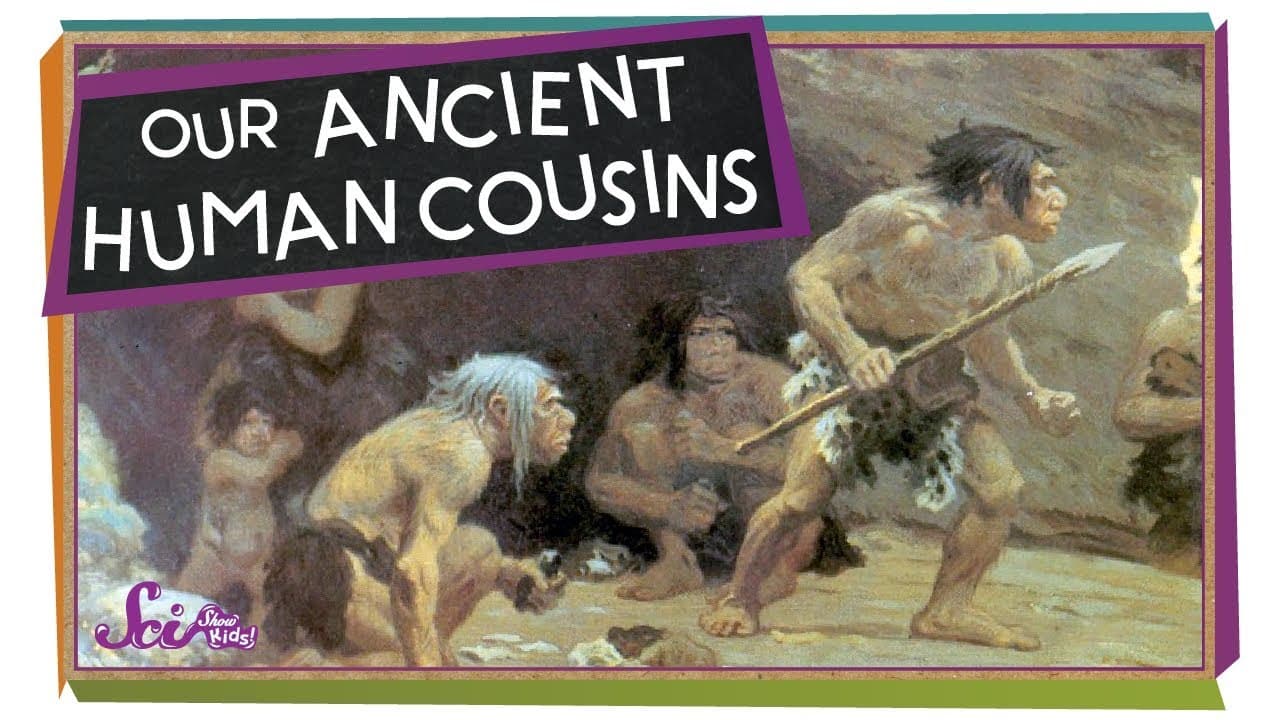
Meeting Our Ancient Relatives: The Story of Neanderthals

Meeting Our Ancient Relatives: The Story of Neanderthals

In this engaging episode of SciShow Kids, host Jessi and her robot mouse friend Squeaks explore the concept of the human family tree, moving from biological families to the broader history of the human species. The video introduces the scientific name for humans, *Homo sapiens*, and explains that while we are the only human species alive today, we used to share the planet with other human-like relatives, specifically the Neanderthals. Through colorful animations and clear explanations, the video breaks down complex evolutionary concepts into kid-friendly terms. The content dives deep into who the Neanderthals were, describing their physical adaptations for cold climates—such as shorter limbs and larger noses—and their distinct culture, including tool use, clothing, and care for one another. It also covers the concept of fossils as the scientific evidence that allows us to learn about extinct species. The narrative touches on environmental changes and competition for resources as key reasons why Neanderthals eventually went extinct while *Homo sapiens* survived. This video is an excellent resource for elementary classrooms to introduce topics like adaptation, fossils, and early human history. It simplifies the abstract concept of "species" and "ancestors" using the familiar analogy of a family tree. Teachers can use this video to spark discussions about how animals adapt to their environments, how scientists use fossils to reconstruct the past, and the shared history of living things on Earth.

SciShow KidsSciShow Kids

4mins 29s

Materials

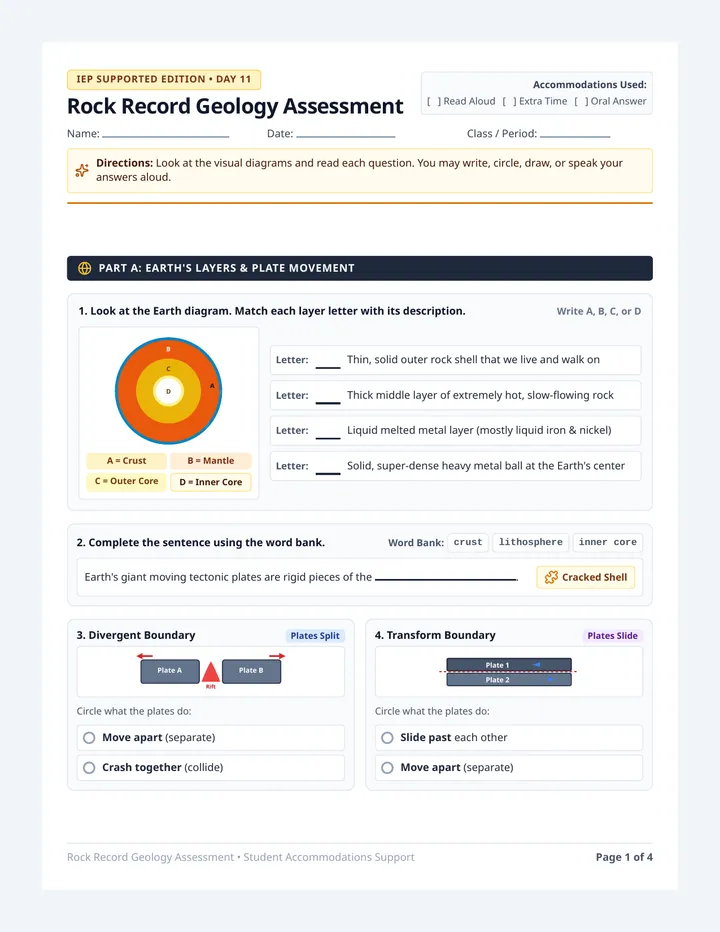
Rock Record IEP Assessment

Rock Record IEP Assessment

Enhanced 4-page IEP-adapted geology assessment featuring rich visual diagrams: Earth layer cross-sections, tectonic plate boundary arrows, subduction trench illustrations, 3-rock-type formation graphics, rock cycle flow paths, textured strata cross-sections, and earthquake safety icons.

CS

Courtney Scherer

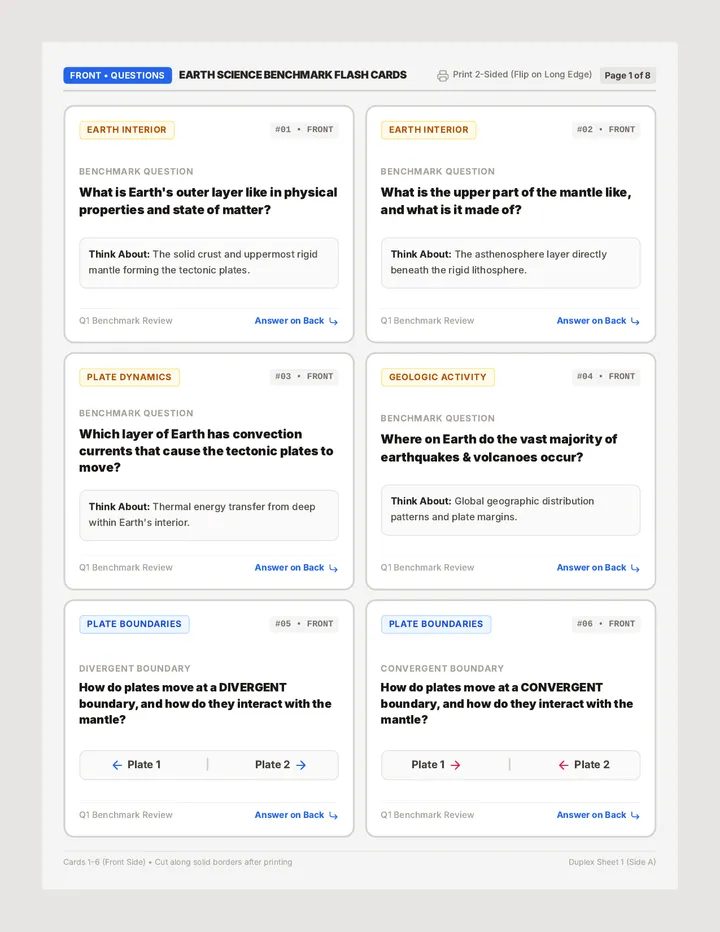
Earth Benchmark Flash Cards

Earth Benchmark Flash Cards

An 8-page ready-to-print double-sided flashcard set (24 cards total) engineered for duplex 2-sided printing (flip on long edge) with perfectly mirrored front-and-back grids so questions print on the front and answers on the reverse with no folding required.

A

Andrea.Golden

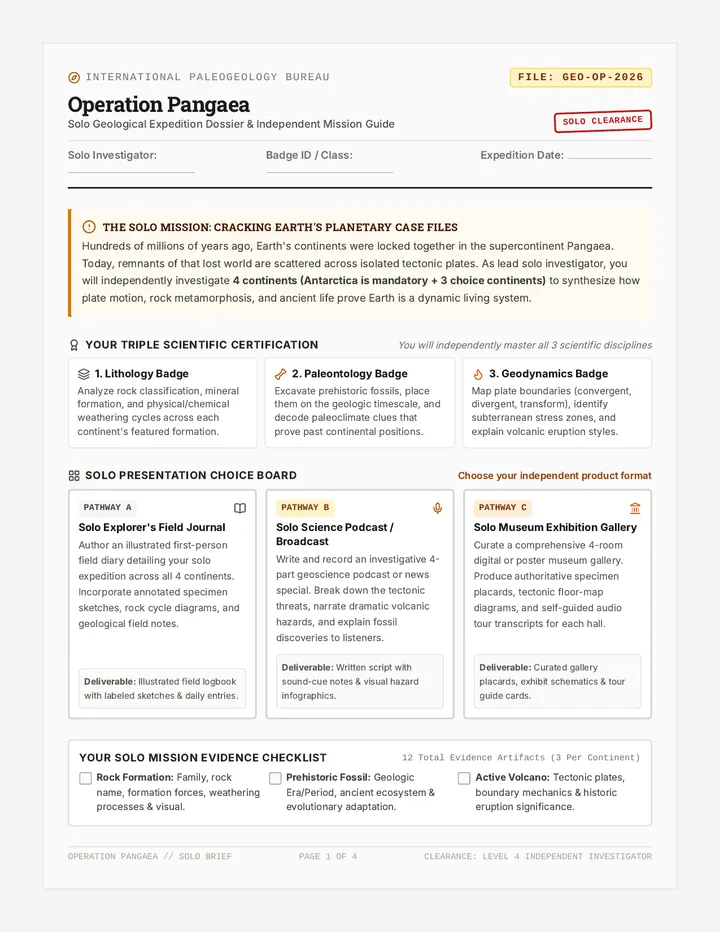
Continental Mystery Project Guide

Continental Mystery Project Guide

A completely independent 4-page geological expedition dossier and choice-based project guide engineered for solo student mastery, featuring triple scientific badge certifications, independent creative pathways, Antarctic mystery clues, global case files, and a self-audit verification rubric.

A

Andrea.Golden

Earth Systems Atlas Reference

Earth Systems Atlas Reference

A comprehensive 2-page Earth Science anchor chart and student reference guide. It covers Grade 5 topics (Weather, Water Cycle, Global Patterns) and Grade 8 topics (Plate Tectonics, Rock Cycle, Hydrosphere, Atmosphere, and Earth's History) with key vocabulary and diagrams.

KH

Kristina Homesley

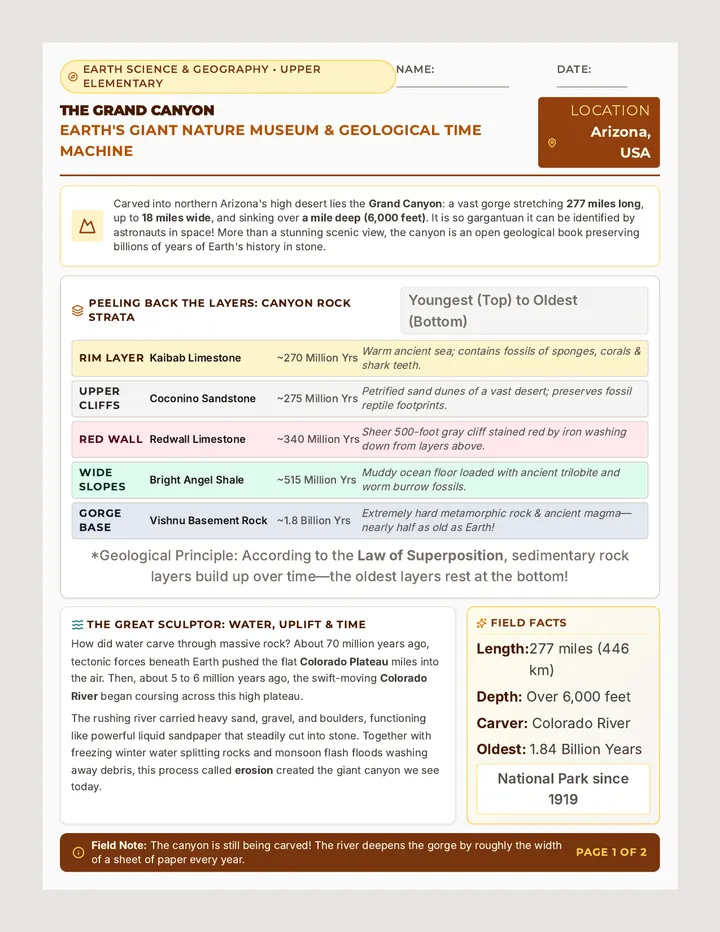
Grand Canyon Reading Passage

Grand Canyon Reading Passage

A two-page illustrated reading passage and comprehension activity for upper elementary students exploring the Grand Canyon's geology, rock strata, microclimates, and human history.

NM

Nicolle Morrissey

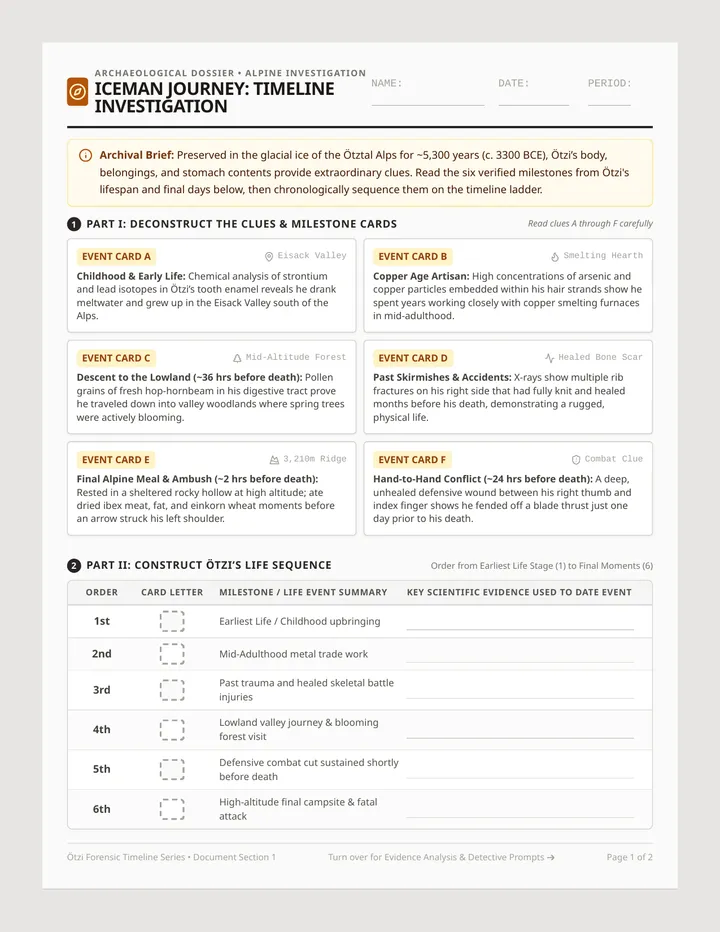
Iceman Journey Worksheet

Iceman Journey Worksheet

A two-page printable investigative timeline worksheet where students analyze forensic clues to sequence major events in Ötzi the Iceman's life and final 48 hours. Includes chronological event cards, a timeline sequence track, artifact evidence matching, and deductive reasoning analysis prompts.

AD

Amanda Daniels

Sequences

Mission Scoring Rubric

Physics Frontiers Research Project

A partner-based research project for 9th-grade conceptual physics students focusing on diverse topics from celestial mechanics to the physics of dance. Students move through a structured research process with mandatory teacher checkpoints for source reliability.

C

ckroeker

13
Fossil Finders Worksheet

Fossil Foundations

A comprehensive unit exploring how fossils form, how they are dated, and what they reveal about Earth's biological and geological history.

A

amanda_raboin

3
Tiny Bits Passage

NC Science Explorer

A comprehensive science curriculum for 8th grade students working at a 1st grade academic level, covering all North Carolina Essential Standards with simplified language, high-interest visuals, and structured support.

KM

Karen McGee

32
Superpowers Teaching Guide

Wild Adaptations

A comprehensive two-week fourth-grade life science unit investigating internal and external structures, behavioral adaptations, extreme habitat survival, fossil evidence, and biomimicry engineering.

AJ

Alexander Jacinto

7
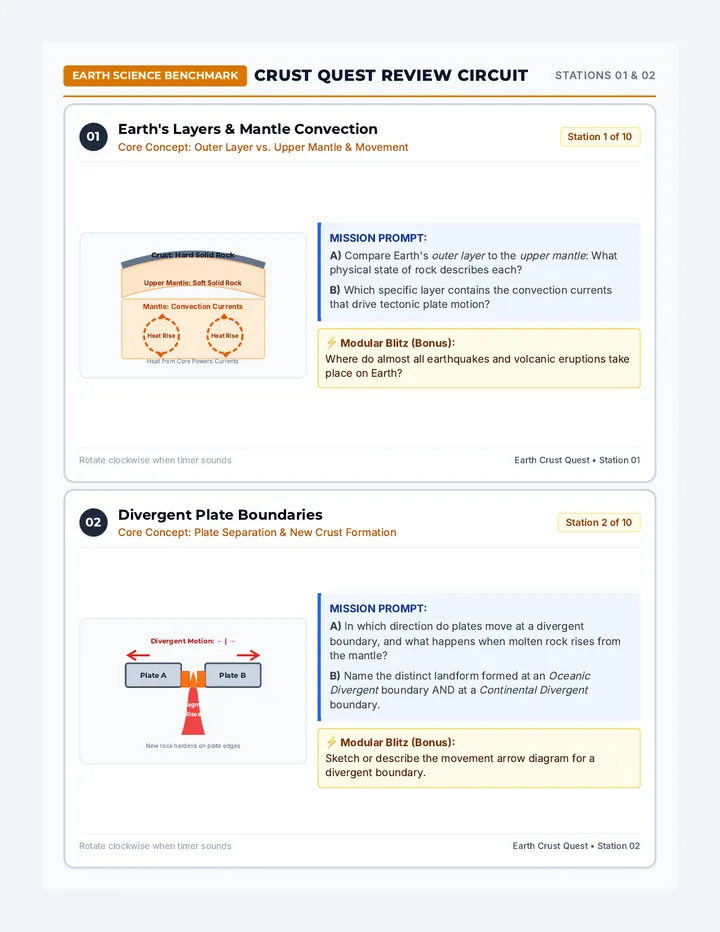
Crust Quest Station Cards

Plate Motion Mastery

A comprehensive Earth science review sequence featuring an interactive 10-station circuit and an immersive tectonic escape room covering plate boundaries, crustal structure, and geologic time.

M

maureen.morgan

6
Fossil Files Sub Guide

Fossil Finders

A comprehensive 4-day science unit on fossils and past environments, designed for independent student work during substitute teacher blocks. Students explore fossil formation, identify past environments from fossil evidence, and differentiate between body and trace fossils.

JH

Jennifer House

6

Lessons

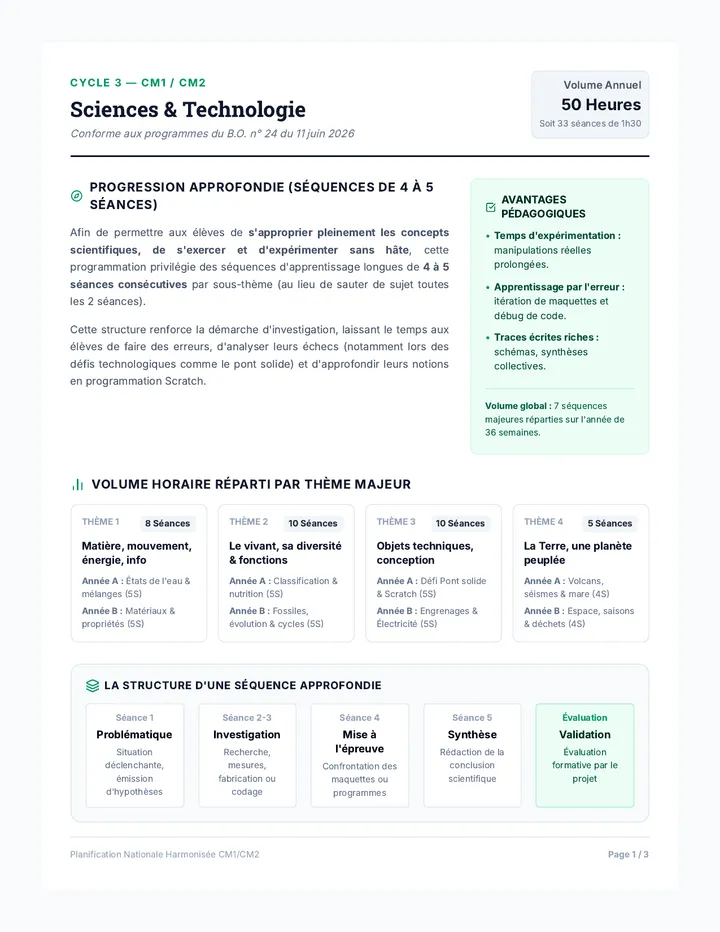
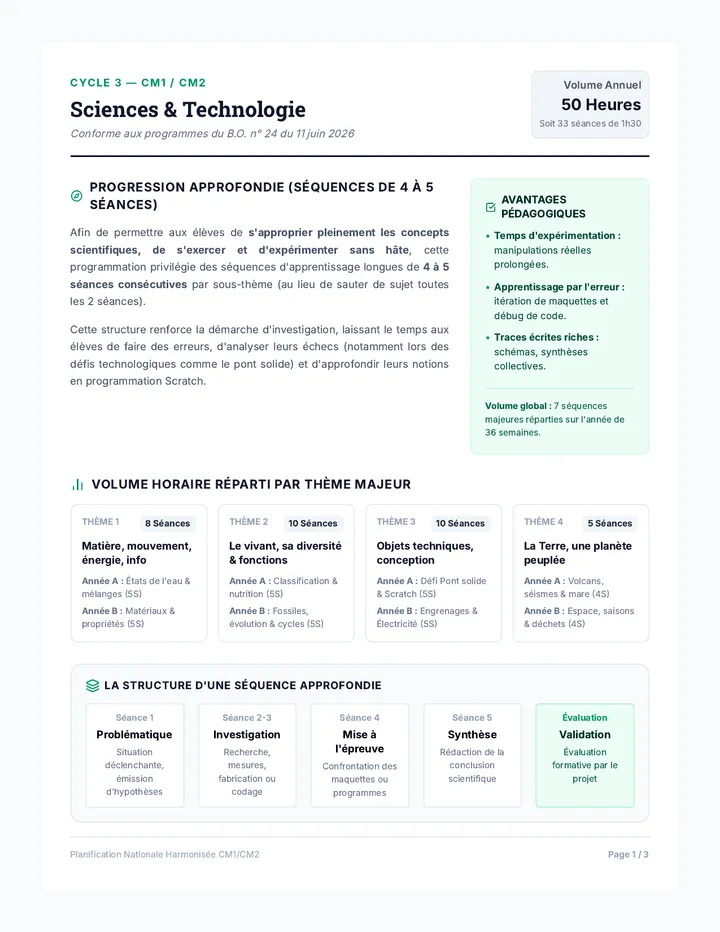
Tableau Progression Annuelle Sciences CM

Progression Sciences CM1 CM2

Outil de planification annuelle et de progression pour l'enseignement des sciences et technologies en classe de CM1/CM2, conforme au BO de juin 2026. Ce guide propose une répartition claire des volumes horaires et des thèmes entre l'année A et l'année B pour éviter les redondances dans les classes à double niveau.

LP

LAURENT PERCHE

40
Physics Final Study Guide Packet

Conceptual Physics Final Prep

A comprehensive 3-page study guide covering Radioactive Decay, Geophysics, Waves, and Momentum for a 9th grade Conceptual Physics final exam.

C

ckroeker

3
Morphology Mission Slides

Root Roundup Challenge

A comprehensive review lesson covering 27 Greek and Latin roots to help developmental reading students prepare for their morphology assessment through gamified slides and a decoding worksheet.

J

Jodi.Denton

3
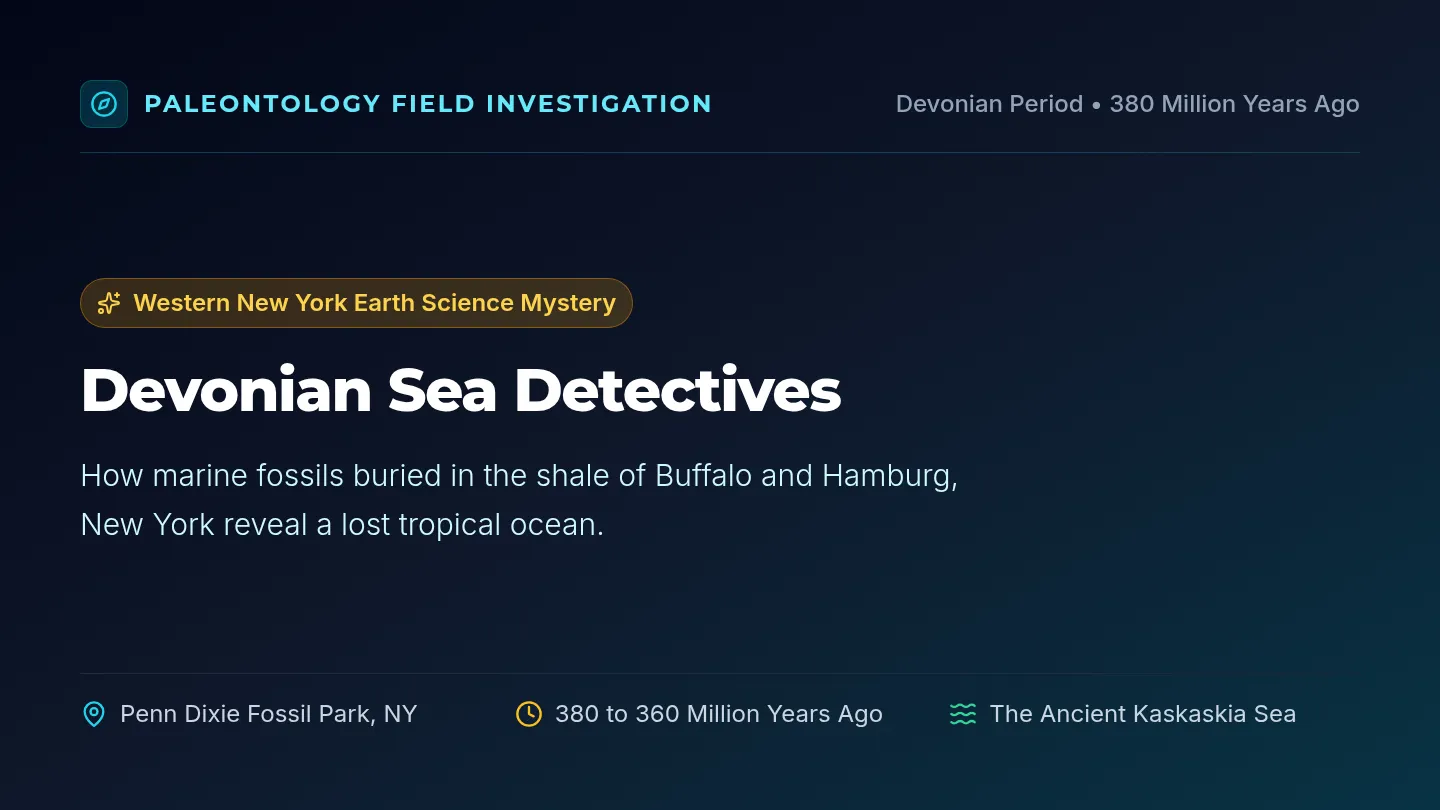
Devonian Sea Slides

Devonian Sea Detectives

A mini-lesson exploring how fossil evidence from Penn Dixie and Western New York reveals that the region was once a tropical shallow sea during the Devonian Period 380 million years ago.

S

sehrenberg

4
Ice Pulse Slides

Ice Pulse

A high school lesson exploring the relationship between deuterium isotopes in ice cores and historical greenhouse gas levels to reconstruct past climates. Students analyze isotopic data to understand how scientists decode Earth's climate history from the deep freeze.

CB

Chloe Brown

5
Tableau Progression Annuelle Sciences CM

Progression Sciences CM1 CM2

Outil de planification annuelle et de progression pour l'enseignement des sciences et technologies en classe de CM1/CM2, conforme au BO de juin 2026. Ce guide propose une répartition claire des volumes horaires et des thèmes entre l'année A et l'année B pour éviter les redondances dans les classes à double niveau.

L

Laurent

11