Lenny.com
Explore
Create
ActivitiesNewMathEnglish Language ArtsScience & EngineeringSocial StudiesGlobal LanguagesHealth & Physical EducationSpecial EducationCounseling & Life SkillsArts & CreativityESL
Lenny.com
Lenny.com
Explore
Create
ActivitiesNewMathEnglish Language ArtsScience & EngineeringSocial StudiesGlobal LanguagesHealth & Physical EducationSpecial EducationCounseling & Life SkillsArts & CreativityESL
Lenny.com
Lenny.com

Solutions

Lenny for EducatorsLenny for SchoolsLenny for Districts

Product

ExploreSign inCreateSupportAbout

Resources

Getting startedMTSS Acceleration Program

© 2026 Lenny Learning Inc.

TermsPrivacyAccessibility
LinkedInInstagramX
Lenny

Electrical Circuits

Voltage, current, and resistance relationships within series and parallel systems. Examines Ohm's Law, component functions, and circuit diagram analysis.

Science & EngineeringLife ScienceLiving ThingsAnimalsPlantsBody SystemsTraitsAdaptationsCellsEcosystemsHeredityGenes to TraitsCell DivisionPhysicsComparing MaterialsShapes and PropertiesMagnetsMagnetismLightSoundLight and SoundMatterStates of MatterChanges of StateMixturesPhysical and Chemical ChangeHeating and CoolingHeat and Thermal EnergyEnergyForce and MotionElectrical CircuitsAtoms and MoleculesPeriodic TableMotion in One DimensionMotion in Two DimensionsScalars and VectorsForces and Laws of MotionCircular Motion and GravityMomentum and ImpulseWork, Energy, and PowerWavesElectromagnetic WavesGeometric OpticsElectricity and MagnetismSimple Harmonic MotionThermodynamicsNuclear PhysicsEarth Science & AstronomyWeatherWater CycleRocks and MineralsFossilsEarth's FeaturesEarth's ResourcesEarth's StructureWeather and ClimateEarth EventsFossils and Geologic TimePlate TectonicsHuman ImpactsAstronomyChemistryUnits and MeasurementAtomic StructurePeriodic TrendsChemical BondingNomenclatureMolecular StructureIntermolecular ForcesThe MoleStoichiometryProperties of GasesSolutionsChemical ReactionsBalancing EquationsEnergy ChangesRates of ReactionsEquilibriumAcids and BasesQuantum ModelBiologyClassificationCell StructureThe Chemistry of LifeBiomoleculesCellular TransportCell EnergyCell Growth and DivisionDNAProtein SynthesisMeiosis and Sexual ReproductionPatterns of InheritanceMulticellular OrganismsEvolutionEcologyBiodiversityComputer ScienceAlgorithms and Computational ThinkingProgramming LanguagesComputing SystemsNetworks and InternetData AnalysisCybersecurityAI and Machine LearningSoftware Design and DevelopmentBlockchainEngineering & AIDesigning ExperimentsEngineering PracticesDesign ThinkingEngineering Design ProcessMechanical EngineeringElectrical EngineeringMaterials and StructuresCAD and 3D DesignRoboticsArtificial Intelligence BasicsVibe CodingMachine LearningAI Ethics and SocietySystems ThinkingEntrepreneurship & InnovationEntrepreneurial MindsetBusiness Idea DevelopmentBusiness Plan BasicsMarketing & Customer DiscoveryFinancial Management for Startups

Videos

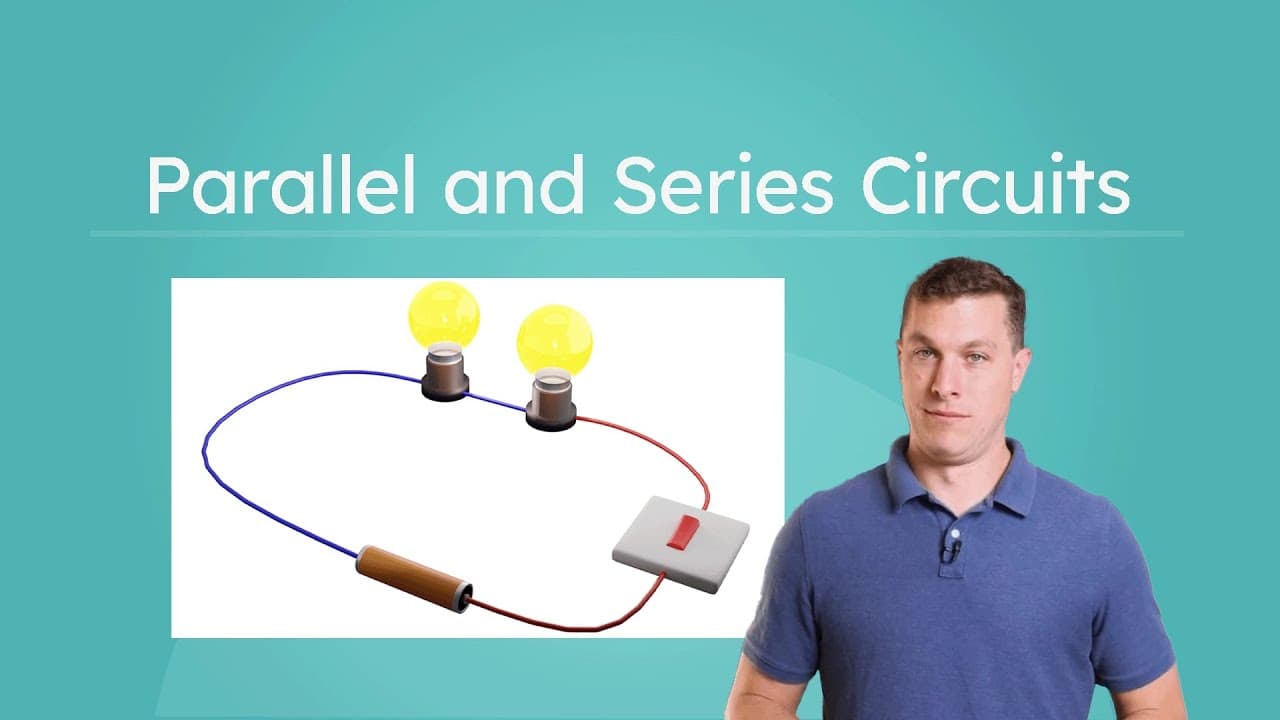
How Series and Parallel Circuits Work

How Series and Parallel Circuits Work

This educational video provides a clear and practical comparison between series and parallel electrical circuits. Using the relatable analogy of holiday lights, the narrator explains the fundamental structural differences between the two circuit types, specifically focusing on how current flows through single versus multiple pathways. The video uses clear circuit diagrams and animations to demonstrate what happens when a component fails in each configuration, highlighting the reliability advantage of parallel circuits. The content dives into the mathematical application of circuit theory, providing step-by-step instructions on how to calculate total resistance for both circuit types. It introduces the formulas for summing resistance in series ($R_s = R_1 + R_2...$) versus the reciprocal formula for parallel circuits ($R_p = 1 / (1/R_1 + 1/R_2...)$). The video walks viewers through specific practice problems using 60-ohm and 25-ohm resistors to demonstrate how adding resistors increases total resistance in series but decreases it in parallel. This video is an excellent resource for physics and physical science classrooms introducing electricity. It directly addresses common student difficulties, such as the counter-intuitive concept that adding resistors in parallel reduces total resistance. Teachers can use this video to transition from conceptual understanding of electron flow to the quantitative skills required to solve resistance problems, supported by the video's guided practice questions and summary tables.

Miacademy & MiaPrep Learning ChannelMiacademy & MiaPrep Learning Channel

9mins 49s

How to Build Simple Electrical Circuits

How to Build Simple Electrical Circuits

This educational video provides a clear, step-by-step demonstration of how to build simple electrical circuits. Hosted in the "Lighthouse Lab," the presenter guides viewers through the process of connecting basic components—batteries, wires, a light bulb, and a switch—to create a functional circuit. The video visualizes the concept of a complete path for electrical current, moving from a basic loop to more complex arrangements involving control mechanisms and increased power sources.

Next Generation ScienceNext Generation Science

4mins 48s

How Simple Circuits Work and Why Bulbs Dim in Series

How Simple Circuits Work and Why Bulbs Dim in Series

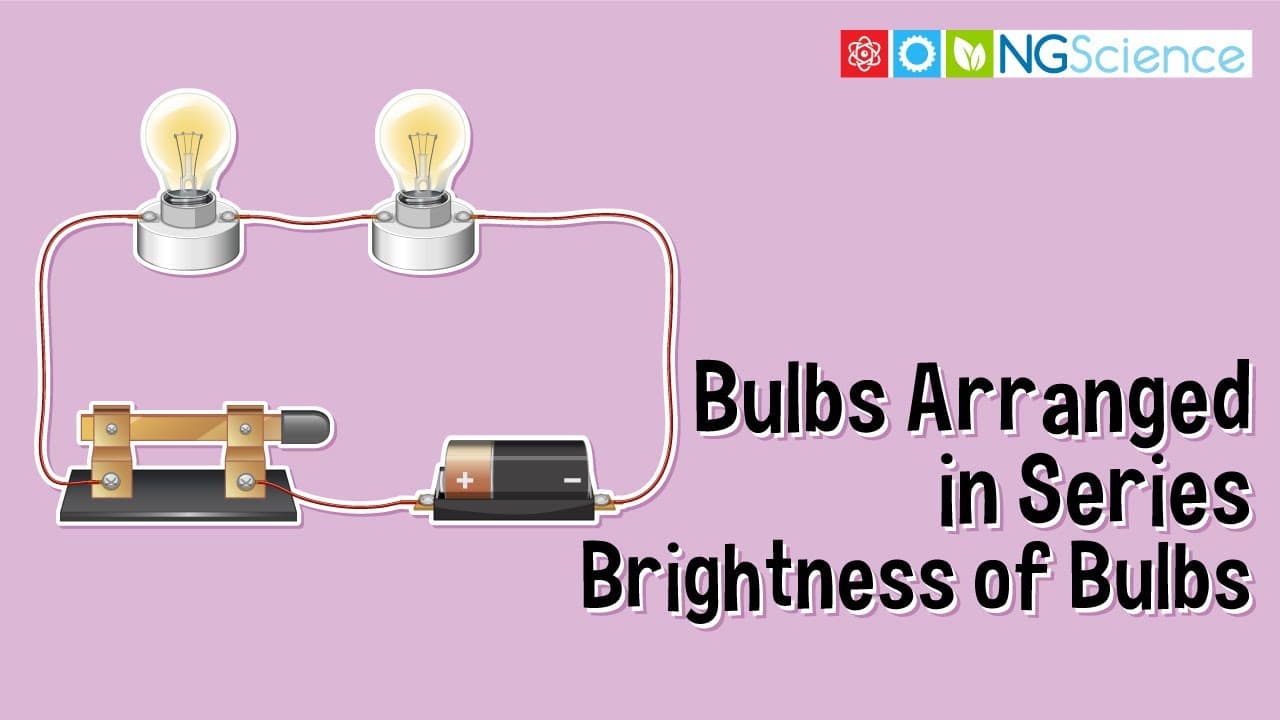
This educational animation provides a clear, step-by-step introduction to electrical circuits, specifically focusing on components and series connections. It begins by identifying the fundamental parts of a simple circuit—batteries, wires, bulbs, and switches—and clearly defines the function of each within the system. The video uses clean, distinct illustrations to help students visualize how these components connect to form a loop that allows electricity to flow. The narrative advances from basic identification to demonstrating how a circuit functions when a switch is closed. It then introduces a key variable: adding a second bulb in a series arrangement. Through side-by-side comparison, the video visually demonstrates a critical concept in physics—voltage sharing. It explains that adding more load (bulbs) to a series circuit without increasing the power source causes the energy to be split, resulting in dimmer lights. For educators, this video serves as an excellent primer for electricity units. It simplifies abstract concepts like voltage and current flow into observable phenomena. The built-in prediction question about bulb brightness makes it an interactive tool for inquiry-based learning, allowing teachers to pause and assess student reasoning before the correct scientific explanation is revealed.

Next Generation ScienceNext Generation Science

1min 31s

How Solar Panels Power Our Homes: From Sunlight to Electricity

How Solar Panels Power Our Homes: From Sunlight to Electricity

This educational video provides a clear and concise explanation of how solar energy is harvested, converted, and utilized in modern homes and businesses. It breaks down the technical process of photovoltaic generation, explaining the critical difference between Direct Current (DC) and Alternating Current (AC), and the role of inverters in making solar power compatible with the electrical grid. The video also introduces the concept of battery storage to manage energy demand during non-sunlight hours. Beyond the technical mechanics, the video explores the broader implications of adopting solar technology. It balances the discussion by highlighting key advantages—such as environmental sustainability, cost savings, and technological advancements—against significant challenges like weather dependence, high initial installation costs, and the environmental concerns surrounding panel disposal. For educators, this resource serves as an excellent primer for units on renewable energy, electricity, or environmental science. It simplifies complex electrical concepts like AC/DC conversion into digestible visuals, making it accessible for upper elementary and middle school students. The balanced presentation of pros and cons also makes it a valuable tool for critical thinking exercises regarding energy policy and sustainability.
Next Generation ScienceNext Generation Science

3mins 30s

How to Identify Electrical Conductors and Insulators

How to Identify Electrical Conductors and Insulators

This educational video provides a clear and practical introduction to electrical conductors and insulators. It begins by defining the core property that distinguishes these two categories: the ability to allow electricity to flow through a material. Through a series of clear demonstrations using a simple electrical circuit, the video tests various common household items—including aluminum foil, a rubber band, a metal screw, a quarter, and a plastic block—to determine their conductivity.

Next Generation ScienceNext Generation Science

2mins 23s

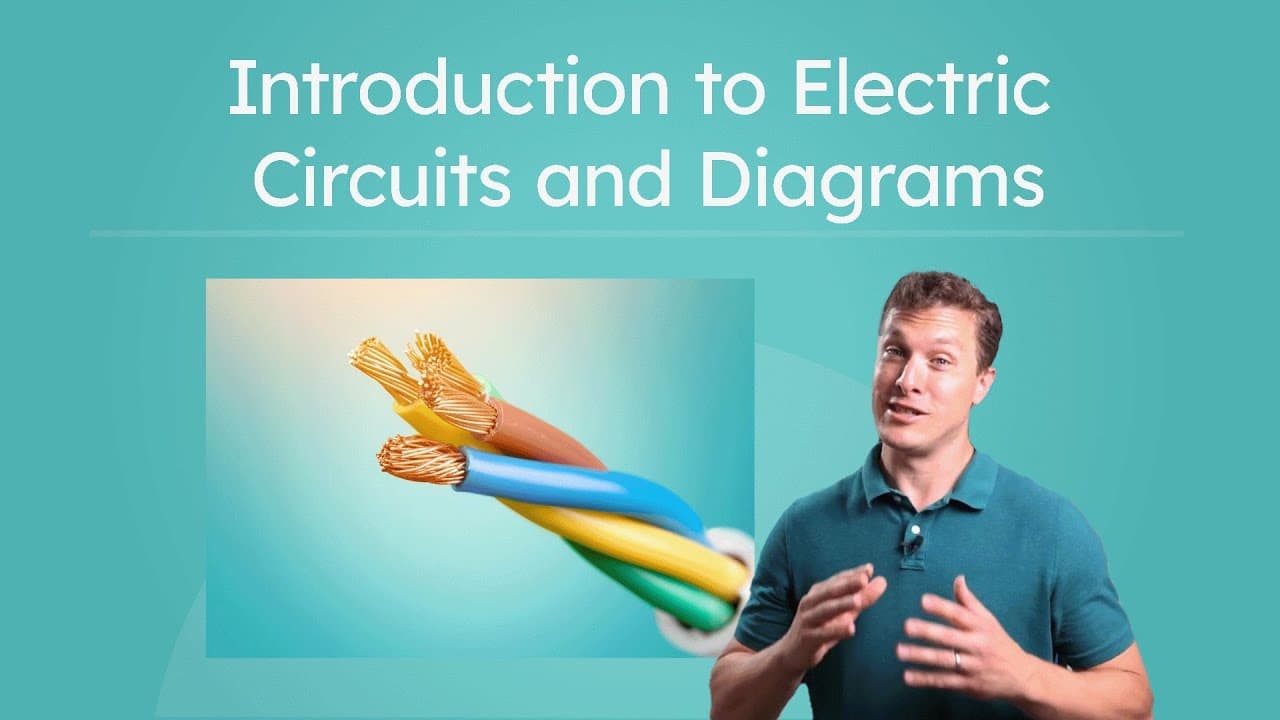
How Electric Circuits Work and How to Draw Them

How Electric Circuits Work and How to Draw Them

This video serves as an engaging introduction to the fundamental concepts of electricity, focusing on how electrons move through circuits and how scientists represent these systems using circuit diagrams. It begins by using an analogy of maps to introduce the concept of schematics, then dives into the microscopic world to visualize electrons roaming freely in metals versus being directed by a battery's voltage. The video explains the function of key components including batteries, light bulbs, switches, and resistors, providing real-world examples like toasters and space heaters to make the abstract concepts concrete. The content is split into two main sections: conceptual understanding and practical application. After establishing how circuits work physically, the narrator transitions to symbolic representation, teaching viewers how to draw standard symbols for voltage sources, lamps, switches, and resistors. The video includes guided practice sessions where the narrator demonstrates exactly how to draw a complex circuit diagram step-by-step, followed by an opportunity for students to practice on their own. This resource is highly valuable for middle and high school physical science or physics classrooms. It bridges the gap between the invisible movement of electrons and the abstract diagrams used in engineering. Teachers can use this video to introduce a unit on electricity, using the clear visual definitions to build vocabulary before moving to hands-on lab activities. The specific instructions on drawing diagrams (like counting the peaks on a resistor symbol) provide actionable skills that students can immediately apply.

Miacademy & MiaPrep Learning ChannelMiacademy & MiaPrep Learning Channel

9mins 48s

Materials

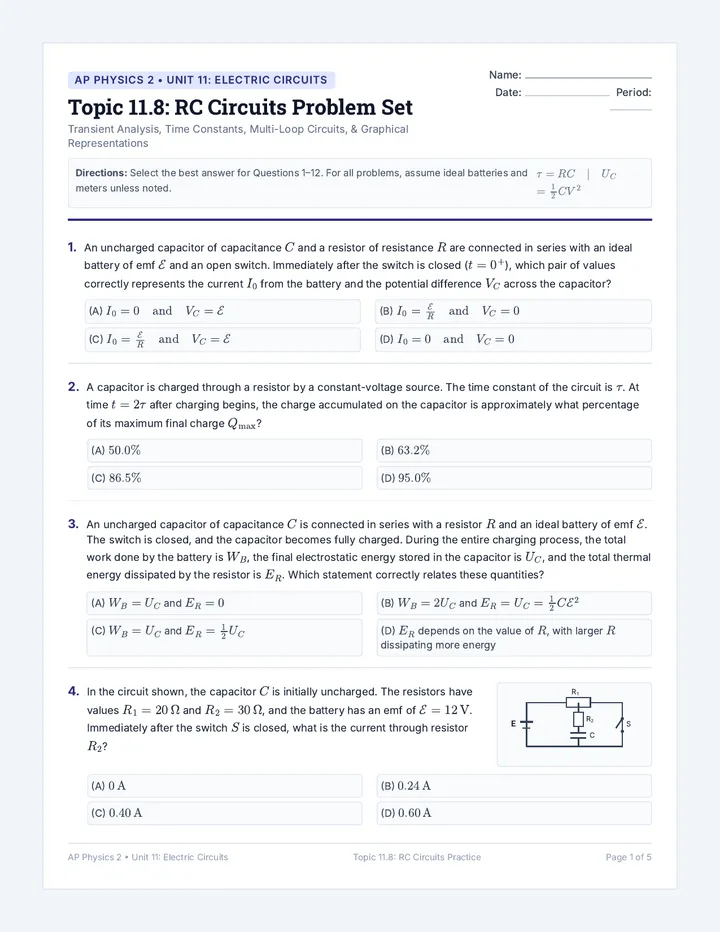
RC Circuits Problem Set

RC Circuits Problem Set

An AP Physics 2 practice problem set on Topic 11.8 (RC Circuits) featuring 12 multiple-choice questions and 2 authentic AP-style free-response questions with transient analysis, graphs, and experimental design.

LW

Lucas Wickham

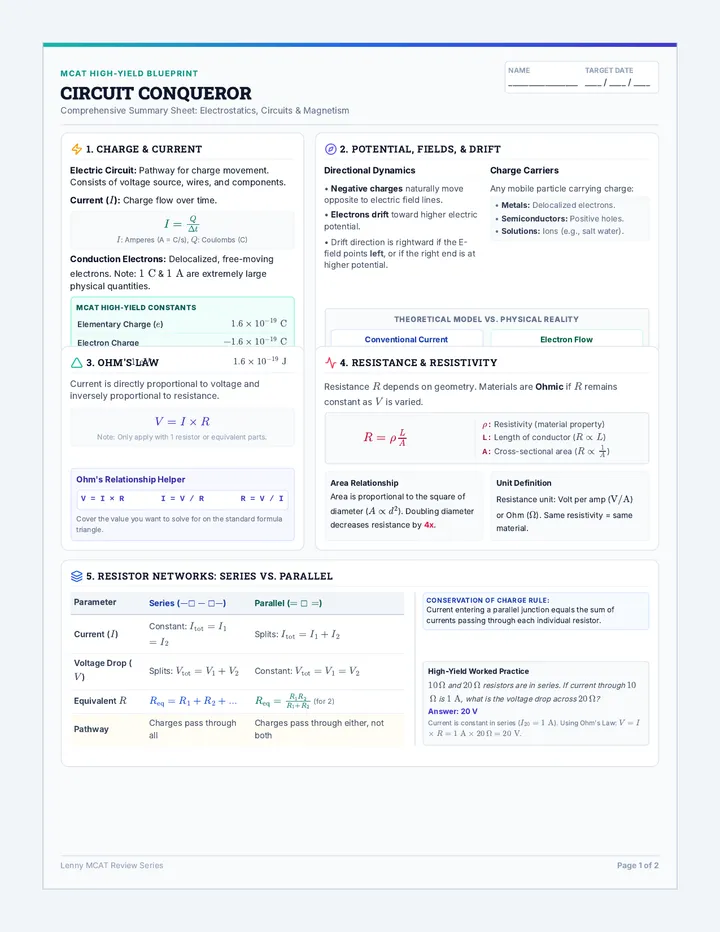
Circuit Conqueror Summary Sheet

Circuit Conqueror Summary Sheet

A high-yield, comprehensive MCAT physics summary sheet covering electric circuits, electrostatics, capacitance, and basic magnetism. Designed specifically for medical students with clean visual layouts, formulas, concept grids, and high-yield study traps.

M

mo

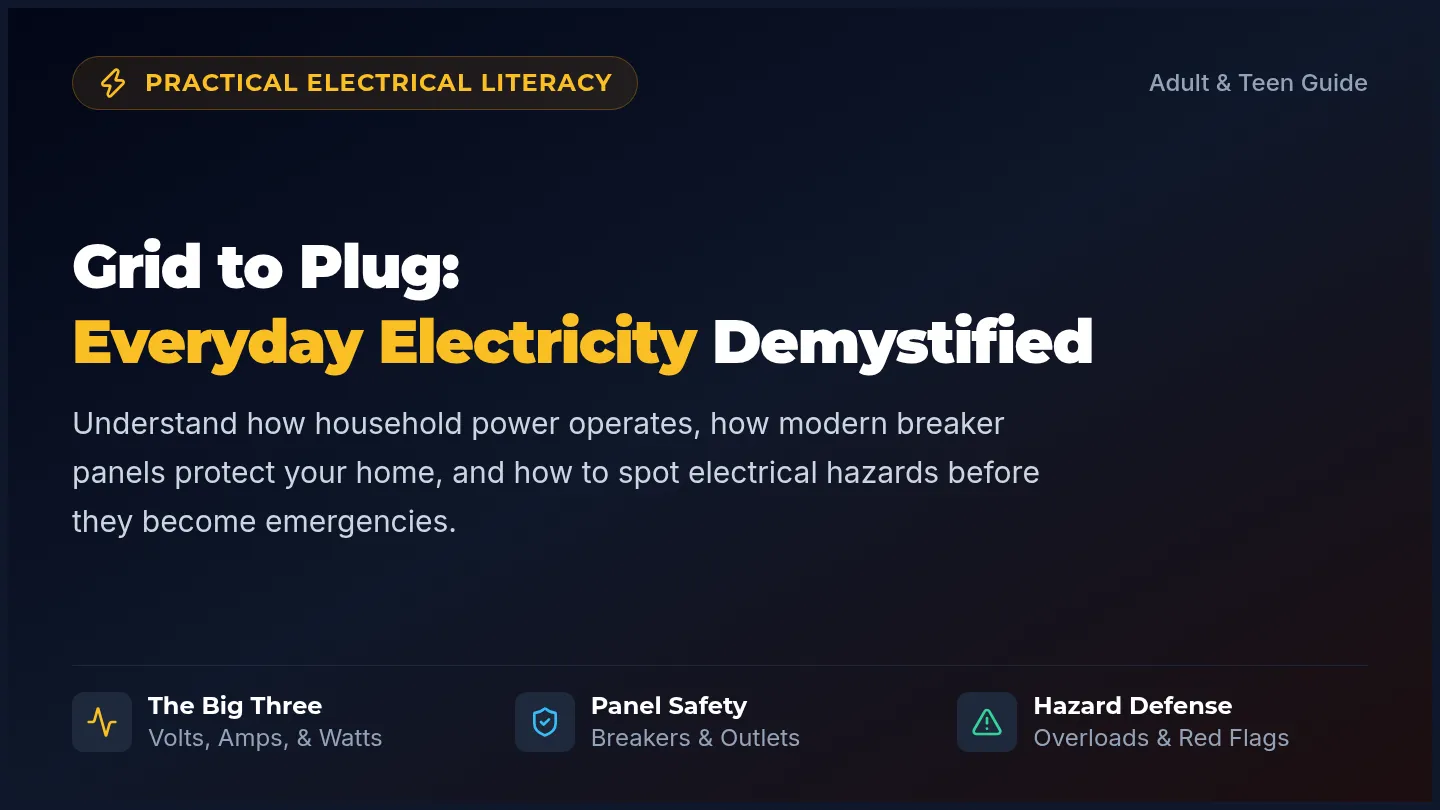
Grid to Plug Slides

Grid to Plug Slides

An engaging, practical 8-slide presentation designed for teens and adults covering home electricity fundamentals, including voltage and current, service panels, outlet anatomy, GFCI/AFCI protection, circuit overload limits, and critical safety rules.

JW

J Watson

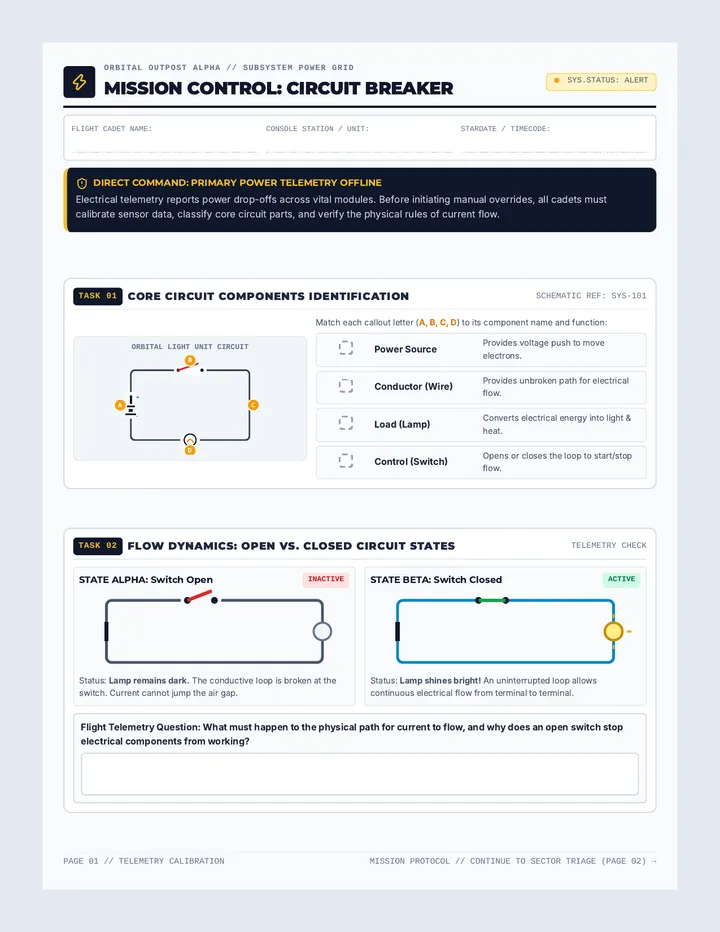
Mission Control Circuit Activity

Mission Control Circuit Activity

A two-page printable mission control circuit diagnostic activity where students identify circuit components, trace the flow of electricity, and troubleshoot system failures.

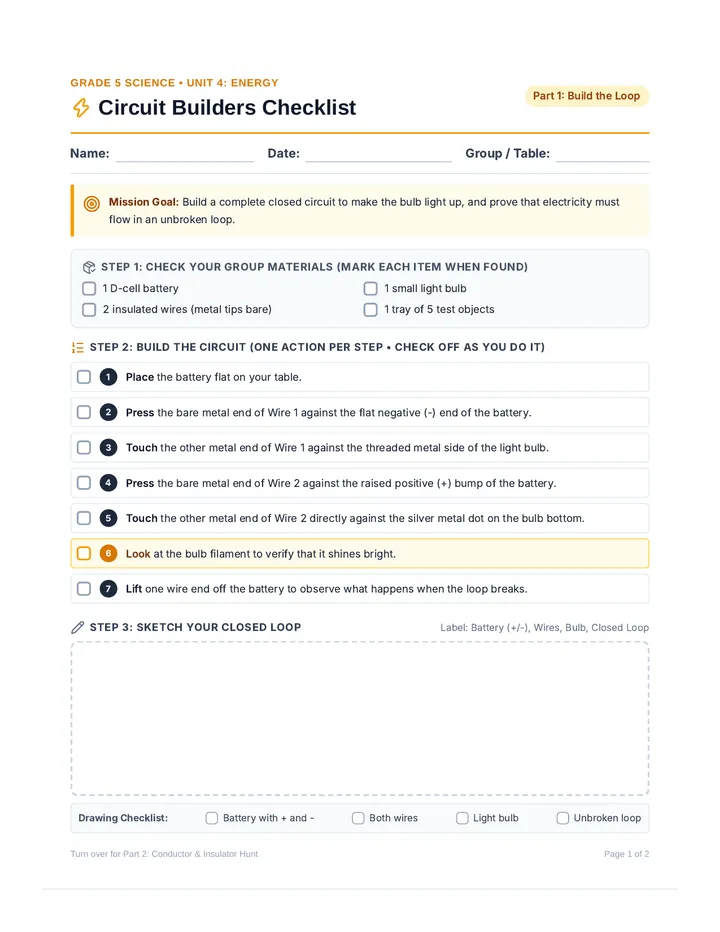
Circuit Builders Checklist Worksheet

Circuit Builders Checklist Worksheet

A structured, step-by-step activity guide and checklist for Grade 5 students to build a closed circuit, test everyday conductors and insulators, and explain complete electrical loops.

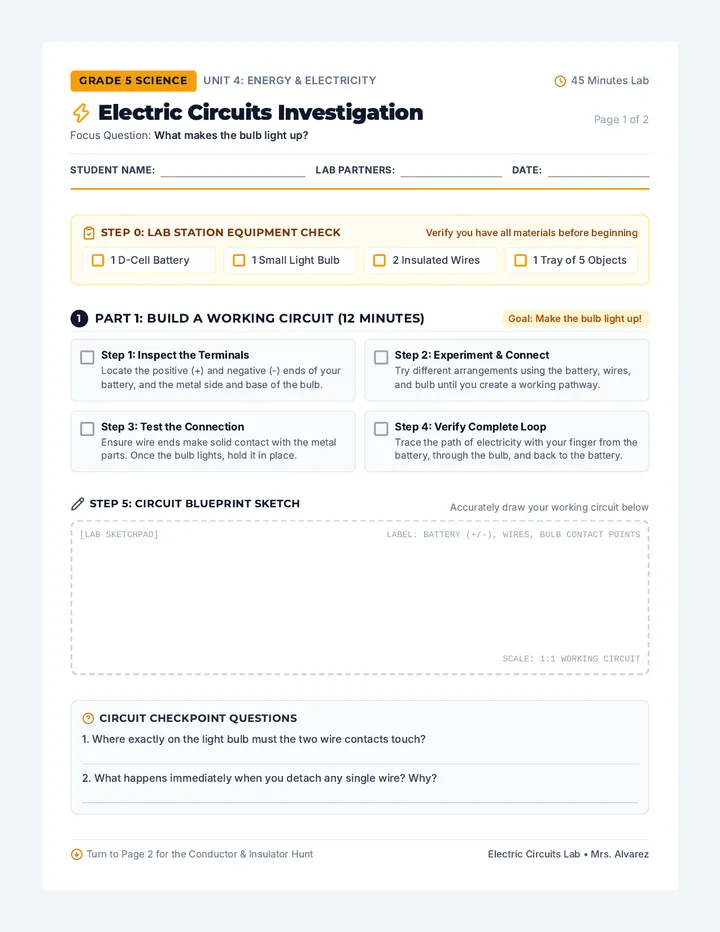
Circuit Sparks Activity Guide

Circuit Sparks Activity Guide

A printable two-page Grade 5 science activity guide and checklist that adapts the electric circuits lesson into clear numbered investigation steps, apparatus checklists, a circuit diagram sketchpad, a conductor testing table, and an exit reflection.

Sequences

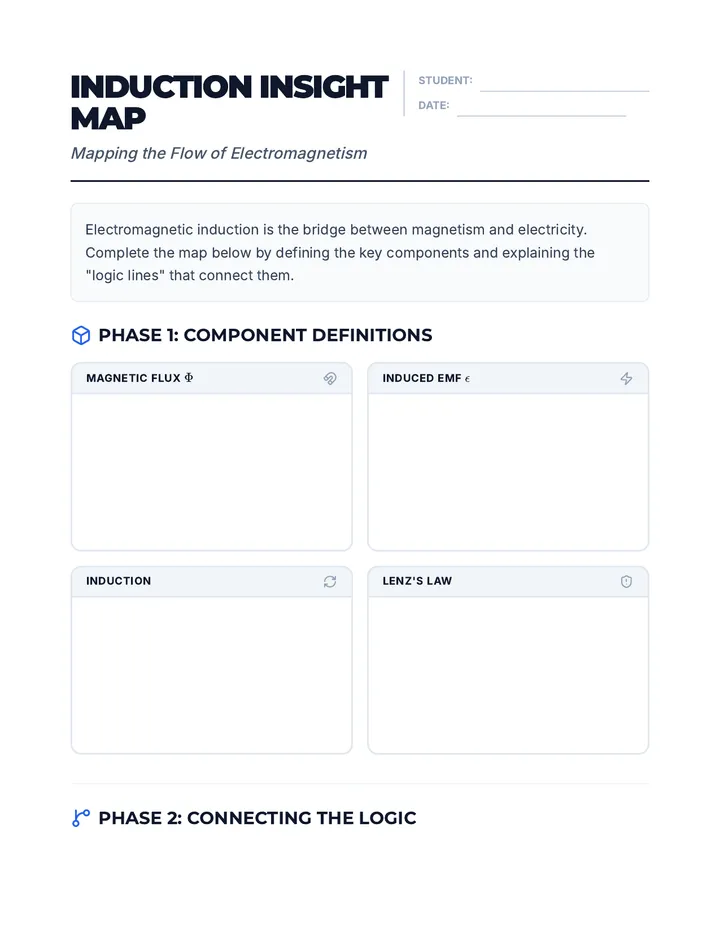
Induction Insight Map Handout

Magnetic Forces Investigation

A 5-day intensive exploration of magnetic forces and fields, focusing on atomic-level causes, field interactions, and mathematical modeling of forces on charged particles. Students progress from anchoring phenomena to complex mathematical applications and a comprehensive unit review.

OM

Olutoyin Makinde

68
Volt Vibe Slides

Electrical Fundamentals

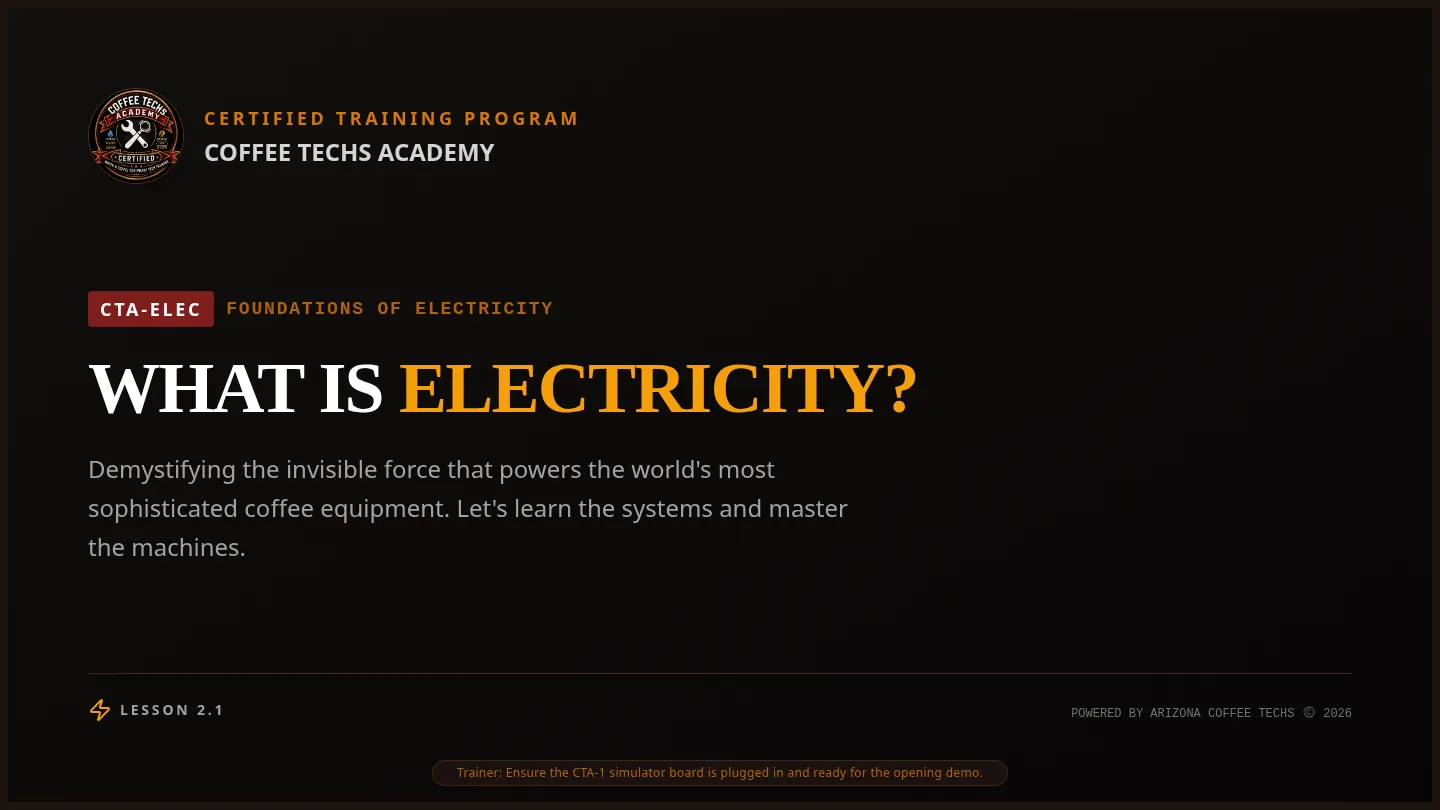
A comprehensive technical certification sequence designed to teach commercial coffee equipment technicians how to demystify electricity, safely troubleshoot components, and master electrical systems.

KO

Kyle Ousley

37
Acid Base Action Plan

Acid Base Investigation

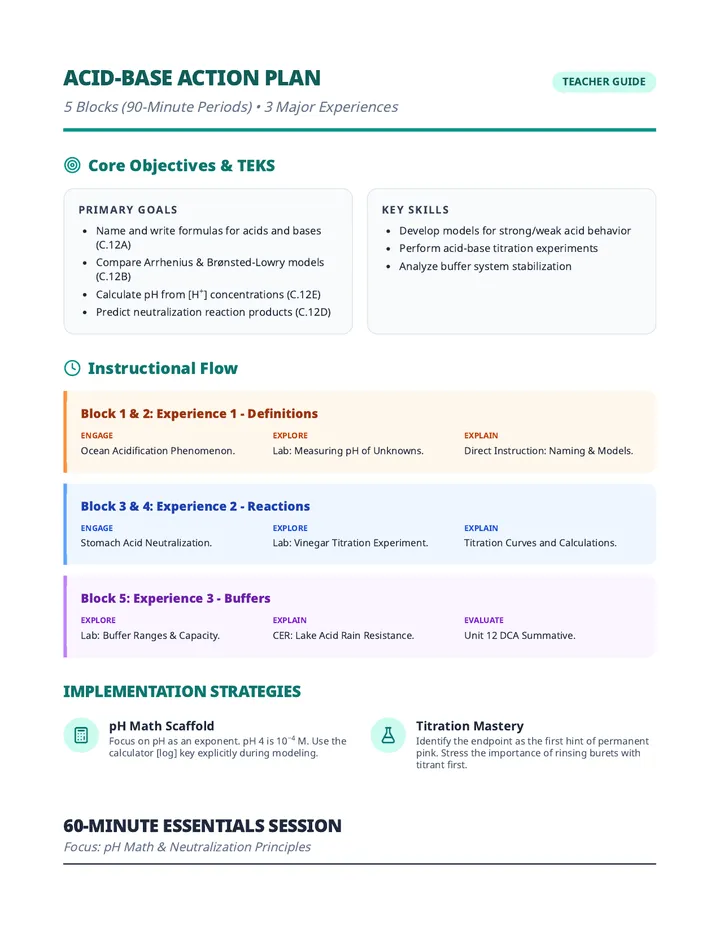
A comprehensive unit exploring the properties, reactions, and mathematical relationships of acids and bases, featuring pH calculations, titrations, and buffer systems.

OM

Olutoyin Makinde

34
Kirchhoff Review Worksheet

Charged Connections

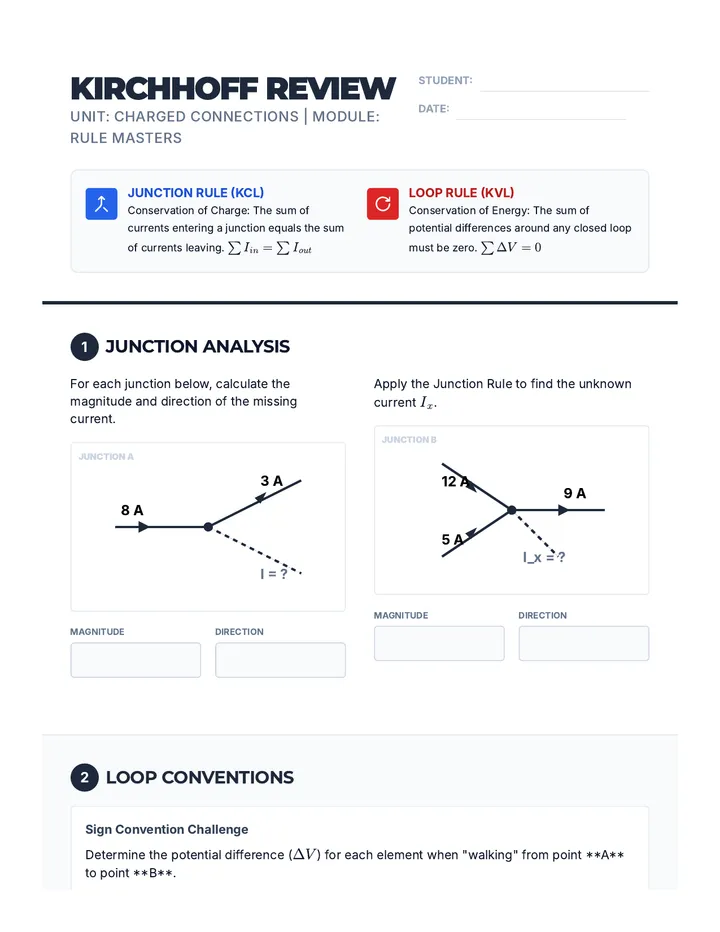
A modular physics unit focused on the principles of electricity, circuit design, and the mathematical laws governing energy flow in electrical systems.

OM

Olutoyin Makinde

42
Power Parade Slides

The Grid Powering the Future

A comprehensive 2-week unit on electricity and circuits, covering electric potential, power generation, Ohm's law, and circuit analysis. Students move from the fundamental physics of voltage to the design of complex grid systems.

OM

Olutoyin Makinde

30
Loop Launch Lesson Plan

Current Connections

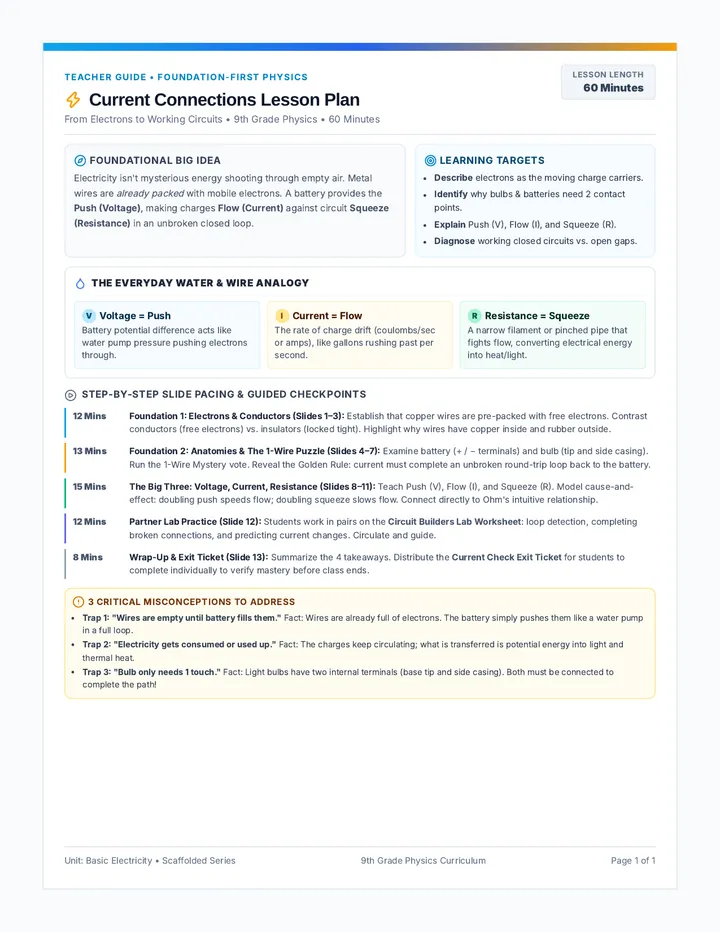
A 2-day foundational physics sequence on electric circuits, covering atomic electron movement, hardware anatomy, closed loops, and Ohm's law with self-guided sub work.

LP

LeShonda Price

8

Lessons

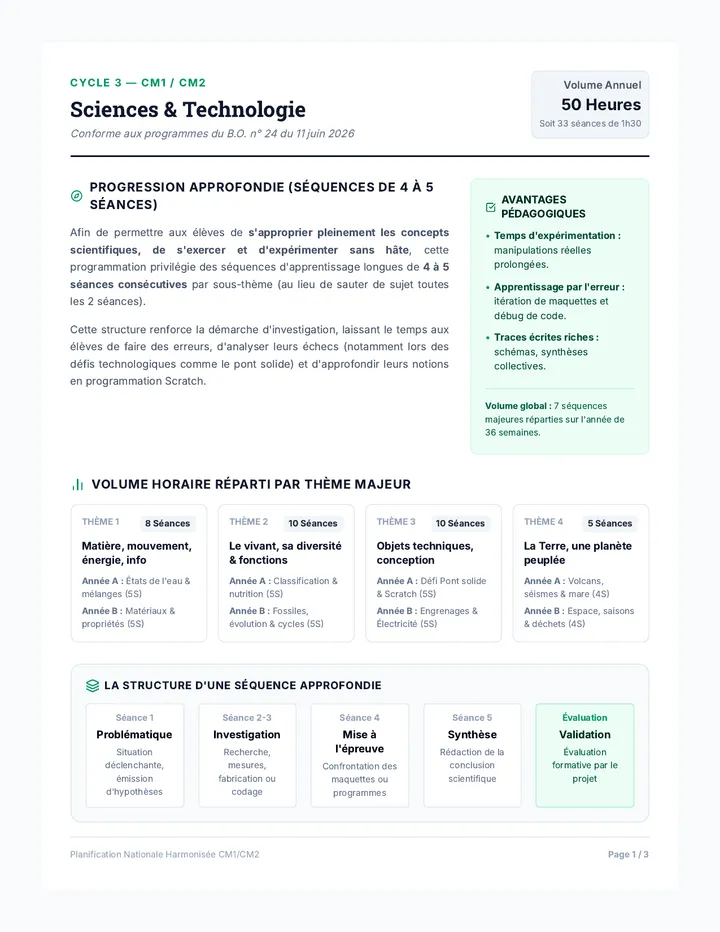
Tableau Progression Annuelle Sciences CM

Progression Sciences CM1 CM2

Outil de planification annuelle et de progression pour l'enseignement des sciences et technologies en classe de CM1/CM2, conforme au BO de juin 2026. Ce guide propose une répartition claire des volumes horaires et des thèmes entre l'année A et l'année B pour éviter les redondances dans les classes à double niveau.

LP

LAURENT PERCHE

40
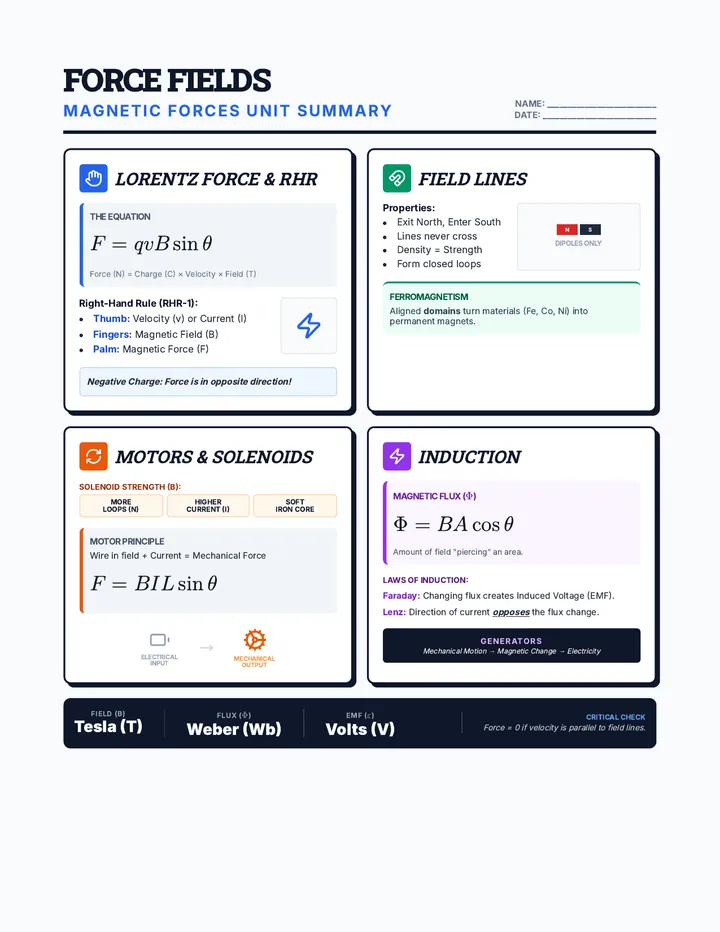
Force Fields Infographic

Magnetic Mastery

A comprehensive lesson on magnetic forces, including a high-impact infographic summary and a practice worksheet covering Lorentz force, motors, and electromagnetic induction.

OM

Olutoyin Makinde

14
Planning Brevet Calendrier

Objectif Brevet

Un programme de révision intensif et structuré sur 3 semaines pour préparer sereinement les épreuves de SVT, Physique-Chimie et Histoire-Géographie du Diplôme National du Brevet.

MW

Myriam Wb

6
Types of Graph Summary Page 1

Decoding Lab Curves

A 2-day high school physics lesson bundle focused on identifying, sketching, and interpreting the 5 primary graphical relationships found in physics laboratories (constant, linear, inverse, square, and square root) using real physical laws like Ohm's Law, Newton's Second Law, and Kinetic Energy.

CM

Chuguna Murugesan

8
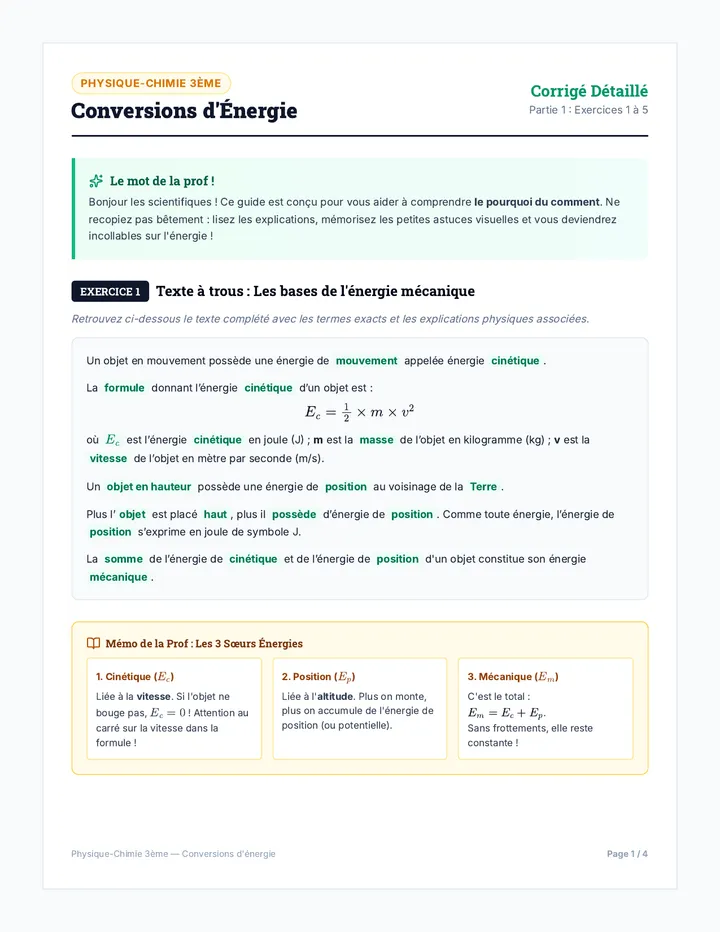
Guide de Correction Partie 1

Conversions d Energie Decodées

Corrigé ultra-pédagogique et complet des 15 exercices de physique-chimie de 3ème sur les conversions d'énergie. Conçu pour faciliter la compréhension profonde, avec des fiches mémo et des astuces visuelles pour mémoriser les formules clés.

MW

Myriam Wb

5
AC DC Lesson Plan

AC DC Whats the Diff

This 30-minute lesson for 10th-grade students clarifies the fundamental electrical differences between Alternating Current (AC) and Direct Current (DC), covering waveforms, electron flow, and real-world applications.

D

dquintiliani

7