Lenny.com
Explore
Create
ActivitiesNewMathEnglish Language ArtsScience & EngineeringSocial StudiesGlobal LanguagesHealth & Physical EducationSpecial EducationCounseling & Life SkillsArts & CreativityESL
Lenny.com
Lenny.com
Explore
Create
ActivitiesNewMathEnglish Language ArtsScience & EngineeringSocial StudiesGlobal LanguagesHealth & Physical EducationSpecial EducationCounseling & Life SkillsArts & CreativityESL
Lenny.com

Electricity and Magnetism

Electric charges, fields, and circuit analysis using Ohm's and Kirchhoff's laws. Examines the relationship between current and magnetism, including electromagnetic induction and motor principles.

Lenny.com

Solutions

Lenny for EducatorsLenny for SchoolsLenny for Districts

Product

ExploreSign inCreateSupportAbout

Resources

Getting startedMTSS Acceleration Program

© 2026 Lenny Learning Inc.

TermsPrivacyAccessibility
LinkedInInstagramX
Lenny
Science & EngineeringLife ScienceLiving ThingsAnimalsPlantsBody SystemsTraitsAdaptationsCellsEcosystemsHeredityGenes to TraitsCell DivisionPhysicsComparing MaterialsShapes and PropertiesMagnetsMagnetismLightSoundLight and SoundMatterStates of MatterChanges of StateMixturesPhysical and Chemical ChangeHeating and CoolingHeat and Thermal EnergyEnergyForce and MotionElectrical CircuitsAtoms and MoleculesPeriodic TableMotion in One DimensionMotion in Two DimensionsScalars and VectorsForces and Laws of MotionCircular Motion and GravityMomentum and ImpulseWork, Energy, and PowerWavesElectromagnetic WavesGeometric OpticsElectricity and MagnetismSimple Harmonic MotionThermodynamicsNuclear PhysicsEarth Science & AstronomyWeatherWater CycleRocks and MineralsFossilsEarth's FeaturesEarth's ResourcesEarth's StructureWeather and ClimateEarth EventsFossils and Geologic TimePlate TectonicsHuman ImpactsAstronomyChemistryUnits and MeasurementAtomic StructurePeriodic TrendsChemical BondingNomenclatureMolecular StructureIntermolecular ForcesThe MoleStoichiometryProperties of GasesSolutionsChemical ReactionsBalancing EquationsEnergy ChangesRates of ReactionsEquilibriumAcids and BasesQuantum ModelBiologyClassificationCell StructureThe Chemistry of LifeBiomoleculesCellular TransportCell EnergyCell Growth and DivisionDNAProtein SynthesisMeiosis and Sexual ReproductionPatterns of InheritanceMulticellular OrganismsEvolutionEcologyBiodiversityComputer ScienceAlgorithms and Computational ThinkingProgramming LanguagesComputing SystemsNetworks and InternetData AnalysisCybersecurityAI and Machine LearningSoftware Design and DevelopmentBlockchainEngineering & AIDesigning ExperimentsEngineering PracticesDesign ThinkingEngineering Design ProcessMechanical EngineeringElectrical EngineeringMaterials and StructuresCAD and 3D DesignRoboticsArtificial Intelligence BasicsVibe CodingMachine LearningAI Ethics and SocietySystems ThinkingEntrepreneurship & InnovationEntrepreneurial MindsetBusiness Idea DevelopmentBusiness Plan BasicsMarketing & Customer DiscoveryFinancial Management for Startups

Videos

How Series and Parallel Circuits Work

How Series and Parallel Circuits Work

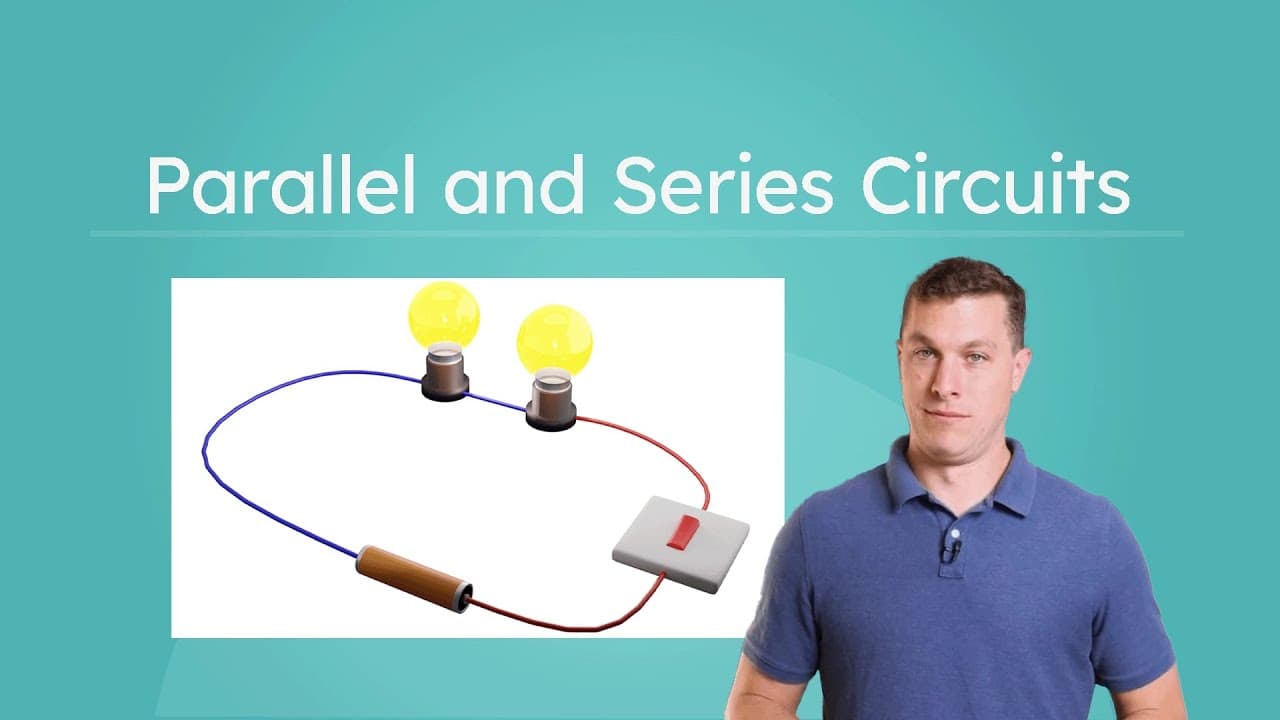
This educational video provides a clear and practical comparison between series and parallel electrical circuits. Using the relatable analogy of holiday lights, the narrator explains the fundamental structural differences between the two circuit types, specifically focusing on how current flows through single versus multiple pathways. The video uses clear circuit diagrams and animations to demonstrate what happens when a component fails in each configuration, highlighting the reliability advantage of parallel circuits. The content dives into the mathematical application of circuit theory, providing step-by-step instructions on how to calculate total resistance for both circuit types. It introduces the formulas for summing resistance in series ($R_s = R_1 + R_2...$) versus the reciprocal formula for parallel circuits ($R_p = 1 / (1/R_1 + 1/R_2...)$). The video walks viewers through specific practice problems using 60-ohm and 25-ohm resistors to demonstrate how adding resistors increases total resistance in series but decreases it in parallel. This video is an excellent resource for physics and physical science classrooms introducing electricity. It directly addresses common student difficulties, such as the counter-intuitive concept that adding resistors in parallel reduces total resistance. Teachers can use this video to transition from conceptual understanding of electron flow to the quantitative skills required to solve resistance problems, supported by the video's guided practice questions and summary tables.

Miacademy & MiaPrep Learning ChannelMiacademy & MiaPrep Learning Channel

9mins 49s

How to Identify Electrical Conductors and Insulators

How to Identify Electrical Conductors and Insulators

This educational video provides a clear and practical introduction to electrical conductors and insulators. It begins by defining the core property that distinguishes these two categories: the ability to allow electricity to flow through a material. Through a series of clear demonstrations using a simple electrical circuit, the video tests various common household items—including aluminum foil, a rubber band, a metal screw, a quarter, and a plastic block—to determine their conductivity.

Next Generation ScienceNext Generation Science

2mins 23s

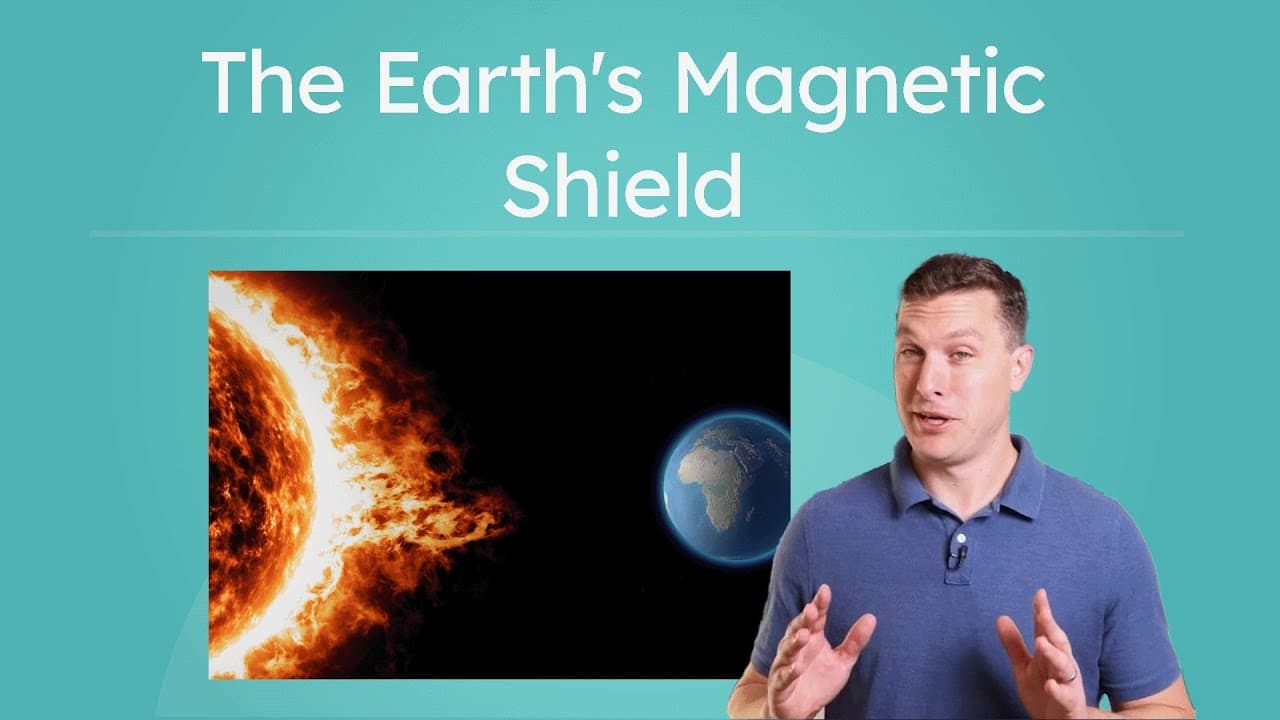
Earth's Magnetic Shield and the Right-Hand Rule

Earth's Magnetic Shield and the Right-Hand Rule

This educational video explores the critical role of Earth's magnetic field in protecting our planet from harmful solar radiation and introduces the physics concept of the Right-Hand Rule. The lesson begins by visualizing the sun as a massive nuclear reactor and explains how Earth's magnetic shield deflects solar wind, creating phenomena like the Aurora Borealis while preventing the radiation damage seen on barren worlds like the Moon and Mars. The second half of the video transitions into a practical physics tutorial on electromagnetism. It breaks down how magnetic fields exert force on moving charges and teaches students how to use the Right-Hand Rule to determine the direction of that force. The presenter uses clear, step-by-step examples with on-screen graphics to demonstrate how to position fingers to represent charge, field, and force vectors. For educators, this video serves as a bridge between Earth science and physics concepts. It provides a real-world application for abstract electromagnetic principles, making it an excellent resource for high school physics units on magnetism or earth science units on planetary habitability. The visual demonstrations of 3D spatial reasoning (using the hand) are particularly helpful for students who struggle with vector directions.

Miacademy & MiaPrep Learning ChannelMiacademy & MiaPrep Learning Channel

7mins 57s

How Wind Turbines Generate Clean Energy

How Wind Turbines Generate Clean Energy

This educational video provides a clear and concise overview of wind energy, explaining how wind turbines function to generate electricity. It begins by establishing the importance of electricity in modern life before diving into the mechanics of energy conversion—specifically how kinetic energy from wind is transformed into electrical power through generators. The video utilizes clear diagrams to illustrate the internal components of a wind turbine, making complex engineering concepts accessible to students. Beyond just the mechanics, the video explores the broader implications of wind energy. It introduces the concept of "wind farms" and how they can power entire cities. Crucially, it discusses the environmental benefits of wind power as a clean, renewable resource that doesn't produce emissions. This sets the stage for discussions about sustainable living and alternative energy sources. The video concludes by presenting a balanced view, addressing the disadvantages of wind turbines, including their potential impact on wildlife like birds and bats, noise pollution, and high maintenance costs. This balanced perspective is excellent for critical thinking exercises, allowing students to weigh the pros and cons of renewable energy technologies and understand that engineering solutions often involve trade-offs.

Next Generation ScienceNext Generation Science

1min 45s

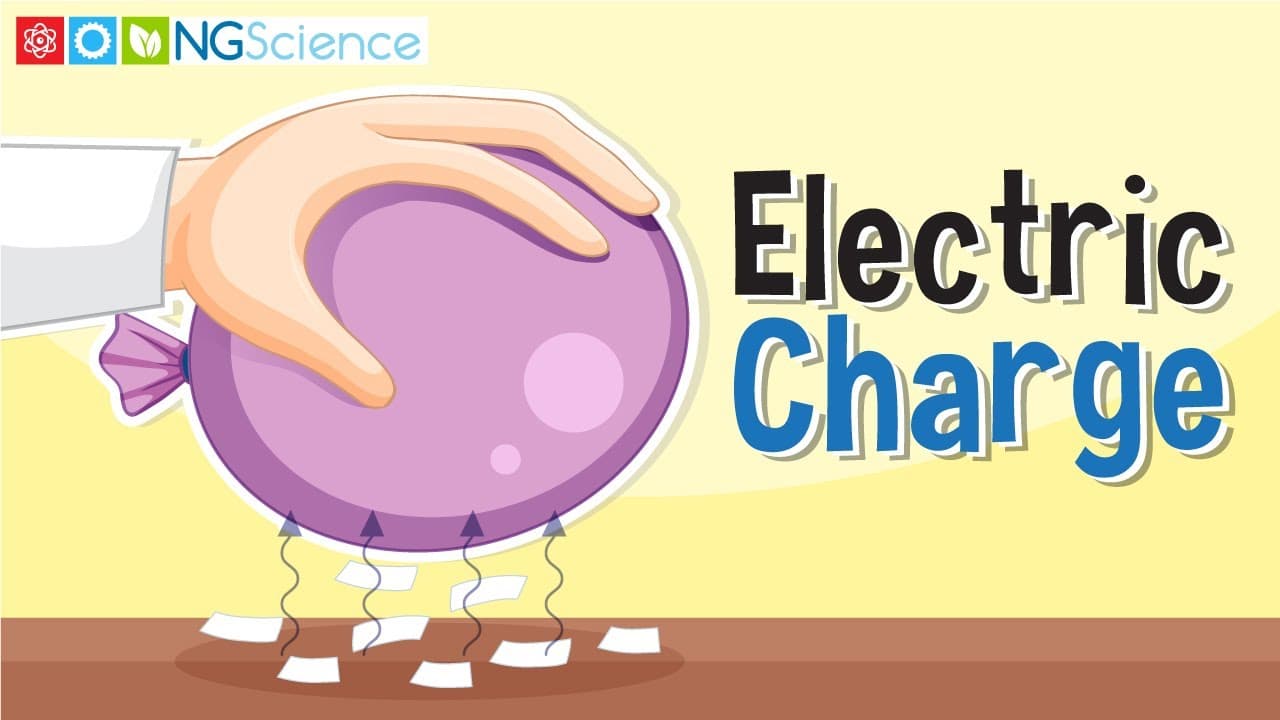
Demonstrating Static Electricity with a Balloon

Demonstrating Static Electricity with a Balloon

This concise educational video provides a clear, practical demonstration of static electricity and electric charge using everyday materials. It opens by posing a central inquiry question about the interaction between charged and neutral objects, setting the stage for a scientific observation. The video then visually demonstrates the answer through an experiment where a balloon is rubbed against a cloth to create a charge imbalance, subsequently attracting small pieces of polystyrene foam. The content focuses on key physical science concepts including electric charge, friction, charge imbalance, and non-contact forces. It explicitly models the scientific method by stating a question, performing a procedure (creating friction), and observing the result (attraction). The slow-motion replay allows students to observe the exact moment the electrostatic force overcomes gravity. For educators, this video serves as an excellent 'hook' or anchor for units on electricity, matter, or forces. It transforms an abstract concept—invisible electric charges—into a tangible phenomenon. Teachers can use it to spark discussions about why the attraction occurs, introduce atomic structure (electrons transferring), or as a precursor to a hands-on lab where students replicate the experiment with different variables.
Next Generation ScienceNext Generation Science

52s

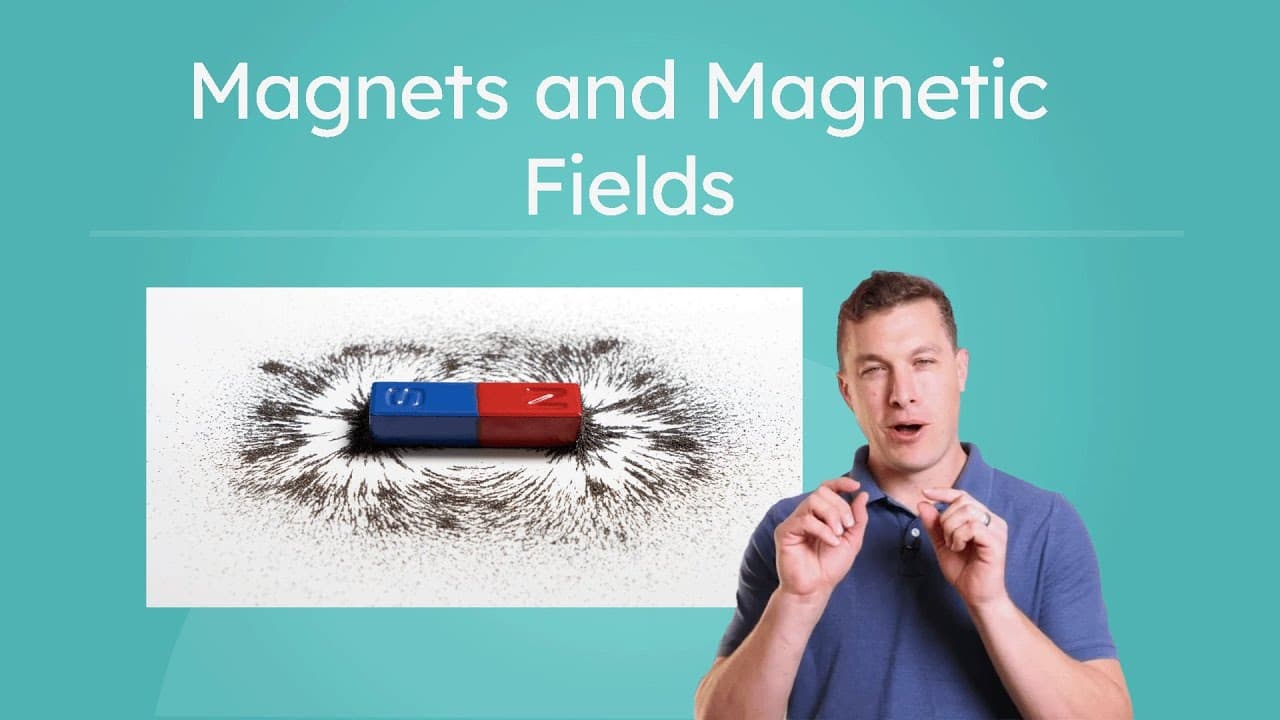
How Magnets, Fields, and Generators Work

How Magnets, Fields, and Generators Work

This engaging physics lesson explores the fundamental principles of magnetism, moving from basic interactions to complex real-world applications. It begins with a relatable personal anecdote to introduce the strength of modern magnets before diving into core concepts like magnetic poles, attraction and repulsion, and the non-existence of magnetic monopoles. The video utilizes clear animations and diagrams to visualize invisible forces, making abstract concepts accessible to students.

Miacademy & MiaPrep Learning ChannelMiacademy & MiaPrep Learning Channel

8mins 9s

Materials

Clean Currents Reading Worksheet

Clean Currents Reading Worksheet

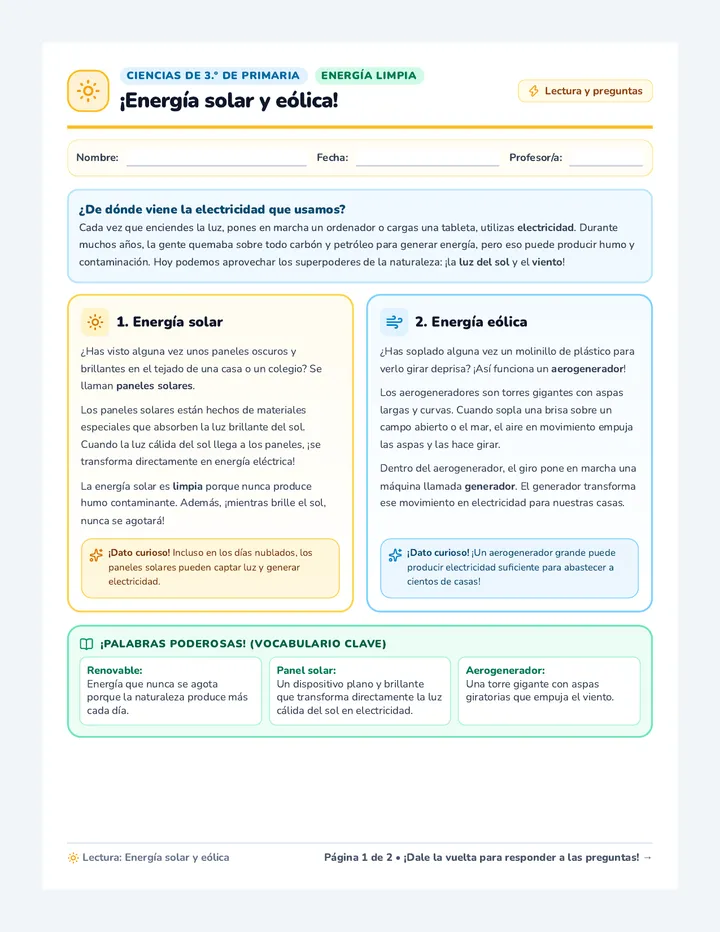
A two-page 3rd-grade reading comprehension worksheet on solar and wind energy. Features age-appropriate informational passages, friendly vocabulary callouts, multiple-choice questions, true/false checks, spacious writing lines, and a drawing prompt.

EG

Emily Gianni

Wind Power Blueprint Worksheet

Wind Power Blueprint Worksheet

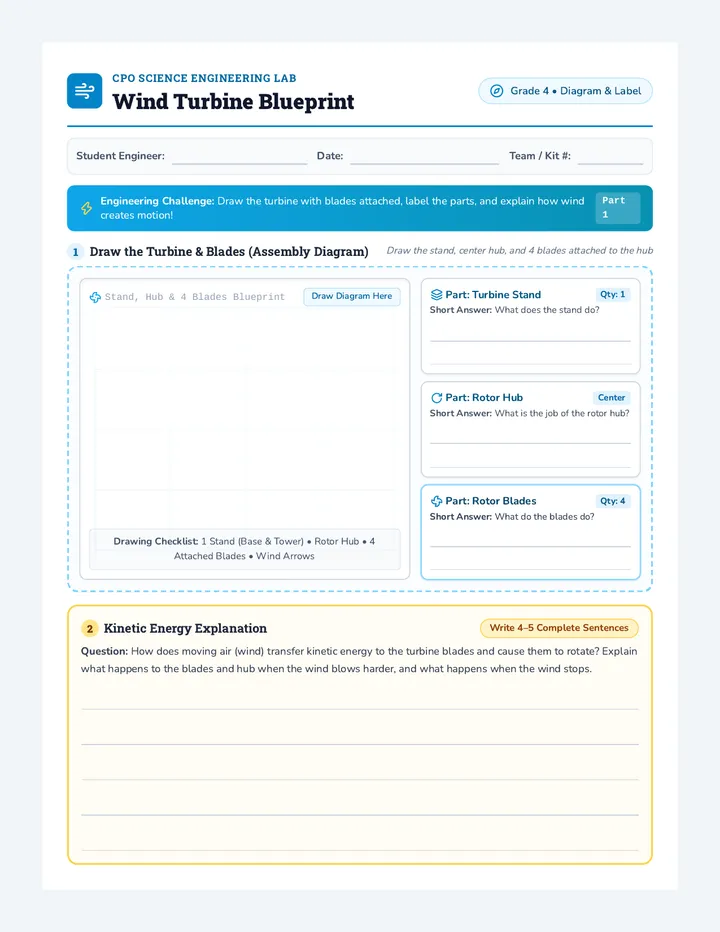
A two-page fourth-grade science diagram and labeling worksheet for the CPO Science Wind Turbine. Page 1 features drawing the turbine assembly, defining exterior component functions, and a dedicated 4-5 sentence kinetic energy explanation; Page 2 covers the electromagnetic generator parts and energy chain.

N

nmack

ACT Science Problem Cards

ACT Science Problem Cards

Complete 40-question ACT Science problem card deck formatted as 10 printable pages with 4 self-contained task cards per page. Each card includes the specific passage stimulus, table or graph data, question stem, answer choices, and a student recording area.

AI

Allison Ingraham

Gas Station Explosions Investigation Activity

Gas Station Explosions Investigation Activity

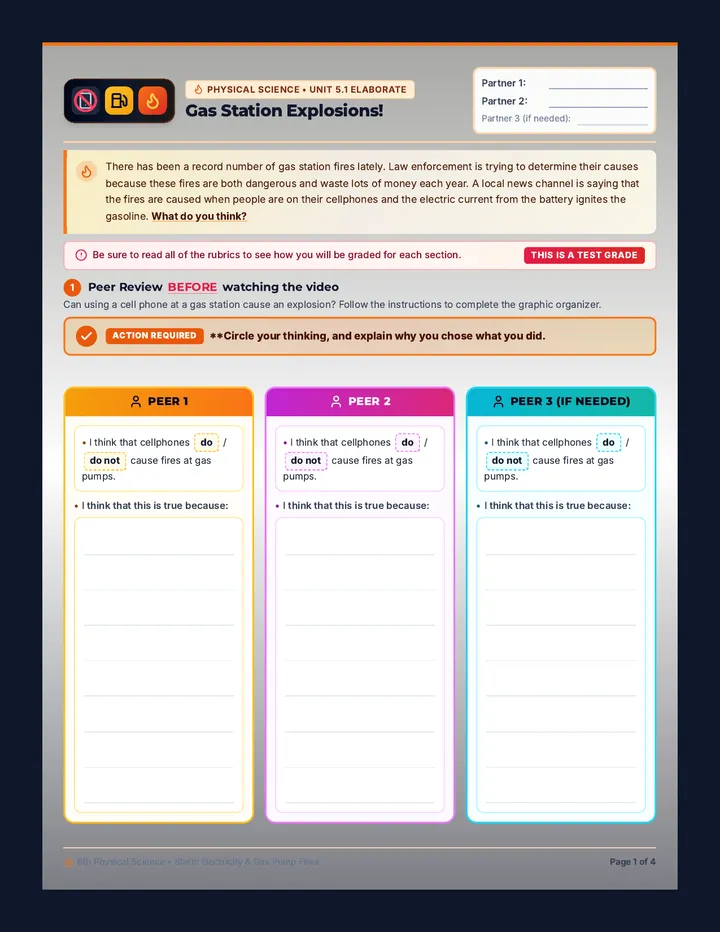
A 4-page scientific investigation with an energetic fire-themed aesthetic, prominent high-visibility instructions for the pre-video peer review, expanded design improvement workspaces, bold label requirements, and score evaluation moved to the back page.

LN

Leah Nickols

Circuit Conqueror Summary Sheet

Circuit Conqueror Summary Sheet

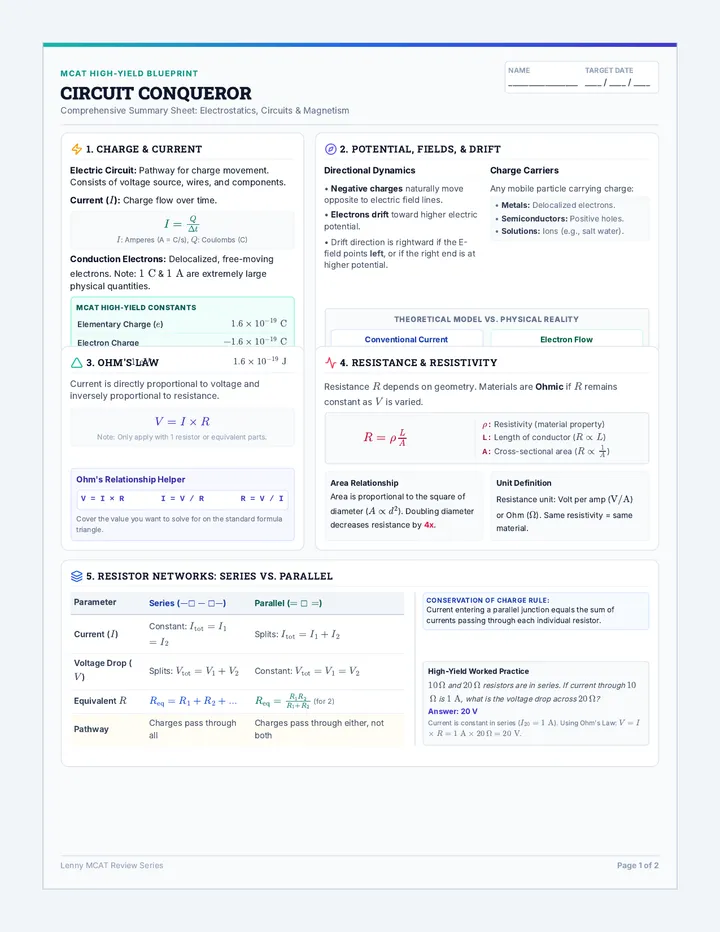
A high-yield, comprehensive MCAT physics summary sheet covering electric circuits, electrostatics, capacitance, and basic magnetism. Designed specifically for medical students with clean visual layouts, formulas, concept grids, and high-yield study traps.

M

mo

Coulomb Law Answer Key Document

Coulomb Law Answer Key Document

A comprehensive teacher answer key for the Coulomb Law Workshop, featuring step-by-step mathematical derivations, final answers highlighted for quick grading, and detailed sidebars for common student misconceptions and unit conversion reminders.

CB

Chloe Brown

Sequences

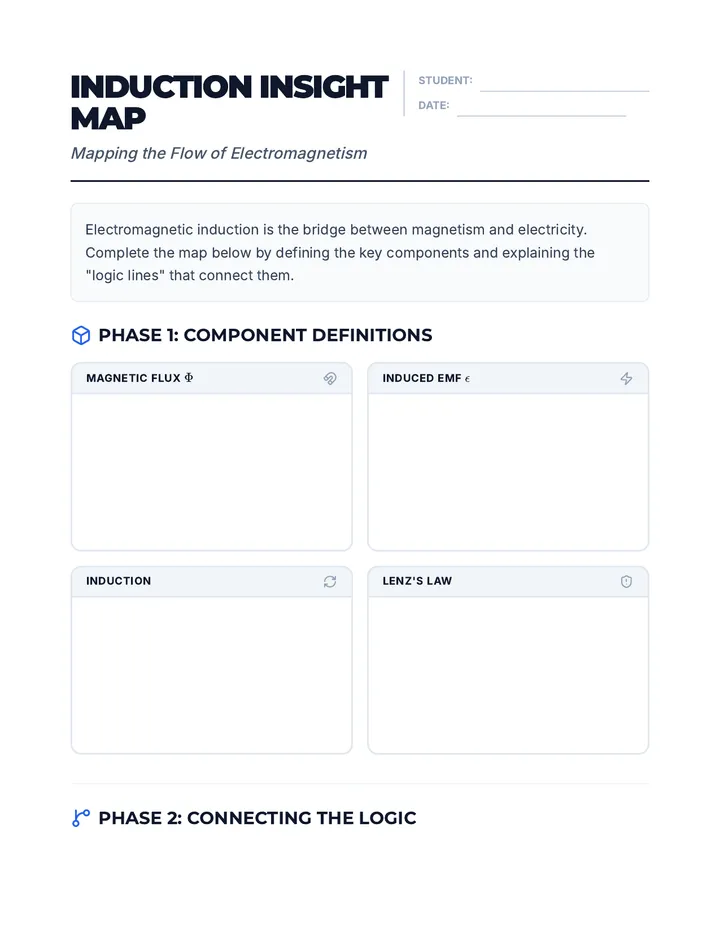
Induction Insight Map Handout

Magnetic Forces Investigation

A 5-day intensive exploration of magnetic forces and fields, focusing on atomic-level causes, field interactions, and mathematical modeling of forces on charged particles. Students progress from anchoring phenomena to complex mathematical applications and a comprehensive unit review.

OM

Olutoyin Makinde

68
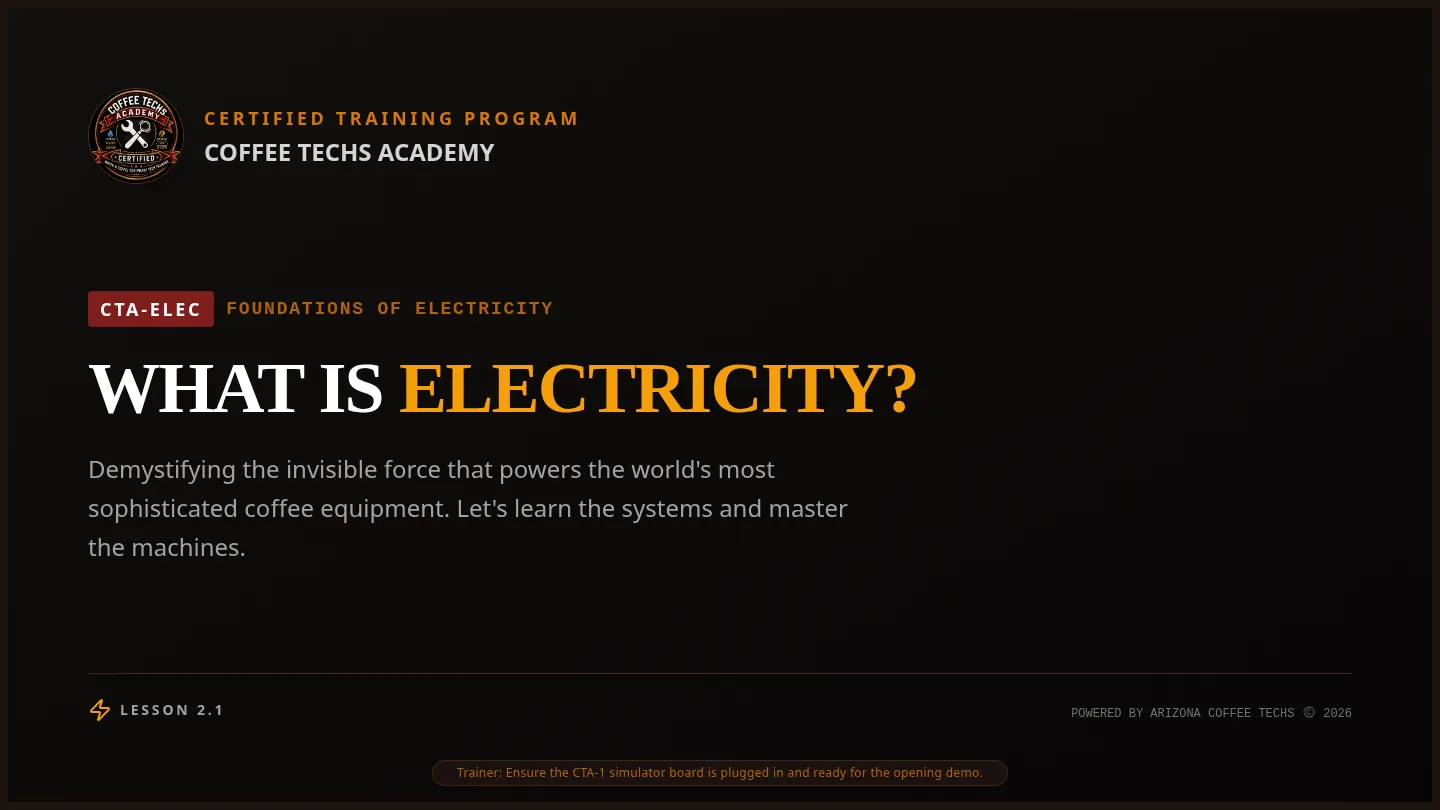
Volt Vibe Slides

Electrical Fundamentals

A comprehensive technical certification sequence designed to teach commercial coffee equipment technicians how to demystify electricity, safely troubleshoot components, and master electrical systems.

KO

Kyle Ousley

37
Pattern Power Slides

Binary Blitz

A week-long exploration of binary code, patterns, and digital communication designed for 4th-grade students. This sequence covers how patterns form codes for devices, the process of binary image transfer, and how engineers use code to solve problems like image brightness.

MG

Matthew Gaudin

13
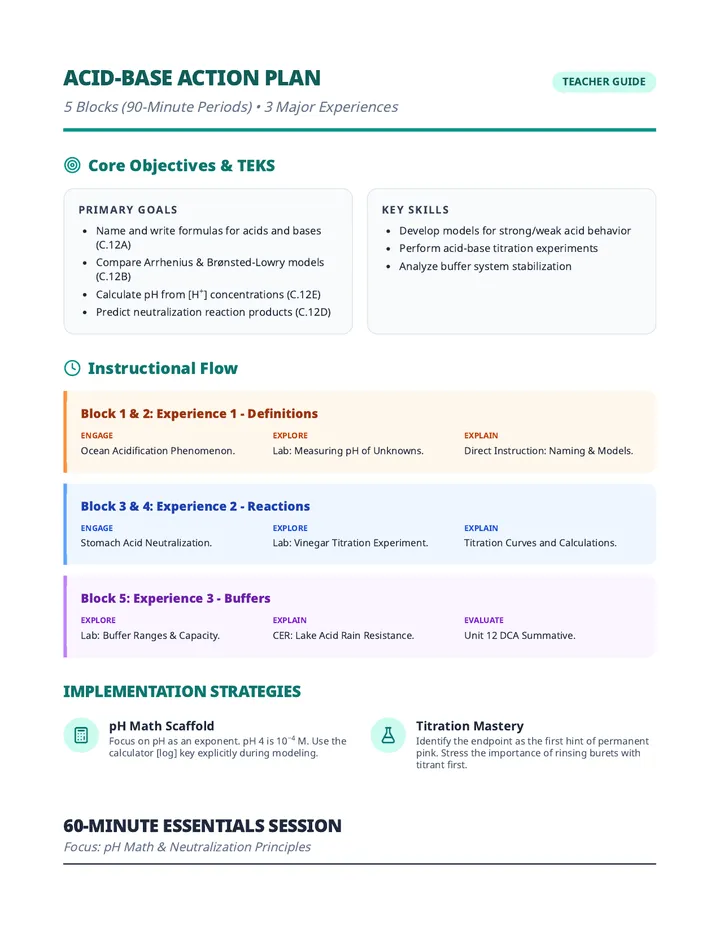
Acid Base Action Plan

Acid Base Investigation

A comprehensive unit exploring the properties, reactions, and mathematical relationships of acids and bases, featuring pH calculations, titrations, and buffer systems.

OM

Olutoyin Makinde

34
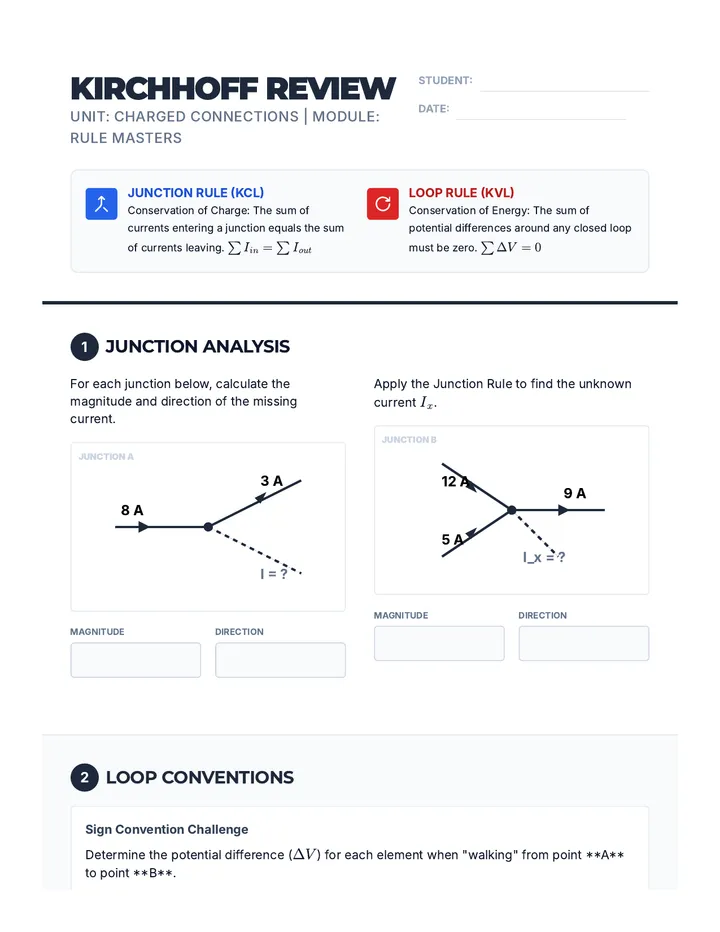
Kirchhoff Review Worksheet

Charged Connections

A modular physics unit focused on the principles of electricity, circuit design, and the mathematical laws governing energy flow in electrical systems.

OM

Olutoyin Makinde

42
Power Parade Slides

The Grid Powering the Future

A comprehensive 2-week unit on electricity and circuits, covering electric potential, power generation, Ohm's law, and circuit analysis. Students move from the fundamental physics of voltage to the design of complex grid systems.

OM

Olutoyin Makinde

30

Lessons

Charge Chart Organizer

Sparking Science

A comprehensive introduction to electrostatic forces, covering atomic structure, triboelectric charging, Coulomb's Law, and electric fields through hands-on labs and scaffolded practice.

CB

Chloe Brown

6
Force Fields Infographic

Magnetic Mastery

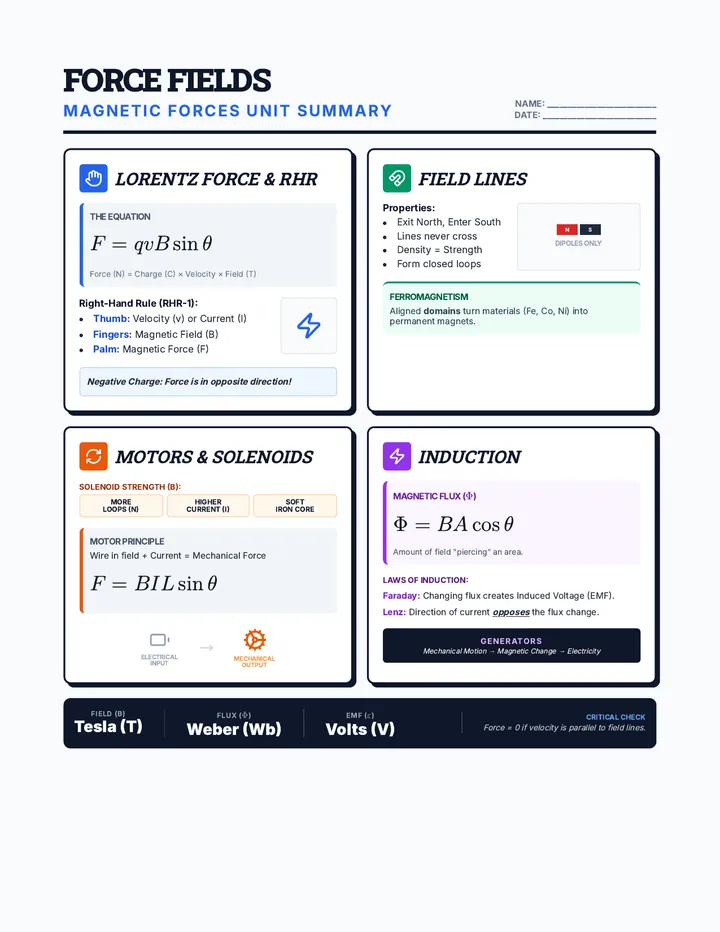
A comprehensive lesson on magnetic forces, including a high-impact infographic summary and a practice worksheet covering Lorentz force, motors, and electromagnetic induction.

OM

Olutoyin Makinde

14
Electric Tug Master Lab Sheet

Electric Tug

An inquiry-based lab where students use the PhET Coulomb's Law simulation to discover the relationships between charge, distance, and electrostatic force.

CM

Chuguna Murugesan

29
Sparking Insight Review Packet

Sparking Insight Review

A comprehensive review lesson for a Physics unit on Electric Forces, covering atomic structure, electric fields, Coulomb's Law calculations, and real-world applications of electrostatics.

OM

Olutoyin Makinde

9
Types of Graph Summary Page 1

Decoding Lab Curves

A 2-day high school physics lesson bundle focused on identifying, sketching, and interpreting the 5 primary graphical relationships found in physics laboratories (constant, linear, inverse, square, and square root) using real physical laws like Ohm's Law, Newton's Second Law, and Kinetic Energy.

CM

Chuguna Murugesan

8
Spectrometer Secret Lab Notes Article

Magnetic Motion and Torque

A deep dive into the behavior of charged particles in magnetic fields, focusing on the mechanics of mass spectrometry and the rotational dynamics of current-carrying loops. Students will derive key equations for particle paths and analyze the torque that drives electric motors.

CM

Chuguna Murugesan

6