Lenny.com
Explore
Create
ActivitiesNewMathEnglish Language ArtsScience & EngineeringSocial StudiesGlobal LanguagesHealth & Physical EducationSpecial EducationCounseling & Life SkillsArts & CreativityESL
Lenny.com
Lenny.com
Explore
Create
ActivitiesNewMathEnglish Language ArtsScience & EngineeringSocial StudiesGlobal LanguagesHealth & Physical EducationSpecial EducationCounseling & Life SkillsArts & CreativityESL
Lenny.com
Lenny.com

Solutions

Lenny for EducatorsLenny for SchoolsLenny for Districts

Product

ExploreSign inCreateSupportAbout

Resources

Getting startedMTSS Acceleration Program

© 2026 Lenny Learning Inc.

TermsPrivacyAccessibility
LinkedInInstagramX
Lenny

Heating and Cooling

Thermal energy transfer through conduction, convection, and radiation. Examines phase changes, temperature measurement, and the relationship between heat and particle motion.

Science & EngineeringLife ScienceLiving ThingsAnimalsPlantsBody SystemsTraitsAdaptationsCellsEcosystemsHeredityGenes to TraitsCell DivisionPhysicsComparing MaterialsShapes and PropertiesMagnetsMagnetismLightSoundLight and SoundMatterStates of MatterChanges of StateMixturesPhysical and Chemical ChangeHeating and CoolingHeat and Thermal EnergyEnergyForce and MotionElectrical CircuitsAtoms and MoleculesPeriodic TableMotion in One DimensionMotion in Two DimensionsScalars and VectorsForces and Laws of MotionCircular Motion and GravityMomentum and ImpulseWork, Energy, and PowerWavesElectromagnetic WavesGeometric OpticsElectricity and MagnetismSimple Harmonic MotionThermodynamicsNuclear PhysicsEarth Science & AstronomyWeatherWater CycleRocks and MineralsFossilsEarth's FeaturesEarth's ResourcesEarth's StructureWeather and ClimateEarth EventsFossils and Geologic TimePlate TectonicsHuman ImpactsAstronomyChemistryUnits and MeasurementAtomic StructurePeriodic TrendsChemical BondingNomenclatureMolecular StructureIntermolecular ForcesThe MoleStoichiometryProperties of GasesSolutionsChemical ReactionsBalancing EquationsEnergy ChangesRates of ReactionsEquilibriumAcids and BasesQuantum ModelBiologyClassificationCell StructureThe Chemistry of LifeBiomoleculesCellular TransportCell EnergyCell Growth and DivisionDNAProtein SynthesisMeiosis and Sexual ReproductionPatterns of InheritanceMulticellular OrganismsEvolutionEcologyBiodiversityComputer ScienceAlgorithms and Computational ThinkingProgramming LanguagesComputing SystemsNetworks and InternetData AnalysisCybersecurityAI and Machine LearningSoftware Design and DevelopmentBlockchainEngineering & AIDesigning ExperimentsEngineering PracticesDesign ThinkingEngineering Design ProcessMechanical EngineeringElectrical EngineeringMaterials and StructuresCAD and 3D DesignRoboticsArtificial Intelligence BasicsVibe CodingMachine LearningAI Ethics and SocietySystems ThinkingEntrepreneurship & InnovationEntrepreneurial MindsetBusiness Idea DevelopmentBusiness Plan BasicsMarketing & Customer DiscoveryFinancial Management for Startups

Videos

How Tornadoes Form and How We Measure Them

How Tornadoes Form and How We Measure Them

This educational video explores the science behind weather patterns, specifically focusing on extreme weather events and the formation of tornadoes. Hosted from the "Lighthouse Lab," the presenter guides students from observing daily weather changes to understanding complex meteorological phenomena. The video uses clear animations to break down the physics of how tornadoes form when cool, dry air meets warm, moist air, and explains the resulting atmospheric instability.

Next Generation ScienceNext Generation Science

5mins 59s

How Salt Prevents Ice From Forming on Sidewalks

How Salt Prevents Ice From Forming on Sidewalks

In this engaging science demonstration, the host Anthony and his robot mouse companion Squeaks explore why we put salt on sidewalks during winter. Through a simple comparative experiment using two cups of water—one with salt and one without—placed in a freezer, the video visually demonstrates how salt affects the freezing process of water. The experiment clearly shows that while fresh water freezes into solid ice at standard temperatures, saltwater remains liquid. The video introduces key chemistry and physics concepts including states of matter (solids and liquids), freezing points, and freezing point depression. It explains that water normally freezes at 0°C (32°F), but adding salt lowers this temperature threshold, requiring much colder conditions for ice to form. This scientific principle is then directly applied to the real-world scenario of keeping sidewalks safe for walking. Finally, the video encourages critical thinking about the environmental impact of using salt, noting how runoff can harm local waterways. This leads to an open-ended inquiry prompt where students are encouraged to design their own experiments to test eco-friendly alternatives like sand, sugar, or rocks, making it an excellent springboard for classroom hands-on learning.

SciShow KidsSciShow Kids

4mins 34s

Exploring Sources of Heat Energy

Exploring Sources of Heat Energy

This educational video introduces young learners to the fundamental concept of heat energy and its various sources. It begins by defining heat as a form of energy that makes things feel warm and defines a "source of heat" as anything that produces this energy. The narrative highlights the Sun as Earth's primary and most critical heat source, explaining its vital role in sustaining life and warming the planet's non-living elements like rocks, soil, and water. The video transitions from natural heat sources to human-managed ones, exploring how burning fuels like wood, gas, and oil generate both heat and light. It provides concrete examples of these chemical reactions in settings like campfires and cooking. This distinction helps students understand that heat can be naturally occurring or generated through specific actions. Finally, the content connects these concepts to students' daily lives by examining common household appliances. It lists familiar items such as ovens, kettles, toasters, clothes dryers, irons, and hair dryers as examples of technology that act as sources of heat. This practical application allows teachers to discuss energy transformation and safety in the home, making the abstract concept of "energy" tangible for primary students.
Next Generation ScienceNext Generation Science

1min 52s

How Land and Water Absorb the Sun's Heat

How Land and Water Absorb the Sun's Heat

This educational video from Crash Course Kids investigates the relationship between the sun's energy and the Earth's surface, specifically comparing how land and water absorb heat differently. Through the relatable example of a day at the beach, the host explains complex physical concepts like absorption and reflection in an accessible way. The video breaks down the path of solar energy from the sun's core to Earth, using clear visual aids like pie charts to show exactly how much energy reaches the surface versus what gets blocked or reflected by the atmosphere. The core scientific themes explored include heat energy transfer, the properties of matter (specifically color) in relation to light absorption, and the interaction between solar radiation and different terrestrial surfaces. A key focus is the concept that darker objects (like land/sand) absorb more heat than lighter objects (like water), which reflect more energy. This explains why sand feels hotter than the ocean on a sunny day despite receiving the same amount of sunlight. For educators, this video serves as an excellent anchor for units on Earth Science, weather patterns, or physical science regarding heat and light. It provides a visual and practical demonstration of differential heating, a foundational concept for understanding global weather systems, climate, and the water cycle. The use of clear definitions for terms like 'absorb' and 'reflect' makes it particularly useful for building scientific vocabulary in upper elementary grades.

Crash Course KidsCrash Course Kids

3mins 33s

The Science of Exploding Soap

The Science of Exploding Soap

In this engaging episode of SciShow Kids, host Jessi and her robot friend Squeaks demonstrate a classic and dramatic kitchen science experiment: the "exploding" soap trick. The video guides young viewers through the process of microwaving a specific type of soap to witness it expand into a massive, fluffy cloud. It explains the manufacturing process of Ivory soap, specifically how air is whipped into it, distinguishing it from other brands and making this specific reaction possible. The content explores key scientific concepts including states of matter, specifically the behavior of gases when heated. It introduces the term "water vapor" and uses clear animations to explain how heat energy causes gas molecules to move faster and expand. The narrative connects the microscopic behavior of air pockets and water trapped inside the soap to the macroscopic expansion seen in the microwave. This video is highly valuable for early elementary science classrooms as a safe, accessible introduction to thermal expansion and states of matter. It models the scientific method by encouraging predictions and observations. Teachers can use this video as a hook for lessons on heat energy, a demonstration of physical changes, or as a guide for a hands-on experiment that requires minimal materials but delivers maximum engagement.

SciShow KidsSciShow Kids

4mins 17s

How Earth's Global Wind and Ocean Currents Work

How Earth's Global Wind and Ocean Currents Work

This engaging science video explores the complex systems of global wind and water currents that shape Earth's weather and climate. Hosted by Sabrina Cruz, the video breaks down how the uneven heating of the Earth by the Sun creates pressure zones, driving the movement of air and water on a massive scale. It moves from explaining local phenomena like sea breezes to global atmospheric circulation cells and jet streams. The content covers essential Earth science concepts including direct versus indirect sunlight, the relationship between temperature and pressure density, and the mechanics of the jet stream. It also draws parallels between atmospheric winds and ocean currents, introducing thermohaline circulation and explaining why these systems are crucial for regulating global temperatures and making the planet habitable. Ideal for upper elementary and middle school science classrooms, this video visualizes invisible forces like air pressure and wind patterns through clear animations. It provides a solid foundation for units on weather, climate, and Earth's systems, helping students understand the 'why' behind the weather patterns they experience and the global connectivity of Earth's environment.

Crash Course KidsCrash Course Kids

5mins 7s

Materials

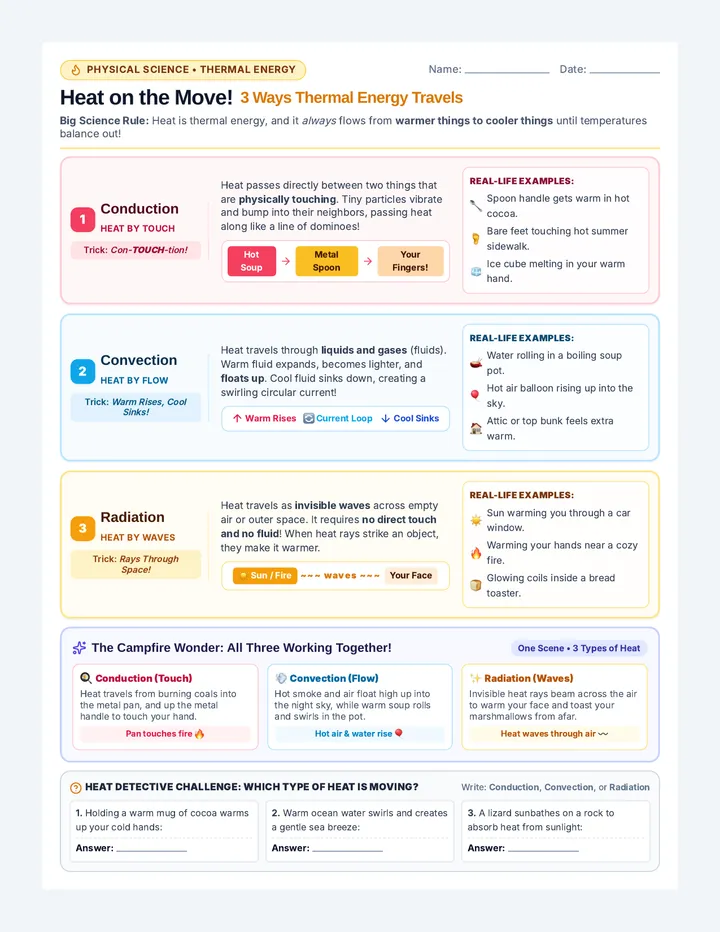
Heat on the Move Reading Guide

Heat on the Move Reading Guide

An illustrated science reading guide explaining the three types of heat transfer: conduction, convection, and radiation. Features clear real-world examples, visual diagrams, a 3-in-1 campfire connection, and a detective check.

AA

Ashley Adams

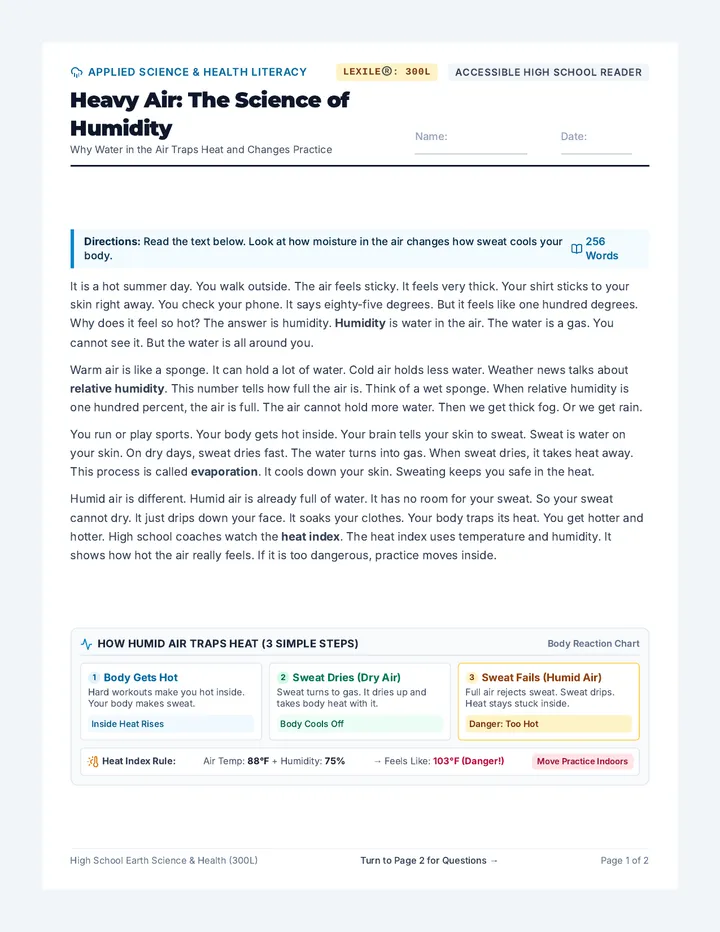
Heavy Air Reading Passage

Heavy Air Reading Passage

A high-school appropriate reading comprehension passage on humidity rewritten to an accessible 300 Lexile level, featuring 5 literal questions and 5 inferential questions with an evaporative cooling diagram and heat index chart.

EB

Emily Bear

Water Cycle Flashcards

Water Cycle Flashcards

A 24-card conceptual double-sided flashcard set engineered for long-edge duplex printing. Focuses on foundational Earth science concepts, atmospheric thermodynamics, energy transfer mechanisms, and hydrological processes without duplicating specific test questions.

A

Andrea.Golden

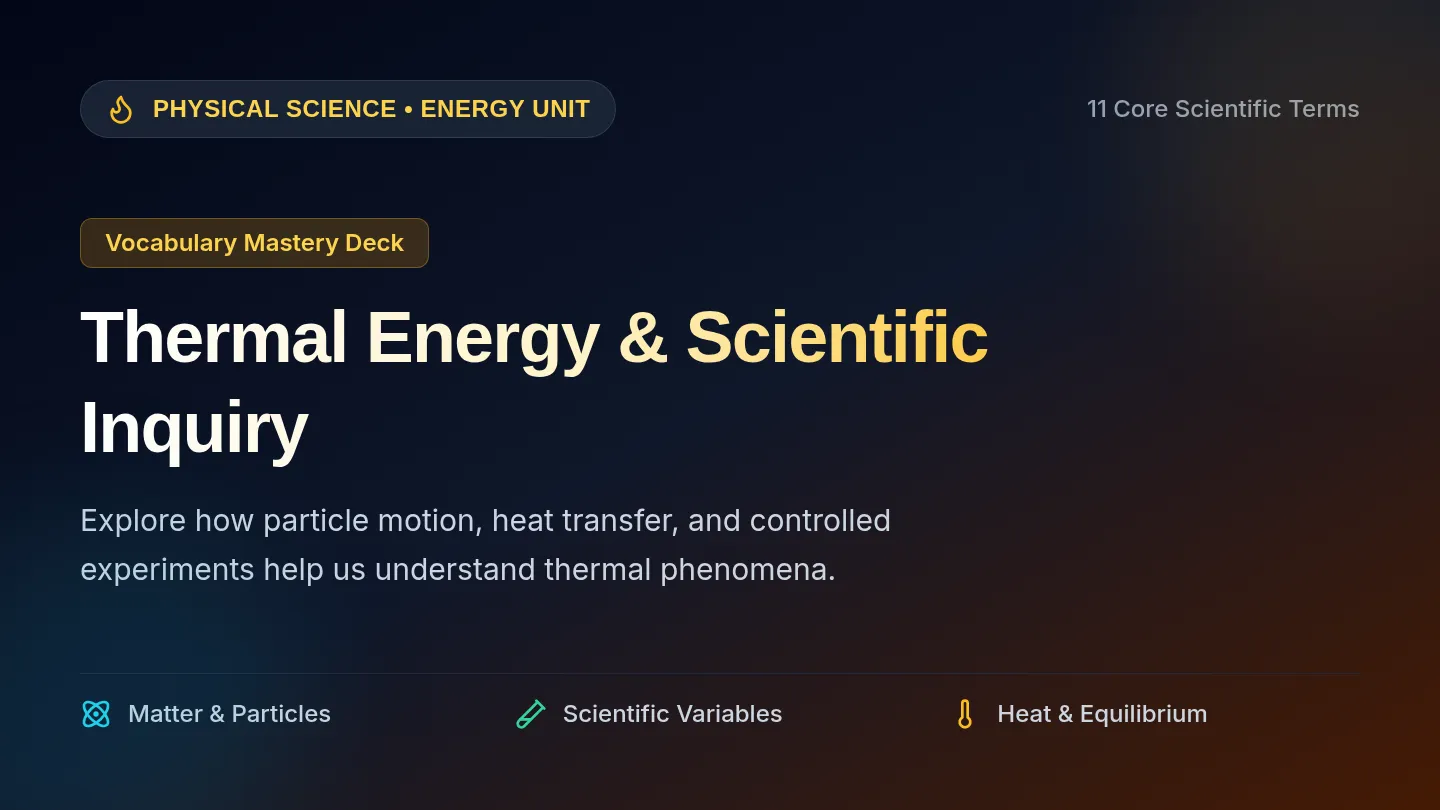
Thermal Power Vocabulary Slides

Thermal Power Vocabulary Slides

A dynamic, classroom-ready 16-slide presentation for practicing and mastering 11 foundational thermal energy and scientific investigation vocabulary words. Each slide features clear scientific definitions, real-world examples, memory hooks, and interactive classroom check questions with bold visual layouts.

MT

Micha Taylor

Thermal Energy Review Packet

Thermal Energy Review Packet

An eight-page review packet for 8th-grade New York State science students covering kinetic molecular theory, particle diagrams, phase changes, conduction/convection/radiation, heating and cooling curves, cumulative practice, and an exit ticket. Includes a cover page titled "Morning Work Week 4".

AW

Austin WIllis

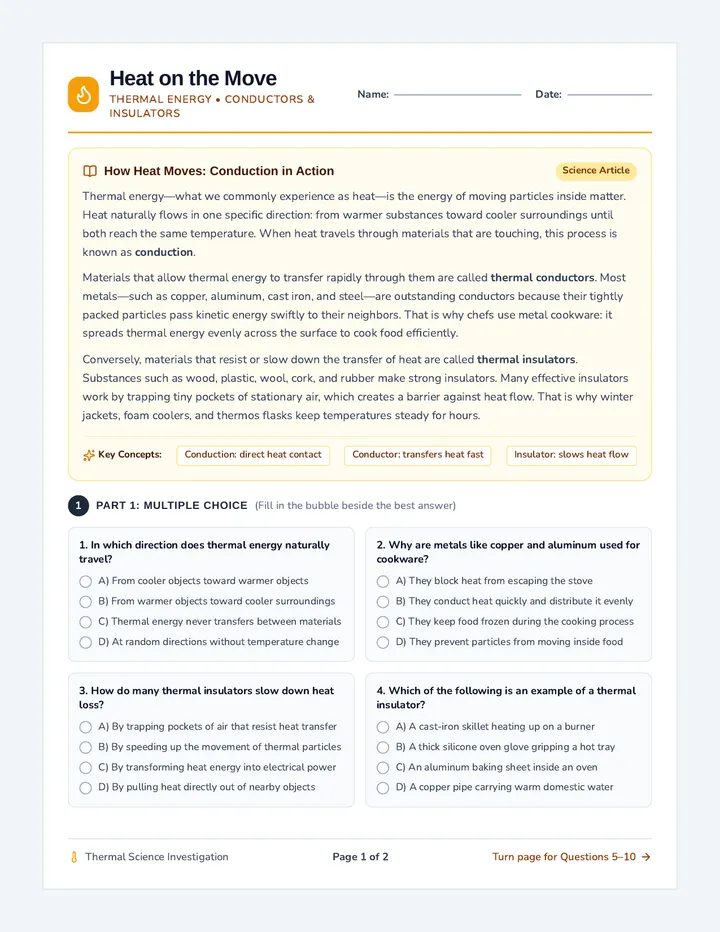
Heat Flow Worksheet

Heat Flow Worksheet

A rigorous two-page science reading comprehension worksheet on thermal conductors and insulators geared for upper elementary readers (grades 3-4 difficulty level, without displaying any grade label). Covers heat transfer principles, conduction, particle movement, and everyday applications with 10 questions across multiple choice, fill in the blank, and sentence completion.

AA

Ashley Adams

Sequences

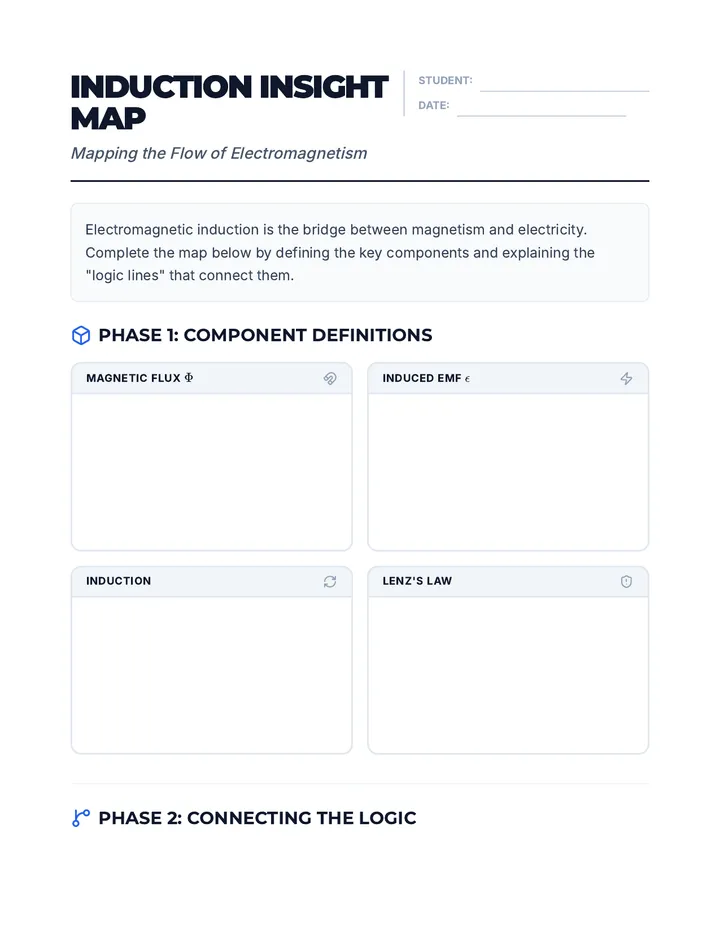
Induction Insight Map Handout

Magnetic Forces Investigation

A 5-day intensive exploration of magnetic forces and fields, focusing on atomic-level causes, field interactions, and mathematical modeling of forces on charged particles. Students progress from anchoring phenomena to complex mathematical applications and a comprehensive unit review.

OM

Olutoyin Makinde

68
Climate Crisis Slides

Science Essentials Vault

A comprehensive collection of core science units covering Environmental Science, Biology, and Physical Science. This sequence provides high-impact instructional slides, hands-on lab experiences, guided notes, and differentiated assessments for five major scientific domains.

CB

Chloe Brown

25
Hess Pathfinders Slides

Energy in Chemical Bonds

A five-day high school chemistry unit exploring thermochemistry, collision theory, enthalpy diagrams, and calorimetry through the lens of body heat and chemical reactions. Students investigate the anchoring phenomenon of exercise-induced heat while mastering TEKS C.13 standards.

OM

Olutoyin Makinde

48
Pressure Poster Workshop Handout

Pressure Power

A comprehensive 5-day chemistry unit investigating the relationships between gas pressure, volume, temperature, and moles using lab inquiries, mathematical modeling, and real-world applications.

OM

Olutoyin Makinde

69
KMT Field Manual Packet

Molecular Mayhem Gas Unit

A 10-day exploration of the Behavior of Gases using Kinetic Molecular Theory, various gas laws, and real-world phenomena to understand gas behavior at both molecular and macroscopic scales. Students will investigate compressibility, gas variables, ideal behavior, and mixtures.

OM

Olutoyin Makinde

26
Steady State Slides

Reaction Dynamics

This unit explores how chemical reactions occur and how they reach a state of balance. Students investigate reaction kinetics, energy changes, and the principles of dynamic equilibrium through modeling and laboratory investigation.

OM

Olutoyin Makinde

34

Lessons

Heat Flow Teacher Guide

Particle Behavior Review

A lesson focusing on the states of matter (solid, liquid, gas) and the behavior of particles at the molecular level. Students will model particle motion and arrangement, as well as the energy changes that drive phase transitions.

EA

Erica Andre

54
Tableau Progression Annuelle Sciences CM

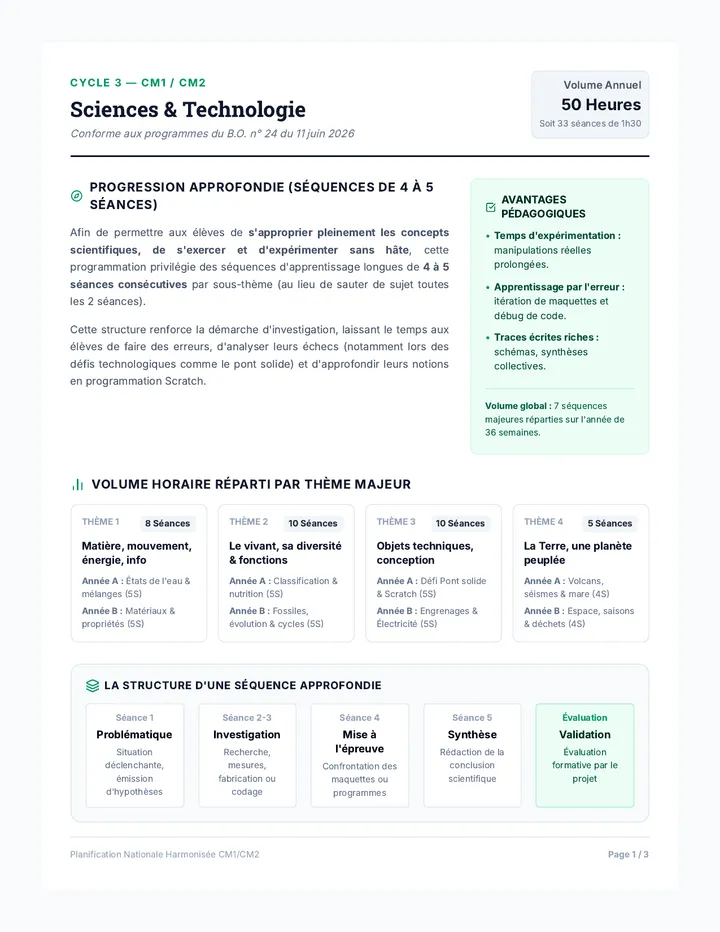
Progression Sciences CM1 CM2

Outil de planification annuelle et de progression pour l'enseignement des sciences et technologies en classe de CM1/CM2, conforme au BO de juin 2026. Ce guide propose une répartition claire des volumes horaires et des thèmes entre l'année A et l'année B pour éviter les redondances dans les classes à double niveau.

LP

LAURENT PERCHE

40
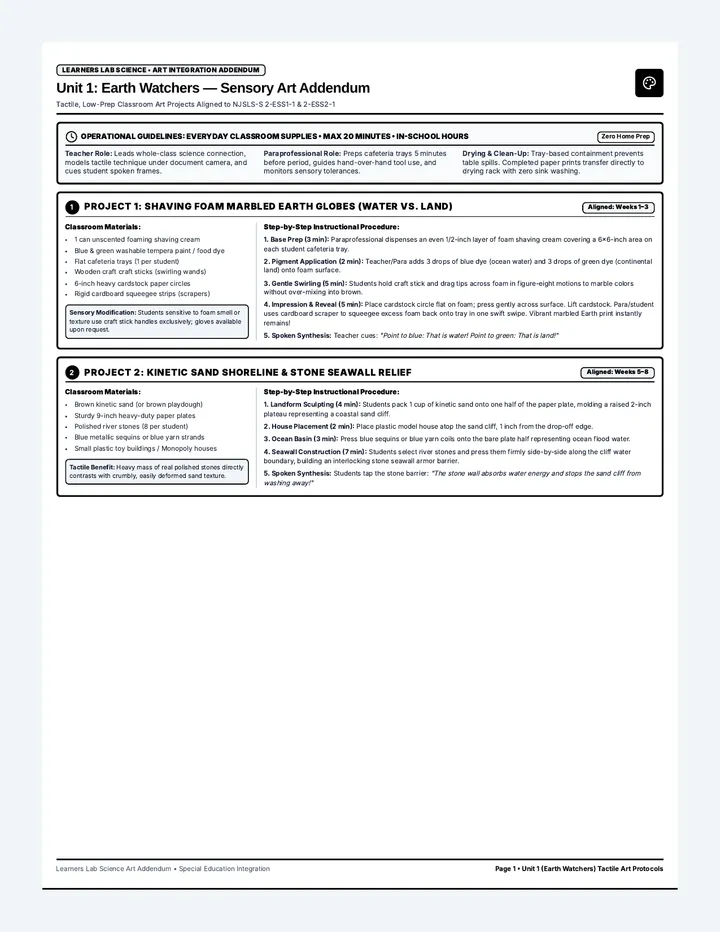
Learners Lab Science Art Addendum

Learners Lab Science

An adapted special education science curriculum framework aligning NJSLS-S standards across grades 2-4 with functional access points, 25-minute multi-sensory inquiry lessons, and rigorous tiered expression.

JE

jenn edwards

21
Thermal Wilds Field Stimuli

Thermal Wilds

A science investigation exploring heat transfer mechanisms across dynamic ecosystems. Students examine three real-world natural phenomena to gather observational evidence and construct evidence-based Claim-Evidence-Reasoning (CER) arguments.

MN

Monica Nicolas

4
Molecular Lab Slides

Matter Lab Review

A comprehensive review of the states of matter and phase changes designed for diverse learners, featuring simplified text, visual aids, and structured graphic organizers.

CB

Chloe Brown

5
Matter Masters Frayer Packet

Matter Foundations Lab

An introductory physical science lesson exploring foundational matter concepts including atoms, elements, properties, and states of matter through multi-modal vocabulary organizers and differentiated supports.

PL

Patrick l

7