Lenny.com
Explore
Create
ActivitiesNewMathEnglish Language ArtsScience & EngineeringSocial StudiesGlobal LanguagesHealth & Physical EducationSpecial EducationCounseling & Life SkillsArts & CreativityESL
Lenny.com
Lenny.com
Explore
Create
ActivitiesNewMathEnglish Language ArtsScience & EngineeringSocial StudiesGlobal LanguagesHealth & Physical EducationSpecial EducationCounseling & Life SkillsArts & CreativityESL
Lenny.com
Lenny.com

Solutions

Lenny for EducatorsLenny for SchoolsLenny for Districts

Product

ExploreSign inCreateSupportAbout

Resources

Getting startedMTSS Acceleration Program

© 2026 Lenny Learning Inc.

TermsPrivacyAccessibility
LinkedInInstagramX
Lenny

Thermodynamics

Heat transfer mechanisms, energy conservation laws, and the properties of matter under varying thermal conditions. Connects microscopic kinetic energy to macroscopic observations like temperature and pressure.

Science & EngineeringLife ScienceLiving ThingsAnimalsPlantsBody SystemsTraitsAdaptationsCellsEcosystemsHeredityGenes to TraitsCell DivisionPhysicsComparing MaterialsShapes and PropertiesMagnetsMagnetismLightSoundLight and SoundMatterStates of MatterChanges of StateMixturesPhysical and Chemical ChangeHeating and CoolingHeat and Thermal EnergyEnergyForce and MotionElectrical CircuitsAtoms and MoleculesPeriodic TableMotion in One DimensionMotion in Two DimensionsScalars and VectorsForces and Laws of MotionCircular Motion and GravityMomentum and ImpulseWork, Energy, and PowerWavesElectromagnetic WavesGeometric OpticsElectricity and MagnetismSimple Harmonic MotionThermodynamicsNuclear PhysicsEarth Science & AstronomyWeatherWater CycleRocks and MineralsFossilsEarth's FeaturesEarth's ResourcesEarth's StructureWeather and ClimateEarth EventsFossils and Geologic TimePlate TectonicsHuman ImpactsAstronomyChemistryUnits and MeasurementAtomic StructurePeriodic TrendsChemical BondingNomenclatureMolecular StructureIntermolecular ForcesThe MoleStoichiometryProperties of GasesSolutionsChemical ReactionsBalancing EquationsEnergy ChangesRates of ReactionsEquilibriumAcids and BasesQuantum ModelBiologyClassificationCell StructureThe Chemistry of LifeBiomoleculesCellular TransportCell EnergyCell Growth and DivisionDNAProtein SynthesisMeiosis and Sexual ReproductionPatterns of InheritanceMulticellular OrganismsEvolutionEcologyBiodiversityComputer ScienceAlgorithms and Computational ThinkingProgramming LanguagesComputing SystemsNetworks and InternetData AnalysisCybersecurityAI and Machine LearningSoftware Design and DevelopmentBlockchainEngineering & AIDesigning ExperimentsEngineering PracticesDesign ThinkingEngineering Design ProcessMechanical EngineeringElectrical EngineeringMaterials and StructuresCAD and 3D DesignRoboticsArtificial Intelligence BasicsVibe CodingMachine LearningAI Ethics and SocietySystems ThinkingEntrepreneurship & InnovationEntrepreneurial MindsetBusiness Idea DevelopmentBusiness Plan BasicsMarketing & Customer DiscoveryFinancial Management for Startups

Videos

How Heat Changes the States of Matter

How Heat Changes the States of Matter

This educational video explores the science behind how matter changes between solid, liquid, and gas states through the addition and removal of heat energy. Using the relatable example of melting ice cream, the instructor guides students through the molecular behavior of matter, explaining how atoms speed up and spread apart when heated (melting, evaporation) and slow down and condense when heat is removed (condensation, freezing). The video effectively uses particle animations to visualize these invisible processes, making abstract concepts concrete for young learners. Key themes include the relationship between heat energy and particle movement, the specific terms for phase changes (melting, freezing, evaporation, boiling, condensation), and the distinction between "cold" as an energy versus the absence of heat. The instructor also addresses the conservation of mass, demonstrating that while matter changes form, its amount remains constant. This resource is highly valuable for elementary science classrooms as it covers core physical science standards regarding states of matter. It provides clear definitions, addresses common misconceptions about "cold energy," and connects scientific concepts to everyday phenomena like drying towels, morning dew, and boiling water. The built-in pauses for note-taking and reflection make it an excellent interactive tool for direct instruction or independent study.
Miacademy & MiaPrep Learning ChannelMiacademy & MiaPrep Learning Channel

8mins 58s

Thermal Physics: Kinetic Energy, Heat Transfer, and Thermodynamics

Thermal Physics: Kinetic Energy, Heat Transfer, and Thermodynamics

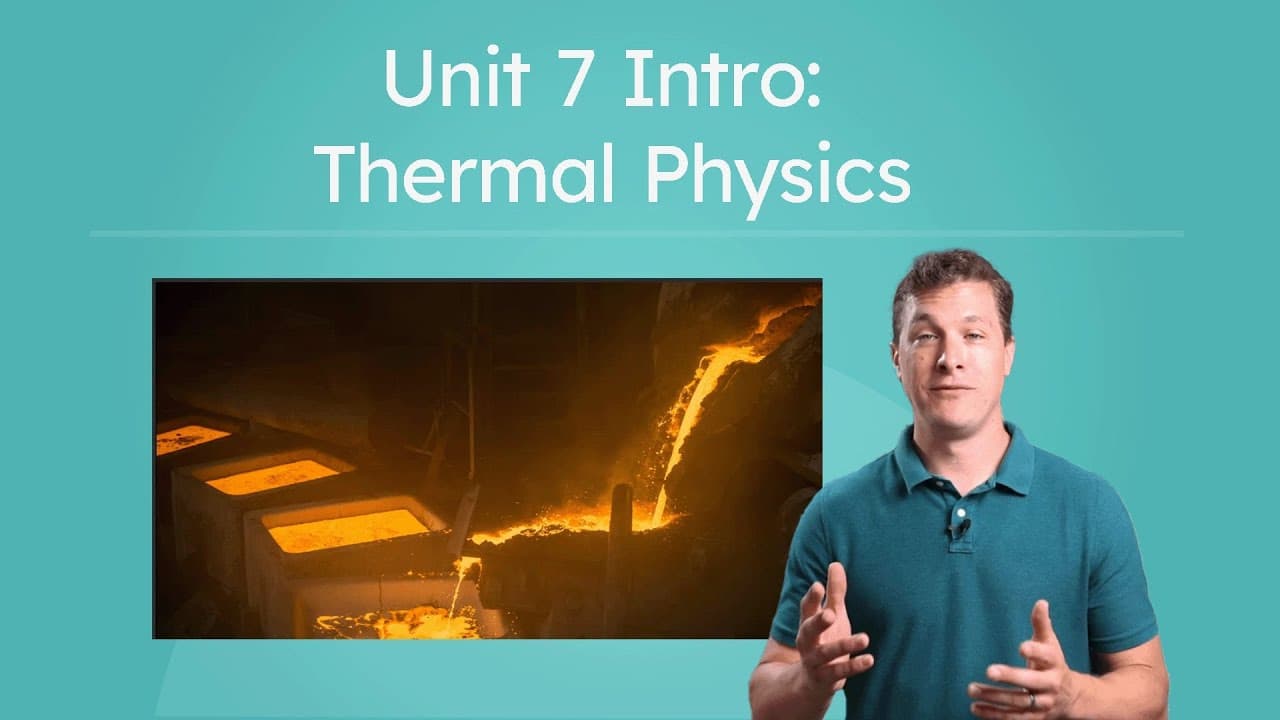
This educational video provides a comprehensive introduction to thermal physics, bridging the gap between macroscopic observations and microscopic atomic behavior. It begins by defining thermal energy as a form of kinetic energy, using clear animations to show how particle motion increases with temperature. The lesson progresses through practical concepts including temperature scales, thermal equilibrium, and the three primary methods of heat transfer: conduction, convection, and radiation. The video also explores the states of matter, introducing plasma and explaining how phase changes occur as energy is added. A significant portion of the video is dedicated to explaining the three Laws of Thermodynamics in accessible terms, using real-world analogies like the decaying Colosseum to explain entropy. The content connects abstract physics concepts to tangible examples like molten iron, boiling water, and pottery kilns. This resource is highly valuable for middle and high school science classrooms as it visually demonstrates concepts that are often difficult for students to conceptualize, such as atomic vibration and entropy. Teachers can use this video to introduce a unit on thermodynamics, reinforce vocabulary around heat transfer, or visually demonstrate the relationship between kinetic energy and temperature.

Miacademy & MiaPrep Learning ChannelMiacademy & MiaPrep Learning Channel

10mins 56s

How Earth's Global Wind and Ocean Currents Work

How Earth's Global Wind and Ocean Currents Work

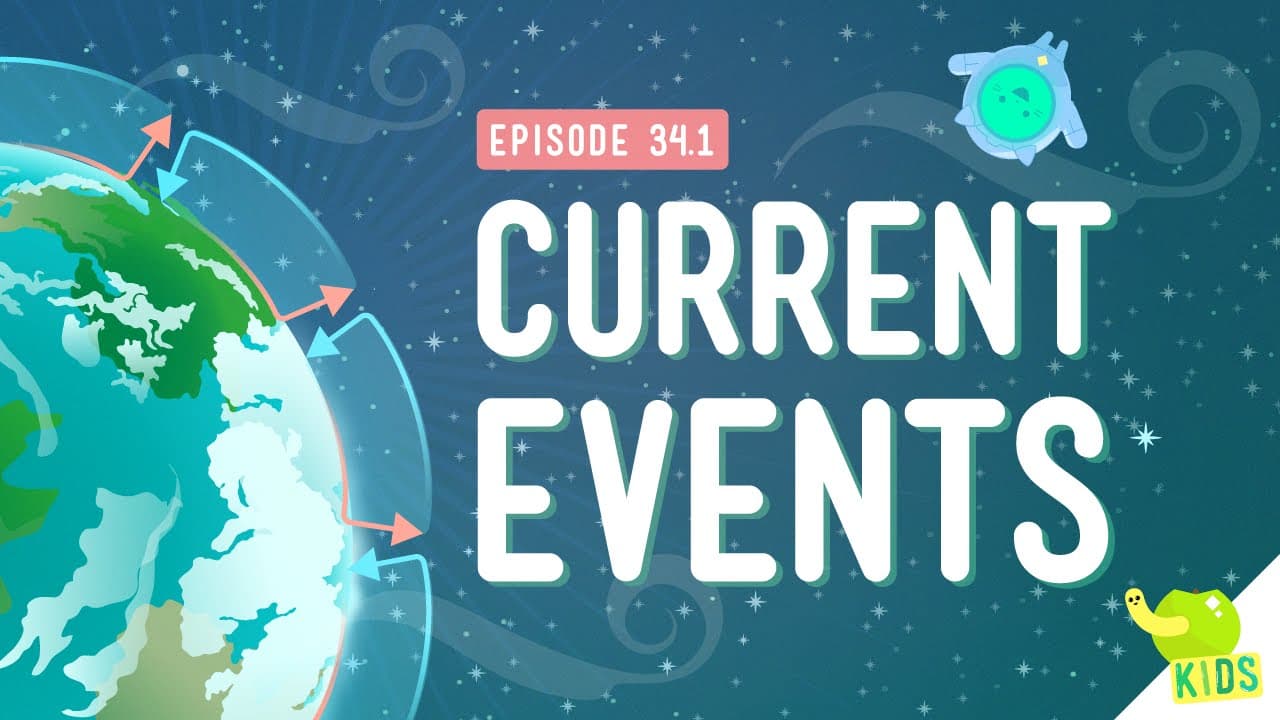
This engaging science video explores the complex systems of global wind and water currents that shape Earth's weather and climate. Hosted by Sabrina Cruz, the video breaks down how the uneven heating of the Earth by the Sun creates pressure zones, driving the movement of air and water on a massive scale. It moves from explaining local phenomena like sea breezes to global atmospheric circulation cells and jet streams. The content covers essential Earth science concepts including direct versus indirect sunlight, the relationship between temperature and pressure density, and the mechanics of the jet stream. It also draws parallels between atmospheric winds and ocean currents, introducing thermohaline circulation and explaining why these systems are crucial for regulating global temperatures and making the planet habitable. Ideal for upper elementary and middle school science classrooms, this video visualizes invisible forces like air pressure and wind patterns through clear animations. It provides a solid foundation for units on weather, climate, and Earth's systems, helping students understand the 'why' behind the weather patterns they experience and the global connectivity of Earth's environment.

Crash Course KidsCrash Course Kids

5mins 7s

Comparing Heat Conductivity: Metal vs. Glass Experiment

Comparing Heat Conductivity: Metal vs. Glass Experiment

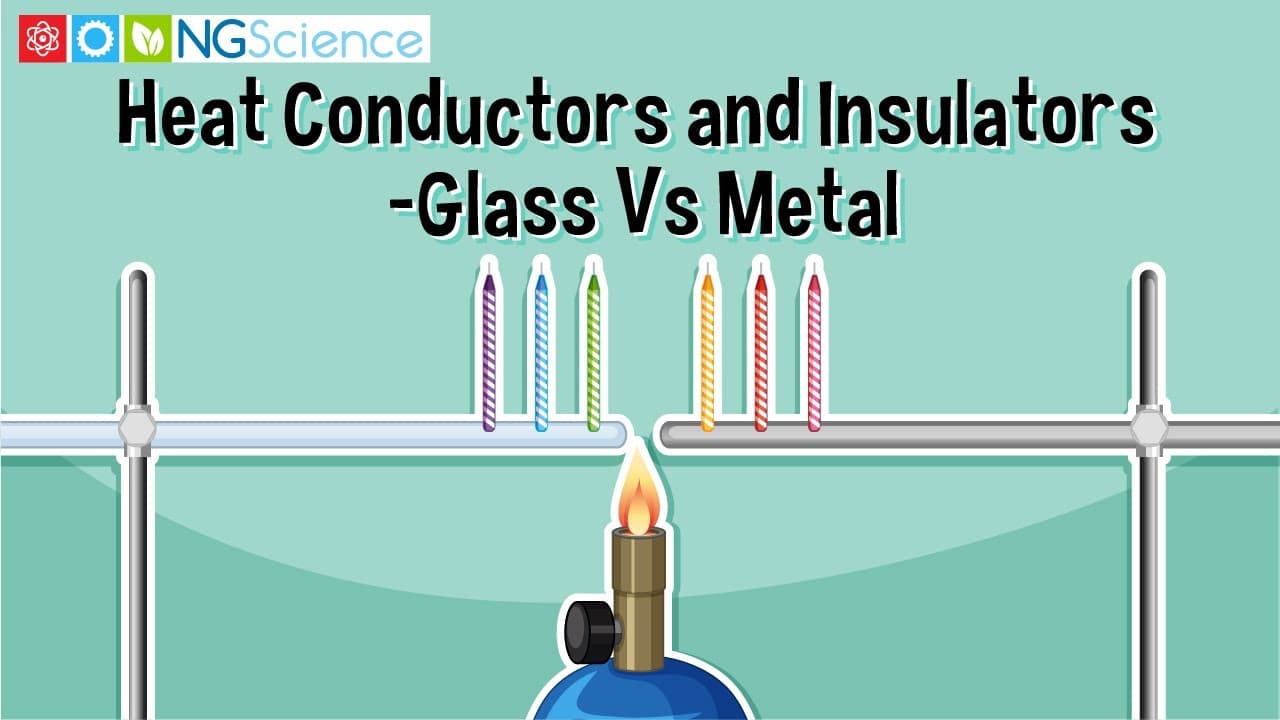
This concise science demonstration visualizes the concept of thermal conductivity by comparing how heat travels through metal versus glass. Set against a high-contrast background, the video features a clear experiment where candles are attached to metal and glass rods using wax. As a central heat source is applied, viewers can observe the progressive melting of the wax on the metal rod, demonstrating how heat energy transfers through conductive materials over time. The video introduces key physics vocabulary including thermal energy, conductors, insulators, and heat transfer. It explicitly addresses the direction of heat flow (from hot to cold) and provides a side-by-side comparison that makes the abstract concept of material properties concrete for young learners. The distinct visual result—candles falling off the metal rod while staying put on the glass rod—serves as immediate, observable evidence. Teachers can use this video to anchor lessons on energy transfer, material science, or the scientific method. It provides an excellent phenomenon for students to observe, predict, and explain. The clear setup allows for easy replication in a lab setting, or serves as a safe virtual alternative for classrooms without access to Bunsen burners. It naturally leads into discussions about why we use specific materials for cooking pans versus handles, or building insulation.

Next Generation ScienceNext Generation Science

2mins 15s

How Tornadoes Form and How We Measure Them

How Tornadoes Form and How We Measure Them

This educational video explores the science behind weather patterns, specifically focusing on extreme weather events and the formation of tornadoes. Hosted from the "Lighthouse Lab," the presenter guides students from observing daily weather changes to understanding complex meteorological phenomena. The video uses clear animations to break down the physics of how tornadoes form when cool, dry air meets warm, moist air, and explains the resulting atmospheric instability.

Next Generation ScienceNext Generation Science

5mins 59s

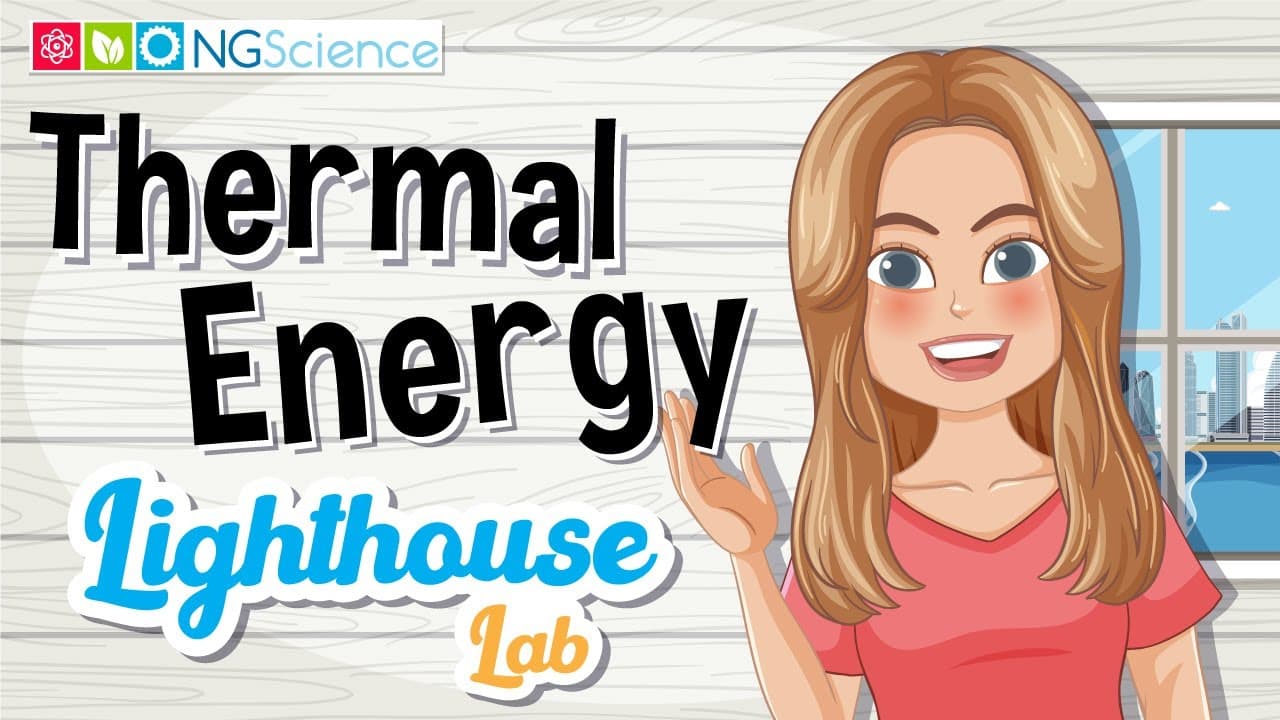
How Thermal Energy Moves and Affects Temperature

How Thermal Energy Moves and Affects Temperature

This educational video from the Lighthouse Lab introduces students to the fundamental concepts of thermal energy, particle theory, and heat transfer. Hosted by Sophie Taylor-Pritchard, the lesson begins by defining matter as being made of tiny particles that are always in motion, explaining that the amount of this motion is what we call thermal energy. Through clear animations, students visualize how increased thermal energy leads to faster particle movement and higher temperatures. The video features two distinct demonstrations to reinforce these concepts. First, the host measures the temperature of three water cups (icy, warm, and hot) to illustrate the relationship between temperature readings and the amount of thermal energy present. Second, a classic conduction experiment is performed using a metal rod, a burner, and wax-attached candles to visually demonstrate the direction of heat flow. This experiment clearly shows that heat travels from a hot source to a cooler area, melting the wax holding the candles in a sequential order. For educators, this video serves as an excellent visual aid for physics and general science units on energy and matter. It effectively bridges the gap between the abstract concept of microscopic particle motion and observable macroscopic phenomena like temperature changes and melting. The included prediction opportunity during the conduction experiment allows for active student engagement and inquiry-based learning directly within the viewing experience.

Next Generation ScienceNext Generation Science

4mins 55s

Materials

Heat on the Move Reading Guide

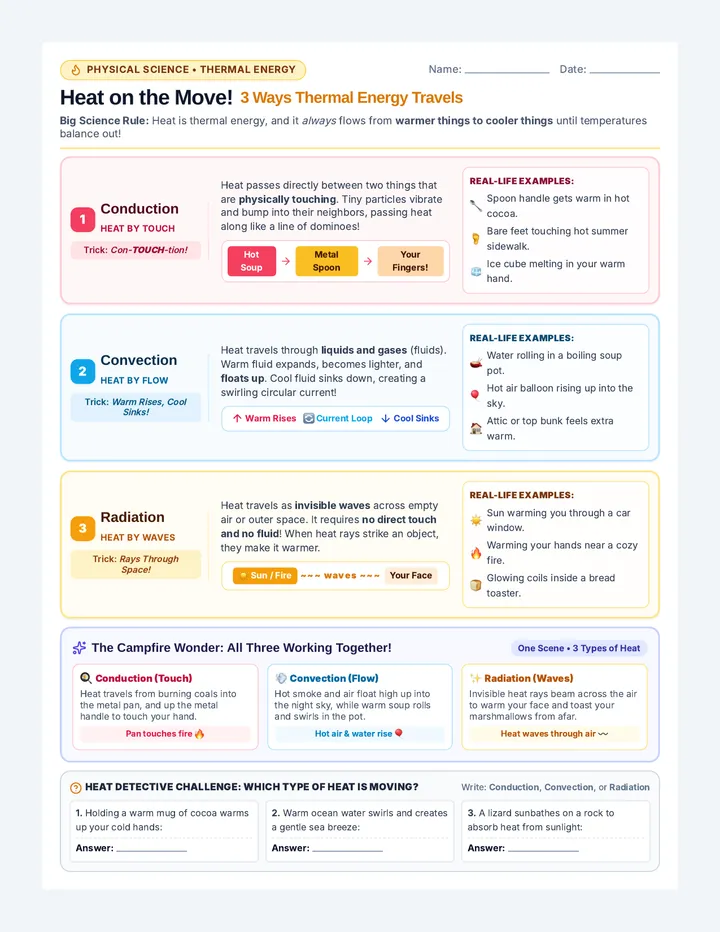
Heat on the Move Reading Guide

An illustrated science reading guide explaining the three types of heat transfer: conduction, convection, and radiation. Features clear real-world examples, visual diagrams, a 3-in-1 campfire connection, and a detective check.

AA

Ashley Adams

Water Cycle Flashcards

Water Cycle Flashcards

A 24-card conceptual double-sided flashcard set engineered for long-edge duplex printing. Focuses on foundational Earth science concepts, atmospheric thermodynamics, energy transfer mechanisms, and hydrological processes without duplicating specific test questions.

A

Andrea.Golden

Thermal Power Vocabulary Slides

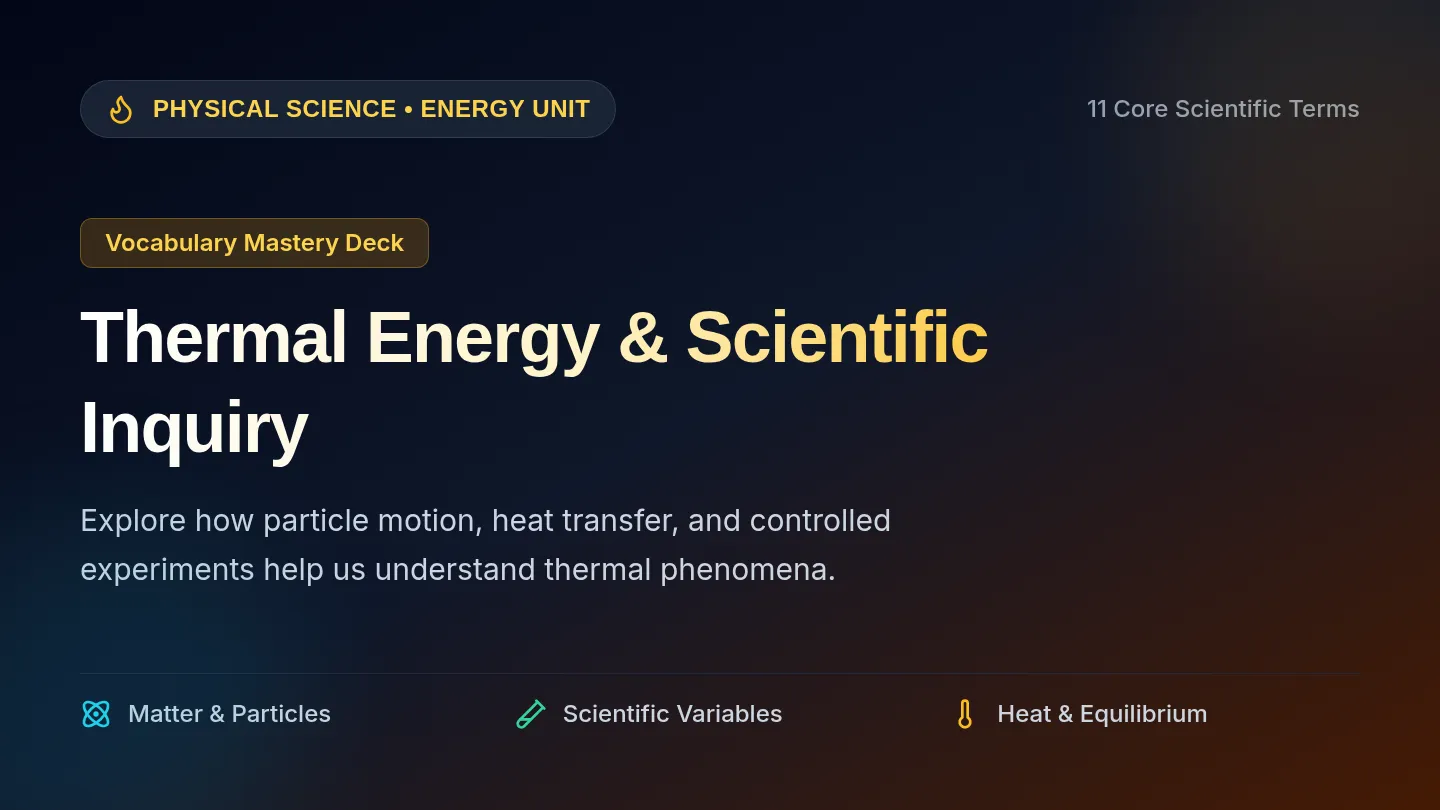
Thermal Power Vocabulary Slides

A dynamic, classroom-ready 16-slide presentation for practicing and mastering 11 foundational thermal energy and scientific investigation vocabulary words. Each slide features clear scientific definitions, real-world examples, memory hooks, and interactive classroom check questions with bold visual layouts.

MT

Micha Taylor

Thermal Energy Review Packet

Thermal Energy Review Packet

An eight-page review packet for 8th-grade New York State science students covering kinetic molecular theory, particle diagrams, phase changes, conduction/convection/radiation, heating and cooling curves, cumulative practice, and an exit ticket. Includes a cover page titled "Morning Work Week 4".

AW

Austin WIllis

Science Scope Curriculum Guide

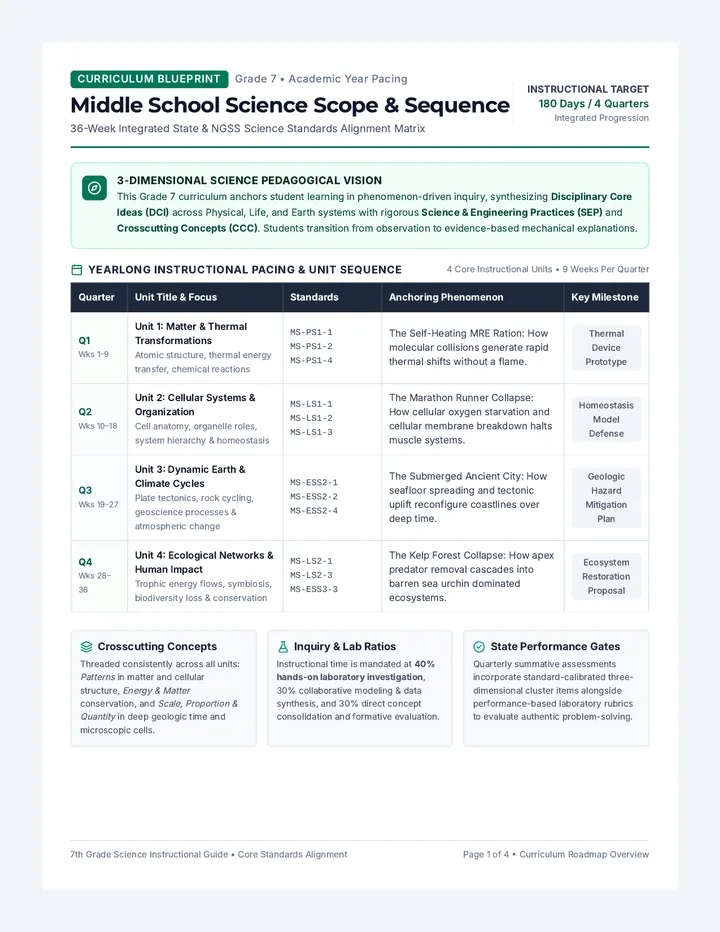
Science Scope Curriculum Guide

A comprehensive middle school 7th grade science scope and sequence curriculum guide. It outlines four instructional units across thirty-six weeks, aligning state standards and Next Generation Science Standards with anchoring phenomena, core labs, and assessment milestones.

JD

Jenny Daniels

States of Matter Notebook Guide

States of Matter Notebook Guide

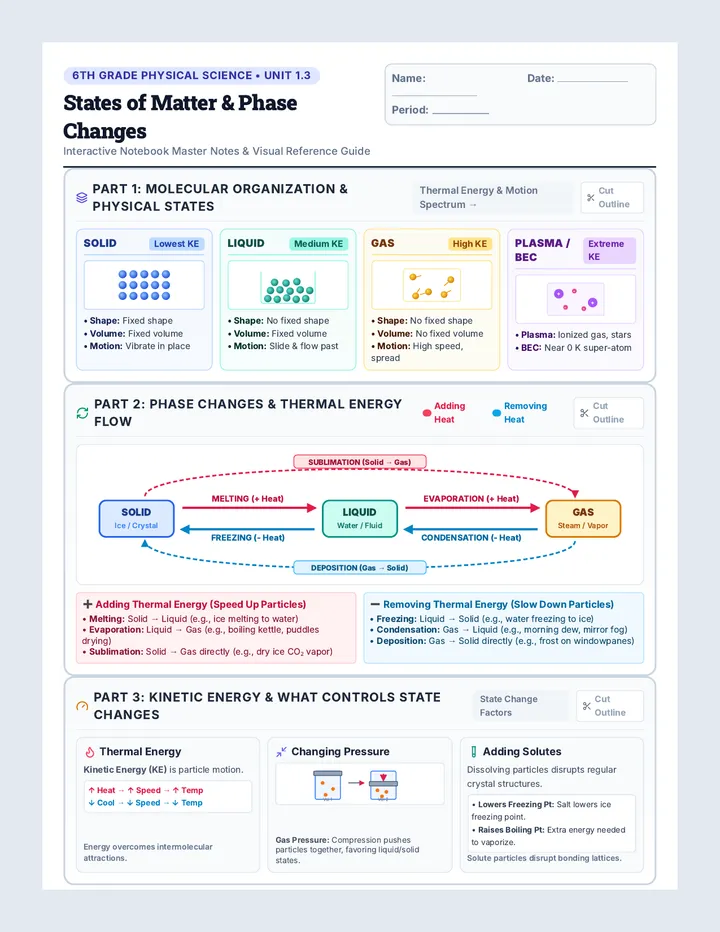
An interactive science notebook resource with states of matter master notes and vocabulary pack, where all parts and categories are enclosed in unified cut outlines with headers and scissor cues for easy cutting.

LN

Leah Nickols

Sequences

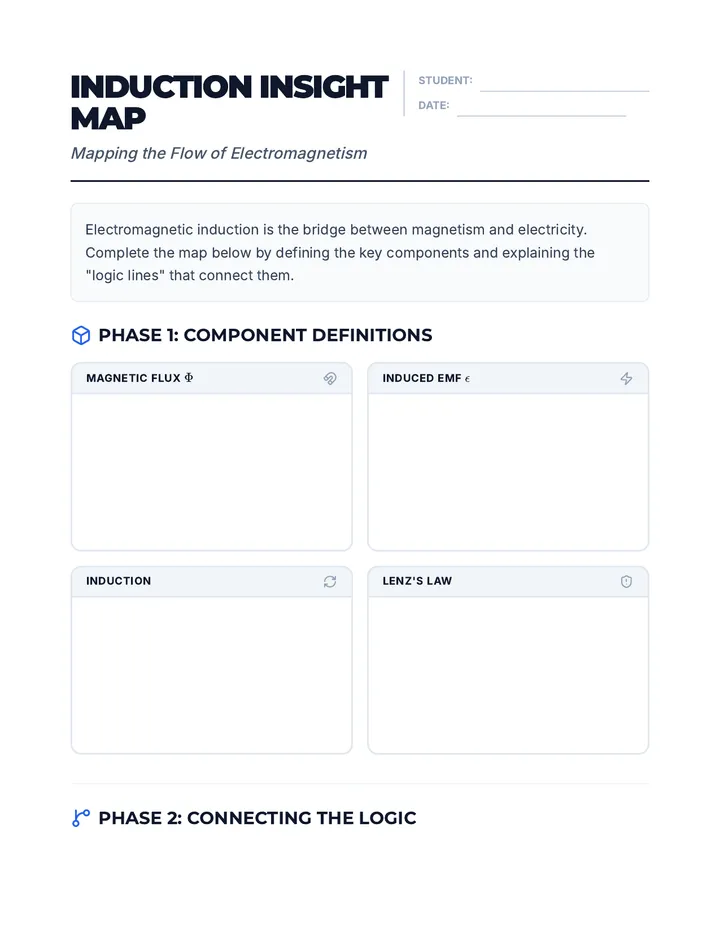
Induction Insight Map Handout

Magnetic Forces Investigation

A 5-day intensive exploration of magnetic forces and fields, focusing on atomic-level causes, field interactions, and mathematical modeling of forces on charged particles. Students progress from anchoring phenomena to complex mathematical applications and a comprehensive unit review.

OM

Olutoyin Makinde

68
Hess Pathfinders Slides

Energy in Chemical Bonds

A five-day high school chemistry unit exploring thermochemistry, collision theory, enthalpy diagrams, and calorimetry through the lens of body heat and chemical reactions. Students investigate the anchoring phenomenon of exercise-induced heat while mastering TEKS C.13 standards.

OM

Olutoyin Makinde

48
Pressure Poster Workshop Handout

Pressure Power

A comprehensive 5-day chemistry unit investigating the relationships between gas pressure, volume, temperature, and moles using lab inquiries, mathematical modeling, and real-world applications.

OM

Olutoyin Makinde

69
KMT Field Manual Packet

Molecular Mayhem Gas Unit

A 10-day exploration of the Behavior of Gases using Kinetic Molecular Theory, various gas laws, and real-world phenomena to understand gas behavior at both molecular and macroscopic scales. Students will investigate compressibility, gas variables, ideal behavior, and mixtures.

OM

Olutoyin Makinde

26
Volt Vibe Slides

Electrical Fundamentals

A comprehensive technical certification sequence designed to teach commercial coffee equipment technicians how to demystify electricity, safely troubleshoot components, and master electrical systems.

KO

Kyle Ousley

37
Science Squad Student Booklet

Science Literacy Journals

A multi-grade collection of scientific reading comprehension and response booklets designed to build disciplinary literacy in Earth, Life, and Physical sciences across elementary and middle school levels.

N

nmack

4

Lessons

Heat Flow Teacher Guide

Particle Behavior Review

A lesson focusing on the states of matter (solid, liquid, gas) and the behavior of particles at the molecular level. Students will model particle motion and arrangement, as well as the energy changes that drive phase transitions.

EA

Erica Andre

54
Flow State Reading Guide Expanded

Flow State

This lesson explores the fundamental properties of fluids, including the molecular differences between solids, liquids, and gases, the concept of density, and the characteristics of ideal fluids. Students will learn to distinguish states of matter through atomic interactions and apply the density formula to various substances.

CM

Chuguna Murugesan

33
Thermal Wilds Field Stimuli

Thermal Wilds

A science investigation exploring heat transfer mechanisms across dynamic ecosystems. Students examine three real-world natural phenomena to gather observational evidence and construct evidence-based Claim-Evidence-Reasoning (CER) arguments.

MN

Monica Nicolas

4
Matter Masters Frayer Packet

Matter Foundations Lab

An introductory physical science lesson exploring foundational matter concepts including atoms, elements, properties, and states of matter through multi-modal vocabulary organizers and differentiated supports.

PL

Patrick l

7
Cosmic Spark Reading

Cosmic Spark

A scaffolded science lesson introducing the Big Bang Theory. Designed with chunked text, visual cues, and immediate comprehension checks to support special education students in understanding the origin and expansion of our universe.

S

Shelby.Toll

5
Matter Mastermind Lab Notes

Matter Mastermind

This integrated lesson explores the properties of matter and the forces of gravity. Students will analyze scientific claims by identifying the reasons and evidence used to support them, bridging physical science concepts with critical reading skills.

MW

Mr Whitfield

9