Lenny.com
Explore
Create
ActivitiesNewMathEnglish Language ArtsScience & EngineeringSocial StudiesGlobal LanguagesHealth & Physical EducationSpecial EducationCounseling & Life SkillsArts & CreativityESL
Lenny.com
Lenny.com
Explore
Create
ActivitiesNewMathEnglish Language ArtsScience & EngineeringSocial StudiesGlobal LanguagesHealth & Physical EducationSpecial EducationCounseling & Life SkillsArts & CreativityESL
Lenny.com
Lenny.com

Solutions

Lenny for EducatorsLenny for SchoolsLenny for Districts

Product

ExploreSign inCreateSupportAbout

Resources

Getting startedMTSS Acceleration Program

Newsletters

School Funding Newsletter

© 2026 Lenny Learning Inc.

TermsPrivacyAccessibility
LinkedInInstagramX
Lenny

Engineering Design Process

Systematic problem-solving frameworks including defining constraints, prototyping, and iterative testing. Connects traditional methodologies with AI-enhanced modeling and predictive analysis for solution refinement.

Science & EngineeringLife ScienceLiving ThingsAnimalsPlantsBody SystemsTraitsAdaptationsCellsEcosystemsHeredityGenes to TraitsCell DivisionPhysicsComparing MaterialsShapes and PropertiesMagnetsMagnetismLightSoundLight and SoundMatterStates of MatterChanges of StateMixturesPhysical and Chemical ChangeHeating and CoolingHeat and Thermal EnergyEnergyForce and MotionElectrical CircuitsAtoms and MoleculesPeriodic TableMotion in One DimensionMotion in Two DimensionsScalars and VectorsForces and Laws of MotionCircular Motion and GravityMomentum and ImpulseWork, Energy, and PowerWavesElectromagnetic WavesGeometric OpticsElectricity and MagnetismSimple Harmonic MotionThermodynamicsNuclear PhysicsEarth Science & AstronomyWeatherWater CycleRocks and MineralsFossilsEarth's FeaturesEarth's ResourcesEarth's StructureWeather and ClimateEarth EventsFossils and Geologic TimePlate TectonicsHuman ImpactsAstronomyChemistryUnits and MeasurementAtomic StructurePeriodic TrendsChemical BondingNomenclatureMolecular StructureIntermolecular ForcesThe MoleStoichiometryProperties of GasesSolutionsChemical ReactionsBalancing EquationsEnergy ChangesRates of ReactionsEquilibriumAcids and BasesQuantum ModelBiologyClassificationCell StructureThe Chemistry of LifeBiomoleculesCellular TransportCell EnergyCell Growth and DivisionDNAProtein SynthesisMeiosis and Sexual ReproductionPatterns of InheritanceMulticellular OrganismsEvolutionEcologyBiodiversityComputer ScienceAlgorithms and Computational ThinkingProgramming LanguagesComputing SystemsNetworks and InternetData AnalysisCybersecurityAI and Machine LearningSoftware Design and DevelopmentBlockchainEngineering & AIDesigning ExperimentsEngineering PracticesDesign ThinkingEngineering Design ProcessMechanical EngineeringElectrical EngineeringMaterials and StructuresCAD and 3D DesignRoboticsArtificial Intelligence BasicsVibe CodingMachine LearningAI Ethics and SocietySystems ThinkingEntrepreneurship & InnovationEntrepreneurial MindsetBusiness Idea DevelopmentBusiness Plan BasicsMarketing & Customer DiscoveryFinancial Management for Startups

Videos

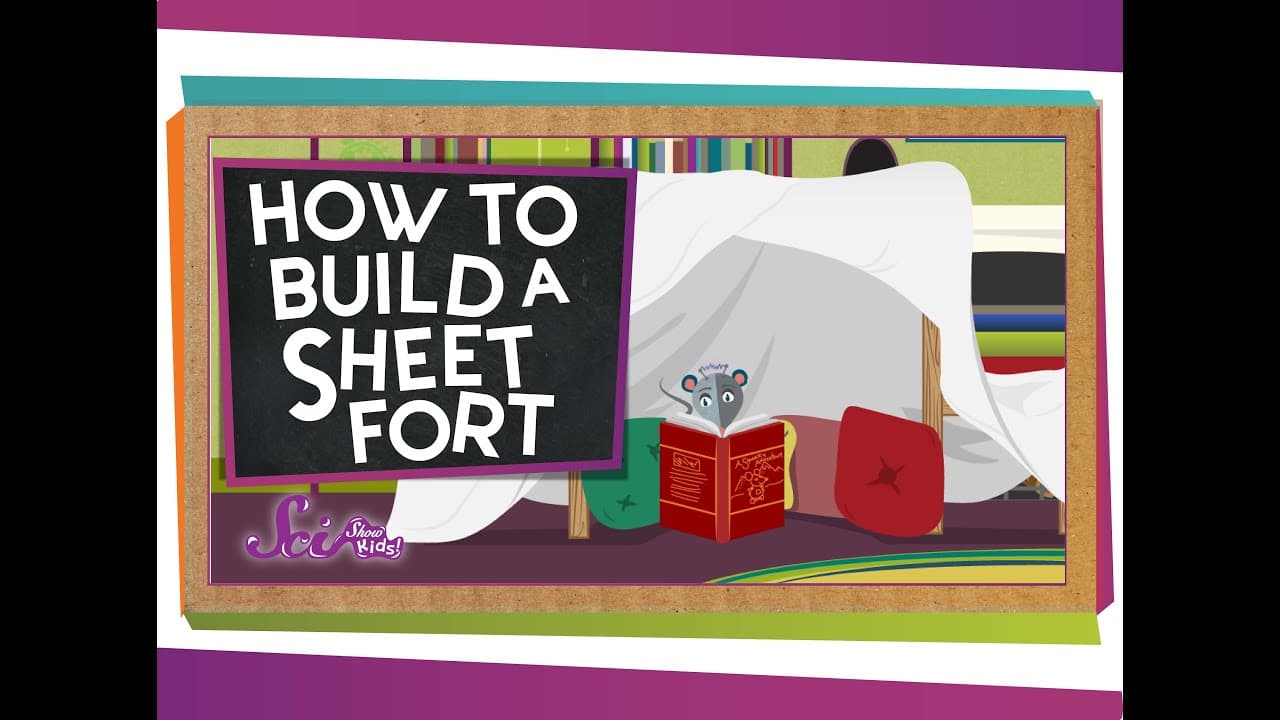
Building Blanket Forts with the Science of Tension

Building Blanket Forts with the Science of Tension

In this engaging episode of SciShow Kids, host Jessi and her robot friend Squeaks explore the physics behind a favorite childhood pastime: building blanket forts. The video transforms a fun rainy-day activity into an introductory engineering lesson by explaining how structures stay standing. Jessi demonstrates two specific methods for constructing forts—the basic draped sheet and the 'tent' style using a string—while explaining the scientific principles that make them work. The content focuses heavily on physical science concepts, specifically the idea of 'forces' (pushes and pulls) and 'tension' (a pulling force). The video draws a clear parallel between the mechanics of a blanket fort and the engineering of massive suspension bridges, showing students that the same physical laws apply to both. It introduces key vocabulary like 'tension,' 'anchors,' and 'engineers' in a highly accessible context. For educators, this video serves as an excellent hook for STEM challenges and physical science units. It provides a concrete, low-stakes environment for students to experiment with forces. Teachers can use this video to launch a classroom engineering design challenge where students must plan, build, and test structures, applying the concept of tension to create stability. It validates play as a form of scientific experimentation.

SciShow KidsSciShow Kids

3mins 16s

Exploring Space: Hubble, the ISS, and the James Webb Telescope

Exploring Space: Hubble, the ISS, and the James Webb Telescope

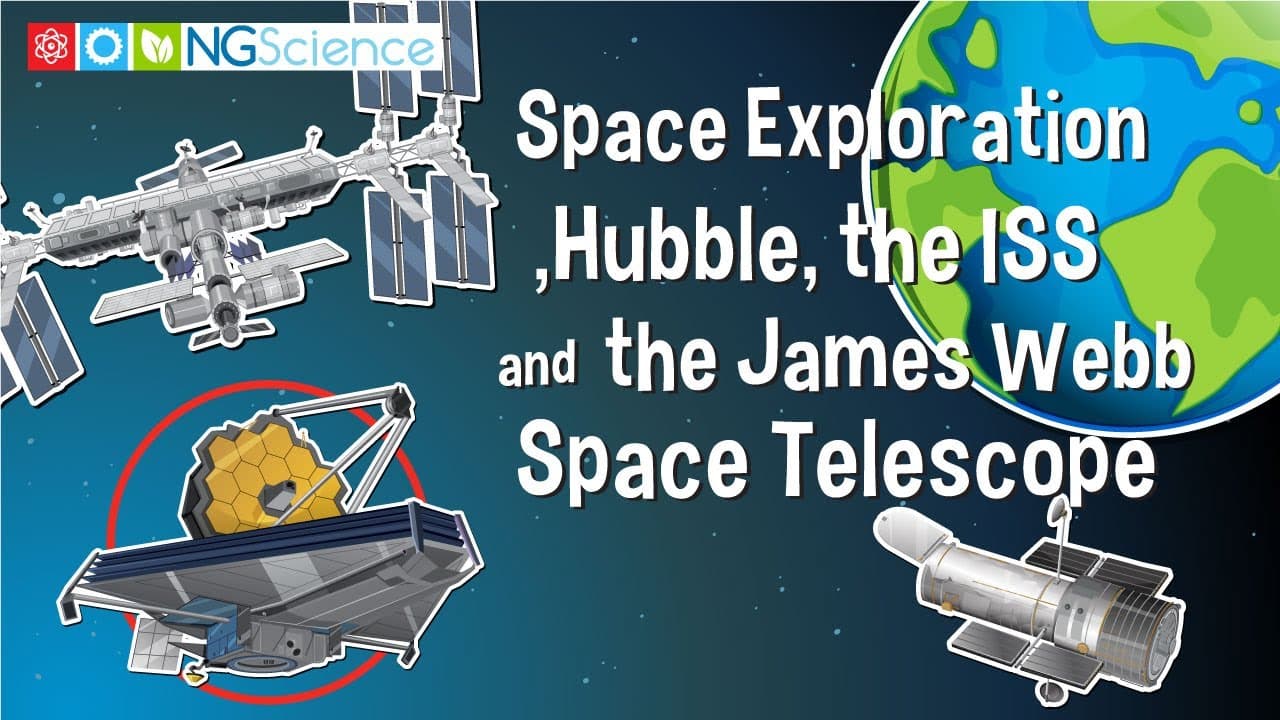
This educational video provides a concise yet comprehensive overview of humanity's presence in the solar system, moving from a broad look at our planetary neighborhood to specific human-made instruments orbiting in space. It begins by establishing the scale of the solar system, identifying the sun, planets, moons, and asteroids, before zooming in on Earth. The narrative then expands outward, introducing three critical pieces of space technology: the Hubble Space Telescope, the International Space Station (ISS), and the James Webb Space Telescope (JWST). A key focus of the video is illustrating the relative distances of these objects from Earth. Using clear animations and on-screen metrics (in both kilometers and miles), it visually demonstrates the vast difference between the Low Earth Orbit of the Hubble and ISS compared to the distant orbit of the Moon and the even more distant vantage point of the James Webb Telescope. This visual comparison helps students grasp the concept of space scale and orbital mechanics in an accessible way. For educators, this resource serves as an excellent bridge between lessons on the solar system and units on space exploration technology. It introduces complex concepts like the L2 Lagrange point and orbital distances with simple visuals, making it a valuable tool for discussing how astronomers study the universe. The video highlights themes of engineering marvels and international cooperation, providing multiple entry points for classroom discussion.
Next Generation ScienceNext Generation Science

1min 58s

How to Build a Mars Helicopter Model

How to Build a Mars Helicopter Model

Join Anthony and his robot pal Squeaks to explore the fascinating engineering behind NASA's Ingenuity helicopter, the first machine designed to fly on Mars. This engaging video breaks down the science of flight, comparing how helicopters work on Earth versus the unique challenges posed by the thin Martian atmosphere. Viewers learn how scientists solved these problems using specific design features like lightweight materials and extra-long, fast-spinning blades. The video transitions from theory to practice by guiding students through a hands-on STEM activity: building their own paper helicopter models. It demonstrates the importance of scientific modeling and introduces the engineering design process, encouraging viewers to test, observe, and iterate on their designs—just like real NASA engineers. This resource is an excellent tool for introducing elementary students to concepts of aerodynamics, planetary science, and engineering. It seamlessly connects complex space exploration topics with a simple, accessible classroom craft, making it perfect for lessons on the scientific method, variables, and the perseverance required in problem-solving.

SciShow KidsSciShow Kids

6mins 41s

How to Engineer a Robot Rescue Mission

How to Engineer a Robot Rescue Mission

In this engaging episode of Crash Course Kids, host Sabrina Cruz introduces students to the engineering design process through a relatable real-world problem: she dropped her phone down a storm drain. Instead of panicking, she uses this scenario to demonstrate how engineers define problems, brainstorm solutions, and design technologies to overcome challenges. The video breaks down complex concepts like isolating variables and conducting trials into accessible, bite-sized explanations.

Crash Course KidsCrash Course Kids

4mins 27s

How Engineers Use Variables to Solve Problems

How Engineers Use Variables to Solve Problems

This educational video introduces students to the critical concept of variables within the engineering design process. Using the relatable framework of asking "What If" questions, the host explains how engineers identify and manipulate different factors to test the success of their solutions. The video distinguishes between variables that can be controlled (like the weight or design of a prototype) and those that cannot (like gravity or wind), providing a clear foundation for scientific testing. The content reviews the standard engineering process—from defining a problem to building a prototype—before focusing specifically on how variables influence outcomes. Through animated examples involving bouncing balls and a hang glider attempting to cross a gorge, the video demonstrates practical applications of these abstract concepts. It emphasizes that identifying variables allows engineers to predict potential failures and refine their designs before real-world implementation. For educators, this video serves as an excellent bridge between general problem-solving and specific scientific methodology. It simplifies the often-confusing topic of variables (independent, dependent, and constants) by framing them as "conditions we can change" versus "conditions we can't." This makes it highly useful for preparing students for science fair projects, STEM challenges, or any unit focusing on experimental design and the scientific method.

Crash Course KidsCrash Course Kids

3mins 55s

Surviving the Red Planet: Challenges of Living on Mars

Surviving the Red Planet: Challenges of Living on Mars

This educational video explores the scientific and logistical challenges of human colonization on Mars, contrasting the Red Planet's harsh environment with Earth's ideal life-sustaining conditions. It takes viewers on a visual journey from the lush biodiversity of Earth to the barren, dusty landscapes of Mars, explaining the fundamental requirements for life—such as breathable air, liquid water, and suitable temperatures—and how Mars lacks these essentials.

Next Generation ScienceNext Generation Science

7mins 14s

Materials

Load Lab Vocabulary Guide

Load Lab Vocabulary Guide

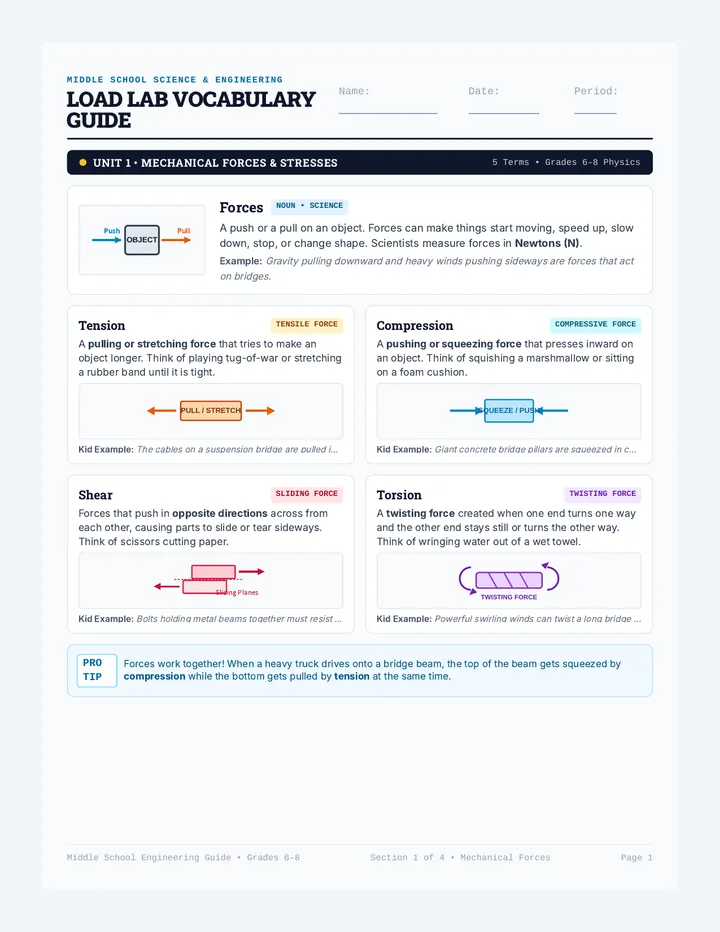
A four-page illustrated vocabulary guide tailored for 6th to 8th graders covering 21 structural engineering and scientific inquiry terms with relatable middle school definitions, real-world examples, and custom vector diagrams.

TC

Theresa Crafts

Lean Factory Challenge Worksheet

Lean Factory Challenge Worksheet

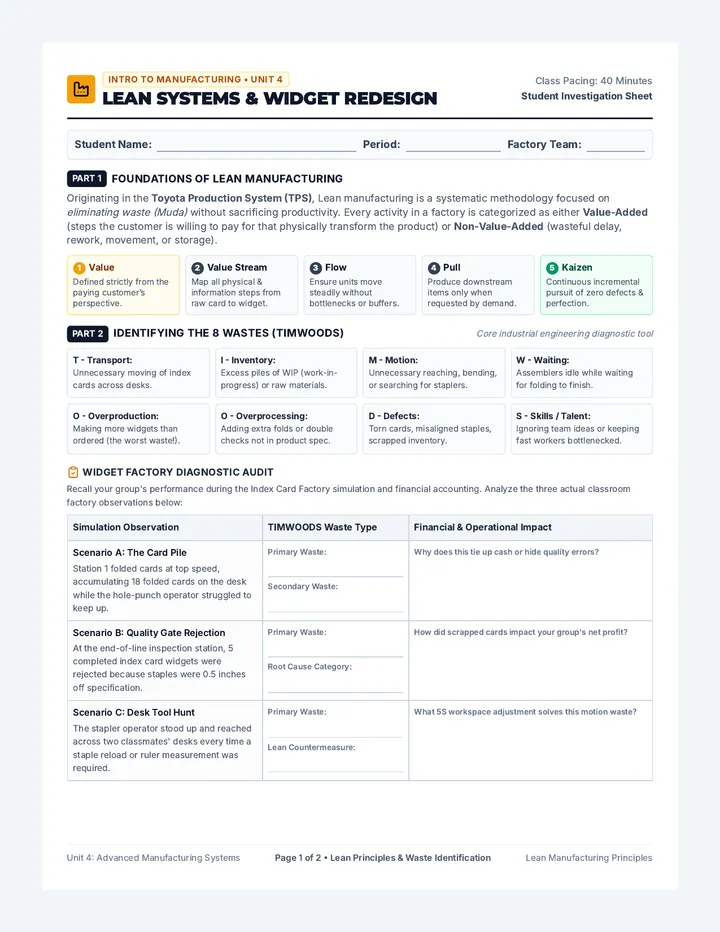
A 2-page print-ready student worksheet introducing core Lean Manufacturing principles, TIMWOODS waste identification, and pull production systems with digital resource links. Students analyze their recent index-card widget factory simulation, eliminate assembly bottlenecks, and evaluate real-world industrial continuous improvement strategies.

CT

Corey Turcheck

PVC Parallel Bars Workbook

PVC Parallel Bars Workbook

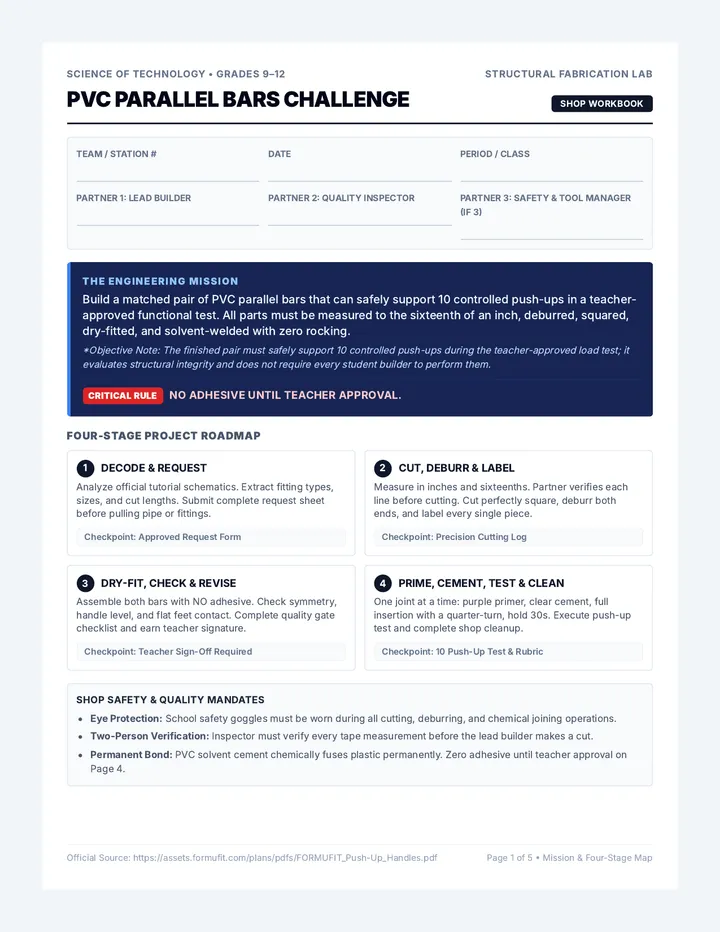
A comprehensive 5-page student workbook for the PVC Parallel Bars Challenge in Grade 9-12 Science of Technology. Features tight individual crops of only the original FORMUFIT black line-art silhouettes on Page 2, a 14-piece cutting log on Page 3, official 4-step assembly diagrams on Page 4, and consistent shop deburring terminology throughout.

KI

Koah Ing

Coding Pioneers Worksheet

Coding Pioneers Worksheet

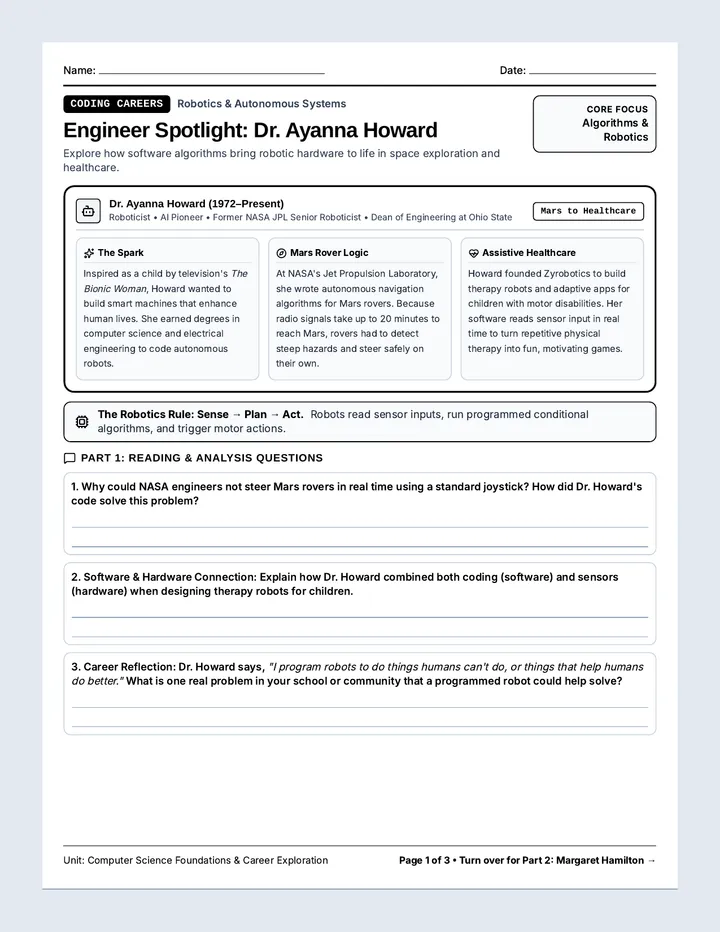
A printer-friendly black-and-white edition of the three-page computer science packet featuring Dr. Ayanna Howard (Page 1), Margaret Hamilton (Page 2), and an independent digital research lab (Page 3), optimized for crisp monochrome photocopying and minimal toner use.

M

Megan.Tanner

Cord Wrap Blueprint Worksheet

Cord Wrap Blueprint Worksheet

A friendly, 4th-grade-accessible two-page printable engineering worksheet for designing a 3D-printed headphone cord wrap in Tinkercad. Features simple caliper and ruler prompts, playful concept sketch boxes, a millimeter drawing grid, a Tinkercad shape recipe builder, and an easy-to-follow 3D print checklist.

N

nmack

Eco-Hero Innovation Worksheet

Eco-Hero Innovation Worksheet

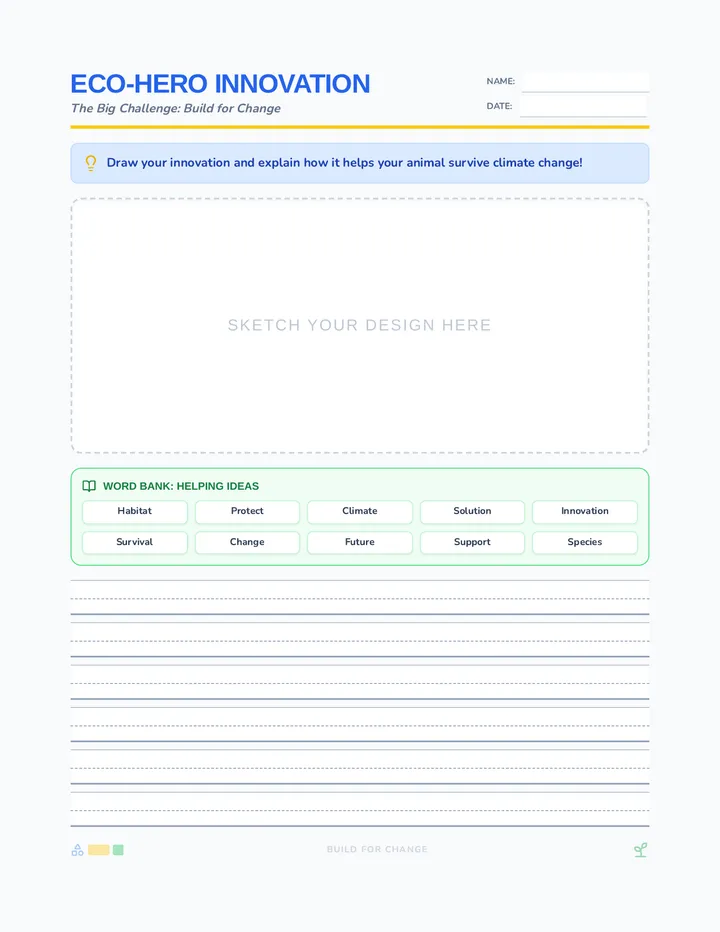
A finalized creative writing and drawing worksheet for 'The Big Challenge'. Features a spacious drawing box, a student-friendly word bank, and six sets of primary-style handwriting lines with clear top, mid (dashed), and baseline boundaries, all fitted to a single page.

N

nmack

Sequences

Planet Profile Slides

Infinite Frontier

A comprehensive Hi-Lo unit for 6th graders exploring the scale of the universe, our place in the Milky Way, the technology used to explore space, and the history of human spaceflight.

JS

Janette Sullivan

54
Vowel Valley Fluency Packet Mastered

Phonics Fluency Fun

A series of phonics lessons focusing on vowel teams, digraphs, and other phonetic patterns through narrative passages and fluency drills.

N

npowers

28
Naval Architect Challenge Answer Key

Fluid Dynamics

A series of lessons exploring the physics of fluids, including buoyancy, pressure, and fluid flow.

CM

Chuguna Murugesan

28
Malware Mutiny Lesson Plan

Digital Defense Unit

A multi-part cybersecurity unit focusing on defensive strategies, from identifying malicious threats to mastering network access control and traffic filtering.

KW

Karen Wright

13
Induction Insight Map Handout

Magnetic Forces Investigation

A 5-day intensive exploration of magnetic forces and fields, focusing on atomic-level causes, field interactions, and mathematical modeling of forces on charged particles. Students progress from anchoring phenomena to complex mathematical applications and a comprehensive unit review.

OM

Olutoyin Makinde

68
Volt Vibe Slides

Electrical Fundamentals

A comprehensive technical certification sequence designed to teach commercial coffee equipment technicians how to demystify electricity, safely troubleshoot components, and master electrical systems.

KO

Kyle Ousley

37