Lenny.com
Explore
Create
ActivitiesNewMathEnglish Language ArtsScience & EngineeringSocial StudiesGlobal LanguagesHealth & Physical EducationSpecial EducationCounseling & Life SkillsArts & CreativityESL
Lenny.com
Lenny.com
Explore
Create
ActivitiesNewMathEnglish Language ArtsScience & EngineeringSocial StudiesGlobal LanguagesHealth & Physical EducationSpecial EducationCounseling & Life SkillsArts & CreativityESL
Lenny.com
Lenny.com

Solutions

Lenny for EducatorsLenny for SchoolsLenny for Districts

Product

ExploreSign inCreateSupportAbout

Resources

Getting startedMTSS Acceleration Program

© 2026 Lenny Learning Inc.

TermsPrivacyAccessibility
LinkedInInstagramX
Lenny

Earth Events

Volcanic eruptions, earthquakes, and landslides as rapid changes to Earth's surface. Examines slow processes like weathering and erosion to illustrate how landforms evolve over time.

Science & EngineeringLife ScienceLiving ThingsAnimalsPlantsBody SystemsTraitsAdaptationsCellsEcosystemsHeredityGenes to TraitsCell DivisionPhysicsComparing MaterialsShapes and PropertiesMagnetsMagnetismLightSoundLight and SoundMatterStates of MatterChanges of StateMixturesPhysical and Chemical ChangeHeating and CoolingHeat and Thermal EnergyEnergyForce and MotionElectrical CircuitsAtoms and MoleculesPeriodic TableMotion in One DimensionMotion in Two DimensionsScalars and VectorsForces and Laws of MotionCircular Motion and GravityMomentum and ImpulseWork, Energy, and PowerWavesElectromagnetic WavesGeometric OpticsElectricity and MagnetismSimple Harmonic MotionThermodynamicsNuclear PhysicsEarth Science & AstronomyWeatherWater CycleRocks and MineralsFossilsEarth's FeaturesEarth's ResourcesEarth's StructureWeather and ClimateEarth EventsFossils and Geologic TimePlate TectonicsHuman ImpactsAstronomyChemistryUnits and MeasurementAtomic StructurePeriodic TrendsChemical BondingNomenclatureMolecular StructureIntermolecular ForcesThe MoleStoichiometryProperties of GasesSolutionsChemical ReactionsBalancing EquationsEnergy ChangesRates of ReactionsEquilibriumAcids and BasesQuantum ModelBiologyClassificationCell StructureThe Chemistry of LifeBiomoleculesCellular TransportCell EnergyCell Growth and DivisionDNAProtein SynthesisMeiosis and Sexual ReproductionPatterns of InheritanceMulticellular OrganismsEvolutionEcologyBiodiversityComputer ScienceAlgorithms and Computational ThinkingProgramming LanguagesComputing SystemsNetworks and InternetData AnalysisCybersecurityAI and Machine LearningSoftware Design and DevelopmentBlockchainEngineering & AIDesigning ExperimentsEngineering PracticesDesign ThinkingEngineering Design ProcessMechanical EngineeringElectrical EngineeringMaterials and StructuresCAD and 3D DesignRoboticsArtificial Intelligence BasicsVibe CodingMachine LearningAI Ethics and SocietySystems ThinkingEntrepreneurship & InnovationEntrepreneurial MindsetBusiness Idea DevelopmentBusiness Plan BasicsMarketing & Customer DiscoveryFinancial Management for Startups

Videos

How Nature Makes Soil: Rocks, Rot, and Time

How Nature Makes Soil: Rocks, Rot, and Time

In this engaging episode of SciShow Kids, Jessi and her robot mouse friend Squeaks investigate a fundamental question about the ground beneath our feet: where does soil come from? While students might know that birds come from eggs and trees grow from seeds, the origin of soil is less obvious. The video breaks down the geological and biological recipes for making dirt, explaining how nature constantly manufactures soil through slow, powerful processes involving wind, water, and living organisms. Key scientific concepts explored include weathering—the breakdown of rocks into smaller particles—and the vital role of organic matter. The video details specific weathering agents like crashing waves, freezing ice, and plant roots, illustrating how massive boulders eventually become tiny grains of sand or clay. It also introduces the concept of nutrients derived from decomposing plant and animal matter, teaching students how to identify healthy, fertile soil based on its color and texture. This video is an excellent resource for early elementary earth science lessons. It simplifies abstract geological timescales and complex decomposition processes into concrete, observable examples. Teachers can use this video to launch outdoor inquiry activities, guiding students to act as "soil scientists" who examine local dirt for evidence of organic matter and weathering, thereby connecting classroom science to their immediate environment.

SciShow KidsSciShow Kids

5mins 29s

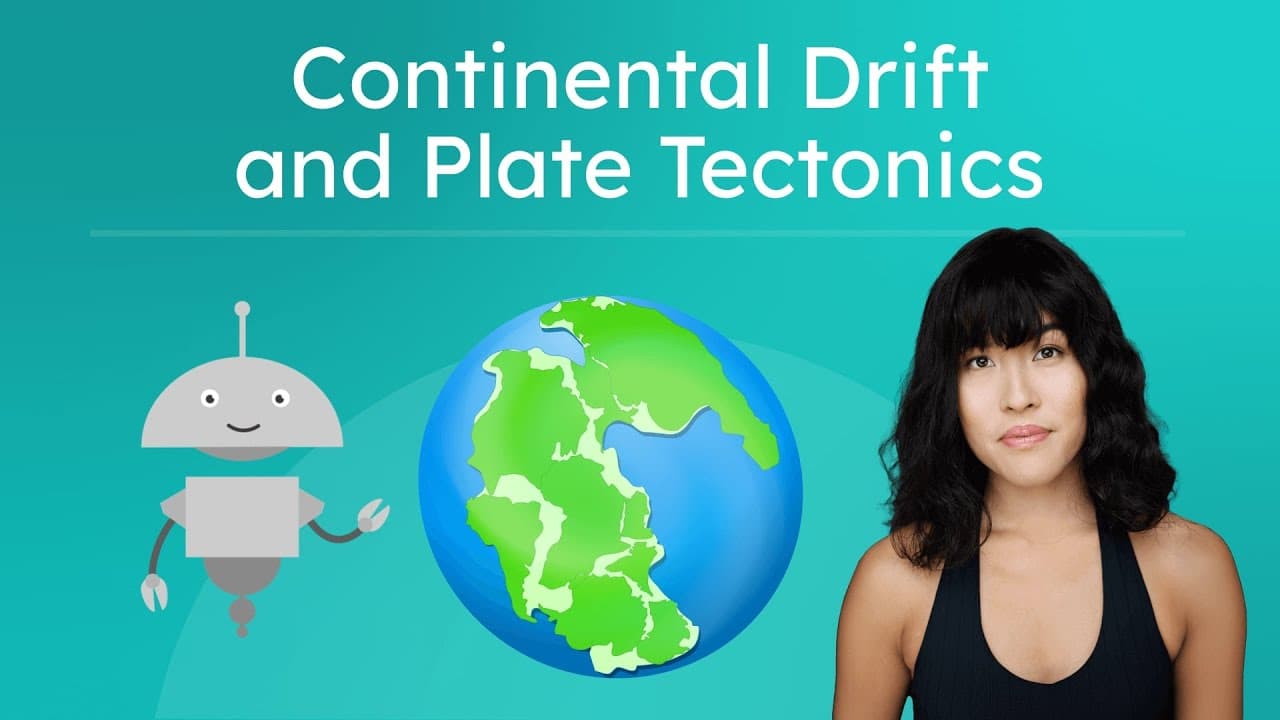
How Plate Tectonics Shape Our Planet

How Plate Tectonics Shape Our Planet

This engaging earth science video explores the fascinating geological history of our planet, specifically focusing on how the Earth's surface has changed over millions of years. It introduces students to the concept of the Earth as a giant puzzle, explaining the connection between the historical theory of Continental Drift and the modern theory of Plate Tectonics. The narrator guides viewers through the scientific journey of Alfred Wegener, whose initial hypothesis about a supercontinent called Pangaea was rejected until fossil and rock evidence later confirmed that continents do indeed move.

Miacademy & MiaPrep Learning ChannelMiacademy & MiaPrep Learning Channel

9mins 36s

The Wonders of Water: Rivers, Erosion, and the Water Cycle

The Wonders of Water: Rivers, Erosion, and the Water Cycle

In this comprehensive compilation from SciShow Kids, Jessi and her robot rat friend Squeaks take students on a journey to explore everything about Earth's water. The video is divided into three distinct segments: first, investigating where the water in our faucets comes from by exploring groundwater, rivers, oceans, and glaciers; second, a debate between puppet characters Bill and Webb about whether wind or water is a stronger force of nature, leading to a lesson on erosion and landforms; and third, a theatrical performance that dramatizes the stages of the water cycle. Key themes include the geography of water (rivers, lakes, oceans), the states of matter (liquid water, solid ice, water vapor), and the geological forces of erosion and weathering. The video covers specific landforms like the Grand Canyon, sand dunes, and stone arches, explaining how they were formed over millions of years. It also breaks down the water cycle into its four main components: evaporation, condensation, precipitation, and collection, using a play-within-a-video format to model these abstract concepts. This video is highly valuable for elementary science classrooms as it connects everyday experiences (turning on a tap, seeing rain) to global systems. It models scientific inquiry through Squeaks' hypothesis testing and uses engaging visual aids—including maps, real-world footage, and puppetry—to make complex topics like geological time and phase changes accessible. The variety of segments allows teachers to use the video as a whole or break it down to teach specific units on hydrology, geology, or weather.
SciShow KidsSciShow Kids

16mins 44s

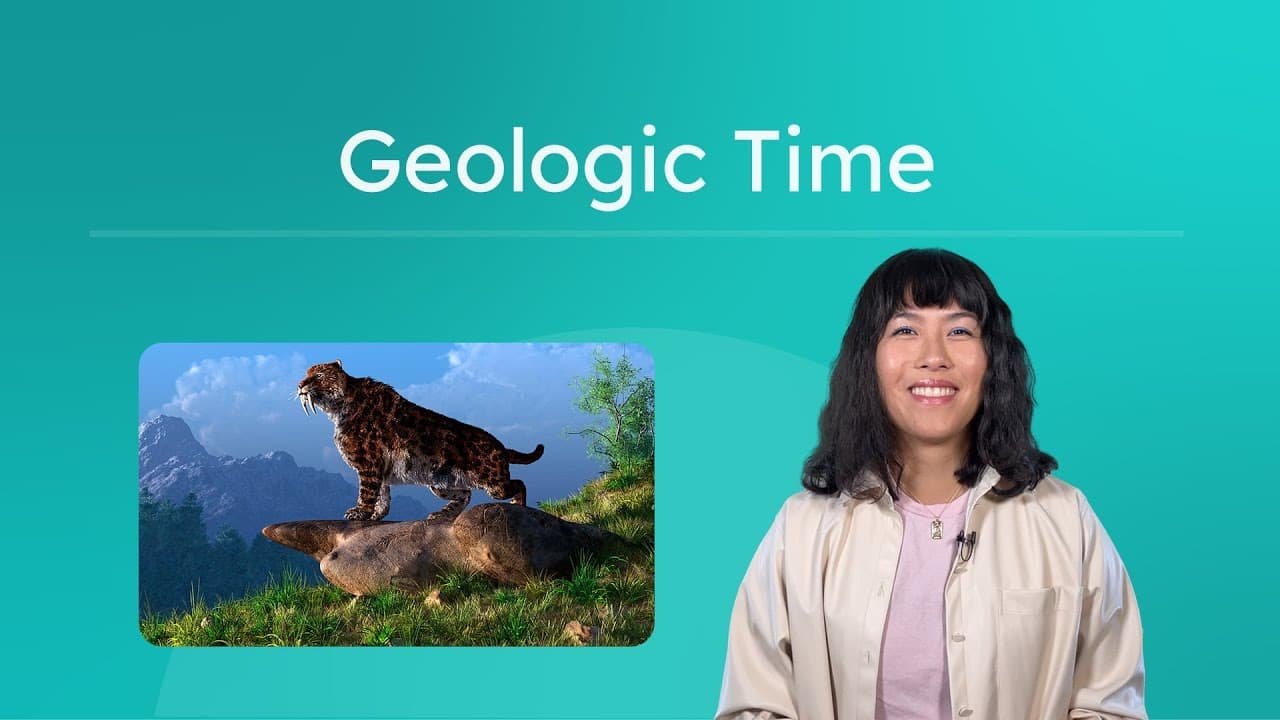
Traveling Through the History of Life on Earth

Traveling Through the History of Life on Earth

This engaging video takes students on a "time-traveling" journey through the history of life on Earth, breaking down the vast expanse of geologic time into understandable segments. Hosted by an energetic presenter, the video uses a recurring timeline graphic and rich visuals to illustrate the four major eons and eras: Precambrian, Paleozoic, Mesozoic, and Cenozoic. It explains how scientists divide time based on major shifts in life forms rather than equal time increments, providing a clear framework for understanding Earth's biological history. Key themes include the evolution of cellular life from prokaryotes to eukaryotes, the colonization of land by plants and animals, and the cyclical nature of mass extinctions followed by rapid diversification. The video details specific periods like the Cambrian Explosion, the Carboniferous period (source of fossil fuels), and the Age of Dinosaurs, while also highlighting critical evolutionary milestones like the development of oxygen by cyanobacteria and the rise of mammals. It emphasizes adaptation, environmental changes, and the relatively short time humans have existed compared to Earth's history. For educators, this video serves as an excellent anchor for units on evolution, Earth science, or biology. It visualizes abstract concepts like "deep time" through a proportional pie chart and linear timeline, making the billions of years of Earth's history graspable for students. The clear segmentation of eras allows teachers to pause and focus on specific time periods, while the discussion of mass extinctions provides natural entry points for exploring climate change and environmental stability.

Miacademy & MiaPrep Learning ChannelMiacademy & MiaPrep Learning Channel

14mins 7s

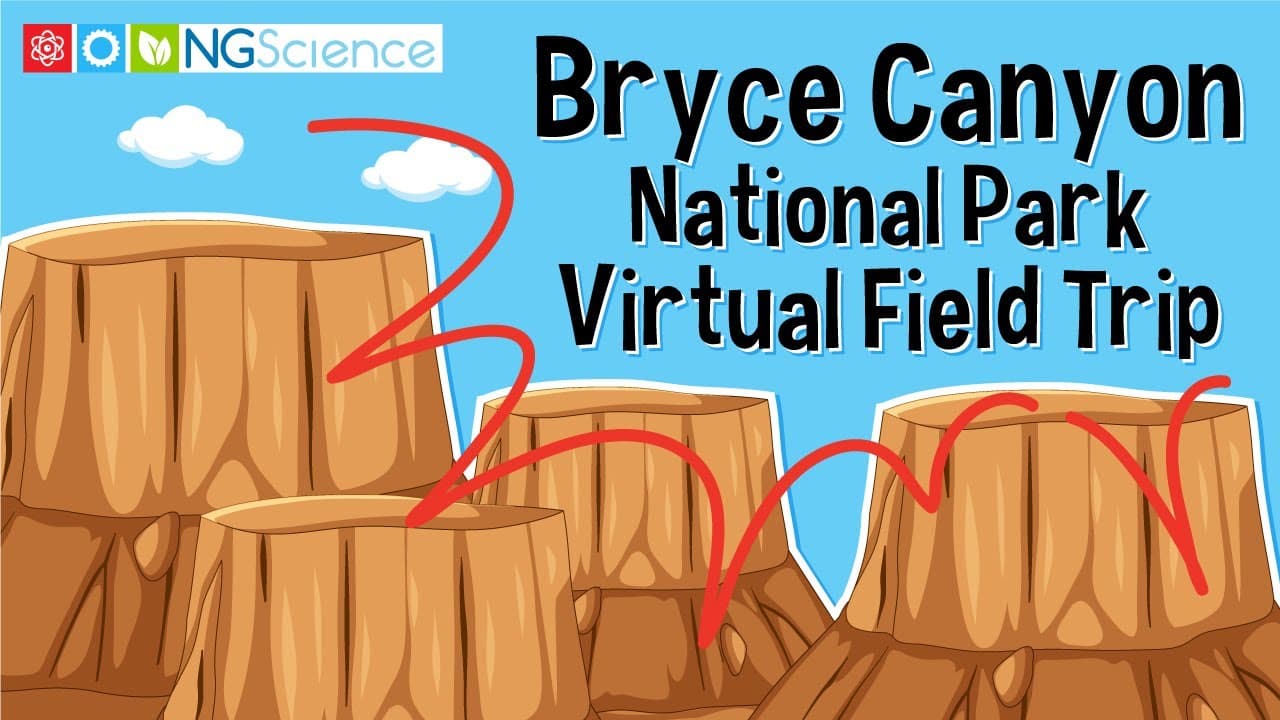
Exploring Bryce Canyon: How Hoodoos Form Through Weathering and Erosion

Exploring Bryce Canyon: How Hoodoos Form Through Weathering and Erosion

This virtual field trip takes students on an immersive journey to Bryce Canyon National Park in southwestern Utah to explore its unique geological and biological features. The video serves as a comprehensive case study for understanding Earth science concepts, specifically focusing on the twin forces of weathering and erosion. Viewers are guided through the park's high-altitude ecosystems, observing the distinct flora and fauna that thrive in this high desert environment before diving deep into the geological history of the landscape. The content meticulously explains the formation of the park's most iconic structures: the hoodoos. Through clear narration and helpful animations, the video breaks down the mechanism of frost wedging—a physical weathering process where water freezes and expands within rock cracks. It illustrates the geological lifecycle of the landscape, showing how flat plateaus erode into narrow fins, which eventually weather down into the spire-like hoodoos that define the canyon today. Ideally suited for upper elementary and middle school science curriculums, this video provides real-world examples of abstract geological concepts. Teachers can use it to visualize the difference between weathering (breaking down) and erosion (moving away), discuss the impact of climate on landscapes, and explore how physical forces shape the Earth's surface over millions of years.

Next Generation ScienceNext Generation Science

5mins 37s

What Causes the Ground to Shake?

What Causes the Ground to Shake?

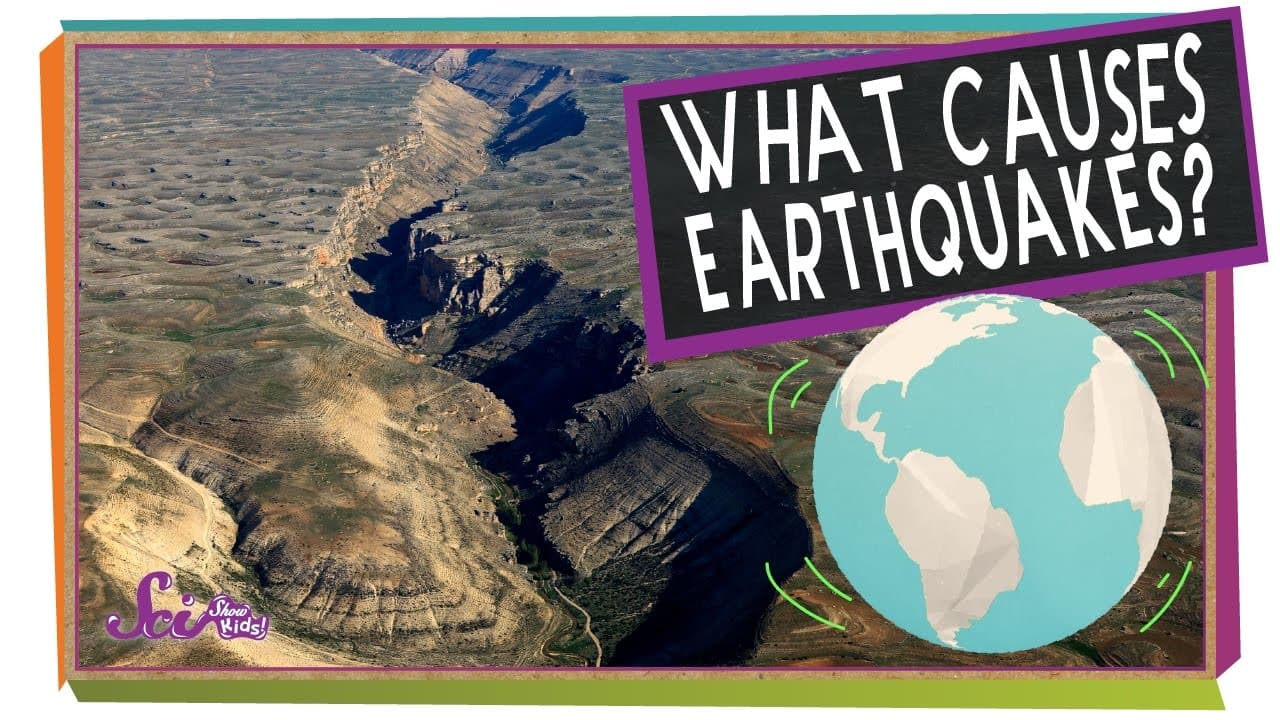
This engaging science video explains the geological causes of earthquakes for young learners using clear analogies and visual demonstrations. Hosted by Jessi from SciShow Kids, the video breaks down complex concepts like plate tectonics, faults, and seismic pressure into digestible segments suitable for elementary students. It transforms the scary concept of the ground shaking into a understandable scientific phenomenon driven by the movement of Earth's crust. The content covers key geological topics including the layers of the Earth, tectonic plates, fault lines, and how pressure builds up underground. It uses relatable comparisons—such as a jigsaw puzzle to explain tectonic plates and a stuck door to explain pressure release—to help students visualize processes they cannot see. The video also introduces specific vocabulary like "crust," "plates," "fault," and "pressure." Teachers can use this video as a perfect introduction to earth science units, specifically for lessons on geology, natural disasters, or changes to the Earth's surface. It provides excellent visual models that can be easily replicated in the classroom with simple manipulatives, making abstract large-scale concepts concrete for young minds.

SciShow KidsSciShow Kids

3mins 46s

Materials

Rock Record IEP Assessment

Rock Record IEP Assessment

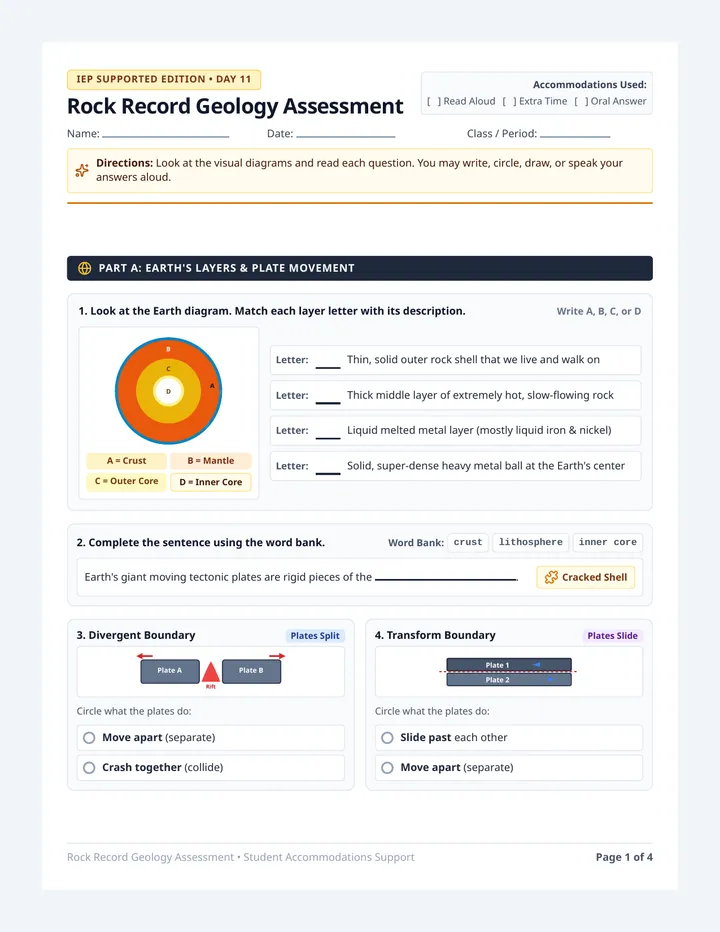
Enhanced 4-page IEP-adapted geology assessment featuring rich visual diagrams: Earth layer cross-sections, tectonic plate boundary arrows, subduction trench illustrations, 3-rock-type formation graphics, rock cycle flow paths, textured strata cross-sections, and earthquake safety icons.

CS

Courtney Scherer

Wild Weather Reading Worksheet

Wild Weather Reading Worksheet

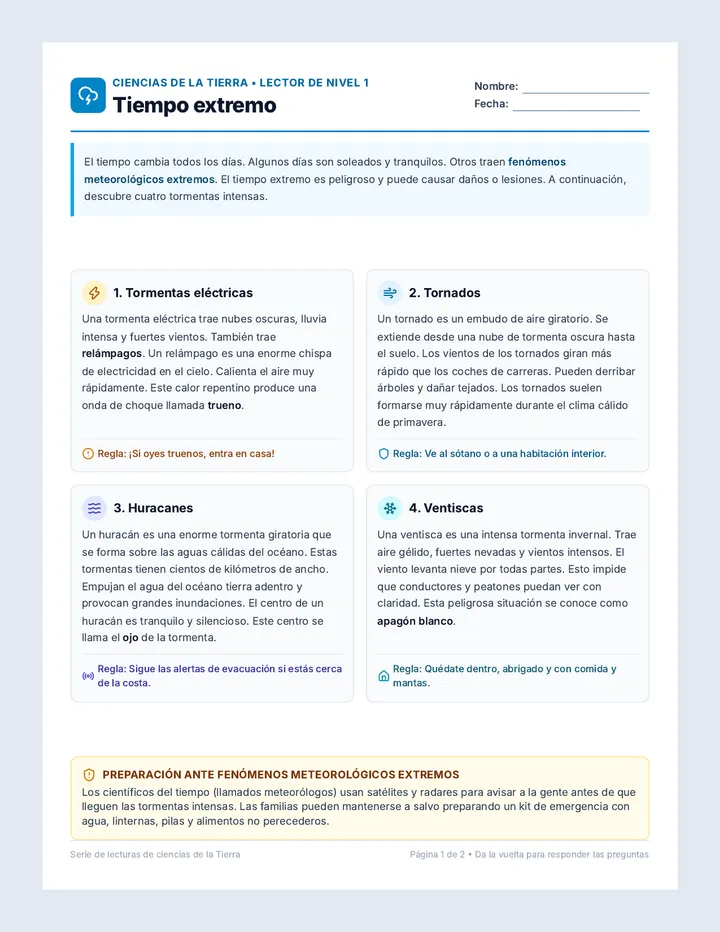
A two-page printable reading comprehension worksheet covering severe weather events including thunderstorms, tornadoes, hurricanes, and blizzards. Features accessible, simplified text with vocabulary matching, multiple-choice questions, and evidence-based short-answer prompts.

EG

Emily Gianni

Tsunami Surge Doodle Notes

Tsunami Surge Doodle Notes

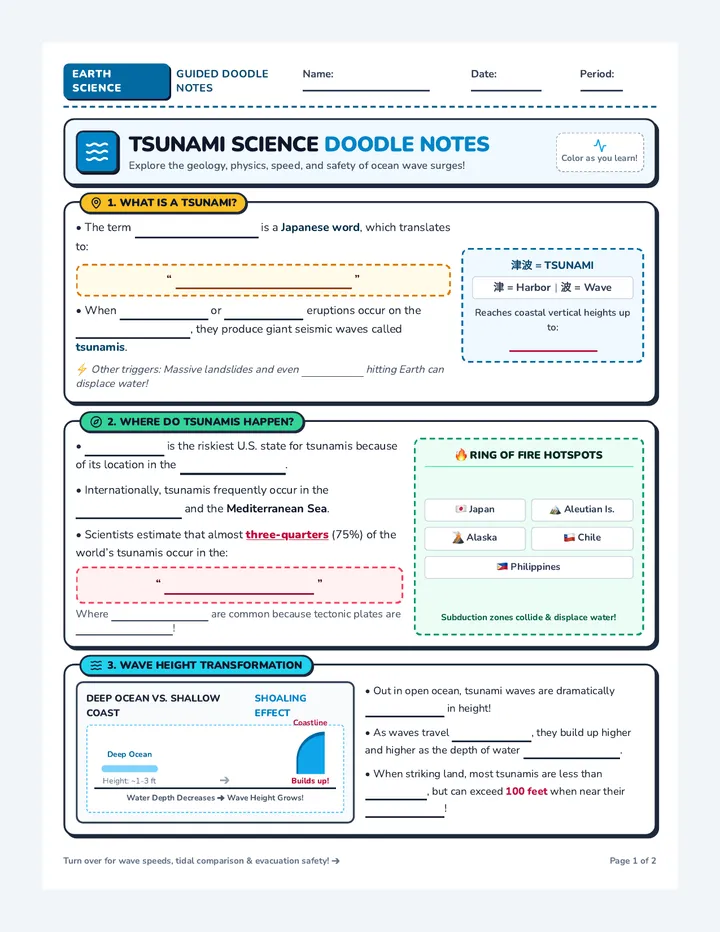
A fun, print-ready two-page doodle notes worksheet covering tsunami origins, triggers, global hotspots, wave height changes, speed physics, differences from tidal waves, detection buoys, and emergency evacuation steps. Features engaging hand-drawn frames, coloring spots, visual diagrams, and clean handwriting blanks.

A

Andrea.Golden

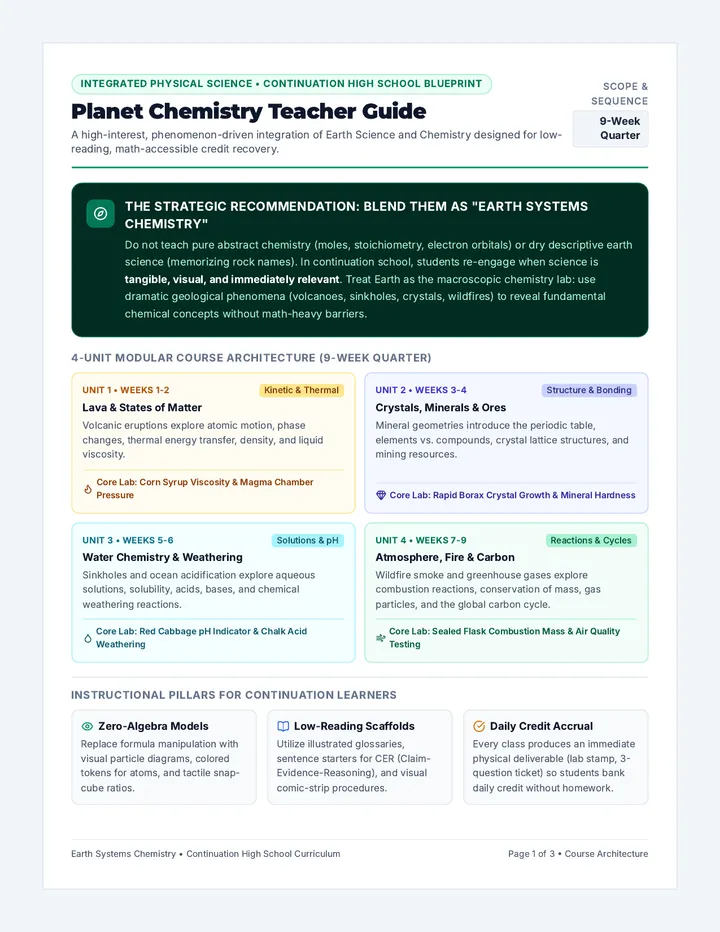
Planet Chemistry Teacher Guide

Planet Chemistry Teacher Guide

A comprehensive curriculum blueprint integrating chemistry and earth science specifically tailored for continuation high school students. Features four accessible, hands-on units, low-math lab investigations, and structured literacy supports for credit recovery.

MH

Meagan Hudson

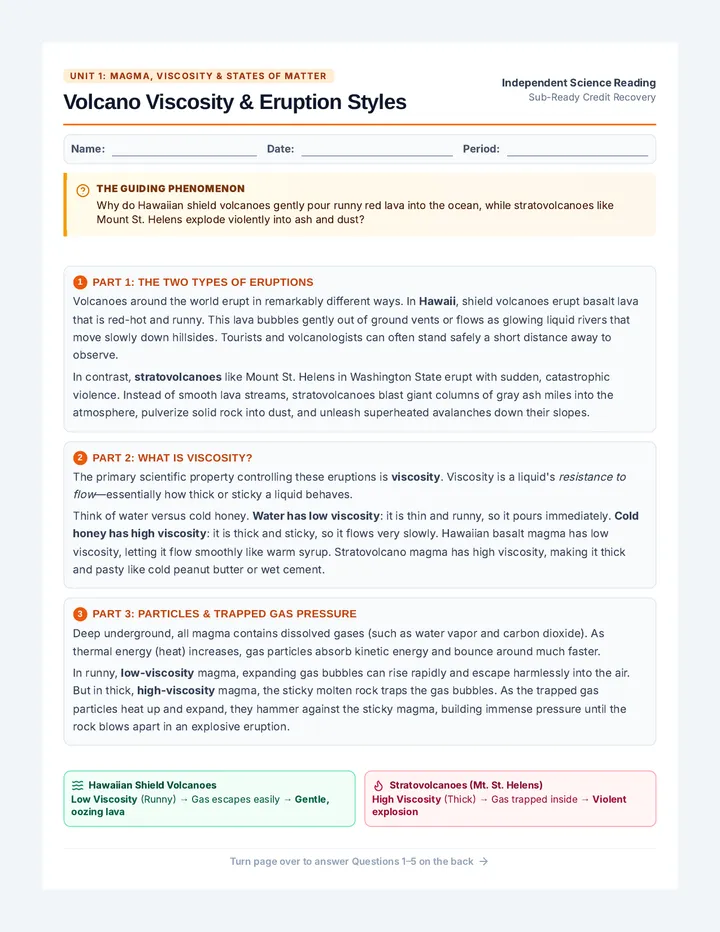
Volcano Viscosity Reading Worksheet

Volcano Viscosity Reading Worksheet

A digital Kami-optimized front-and-back science reading and analysis worksheet on magma viscosity, particle motion, and volcanic eruption styles, featuring spacious digital typing boxes and annotation-friendly layout.

MH

Meagan Hudson

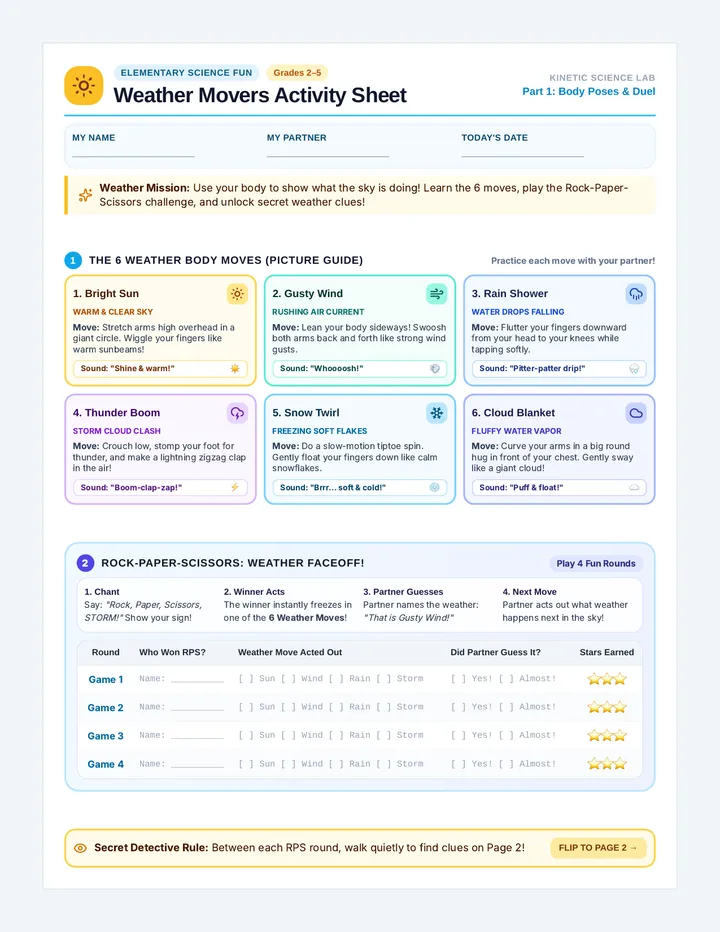
Weather Movers Activity Sheet

Weather Movers Activity Sheet

A 4-page elementary-friendly science activity pack featuring full-body weather movements, an RPS movement duel, classroom clue hunt, weather comic art studio, TV forecaster extension task, and printable cut-out picture cards.

S

Sara

Sequences

Earthquake Anchor Chart

Disaster Detectives

A series of lessons focused on understanding different natural disasters, their causes, impacts, and safety protocols through structured writing and investigation.

CO

Catherine Onessimo

18
Volcano Quest Slides

Ring of Fire Detectives

A comprehensive 5E science sequence where students investigate global volcano patterns to discover the 'Ring of Fire' and evaluate the likelihood of volcanic activity in their own region. Students use data mapping, research, and CER (Claim, Evidence, Reasoning) to build their scientific arguments.

AN

Alexis Nelson

6
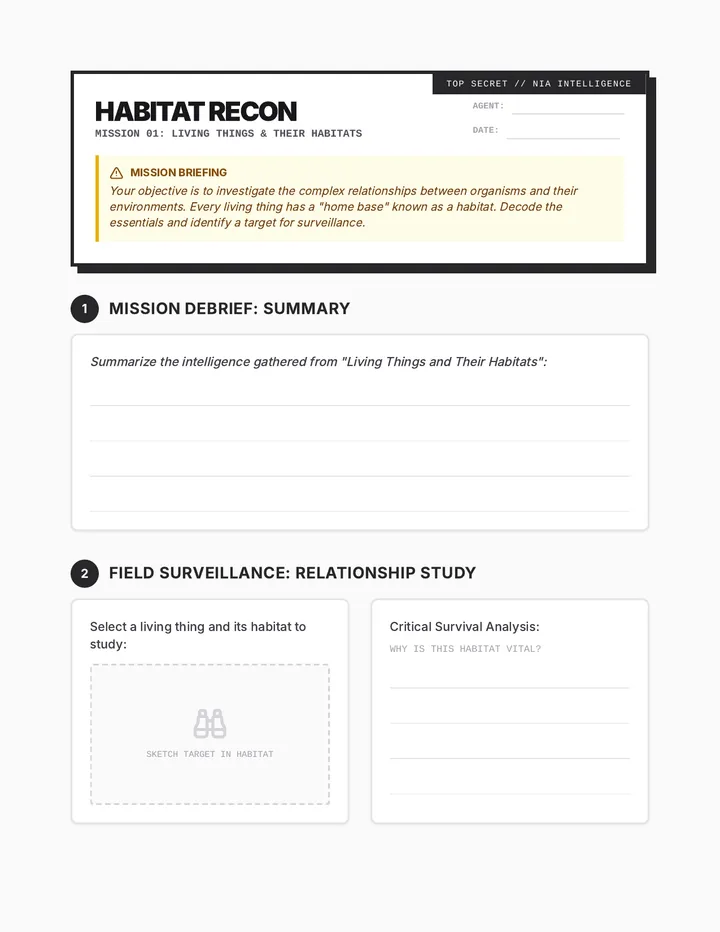
Habitat Recon Worksheet

Nature Intelligence Agency

A series of secret agent-themed ecology missions where students act as Eco-Detectives for the Nature Intelligence Agency (NIA) to study habitats, food chains, and environmental impacts.

A

Alaina.Burton

14
Scout Mission Slides

Earth System Scouts

A foundational exploration of the four main branches of Earth Science through a multi-day digital scavenger hunt designed for accessibility and engagement.

S

Shelby.Toll

4
Rock Origins Slides

Earth Shapers

A comprehensive unit exploring how natural processes like rock formation and erosion work together to shape the Earth's surface over millions of years.

CN

Coleman Newell

19
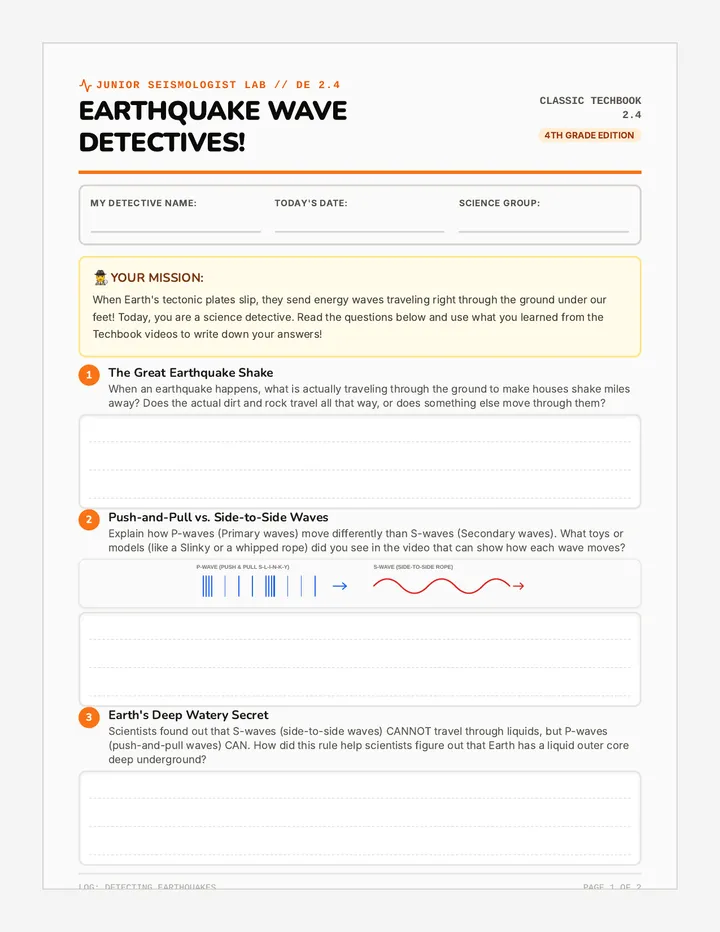
Earthquake Waves Lab Worksheet

Earth and Atmosphere Science

An earth and space science curriculum unit covering dynamic earth processes, earthquake wave mechanics, atmospheric pressure systems, and weather prediction techniques.

CA

Christin Anderson

11

Lessons

Heat Flow Teacher Guide

Particle Behavior Review

A lesson focusing on the states of matter (solid, liquid, gas) and the behavior of particles at the molecular level. Students will model particle motion and arrangement, as well as the energy changes that drive phase transitions.

EA

Erica Andre

54
Quake Coords Map Activity

Tectonic Tremors

A comprehensive GED science lesson on tectonic activity, focusing on seismic wave analysis, seismograms, and the Richter scale. Students will learn to calculate S-P intervals and interpret map data to locate epicenters and volcanic hotspots.

CL

Carmela Leone

5
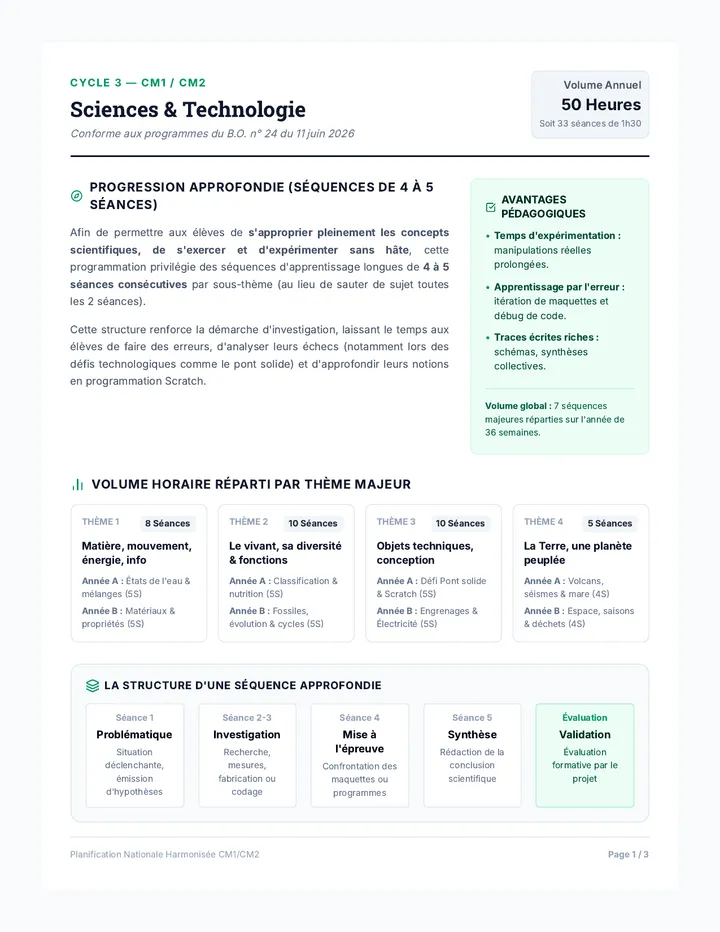
Tableau Progression Annuelle Sciences CM

Progression Sciences CM1 CM2

Outil de planification annuelle et de progression pour l'enseignement des sciences et technologies en classe de CM1/CM2, conforme au BO de juin 2026. Ce guide propose une répartition claire des volumes horaires et des thèmes entre l'année A et l'année B pour éviter les redondances dans les classes à double niveau.

LP

LAURENT PERCHE

40
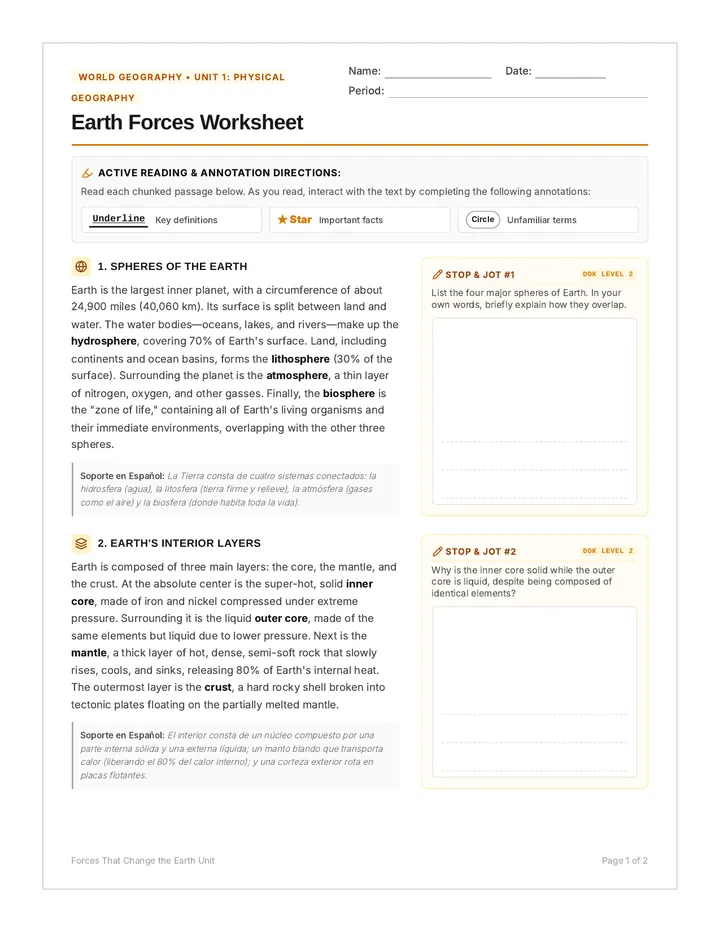
Earth Forces Worksheet

Restless Earth

Explore the dynamic geological forces of the Pacific Ring of Fire and how tectonic activity shapes physical geography and human adaptation.

OA

Oumhani Achour

5
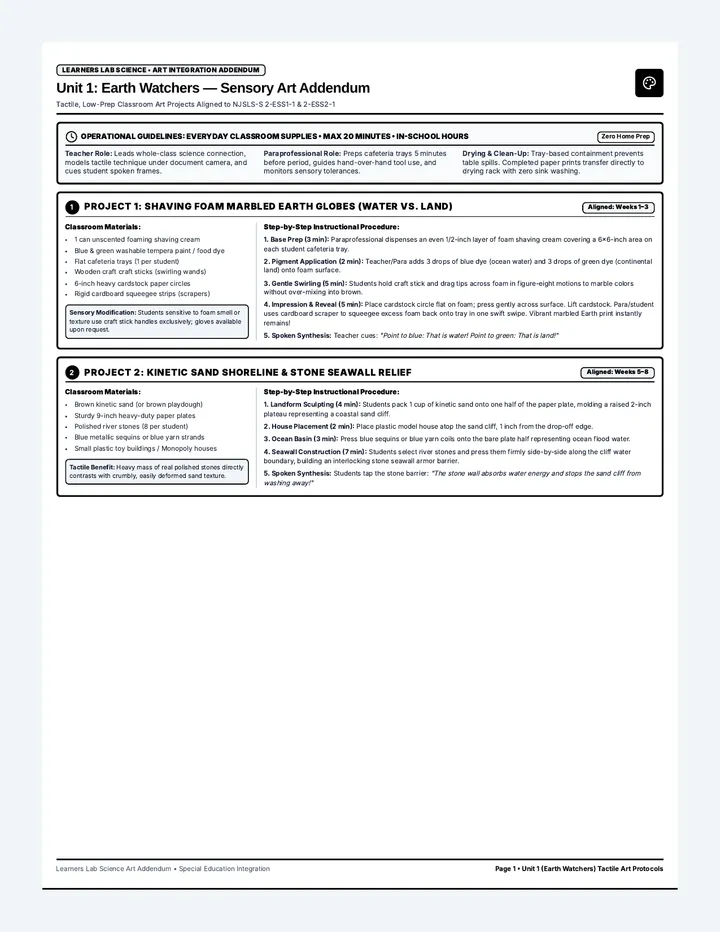
Learners Lab Science Art Addendum

Learners Lab Science

An adapted special education science curriculum framework aligning NJSLS-S standards across grades 2-4 with functional access points, 25-minute multi-sensory inquiry lessons, and rigorous tiered expression.

JE

jenn edwards

21
Tectonic Tempests Slides

Tectonic Tempests

A GED Science lesson focusing on the interpretation of maps, charts, and seismic data through the lens of volcanoes and earthquakes. Students will analyze tectonic movements and volcanic indicators to build data literacy skills.

CL

Carmela Leone

5