Lenny.com
Explore
Create
ActivitiesNewMathEnglish Language ArtsScience & EngineeringSocial StudiesGlobal LanguagesHealth & Physical EducationSpecial EducationCounseling & Life SkillsArts & CreativityESL
Lenny.com
Lenny.com
Explore
Create
ActivitiesNewMathEnglish Language ArtsScience & EngineeringSocial StudiesGlobal LanguagesHealth & Physical EducationSpecial EducationCounseling & Life SkillsArts & CreativityESL
Lenny.com
Lenny.com

Solutions

Lenny for EducatorsLenny for SchoolsLenny for Districts

Product

ExploreSign inCreateSupportAbout

Resources

Getting startedMTSS Acceleration Program

© 2026 Lenny Learning Inc.

TermsPrivacyAccessibility
LinkedInInstagramX
Lenny

Machine Learning

Supervised, unsupervised, and reinforcement learning algorithms for predictive modeling and pattern recognition. Examines neural networks, data preprocessing, and model evaluation techniques to develop autonomous systems.

Science & EngineeringLife ScienceLiving ThingsAnimalsPlantsBody SystemsTraitsAdaptationsCellsEcosystemsHeredityGenes to TraitsCell DivisionPhysicsComparing MaterialsShapes and PropertiesMagnetsMagnetismLightSoundLight and SoundMatterStates of MatterChanges of StateMixturesPhysical and Chemical ChangeHeating and CoolingHeat and Thermal EnergyEnergyForce and MotionElectrical CircuitsAtoms and MoleculesPeriodic TableMotion in One DimensionMotion in Two DimensionsScalars and VectorsForces and Laws of MotionCircular Motion and GravityMomentum and ImpulseWork, Energy, and PowerWavesElectromagnetic WavesGeometric OpticsElectricity and MagnetismSimple Harmonic MotionThermodynamicsNuclear PhysicsEarth Science & AstronomyWeatherWater CycleRocks and MineralsFossilsEarth's FeaturesEarth's ResourcesEarth's StructureWeather and ClimateEarth EventsFossils and Geologic TimePlate TectonicsHuman ImpactsAstronomyChemistryUnits and MeasurementAtomic StructurePeriodic TrendsChemical BondingNomenclatureMolecular StructureIntermolecular ForcesThe MoleStoichiometryProperties of GasesSolutionsChemical ReactionsBalancing EquationsEnergy ChangesRates of ReactionsEquilibriumAcids and BasesQuantum ModelBiologyClassificationCell StructureThe Chemistry of LifeBiomoleculesCellular TransportCell EnergyCell Growth and DivisionDNAProtein SynthesisMeiosis and Sexual ReproductionPatterns of InheritanceMulticellular OrganismsEvolutionEcologyBiodiversityComputer ScienceAlgorithms and Computational ThinkingProgramming LanguagesComputing SystemsNetworks and InternetData AnalysisCybersecurityAI and Machine LearningSoftware Design and DevelopmentBlockchainEngineering & AIDesigning ExperimentsEngineering PracticesDesign ThinkingEngineering Design ProcessMechanical EngineeringElectrical EngineeringMaterials and StructuresCAD and 3D DesignRoboticsArtificial Intelligence BasicsVibe CodingMachine LearningAI Ethics and SocietySystems ThinkingEntrepreneurship & InnovationEntrepreneurial MindsetBusiness Idea DevelopmentBusiness Plan BasicsMarketing & Customer DiscoveryFinancial Management for Startups

Videos

How Artificial Intelligence Evolved From Chess Bots to Deep Learning

How Artificial Intelligence Evolved From Chess Bots to Deep Learning

This educational video traces the explosive evolution of computing power and artificial intelligence, moving from the hardware revolution of the 1960s to the software revolution of the modern era. It begins by explaining Moore's Law and the exponential growth of computing hardware, setting the stage for the development of early "Symbolic AI." The narrative uses the history of computer chess—from the 1957 Bernstein program to Deep Blue's victory over Kasparov—to illustrate the limitations of hard-coded logic and the transition to machine learning. The video then demystifies complex modern AI concepts, specifically Neural Networks and Deep Learning. Using the chess engine Stockfish as a case study, it explains how neural networks function like a human brain using nodes and weighted connections, rather than rigid instructions. It introduces the "Transformer" architecture that enables General Purpose AI (like Large Language Models) to process vast amounts of data simultaneously, leading to rapid advancements in capabilities ranging from writing code to generating video. Finally, the video explores how we measure AI progress through "Benchmarks" and "Scaling Laws." It explains the mathematical observation that increasing data and computing power consistently yields better performance, a principle driving the current AI boom. The content is highly relevant for computer science, history of technology, and social studies classrooms, offering a clear framework for understanding how AI works, how it has changed over time, and the trajectory of its future development.
CrashCourseCrashCourse

12mins 49s

Sequences

Fondations SQL Slides

Maîtrise SQL pour Data Analyste

Un programme complet conçu pour transformer un débutant en analyste de données capable de manipuler MySQL pour le Big Data et l'IA. Le parcours couvre les bases, les agrégations, les jointures et l'optimisation pour les grands volumes de données.

EM

Elhadji Malick DIENE

22
Robot Brains Slides

AI Explorer Path

A comprehensive K-8 curriculum designed to build foundational AI literacy through understanding, evaluation, application, and ethics. Each grade level tackles a specific theme, progressing from basic robot concepts to complex algorithmic bias and societal impact.

EW

Elizabeth Whitver

27
Robot Brains Presentation Slides

AI Literacy Blueprint

A comprehensive K-12 AI literacy sequence covering the fundamentals of how AI works, machine learning, ethics, social impact, and creative application through age-appropriate lessons.

VC

Vic Chamness

13
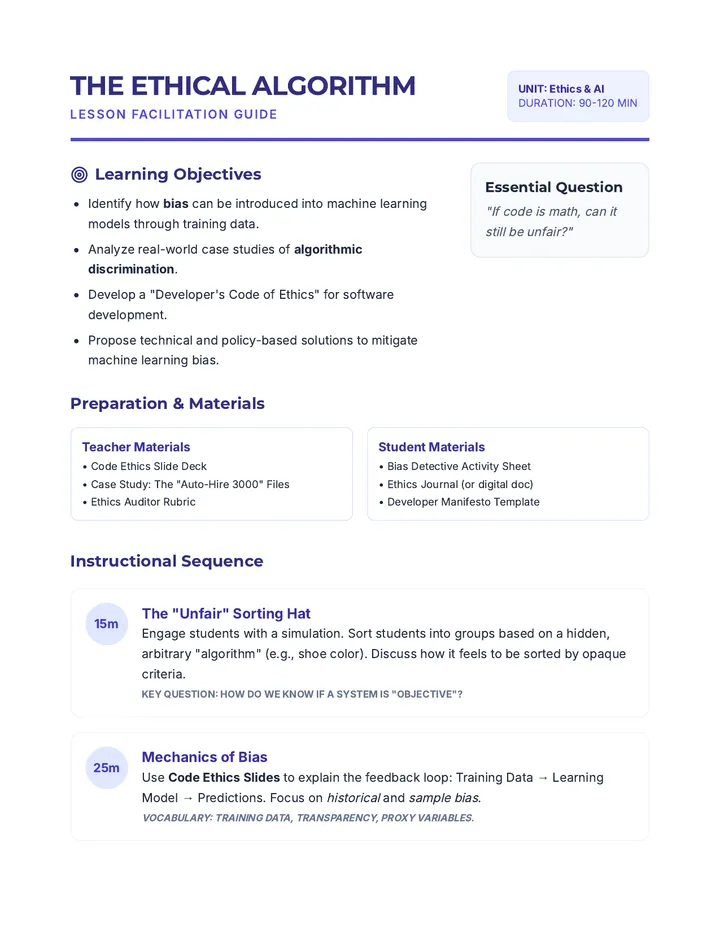
Ethical Algorithm Lesson Plan

The Ethical Algorithm

A capstone unit exploring the intersections of machine learning, data ethics, and the societal impact of algorithmic decision-making. Students transition from being technical builders to critical auditors of modern software.

BB

Brenda Bolyard

4
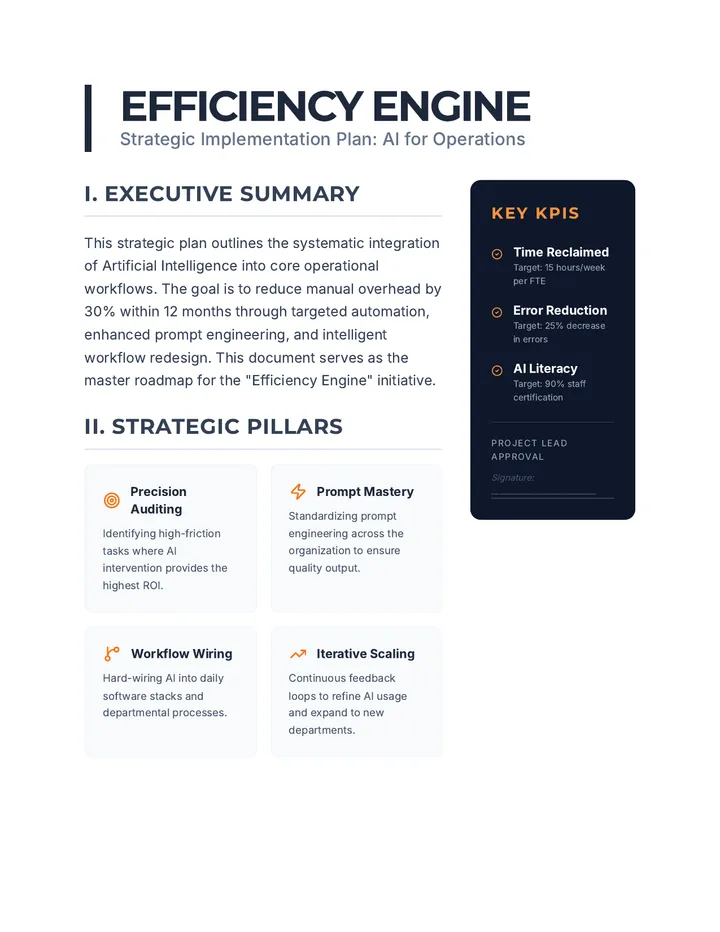
Efficiency Engine Strategic Plan

Efficiency Engine

A comprehensive training sequence designed to help organizations leverage AI for operational efficiency, covering everything from initial audits to full-scale workflow integration.

M

Matthew.Sprout

9
Pattern Predictors Slides

Truth and Machines

A comprehensive sequence for 8th-grade students exploring the mechanics, ethics, and societal impacts of Generative AI. Students will learn how AI models predict data, identify deepfakes, manage hallucinations, and navigate copyright issues to become responsible digital citizens.

15

Lessons

Python Blocks Cheat Sheet

Python Coding Basics

A collection of highly visual, simplified resources designed for students with reading and word comprehension challenges to master the basics of Python programming.

BH

Becca Houston

51
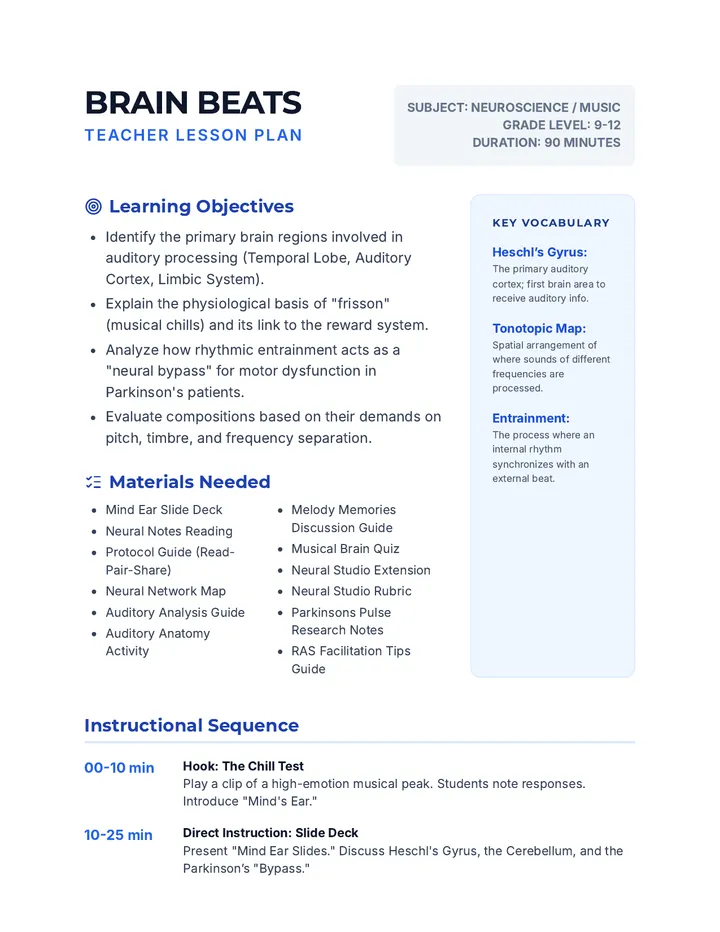
Brain Beats Lesson Plan

The Musical Brain

A high school lesson exploring the neuroscience of music, investigating how the brain processes auditory stimuli, triggers emotions, and encodes memories through melodies.

J

jditomaso

15
AI Insight Reading Activity

AI Insight

A comprehensive introduction to Artificial Intelligence, exploring its benefits, risks, and ethical usage through reading, discussion, and critical writing.

TH

Thomas Harris

3
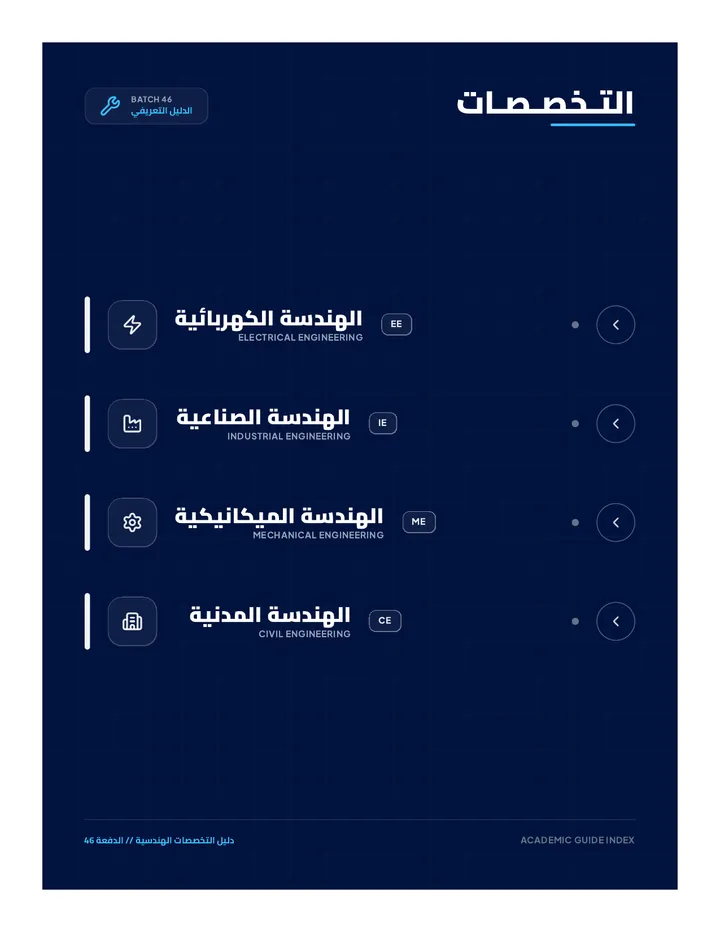
فهرس التخصصات الهندسية

تخصصات المستقبل الرقمي

دليل تعريفي لتخصصات الحاسب الآلي والتقنية يهدف إلى استعراض الفروع الرئيسية وتوجيه الطلاب نحو التخصص المناسب.

YA

Yara Alqwaizani

10
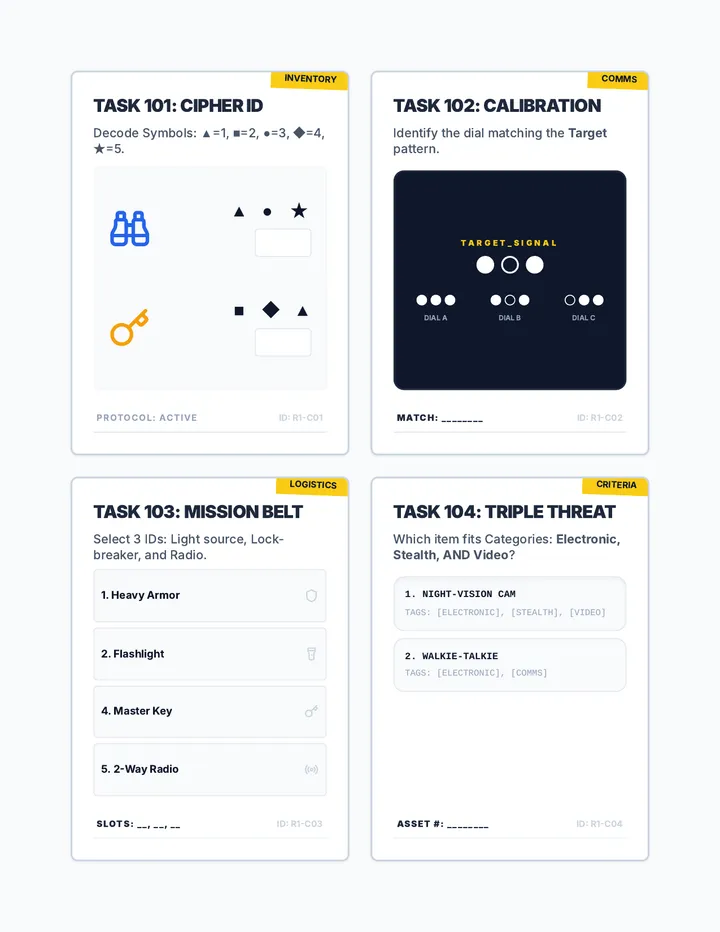
Gear Match Cards Round 1

Spy Academy Escape

A high-stakes secret agent escape room designed for middle school students, featuring complex logic grids, binary decryption, spatial reasoning, and data analysis. Operatives must work through three rigorous phases of testing to earn their field status.

SC

Samantha Casler

5
Future Tech Slides

Future Tech Voices

A lesson exploring the mechanics of AI generators and their social impact, specifically focusing on the experiences of young African Americans in tech and representation.

TH

Thomas Harris

3