Lenny.com
Explore
Create
ActivitiesNewMathEnglish Language ArtsScience & EngineeringSocial StudiesGlobal LanguagesHealth & Physical EducationSpecial EducationCounseling & Life SkillsArts & CreativityESL
Lenny.com
Lenny.com
Explore
Create
ActivitiesNewMathEnglish Language ArtsScience & EngineeringSocial StudiesGlobal LanguagesHealth & Physical EducationSpecial EducationCounseling & Life SkillsArts & CreativityESL
Lenny.com
Lenny.com

Solutions

Lenny for EducatorsLenny for SchoolsLenny for Districts

Product

ExploreSign inCreateSupportAbout

Resources

Getting startedMTSS Acceleration Program

© 2026 Lenny Learning Inc.

TermsPrivacyAccessibility
LinkedInInstagramX
Lenny

Business Idea Development

Ideation frameworks, market research, and value proposition design to transform problems into viable solutions. Builds skills in prototyping, testing, and refining business models for initial market entry.

Science & EngineeringLife ScienceLiving ThingsAnimalsPlantsBody SystemsTraitsAdaptationsCellsEcosystemsHeredityGenes to TraitsCell DivisionPhysicsComparing MaterialsShapes and PropertiesMagnetsMagnetismLightSoundLight and SoundMatterStates of MatterChanges of StateMixturesPhysical and Chemical ChangeHeating and CoolingHeat and Thermal EnergyEnergyForce and MotionElectrical CircuitsAtoms and MoleculesPeriodic TableMotion in One DimensionMotion in Two DimensionsScalars and VectorsForces and Laws of MotionCircular Motion and GravityMomentum and ImpulseWork, Energy, and PowerWavesElectromagnetic WavesGeometric OpticsElectricity and MagnetismSimple Harmonic MotionThermodynamicsNuclear PhysicsEarth Science & AstronomyWeatherWater CycleRocks and MineralsFossilsEarth's FeaturesEarth's ResourcesEarth's StructureWeather and ClimateEarth EventsFossils and Geologic TimePlate TectonicsHuman ImpactsAstronomyChemistryUnits and MeasurementAtomic StructurePeriodic TrendsChemical BondingNomenclatureMolecular StructureIntermolecular ForcesThe MoleStoichiometryProperties of GasesSolutionsChemical ReactionsBalancing EquationsEnergy ChangesRates of ReactionsEquilibriumAcids and BasesQuantum ModelBiologyClassificationCell StructureThe Chemistry of LifeBiomoleculesCellular TransportCell EnergyCell Growth and DivisionDNAProtein SynthesisMeiosis and Sexual ReproductionPatterns of InheritanceMulticellular OrganismsEvolutionEcologyBiodiversityComputer ScienceAlgorithms and Computational ThinkingProgramming LanguagesComputing SystemsNetworks and InternetData AnalysisCybersecurityAI and Machine LearningSoftware Design and DevelopmentBlockchainEngineering & AIDesigning ExperimentsEngineering PracticesDesign ThinkingEngineering Design ProcessMechanical EngineeringElectrical EngineeringMaterials and StructuresCAD and 3D DesignRoboticsArtificial Intelligence BasicsVibe CodingMachine LearningAI Ethics and SocietySystems ThinkingEntrepreneurship & InnovationEntrepreneurial MindsetBusiness Idea DevelopmentBusiness Plan BasicsMarketing & Customer DiscoveryFinancial Management for Startups

Videos

How Nations Work Together to Address Climate Change

How Nations Work Together to Address Climate Change

This educational video provides a comprehensive overview of how nations around the world are collaborating to address climate change through policy, international agreements, and economic strategies. Narrated by Caroline, the lesson bridges environmental science with civics by explaining the mechanisms governments use to manage pollution, such as the Paris Agreement, the U.S. Clean Air Act, and economic systems like "cap and trade." It defines complex terms like "carbon neutral" and "net zero" in accessible language while acknowledging the real-world political and economic challenges hindering progress. The video explores key themes including the tension between wealthy and developing nations regarding responsibility for emissions, the role of technological innovation, and the specific legislative tools available in the United States. It breaks down the difference between preventing pollution versus removing it, and uses clear analogies—such as arcade tokens for cap and trade—to demystify economic concepts. The content highlights both the successes, like the stabilization of emissions in certain regions, and the limitations, such as lobbying and equitable access to green technology. For educators, this video serves as an excellent primary resource for units on environmental policy, global interdependence, or climate science. It moves beyond the basic science of the greenhouse effect to focus on human systems and solutions, making it valuable for social studies and civics classrooms as well as science classes. The video includes built-in pause points for reflection and critical thinking, making it ready-made for interactive classroom instruction that encourages students to evaluate global cooperation and national responsibility.

Miacademy & MiaPrep Learning ChannelMiacademy & MiaPrep Learning Channel

9mins 47s

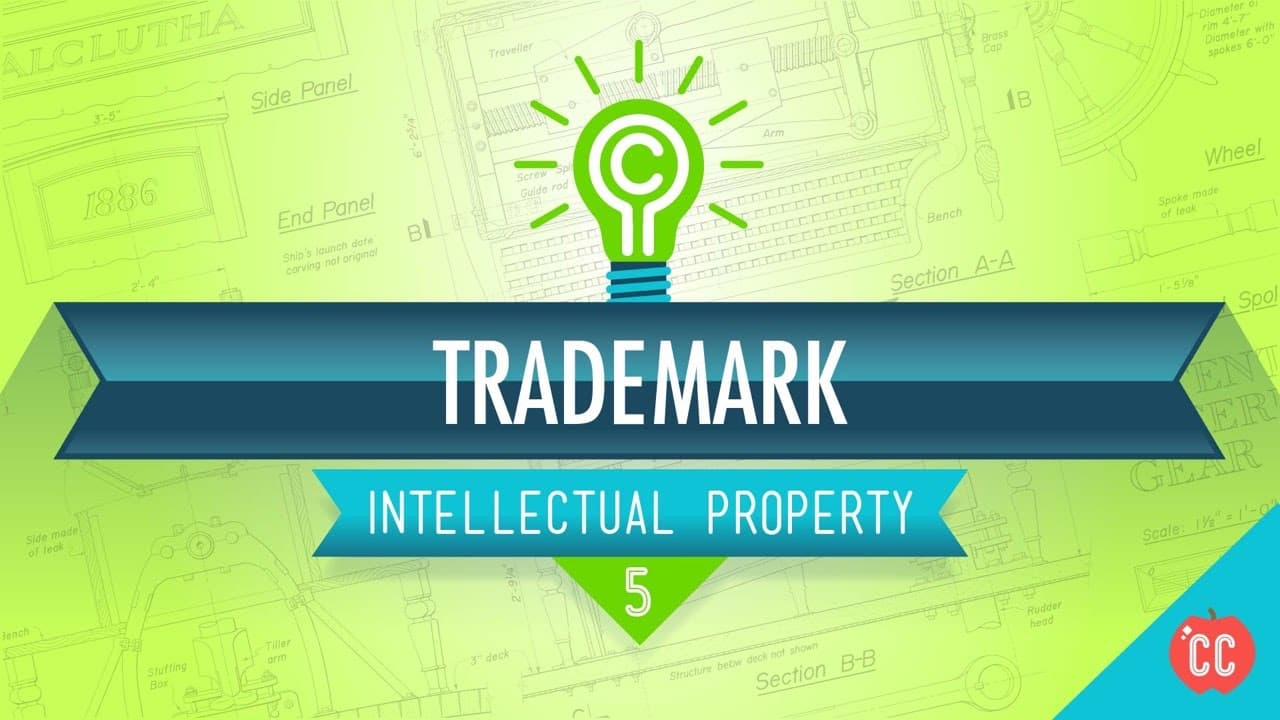
How Trademarks Protect Brands and Consumers

How Trademarks Protect Brands and Consumers

This educational video from Crash Course Intellectual Property explores the complex world of trademarks, explaining how they function not just as corporate assets but as vital consumer protection tools. Host Stan Muller breaks down the legal definitions of trademarks, service marks, and trade dress, illustrating how these intellectual property rights allow consumers to distinguish between sources of goods in a crowded marketplace. The video traces the history of trademarks from the days of local blacksmiths to the modern industrial economy where brand recognition is essential for trust and quality assurance. The content covers a wide range of legal concepts including the spectrum of distinctiveness (from generic to fanciful), the phenomenon of "genericide" where successful brands lose protection, and the specific legal tests courts use to determine infringement. Viewers learn about the rigorous registration process with the USPTO, the constitutional basis for trademark law under the Commerce Clause, and the concepts of dilution by blurring and tarnishment. The video uses engaging examples like the shape of Coca-Cola bottles, the sound of NBC chimes, and the color of UPS trucks to show that trademarks can be almost anything that carries meaning. For educators, this video serves as an excellent resource for Business Law, Civics, Economics, and Marketing classes. It provides a practical framework for understanding how businesses build value and how the legal system balances corporate rights with consumer clarity. The clear explanation of the "likelihood of confusion" test offers a perfect template for classroom case studies and critical thinking exercises regarding brand identity and fair competition.

CrashCourseCrashCourse

11mins 20s

Materials

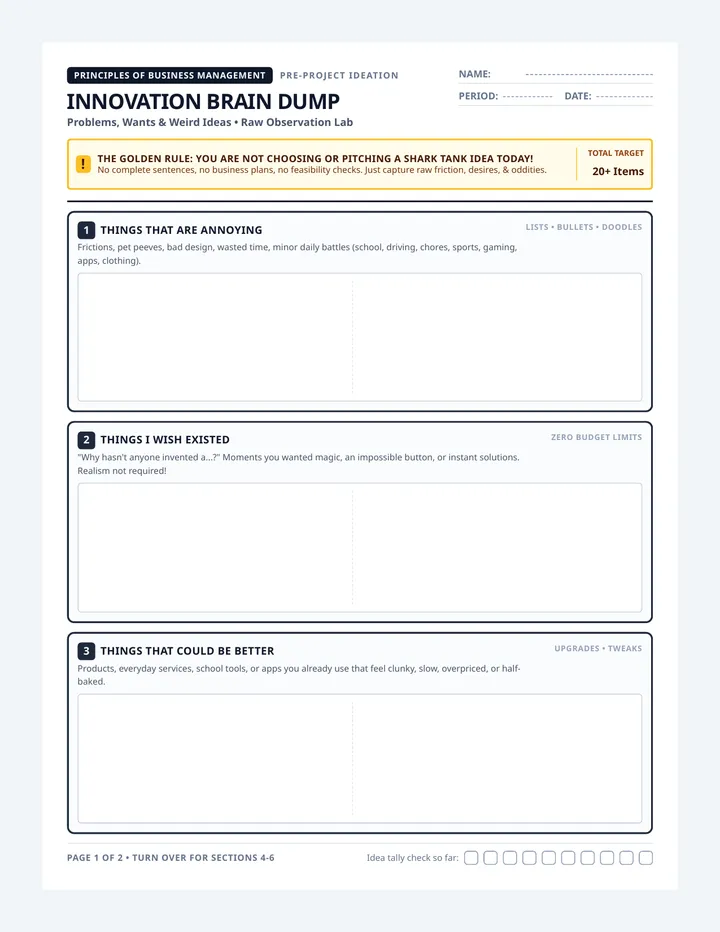
Innovation Brain Dump Worksheet

Innovation Brain Dump Worksheet

A high-energy, print-ready, two-page brain dump worksheet for high school business students. It guides students through six low-pressure ideation zones to generate 20+ raw problems, annoyances, desires, and wild concepts before starting their Shark Tank innovation project.

L

Landry.Stahl

Vibe Coding Blueprint Organizer

Vibe Coding Blueprint Organizer

A two-page design thinking graphic organizer and iterative prompt cheat sheet for middle school students learning to vibe code web projects.

HC

Holly Clark

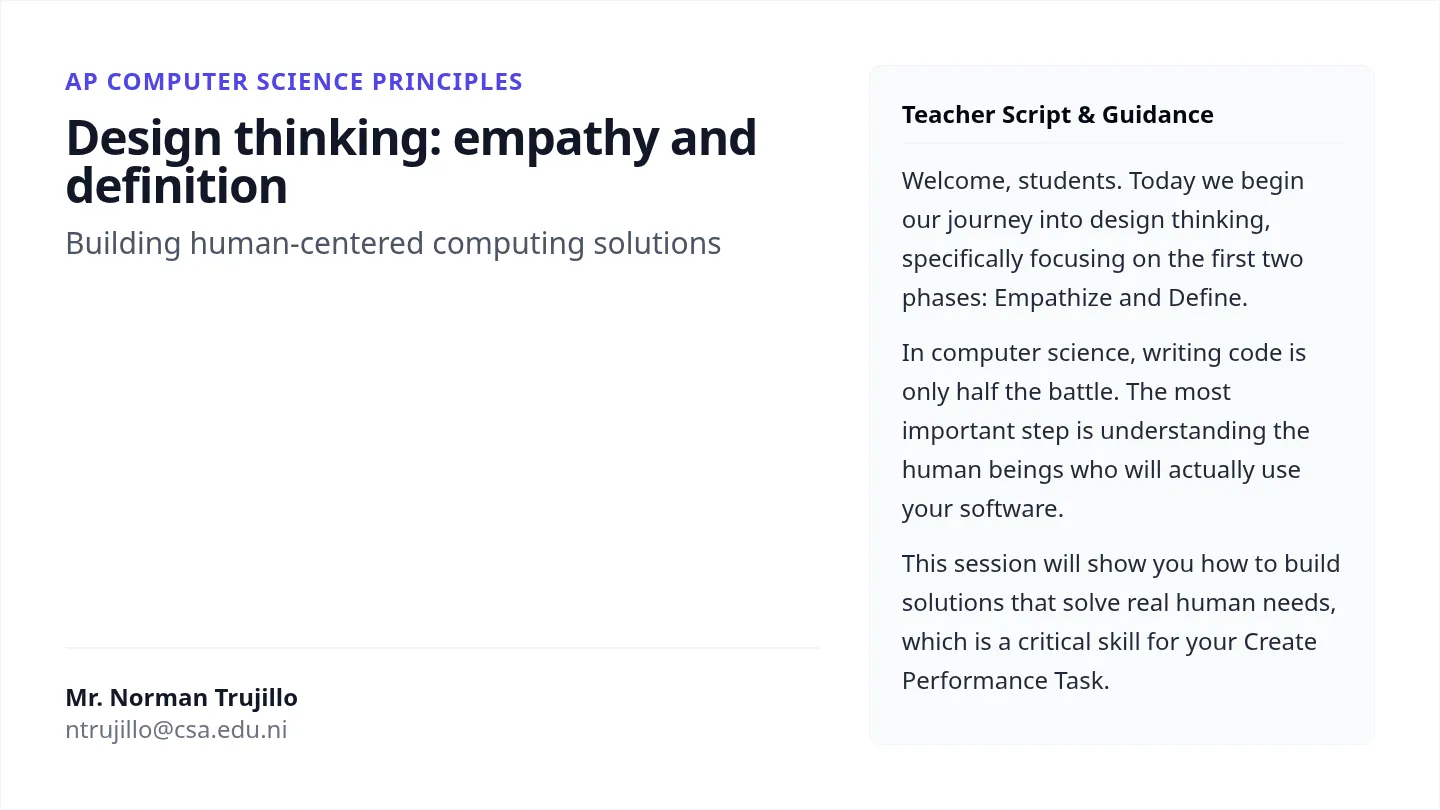
Design Thinking Slides

Design Thinking Slides

A comprehensive and highly professional 40-slide presentation deck on Design Thinking: Empathy and Definition for AP Computer Science Principles, with complete speaker notes and strict minimalist high-contrast typography, with Slide 1 student display area cleared.

NR

Norman René Trujillo Zapata

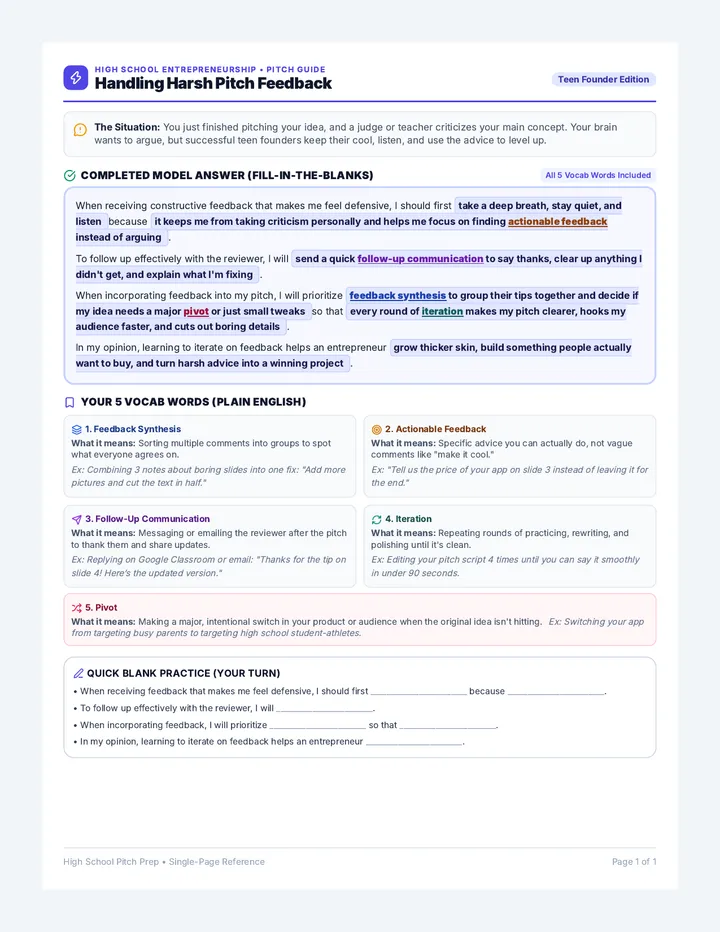
Pitch Polish Response Guide

Pitch Polish Response Guide

A teen-friendly, high-school-ready one-page guide and model response explaining how to handle pitch feedback, stay cool under pressure, and use the five core entrepreneurship terms effectively.

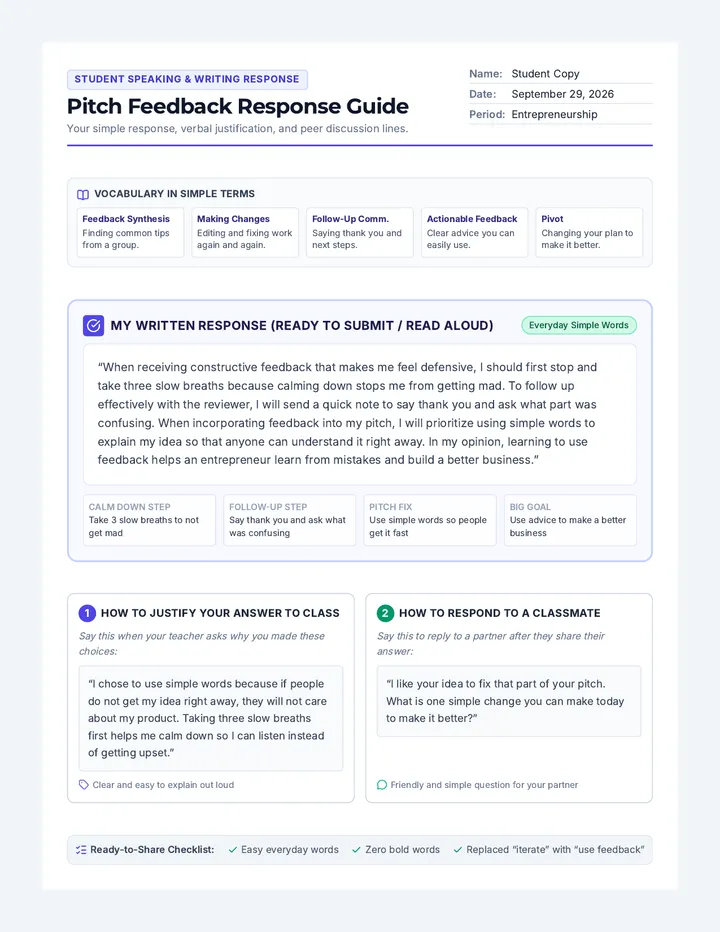
Pitch Feedback Response Guide

Pitch Feedback Response Guide

A student response and speaking guide simplified into plain, everyday language without the word iterate, featuring zero bold text and easy peer discussion prompts.

Sequences

Behind the Seams Slides

Style Strategists

An introductory high-school course sequence exploring the professional fashion merchandising pipelines, trend cycles, visual storefront design, and inventory strategy.

J

Jennifer.Leber

15
Business Basics Slides

Business Blueprint

A comprehensive 7-day introduction to business and entrepreneurship. Students explore foundations, economic principles, ownership models, internal structures, and the mindset and process needed to launch a new business idea.

DJ

Dayna Jackson

16
Bionic Blueprints Slides

Bionic Pioneers Unit

A high-impact 7th-grade STEM unit exploring biomechanics, the human skeletal-muscular leverage system, and pioneering prosthetic innovations. Students design and build physical mechanical limb models to solve real-world accessibility challenges.

AW

Amber Williams

10
Retail Foundations Slides

Retail Revolution

A comprehensive introductory unit on the business of retail, designed for 10th and 11th grade business students. The unit covers fundamental retail concepts, the modern supply chain, physical store operations, visual merchandising, and culminates in a hands-on storefront pitch project.

MK

Marlyce Kemp

9
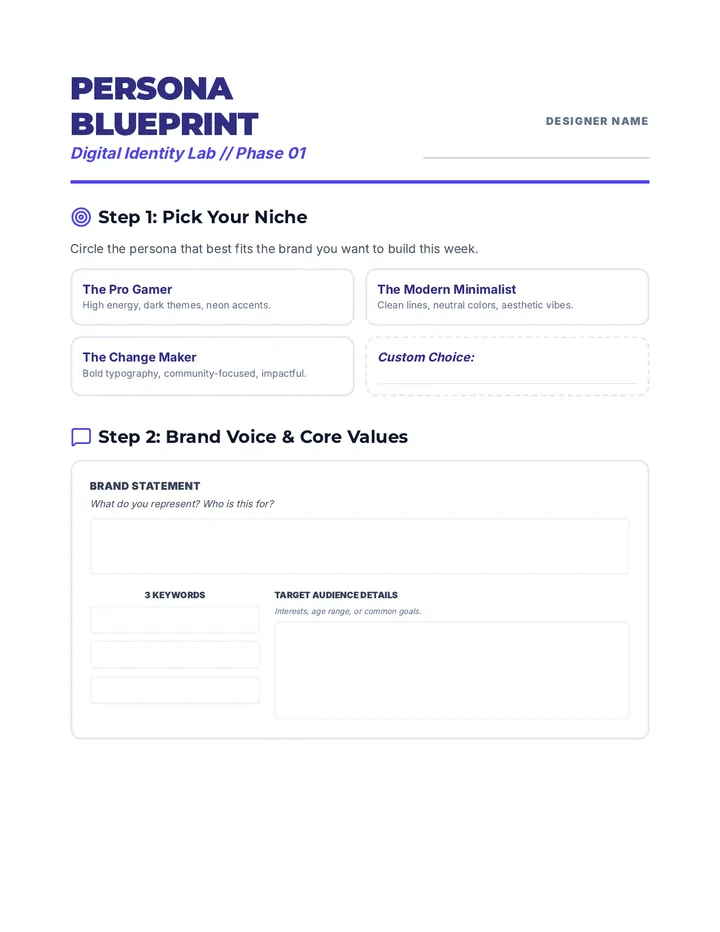
Persona Blueprint Worksheet

Digital Identity Lab

A 4-day project sequence where high school students explore their digital identity through personal branding in Canva and short-form video production in CapCut. Students choose a personal 'niche'—such as gaming, fashion, or social advocacy—to build a cohesive visual presence.

M

mmccormick

12
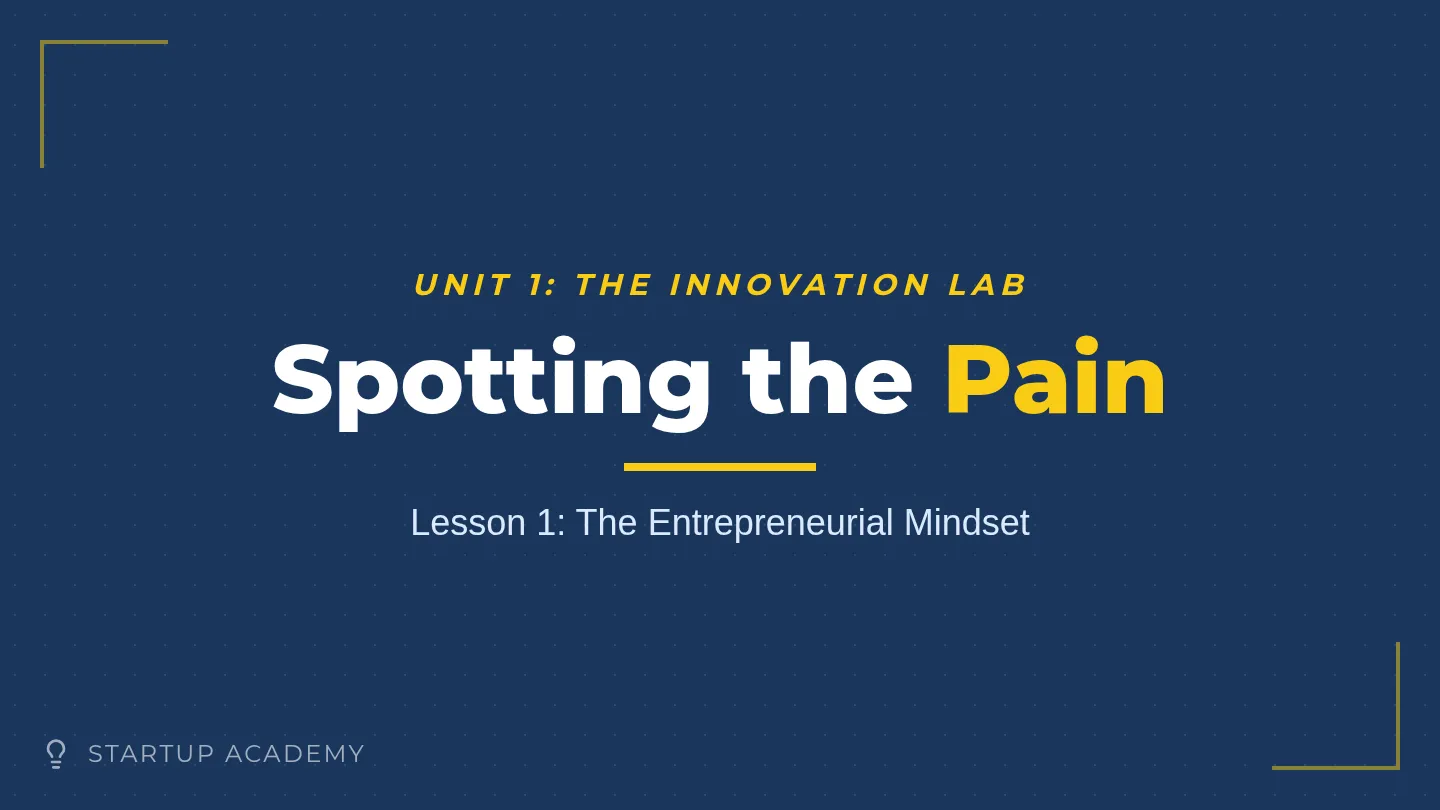
Innovation Lab Slides

Innovation Lab: Identity Studio

A comprehensive identity design unit where students explore the psychological and visual elements of branding, including color theory, typography, and logo composition.

B

brittaink@urbandaleschools.com

47

Lessons

Pitch Perfect Unit Exam

Pitching Mastery

This lesson concludes the unit on business presentation skills and company valuation, testing students on the FIT model, the Rule of Three, and core financial assessment concepts.

KB

Kayla Borozny

6
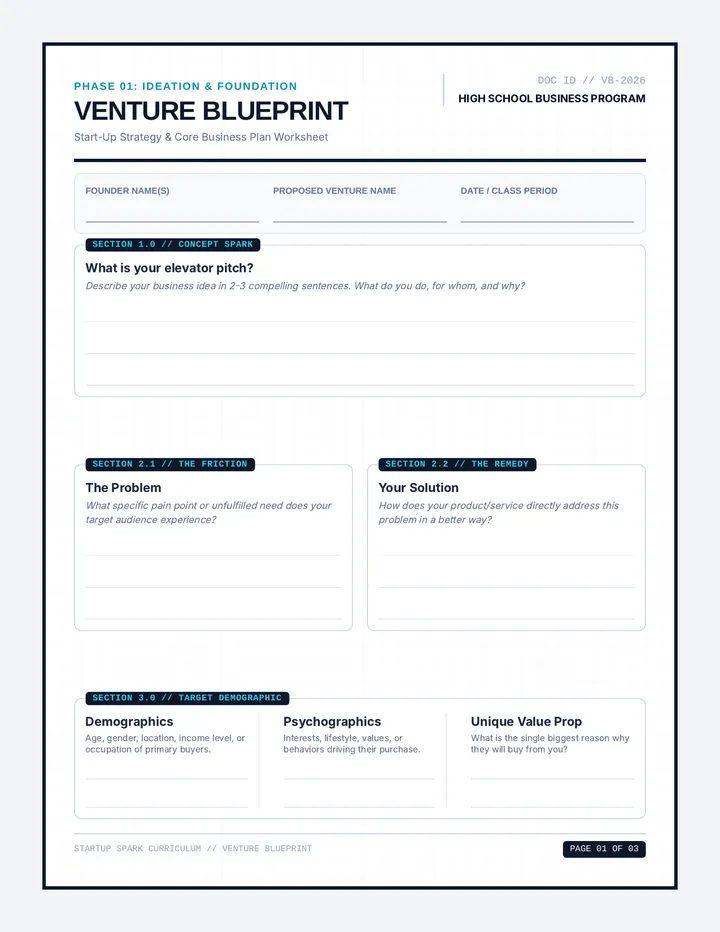
Venture Blueprint Document

Venture Blueprint

A comprehensive, step-by-step framework for high school students to design, structure, and refine a small business startup concept. Includes guided drafting templates, pacing checklists, and pitch preparation tools.

TI

Tom Ingram

4
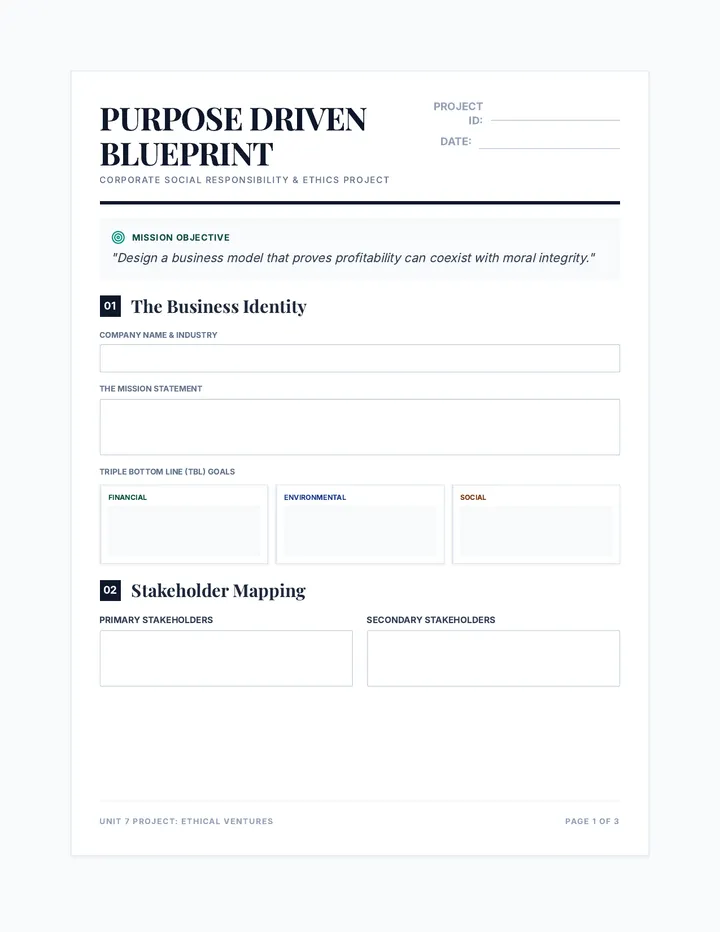
Purpose Driven Blueprint Document

Ethical Ventures

A comprehensive project where students design a socially responsible business from the ground up, focusing on the Triple Bottom Line, stakeholder mapping, and ethical decision-making.

KB

Kayla Borozny

3
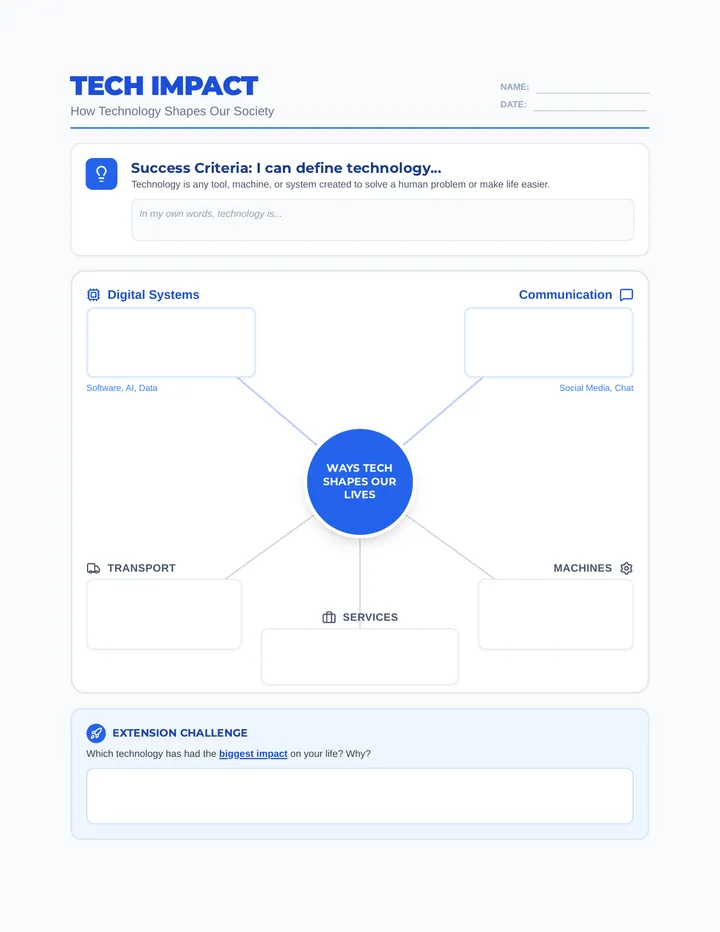
Tech Impact Mind Map

Tech Society Impact

A lesson exploring the broad definition of technology and its profound impact on how we live, work, and connect in society.

CM

Cara Marsden (KB Teacher)

3
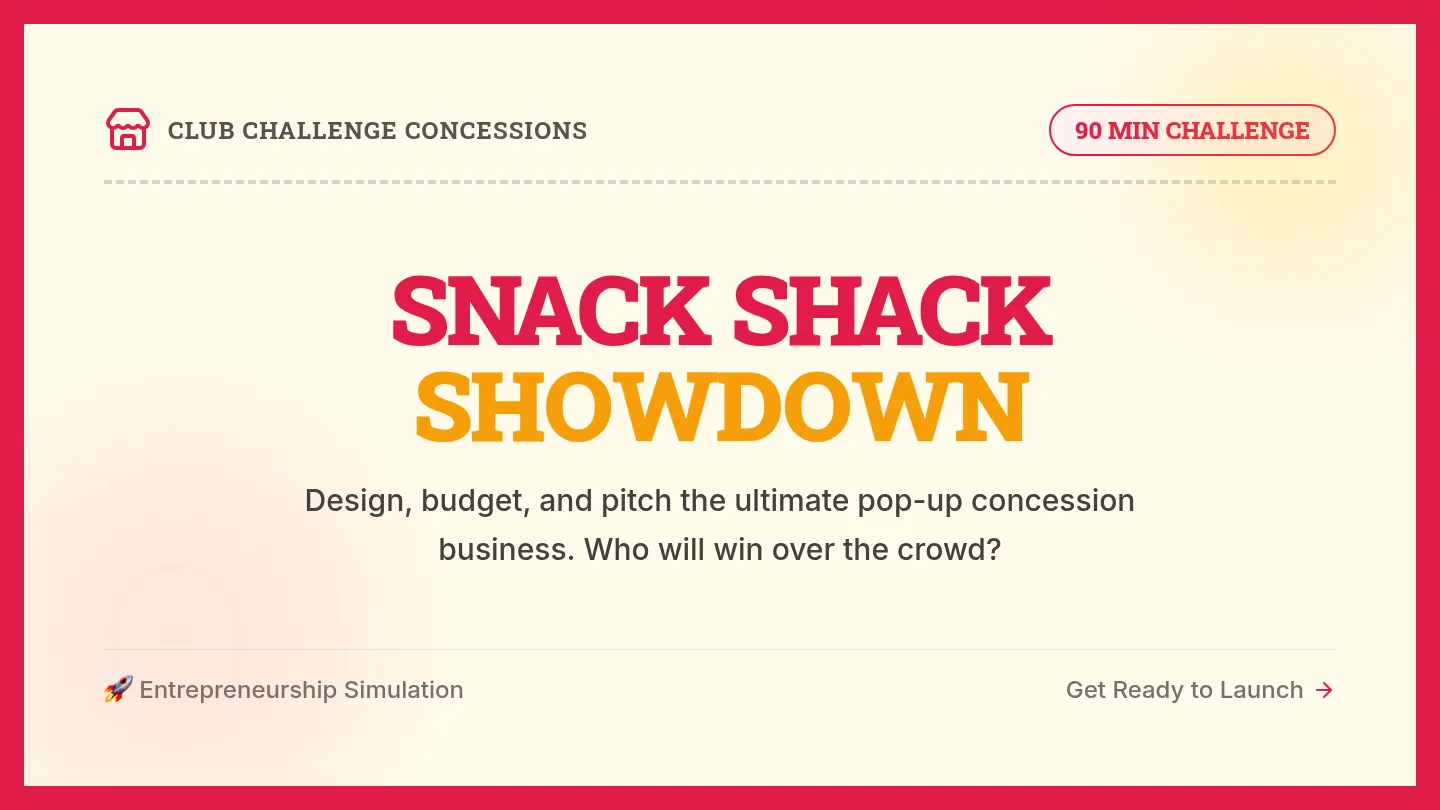
Snack Shack Slides

Snack Shack Showdown

An immersive, 90-minute entrepreneurial challenge where teams collaborate to design, budget, and present a fully functional snack shack business while navigating real-world supply chain and staffing twists.

KB

Kelly Brown

3
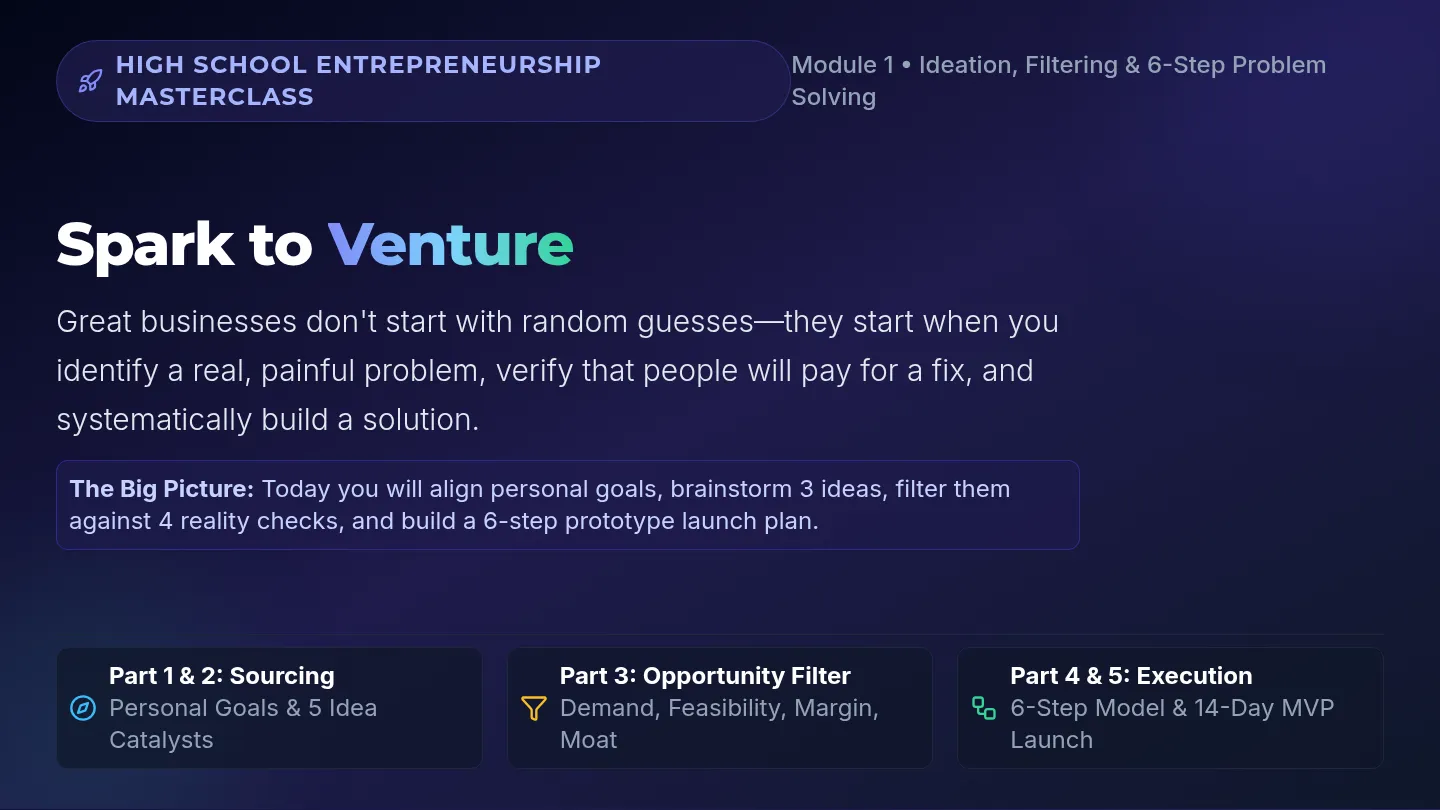
Spark to Venture Slides

Spark to Venture

A comprehensive entrepreneurship lesson guiding students through uncovering business ideas, mapping personal goals, evaluating market opportunities, and applying a robust six-step problem-solving framework.

MK

Marlyce Kemp

7