Lenny.com
Explore
Create
ActivitiesNewMathEnglish Language ArtsScience & EngineeringSocial StudiesGlobal LanguagesHealth & Physical EducationSpecial EducationCounseling & Life SkillsArts & CreativityESL
Lenny.com
Lenny.com
Explore
Create
ActivitiesNewMathEnglish Language ArtsScience & EngineeringSocial StudiesGlobal LanguagesHealth & Physical EducationSpecial EducationCounseling & Life SkillsArts & CreativityESL
Lenny.com
Lenny.com

Solutions

Lenny for EducatorsLenny for SchoolsLenny for Districts

Product

ExploreSign inCreateSupportAbout

Resources

Getting startedMTSS Acceleration Program

© 2026 Lenny Learning Inc.

TermsPrivacyAccessibility
LinkedInInstagramX
Lenny

Cellular Transport

Passive and active transport mechanisms including diffusion, osmosis, and facilitated diffusion. Examines how cell membranes maintain homeostasis through endocytosis, exocytosis, and protein pumps.

Science & EngineeringLife ScienceLiving ThingsAnimalsPlantsBody SystemsTraitsAdaptationsCellsEcosystemsHeredityGenes to TraitsCell DivisionPhysicsComparing MaterialsShapes and PropertiesMagnetsMagnetismLightSoundLight and SoundMatterStates of MatterChanges of StateMixturesPhysical and Chemical ChangeHeating and CoolingHeat and Thermal EnergyEnergyForce and MotionElectrical CircuitsAtoms and MoleculesPeriodic TableMotion in One DimensionMotion in Two DimensionsScalars and VectorsForces and Laws of MotionCircular Motion and GravityMomentum and ImpulseWork, Energy, and PowerWavesElectromagnetic WavesGeometric OpticsElectricity and MagnetismSimple Harmonic MotionThermodynamicsNuclear PhysicsEarth Science & AstronomyWeatherWater CycleRocks and MineralsFossilsEarth's FeaturesEarth's ResourcesEarth's StructureWeather and ClimateEarth EventsFossils and Geologic TimePlate TectonicsHuman ImpactsAstronomyChemistryUnits and MeasurementAtomic StructurePeriodic TrendsChemical BondingNomenclatureMolecular StructureIntermolecular ForcesThe MoleStoichiometryProperties of GasesSolutionsChemical ReactionsBalancing EquationsEnergy ChangesRates of ReactionsEquilibriumAcids and BasesQuantum ModelBiologyClassificationCell StructureThe Chemistry of LifeBiomoleculesCellular TransportCell EnergyCell Growth and DivisionDNAProtein SynthesisMeiosis and Sexual ReproductionPatterns of InheritanceMulticellular OrganismsEvolutionEcologyBiodiversityComputer ScienceAlgorithms and Computational ThinkingProgramming LanguagesComputing SystemsNetworks and InternetData AnalysisCybersecurityAI and Machine LearningSoftware Design and DevelopmentBlockchainEngineering & AIDesigning ExperimentsEngineering PracticesDesign ThinkingEngineering Design ProcessMechanical EngineeringElectrical EngineeringMaterials and StructuresCAD and 3D DesignRoboticsArtificial Intelligence BasicsVibe CodingMachine LearningAI Ethics and SocietySystems ThinkingEntrepreneurship & InnovationEntrepreneurial MindsetBusiness Idea DevelopmentBusiness Plan BasicsMarketing & Customer DiscoveryFinancial Management for Startups

Videos

How Cellular Transport Works and Why Cells Are Small

How Cellular Transport Works and Why Cells Are Small

This comprehensive biology lesson breaks down the complex mechanisms of cellular transport, explaining how cells move materials across their membranes to survive. Using relatable analogies like room spray, messy bedrooms, and crowded malls, the video simplifies abstract concepts such as diffusion, concentration gradients, and the surface area-to-volume ratio. It visualizes microscopic processes, showing exactly how oxygen, carbon dioxide, glucose, and ions navigate the cell membrane boundaries.

Miacademy & MiaPrep Learning ChannelMiacademy & MiaPrep Learning Channel

14mins 15s

How Hormones Regulate Your Body and Mood

How Hormones Regulate Your Body and Mood

This engaging biology video explores the human endocrine system, breaking down how hormones function as the body's chemical messengers. The host, Bee, distinguishes between the nervous system's direct communication and the endocrine system's widespread broadcasting, using relatable analogies like texting versus television advertisements. The video dives deep into the molecular differences between steroidal and non-steroidal hormones, explaining how their chemical structures determine how they interact with target cells to regulate bodily functions.

Miacademy & MiaPrep Learning ChannelMiacademy & MiaPrep Learning Channel

12mins 28s

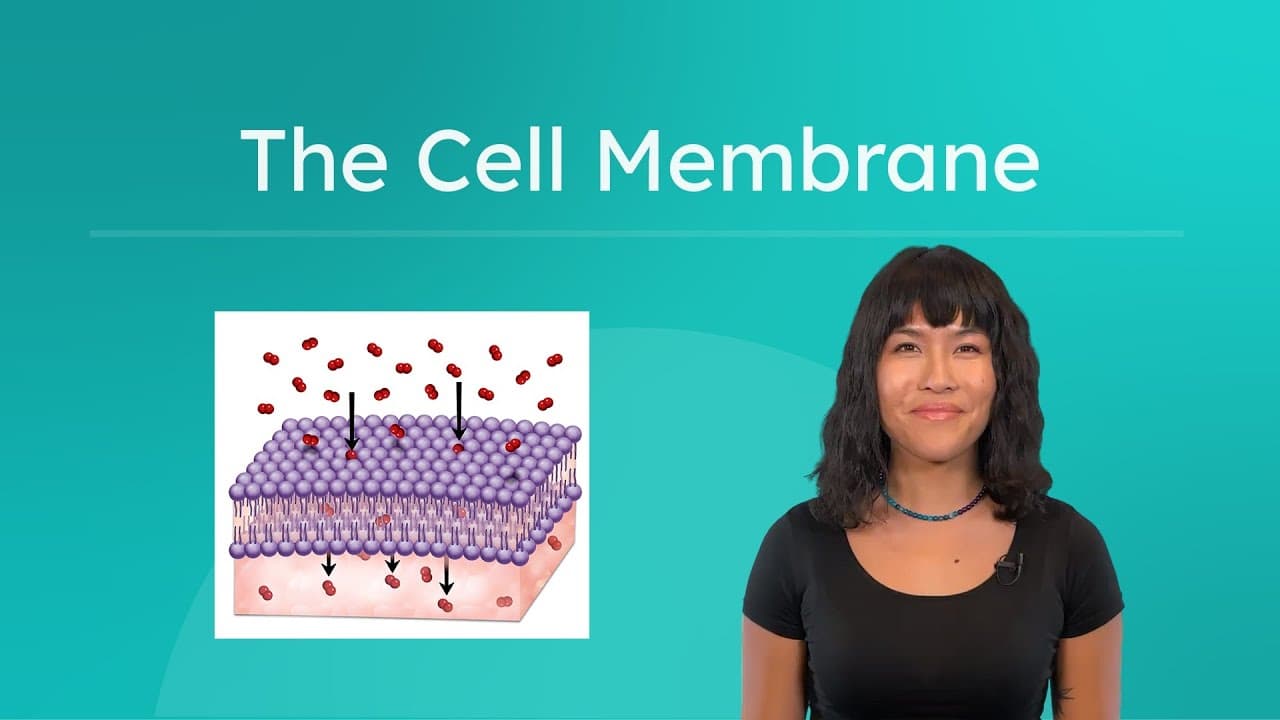
Exploring the Structure and Function of the Cell Membrane

Exploring the Structure and Function of the Cell Membrane

This comprehensive biology video provides an in-depth exploration of the cell membrane, also known as the plasma membrane. It uses engaging analogies, such as swimming in a pool and dissolving antacid tablets, to explain complex concepts like solubility and the rule "like dissolves like." The video breaks down the molecular structure of the membrane, specifically the phospholipid bilayer, explaining the hydrophilic properties of phosphate heads and the hydrophobic nature of fatty acid tails.

Miacademy & MiaPrep Learning ChannelMiacademy & MiaPrep Learning Channel

12mins 58s

How Plants Work: Structure, Growth, and Reproduction

How Plants Work: Structure, Growth, and Reproduction

This educational video provides a comprehensive biology lesson on the structure, function, and lifecycle of plants. Hosted by a presenter named "B," the video begins by challenging students to expand their definition of "living things" to include plants, explaining the cellular criteria that classify them as eukaryotes. It breaks down plant anatomy from the cellular level—distinguishing plant cells from animal cells—through to tissues and organ systems. The lesson uses clear visuals and animations to explain complex topics like vascular transport, photosynthesis, and the specialized functions of roots, stems, and leaves. The content covers key biological themes including cell differentiation (parenchyma, collenchyma, and sclerenchyma cells), tissue systems (dermal, vascular, and ground), and the mechanics of plant survival such as transpiration and gas exchange via stomata. It also explores evolutionary adaptations in reproduction, contrasting spore-bearing plants (mosses, ferns) with seed-bearing plants (gymnosperms, angiosperms), and discusses the advantages of seeds, fruit, and cross-pollination. The video touches on growth patterns, distinguishing between determinate human growth and indeterminate plant growth. For educators, this video is an excellent core resource for units on botany, cell biology, or life cycles. It effectively simplifies complex mechanisms, such as how water travels up tall trees using a "straw" analogy for negative pressure. The video bridges the gap between microscopic cellular structures and macroscopic plant functions, making it suitable for introducing plant anatomy labs or sparking discussions about evolutionary trade-offs, such as the balance between gas exchange and water loss.
Miacademy & MiaPrep Learning ChannelMiacademy & MiaPrep Learning Channel

11mins 22s

The Fascinating Biology and Life Cycle of Jellyfish

The Fascinating Biology and Life Cycle of Jellyfish

This comprehensive educational video provides a deep dive into the world of jellyfish, exploring their anatomy, diverse species, complex life cycles, and interactions with humans. The video clarifies common misconceptions—such as the fact that they are invertebrates, not fish—and explains biological processes like diffusion for breathing and the function of nematocysts for hunting and defense. It features stunning underwater footage of various species, including Moon Jellyfish, Lion's Mane, and the deadly Box Jellyfish. The content is structured into clear sections: General Characteristics, Anatomy, Types of Jellyfish, Life Cycle, and Jellyfish and People. A highlight of the video is the detailed explanation of the jellyfish life cycle, illustrating the transformation from fertilized egg to planula larva, polyp, ephyra, and finally to the adult medusa stage. This segment effectively visualizes a complex biological process that is often difficult for students to grasp from text alone. For educators, this video serves as an excellent resource for units on marine biology, invertebrate anatomy, and life cycles. It connects biological concepts to real-world examples, such as the jellyfish's role in the food web and its importance in scientific research. The clear narration and labeled graphics make it accessible for upper elementary and middle school students, supporting learning objectives related to adaptation, ecosystem interdependence, and biological diversity.

Next Generation ScienceNext Generation Science

8mins 10s

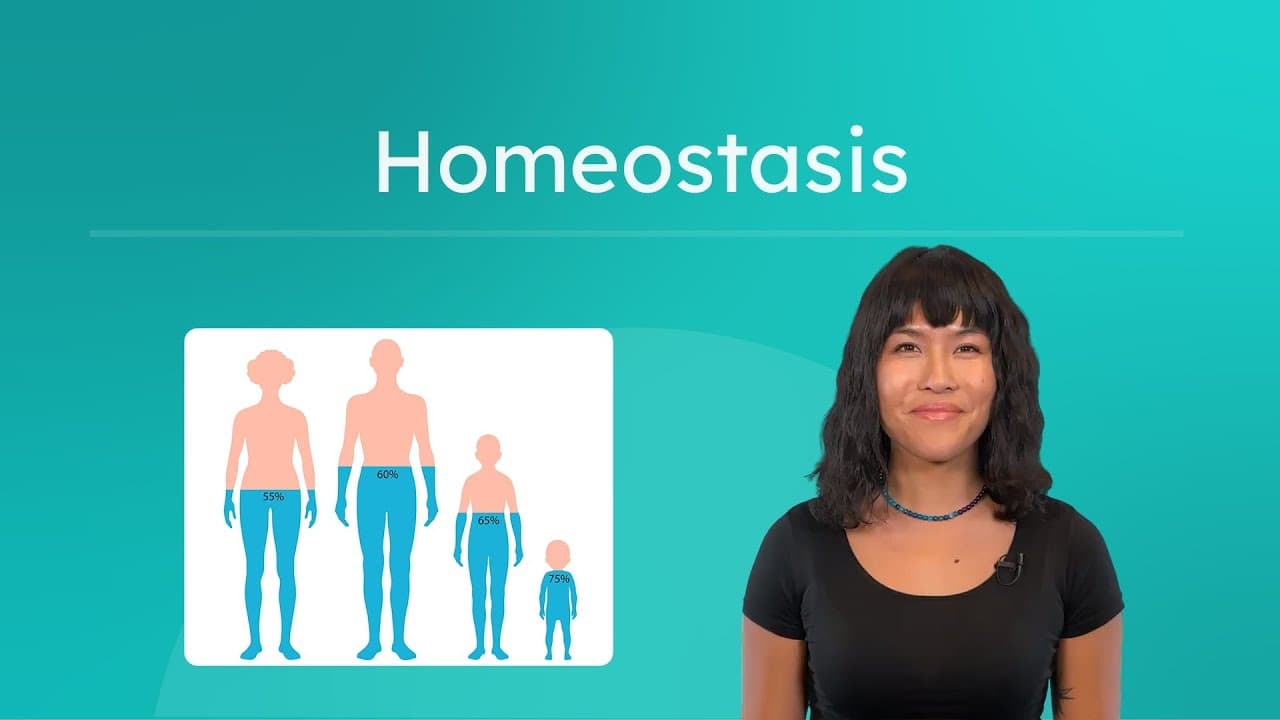
How Your Body Stays Balanced: Understanding Homeostasis

How Your Body Stays Balanced: Understanding Homeostasis

This comprehensive biology lesson explores the essential concept of homeostasis—the ability of living organisms to maintain a stable internal environment despite changing external conditions. Through relatable examples like shivering in the cold or sweating in the heat, the video illustrates how our bodies actively work to regulate temperature, water content, and nutrient levels. The narrative expands beyond humans to show how plants, reptiles, single-celled organisms, and bacteria also utilize unique mechanisms to achieve this vital balance. A significant portion of the video is dedicated to explaining the mechanics of feedback loops, comparing biological systems to a household thermostat. It clearly distinguishes between negative feedback loops, which restore balance (like blood sugar regulation with insulin), and positive feedback loops, which push systems to extremes (like fruit ripening). Detailed animations help visualize complex processes such as how kidneys regulate water using ADH and how cells respond to osmotic pressure. For educators, this video serves as a perfect anchor for units on body systems, cellular processes, or ecology. It provides clear, visual explanations of abstract concepts like osmosis and feedback mechanisms. The real-world examples of homeostatic failure—such as hypothermia, heat stroke, and the fatal consequences of placing fish in the wrong salinity—offer excellent opportunities for case study analysis and critical thinking about organism survival and adaptation.

Miacademy & MiaPrep Learning ChannelMiacademy & MiaPrep Learning Channel

14mins 57s

Materials

Cell Transport Challenge Slides

Cell Transport Challenge Slides

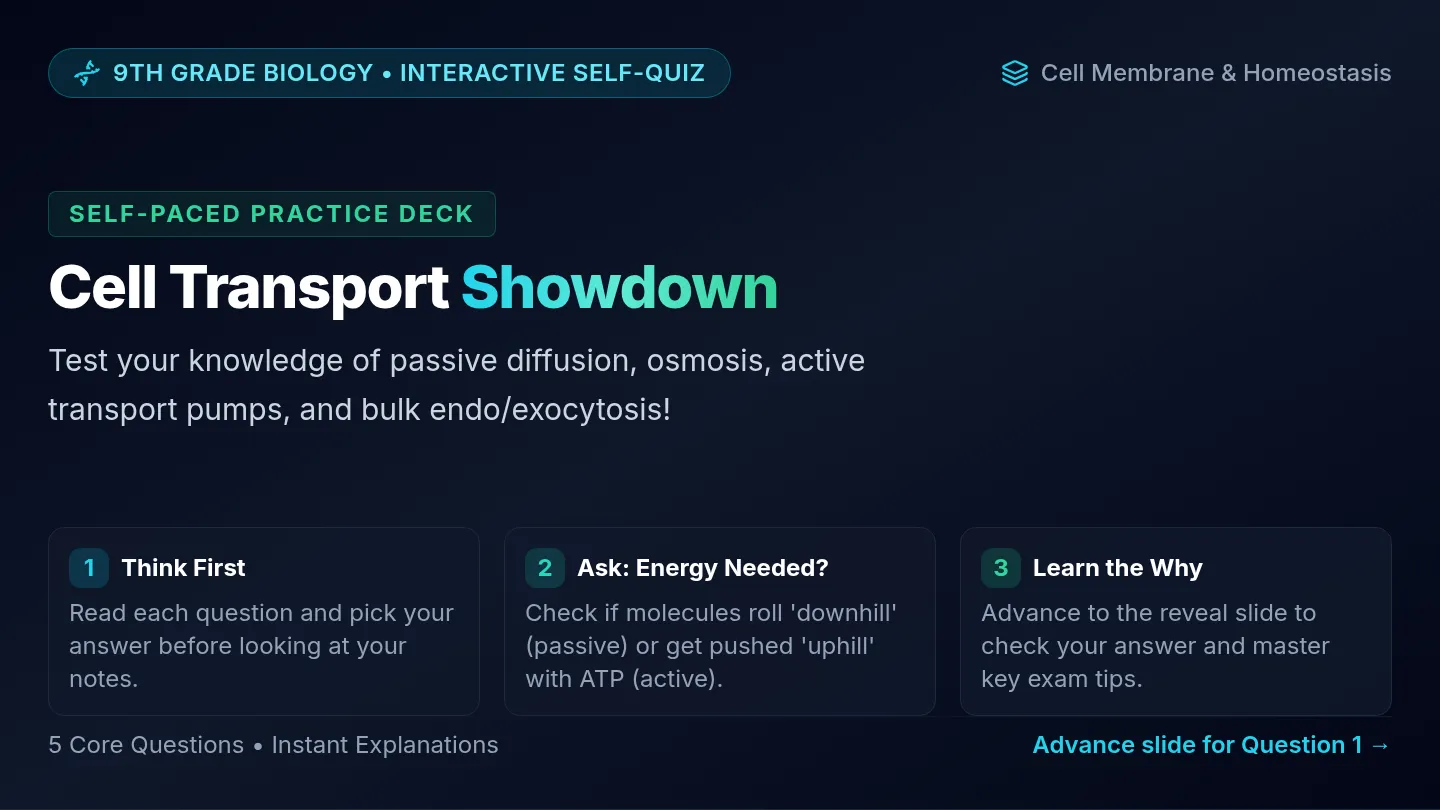
A 9th-grade biology self-paced quiz slide deck covering passive diffusion, facilitated diffusion, osmosis & tonicity, active transport pumps, and bulk transport (endocytosis and exocytosis). Features student-friendly analogies, clear challenge questions, detailed breakdown reveals, and a diagnostic reflection scorecard.

ME

Mary Ellen Goodrow

Inside The Cell Slides

Inside The Cell Slides

A vibrant 10-slide instructional deck introducing 10 core cell vocabulary terms, plant vs. animal cell comparisons, cell city analogies, mystery challenges, and an exit ticket, featuring extra-large high-visibility fonts for classroom presentation.

M

mcatt

Cell Transport Matching Worksheet

Cell Transport Matching Worksheet

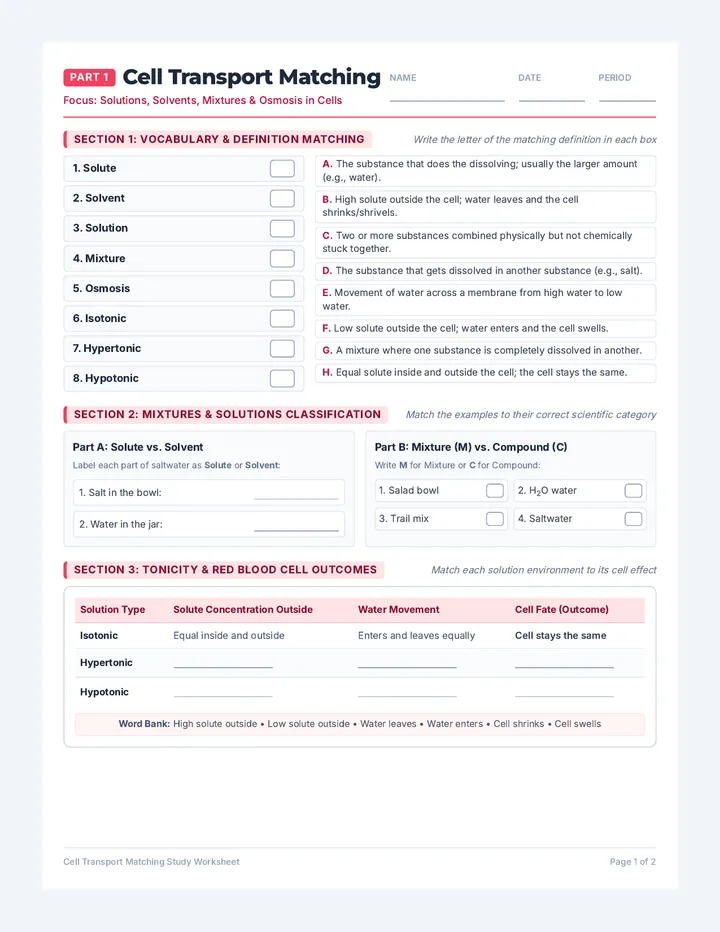
A comprehensive two-page matching worksheet reviewing cellular transport concepts, membrane structures, and solutions, with a streamlined, perfectly fitting layout on page 1.

M

MELANIE.ROBERTS

Cellular Oasis Cluster Worksheet

Cellular Oasis Cluster Worksheet

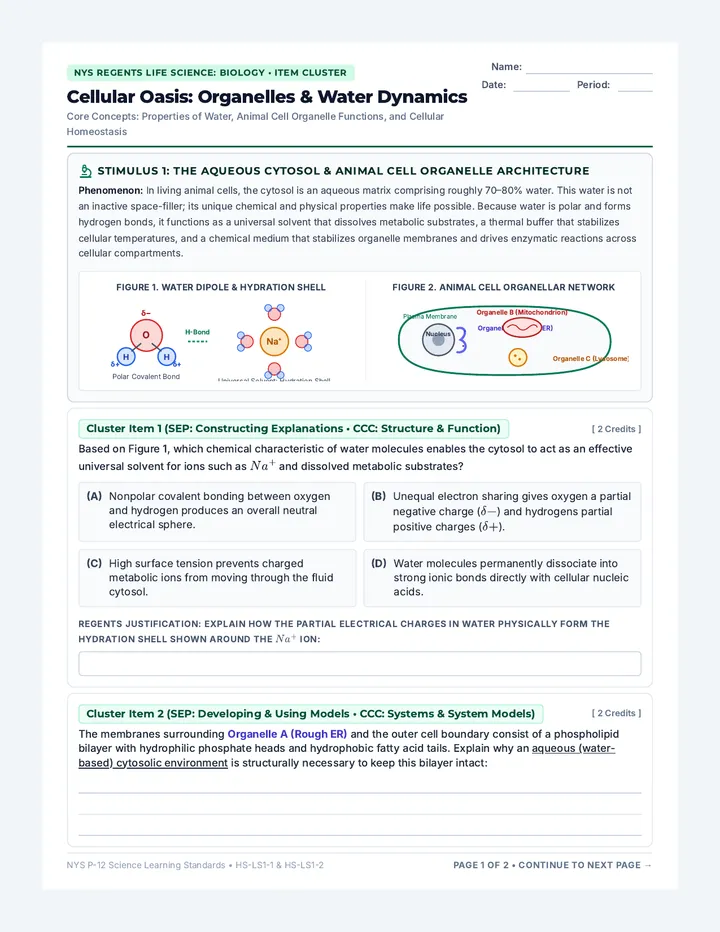
A NYS Regents Life Science biology cluster practice worksheet strictly focused on animal cell organelles, their specialized functions, and the biochemical properties of water, featuring organelle models, an experimental investigation table, and constructed reasoning.

S

stewart

Curriculum Alignment Master Document

Curriculum Alignment Master Document

A comprehensive 4-page curriculum alignment guide and revised scope and sequence for Biology, Environmental Science, and Marine Biology, mapped to NGSS high school standards. Each subject is presented on its own page for clarity.

J

jcasey

Living Earth Curriculum Plan

Living Earth Curriculum Plan

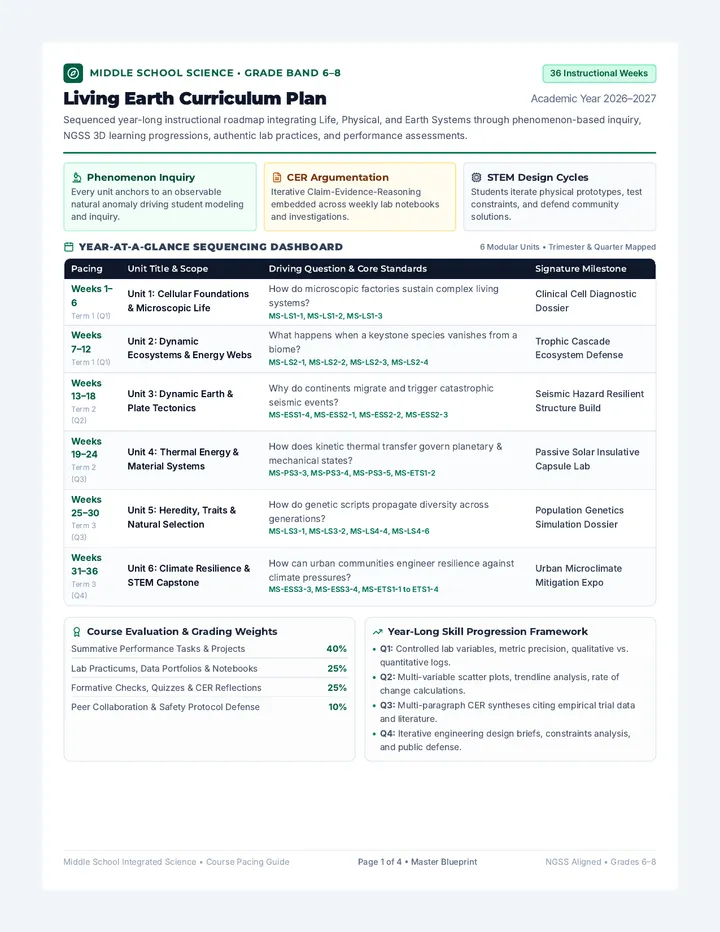
A comprehensive four-page sequenced middle school science year unit plan covering 36 instructional weeks. Details six modular units aligned with NGSS standards, driving phenomena, essential questions, hands-on lab activities, formative assessments, and summative performance tasks alongside universal differentiation frameworks.

Sequences

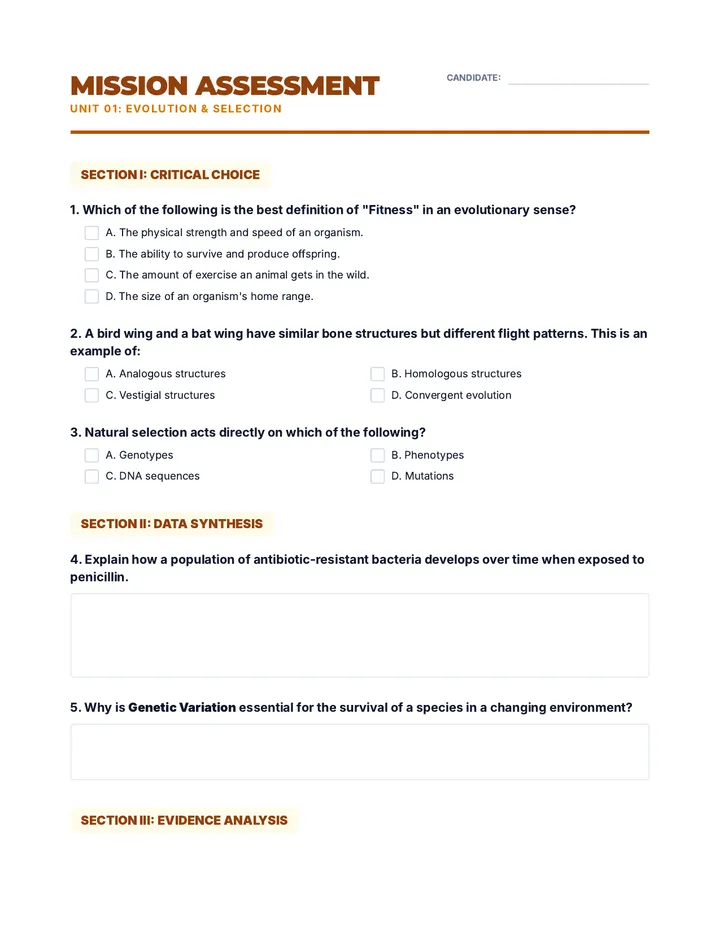
Evolution Assessment Quiz

Biology Recovery Sprint

A high-intensity biology credit recovery program focused on high-yield standards: Evolution, Systems, Viruses, and Cellular Genetics.

PB

Priyadarshini Bharath

15
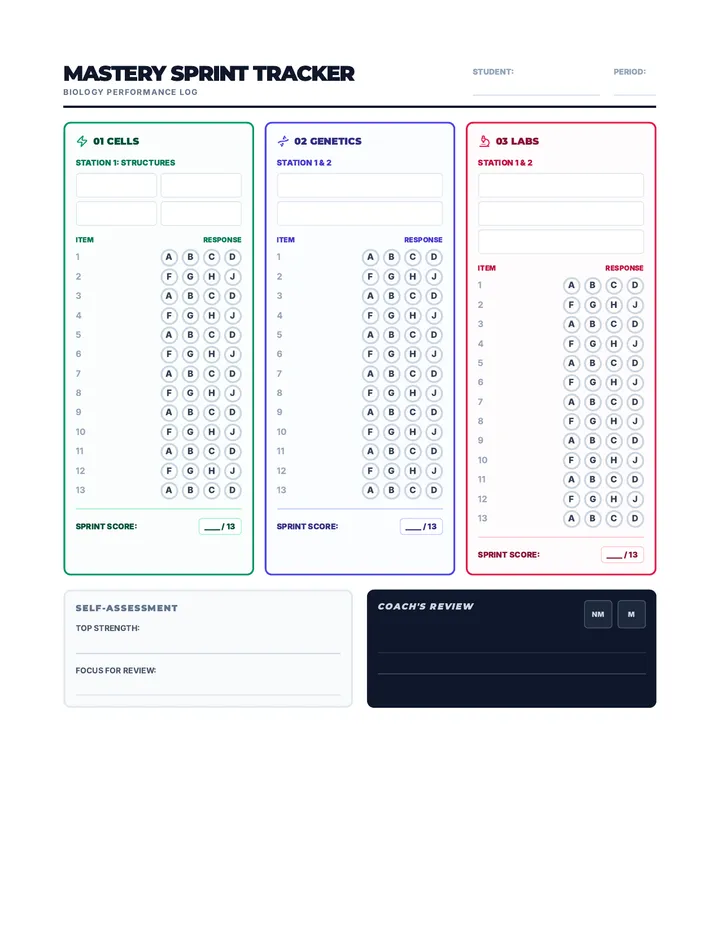
Sprint Mastery Tracker Worksheet

Biology Mastery Sprint

A high-intensity review sequence designed to move students from 'not met' to 'mastery' in Biology through vocabulary immersion and STAAR-style practice.

PB

Priyadarshini Bharath

10
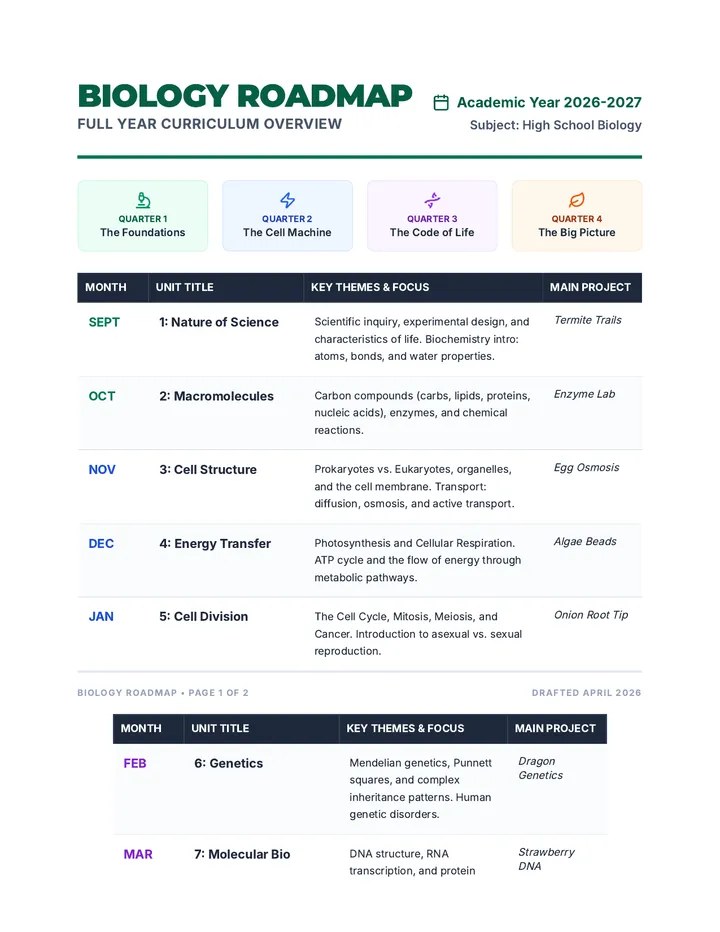
Biology Roadmap Document Trimmed

Biology Blueprint

A comprehensive full-year planning framework for high school Biology, including pacing, unit objectives, lab requirements, and assessment strategies.

A

AMY.MILLER

7
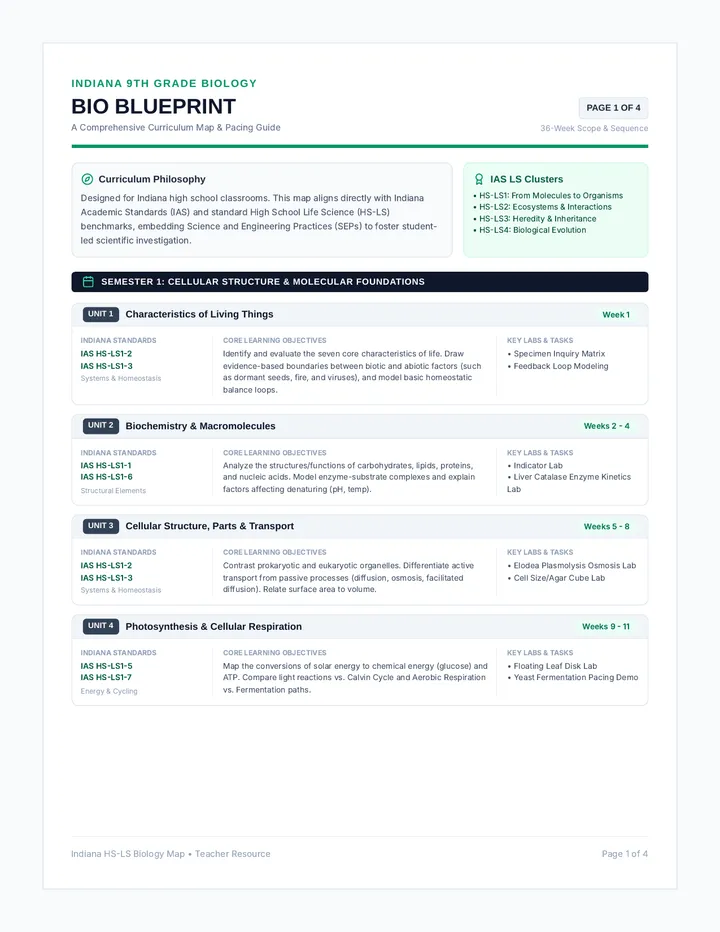
Bio Blueprint Curriculum Map

Indiana Biology Curriculum

A comprehensive biology curriculum aligned with Indiana Academic Standards, spanning twelve core units from the characteristics of living things to human impact, designed for 9th-grade on-level students.

M

MELANIE.ROBERTS

5
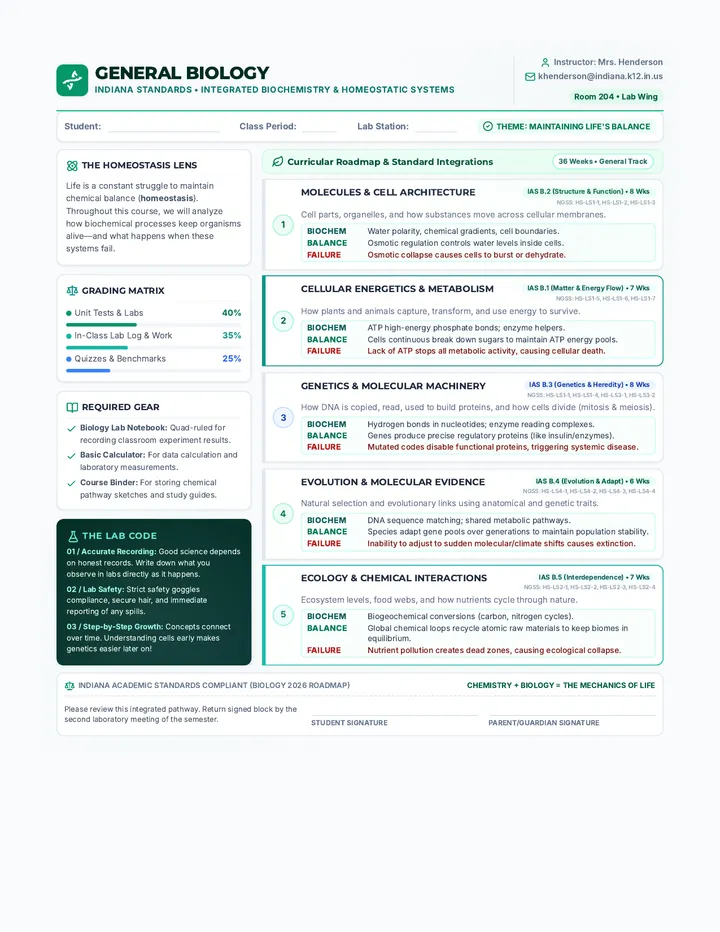
Biology Syllabus Infographic

Indiana Biology and Biochemistry

A comprehensive, 36-week General Biology curriculum aligned with Indiana Academic Standards, emphasizing the integration of biochemical foundations and metabolic homeostasis across all units.

J

Jennifer.Tetrick

7
Bio Blueprint Curriculum Map

Biology Blueprint

A complete 36-week high school biology curriculum designed for 9th-grade students, aligned with Indiana Academic Standards for Biology. This course progresses from microscopic biochemical foundations to macroscopic ecological systems.

A

AMY.MILLER

4

Lessons

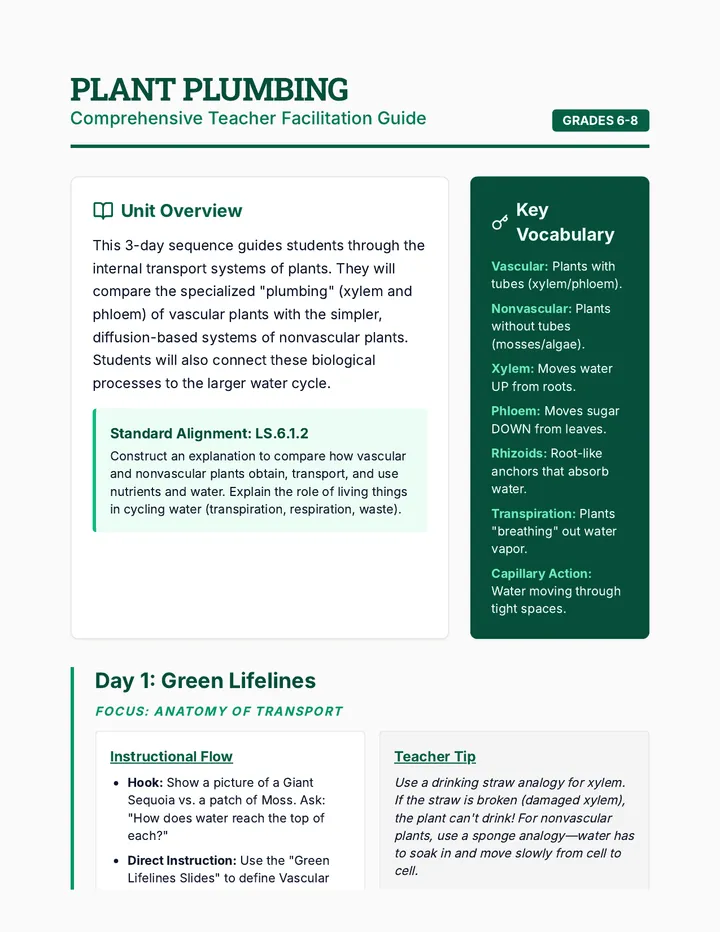
Plant Plumbing Teacher Guide

Water Wayfarers

Focuses on the role of plants and animals in cycling water through ecosystems, specifically looking at transpiration and animal respiration/waste.

CW

Candace Woodell

13
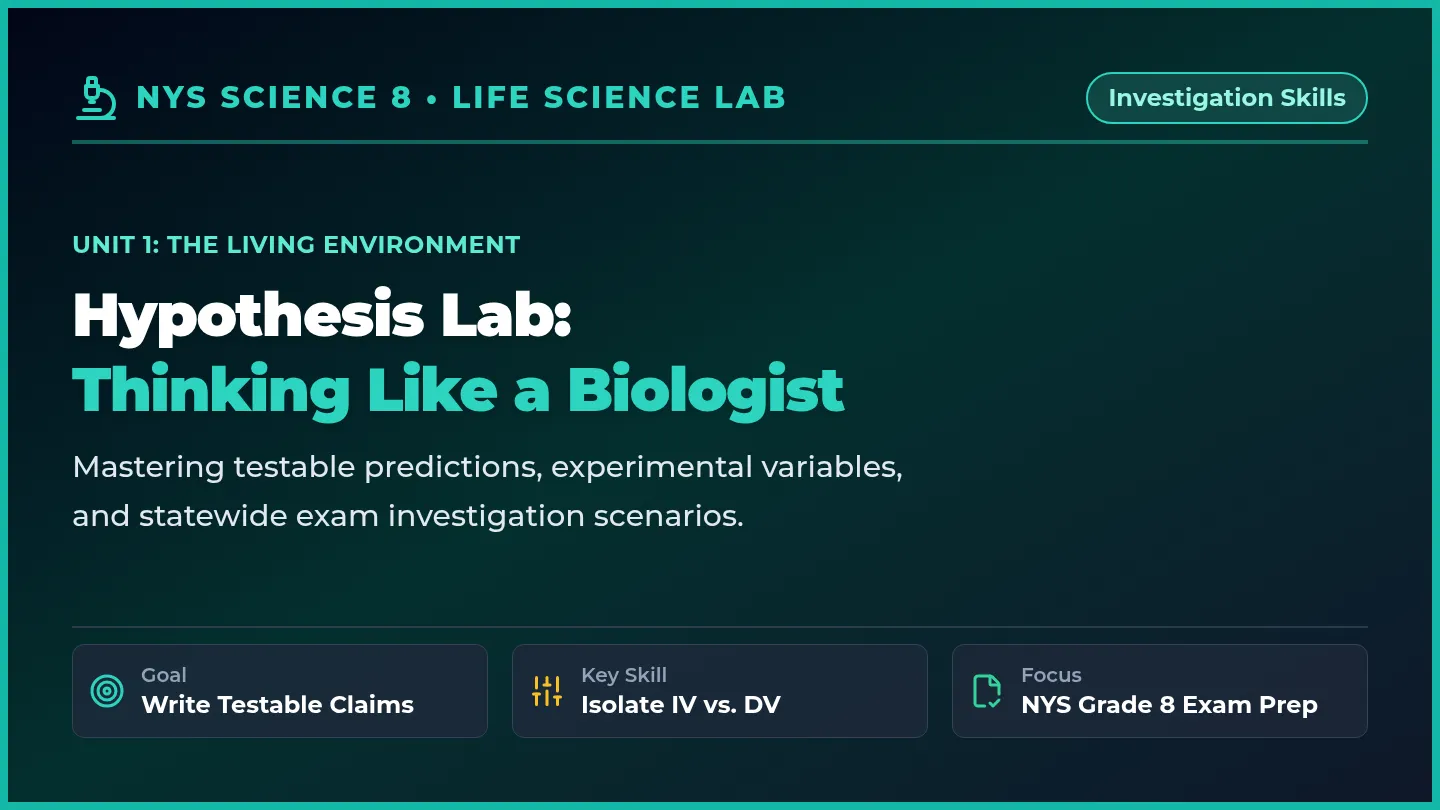
Hypothesis Lab Slides

Hypothesis Lab

An eighth-grade life science investigation lesson where students analyze New York statewide science exam biology scenarios to master hypothesis generation, independent and dependent variable identification, and experimental testing.

J

jelterman

7
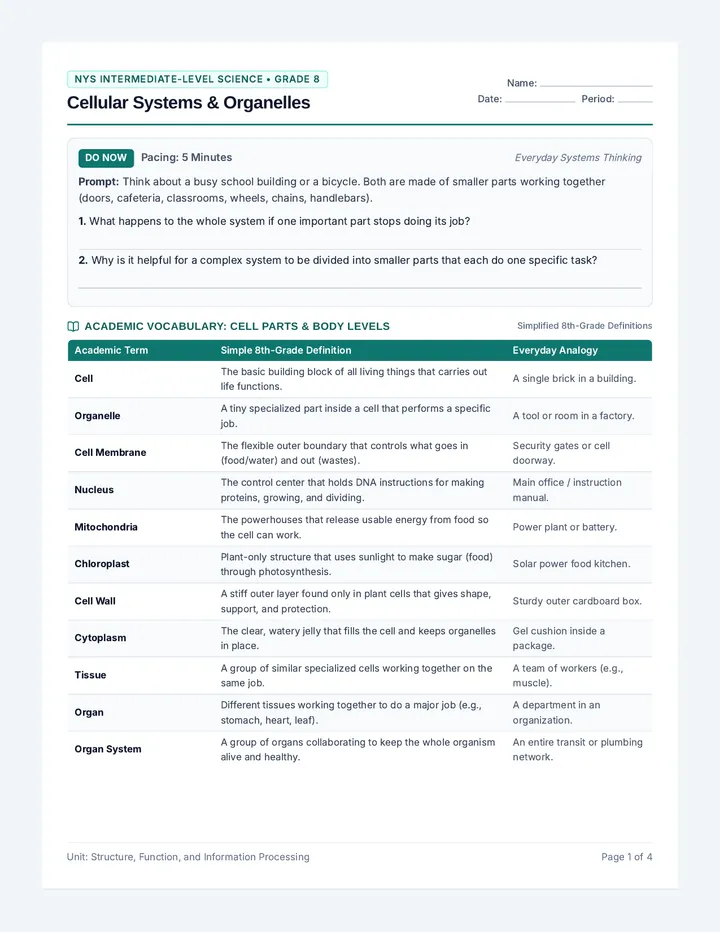
Cell Systems Student Packet

Cell Power Systems

An 8th-grade NYS science lesson exploring cell organelles, cellular organization, and system-level interactions aligned with NYSSLS standards MS-LS1-1, MS-LS1-2, and MS-LS1-3. Features a structured Do Now, comprehensive academic vocabulary, a 17-minute exam-referenced activity, an exit ticket, and a 20-minute timed homework assignment.

J

jelterman

4
Biology Syllabus Infographic

Course Launch

An introductory framework establishing course policies, Indiana state biology standards, and the integrated biochemistry roadmap for the academic year.

M

MELANIE.ROBERTS

4
Bio Roots Relay Cards

Bio Roots Relay

A high-energy, kinetic biology relay activity where students race to match biological prefixes, roots, and suffixes with their meanings and real-world scientific examples, followed by word-building challenges and formative assessment.

M

MELANIE.ROBERTS

5
Molecular Roadblocks Worksheet

Molecular Roadblocks

A middle school science lesson exploring how four distinct medical conditions—pancreatic injury, asthma, diabetes, and anemia—interfere with the body's delivery of glucose and oxygen to cells, disrupting cellular respiration and metabolic energy production.

M

mcatt

3