Encryption algorithms, network security protocols, and threat detection strategies. Develops skills in identifying system vulnerabilities and implementing defensive measures against malware and digital attacks.
A comprehensive 2-page project packet and planning guide for a Digital Citizenship & Cyber Hygiene Public Service Announcement (PSA). It includes topic selection, audience analysis, an APA citation model, research tracker, data visualization planner with sentence starters, content blueprint, and a clear evaluation rubric.
An updated high-impact rules and procedures poster for the Verizon Innovative Learning Lab, featuring six key safety and conduct rules with large icons and bold, simple text. Rule 5 has been updated to focus on digital safety and tech integrity.
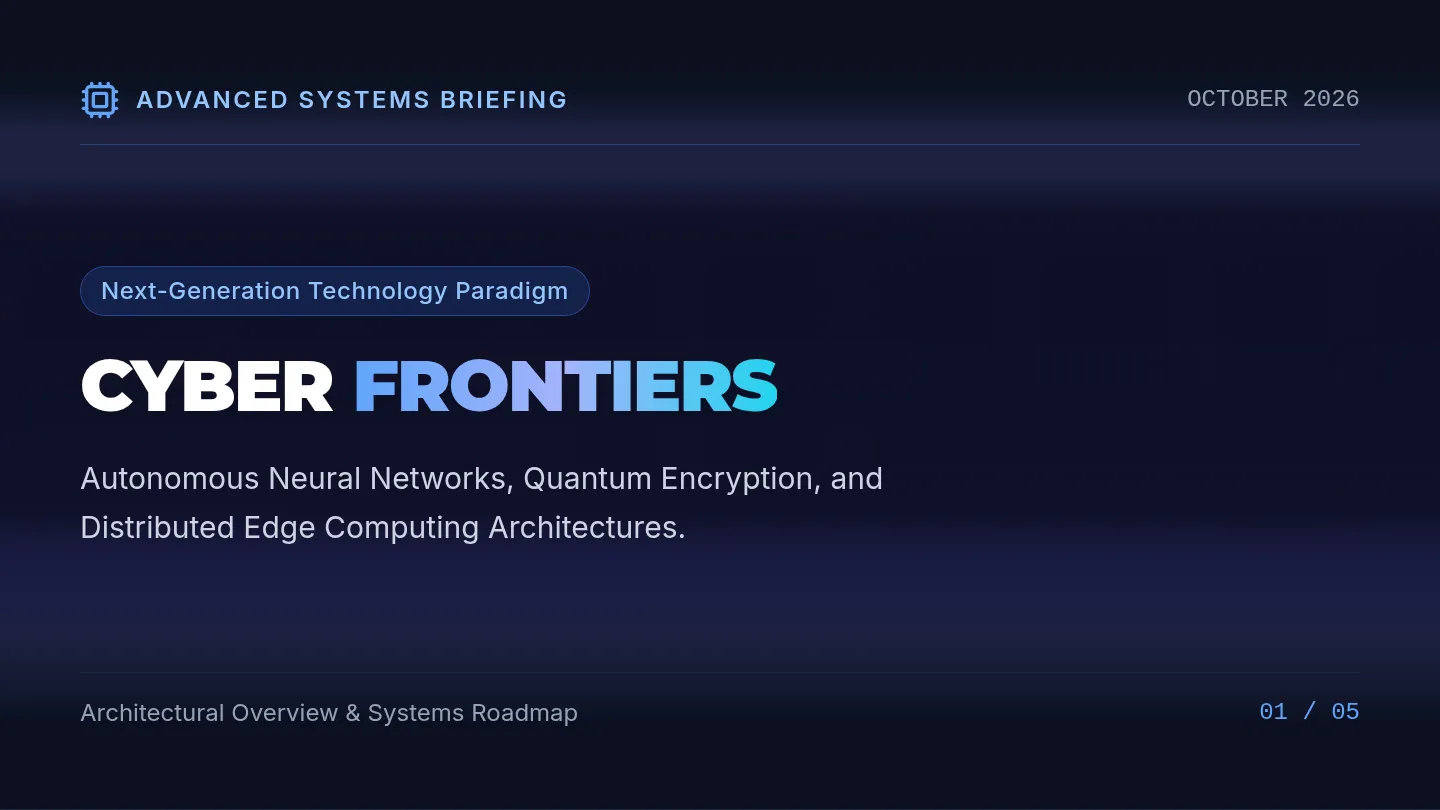
A sleek 5-slide dark presentation deck built around the blue light bar visual aesthetic, exploring modern cyber architecture, neural systems, and quantum data frontiers.
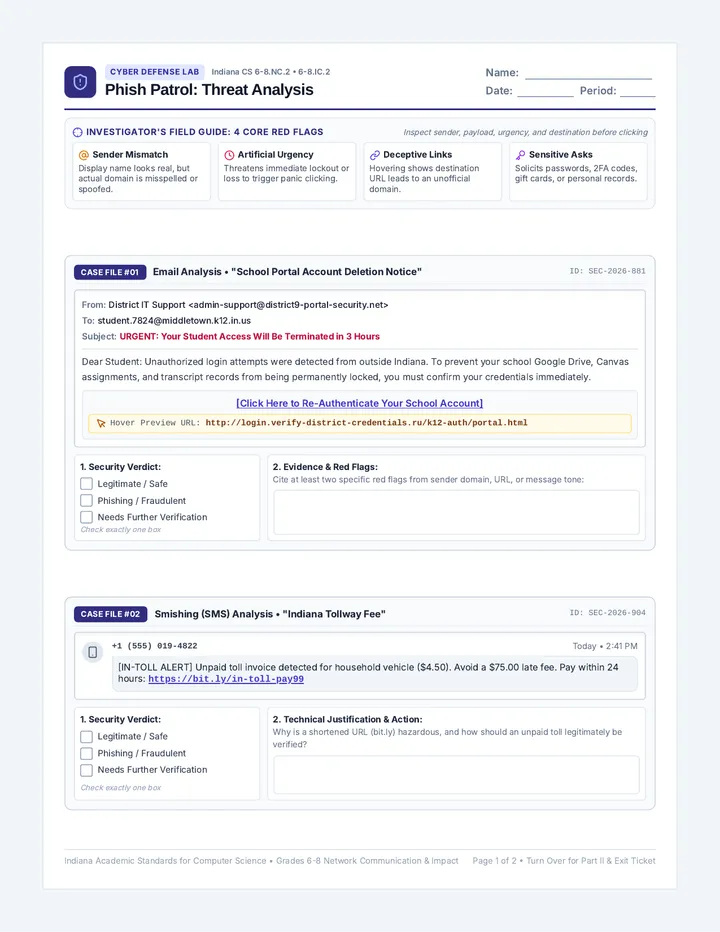
An 8th grade cybersecurity worksheet aligned with Indiana CS standards where students analyze realistic email, SMS, and direct message scenarios to detect phishing indicators and justify their security verdicts. Includes deep analysis questions and a debrief exit ticket.
A multi-part cybersecurity unit focusing on defensive strategies, from identifying malicious threats to mastering network access control and traffic filtering.
A 2-day self-contained project for Cyber Security 2 students focusing on the five phases of penetration testing. Students research and create a visual representation (poster or slide deck) of a simulated ethical hacking mission.
A comprehensive sequence for 12th-grade students exploring network security, cryptography, and the protocols that secure the modern internet. Students progress from foundational security principles to the technical details of public key infrastructure and the HTTPS handshake.
This sequence explores the biological parallels between organic viruses and computer malware to help students understand system defense. Students classify different types of malware, investigate ransomware case studies, understand the logic behind antivirus engines, and develop practical digital hygiene habits.
This sequence explores how network protocols and architecture form the backbone of internet security, focusing on packet switching, port security, threat mitigation, and encrypted tunneling.
This sequence explores how data remains secure across public networks. Students move from basic vulnerabilities to complex encryption methods like SSL/TLS and firewall configurations to understand digital privacy and integrity.
A foundational lesson for middle schoolers on digital safety, focusing on password security and threat recognition.
A three-day project-based lesson where 5th-grade students design, construct, and playtest board games centered on digital citizenship topics like cyberbullying, digital footprints, and online engagement tricks. Students collaborate with AI to brainstorm rules and use hands-on materials to build a playable physical game.
A comprehensive preparation suite for the CompTIA CySA+ (CS0-003) exam, covering threat management, security operations, and incident response through detailed reviews, cheat sheets, and practice scenarios.
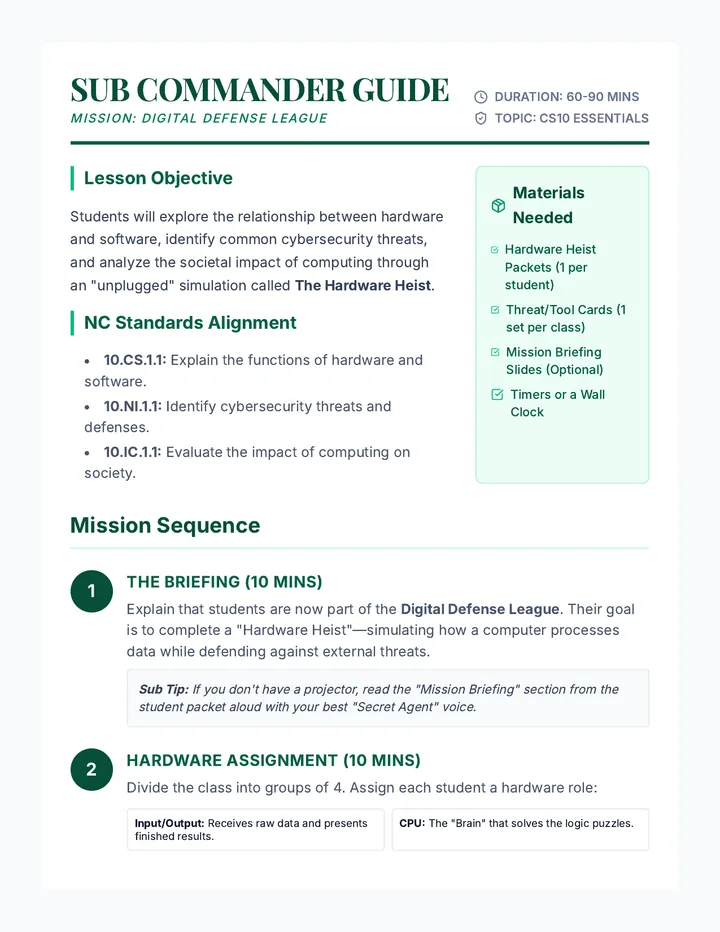
A comprehensive sub plan focusing on hardware basics, cybersecurity, and the impact of computing through a hands-on 'Human Computer' unplugged simulation.
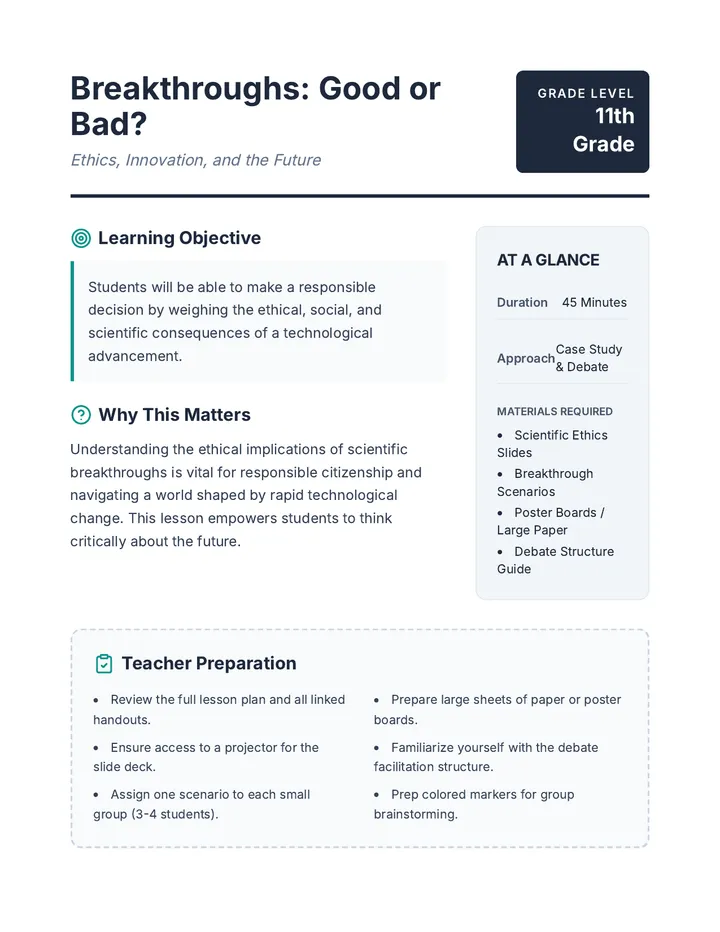
An 11th-grade ethics and science lesson exploring the social and moral implications of technological advancements through case studies and debate.
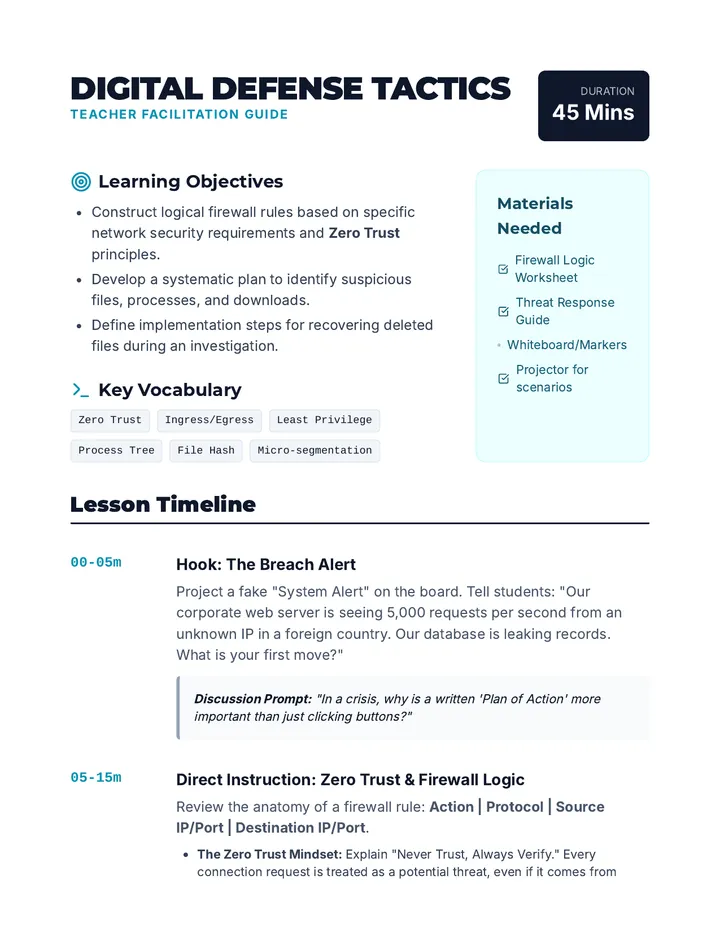
A high-stakes cybersecurity lesson where 12th graders learn to defend networks by configuring firewall rules and investigating suspicious system activity. Students develop action plans for identifying malicious files and processes in a simulated incident response scenario.