Lenny.com
Explore
Create
ActivitiesNewMathEnglish Language ArtsScience & EngineeringSocial StudiesGlobal LanguagesHealth & Physical EducationSpecial EducationCounseling & Life SkillsArts & CreativityESL
Lenny.com
Lenny.com
Explore
Create
ActivitiesNewMathEnglish Language ArtsScience & EngineeringSocial StudiesGlobal LanguagesHealth & Physical EducationSpecial EducationCounseling & Life SkillsArts & CreativityESL
Lenny.com
Lenny.com

Solutions

Lenny for EducatorsLenny for SchoolsLenny for Districts

Product

ExploreSign inCreateSupportAbout

Resources

Getting startedMTSS Acceleration Program

Newsletters

School Funding Newsletter

© 2026 Lenny Learning Inc.

TermsPrivacyAccessibility
LinkedInInstagramX
Lenny

Light

Fundamental properties of the electromagnetic spectrum, including reflection, refraction, and diffraction. Analyzes the behavior of visible light through lenses, mirrors, and various media.

Science & EngineeringLife ScienceLiving ThingsAnimalsPlantsBody SystemsTraitsAdaptationsCellsEcosystemsHeredityGenes to TraitsCell DivisionPhysicsComparing MaterialsShapes and PropertiesMagnetsMagnetismLightSoundLight and SoundMatterStates of MatterChanges of StateMixturesPhysical and Chemical ChangeHeating and CoolingHeat and Thermal EnergyEnergyForce and MotionElectrical CircuitsAtoms and MoleculesPeriodic TableMotion in One DimensionMotion in Two DimensionsScalars and VectorsForces and Laws of MotionCircular Motion and GravityMomentum and ImpulseWork, Energy, and PowerWavesElectromagnetic WavesGeometric OpticsElectricity and MagnetismSimple Harmonic MotionThermodynamicsNuclear PhysicsEarth Science & AstronomyWeatherWater CycleRocks and MineralsFossilsEarth's FeaturesEarth's ResourcesEarth's StructureWeather and ClimateEarth EventsFossils and Geologic TimePlate TectonicsHuman ImpactsAstronomyChemistryUnits and MeasurementAtomic StructurePeriodic TrendsChemical BondingNomenclatureMolecular StructureIntermolecular ForcesThe MoleStoichiometryProperties of GasesSolutionsChemical ReactionsBalancing EquationsEnergy ChangesRates of ReactionsEquilibriumAcids and BasesQuantum ModelBiologyClassificationCell StructureThe Chemistry of LifeBiomoleculesCellular TransportCell EnergyCell Growth and DivisionDNAProtein SynthesisMeiosis and Sexual ReproductionPatterns of InheritanceMulticellular OrganismsEvolutionEcologyBiodiversityComputer ScienceAlgorithms and Computational ThinkingProgramming LanguagesComputing SystemsNetworks and InternetData AnalysisCybersecurityAI and Machine LearningSoftware Design and DevelopmentBlockchainEngineering & AIDesigning ExperimentsEngineering PracticesDesign ThinkingEngineering Design ProcessMechanical EngineeringElectrical EngineeringMaterials and StructuresCAD and 3D DesignRoboticsArtificial Intelligence BasicsVibe CodingMachine LearningAI Ethics and SocietySystems ThinkingEntrepreneurship & InnovationEntrepreneurial MindsetBusiness Idea DevelopmentBusiness Plan BasicsMarketing & Customer DiscoveryFinancial Management for Startups

Videos

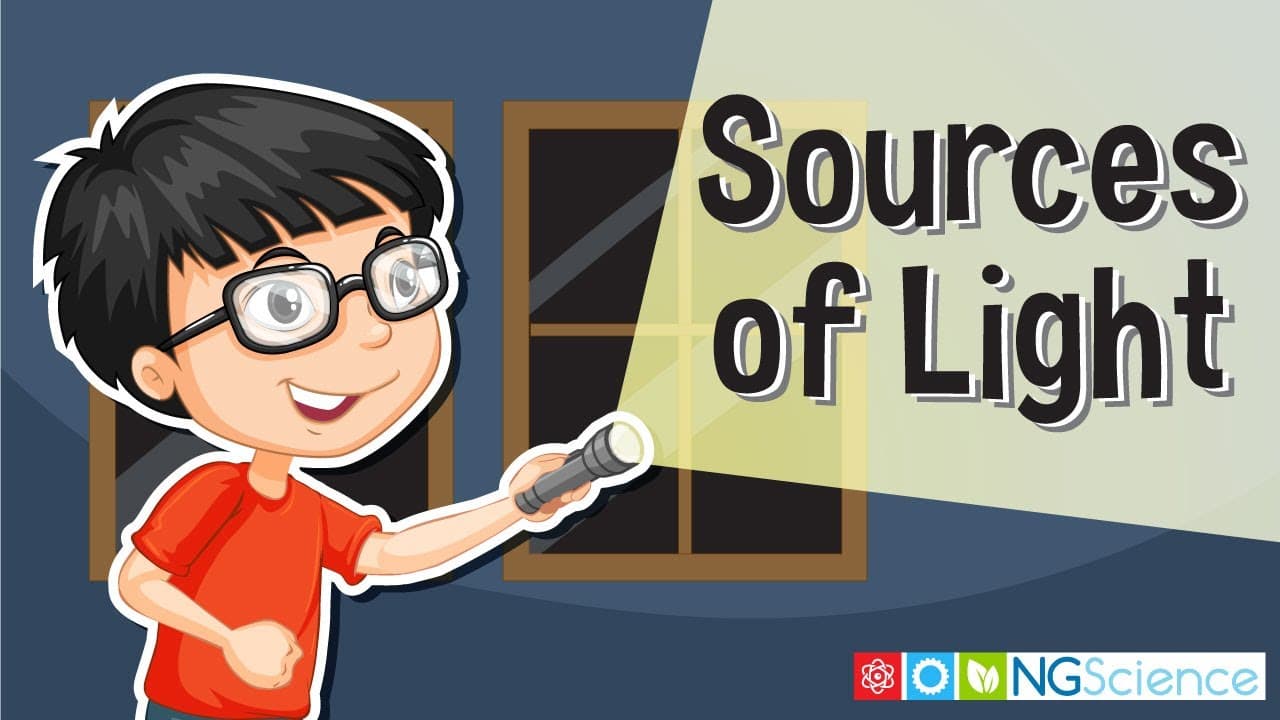
Identifying Natural and Artificial Sources of Light

Identifying Natural and Artificial Sources of Light

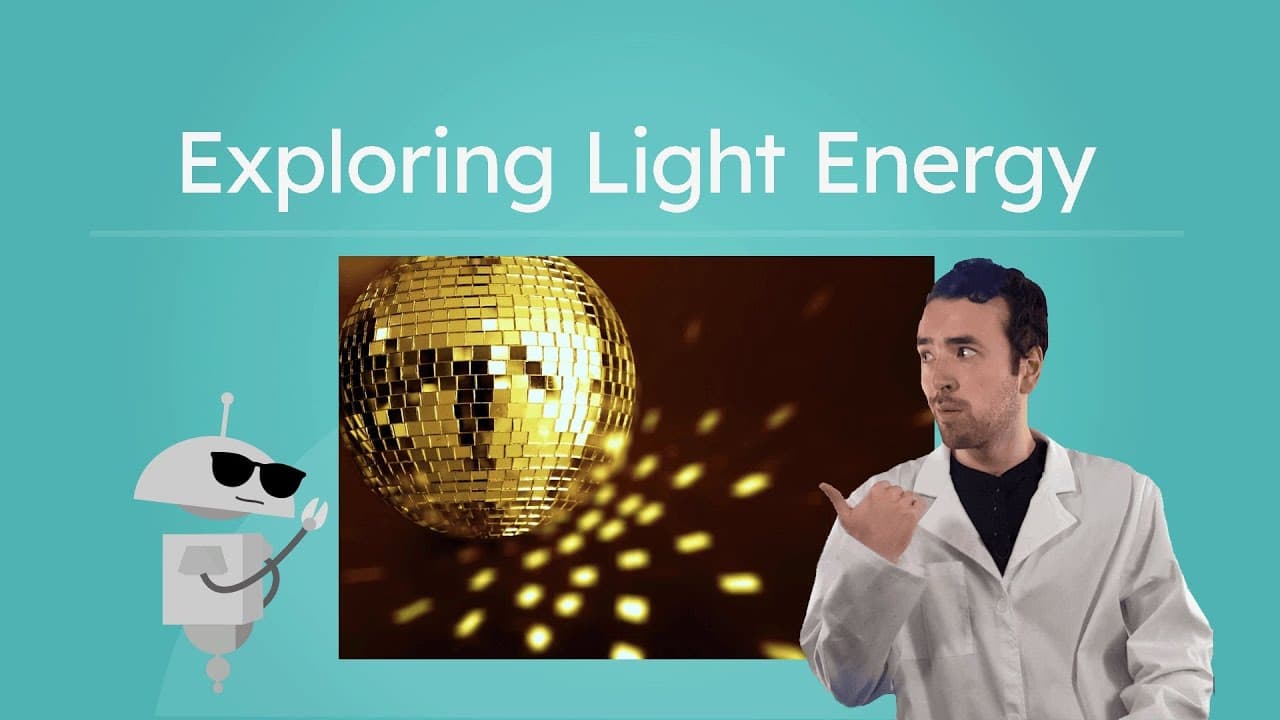
This educational science video introduces primary school students to the concept of light sources, clearly distinguishing between objects that produce their own light and those that do not. Through a series of high-quality visuals ranging from sunny orchards to bioluminescent fireflies, the narrator explains the definition of a light source. The video categorizes these sources into natural examples like the Sun, lightning, and stars, and artificial examples used by humans such as light bulbs, car headlights, and televisions. A key scientific concept addressed is the distinction between emitting and reflecting light, specifically using the Moon as a case study. The video corrects the common misconception that the Moon is a source of light, explaining that it merely reflects the Sun's rays. This critical distinction helps students build a more accurate understanding of astronomical bodies and the physics of light. Teachers can use this video as an engaging hook for a unit on energy, physics, or day and night cycles. It provides clear visual examples that can anchor class discussions and sorting activities. The pacing is suitable for young learners, and the 'silent quiz' section near the end—showing fireworks, divers, and candles without narration—offers an excellent opportunity for teachers to pause and assess student understanding in real-time.

Next Generation ScienceNext Generation Science

1min 52s

Why Is the Sky Blue? Understanding Light and Color

Why Is the Sky Blue? Understanding Light and Color

This engaging science video from SciShow Kids tackles one of the most common questions children ask: "Why is the sky blue?" Hosted by Jessi and her robot friend Squeaks, the video simplifies complex physics concepts like the visible light spectrum and atmospheric scattering into age-appropriate explanations. Using a mix of animation and real-world demonstrations, it explains that sunlight, while appearing white, actually contains all colors of the rainbow. The content covers key topics including the composition of white light, how prisms refract light to reveal the color spectrum, and the nature of Earth's atmosphere. It introduces the concept of air being made of tiny, invisible particles and demonstrates how these particles interact with sunlight. The core explanation focuses on Rayleigh scattering—simplified here as "scattering" or "bouncing"—showing how blue light waves scatter more easily than other colors when hitting air particles, painting the sky blue. For educators, this video serves as an excellent introduction to units on light, color, or Earth's atmosphere. It provides clear visual metaphors, such as comparing mixing paint to mixing light, and offers a tangible demonstration using a prism that can be replicated in the classroom. The video encourages observation and inquiry, making it a perfect launchpad for hands-on experiments about light refraction and atmospheric science.

SciShow KidsSciShow Kids

2mins 51s

How Light Energy Travels and Interacts with Matter

How Light Energy Travels and Interacts with Matter

This engaging educational video introduces students to the fundamental concepts of light energy, explaining its nature, speed, and how it interacts with the material world. The lesson begins by defining light as a form of energy that travels in straight lines called rays, highlighting the Sun as our primary source and illustrating the immense speed at which light travels through space. Through clear visual examples and energetic narration, the host breaks down complex behaviors of light including reflection and refraction. The video dives deep into how we perceive our environment, demonstrating that sight is actually the result of light bouncing off objects and entering our eyes. It categorizes materials based on how they transmit light, defining key vocabulary such as transparent, translucent, and opaque with relatable real-world examples like windows, sunglasses, and walls. The concept of refraction is also explored, explaining optical illusions like a "broken" straw in water and how corrective lenses work. Teachers can utilize this video as a comprehensive introduction to optics and light energy for elementary and middle school science curriculums. The content effectively bridges the gap between abstract physical concepts and observable phenomena, making it an excellent launchpad for hands-on experiments involving mirrors, lenses, and shadow play. The clear definitions and "pause and think" moments provide natural breaks for classroom discussion and formative assessment.
Miacademy & MiaPrep Learning ChannelMiacademy & MiaPrep Learning Channel

8mins 8s

Why We See the Moon During the Day

Why We See the Moon During the Day

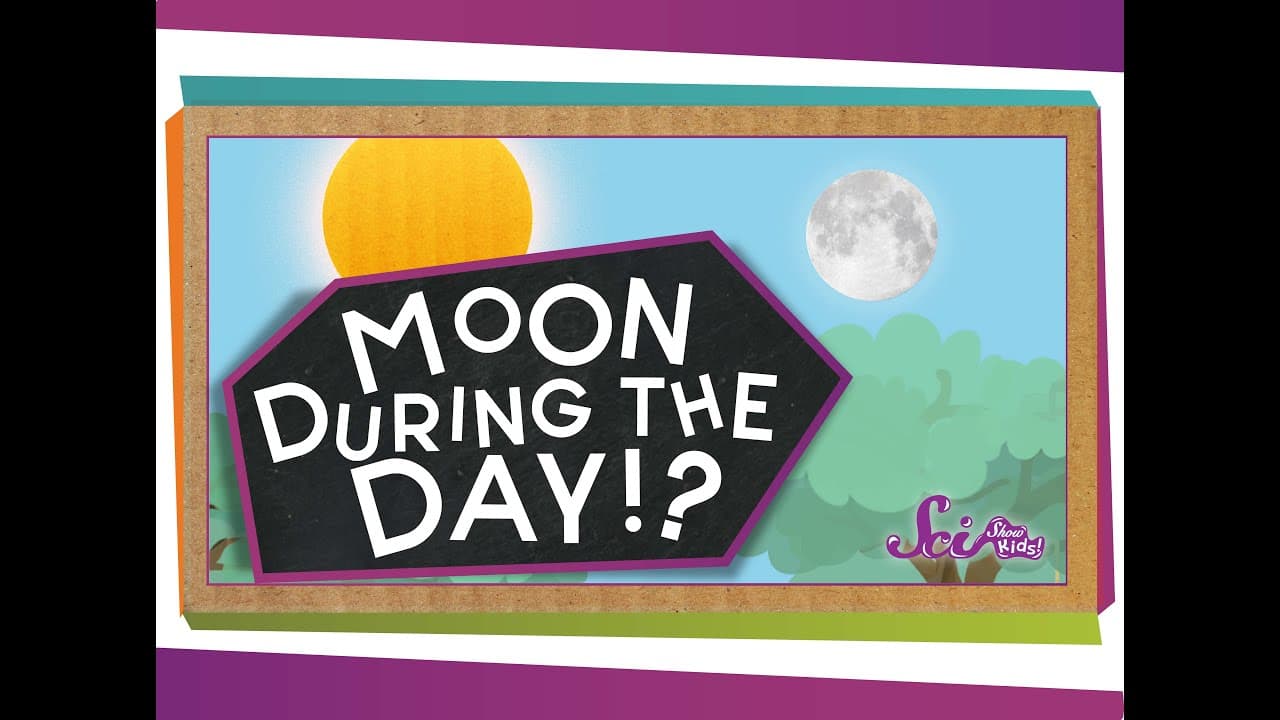
This engaging video from SciShow Kids answers a common student inquiry: "Why can I see the moon during the day?" Through clear narration and helpful animations, the host breaks down the complex mechanics of the Earth-Sun-Moon system. The video explains foundational astronomical concepts, differentiating between Earth's daily rotation and the Moon's monthly orbit, while effectively demonstrating how the interaction of these movements allows the Moon to be visible in the daytime sky. Key themes include the rotation of Earth causing day and night, the concept of orbiting, and the physics of light reflection. A crucial distinction is made between the Sun as a source of light and the Moon as a reflector of that light. The video also introduces the concept of moon phases using kid-friendly analogies—comparing the changing shapes to a bitten cookie, a fingernail clipping, and a dinner plate—to explain that the Moon's shape doesn't actually change, only our view of its illuminated half does. For classroom application, this resource is invaluable for dispelling the misconception that the Moon acts solely as a "night light." It serves as a perfect launchpad for units on space systems, patterns in the sky, or the properties of light. Teachers can utilize the video's clear visual models to set up classroom demonstrations using globes and flashlights, or to initiate a long-term moon observation journal project where students track the moon's visibility during school hours.

SciShow KidsSciShow Kids

3mins 52s

Why the Moon Turns Red: Understanding Lunar Eclipses

Why the Moon Turns Red: Understanding Lunar Eclipses

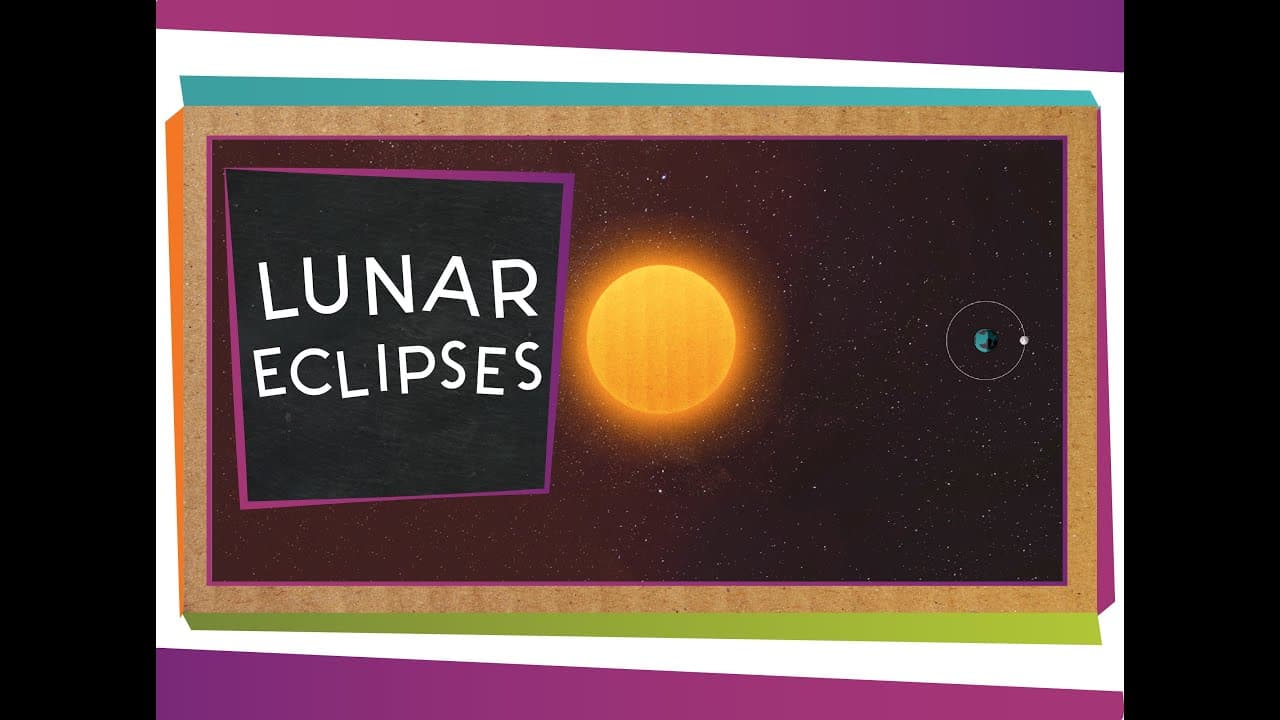
In this engaging episode of SciShow Kids, host Jessi takes young astronomers into the observatory to explore the phenomenon of a lunar eclipse. The video breaks down the celestial mechanics behind this event, explaining how the specific alignment of the Sun, Earth, and Moon creates a shadow that changes the Moon's appearance. It specifically addresses the "Blood Moon" phenomenon, answering the intriguing question of why the Moon turns red instead of going completely dark when it passes into Earth's shadow. The content covers key astronomical concepts including the definition of "lunar" and "eclipse," the orbital paths of the Earth and Moon, and the physics of light refraction through Earth's atmosphere. Through clear, colorful animations, students visualize the straight-line alignment required for an eclipse and learn why these events are visible only from certain parts of the world and at specific times. The video also importantly distinguishes between solar and lunar eclipses regarding eye safety. This resource is highly valuable for elementary science classrooms as it simplifies the complex 3D spatial relationships of celestial bodies into understandable 2D animations. It serves as an excellent introduction to units on space, light and shadows, or the solar system. Teachers can use this video to spark curiosity about the night sky, model orbital mechanics, or introduce basic optics concepts. While the video references specific dates from 2015, the scientific explanations remain evergreen and accurate.

SciShow KidsSciShow Kids

3mins 9s

Exploring the Nature of Light and Electromagnetic Waves

Exploring the Nature of Light and Electromagnetic Waves

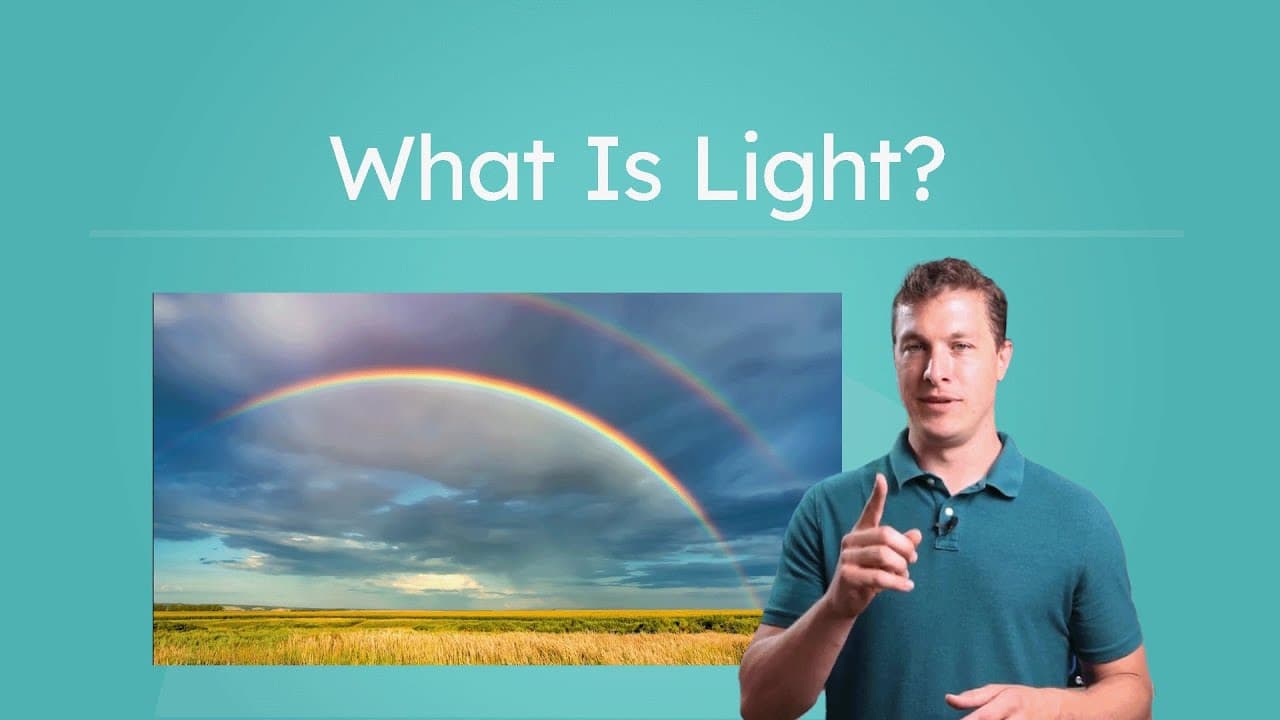
This educational video provides a comprehensive introduction to the physics of light, defining it as an oscillating electromagnetic wave. The instructor breaks down complex abstract concepts by first explaining electric and magnetic fields separately, using clear diagrams and real-world analogies like magnets and iron filings. The video then combines these concepts to visualize light as two perpendicular fields—electric and magnetic—oscillating together as they travel through space. The lesson delves into the specific wave properties of light, including wavelength, frequency, and amplitude. It effectively connects these mathematical and physical properties to human perception, explaining how wavelength and frequency determine the color we see, while amplitude determines the brightness. The video uses helpful animations, such as 3D graphs and water wave comparisons, to make these invisible phenomena easier to visualize. This resource is highly valuable for physical science and physics classrooms as it bridges the gap between static electricity/magnetism and wave theory. It is ideal for introducing the electromagnetic spectrum, teaching wave properties, or explaining the fundamental nature of light. The video includes a built-in review quiz and summary, making it a ready-to-use lesson component for checking student understanding of key physics vocabulary.

Miacademy & MiaPrep Learning ChannelMiacademy & MiaPrep Learning Channel

10mins

Materials

Lens Detectives Lab Activity

Lens Detectives Lab Activity

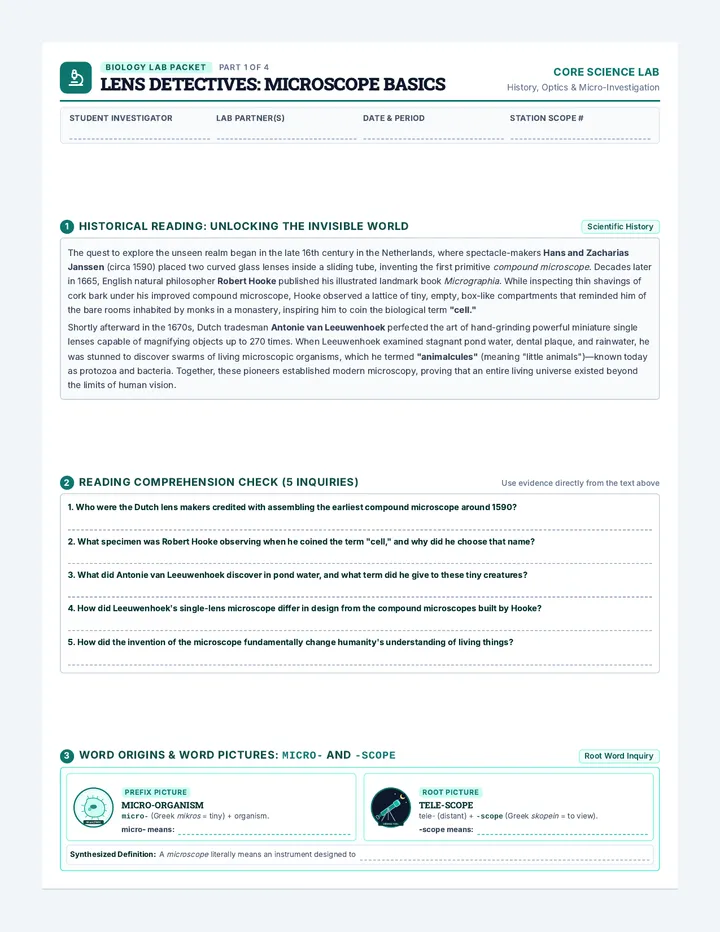
A comprehensive 4-page laboratory investigation packet covering microscope history with comprehension questions, root word pictures, a labeled microscope anatomy diagram, magnification math, letter 'e' inversion inquiry, and pond water wet-mount microscopy with realistic 400x photomicrograph views of Euglena, Paramecium, Amoeba, and Diatoms.

S

stewart

Light Waves Fluency Passage

Light Waves Fluency Passage

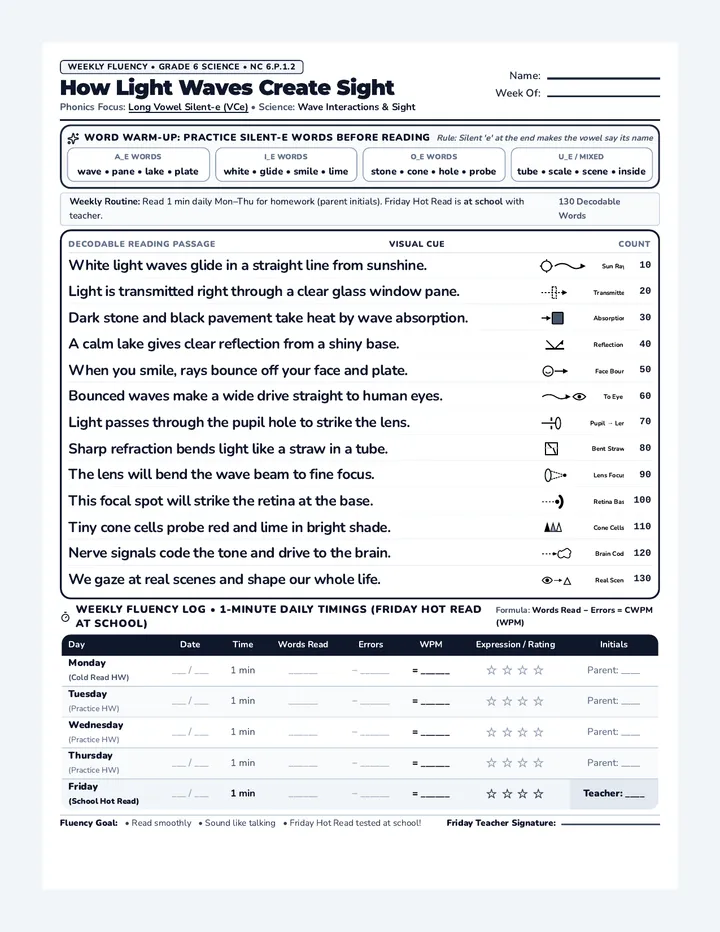
A two-page decodable fluency passage and comprehension worksheet in Second Story Window style. Page 1 features an enlarged 16.5px passage font with spot visuals between words and cumulative counts, tightly coupled to the weekly fluency log with zero gap, and specifies that the Friday Hot Read is conducted at school; Page 2 provides daily close reading questions for Monday through Thursday.

CW

Candace Woodell

Energy Detectives Worksheet

Energy Detectives Worksheet

A two-page printable science practice worksheet exploring how energy is detected through observable evidence like light, sound, heat, and motion. Students analyze everyday scenarios to identify evidence clues and explain how invisible energy reveals its presence.

KB

Kelsey Barofski

Science Mastery Study Guide

Science Mastery Study Guide

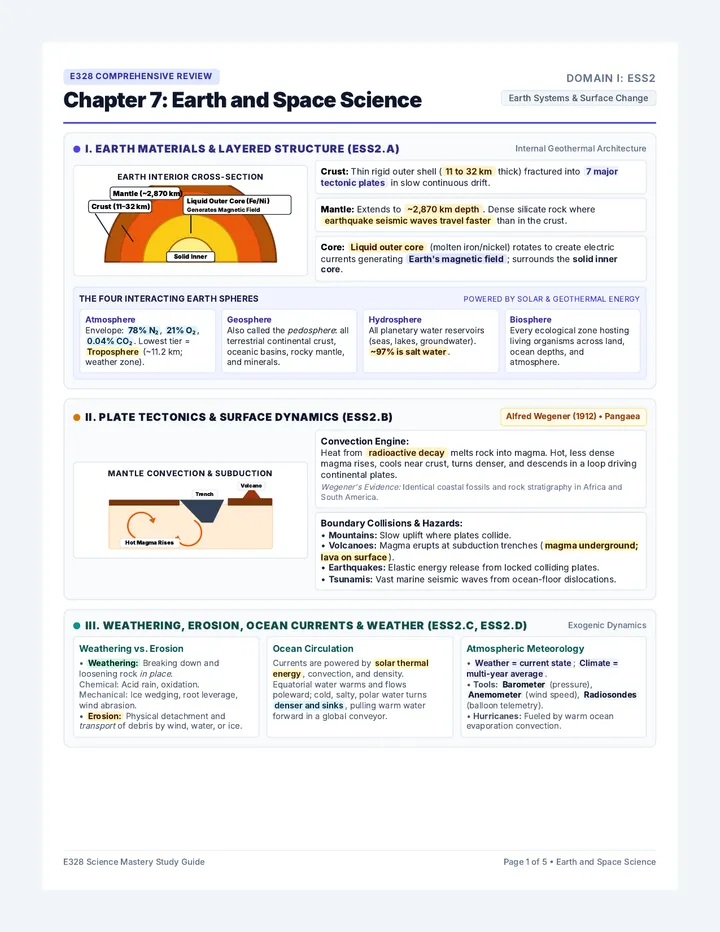
A comprehensive 5-page study guide and high-yield exam cheat sheet covering E328 Chapters 7 through 12. Updated with high-contrast pure black lettering and white callout backings on Earth layer diagrams, an explicit tri-fold distinction comparing matter, mass, and weight, and pervasive color-coded phrase highlighting for accelerated exam mastery.

AP

Amya Perry

Silvered Secret Worksheet

Silvered Secret Worksheet

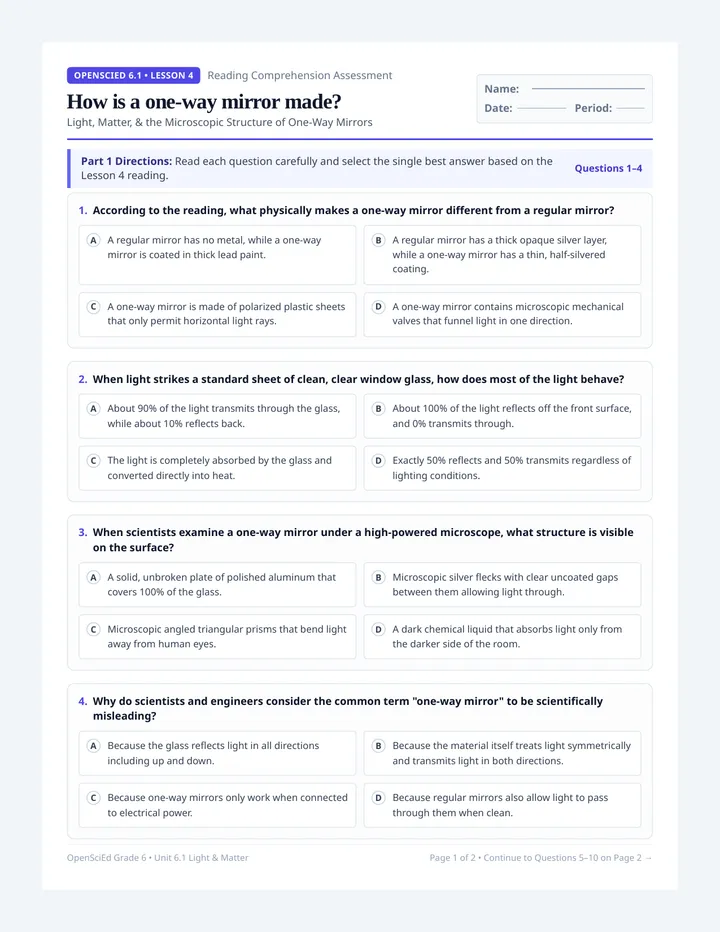
A two-page reading comprehension worksheet for OpenSciEd Grade 6 Unit 1 Lesson 4. Features eight multiple-choice questions and two expanded short-answer constructed response questions with ample handwriting lines.

AD

Amanda Daniels

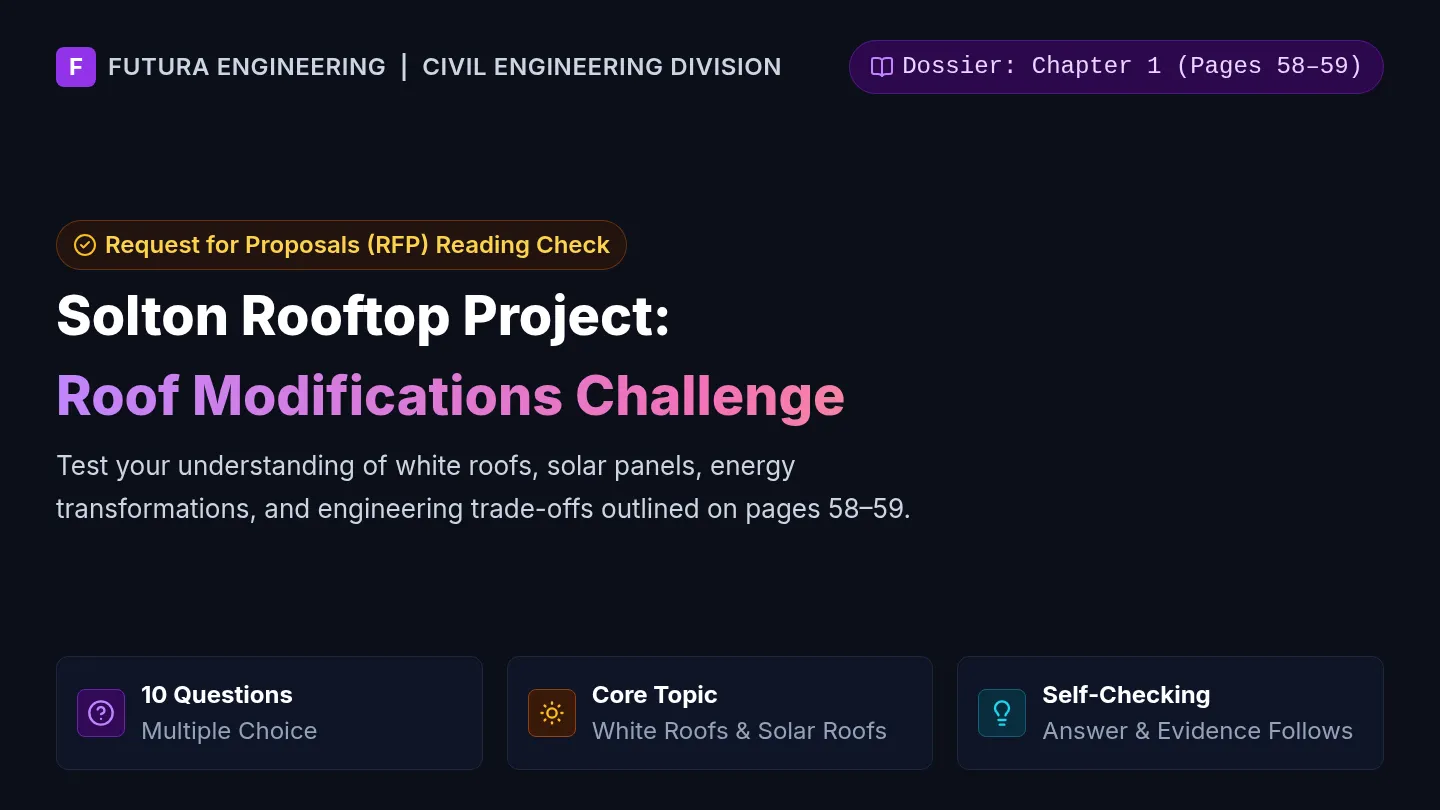
Rooftop Modifications Challenge Slides

Rooftop Modifications Challenge Slides

A 21-slide presentation featuring 10 multiple-choice reading comprehension questions and detailed answer explanations on pages 58–59 of the Solton Rooftop Project dossier. Covers white roofs, solar panels, light absorption and reflection, thermal energy conversion, electricity generation, project criteria, and architectural constraints. Every question is paired with an immediate explanation slide, with all correct answers strictly shorter than the longest distractor.

K

KATIE.CADLE

Sequences

Planet Profile Slides

Infinite Frontier

A comprehensive Hi-Lo unit for 6th graders exploring the scale of the universe, our place in the Milky Way, the technology used to explore space, and the history of human spaceflight.

JS

Janette Sullivan

54
Wave Racer CER Bellringer

Wave Runners Sequence

A comprehensive physics unit covering the behavior of mechanical and electromagnetic waves. Students transition from hands-on slinky exploration to advanced optical modeling and mathematical derivations.

OM

Olutoyin Makinde

65
Straight Shooters Slides

Light Speed

A comprehensive 5-lesson unit for 4th graders exploring the properties of light energy, including how it travels, reflects, refracts, and interacts with different materials.

NP

Natalie Pelletier

20
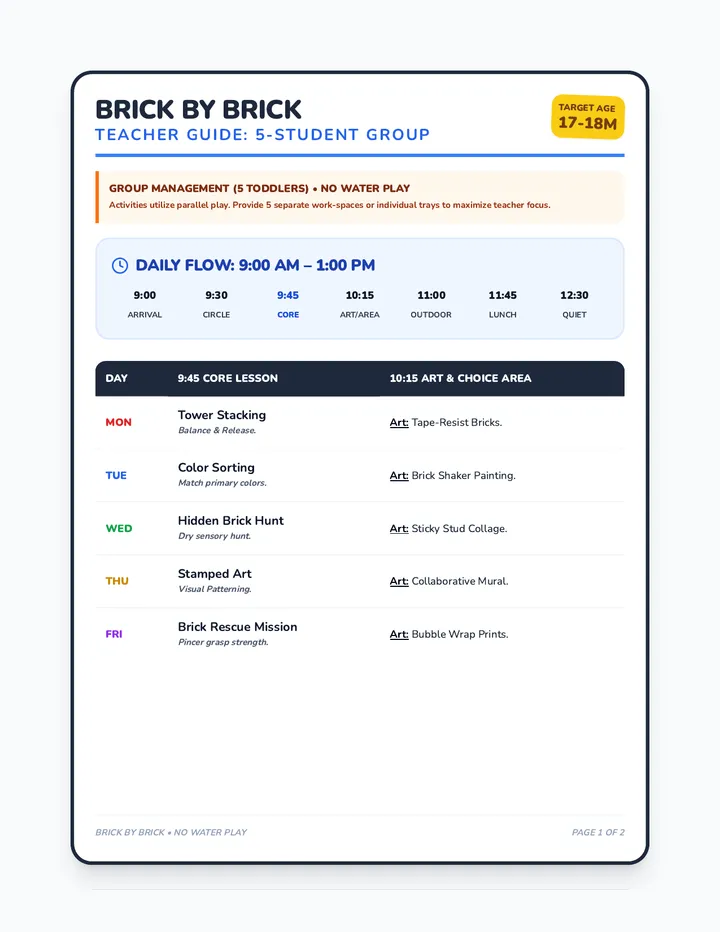
Weekly Curriculum Overview Teacher Guide

Toddler Theme Weeks

A collection of comprehensive week-long curricula for toddlers aged 17-18 months. Each themed week focuses on developmental play, sensory exploration, and fine motor skills for a group of 5 students with zero water play.

SN

Susan Nowlin

69
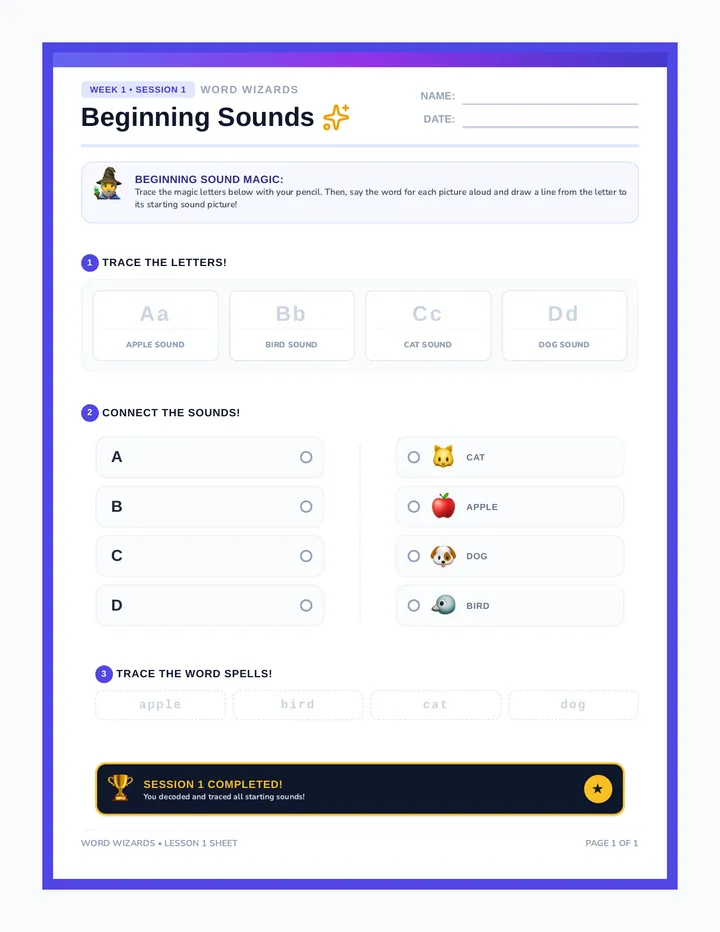
Beginning Sounds Worksheet

Word Wizards

An engaging, high-impact 4-week literacy skills program for young learners. Features highly visual, fun printable worksheets focusing on beginning letter sounds, CVC phonics blending, sight word reading, and short stories.

Z

ziad

18
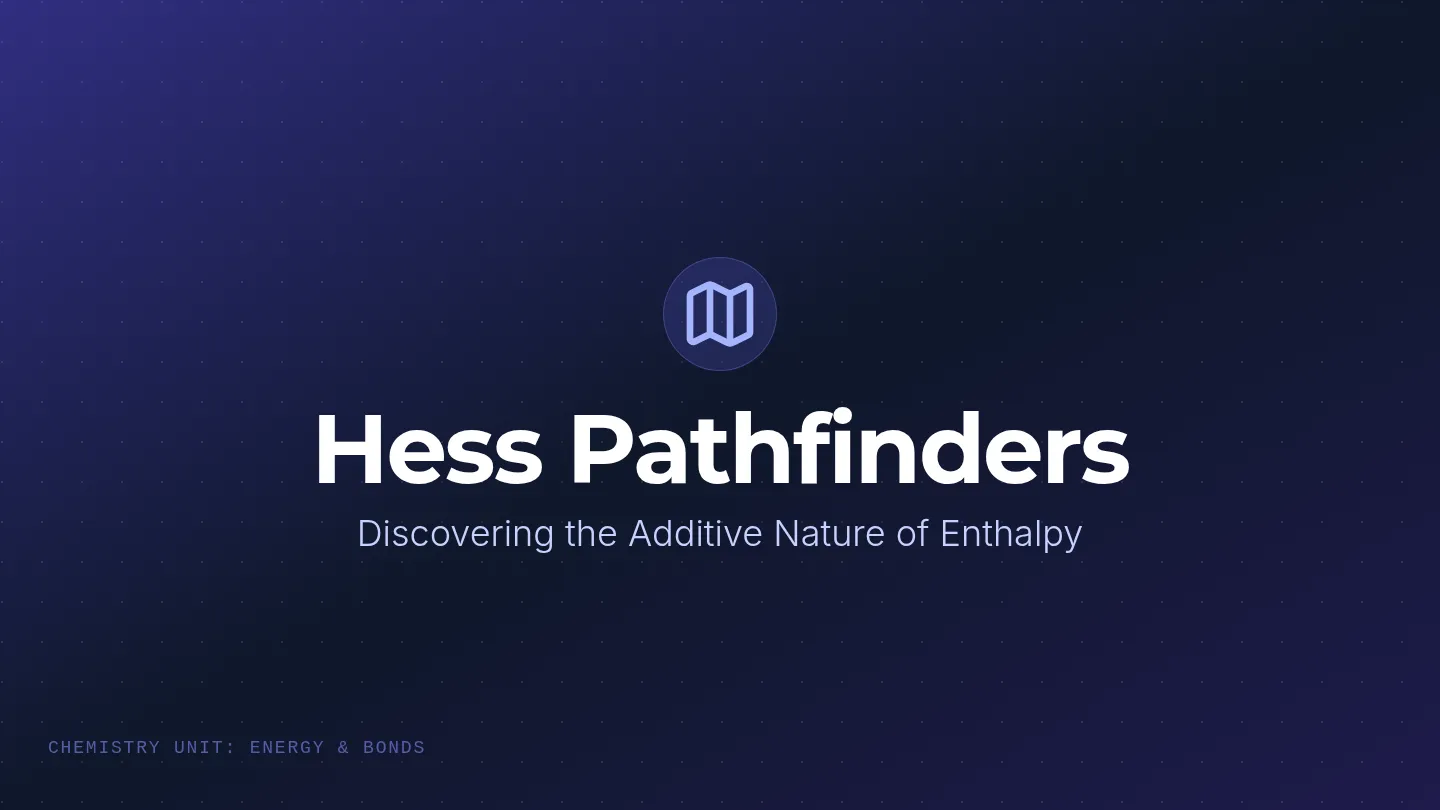
Hess Pathfinders Slides

Energy in Chemical Bonds

A five-day high school chemistry unit exploring thermochemistry, collision theory, enthalpy diagrams, and calorimetry through the lens of body heat and chemical reactions. Students investigate the anchoring phenomenon of exercise-induced heat while mastering TEKS C.13 standards.

OM

Olutoyin Makinde

48