Lenny.com
Explore
Create
ActivitiesNewMathEnglish Language ArtsScience & EngineeringSocial StudiesGlobal LanguagesHealth & Physical EducationSpecial EducationCounseling & Life SkillsArts & CreativityESL
Lenny.com
Lenny.com
Explore
Create
ActivitiesNewMathEnglish Language ArtsScience & EngineeringSocial StudiesGlobal LanguagesHealth & Physical EducationSpecial EducationCounseling & Life SkillsArts & CreativityESL
Lenny.com
Lenny.com

Solutions

Lenny for EducatorsLenny for SchoolsLenny for Districts

Product

ExploreSign inCreateSupportAbout

Resources

Getting startedMTSS Acceleration Program

© 2026 Lenny Learning Inc.

TermsPrivacyAccessibility
LinkedInInstagramX
Lenny

Balancing Equations

Fundamental techniques for applying the law of conservation of mass to chemical reactions. Strengthens ability to adjust coefficients while identifying reactants and products in stoichiometric calculations.

Science & EngineeringLife ScienceLiving ThingsAnimalsPlantsBody SystemsTraitsAdaptationsCellsEcosystemsHeredityGenes to TraitsCell DivisionPhysicsComparing MaterialsShapes and PropertiesMagnetsMagnetismLightSoundLight and SoundMatterStates of MatterChanges of StateMixturesPhysical and Chemical ChangeHeating and CoolingHeat and Thermal EnergyEnergyForce and MotionElectrical CircuitsAtoms and MoleculesPeriodic TableMotion in One DimensionMotion in Two DimensionsScalars and VectorsForces and Laws of MotionCircular Motion and GravityMomentum and ImpulseWork, Energy, and PowerWavesElectromagnetic WavesGeometric OpticsElectricity and MagnetismSimple Harmonic MotionThermodynamicsNuclear PhysicsEarth Science & AstronomyWeatherWater CycleRocks and MineralsFossilsEarth's FeaturesEarth's ResourcesEarth's StructureWeather and ClimateEarth EventsFossils and Geologic TimePlate TectonicsHuman ImpactsAstronomyChemistryUnits and MeasurementAtomic StructurePeriodic TrendsChemical BondingNomenclatureMolecular StructureIntermolecular ForcesThe MoleStoichiometryProperties of GasesSolutionsChemical ReactionsBalancing EquationsEnergy ChangesRates of ReactionsEquilibriumAcids and BasesQuantum ModelBiologyClassificationCell StructureThe Chemistry of LifeBiomoleculesCellular TransportCell EnergyCell Growth and DivisionDNAProtein SynthesisMeiosis and Sexual ReproductionPatterns of InheritanceMulticellular OrganismsEvolutionEcologyBiodiversityComputer ScienceAlgorithms and Computational ThinkingProgramming LanguagesComputing SystemsNetworks and InternetData AnalysisCybersecurityAI and Machine LearningSoftware Design and DevelopmentBlockchainEngineering & AIDesigning ExperimentsEngineering PracticesDesign ThinkingEngineering Design ProcessMechanical EngineeringElectrical EngineeringMaterials and StructuresCAD and 3D DesignRoboticsArtificial Intelligence BasicsVibe CodingMachine LearningAI Ethics and SocietySystems ThinkingEntrepreneurship & InnovationEntrepreneurial MindsetBusiness Idea DevelopmentBusiness Plan BasicsMarketing & Customer DiscoveryFinancial Management for Startups

Videos

Does Matter Just Disappear? Investigating the Conservation of Mass

Does Matter Just Disappear? Investigating the Conservation of Mass

This educational video explores the fundamental scientific principle of the Conservation of Mass. Through engaging visuals and clear examples, the host investigates whether matter can ever truly disappear or be created from nothing. The video distinguishes between physical changes (like dissolving sugar in tea) and chemical changes (like baking a cake), explaining how matter behaves in each scenario. It specifically addresses the common misconception that when something dissolves or evaporates, it is gone forever. The content breaks down complex terminology into accessible concepts, defining key terms such as reactants, products, and physical versus chemical changes. It uses a concrete experiment—weighing sugar and water before and after mixing—to provide empirical evidence that mass remains constant even when visible properties change. The narrative connects everyday observations, like a glass of water evaporating or sugar dissolving, to the broader scientific law that mass is never made or lost. For educators, this video is an excellent tool for introducing the particle nature of matter and the law of conservation of mass. It provides a ready-made demonstration that can be replicated in the classroom and offers clear definitions of vocabulary essential for upper elementary and middle school science curricula. The visual proof provided by the digital scale reading serves as a powerful anchor for students grappling with abstract concepts of invisible matter.

Crash Course KidsCrash Course Kids

4mins 9s

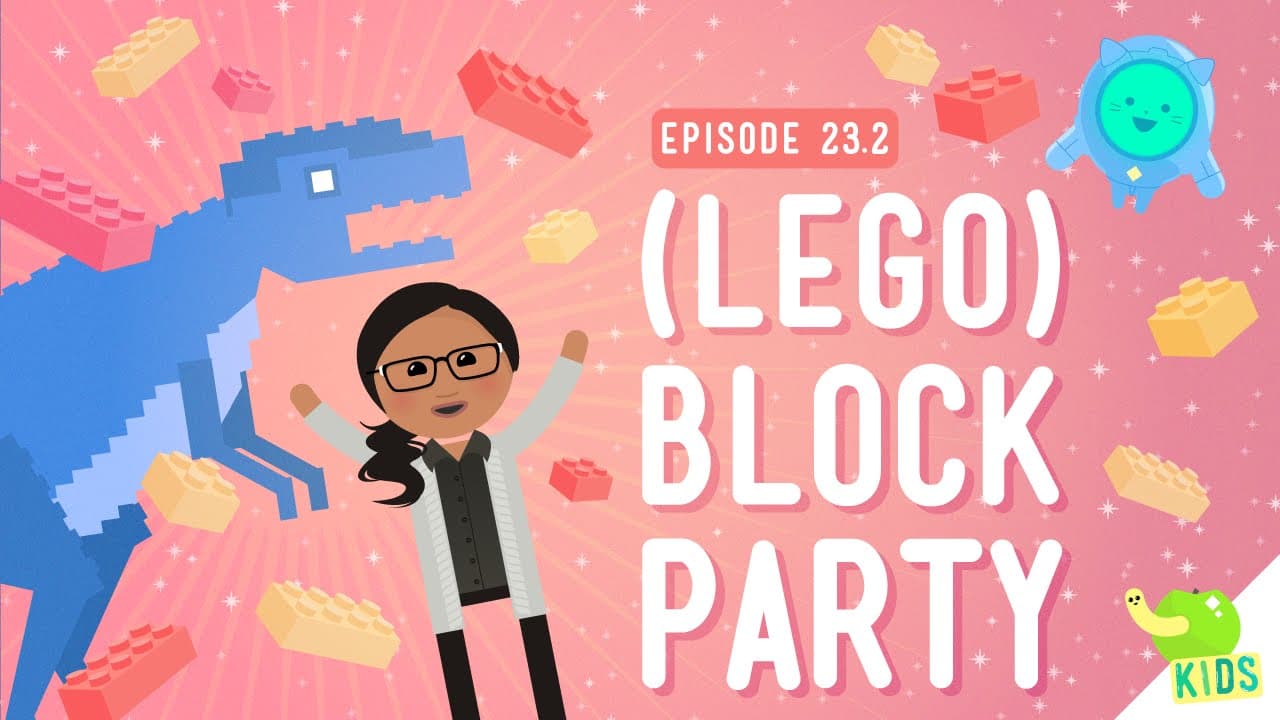
How Chemical Reactions Conserve Mass

How Chemical Reactions Conserve Mass

This engaging video explores the Law of Conservation of Mass specifically through the lens of chemical changes. Using Lego bricks as an accessible analogy, the host demonstrates how atoms (represented by blocks) are merely rearranged rather than created or destroyed during reactions. This visual metaphor helps bridge the gap between abstract atomic theory and observable phenomena. The video moves from theory to practice by conducting a "gross" but effective experiment mixing vinegar and cream to create curds. It introduces critical scientific vocabulary including reactants, products, and chemical changes, while teaching students how to identify evidence of reactions such as temperature shifts, bubbling, or light. The host also addresses the tricky concept of conserving mass when gases are produced, referencing closed systems like balloons. For educators, this resource serves as an excellent anchor for units on matter and chemical reactions. It directly addresses Next Generation Science Standards regarding conservation of matter (5-PS1-2 and MS-PS1-5). The combination of a concrete model (Legos) and a wet lab demonstration makes it perfect for visual learners and provides a clear framework for students to design their own investigations into mass conservation.

Crash Course KidsCrash Course Kids

3mins 53s

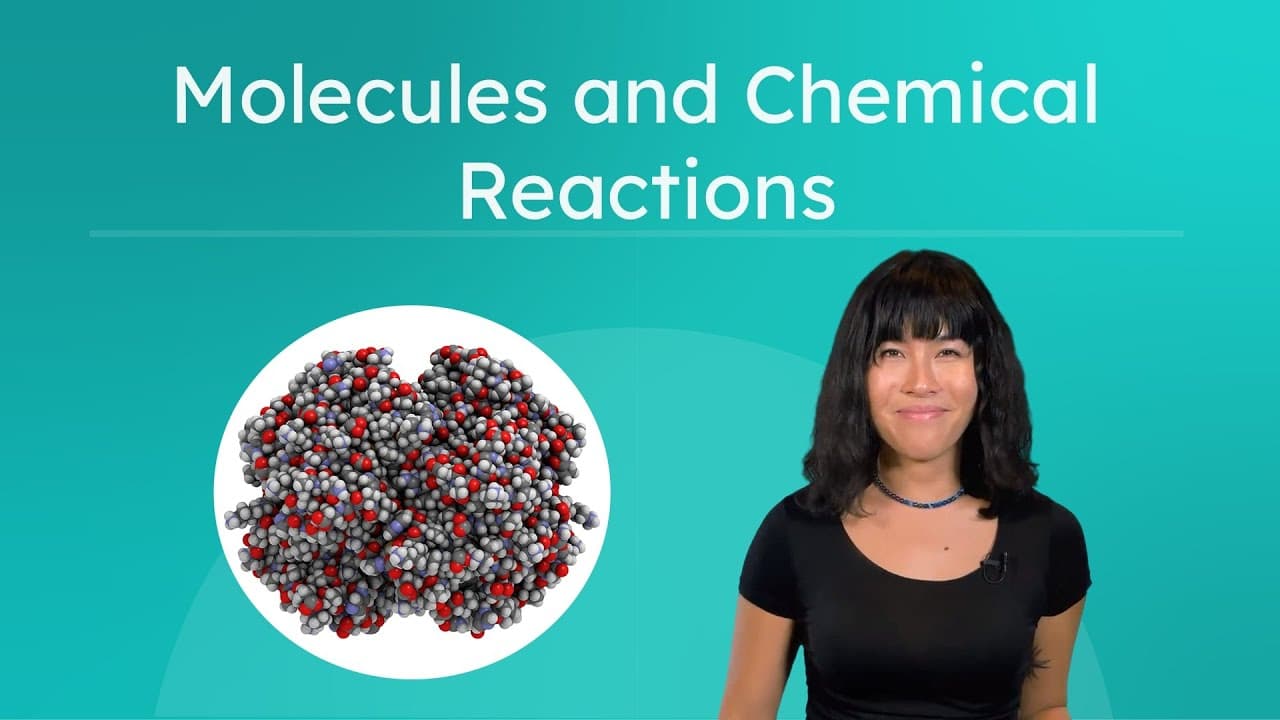
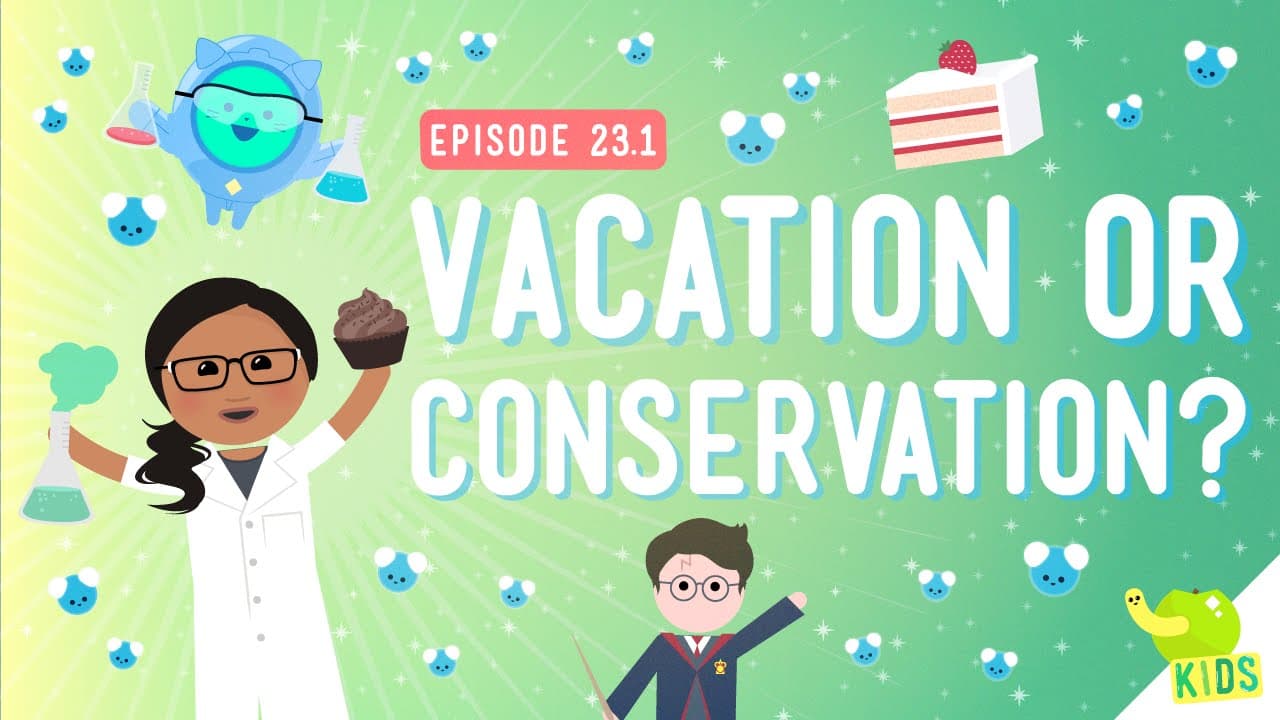
How Molecules and Chemical Reactions Power Life

How Molecules and Chemical Reactions Power Life

This educational video bridges the gap between basic chemistry and biology by explaining how the microscopic world of atoms and molecules powers living organisms. It begins with the familiar phrase "you are what you eat" to introduce the concept that our bodies are constructed from the atoms found in our food. The video uses clear visual models to explain fundamental concepts including atomic structure, the periodic table, chemical bonding, and the formation of molecules like oxygen, carbon dioxide, and water. The content progresses to explain chemical reactions as the mechanism that rearranges atoms—similar to reassembling LEGO bricks—transforming food molecules into body structures and energy. It distinguishes between reactants and products, demonstrates the conservation of atoms during reactions, and visually balances a chemical equation for the formation of water. The narrator emphasizes that while molecules change, the atoms themselves remain constant during biological processes. Finally, the video explores the role of energy in biological systems, explaining how breaking chemical bonds releases energy for life processes while other reactions, like photosynthesis, absorb energy. This resource is highly valuable for teachers introducing biochemistry or the flow of matter and energy in ecosystems, as it concretizes abstract concepts using relatable examples like apples, nutrition labels, and building blocks.
Miacademy & MiaPrep Learning ChannelMiacademy & MiaPrep Learning Channel

14mins 25s

Materials

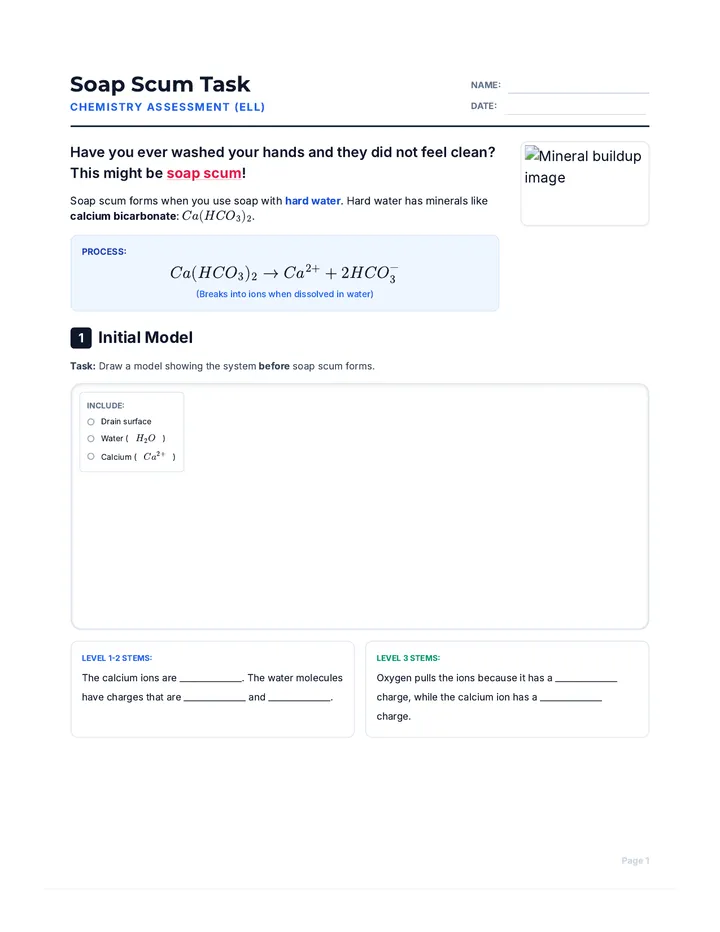
Soap Scum Scaffolded Assessment

Soap Scum Scaffolded Assessment

A 6-page scaffolded chemistry assessment designed for 10-11th grade English Language Learners (Entering, Emerging, Developing). It features simplified language, visual aids, and differentiated sentence stems for modeling, chemical balancing, and reasoning tasks.

AF

Ashley Fienup

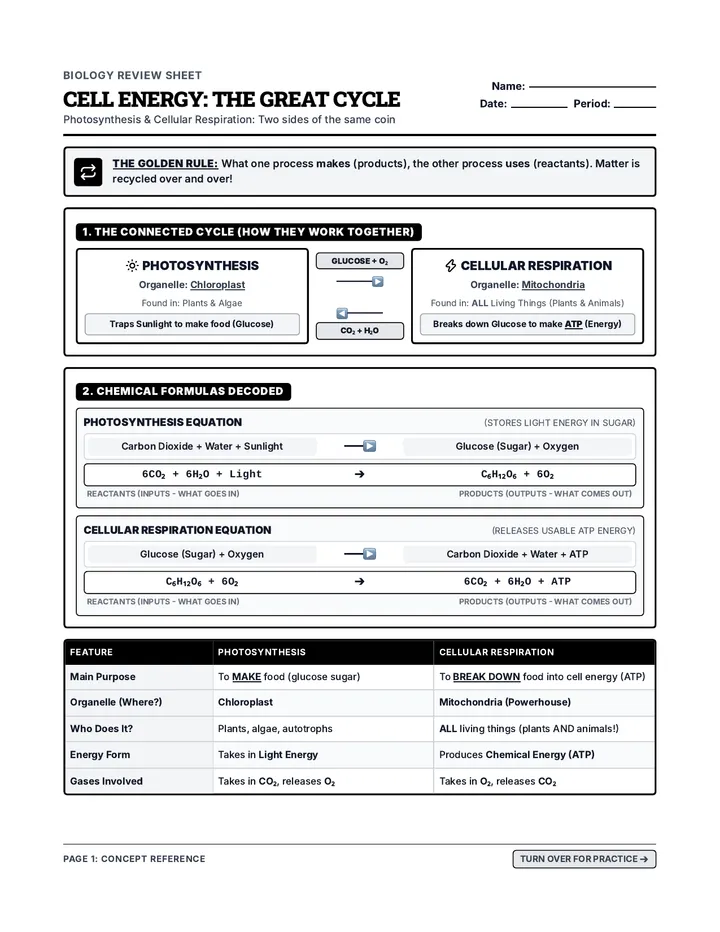
Energy Cycle Review Handout

Energy Cycle Review Handout

A printer-friendly, high-contrast black-and-white 2-page review handout comparing photosynthesis and cellular respiration, designed with visual scaffolds and sentence frames for 9th-grade biology students performing below grade level.

RA

Richard Alan Frazier

Sequences

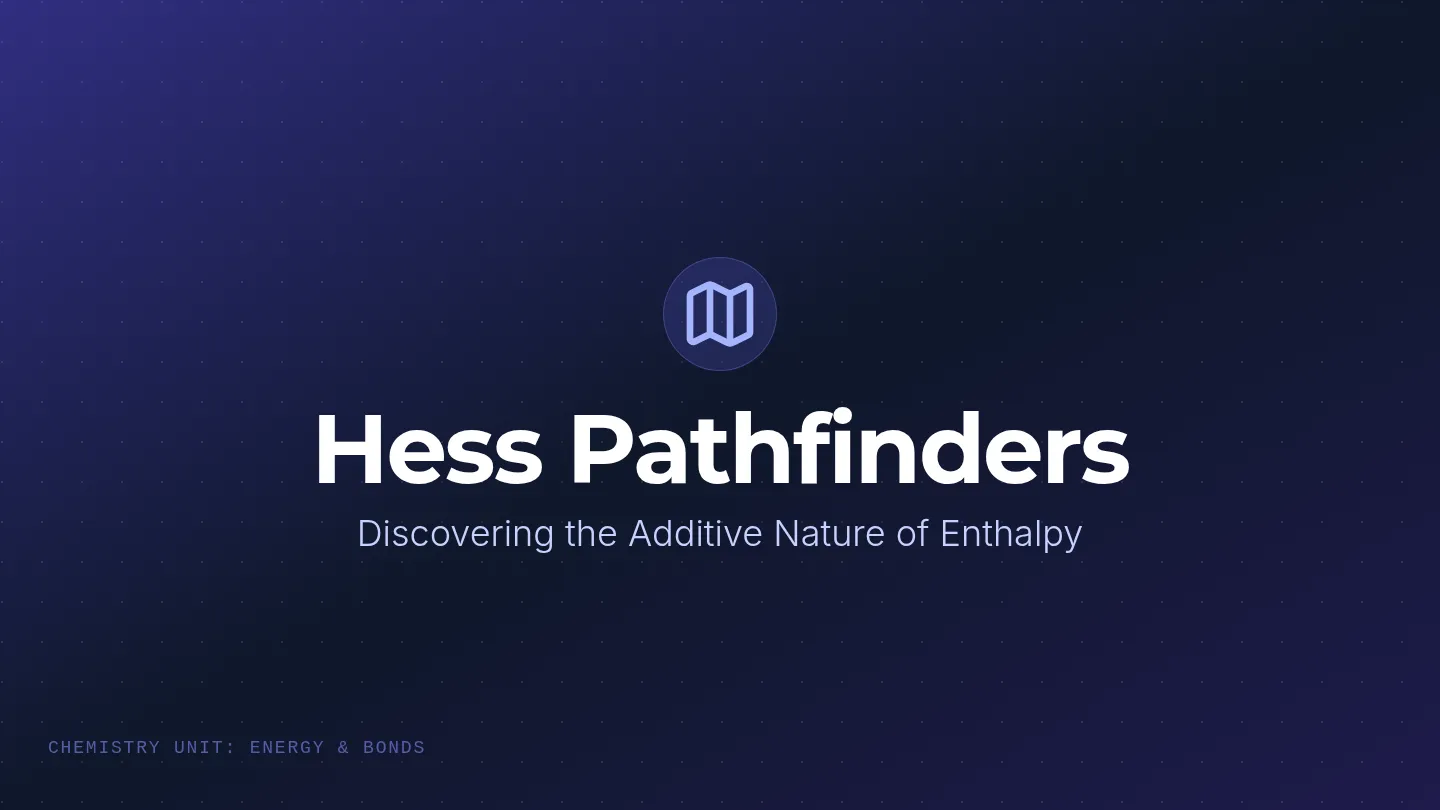
Hess Pathfinders Slides

Energy in Chemical Bonds

A five-day high school chemistry unit exploring thermochemistry, collision theory, enthalpy diagrams, and calorimetry through the lens of body heat and chemical reactions. Students investigate the anchoring phenomenon of exercise-induced heat while mastering TEKS C.13 standards.

OM

Olutoyin Makinde

48
Pressure Poster Workshop Handout

Pressure Power

A comprehensive 5-day chemistry unit investigating the relationships between gas pressure, volume, temperature, and moles using lab inquiries, mathematical modeling, and real-world applications.

OM

Olutoyin Makinde

69
KMT Field Manual Packet

Molecular Mayhem Gas Unit

A 10-day exploration of the Behavior of Gases using Kinetic Molecular Theory, various gas laws, and real-world phenomena to understand gas behavior at both molecular and macroscopic scales. Students will investigate compressibility, gas variables, ideal behavior, and mixtures.

OM

Olutoyin Makinde

26
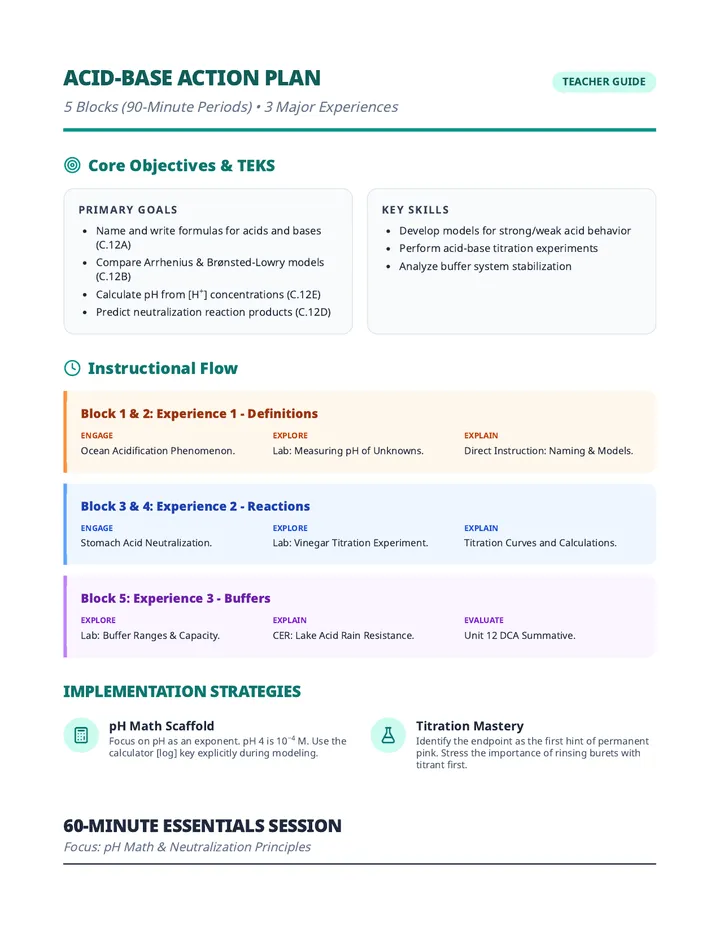
Acid Base Action Plan

Acid Base Investigation

A comprehensive unit exploring the properties, reactions, and mathematical relationships of acids and bases, featuring pH calculations, titrations, and buffer systems.

OM

Olutoyin Makinde

34
CHEM 1406 Study Guide

CHEM 1406 Lab Midterm Review

A comprehensive review of CHEM 1406 introductory chemistry lab concepts, including safety, measurement, atomic structure, bonding, and chemical reactions.

OM

Olutoyin Makinde

4
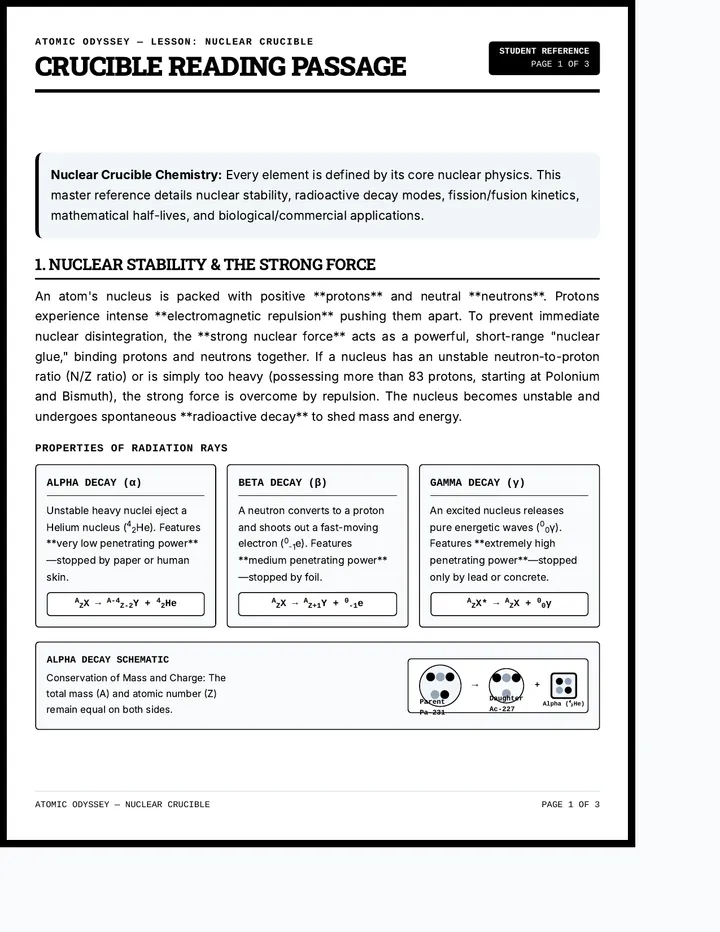
Crucible Reading Passage

Atomic Odyssey

A comprehensive, highly engaging chemistry exploration of nuclear processes, including radioactive decay, nuclear stability, fission, fusion, half-life calculations, and modern nuclear technologies. Studentsrotate through four interactive stations to master atomic chemistry.

OM

Olutoyin Makinde

7

Lessons

Heat Flow Teacher Guide

Particle Behavior Review

A lesson focusing on the states of matter (solid, liquid, gas) and the behavior of particles at the molecular level. Students will model particle motion and arrangement, as well as the energy changes that drive phase transitions.

EA

Erica Andre

54
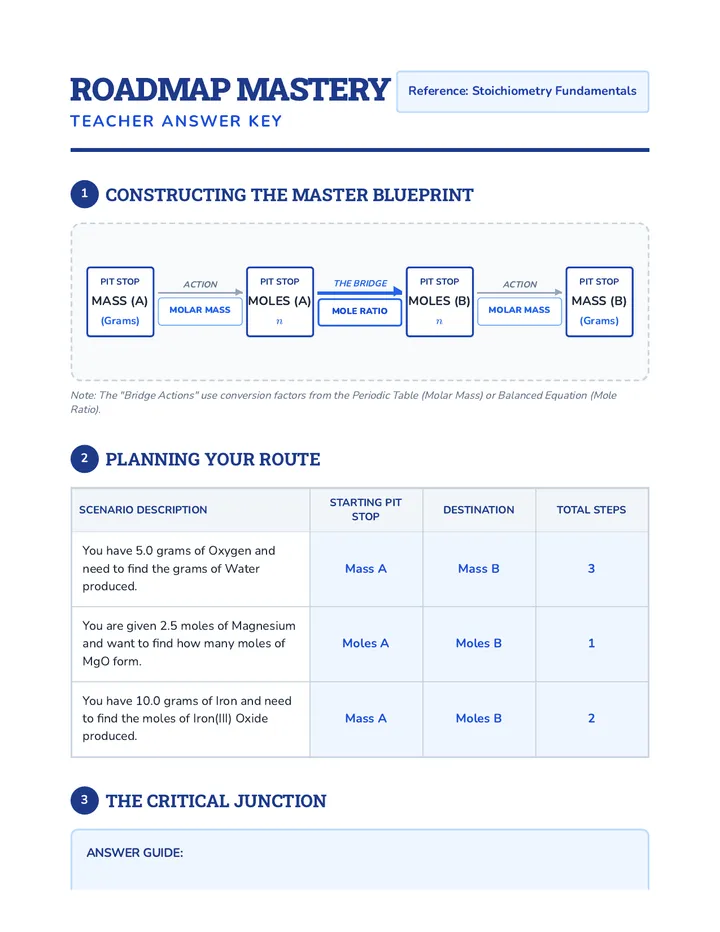
Roadmap Mastery Answer Key

Reaction Roadmap

A comprehensive lesson on mastering the stoichiometry roadmap, covering mole-to-mole conversions, mass-to-mass calculations, limiting reactants, and percent yield through visual slides and interactive sorting activities.

OM

Olutoyin Makinde

13
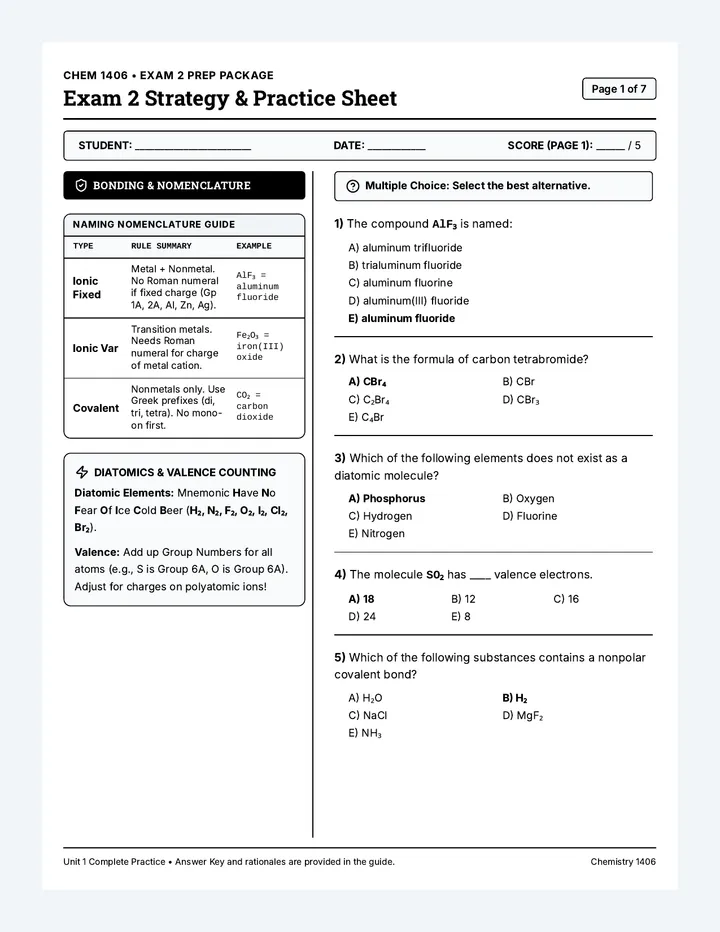
Exam 2 Strategy and Practice Sheet

Exam Prep Package

A comprehensive study and practice package for Chemistry 1406 Exam 2. It contains a highly structured, side-by-side strategy guide paired with a 30-question practice exam, and a matching detailed answer key with step-by-step rationales.

OM

Olutoyin Makinde

2
Chemistry Detective Worksheet EN

Chemistry Secrets Lesson

An introductory chemistry lesson based on Maya's discovery of atoms, bonds, and reactions, available in English and Spanish with hands-on practice.

MB

Marsha Bolden

4
Reaction Remix Worksheet

Reaction Remix

A concise practice lesson focused on balancing chemical equations and identifying the five primary types of chemical reactions for high school chemistry students.

TS

Taryn Sigl

3
Reaction Review Slides

Reaction Mastery

A comprehensive lesson on chemical reactions covering conservation of mass, balancing equations, evidence of reactions, and energy changes. Students will engage with visual slides, practice worksheets, and a summative assessment.

MB

Marsha Bolden

6