Lenny.com
Explore
Create
ActivitiesNewMathEnglish Language ArtsScience & EngineeringSocial StudiesGlobal LanguagesHealth & Physical EducationSpecial EducationCounseling & Life SkillsArts & CreativityESL
Lenny.com
Lenny.com
Explore
Create
ActivitiesNewMathEnglish Language ArtsScience & EngineeringSocial StudiesGlobal LanguagesHealth & Physical EducationSpecial EducationCounseling & Life SkillsArts & CreativityESL
Lenny.com
Science & EngineeringLife ScienceLiving ThingsAnimalsPlantsBody SystemsTraitsAdaptationsCellsEcosystemsHeredityGenes to TraitsCell DivisionPhysicsComparing MaterialsShapes and PropertiesMagnetsMagnetismLightSoundLight and SoundMatterStates of MatterChanges of StateMixturesPhysical and Chemical ChangeHeating and CoolingHeat and Thermal EnergyEnergyForce and MotionElectrical CircuitsAtoms and MoleculesPeriodic TableMotion in One DimensionMotion in Two DimensionsScalars and VectorsForces and Laws of MotionCircular Motion and GravityMomentum and ImpulseWork, Energy, and PowerWavesElectromagnetic WavesGeometric OpticsElectricity and MagnetismSimple Harmonic MotionThermodynamicsNuclear PhysicsEarth Science & AstronomyWeatherWater CycleRocks and MineralsFossilsEarth's FeaturesEarth's ResourcesEarth's StructureWeather and ClimateEarth EventsFossils and Geologic TimePlate TectonicsHuman ImpactsAstronomyChemistryUnits and MeasurementAtomic StructurePeriodic TrendsChemical BondingNomenclatureMolecular StructureIntermolecular ForcesThe MoleStoichiometryProperties of GasesSolutionsChemical ReactionsBalancing EquationsEnergy ChangesRates of ReactionsEquilibriumAcids and BasesQuantum ModelBiologyClassificationCell StructureThe Chemistry of LifeBiomoleculesCellular TransportCell EnergyCell Growth and DivisionDNAProtein SynthesisMeiosis and Sexual ReproductionPatterns of InheritanceMulticellular OrganismsEvolutionEcologyBiodiversityComputer ScienceAlgorithms and Computational ThinkingProgramming LanguagesComputing SystemsNetworks and InternetData AnalysisCybersecurityAI and Machine LearningSoftware Design and DevelopmentBlockchainEngineering & AIDesigning ExperimentsEngineering PracticesDesign ThinkingEngineering Design ProcessMechanical EngineeringElectrical EngineeringMaterials and StructuresCAD and 3D DesignRoboticsArtificial Intelligence BasicsVibe CodingMachine LearningAI Ethics and SocietySystems ThinkingEntrepreneurship & InnovationEntrepreneurial MindsetBusiness Idea DevelopmentBusiness Plan BasicsMarketing & Customer DiscoveryFinancial Management for Startups
Lenny.com

Solutions

Lenny for EducatorsLenny for SchoolsLenny for Districts

Product

ExploreSign inCreateSupportAbout

Resources

Getting startedMTSS Acceleration Program

© 2026 Lenny Learning Inc.

TermsPrivacyAccessibility
LinkedInInstagramX
Lenny

Geometric Optics

Principles of light propagation, reflection, and refraction through mirrors and lenses. Models image formation using ray tracing, Snell's law, and the thin lens equation.

Videos

The Speed of Light: Cosmic Limits and Calculations

The Speed of Light: Cosmic Limits and Calculations

This comprehensive physics lesson explores the speed of light ($c$), framing it as the "cosmic speed limit" of the universe. The video transitions from a conceptual understanding of light's immense speed to practical applications in astronomy, explaining how looking at distant galaxies like Andromeda is effectively looking back in time due to the travel time of light. It also covers the behavior of light in different media, introducing the index of refraction and explaining why light bends and splits into rainbows when passing through prisms. The video provides rigorous mathematical instruction on wave properties, teaching students the relationship between frequency, wavelength, and the speed of light using the equation $f = c/\lambda$. Detailed, step-by-step walkthroughs demonstrate how to handle scientific notation, unit conversions (nanometers to meters), and calculator inputs to solve physics problems. The content effectively bridges high-level concepts with the specific algebraic skills needed for high school physics. Ideal for high school physical science or physics classrooms, this video serves as both a conceptual introduction and a procedural tutorial. Teachers can use the astronomy segments to spark engagement about the scale of the universe, while the calculation segments provide a clear model for solving wave frequency problems. The explicit instruction on using parentheses in calculators addresses a common student error in scientific notation operations.

Miacademy & MiaPrep Learning ChannelMiacademy & MiaPrep Learning Channel

10mins

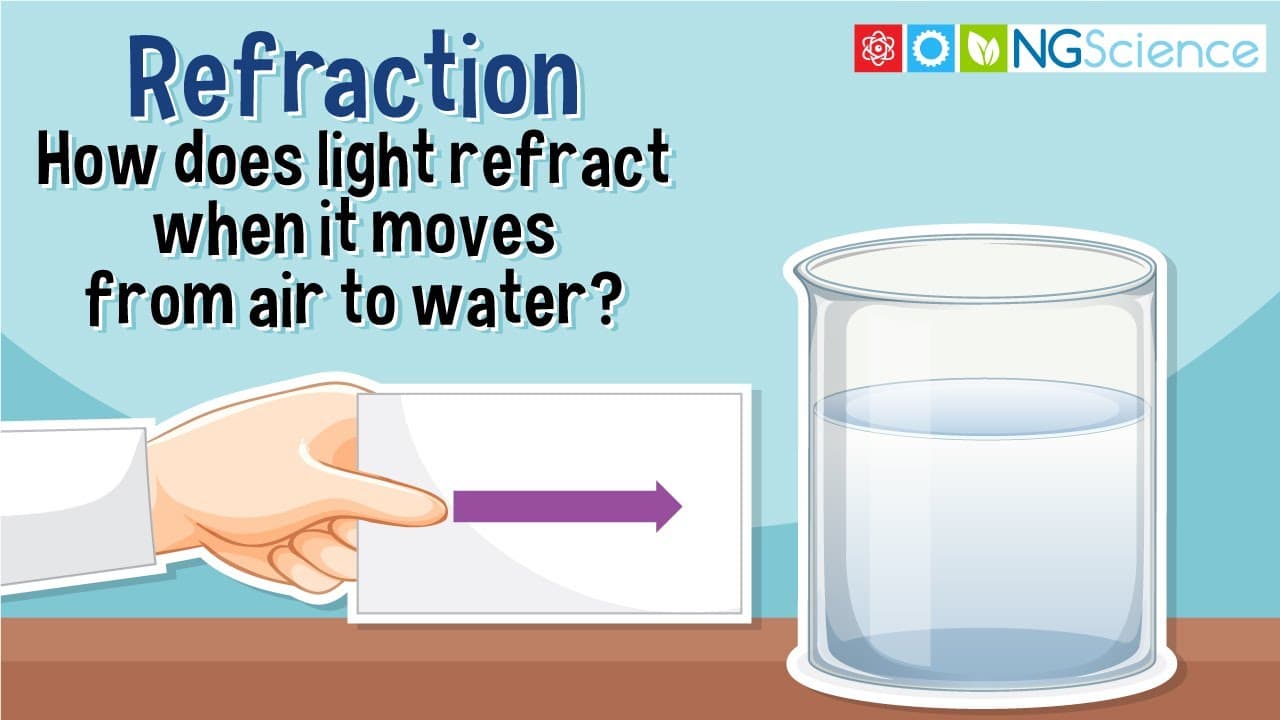
How Water Bends Light: The Reversing Arrow Experiment

How Water Bends Light: The Reversing Arrow Experiment

This concise video demonstrates the property of light refraction through a classic and visually striking experiment known as the "Reversing Arrow." Using simple materials—a glass beaker, water, and a drawing of an arrow—the video illustrates how light bends when passing from air into water, causing images to appear flipped. The visual demonstration is accompanied by a clear narration explaining the physics behind the phenomenon, specifically how the speed of light changes as it moves through different mediums. The content focuses on core physics concepts including light waves, refraction, and the behavior of light as it travels through materials of varying density. It explicitly connects the slowing down of light in water to the bending effect observed, comparing the cylindrical beaker of water to a lens. This provides a tangible example of abstract optical principles. For educators, this video serves as an excellent "hook" or discrepant event to introduce a unit on light and optics. It provides a replicable experiment that students can perform themselves with minimal equipment. The video helps visualize the concept of refraction, making it easier for students to understand why objects look distorted or shifted underwater, and lays the groundwork for understanding how lenses work in eyes, cameras, and glasses.
Next Generation ScienceNext Generation Science

1min 17s

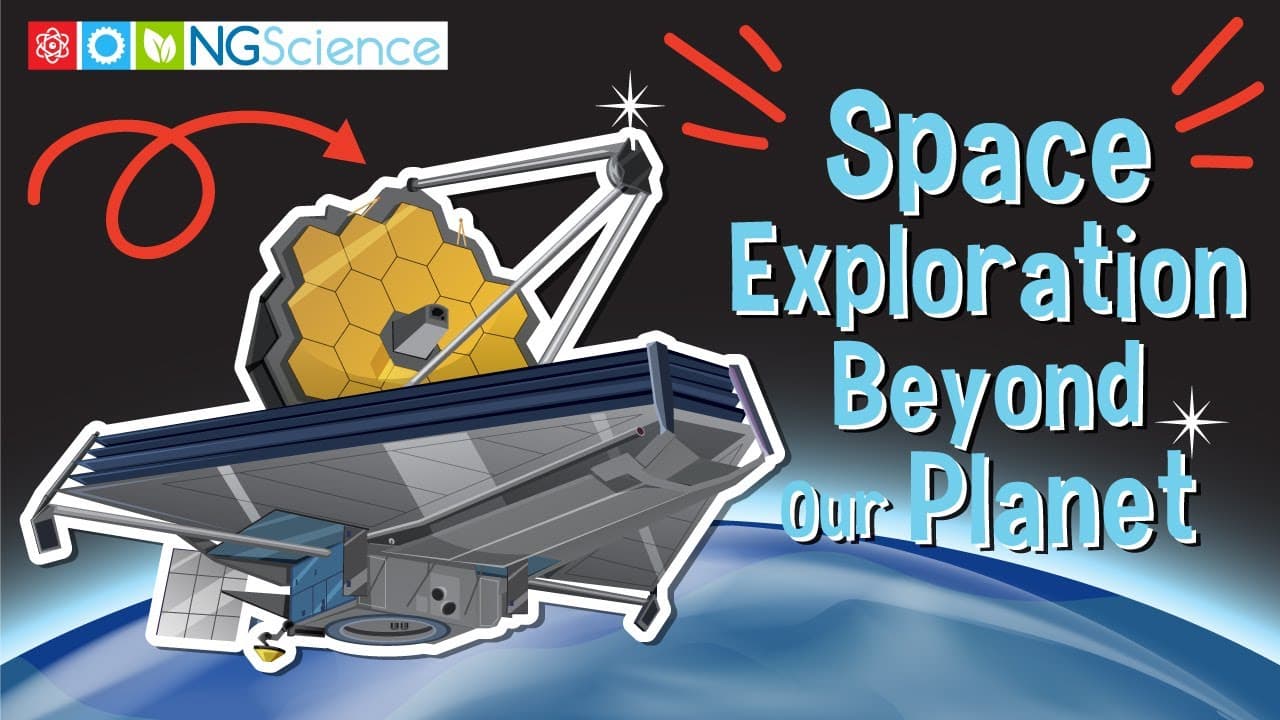
How We Explore Space: Telescopes, Satellites, and Rovers

How We Explore Space: Telescopes, Satellites, and Rovers

This educational video provides a comprehensive overview of the history, methods, and technologies humanity has developed to explore the cosmos. Starting with our innate curiosity about the stars, the narration guides viewers through the evolution of space exploration tools, from early optical telescopes to the advanced James Webb Space Telescope. It categorizes exploration into distinct methods: ground-based telescopes, orbiting satellites, deep-space probes, planetary rovers, and human space missions.

Next Generation ScienceNext Generation Science

12mins 4s

Decoding the Universe: How We Study the Electromagnetic Spectrum

Decoding the Universe: How We Study the Electromagnetic Spectrum

This video explores the fascinating world of astronomy through the lens of the electromagnetic spectrum. It begins by defining light not just as what we see, but as electromagnetic radiation composed of photons traveling in waves. The narrator breaks down complex physics concepts, such as wavelength and frequency, into accessible terms, explaining how the distance between wave peaks determines the type of radiation—from long radio waves to microscopic gamma rays. The lesson details the specific tools astronomers use to capture these different types of light. It distinguishes between reflecting and refracting telescopes used for visible light and introduces specialized instruments needed to detect invisible radiation like X-rays and radio waves. The video emphasizes that everything in the universe, including humans, stars, and black holes, emits some form of electromagnetic radiation, and studying these invisible waves reveals information that visible light cannot. Teachers can use this video to bridge the gap between physical science and astronomy. It offers a clear explanation of how technology extends human senses, allowing us to observe the universe beyond the limitations of our eyes. The content effectively addresses the challenges posed by Earth's atmosphere in blocking certain radiation, providing a logical explanation for why space telescopes are essential for a complete understanding of the cosmos.

Miacademy & MiaPrep Learning ChannelMiacademy & MiaPrep Learning Channel

8mins 15s

Materials

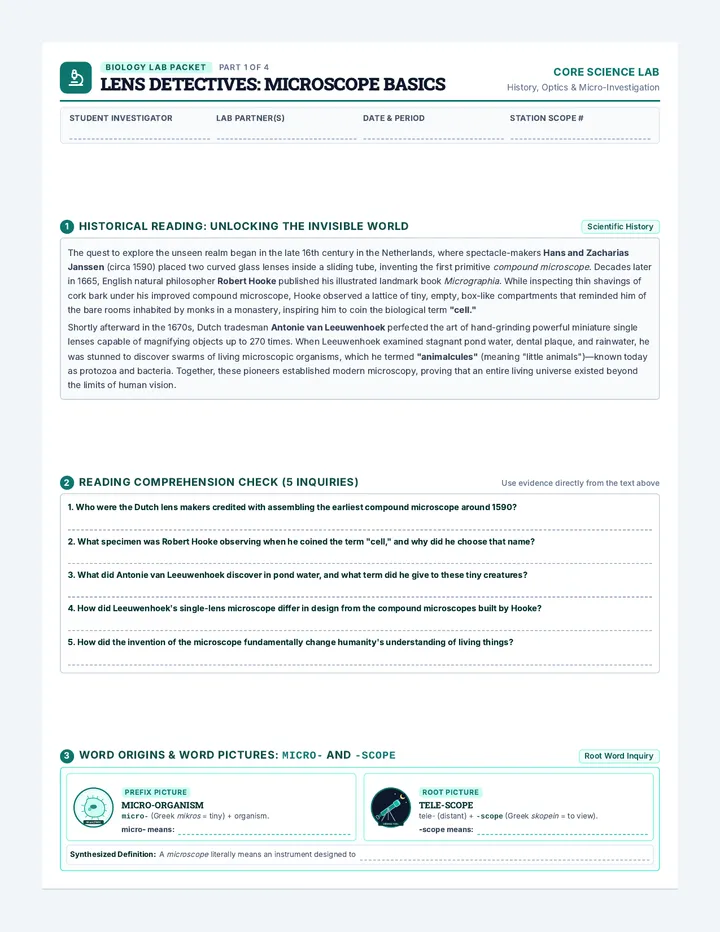
Lens Detectives Lab Activity

Lens Detectives Lab Activity

A comprehensive 4-page laboratory investigation packet covering microscope history with comprehension questions, root word pictures, a labeled microscope anatomy diagram, magnification math, letter 'e' inversion inquiry, and pond water wet-mount microscopy with realistic 400x photomicrograph views of Euglena, Paramecium, Amoeba, and Diatoms.

S

stewart

Light Paths Slide Deck

Light Paths Slide Deck

An 11-slide presentation for a 45-minute lesson on light and how it travels. It covers luminous sources, rectilinear propagation, ray diagrams, material transparency, the law of reflection, refraction through varying media, classroom demonstrations, and review practice questions.

MT

Micha Taylor

Sequences

Wave Racer CER Bellringer

Wave Runners Sequence

A comprehensive physics unit covering the behavior of mechanical and electromagnetic waves. Students transition from hands-on slinky exploration to advanced optical modeling and mathematical derivations.

OM

Olutoyin Makinde

65
Source Facilitator Guide

Glow Lab Light Unit

A 4-day science unit for high school Essential Skills students exploring light sources, movement, reflection, shadows, and the visible spectrum. Each day includes visual slides, hands-on activities, and simplified assessments designed for accessibility and engagement.

P

Patrick.Kelly

17
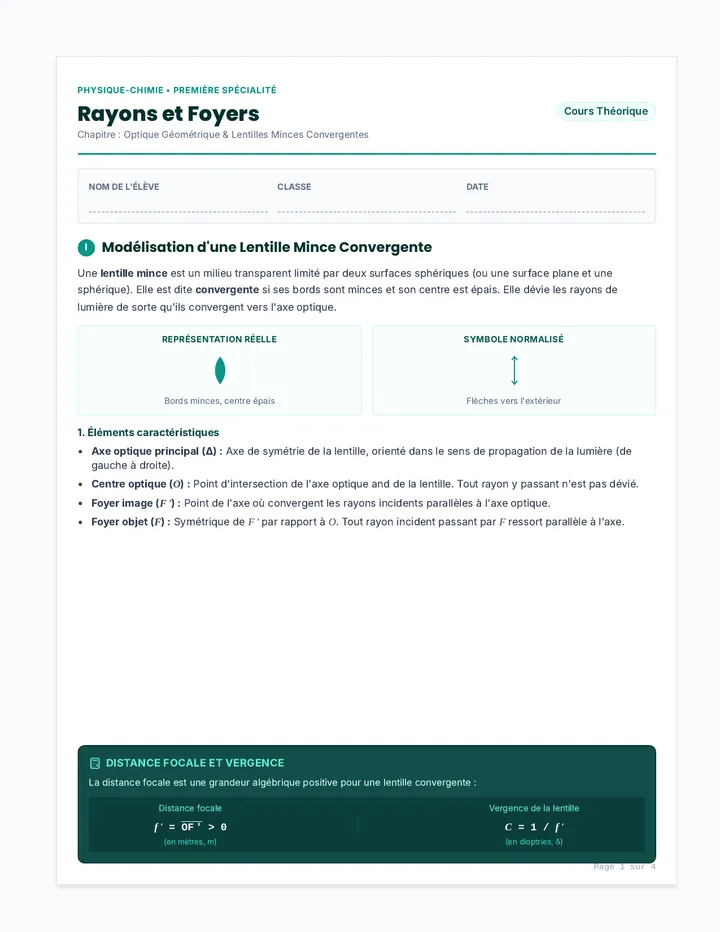
Lentilles Convergentes Cours théorique

Rayons et Foyers

Une séquence de physique de niveau Première sur l'optique géométrique et les lentilles minces convergentes. Elle aborde la modélisation géométrique des lentilles, la construction graphique des images, les relations mathématiques de Descartes et de grandissement, ainsi que les trois méthodes de mesure de la distance focale (objet à l'infini, autocollimation, méthode de Bessel).

PP

prof physchimie

4
Lattice Logic Slides

Crystallography and Lattice Geometry

An undergraduate-level exploration of solid-state crystallography, moving from real-space lattice geometry and packing efficiency to the mathematical abstraction of reciprocal space and X-ray diffraction analysis. Students master the geometric principles that govern material properties at the atomic scale.

10
Field Boundary Slides

Electromagnetic Interaction with Matter and Boundaries

A comprehensive graduate-level sequence exploring how microscopic atomic interactions determine the macroscopic propagation of electromagnetic waves through conductors, dielectrics, and plasmas. This series covers Maxwell's equations in matter, boundary conditions, dispersion models (Drude/Lorentz), Fresnel equations, and ionospheric plasma physics.

15
Reflection Principles Slides

Wave Optics and Behavior

An inquiry-driven physics sequence exploring the wave nature of light through reflection, refraction, diffraction, and polarization, culminating in applications of optical technology.

15

Lessons

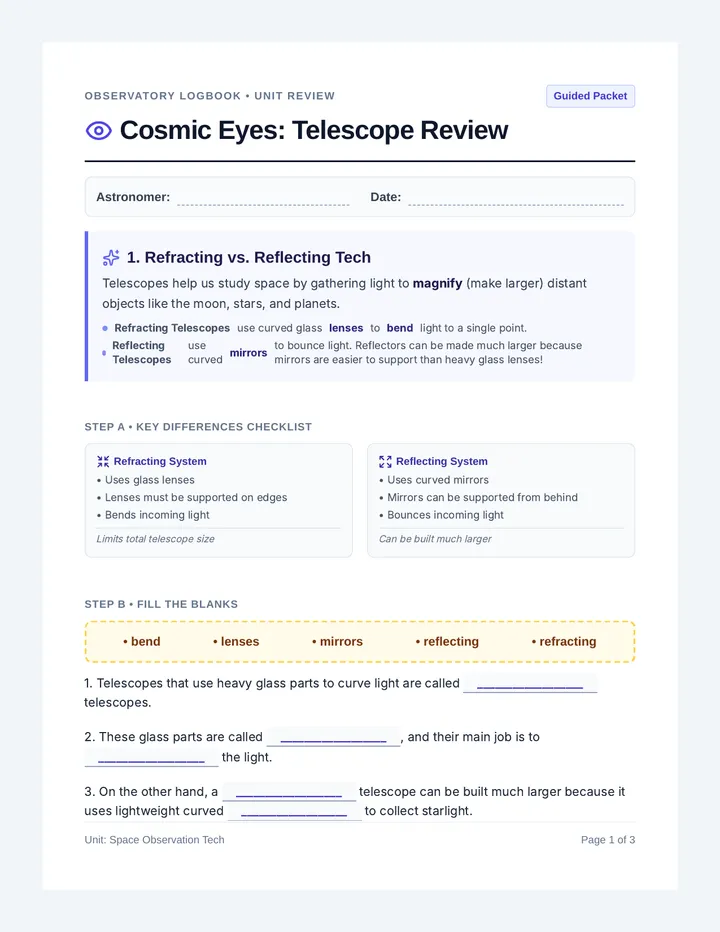
Cosmic Eyes Review Packet

Cosmic Eyes

An accommodated science lesson covering telescope technology, optical vs. radio systems, reflecting vs. refracting designs, and the history of space observation (including Hubble and Galileo). Features high-scaffolding review materials and a fresh, aligned assessment.

S

Shelby.Toll

7
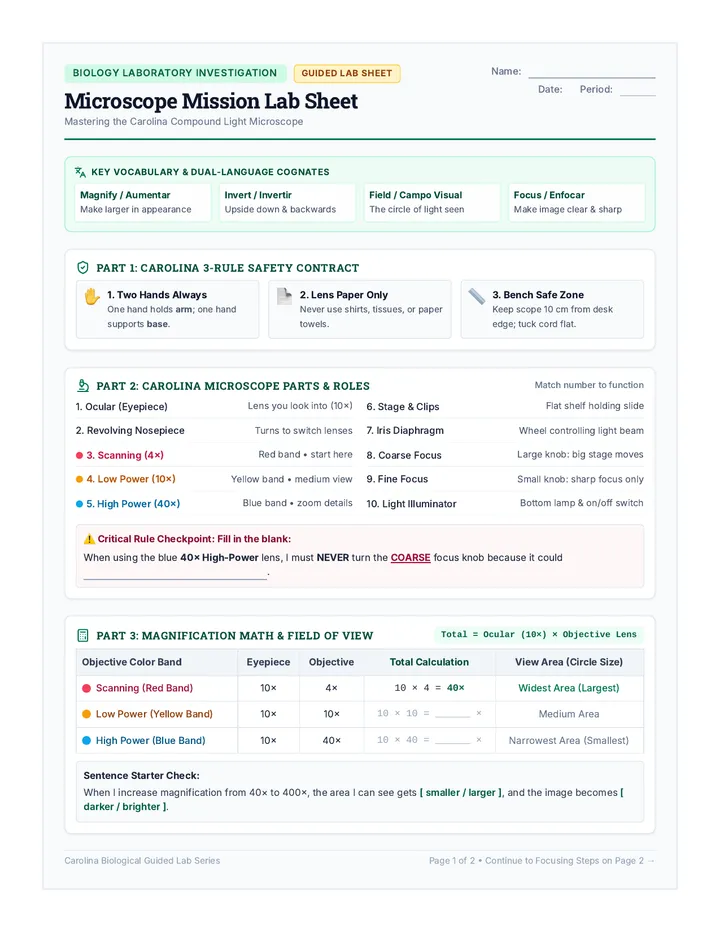
Microscope Mission Lab Sheet

Microscope Mastery

A comprehensive introductory laboratory lesson on compound light microscope handling, anatomy, magnification calculations, step-by-step focusing, and specimen observation using standard Carolina microscopes. Students build essential microscopy lab skills through structured protocols, diagrams, and investigations.

CB

Chloe Brown

4
Microscope Investigation Slides

Microscopic Mysteries

Students learn the fundamentals of microscopy by investigating the letter 'e', practicing slide preparation, and mastering magnification calculations. This lesson covers microscope parts, safety, wet mount preparation, and scientific drawing.

MK

Michelle Kaske

4
Crimson Shadows Teacher Guide

Crimson Shadows

A complete, high-quality lesson focused on the mechanics of lunar eclipses, exploring why the Moon turns red during a total eclipse (Rayleigh scattering) and contrasting solar vs. lunar eclipses. Includes interactive modeling, formative assessment, exit tickets, slides, and a teacher guide.

M

Megan.Tanner

5
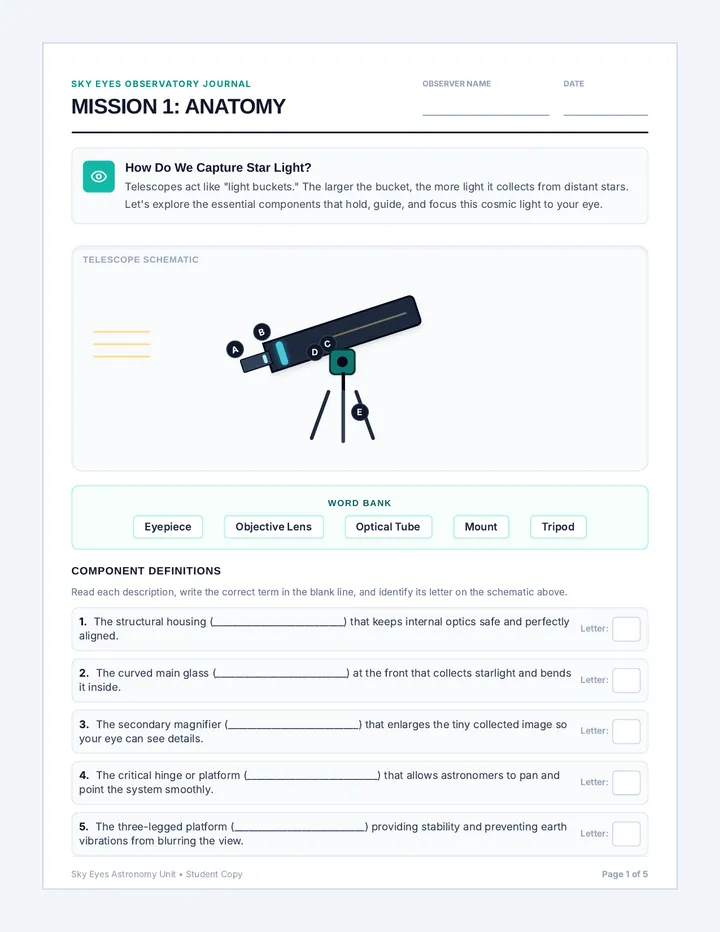
Sky Eyes Worksheet

Sky Eyes

A highly visual, scaffolded lesson on telescope optics, designs, and locations. Students explore how light behaves in refracting and reflecting systems, identify telescope components, and compare Earth-based observatories with space telescopes like Hubble.

S

Shelby.Toll

3
Starlight Blueprint Notes

Cosmic Vision

An introductory exploration into how telescopes work, the history of their invention by Galileo and Newton, and the practical steps for observing the night sky.

S

Shelby.Toll

4