Lenny.com
Explore
Create
ActivitiesNewMathEnglish Language ArtsScience & EngineeringSocial StudiesGlobal LanguagesHealth & Physical EducationSpecial EducationCounseling & Life SkillsArts & CreativityESL
Lenny.com
Lenny.com
Explore
Create
ActivitiesNewMathEnglish Language ArtsScience & EngineeringSocial StudiesGlobal LanguagesHealth & Physical EducationSpecial EducationCounseling & Life SkillsArts & CreativityESL
Lenny.com
Lenny.com

Solutions

Lenny for EducatorsLenny for SchoolsLenny for Districts

Product

ExploreSign inCreateSupportAbout

Resources

Getting startedMTSS Acceleration Program

© 2026 Lenny Learning Inc.

TermsPrivacyAccessibility
LinkedInInstagramX
Lenny

Biodiversity

Ecological systems, species richness, and genetic variation within populations. Examines threats like habitat loss and the importance of conservation for ecosystem stability.

Science & EngineeringLife ScienceLiving ThingsAnimalsPlantsBody SystemsTraitsAdaptationsCellsEcosystemsHeredityGenes to TraitsCell DivisionPhysicsComparing MaterialsShapes and PropertiesMagnetsMagnetismLightSoundLight and SoundMatterStates of MatterChanges of StateMixturesPhysical and Chemical ChangeHeating and CoolingHeat and Thermal EnergyEnergyForce and MotionElectrical CircuitsAtoms and MoleculesPeriodic TableMotion in One DimensionMotion in Two DimensionsScalars and VectorsForces and Laws of MotionCircular Motion and GravityMomentum and ImpulseWork, Energy, and PowerWavesElectromagnetic WavesGeometric OpticsElectricity and MagnetismSimple Harmonic MotionThermodynamicsNuclear PhysicsEarth Science & AstronomyWeatherWater CycleRocks and MineralsFossilsEarth's FeaturesEarth's ResourcesEarth's StructureWeather and ClimateEarth EventsFossils and Geologic TimePlate TectonicsHuman ImpactsAstronomyChemistryUnits and MeasurementAtomic StructurePeriodic TrendsChemical BondingNomenclatureMolecular StructureIntermolecular ForcesThe MoleStoichiometryProperties of GasesSolutionsChemical ReactionsBalancing EquationsEnergy ChangesRates of ReactionsEquilibriumAcids and BasesQuantum ModelBiologyClassificationCell StructureThe Chemistry of LifeBiomoleculesCellular TransportCell EnergyCell Growth and DivisionDNAProtein SynthesisMeiosis and Sexual ReproductionPatterns of InheritanceMulticellular OrganismsEvolutionEcologyBiodiversityComputer ScienceAlgorithms and Computational ThinkingProgramming LanguagesComputing SystemsNetworks and InternetData AnalysisCybersecurityAI and Machine LearningSoftware Design and DevelopmentBlockchainEngineering & AIDesigning ExperimentsEngineering PracticesDesign ThinkingEngineering Design ProcessMechanical EngineeringElectrical EngineeringMaterials and StructuresCAD and 3D DesignRoboticsArtificial Intelligence BasicsVibe CodingMachine LearningAI Ethics and SocietySystems ThinkingEntrepreneurship & InnovationEntrepreneurial MindsetBusiness Idea DevelopmentBusiness Plan BasicsMarketing & Customer DiscoveryFinancial Management for Startups

Videos

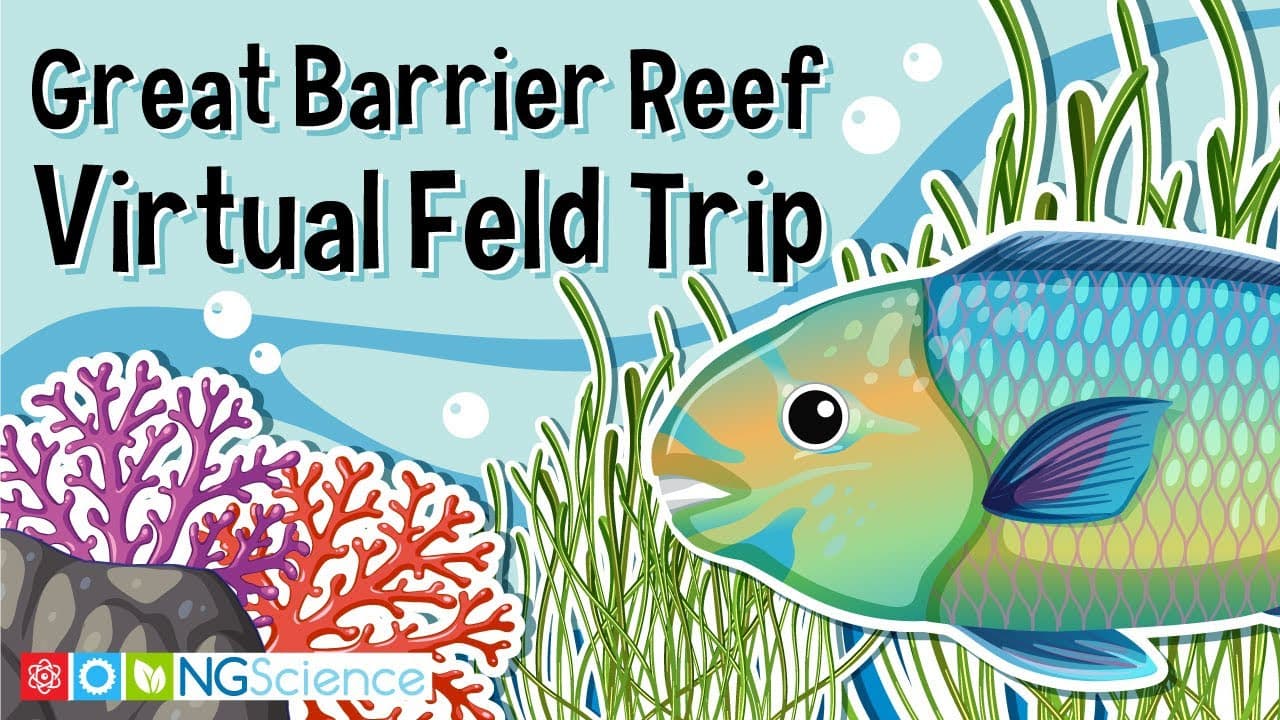
A Virtual Field Trip to the Great Barrier Reef

A Virtual Field Trip to the Great Barrier Reef

Join a virtual field trip to Australia's Great Barrier Reef, the largest living structure on Earth. This engaging video takes students from the dusty roads of Queensland directly into the underwater world to explore the incredible biodiversity of this marine ecosystem. Through stunning aerial and underwater footage, viewers discover how billions of tiny coral polyps create a habitat visible from space that supports thousands of different species. The video systematically introduces various categories of marine life found on the reef, moving beyond just fish to explore reptiles, mammals, and invertebrates. Key themes include animal classification (identifying specific species of fish, sharks, rays, turtles, and sea snakes), the definition of a coral reef system, and the staggering scale of this natural wonder. This resource is an excellent tool for biology and geography lessons, allowing teachers to vividly illustrate concepts of biodiversity and ecosystem interdependence. It provides concrete examples for animal classification units—differentiating between hard and soft corals, vertebrates and invertebrates—and offers a compelling visual hook for discussions about ocean conservation and Australian geography.

Next Generation ScienceNext Generation Science

4mins 38s

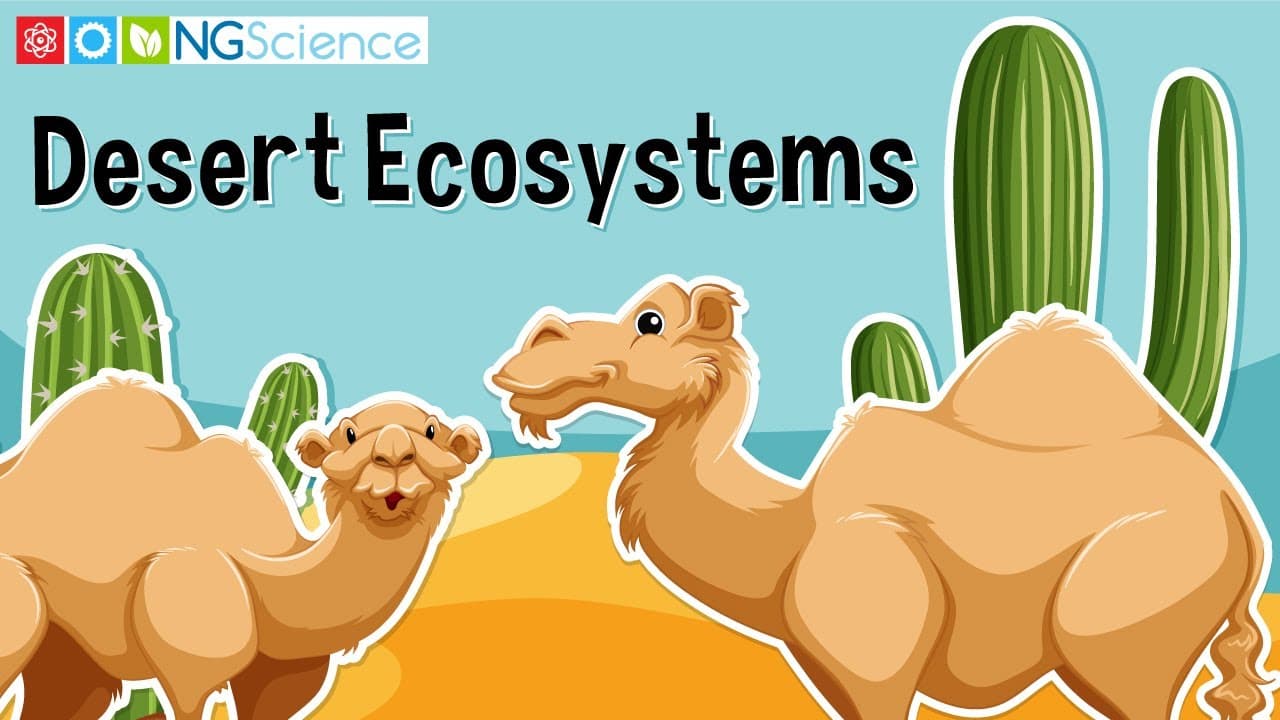
How Plants and Animals Survive in Desert Ecosystems

How Plants and Animals Survive in Desert Ecosystems

This educational video provides a comprehensive exploration of desert ecosystems, challenging the common misconception that deserts are defined solely by heat. It explains that deserts are actually defined by precipitation levels—receiving less than 25 centimeters (10 inches) of rain annually—and introduces viewers to both hot and cold deserts, including the Arctic and Antarctic. The video offers a global perspective, showcasing deserts on every continent and visualizing their unique landscapes. A significant portion of the video is dedicated to the concept of biological adaptation. It details how flora and fauna have evolved specific traits to survive in harsh, arid environments. Viewers learn about plant adaptations through the example of cacti, examining their spines, waxy surfaces, and specialized root systems (tap roots vs. shallow roots). The video then transitions to animal adaptations, using camels, fennec foxes, and desert tortoises to illustrate survival strategies such as water storage, heat dissipation via large ears, nocturnal behavior, and estivation. For educators, this video is an excellent resource for units on biomes, habitats, and evolutionary biology. It provides clear visual examples of structural and behavioral adaptations, making abstract concepts concrete for students. The content naturally supports cross-curricular learning, connecting science (biology/environmental science) with geography (mapping global deserts) and math (calculating water consumption), making it a versatile tool for elementary and middle school classrooms.
Next Generation ScienceNext Generation Science

6mins 17s

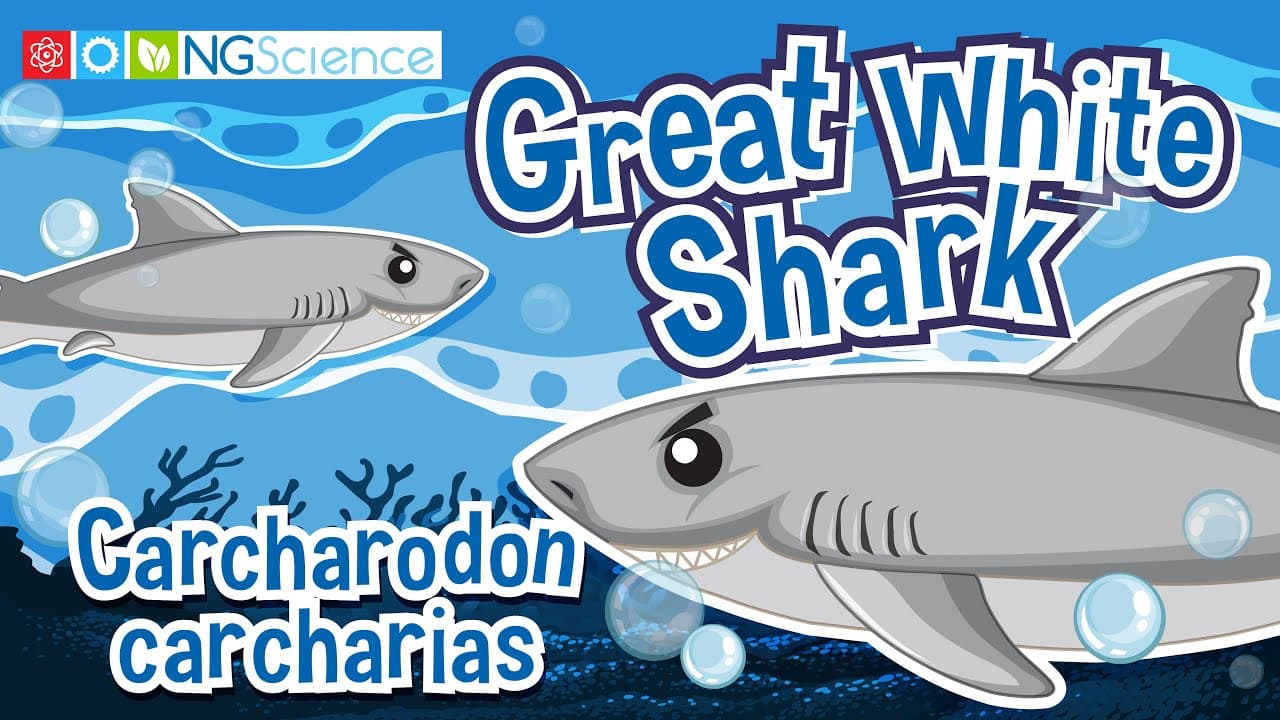
The Great White Shark: Guardian of the Ocean

The Great White Shark: Guardian of the Ocean

This educational video provides a stunning and scientifically rich exploration of the Great White Shark, reframing it from a movie monster to a vital component of marine ecosystems. Opening with a global perspective of Earth as the "pale blue dot," the video dives beneath the surface to explore the biodiversity of the ocean, eventually focusing on sharks as ancient, evolutionary masterpieces. It highlights the Great White's remarkable physical adaptations, including its cartilaginous skeleton, heightened senses, and hydrodynamic design that allows for explosive speed and breaching.

Next Generation ScienceNext Generation Science

5mins 19s

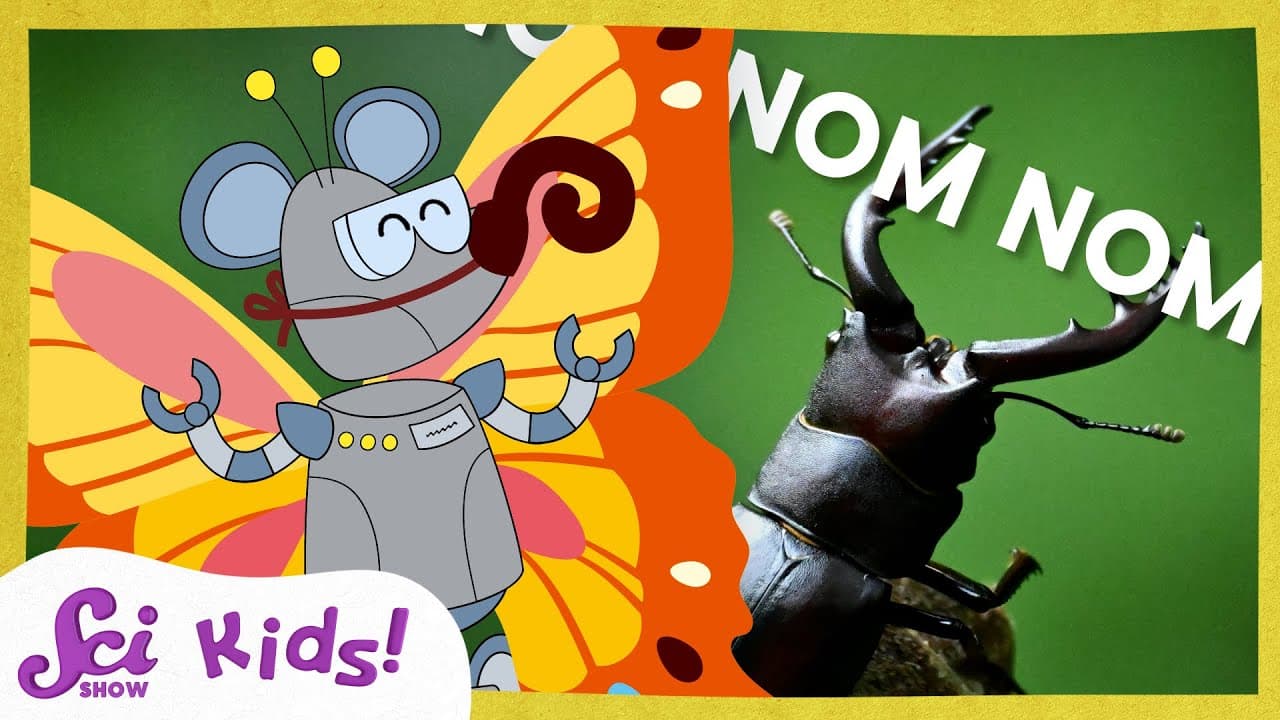
How Insects Eat: Exploring Proboscises and Mandibles

How Insects Eat: Exploring Proboscises and Mandibles

In this engaging episode of Sci Kids!, host Jessi and her robot rat friend Squeaks explore the fascinating world of insect anatomy, specifically focusing on how different insects eat. Prompted by Squeaks' anxiety about bugs eating their picnic food, Jessi explains that not all insects eat the same things humans do. The video breaks down the two main categories of insect mouthparts: those designed for drinking liquids (like straws) and those designed for chewing solids (like pinchers). The video introduces key biological terms such as "proboscis," "maxillae," and "mandibles," using clear visual analogies to help young learners understand these concepts. Viewers learn how butterflies and mosquitoes use a proboscis to sip nectar or blood, comparing it to drinking from a straw or a juice box. It also covers chewing insects like crickets and beetles, explaining how their mandibles work side-to-side rather than up-and-down like human jaws. Teachers can use this video to introduce topics of adaptation, form and function, and biodiversity. The content bridges biology with physics (mechanics of eating) and math (measurement of the moth's tongue), making it a versatile tool for cross-curricular learning. The video features high-quality close-up footage of insects alongside friendly puppet interactions, making complex biological adaptations accessible and non-threatening for elementary students.

SciShow KidsSciShow Kids

7mins 43s

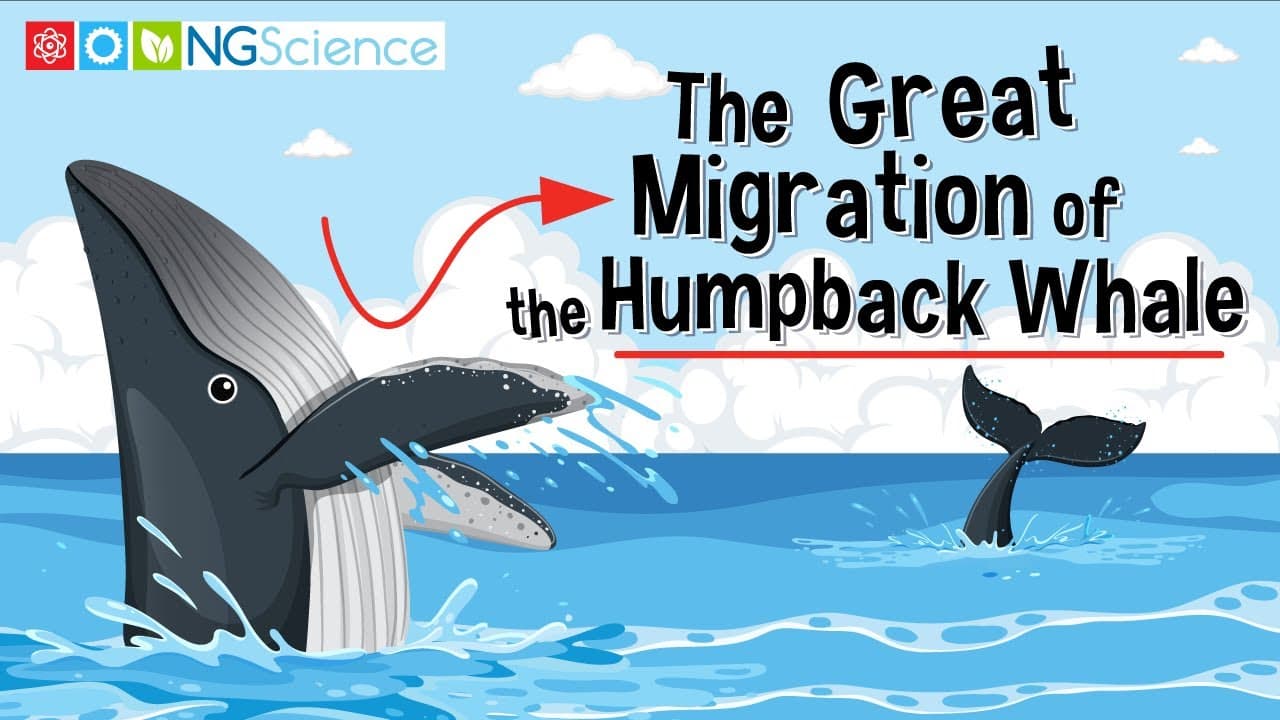
Exploring the Life, Migration, and Songs of Humpback Whales

Exploring the Life, Migration, and Songs of Humpback Whales

This comprehensive educational video provides a deep dive into the biology, behavior, and life cycle of Humpback Whales (*Megaptera novaeangliae*). Through a blend of high-quality underwater footage, clear narration, and detailed animated diagrams, the video explores the physical characteristics that define these "gentle giants," including their massive pectoral fins and unique baleen plates. It explains their classification as marine mammals and breaks down their internal anatomy in a way that is accessible for elementary and middle school students. The content covers key biological themes such as migration, feeding adaptations, and social structures. Viewers learn about the whales' incredible annual migration between polar feeding grounds and tropical breeding waters—one of the longest of any mammal. The video also highlights specific behaviors like the cooperative "bubble net feeding" technique, their complex vocalizations or "songs," and the strong bond between mother and calf. Specific attention is given to the function of their tail flukes for identification and their acrobatic surface behaviors like breaching. From a classroom perspective, this video serves as an excellent resource for units on marine biology, animal adaptations, and environmental conservation. It addresses the history of commercial whaling and the species' subsequent recovery, offering a practical entry point for discussions on human impact and conservation laws. The clear visuals of internal organs and migration maps make it particularly useful for visual learners, while the scientific vocabulary introduced provides a solid foundation for science literacy.

Next Generation ScienceNext Generation Science

4mins 33s

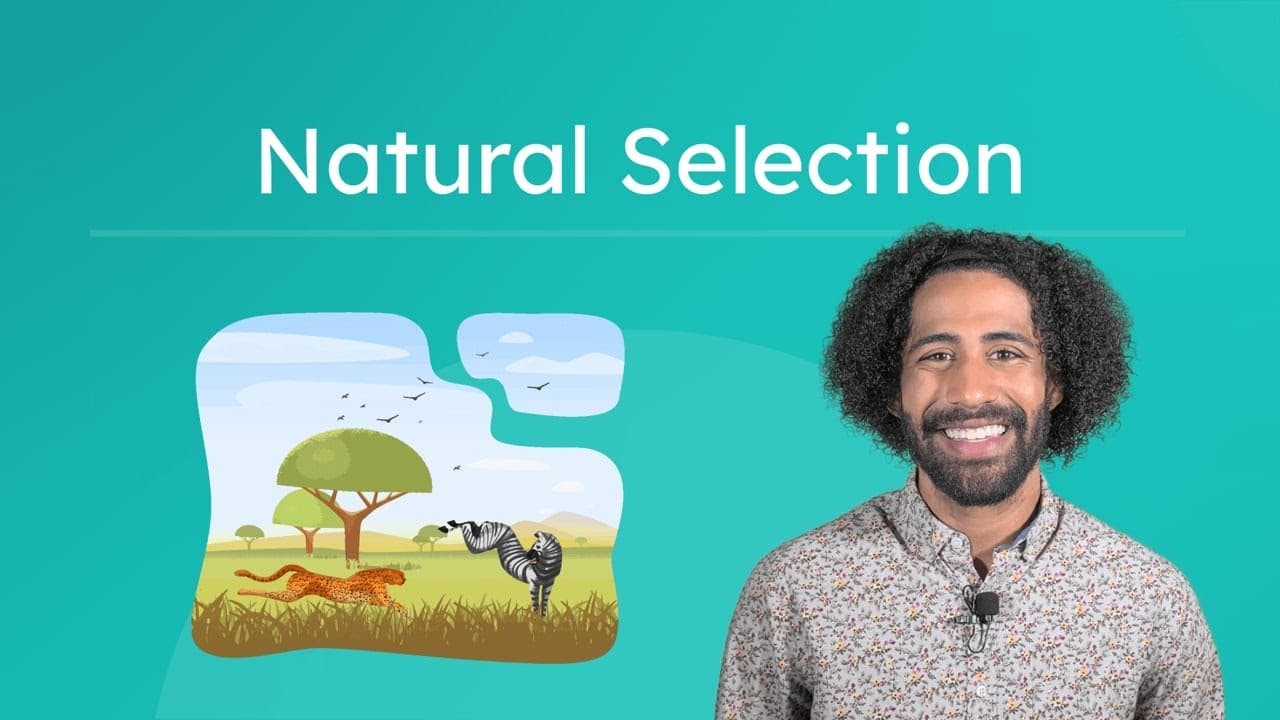
How Natural Selection Drives Adaptation and Survival

How Natural Selection Drives Adaptation and Survival

This educational video provides a clear and engaging introduction to the biological concepts of natural selection, adaptation, and genetic diversity. The host, Tony, begins by drawing an analogy between personal life changes—like moving schools—and the biological imperative for species to adapt to changing environments. The video connects previous lessons on DNA and heredity to the broader mechanism of evolution, explaining that traits are not random but serve specific purposes that enhance an organism's "fitness," defined here as the ability to survive and reproduce.

Miacademy & MiaPrep Learning ChannelMiacademy & MiaPrep Learning Channel

8mins 32s

Materials

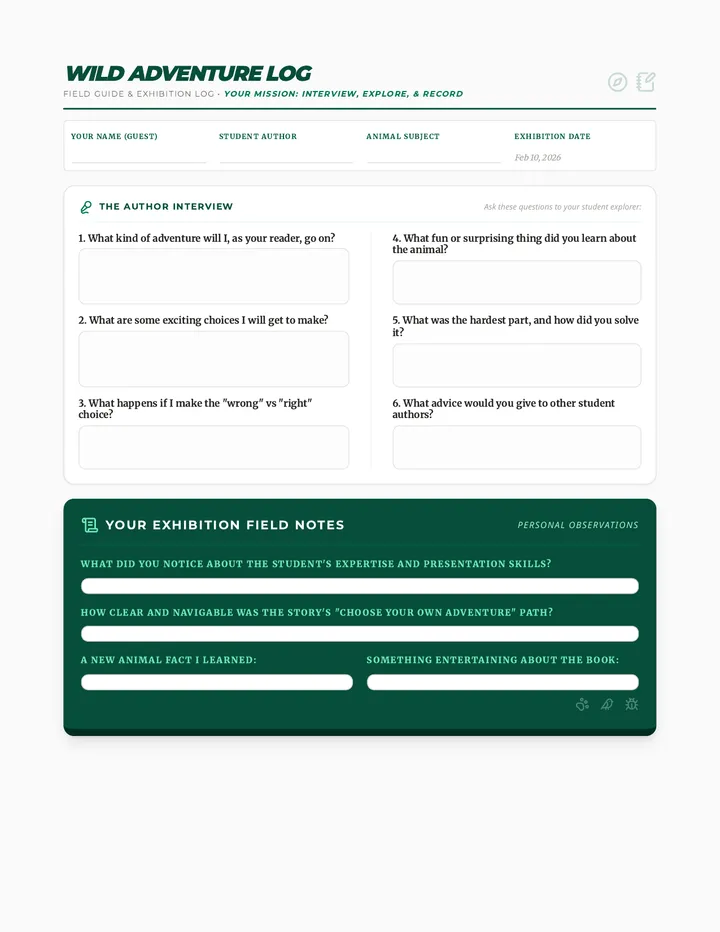
Wild Adventure Log Guest Form Plus Plus Plus Plus Plus

Wild Adventure Log Guest Form Plus Plus Plus Plus Plus

A 2nd-person 'Wild Adventure Log' guest form with maximized writing space. It features a side-by-side author interview/process section and a large Guest Observation area, all designed for comfortable handwriting on a single page.

E

epate

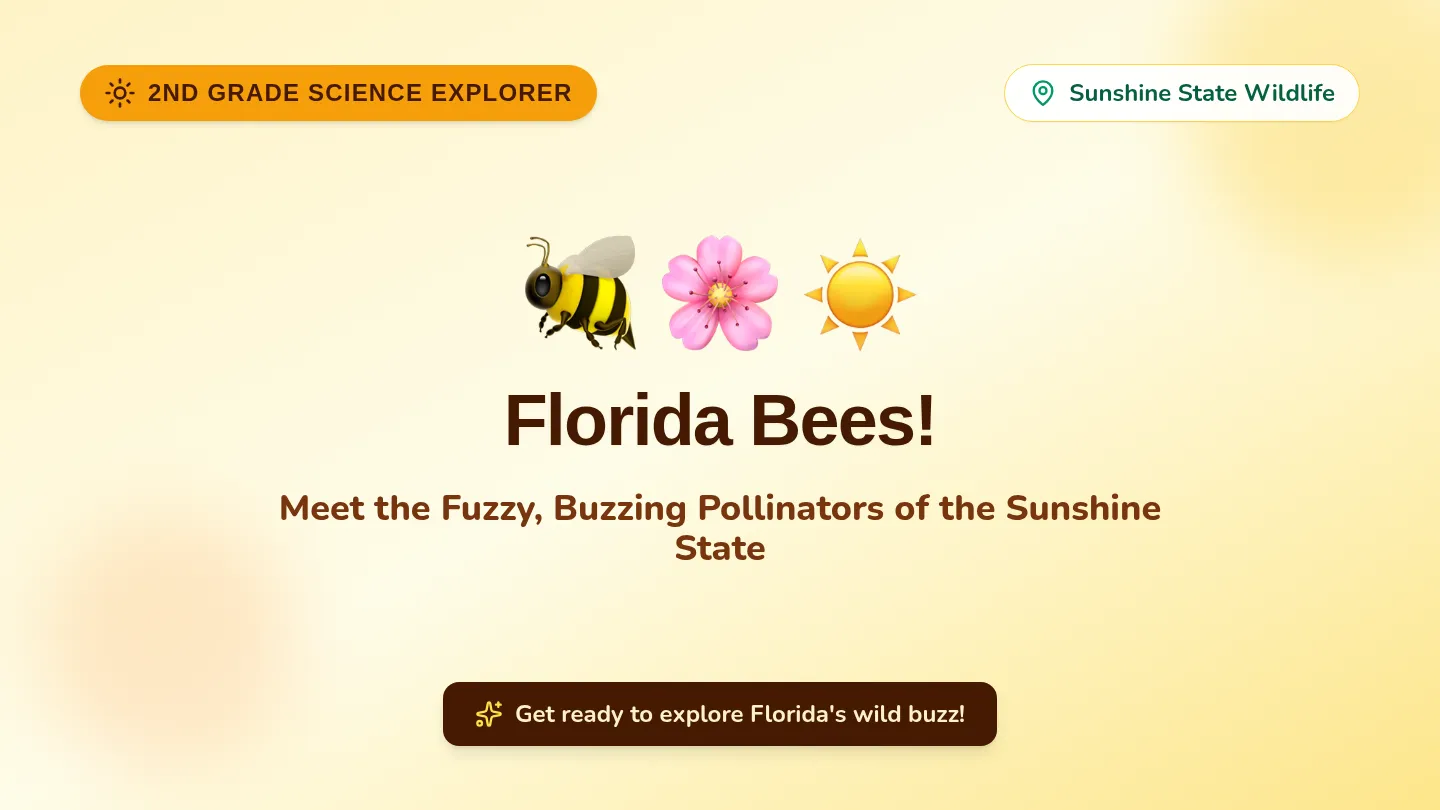
Florida Bees Slides

Florida Bees Slides

An engaging 10-slide science presentation for 2nd graders exploring Florida's diverse native bees, honeybees, pollination superpowers, unique nesting habitats, and conservation tips. Designed with vibrant sunshine colors, large readable typography, and interactive quiz elements tailored for young learners.

AI

Allison Ingraham

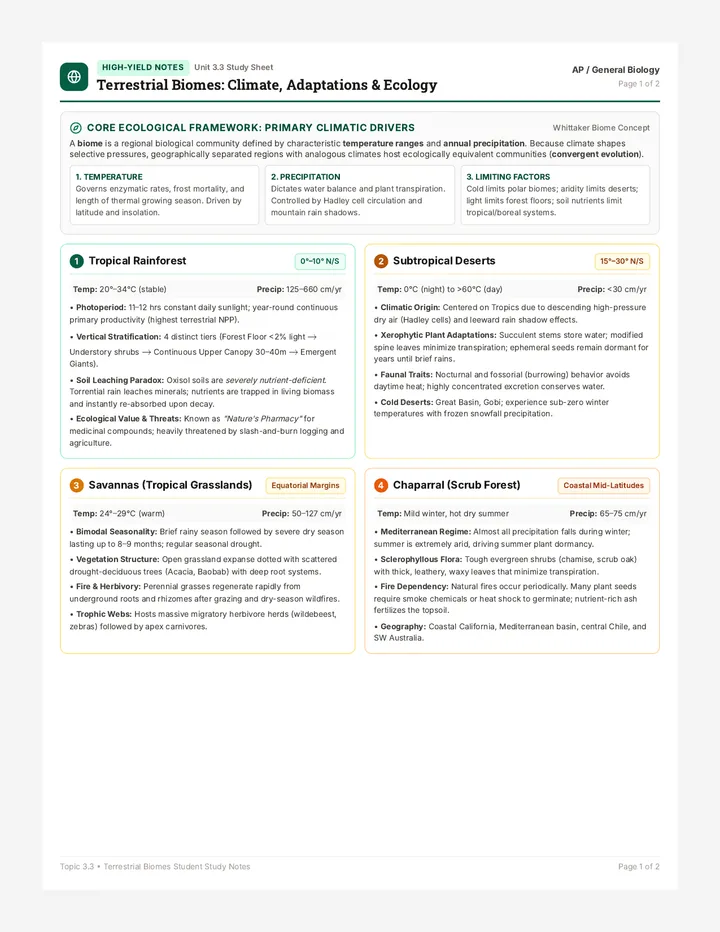
Terrestrial Biomes Student Notes

Terrestrial Biomes Student Notes

A condensed two-page high-yield student notes document summarizing all eight terrestrial biomes, climatic determinants, plant and animal adaptations, soil productivity, fire ecology, and global feedback loops.

MB

M. B.

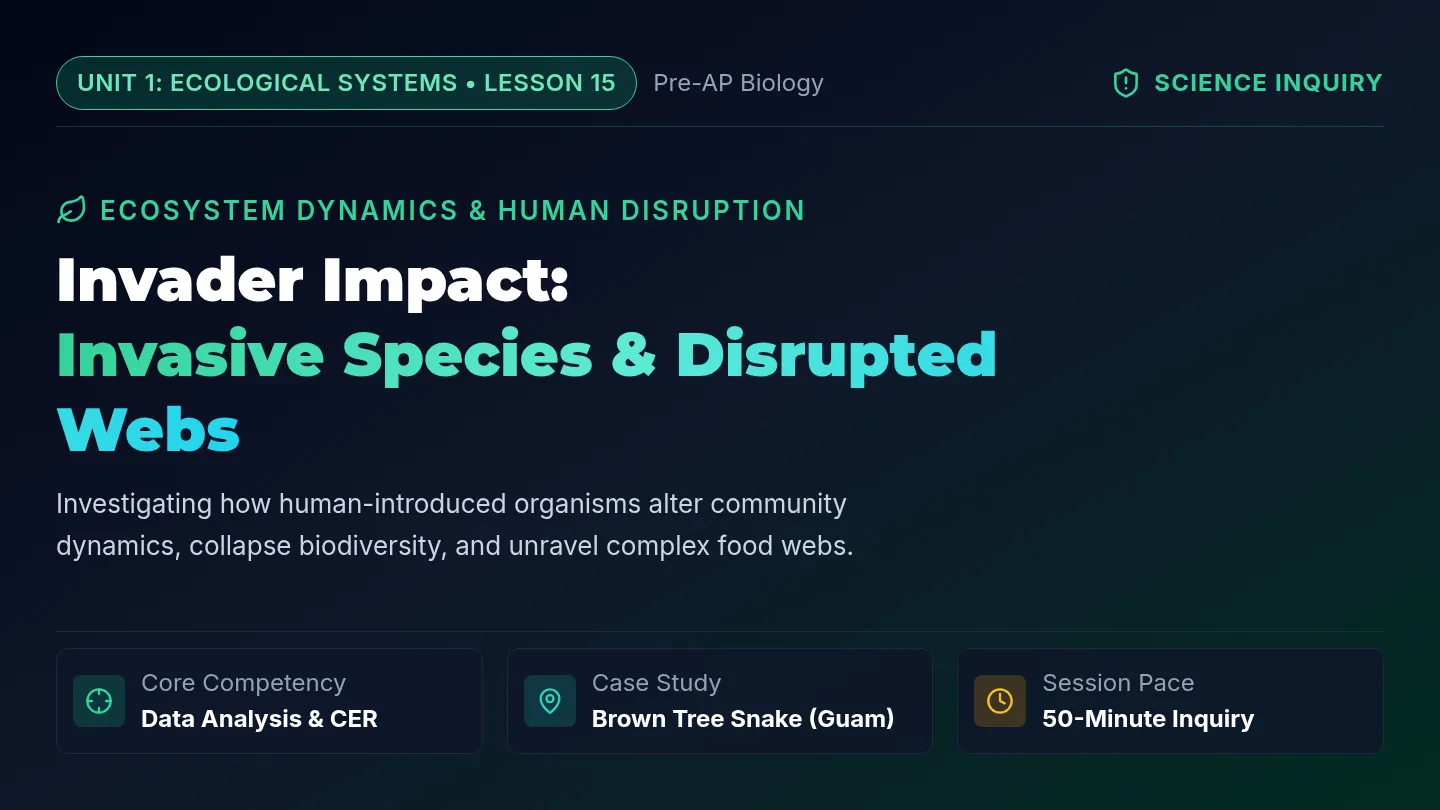
Invader Impact Slides

Invader Impact Slides

An updated 17-slide student-facing presentation for the 50-minute Biology U01L15 lesson on invasive species, featuring the Guam Brown Tree Snake case study, r-selected strategy, dimensional analysis calculations, data analysis, CER writing guidance, and final synthesis.

D

david.soares

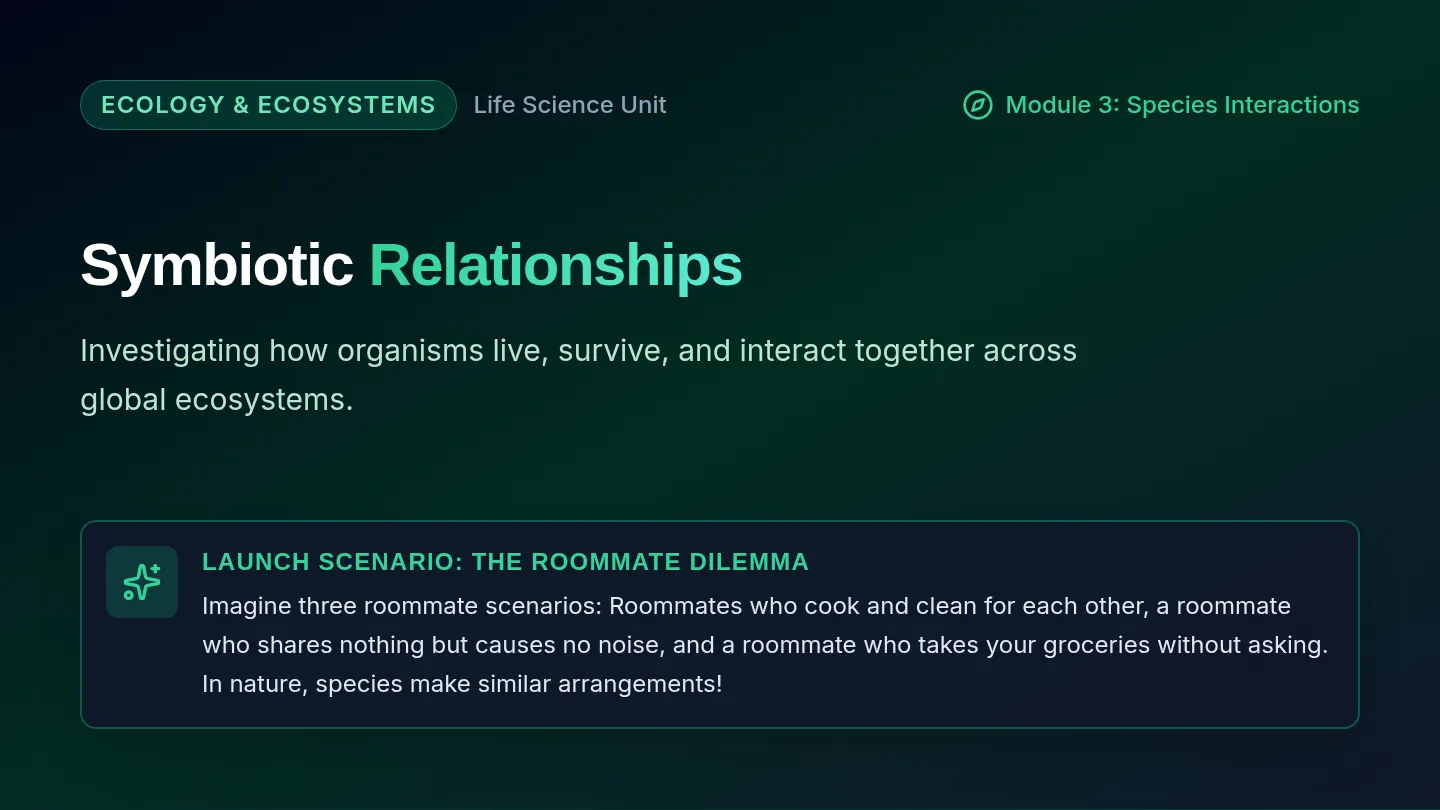
Symbiotic Bonds Slides

Symbiotic Bonds Slides

A comprehensive 12-slide student presentation on ecological interactions and symbiotic relationships, including a launch hook, lesson objectives, previous lesson objective recap and thematic connection, vocabulary breakdown, symbiosis vs. predation and competition, an essential vocabulary application guide, case studies with questions and explanations, C.E.R. framework instruction with model, and the final guiding question and answer.

D

david.soares

Eco Explorer Glossary Sheet

Eco Explorer Glossary Sheet

A clear and visually engaging glossary for 6th-grade students covering key ecosystem and biome terminology. It includes definitions for ecosystem, biome, biotic/abiotic factors, and more, styled as a scientist's field guide.

PR

Paige Ragan

Sequences

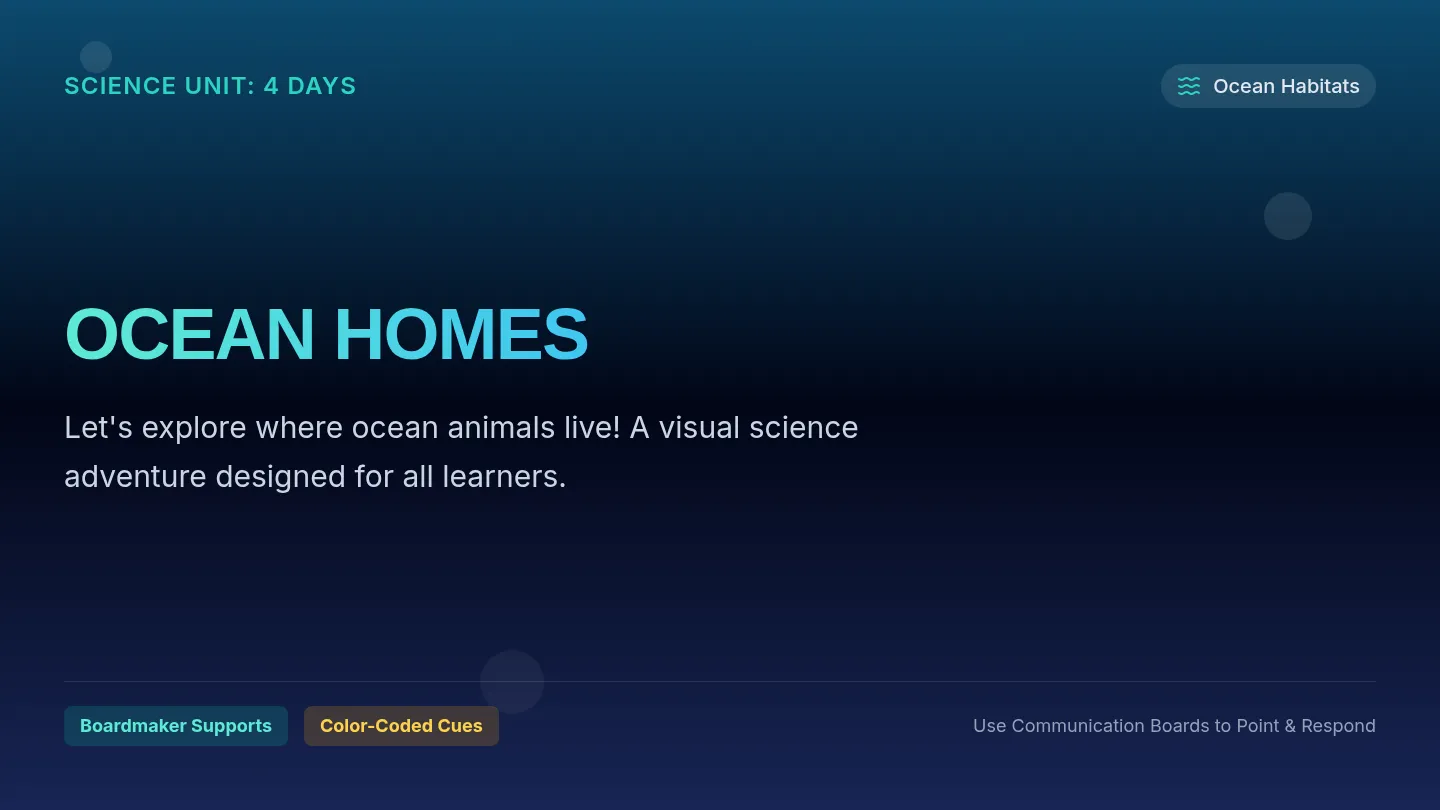
Ocean Homes Slides

Ocean Homes

A highly visual 4-day science unit exploring ocean habitats and depth zones. Tailored for differentiated instruction for 3rd grade and nonverbal 7th grade students using Boardmaker-style symbols, color-coded matching, and visual check comprehension.

D

dbowers

17
Sea Parts Vocabulary Worksheet

Ocean Architects

A sequence of lessons exploring the specialized anatomy and physical structures of marine organisms, from basic fish biology to the complex adaptations that allow them to thrive in diverse oceanic environments.

JS

Jasmine Silva Villa

24
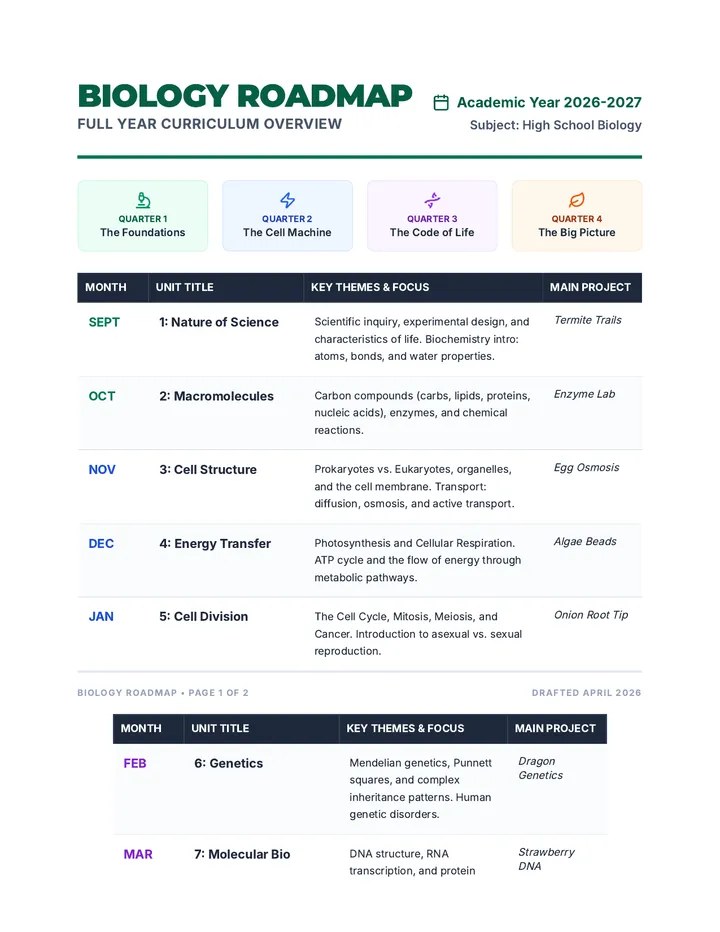
Biology Roadmap Document Trimmed

Biology Blueprint

A comprehensive full-year planning framework for high school Biology, including pacing, unit objectives, lab requirements, and assessment strategies.

A

AMY.MILLER

7
Atomic Foundations Teacher Planner

Atomic Foundations

A comprehensive 5-day unit focusing on atomic structure, the periodic table, and chemical reactivity, designed for Integrated Physics and Chemistry students.

MB

Marsha Bolden

14
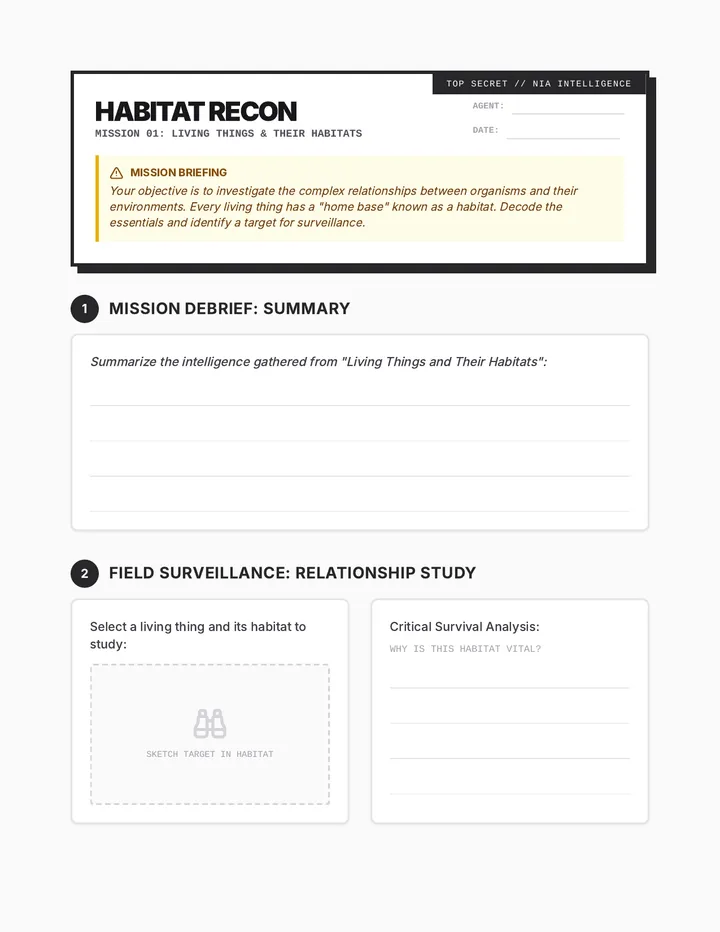
Habitat Recon Worksheet

Nature Intelligence Agency

A series of secret agent-themed ecology missions where students act as Eco-Detectives for the Nature Intelligence Agency (NIA) to study habitats, food chains, and environmental impacts.

A

Alaina.Burton

14
Ecosystem Explorers Slides

Life Science Explorer

A comprehensive sequence covering introductory 6th-grade life science topics, from ecosystem dynamics to inheritance and evolutionary changes.

KA

Khalid Abdulla

10

Lessons

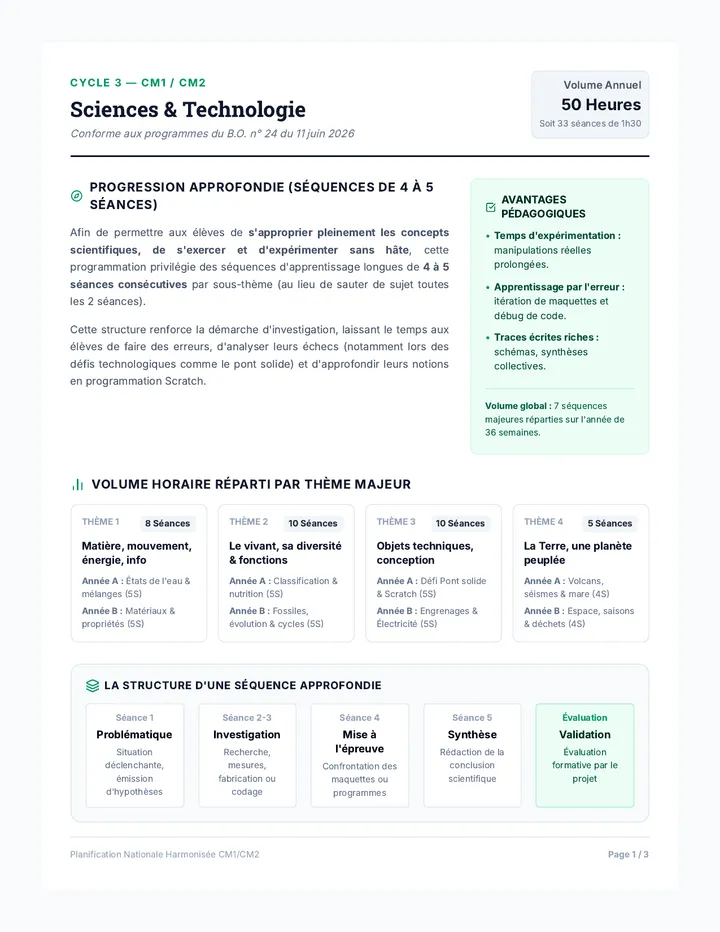
Tableau Progression Annuelle Sciences CM

Progression Sciences CM1 CM2

Outil de planification annuelle et de progression pour l'enseignement des sciences et technologies en classe de CM1/CM2, conforme au BO de juin 2026. Ce guide propose une répartition claire des volumes horaires et des thèmes entre l'année A et l'année B pour éviter les redondances dans les classes à double niveau.

LP

LAURENT PERCHE

40
Savanna Survival Report

Biome Builders

A creative project-based lesson where students research and design an educational poster about a specific global biome, focusing on adaptations, food webs, and conservation. Now expanded to include an informative research paper component.

S

sheenad

11
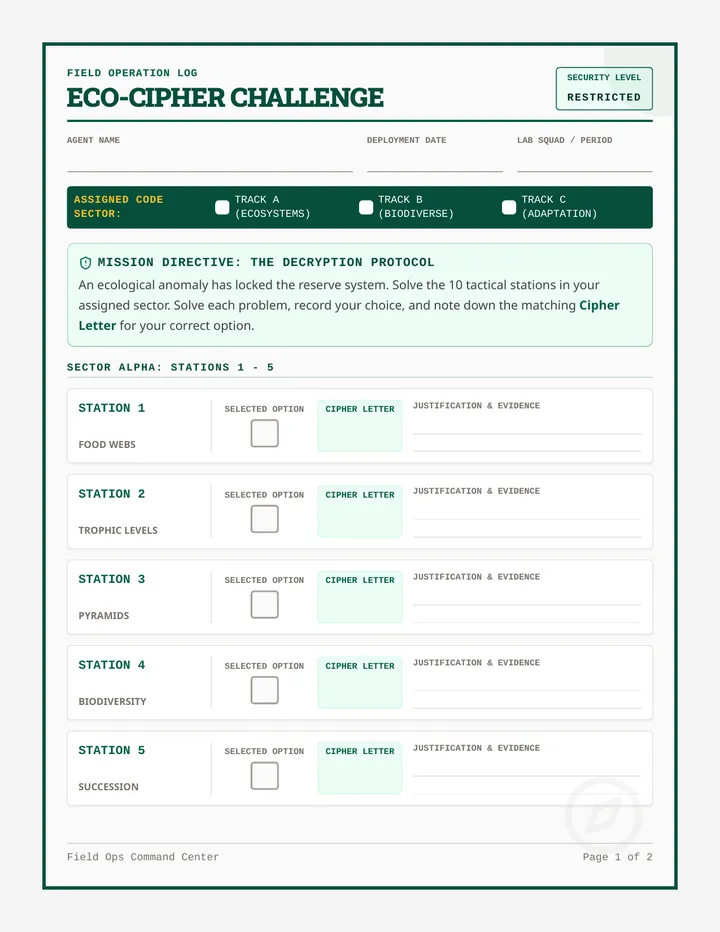
Eco Cipher Student Journal

Eco-Cipher Challenge

An interactive, station-based scavenger hunt where students solve ecological mysteries to decode a final ten-letter secret cipher ('ECOSYSTEMS'). Students review core concepts like food webs, trophic levels, symbiosis, succession, biomagnification, and populations.

M

MELANIE.ROBERTS

4
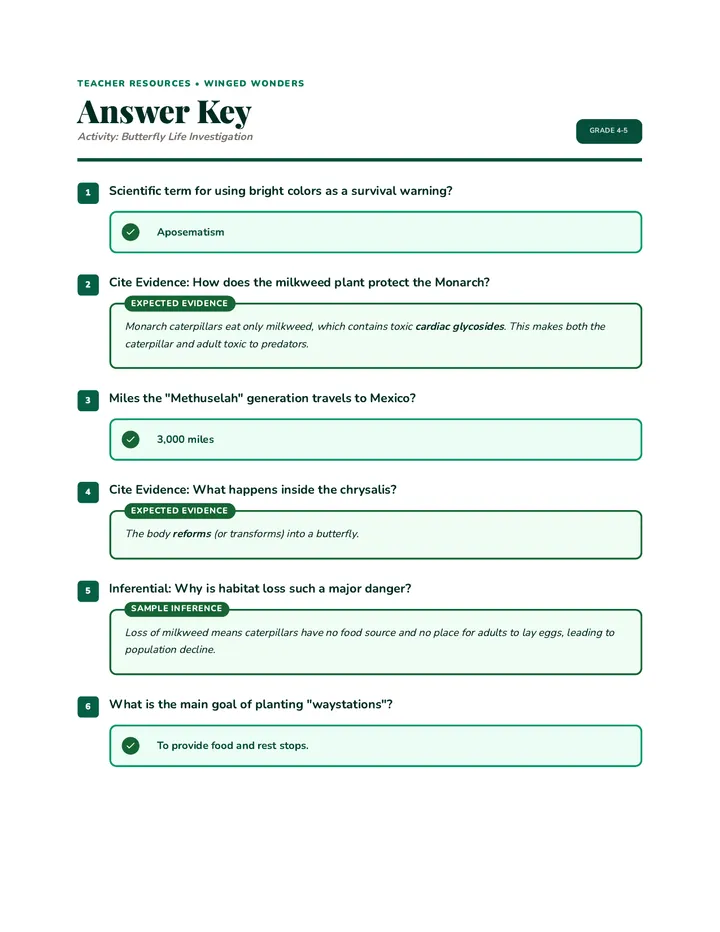
Butterfly Life Answer Key

Winged Wonders

A comprehensive lesson on butterfly biology and conservation, focusing on citing textual evidence and structured informative writing for 4th-5th grade students.

RK

Rachel Knight

8
Scoring Scout Training Slides

Mammal Extremes Comparison

This lesson focuses on comparing the world's largest mammal, the blue whale, with some of the world's smallest mammals. Students will use the provided informational text and conduct their own research to create a comparative report.

E

ecreamer

9
Cool Campus Poster

High Cut Heroes

A student-led advocacy campaign to encourage schools and families to raise lawn mower heights. Students learn the science of soil temperature, root health, and pest management to promote cooler, greener communities.

VI

Vi in Texas

9