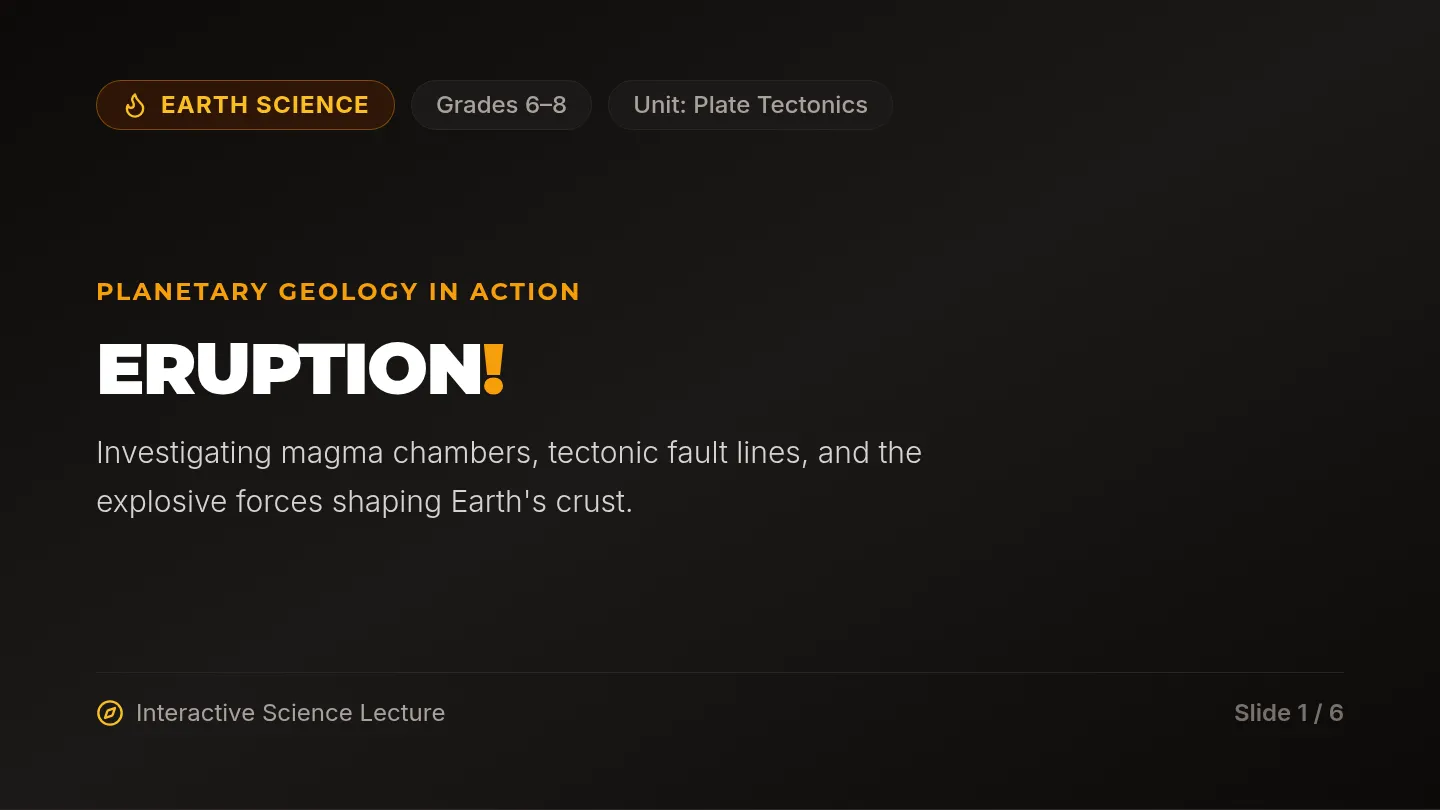
Ecosystem Explorers SlidesECOSYSTEM EXPLORERS Unit 1: Organisms & Environments Living Connections Survival Skills What is an Ecosystem? An ecosystem is like a giant community where everything is connected. "It's the relationship between the living things and the non-living things in a specific area." Can be as small as a pond... ...or as big as a rainforest! The Two Main Ingredients BIOTIC LIVING! Everything in an ecosystem that is alive or was once alive. Plants Animals Bacteria Fungi ABIOTIC NON-LIVING! The physical parts of the environment that aren't alive. Sunlight Water Soil Temperature Check Your Knowledge! TEST STYLE Q #1 Plants like grasses and shrubs need energy to grow. Which of these are Abiotic components they depend on for energy? A. Deer and Hawks B. Sunlight and Water C. Insects and Worms D. Soil and Fungi Relationship Hint: Think! Does a plant eat a burger (biotic) or soak up rays (abiotic)? Competition: The Big Race In nature, there isn't always enough for everyone. When organisms want the same resource, they compete! They Compete For: Food Water Light Space Key Rule: The more similar two organisms are, the more they will compete! Pond Fish Example Two fish of the same species in a small pond are MOST likely to compete for food because they eat the same things! Check Your Knowledge! TEST STYLE Q #2 Look at the preferred temperatures of these organisms. Which two would compete the MOST for a spot in a habitat? Organism 1 20°C - 25°C Organism 2 15°C - 20°C Organism 3 5°C - 10°C Organism 4 15°C - 20°C A. Organism 1 and 2 B. Organism 2 and 4 C. Organism 3 and 4 D. Organism 1 and 3 Why? They both prefer the SAME temperature range! Levels of Life: Simple to Complex ORGANISM One single living thing Population ALL members of the SAME species Community DIFFERENT populations living together Ecosystem Community + Abiotic factors Let's Use a School Relationship! If we compare nature to your school: 1 "A class of students" is like a... POPULATION But the whole campus (desks, lights, kids, and teachers): 2 "The entire campus" is like an... ECOSYSTEM Population vs Ecosystem Check Your Knowledge! TEST STYLE Q #3 X Organism Ecosystem What word BEST completes the "X" in the diagram? (It's more than a population but less than an ecosystem!) A. Habitat B. Community C. Biome D. Census Symbiosis: Nature's Relationships Mutualism A relationship where BOTH organisms win! Ex: Clownfish & Anemone. Clownfish gets a home; Anemone gets food scraps. Parasitism One organism wins, the other is HARMED! Ex: A plant stealing nutrients from an Oak tree. The plant wins; the tree loses energy. Commensalism One wins, and the other just doesn't care (not harmed, not helped)! Check Your Knowledge! TEST STYLE Q #4 A tiny plant called Ceratocystis lives on an Oak tree. It STEALS nutrients from the tree to survive. What term describes this relationship? Mutualism Parasitism Commensalism Competition Dressed for Success: Adaptations An adaptation is a special trait that helps an organism survive in its environment. Relationship to Habitat: If the habitat changes (like it starts snowing), the organism needs traits that match the NEW environment to stay hidden and safe! COAT Arctic Hare: White fur helps it blend into the snow to hide from predators. FUR Grizzly Bear: Brown fur helps it hide in the dark, leafy woods. When the Environment Changes Some traits help an animal every day. Others are specially tuned for seasons. Affected by Seasons: The number of pecans on a tree The height of summer flowers How many crickets hatch Least Affected? Some body parts, like the length of horns on a steer, don't really care if it's winter or summer. They grow slowly regardless! Check Your Knowledge! TEST STYLE Q #5 Imagine a population of owls. Some have white feathers and some have gray feathers. They live in an area that is usually covered in snow. Which change would be a disadvantage for the white-feathered owls? A. A decrease in the usual amount of snowfall (Less snow means white is easy to see!) B. An increase in the usual amount of winter snowfall C. An increase in cloud cover in the area Mission Accomplished! You are now an Ecosystem Expert. Biotic/Abiotic The parts of our world. Relationships Friends, foes, & neighbors. Survival Adapting to the change. "In the ecosystem, everything you do affects someone else. We are all connected!"
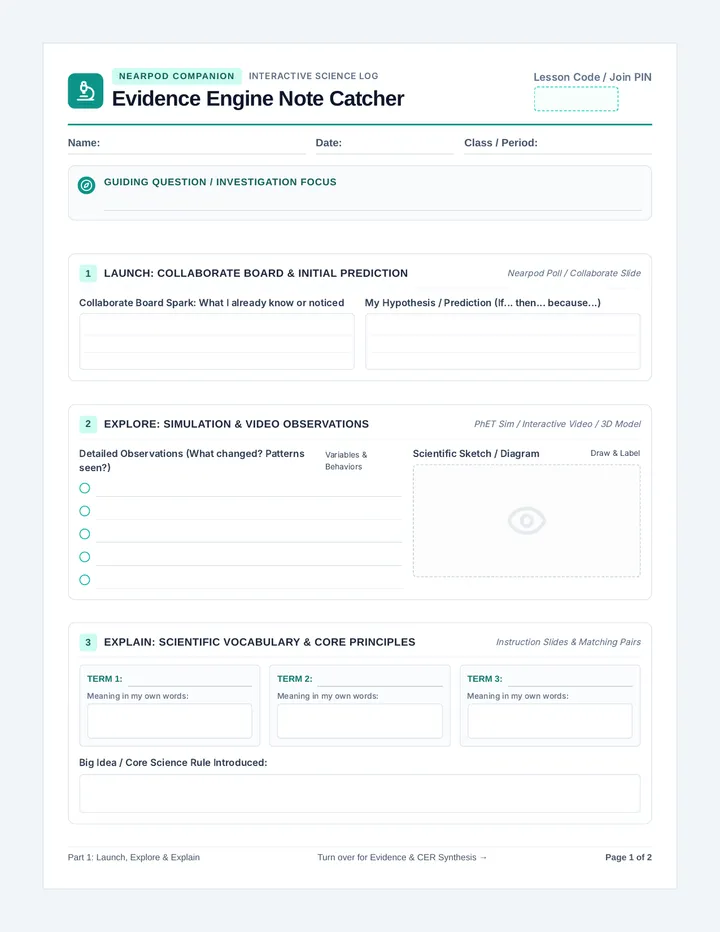
Nature's Layers WorksheetNature's Layers: Video Notes Name: Date: Free Response Video Worksheet As you watch the video, answer the following questions. Be sure to use complete sentences and explain your thinking clearly! In your own words, describe what makes something an "organism." The video explains the concept of a "population." Give an example of a population you might find in a local park or your backyard. How is a "community" different from a "population"? Explain the main difference. According to the video, what are some examples of non-living (abiotic) parts that turn a community into an "ecosystem"? If you were looking at a single honeybee landing on a flower, which specific level of organization are you observing? Explain what might happen to a specific population if all the other populations in its community were suddenly removed. From the ecosystem examples shown in the video, identify two biotic (living) parts and two abiotic (non-living) parts. Why is the "ecosystem" level considered larger and more complex than the "community" level? Imagine a forest community. List at least three different populations that would likely live there together. Summarize the relationship between these four levels: How does an organism eventually fit into an entire ecosystem? Great Job, Scientist! 🌿
Ecosystem Expedition WorksheetECOSYSTEM EXPEDITION The Great Unit Review Quest Explorer Name: Base Camp Date: Phase 1: The Explorer's Sketchbook 1. Illustrate an Ecosystem! Draw one Biotic factor (living) and one Abiotic factor (non-living) interacting together. 2. The Camouflage Challenge! Draw an Arctic Hare in the winter. Use its coat color to show how it hides in its background. Phase 2: The Path to Success (Multiple Choice) Sunlight from the Sun is classified as which type of factor in an ecosystem? A. Biotic B. Abiotic C. Community D. Population In a pond ecosystem, which resource are fish MOST likely to compete for with each other? A. Sunlight B. Soil C. Food D. Saltwater If two different organisms prefer the EXACT same temperature range, their level of competition will be: A. Low B. Medium C. High D. Non-existent A clownfish lives in a sea anemone. Both organisms benefit from the relationship. This is called: A. Predation B. Parasitism C. Mutualism D. Competition A plant that lives on an Oak tree and steals its nutrients is a: A. Predator B. Parasite C. Producer D. Decomposer Which level of organization includes both living and non-living things? A. Population B. Community C. Organism D. Ecosystem A class of students is to a population as a school campus (with students, desks, and lights) is to an: A. Ecosystem B. Community C. Organism D. Biotic Factor White fur on a polar bear helps it survive by: A. Keeping it warm in summer B. Making it appear larger C. Helping it blend into snow D. Scaring away predators Which of the following is LEAST affected by seasonal changes? A. Number of crickets that hatch B. Growth height of sunflowers C. Length of horns on a steer D. Size of pecans on a tree
Ecosystem Review Roundup SlideTest Review: Ecosystem Roundup Ingredients of Life Biotic: Living things (Plants, Animals, Fungi). Abiotic: Non-living (Sunlight, Water, Soil, Temp). Pro Tip: Plants depend on Abiotic factors for energy! The Nesting Dolls 1 Organism (Individual) 2 Population (Same Species) 3 Community (All Living) 4 Ecosystem (Living + Non-Living) Survival Games Competition: High when needs are the SAME! Mutualism: Both win (+/+) like Clownfish. Parasitism: Win/Loss (+/-) like Ticks. Dressed to Survive Adaptation: A trait that helps survival. Camouflage: Blending in (Arctic Hare fur). Change: If habitat changes, traits might become a disadvantage! You've got this, Explorer! 🚀
Generation Games Study GuideGENERATION GAMES Study Guide: Inheritance & Change Topic 1: Asexual vs. Sexual Reproduction Asexual Reproduction Definition: One parent produces offspring that are identical to itself. Advantages: No need to find a mate (saves time!) Can produce many offspring very quickly Requires less energy Disadvantage: No diversity! If the environment changes, all identical offspring might die. Sexual Reproduction Definition: Two parents combine genetic material to create diverse offspring. Advantages: Creates unique combinations of traits High genetic diversity Allows populations to adapt to changes Disadvantage: Takes more time and energy; must find a mate. Topic 2: Natural vs. Artificial Selection Type of SelectionWho Chooses?The GoalExampleNatural SelectionThe EnvironmentSurvival & Reproduction (Adaptation)Pocket mice with dark fur survive better on lava rocks.Artificial Selection (Selective Breeding)Humans (People)Desired traits like size, taste, or strengthBreeding the biggest strawberries for the grocery store. Key Relationships to Remember: Similarity Asexual = Identical Sexual = Diverse Natural Selection Helps population adapt to habitat. Selective Breeding Humans pick desirable traits.
Generation Games WorksheetInheritance & Change Review Name: Date: Lesson Generation Games 1. Interactive Response: Inline Choice DOK 3 Family Portrait (Leopards) A family of leopards includes two parents and two cubs. In sexual reproduction, traits are passed down to create diversity. The female and male cubs have traits that are diverse from each other. The cubs and their parents have traits that are diverse from each other. Some traits for variations are passed from generation to generation and may become common throughout the population. 2. Selected Response DOK 2 Asexual reproduction in plants and animals has both advantages and disadvantages. Which of the following are advantages of asexual reproduction? Select TWO correct answers. A. Offspring have a unique combination of traits. B. Many offspring can be produced very quickly. C. The organism does not need to find a mate. D. Offspring are genetically diverse from the parent. 3. Interactive Response: Inline Choice DOK 2 "In artificial selection of a plant or animal, people choose specific individuals to breed. The goal is to make the traits of the plant or animal more desirable." Which of the following is an example of selective breeding (artificial selection) in cattle? A. Cattle that naturally develop thicker skin to survive the heat. B. Ranchers choosing only the largest cows to breed so they produce more meat. C. Cattle moving to a new field because of a drought. D. A population of cattle becoming immune to a virus over many years. 4. Constructed Response DOK 3 On different islands in the Galapagos, tortoises have developed different neck lengths to reach the specific food sources available on their island. Tortoise offspring are not identical to their parents. Make a claim: Do these tortoises reproduce sexually or asexually? Provide evidence to support your claim. Think like a Scientist! 🔍 If humans choose the traits, it's Artificial. If the environment chooses who survives, it's Natural.
Generation Games Slides FinalGENERATION GAMES Inheritance & Evolution How traits travel through time The Big Idea: What is Inheritance? Inheritance is the passing of traits from parents to their children. It's like a family recipe book! Your parents pass down "instructions" that decide how you look and grow. Traits = Characteristics Type 1: Asexual Reproduction THE CLONE FACTORY One single parent makes an exact copy of itself. Offspring are IDENTICAL to the parent. Traits remain the same over time. The Benefits: Fast & Efficient Massive population (1,000s at once) No need to find a mate Type 2: Sexual Reproduction THE MIX MASTER Two parents combine their traits to make someone new. Offspring are DIVERSE (different). A unique combination of traits from both. The Benefits: Genetic Variety (Diversity) Population can adapt & survive Unique individuals Disadvantage: Must find a mate (takes energy!) Check Your Knowledge! TEST PREP A seahorse father carries and gives birth to 1,000 offspring. Because there are male and female seahorses, the offspring will be: Identical Diverse Why? Since it takes a mother and a father, they mix their DNA to make unique babies! Natural Selection: Nature's Choice Nature is tough. Natural Selection is when the environment "picks" which traits help an animal survive. The Winner's Rule: If you have a trait that helps you survive, you live long enough to have babies and pass that trait on! 1 Population adapts to environment. 2 Environment selects for survival. 3 Traits change over generations. Real World: The Pocket Mice Scenario Mice with tan fur live on dark lava rocks. Owls can see them easily from above! WHAT HAPPENS? Over many generations, the fur of the mice darkens to match the rocks. This helps them blend in and survive. This is NATURAL SELECTION. Artificial Selection: Human Choice
Generation Games Slides Final RevisedGENERATION GAMES Inheritance & Evolution How traits travel through time The Big Idea: What is Inheritance? Inheritance is the passing of traits from parents to their children. It's like a family recipe book! Your parents pass down "instructions" that decide how you look and grow. Traits = Characteristics Type 1: Asexual Reproduction THE CLONE FACTORY One single parent makes an exact copy of itself. Offspring are IDENTICAL to the parent. Traits remain the same over time. The Benefits: Fast & Efficient Many offspring produced No need to find a mate Type 2: Sexual Reproduction THE MIX MASTER Two parents combine their traits to make someone new. Offspring are DIVERSE (different). A unique combination of traits from both. The Benefits: Genetic Variety (Diversity) Population can adapt & survive Unique individuals Disadvantage: Must find a mate (takes energy!) Check Your Knowledge! TEST PREP A seahorse father carries and gives birth to 1,000 offspring. Because there are male and female seahorses, the offspring will be: A. Identical B. Diverse Correct Answer: DIVERSE Because it takes a mother and a father, they mix their DNA to make a unique combination of traits for every baby seahorse! Natural Selection: Nature's Choice Nature is tough. Natural Selection is when the environment "picks" which traits help an animal survive. The Winner's Rule: If you have a trait that helps you survive, you live long enough to have babies and pass that trait on! 1 Population adapts to environment. 2 Environment selects for survival. 3 Traits change over generations. Real World: The Pocket Mice Scenario Mice with tan fur live on dark lava rocks. Owls can see them easily from above! WHAT HAPPENS? Over many generations, the fur of the mice darkens to match the rocks. This helps them blend in and survive. This is NATURAL SELECTION.
Resource Guardians SlidesRESOURCE GUARDIANS Managing Earth's Treasures Protecting Air, Water, Soil, and Energy What are Earth's Resources? WATER For drinking, farming, and habitats. AIR For breathing and climate health. SOIL For growing food and nutrients. ENERGY To power our homes and cities. The Big Relationship Population UP As the global population increases, there are more people on Earth. Demand UP More people means we need MORE energy and resources. The Goal: "How do we make sure there is enough for everyone?" Resource Management Resource Management is the smart way we handle our Earth's treasures. The Main Goal: To ensure resources are used EFFICIENTLY. Efficient Use Means: Using less to do more. Reducing waste. Planning for the future. CONSERVATION Water Conservation Turn off the water while brushing teeth. Fix leaky faucets and toilets. Plant drought-tolerant grass in yards. Energy Conservation Use energy-efficient appliances. Turn off the A/C when not home. Turn off lights when you leave a room. Soil, Food, & Health Good resource management helps prevent malnutrition (not having enough healthy food). By using agricultural resources like water and soil efficiently, we can grow more food for everyone! Healthy Soil Tips: Rotate crops to keep nutrients in soil. Reduce the use of chemical pesticides. Use smart irrigation (watering). Protecting our Air Why It Matters: "Air pollution impacts people's HEALTH and their ability to be active." How to Save our Air: Burn less firewood outside. Drive cars LESS (ride a bike!). Use less fossil fuels (coal/oil).
Resource Snapshot Review SlideTest Snapshot Earth's Resource Management Population Pulse Pop. UP Demand UP Demand is managed through Conservation and Efficiency. Management Goals Efficiency: Use wisely! Soil/Water: Prevents malnutrition. Air: Protects health & activity. Pollution Types Point One spot! (Oil spills, pipes). Nonpoint Wide area! (Acid rain). Hero Actions Water: Drought-tolerant grass. Energy: Turn off A/C when out. Air: Burn less firewood; drive less. Smart choices protect our future!