Lenny.com
Explore
Create
ActivitiesNewMathEnglish Language ArtsScience & EngineeringSocial StudiesGlobal LanguagesHealth & Physical EducationSpecial EducationCounseling & Life SkillsArts & CreativityESL
Lenny.com
Lenny.com
Explore
Create
ActivitiesNewMathEnglish Language ArtsScience & EngineeringSocial StudiesGlobal LanguagesHealth & Physical EducationSpecial EducationCounseling & Life SkillsArts & CreativityESL
Lenny.com
Lenny.com

Solutions

Lenny for EducatorsLenny for SchoolsLenny for Districts

Product

ExploreSign inCreateSupportAbout

Resources

Getting startedMTSS Acceleration Program

© 2026 Lenny Learning Inc.

TermsPrivacyAccessibility
LinkedInInstagramX
Lenny

Mechanical Engineering

Kinematics, thermodynamics, and structural analysis applied to machine design and manufacturing. Integrates artificial intelligence for predictive maintenance and automated robotic systems.

Science & EngineeringLife ScienceLiving ThingsAnimalsPlantsBody SystemsTraitsAdaptationsCellsEcosystemsHeredityGenes to TraitsCell DivisionPhysicsComparing MaterialsShapes and PropertiesMagnetsMagnetismLightSoundLight and SoundMatterStates of MatterChanges of StateMixturesPhysical and Chemical ChangeHeating and CoolingHeat and Thermal EnergyEnergyForce and MotionElectrical CircuitsAtoms and MoleculesPeriodic TableMotion in One DimensionMotion in Two DimensionsScalars and VectorsForces and Laws of MotionCircular Motion and GravityMomentum and ImpulseWork, Energy, and PowerWavesElectromagnetic WavesGeometric OpticsElectricity and MagnetismSimple Harmonic MotionThermodynamicsNuclear PhysicsEarth Science & AstronomyWeatherWater CycleRocks and MineralsFossilsEarth's FeaturesEarth's ResourcesEarth's StructureWeather and ClimateEarth EventsFossils and Geologic TimePlate TectonicsHuman ImpactsAstronomyChemistryUnits and MeasurementAtomic StructurePeriodic TrendsChemical BondingNomenclatureMolecular StructureIntermolecular ForcesThe MoleStoichiometryProperties of GasesSolutionsChemical ReactionsBalancing EquationsEnergy ChangesRates of ReactionsEquilibriumAcids and BasesQuantum ModelBiologyClassificationCell StructureThe Chemistry of LifeBiomoleculesCellular TransportCell EnergyCell Growth and DivisionDNAProtein SynthesisMeiosis and Sexual ReproductionPatterns of InheritanceMulticellular OrganismsEvolutionEcologyBiodiversityComputer ScienceAlgorithms and Computational ThinkingProgramming LanguagesComputing SystemsNetworks and InternetData AnalysisCybersecurityAI and Machine LearningSoftware Design and DevelopmentBlockchainEngineering & AIDesigning ExperimentsEngineering PracticesDesign ThinkingEngineering Design ProcessMechanical EngineeringElectrical EngineeringMaterials and StructuresCAD and 3D DesignRoboticsArtificial Intelligence BasicsVibe CodingMachine LearningAI Ethics and SocietySystems ThinkingEntrepreneurship & InnovationEntrepreneurial MindsetBusiness Idea DevelopmentBusiness Plan BasicsMarketing & Customer DiscoveryFinancial Management for Startups

Videos

How Hot Air Balloons Fly and Function

How Hot Air Balloons Fly and Function

In this engaging episode of Lighthouse Lab, host Halle takes students on a virtual journey to understand the science and engineering behind hot air balloons. The video combines live-action hosting with clear animations to break down the mechanics of flight, transitioning from a field setting to a laboratory environment to explain the core concepts before demonstrating a launch. It provides a accessible introduction to aerodynamics and states of matter. The content focuses on two main areas: the anatomy of a hot air balloon and the physics of lift. Viewers learn about the three essential components—the envelope, the burner, and the basket—and the specific materials used. Crucially, the video simplifies the complex concept of density, using particle animations to show how heating air causes it to expand and become less dense than the surrounding cooler air, generating lift. It also explains how pilots navigate vertically by controlling the temperature using the burner and top vents. This video is an excellent resource for elementary and middle school science classrooms introducing units on matter, energy, or forces. It provides a practical, real-world application for abstract concepts like density and thermal expansion. Teachers can use this video to anchor lessons on particle theory, to illustrate how heat changes matter, or as a case study in engineering design.

Next Generation ScienceNext Generation Science

3mins 55s

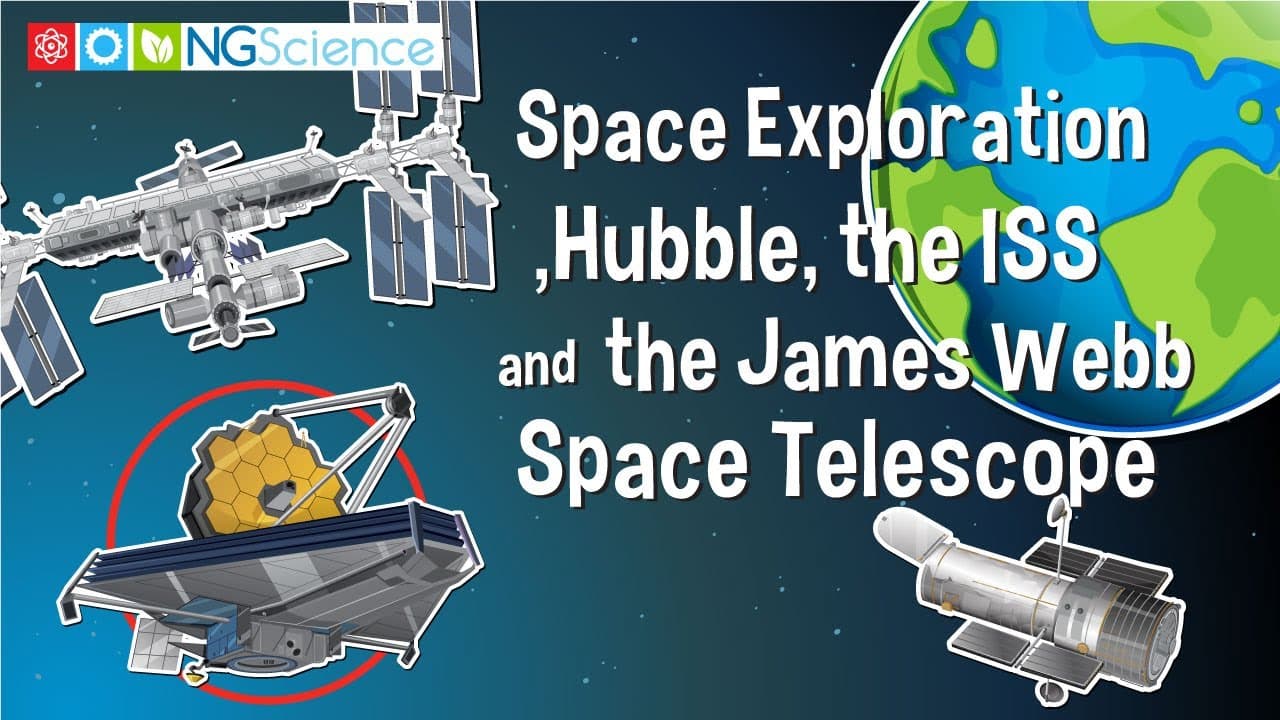
Exploring Space: Hubble, the ISS, and the James Webb Telescope

Exploring Space: Hubble, the ISS, and the James Webb Telescope

This educational video provides a concise yet comprehensive overview of humanity's presence in the solar system, moving from a broad look at our planetary neighborhood to specific human-made instruments orbiting in space. It begins by establishing the scale of the solar system, identifying the sun, planets, moons, and asteroids, before zooming in on Earth. The narrative then expands outward, introducing three critical pieces of space technology: the Hubble Space Telescope, the International Space Station (ISS), and the James Webb Space Telescope (JWST). A key focus of the video is illustrating the relative distances of these objects from Earth. Using clear animations and on-screen metrics (in both kilometers and miles), it visually demonstrates the vast difference between the Low Earth Orbit of the Hubble and ISS compared to the distant orbit of the Moon and the even more distant vantage point of the James Webb Telescope. This visual comparison helps students grasp the concept of space scale and orbital mechanics in an accessible way. For educators, this resource serves as an excellent bridge between lessons on the solar system and units on space exploration technology. It introduces complex concepts like the L2 Lagrange point and orbital distances with simple visuals, making it a valuable tool for discussing how astronomers study the universe. The video highlights themes of engineering marvels and international cooperation, providing multiple entry points for classroom discussion.

Next Generation ScienceNext Generation Science

1min 58s

How Wind Turbines Generate Clean Energy

How Wind Turbines Generate Clean Energy

This educational video provides a clear and concise overview of wind energy, explaining how wind turbines function to generate electricity. It begins by establishing the importance of electricity in modern life before diving into the mechanics of energy conversion—specifically how kinetic energy from wind is transformed into electrical power through generators. The video utilizes clear diagrams to illustrate the internal components of a wind turbine, making complex engineering concepts accessible to students. Beyond just the mechanics, the video explores the broader implications of wind energy. It introduces the concept of "wind farms" and how they can power entire cities. Crucially, it discusses the environmental benefits of wind power as a clean, renewable resource that doesn't produce emissions. This sets the stage for discussions about sustainable living and alternative energy sources. The video concludes by presenting a balanced view, addressing the disadvantages of wind turbines, including their potential impact on wildlife like birds and bats, noise pollution, and high maintenance costs. This balanced perspective is excellent for critical thinking exercises, allowing students to weigh the pros and cons of renewable energy technologies and understand that engineering solutions often involve trade-offs.

Next Generation ScienceNext Generation Science

1min 45s

How Levers Work and Their Three Classes

How Levers Work and Their Three Classes

This educational video provides a clear and structured explanation of levers as simple machines. It begins by defining the basic components of a lever—the rigid bar and the fulcrum—and explains the trade-off between the effort force applied and the distance traveled. The narration simplifies the physics of mechanical advantage, showing how moving the fulcrum or the point of effort changes the force required to move a load.

Next Generation ScienceNext Generation Science

1min 57s

How Simple Machines Create Mechanical Advantage

How Simple Machines Create Mechanical Advantage

This video provides an engaging and clear introduction to the physics of simple and compound machines, focusing on the concept of mechanical advantage. The lesson begins by contrasting a human jump with the height achievable on a swing, using this analogy to explain how simple machines allow us to "smear out" effort over a longer distance to achieve a greater result with less immediate force. The narrator systematically breaks down the six classic simple machines: the inclined plane, pulley, wheel and axle, lever, wedge, and screw.

Miacademy & MiaPrep Learning ChannelMiacademy & MiaPrep Learning Channel

8mins 45s

How Gears Work: Direction, Force, and Speed

How Gears Work: Direction, Force, and Speed

This concise educational video provides a clear, foundational overview of gears as simple machines. It defines what gears are—wheels with interlocking teeth—and visually demonstrates their three primary functions: changing the direction of force, multiplying applied force (mechanical advantage), and multiplying speed. The narration is supported by high-quality close-ups of various gear mechanisms in action, ranging from simple plastic models to heavy industrial machinery. The video explores key mechanical concepts including the relationship between gear size and speed/force. It explains how turning a smaller gear to drive a larger one creates more force but less speed, while the reverse increases speed. The content concludes by connecting these abstract physical principles to concrete, everyday objects like bicycles, fishing reels, watches, and can openers, helping students recognize engineering in their daily lives. For educators, this resource serves as an excellent introduction or review for a unit on simple machines, physics, or engineering. Its short runtime makes it a perfect "hook" to start a lesson or a visual anchor to reinforce textbook definitions. The clear visual evidence of counter-rotation and speed differences allows teachers to pause and ask predictive questions, making it a valuable tool for developing observational skills in STEM subjects.

Next Generation ScienceNext Generation Science

1min 8s

Materials

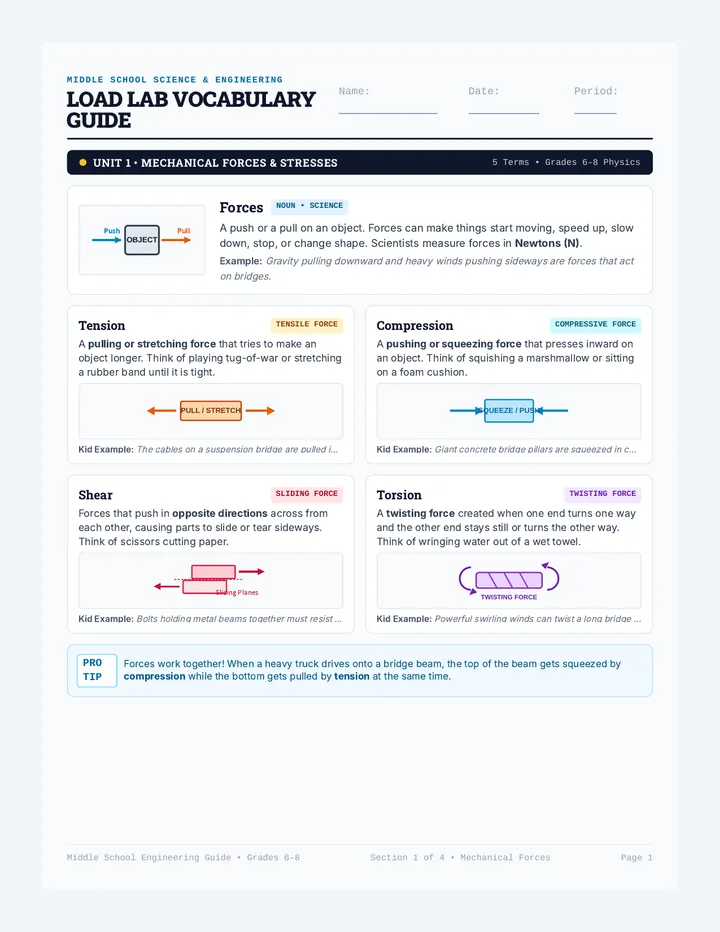
Load Lab Vocabulary Guide

Load Lab Vocabulary Guide

A four-page illustrated vocabulary guide tailored for 6th to 8th graders covering 21 structural engineering and scientific inquiry terms with relatable middle school definitions, real-world examples, and custom vector diagrams.

TC

Theresa Crafts

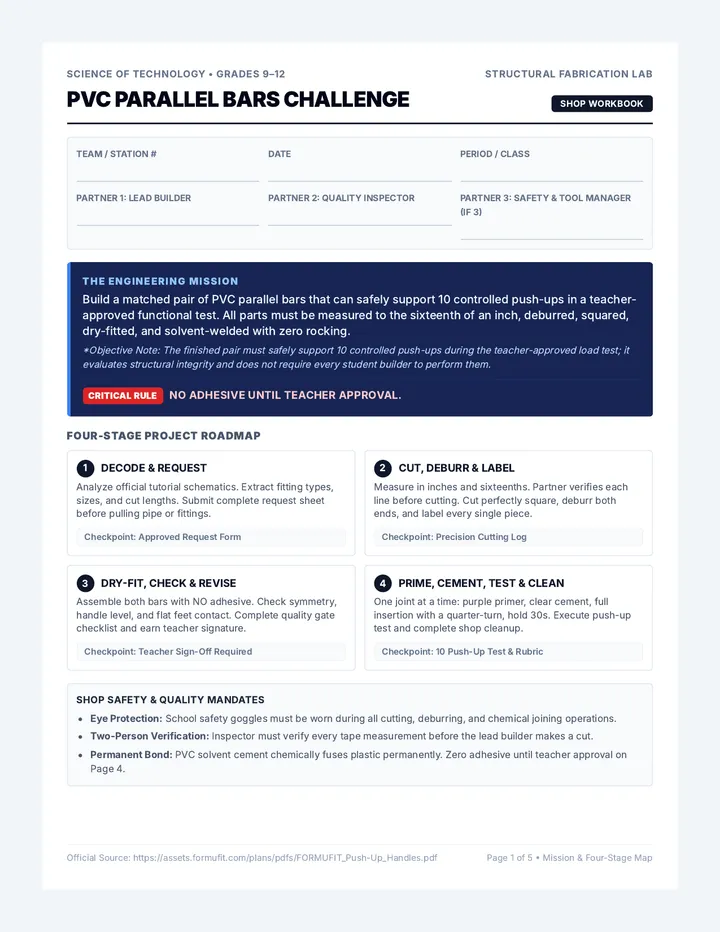
PVC Parallel Bars Workbook

PVC Parallel Bars Workbook

A comprehensive 5-page student workbook for the PVC Parallel Bars Challenge in Grade 9-12 Science of Technology. Features tight individual crops of only the original FORMUFIT black line-art silhouettes on Page 2, a 14-piece cutting log on Page 3, official 4-step assembly diagrams on Page 4, and consistent shop deburring terminology throughout.

KI

Koah Ing

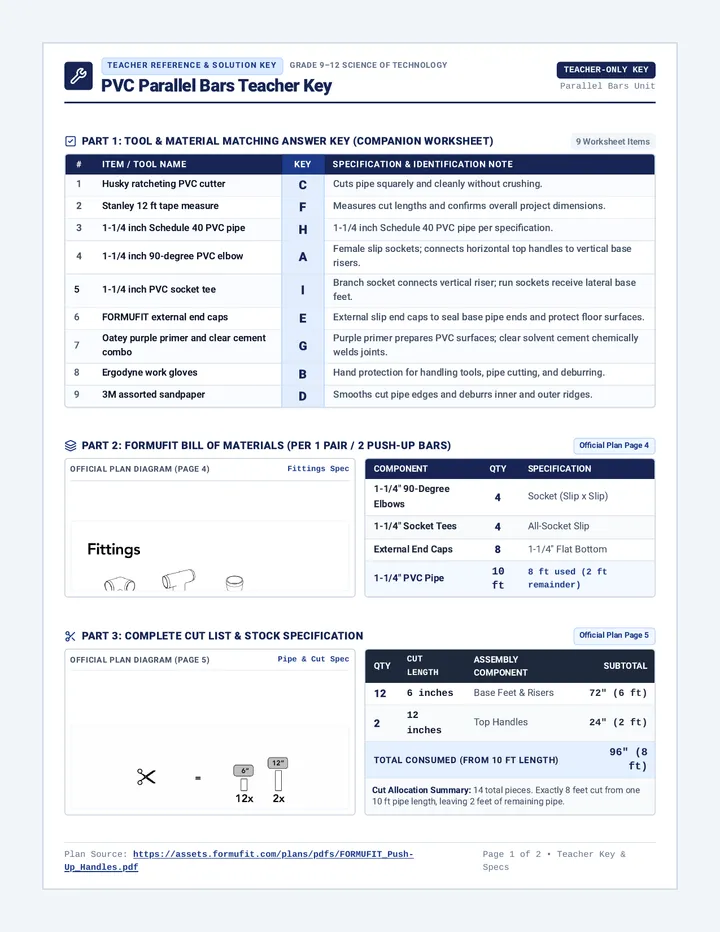
PVC Parallel Bars Teacher Key

PVC Parallel Bars Teacher Key

A two-page teacher key and evaluation guide for Grade 9-12 Science of Technology, featuring tool identification answers, official FORMUFIT diagrams from pages 4 through 9, bill of materials, stock cut list, tolerance scoring matrix, and standardized 100-point rubric with clarified 50-point accuracy conversion.

KI

Koah Ing

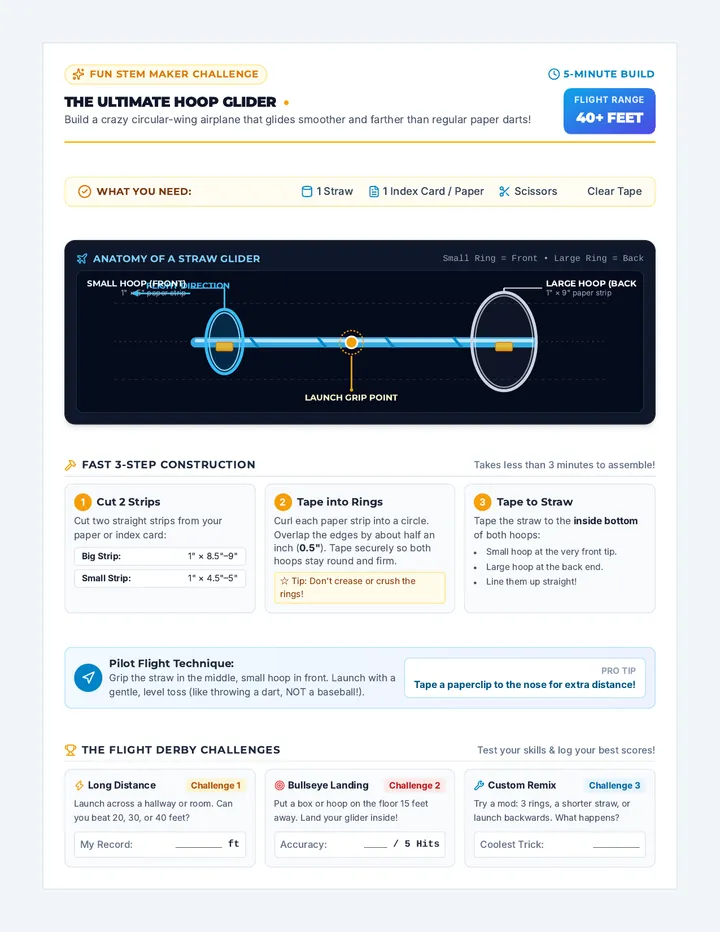
Straw Glider Challenge Guide

Straw Glider Challenge Guide

A fun, visual, single-page maker guide and challenge sheet for building a straw loop glider. Features an illustrated diagram of the glider, rapid 3-step build instructions, pilot flight hacks, and three gamified flight challenges.

AR

Angie Rice

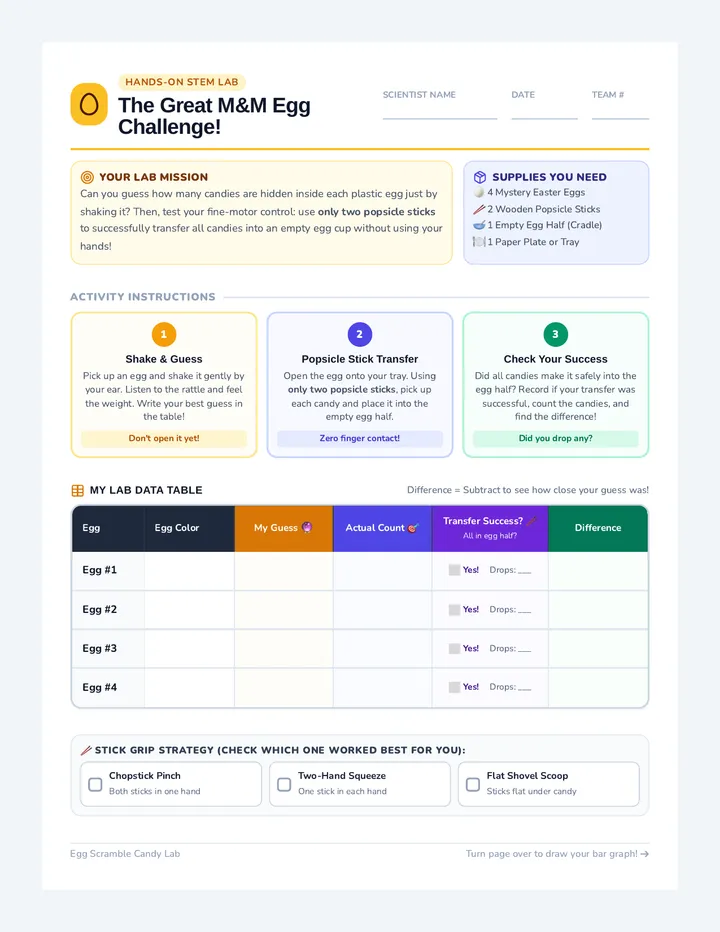
Egg Scramble Lab Sheet

Egg Scramble Lab Sheet

A student-friendly two-page printable lab sheet for elementary and middle schoolers to shake and guess M&M counts in Easter eggs, test transfer success using two popsicle sticks without dropping candies, record data, color a comparative bar graph, and answer reflection questions.

SF

Steven Flint

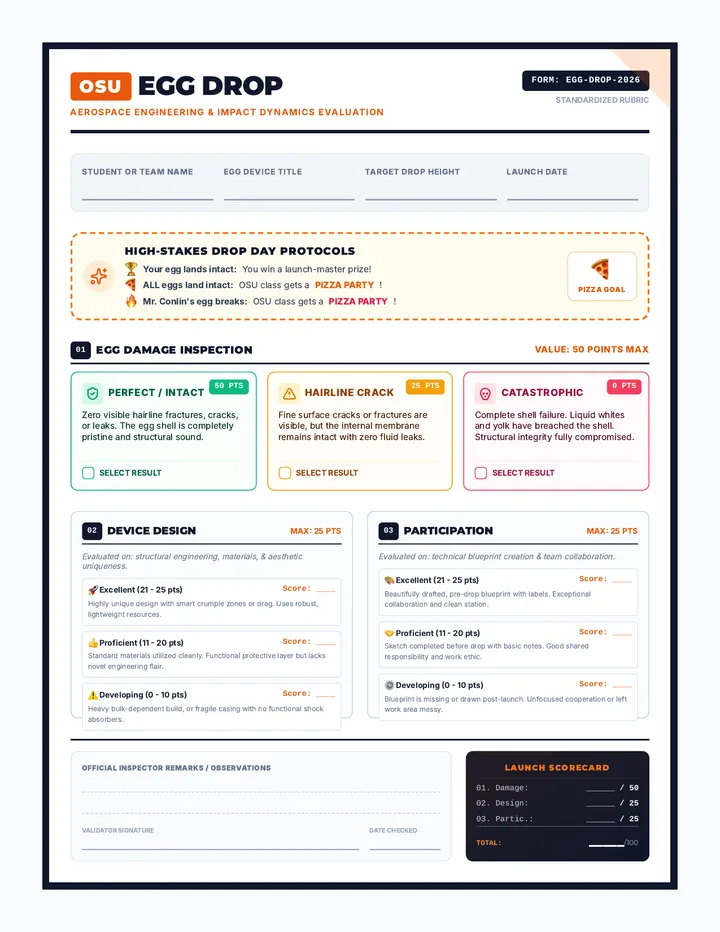
OSU Egg Drop Rubric

OSU Egg Drop Rubric

A single-page printable official scoring sheet and rubric for the 'OSU Egg Drop' competition. Features clear visual icon indicators for egg damage states (Intact, Hairline, Catastrophic) and details the high-stakes prize and pizza party conditions. Includes clean, dedicated grading regions for Design and Participation with an official scoreboard.

AC

Aaron Conlin

Sequences

Planet Profile Slides

Infinite Frontier

A comprehensive Hi-Lo unit for 6th graders exploring the scale of the universe, our place in the Milky Way, the technology used to explore space, and the history of human spaceflight.

JS

Janette Sullivan

54
Naval Architect Challenge Answer Key

Fluid Dynamics

A series of lessons exploring the physics of fluids, including buoyancy, pressure, and fluid flow.

CM

Chuguna Murugesan

28
Wave Racer CER Bellringer

Wave Runners Sequence

A comprehensive physics unit covering the behavior of mechanical and electromagnetic waves. Students transition from hands-on slinky exploration to advanced optical modeling and mathematical derivations.

OM

Olutoyin Makinde

65
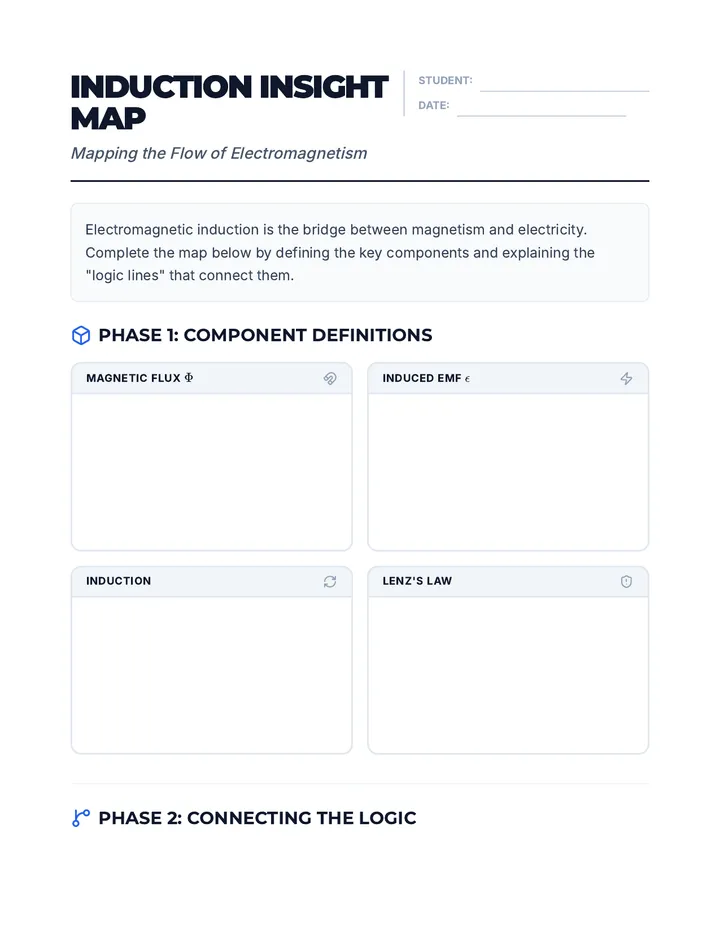
Induction Insight Map Handout

Magnetic Forces Investigation

A 5-day intensive exploration of magnetic forces and fields, focusing on atomic-level causes, field interactions, and mathematical modeling of forces on charged particles. Students progress from anchoring phenomena to complex mathematical applications and a comprehensive unit review.

OM

Olutoyin Makinde

68
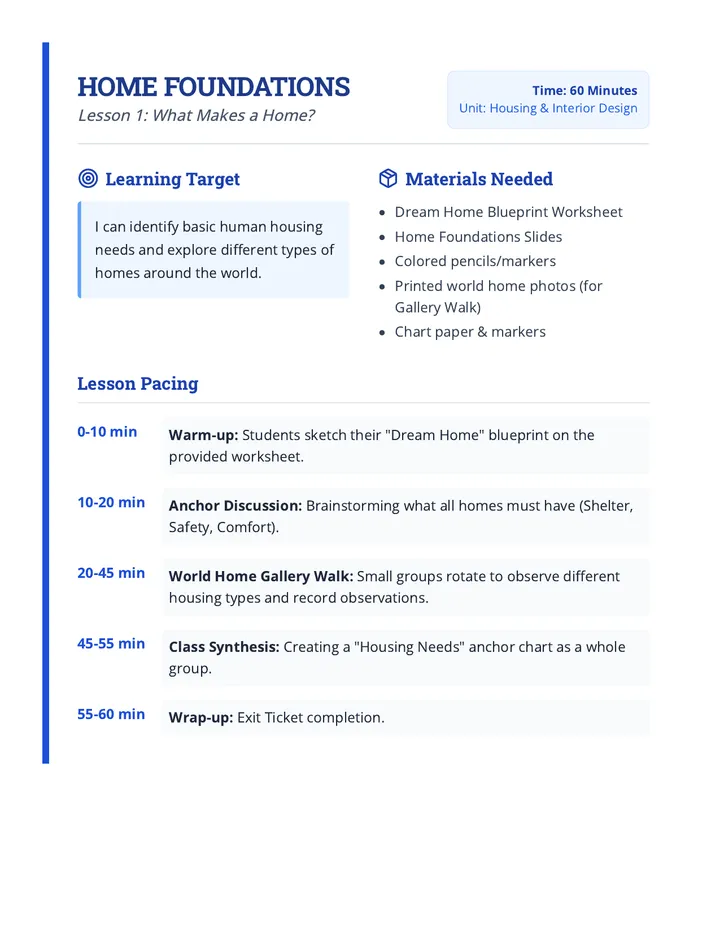
Home Foundations Teacher Guide

Housing and Interior Design

An introductory unit on Housing and Interior Design within the Human Services field. Students explore basic housing needs, sustainable green building, universal design for accessibility, the impact of local resources and climate on home construction, and residential energy efficiency.

JM

Jill Miller

38
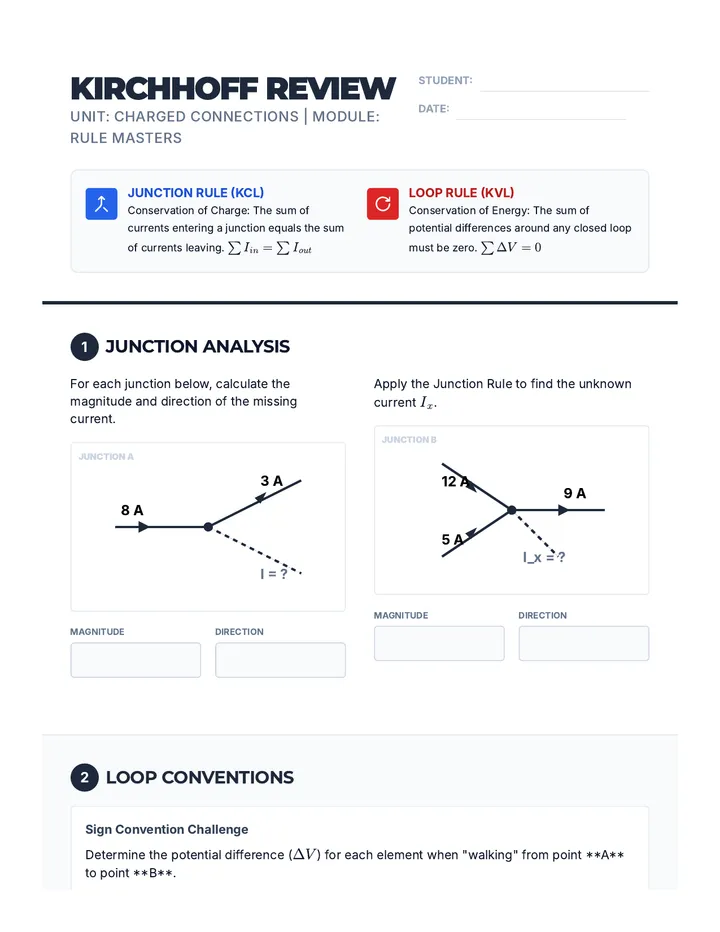
Kirchhoff Review Worksheet

Charged Connections

A modular physics unit focused on the principles of electricity, circuit design, and the mathematical laws governing energy flow in electrical systems.

OM

Olutoyin Makinde

42

Lessons

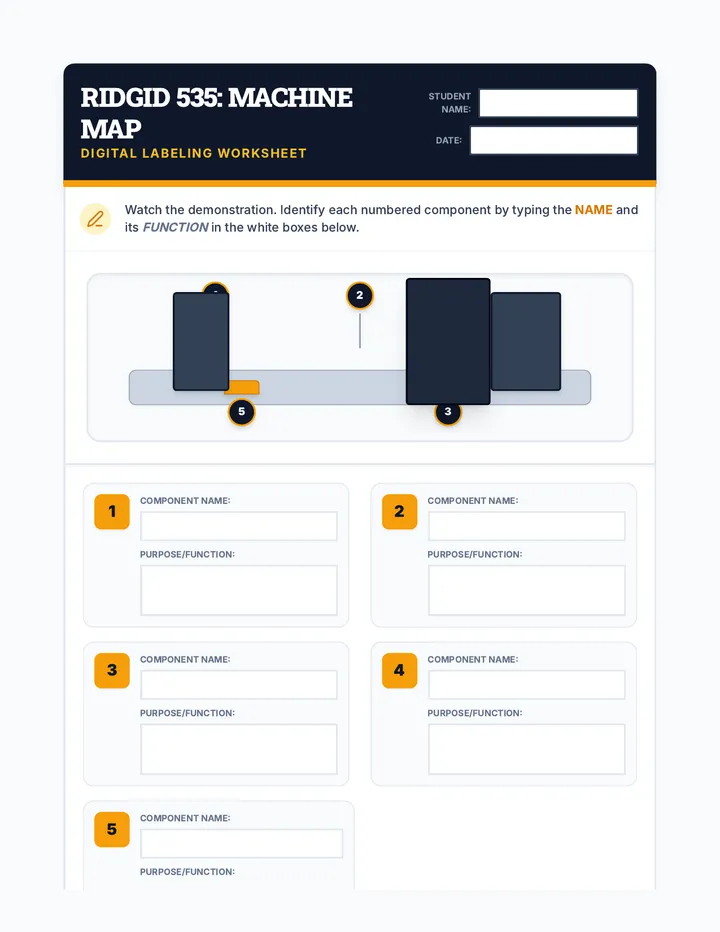
Machine Map Worksheet Digital

Threader Mastery

A 10-minute introductory lesson for 10th-grade students on the safe and basic operation of the Ridgid 535 pipe threader, focusing on safety protocols and component identification.

M

mcapeless

8
Imagineer Lab Reading

Magic Mechanics

In this lesson, students explore the world of theme park engineering by identifying simple machines within famous attractions. They will apply their knowledge through a hands-on design challenge and a vocabulary matching game.

KB

Krista Bodkin

4
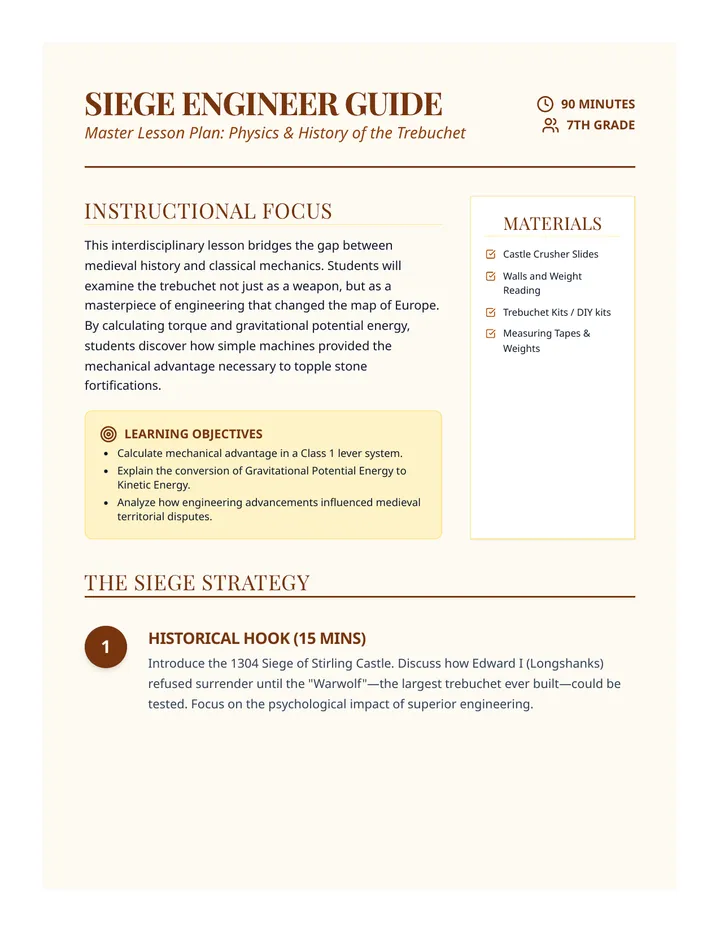
Engineer Manual Teacher Guide

Siege Science

An interdisciplinary exploration of medieval siege engines, combining the physics of levers, torque, and potential energy with the historical impact of engineering on territorial warfare. Students analyze how the trebuchet revolutionized medieval combat through mathematical precision.

JR

Jonathan Reynolds

5
Stress Test Graphing Guide

Stress Test Physics

An introductory lesson exploring the physical properties of structures through a spaghetti bridge lab. Students learn to identify variables, construct graphs, and interpret slopes as physical properties like structural stiffness.

CM

Chuguna Murugesan

6
Gravity Brake Challenge Handout

Rapid Engineering Sprints

A collection of high-energy, 10-minute rapid prototyping engineering sprints for middle school STEM students, featuring mechanical challenges with strict constraints, testing logs, and scoring criteria.

SH

Sarah Hurdle

13
Fleet Forensics Slides

Fleet Forensics

A comprehensive project-based lesson where students inspect, document, and prepare auction-ready reports for automotive program fleet vehicles. Students learn the critical professional difference between objective physical documentation and unverified mechanical diagnosis.

MM

Manuel Morales

5