A 5-day intensive exploration of magnetic forces and fields, focusing on atomic-level causes, field interactions, and mathematical modeling of forces on charged particles. Students progress from anchoring phenomena to complex mathematical applications and a comprehensive unit review.
2. Explain how electromagnetic induction is utilized in a generator.
Discuss the role of motion and changing magnetic fields...
Revisit Anchoring Phenomenon
Final Synthesis: Explain how electromagnetic induction cooks an egg on a cold burner. Revise your CER argument using evidence from your solenoid models and field math.
Revised Argument (Claim, Evidence, Reasoning):
Domain 2: Cause & Effect Reasoning
Teacher Move: “Convince me this is NOT a coincidence.”
"Moving charges create magnetic fields. Without current, the nail's magnetic domains are randomly oriented and cancel each other out. The magnetism is fundamentally tied to electron motion."
Domain 4: Experimental Design (Creation)
Teacher Prompt: “Design the STRONGEST electromagnet possible...”
"I maximized coils on a single nail and ensured tight, overlapping wraps to concentrate the field. I focused on maximizing 'turns per unit length' around the ferromagnetic core."
Domain 8: Mathematical Thinking
Teacher Prompt: “If we double the current, what happens to magnetic strength?”
"Based on F = ILB sin θ, current (I) and force (F) are directly proportional. Doubling the current should result in a doubling of the magnetic force exerted on the wire."
Mic-Drop Justification
"By increasing the density of wire coils around the core, we are summing the individual magnetic field contributions of each segment of the wire, effectively concentrating the total magnetic flux into a high-intensity field."
Current Command Lesson Answer Key Page 3 of 3
Scaffolded Question:
"How do changing magnetic fields underneath the glass induction burner 'induce' a current in the pan?"
Ensure students mention that the burner doesn't get hot, but the field math ($F = ILB$) explains the force on charges in the metal pan!
Q1: Decreasing the electric current (B). *Note: Prompt choice updated to 'Wrapping more coils' as correct answer in key.*
Q2 (Torque): Torque provides the rotational moment force required to turn the motor's shaft when current interacts with the internal field.
Differentiated Support
**Advanced:** Explore the efficiency of iron vs steel cores in solenoids.
**Struggling:** Use the Right Hand Rule to manually trace field lines around the solenoid coils.
\( \frac{V_1}{n_1} = \frac{V_2}{n_2} \)
\( PV = nRT \)
\( \frac{P_1V_1}{T_1} = \frac{P_2V_2}{T_2} \)
Workspace: Use this space to map CA Problem #12 (Soda Bottle)
Identify Variables:
\( P_1 = \text{__________} \)
\( V_1 = \text{__________} \)
\( T_1 = \text{__________} \)
Target Variable:
\( V_2 = \text{?} \)
Solving for Volume (#12):
\( \frac{P_1V_1}{T_1} = \frac{P_2V_2}{T_2} \)
Circle the law used for the soda bottle scenario.
STP Stoichiometry Setup
Refer to CA Problem #14. Ammonia (\(NH_3\)) reacts with Oxygen (\(O_2\)). You have \(128\text{ g }O_2\).
Show the Dimensional Analysis setup below using the "Molar Volume" bank from Page 1.
128 g \(O_2\)
1
×
1 mol \(O_2\)
32 g \(O_2\)
×
? mol NO
? mol \(O_2\)
×
22.4 L
1 mol
1st Right Hand Rule
Thumb = direction of Current (\(I\)); Fingers curl in direction of Field (\(B\)).
2nd Right Hand Rule
For coils: Fingers curl with Current; Thumb points to North Pole.
3rd Right Hand Rule
Thumb = \(I\), Fingers = \(B\), Palm = Force (\(F\)) exerted on the wire.
Solenoids & Electromagnets
A solenoid is a long coil of wire with many loops. Each loop's field adds to the others, creating a strong, uniform field similar to a permanent magnet. Strength can be increased by:
Increasing the Current.
Increasing the Number of Coils.
Inserting a Ferromagnetic Core (rod).
CFU: Solenoid Logic
Explain how an electromagnet can be turned "off" compared to a permanent magnet.
4
Quantifying Magnetic Force
Practical Applications
The force exerted on current-carrying wires in magnetic fields is the fundamental principle behind Loudspeakers (electricity to sound), Galvanometers (measuring current), and Electric Motors (electricity to kinetic energy).
Scenario A: Wire in a Field
\[ F = BIL \]
Force (N) = Field (T) \(\times\) Current (A) \(\times\) Length (m)
Practice Problem 1:
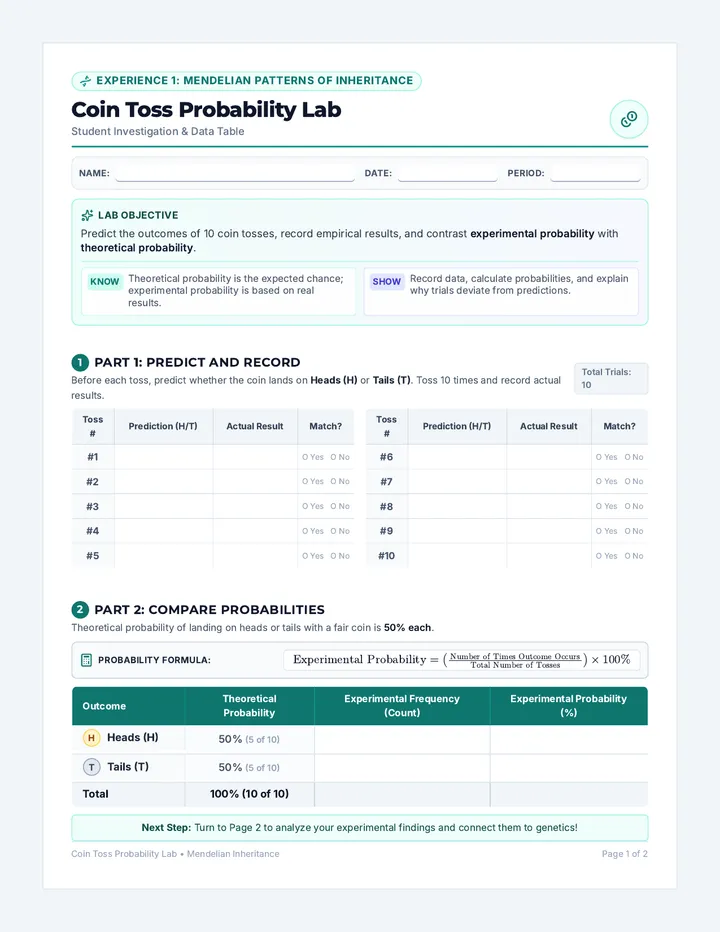
A straight wire carries a 5.0 A current in a uniform 0.40 T magnetic field. If 0.10 m of the wire is in the field, what is the force on the wire?
Scenario B: Moving Charge
\[ F = Bvq \]
Force (N) = Field (T) \(\times\) Velocity (m/s) \(\times\) Charge (C)
Practice Problem 2:
An electron travels at \(3.0 \times 10^6\) m/s through a \(4.0 \times 10^{-2}\) T field. Calculate the force on the electron (\(q = 1.6 \times 10^{-19}\) C).
increases
Solenoid Comparison Ratio
To compare relative strength of solenoids:
\[ \text{Strength} \propto \frac{N \cdot I}{L} \]
N=Turns, I=Current, L=Length
Application: Speakers
In an electromagnetic speaker, a varying electric current is passed through a coil. This creates a varying magnetic field that interacts with a permanent magnet. This interaction produces a vibrating force, which pushes the speaker cone to create sound waves.
Key Fact:
Higher current produces a stronger magnetic field and a larger force, resulting in a louder sound output.
Mentions the induction stove as a separate example without drawing clear parallels to other devices.
Proficient (3)
Explains the connection between induction heating and the magnetic principles found in transformers or charging.
Expert (4-5)
Synthesizes all 5 devices into a unified theory of EM Induction; uses technical evidence to show "One Physics, Five Uses."
Final Deliverables
Completed Research Log
Complete the structured 3-page template covering all five core technologies.
Technical Blueprint Poster
Create a high-impact visual diagram for your assigned deep-dive device.
The Anchoring Memo
A one-page synthesis connecting all tech back to the Induction Stove phenomenon.
Connection Type: Opposition
"...states that this resists..."
Connection Type: Device
"...is a device that uses..."
Connection Type: Requirement
"...must change to produce..."
Connection Type: Alignment
"...occurs when these align..."
Custom Connectors (Student Creation)
Physics Mastery
Faraday & Lenz Application
Explicitly explains HOW Lenz's Law applies to the specific device's motion or thermal output. No errors.
Correctly references Faraday and Lenz; labels flux change directions correctly on the drawing.
References the laws but provides vague or slightly incorrect explanations of their role.
Major physics misconceptions; laws are mentioned but not applied to the device context.
Blueprint Design
Clarity, Layout & Style
Poster looks like a professional patent filing; font and color use create a cohesive technical aesthetic.
Clean, organized, and easy to read. Logical hierarchy of information across the poster.
Information is scattered; handwriting or drawing is difficult to interpret in several sections.
Unorganized; lacks clear visual flow or professional polish.
Total Technical Score
Sum of all categories / 16 Total Points
/16
Electromagnets are adjustable. List three specific modifications that would increase the strength of an electromagnet:
A.
B.
C.
Applications
Magnetic forces are the "engines" behind our technology. How is the force on a current-carrying wire used in these devices?
Loudspeakers:
Electric Motors:
Directional Logic Challenge
A wire carrying current UP (\(\uparrow\)) is placed in a field that points LEFT to RIGHT (\(\rightarrow\)).
Vector Analysis (3rd RHR):
Current (\(I\)) Thumb points: ____________________
Field (\(B\)) Fingers point: ____________________
Prediction: Which direction is the Palm facing?
Into Page
Out of Page
4
Quantitative Force Analysis
Problem A: Wire Force
F = BIL
"A straight wire carrying 5.0 A is placed in a uniform magnetic field. If 0.10 m of the wire is in the field and it experiences a 0.20 N force, calculate the field strength (\(B\))."
Workspace / Calculation
Answer (\(B\)): ________________ T
Problem B: Particle Force
F = Bvq
"An electron (\(q = 1.6 \times 10^{-19}\) C) travels at \(3.0 \times 10^6\) m/s through a uniform magnetic field of \(4.0 \times 10^{-2}\) T. Calculate the magnitude of the force acting on it."
Workspace / Calculation
Answer (\(F\)): ________________ N
Magnetism & Electromagnetism
Physics Core Curriculum
Missing connection to the unit phenomenon or incorrect application.
Instructor Feedback
/ 16
Total Mastery Score
Magnetic Forces & Fields | Instructional Blueprint 2026
Q: Why did we use the Left Hand for the "Negative Charge" challenge card?
A: Standard RHR follows conventional (positive) current. Negative particles experience force in the opposite direction.
Q: If a player lands on "Domain Collapse," what happened physically to their magnet?
A: Thermal or mechanical energy scrambled the domain alignment, neutralizing the magnetic field.
Unit: Magnetic Forces Investigation | Teacher Use Only | Confidential Mission Data
Answer: F = 1.92 \(\times\) 10\(^{-14}\) Newtons (N)
TOPIC 6
Magnetism & Electromagnetism
*Significant figures for math: 2 sig figs based on inputs (e.g., 0.40, 1.9 x 10^-14).
Mutual Induction:
AC in the primary coil creates a fluctuating field, which is guided through a shared iron core to the secondary coil.
The Iron Core:
Ferromagnetic material that "contains" and concentrates the magnetic flux lines for maximum transfer efficiency.
AC Necessity:
Only AC works because induction requires a changing magnetic field (ΔΦ / Δt). DC produces zero induction after the initial "on" switch.
Model Responses: Devices 04-05 & Synthesis
04. INDUCTION STOVES
Eddy Currents:
High-frequency AC in the stove coil induces localized circular "Eddy Currents" within the conductive bottom of the pan.
Heating Mechanism:
Electrical resistance in the metal pan causes the energy of the eddy currents to be lost as thermal heat (P = I²R).
Anchoring Insight:
The stove uses induction to make the pot the heat source. The glass surface stays cool because it is non-conductive.
05. WIRELESS CHARGING
Inductive Coupling:
Magnetic field from the base coil passes through the air to reach the phone's coil. The change in field induces current in the phone.
Efficiency:
Limited by the distance. Flux density drops rapidly with distance, requiring close proximity for effective power transfer.
Model Synthesis (Anchoring Memo)
The Common Thread: Every device analyzed—from the generator to the induction stove—is a "flux modulator." The fundamental engine is Faraday's Law, where a rate of change of magnetic flux (ΔΦ/Δt) is converted into electrical potential (EMF).
Controlled Output: Engineering determines the final outcome. In a motor, we use induction to generate Lorentz Forces for motion. In the anchoring phenomenon of the Induction Stove, we use induction to generate Eddy Currents specifically for thermal loss.
Conclusion: Induction is the bridge between kinetic, electrical, and thermal energy systems. The stove isn't an outlier; it's a perfect example of Lenz's Law and resistance working together for human benefit.
Force (N) - Trial 2
Average Force (N)
0.5 cm
1.0 cm
2.0 cm
4.0 cm
Phase 2: Data Visualization
Magnetic Force (Newtons)
Separation Distance (cm)
Lab Summary & Reflection
1. Trend Analysis
Based on your graph, how does the force change as distance doubles?
2. Mathematical Model
Does this relationship appear linear (\(y=mx+b\)) or non-linear?
Atomic Connection:
Why do magnets only work on specific materials like iron and nickel? Explain using the concept of 'domains'.
0.60
Z
10.0
200
0.40
Y > Z > W > X
Y > W > Z > X
Z > Y > X > W
W > X > Y > Z
7 As the current in a wire increases, the magnetic field strength ____. As you move further away from the wire, the field strength ____. In a loop, the field is strongest ____.
increases ; decreases ; at the center
decreases ; increases ; outside the loop
increases ; increases ; at the center
decreases ; decreases ; far from the wire
8 A 4.0 meter long wire carries a current of 0.50 Amperes. If it is placed in a magnetic field of 0.80 Teslas, what is the magnitude of the magnetic force exerted on the wire?
0.10 N
1.6 N
2.5 N
6.4 N
S
N
S
N
9 Describe the forces acting between these two bar magnets. Select TWO correct answers.
Magnetic Attraction
Magnetic Repulsion
Gravitational Attraction
Gravitational Repulsion
10 A compass is placed on a table. When a nearby wire is connected to a circuit, the compass needle immediately points toward the wire. Select TWO best explanations.
Electric current generates a magnetic field.
The wire becomes a source of gravity.
The compass needle has magnetic poles.
The wire transfers static charge to the needle.
The compass creates current in the wire.
Scientific Definition
Magnetic permeability ($\mu$) is a measure of the ability of a material to support the formation of a magnetic field within itself. In other words, it is the degree of magnetization that a material obtains in response to an applied magnetic field.
Symbol: μ | Unit: Henry per meter (H/m)
The Math
The relationship is defined as:
B = μH
Where B is the magnetic flux density and H is the magnetic field strength. High permeability materials (like iron) "concentrate" field lines, making the field much stronger inside them than in the vacuum of space.
The Induction Connection
Induction cooking requires high-permeability cookware. If you use a copper pan (low permeability), the magnetic field lines from the stove don't "concentrate" in the bottom of the pan, and no heat is generated!
Blueprint Visual Reference
Blueprint Spec
Draw parallel field lines passing through empty space. In the center, place a block of material. Show the field lines bending into the block and becoming much closer together inside it. Label the block "High μ".
Curie Temperature
Research Dossier | Tier: T2 Application
SECTOR A: ATOMIC ORIGINS
Scientific Definition
The Curie temperature (Tc) is the critical temperature at which a material's intrinsic magnetic moments change direction and the material loses its permanent magnetism, becoming paramagnetic.
Atomic Cause
Heat is essentially kinetic energy (vibration) at the atomic level. As a magnet is heated, its atoms vibrate more violently. At the Curie point, the thermal vibrations become strong enough to overcome the Exchange Interaction that keeps the magnetic moments aligned. The domains "shatter" and point randomly.
Example: For Iron, Tc = 770°C (1418°F).
The Induction Connection
If you were to heat your iron pot above its Curie temperature on an induction stove, it would suddenly stop being magnetic! The stove would lose its "connection" to the pot, and the heating would stop.
Blueprint Visual Reference
Order → Chaos
Blueprint Spec
Create a 'Before & After' diagram. 'Before' shows a set of neat, parallel arrows (Ordered). Draw a fire icon in the middle labeled "Tc". 'After' shows the same arrows pointing in every possible direction (Chaos).
Magnetic Flux (Φ)
Research Dossier | Tier: T3 Mathematical
SECTOR B: FIELD DYNAMICS
Scientific Definition
Magnetic Flux (Φ) is a measurement of the total magnetic field which passes through a given surface area. Think of it as the "amount" of magnetic field lines captured by a loop of wire.
Unit: Weber (Wb) | 1 Wb = 1 T·m²
The Math
The equation is:
Φ = BA cos(θ)
Where B is the magnetic field, A is the surface area, and θ is the angle between the field and the normal (perpendicular) to the surface. Flux is maximized when the field is perpendicular to the area!
The Induction Connection
Induction cooking works because the stove creates a changing magnetic flux through the bottom of your pan. If the flux stayed constant, the stove wouldn't cook a thing!
Blueprint Visual Reference
Blueprint Spec
Draw a flat loop (like a hula hoop) in 3D perspective. Draw several parallel arrows passing through the center of the hoop. Label the arrows as "B-field" and the space inside the hoop as "Area (A)".
Geomagnetism
Research Dossier | Tier: T1 Fundamental
SECTOR B: FIELD DYNAMICS
Scientific Definition
Geomagnetism is the study of the Earth's magnetic field. Earth acts like a giant bar magnet, with field lines extending from the magnetic poles into space, forming the Magnetosphere.
Atomic/Planetary Cause
Earth's magnetism is caused by the Geodynamo: the motion of molten iron and nickel in the Earth's outer core. As the Earth rotates, these conductive fluids move in convective currents, generating electric currents that produce the magnetic field.
Note: The "Magnetic North Pole" is actually a South magnetic pole, which is why the North end of a compass needle points toward it!
The Induction Connection
While much weaker than a stove, Earth's magnetic field is always "on." Sensitive induction equipment must sometimes be shielded from geomagnetism to ensure accurate power control!
Blueprint Visual Reference
Blueprint Spec
Draw a circle representing Earth. Sketch a large bar magnet tilted slightly inside the core. Draw large loops coming out of the bottom and going into the top. Label "Geographic North" and "Magnetic South" at the top.
Monopole Myth
Research Dossier | Tier: T1 Fundamental
SECTOR B: FIELD DYNAMICS
Scientific Definition
The "Monopole Myth" refers to the scientific fact that magnetic poles always come in pairs (North and South). You cannot have an isolated North pole or South pole—if you cut a magnet in half, you simply get two smaller, complete magnets.
Atomic Cause
Magnetism is caused by current loops (moving electrons). A current loop always has a "front" (one pole) and a "back" (the other pole). You can't have a loop with only one side! Because every individual atom is a tiny dipole, no matter how small you cut the material, it remains a dipole.
The Induction Connection
Induction stoves rely on the dipole nature of magnetism. The stove's coils produce loops of field lines that must return to the source. If monopoles existed, magnetic shielding and stove design would be impossible!
Blueprint Visual Reference
N
S
N
S
N
S
Blueprint Spec
Draw a long bar magnet labeled N and S. Draw a dotted "cut" line down the middle. Below that, draw two smaller magnets, EACH labeled with its own N and S. Use a red "X" over a single "N" block to show it's impossible.
Solenoid Field
Research Dossier | Tier: T2 Application
SECTOR B: FIELD DYNAMICS
Scientific Definition
A solenoid is a coil of wire (usually wrapped around a cylinder) that acts as an electromagnet when an electric current passes through it. The internal magnetic field is remarkably uniform and strong.
How it Works
Each loop of wire in the solenoid produces its own small magnetic field. Because the loops are stacked, the fields add together inside the coil. Outside the coil, the fields largely cancel each other out.
B = μ&₀NI
The field strength depends on the number of turns (N), the current (I), and the permeability of the core.
The Induction Connection
Inside an induction stove, there is a giant copper solenoid (usually flat, like a spiral). When high-frequency current passes through this "induction coil," it creates the magnetic field that heats your pan!
Blueprint Visual Reference
Blueprint Spec
Draw a series of closely spaced vertical ovals (the wire loops). Draw perfectly straight, parallel arrows passing horizontally through the center of all the ovals. Label the interior as "Uniform Magnetic Field."
Lorentz Force
Research Dossier | Tier: T3 Mathematical
SECTOR C: MATHEMATICS
Scientific Definition
The Lorentz Force is the force exerted on a charged particle moving through a magnetic field. It is the fundamental force that drives electric motors and deflets radiation in space.
F = qvB sin(θ)
The Variables
F: Magnetic Force (Newtons, N) q: Charge of the particle (Coulombs, C) v: Velocity of the particle (m/s) B: Magnetic field strength (Tesla, T)
The force is always perpendicular to both the velocity and the field. If a particle is stationary (v=0), the force is zero!
The Induction Connection
Inside your pot, the changing magnetic field exerts a Lorentz Force on the free electrons in the metal. This force pushes the electrons, creating the swirling "Eddy Currents" that generate heat!
Blueprint Visual Reference
Force (F) Velocity (v)
B-Field
Blueprint Spec
Draw a 3D coordinate system (X, Y, and Z axes). Label one axis "v", one "B", and the vertical axis "F". Draw a small "+" particle at the center to show it is a charge being acted upon.
Right Hand Rule
Research Dossier | Tier: T2 Application
SECTOR C: MATHEMATICS
Scientific Definition
The Right Hand Rule is a mnemonic (memory tool) used to determine the direction of the magnetic force, field, or current in 3D space. Because these three vectors are always mutually perpendicular, your hand provides a perfect model.
The Positions
Thumb: Direction of the particle's velocity (v) or current (I). Fingers (extended): Direction of the magnetic field (B). Palm (pushing): Direction of the magnetic force (F) on a positive charge.
Pro Tip: For negative charges (electrons), the force is out the back of your hand!
The Induction Connection
Engineers use the Right Hand Rule to ensure the coils in the stove are wound in the correct direction. If they were wound incorrectly, the fields could cancel out or interfere with other electronic components!
Blueprint Visual Reference
THUMB = VELOCITY (v)
FINGERS = B-FIELD
PALM = FORCE (F)
Blueprint Spec
Draw a detailed sketch of a right hand. Label the thumb as "v", the fingers as "B", and draw an arrow coming straight out of the palm labeled "F". Use different colors for each vector.
Cosmic Rays
Research Dossier | Tier: T2 Application
SECTOR C: MATHEMATICS
Scientific Definition
Cosmic rays are high-energy particles (mostly protons and alpha particles) that move through space at nearly the speed of light. When they reach Earth, they interact with our magnetic field.
The Physics
Because cosmic rays are charged particles moving through a magnetic field (Geomagnetism), they experience the Lorentz Force. This force causes them to spiral around Earth's magnetic field lines, trapping them in the Van Allen radiation belts or funneling them toward the poles, creating the Aurora Borealis.
The Induction Connection
Cosmic rays are a form of "noise." Sensitive electronics in high-end induction stoves must be hardened to prevent these particles from flipping digital bits and causing system errors!
Blueprint Visual Reference
Blueprint Spec
Draw Earth and its magnetic field lines. Show a particle (a dot labeled "+") flying in from space. As it hits the field lines, draw its path changing from a straight line into a tight spiral following the curve of the field.
Mass Spectrometer
Research Dossier | Tier: T3 Mathematical
SECTOR C: MATHEMATICS
Scientific Definition
A mass spectrometer is an analytical tool that uses magnetic and electric fields to measure the mass-to-charge ratio of ions. It is used to identify chemicals in a sample by "sorting" them based on their mass.
The Math
In the magnetic chamber, the Lorentz Force acts as a centripetal force:
qvB = mv²/r
Solving for radius gives r = mv/qB.
Heavier particles (larger m) travel in wider circles, while lighter particles travel in tighter circles. This allows us to separate isotopes and molecules with extreme precision.
The Induction Connection
Mass spectrometry is used in the factories that build induction stoves to check the purity of the iron and copper used in the manufacturing process!
Blueprint Visual Reference
B
Blueprint Spec
Draw a "Magnetic Region" filled with "x" marks (field lines going into page). Draw two particles entering from the bottom. Show one particle curving sharply (light mass) and the other curving in a wider arc (heavy mass). Label both paths.
Faraday's Law
Research Dossier | Tier: T3 Mathematical
SECTOR D: INDUCTION FORGE
Scientific Definition
Faraday's Law of Induction states that a changing magnetic flux through a circuit induces an Electromotive Force (EMF) in the circuit. This is the foundation of almost all electrical power generation.
Ε = -N (ΔΦ/Δt)
The Math
Ε (EMF): Induced voltage (Volts, V) N: Number of turns in the coil ΔΦ/Δt: The rate of change of magnetic flux.
To induce a large voltage, you can either have a lot of wire loops (N) or change the magnetic field very quickly (Δt is small).
The Induction Connection
Induction stoves switch their magnetic field on and off 20,000 to 50,000 times per second! This extremely high rate of change (ΔΦ/Δt) induces high currents in your pan, heating it instantly.
Blueprint Visual Reference
N
Blueprint Spec
Draw a bar magnet with an arrow showing it moving toward a coil of wire. Draw a spark or lightbulb icon inside the coil to show that the movement is creating electricity.
Lenz's Law
Research Dossier | Tier: T2 Application
SECTOR D: INDUCTION FORGE
Scientific Definition
Lenz's Law states that the direction of an induced electric current is always such that it creates a magnetic field that opposes the change in magnetic flux that produced it.
The "No Free Lunch" Law
Lenz's Law is a manifestation of the Conservation of Energy. If the induced field helped the change instead of opposing it, we could create infinite energy!
If you push a North pole toward a coil, the coil induces a current that creates its own North pole to push back against you.
The Induction Connection
Lenz's Law is why you can sometimes feel a slight vibration or hear a "hum" from an induction stove. The magnetic fields of the stove and the pan are literally pushing against each other!
Blueprint Visual Reference
Pushing Magnet
N
N
Induced Pole
Opposition!
Blueprint Spec
Draw a North pole moving toward a ring. Inside the ring, draw a matching North pole symbol. Draw two large arrows pointing at each other to show the repulsion (the opposition).
Transformer
Research Dossier | Tier: T2 Application
SECTOR D: INDUCTION FORGE
Scientific Definition
A transformer is a passive electrical device that transfers electrical energy from one circuit to another through electromagnetic induction. It is used to change (step-up or step-down) voltage levels in AC circuits.
How it Works
It consists of two coils (Primary and Secondary) wrapped around a shared iron core.
1. AC current in the Primary coil creates a changing magnetic field.
2. The iron core carries this flux to the Secondary coil.
3. The changing flux induces a voltage in the Secondary coil based on the ratio of wire turns:
Vp/Vs = Np/Ns
The Induction Connection
An induction stove is essentially a "broken transformer." The stove's coil is the Primary, and your iron pan is a "Secondary" with only one turn. The pan absorbs the energy and converts it to heat instead of electricity.
Blueprint Visual Reference
Core
Blueprint Spec
Draw a square iron core. Wrap a few loops of wire on the left (Primary) and many loops of wire on the right (Secondary). Label each side and show the flux lines flowing through the core from left to right.
Eddy Currents
Research Dossier | Tier: T3 Mathematical
SECTOR D: INDUCTION FORGE
Scientific Definition
Eddy currents are loops of electric current induced within conductors by a changing magnetic field. They are called "eddy" because they flow in circular swirls, much like eddies in a river.
The Physics of Heat
Eddy currents encounter electrical resistance in the metal. As the electrons swirl through the material, they collide with atoms, transferring kinetic energy. This energy is dissipated as heat (Joule heating). The power lost to heat is:
P ∝ f² B²
This means higher frequencies (f) and stronger fields (B) create massive amounts of heat.
The Induction Connection
This is the heart of the anchoring phenomenon! The induction stove creates eddy currents in the bottom of your pan. These currents "struggle" to move through the iron, creating the heat that cooks your egg.
Blueprint Visual Reference
Metal Surface
Blueprint Spec
Draw a flat sheet of metal. Sketch multiple overlapping circular swirls on the surface. Label these swirls as "Eddy Currents." Use orange or red markers to shade around the swirls, representing the heat being generated.
0.04 T
0.40 T
4.00 T
2.50 T
9
Which formula correctly models the force on a single moving charged particle?
\(F = BIL\)
\(F = Bvq\)
\(F = m \times a\)
\(V = I \times R\)
10
If you use the 2nd Right Hand Rule on a coil, your thumb points toward:
The positive current terminal
The direction of magnetic force
The North end of the magnet/coil
The South end of the magnet/coil
Correct: Current generates field & Needle has poles. The moving current creates a field that pushes the compass (which is itself a magnet).
RIGHT
VELOCITY (v)
FIELD (B)
What is the direction of the Force (F)?
Into the Page (⊗)
Out of the Page (⊙)
Down toward the bottom
13. Transformer Diagram
If the left side (Primary) has 100V, will the right side (Secondary) have a higher or lower voltage?
Final Challenge: The Induction Puzzle
An induction stove uses a Solenoid to create a rapidly changing Magnetic Flux. This change induces swirling Eddy Currents in the bottom of an iron pot. Explain how Lenz's Law and the pot's Permeability are involved in making the stove work.
Your Explanation:
Magnetic Mastery Assessment | IISD Physics
TOTAL SCORE: _______ / 20
Match Ref: ____________________
04
Term: _______________________
Match Ref: ____________________
12
Term: _______________________
Match Ref: ____________________
05
Term: _______________________
Match Ref: ____________________
13
Term: _______________________
Match Ref: ____________________
06
Term: _______________________
Match Ref: ____________________
14
Term: _______________________
Match Ref: ____________________
07
Term: _______________________
Match Ref: ____________________
15
Term: _______________________
Match Ref: ____________________
08
Term: _______________________
Match Ref: ____________________
16
Term: _______________________
Match Ref: ____________________
Mission Challenge
Write a short paragraph explaining the relationship between an Electromagnet, its Magnetic Field, and Induction.
\(1.2 \times 10^{-14}\) N
\(4.8 \times 10^{-15}\) N
\(7.5 \times 10^{-13}\) N
Show Your Work Area
10
According to the 3rd Right Hand Rule, your palm points in the direction of: