Lenny.com
Explore
Create
ActivitiesNewMathEnglish Language ArtsScience & EngineeringSocial StudiesGlobal LanguagesHealth & Physical EducationSpecial EducationCounseling & Life SkillsArts & CreativityESL
Lenny.com
Lenny.com
Explore
Create
ActivitiesNewMathEnglish Language ArtsScience & EngineeringSocial StudiesGlobal LanguagesHealth & Physical EducationSpecial EducationCounseling & Life SkillsArts & CreativityESL
Lenny.com
Lenny.com

Solutions

Lenny for EducatorsLenny for SchoolsLenny for Districts

Product

ExploreSign inCreateSupportAbout

Resources

Getting startedMTSS Acceleration Program

© 2026 Lenny Learning Inc.

TermsPrivacyAccessibility
LinkedInInstagramX
Lenny

Plate Tectonics

Lithospheric plate movements, seafloor spreading, and the mechanisms driving continental drift. Examines divergent, convergent, and transform boundaries alongside their roles in seismic activity and mountain formation.

Science & EngineeringLife ScienceLiving ThingsAnimalsPlantsBody SystemsTraitsAdaptationsCellsEcosystemsHeredityGenes to TraitsCell DivisionPhysicsComparing MaterialsShapes and PropertiesMagnetsMagnetismLightSoundLight and SoundMatterStates of MatterChanges of StateMixturesPhysical and Chemical ChangeHeating and CoolingHeat and Thermal EnergyEnergyForce and MotionElectrical CircuitsAtoms and MoleculesPeriodic TableMotion in One DimensionMotion in Two DimensionsScalars and VectorsForces and Laws of MotionCircular Motion and GravityMomentum and ImpulseWork, Energy, and PowerWavesElectromagnetic WavesGeometric OpticsElectricity and MagnetismSimple Harmonic MotionThermodynamicsNuclear PhysicsEarth Science & AstronomyWeatherWater CycleRocks and MineralsFossilsEarth's FeaturesEarth's ResourcesEarth's StructureWeather and ClimateEarth EventsFossils and Geologic TimePlate TectonicsHuman ImpactsAstronomyChemistryUnits and MeasurementAtomic StructurePeriodic TrendsChemical BondingNomenclatureMolecular StructureIntermolecular ForcesThe MoleStoichiometryProperties of GasesSolutionsChemical ReactionsBalancing EquationsEnergy ChangesRates of ReactionsEquilibriumAcids and BasesQuantum ModelBiologyClassificationCell StructureThe Chemistry of LifeBiomoleculesCellular TransportCell EnergyCell Growth and DivisionDNAProtein SynthesisMeiosis and Sexual ReproductionPatterns of InheritanceMulticellular OrganismsEvolutionEcologyBiodiversityComputer ScienceAlgorithms and Computational ThinkingProgramming LanguagesComputing SystemsNetworks and InternetData AnalysisCybersecurityAI and Machine LearningSoftware Design and DevelopmentBlockchainEngineering & AIDesigning ExperimentsEngineering PracticesDesign ThinkingEngineering Design ProcessMechanical EngineeringElectrical EngineeringMaterials and StructuresCAD and 3D DesignRoboticsArtificial Intelligence BasicsVibe CodingMachine LearningAI Ethics and SocietySystems ThinkingEntrepreneurship & InnovationEntrepreneurial MindsetBusiness Idea DevelopmentBusiness Plan BasicsMarketing & Customer DiscoveryFinancial Management for Startups

Videos

How Plate Tectonics Shape Our Planet

How Plate Tectonics Shape Our Planet

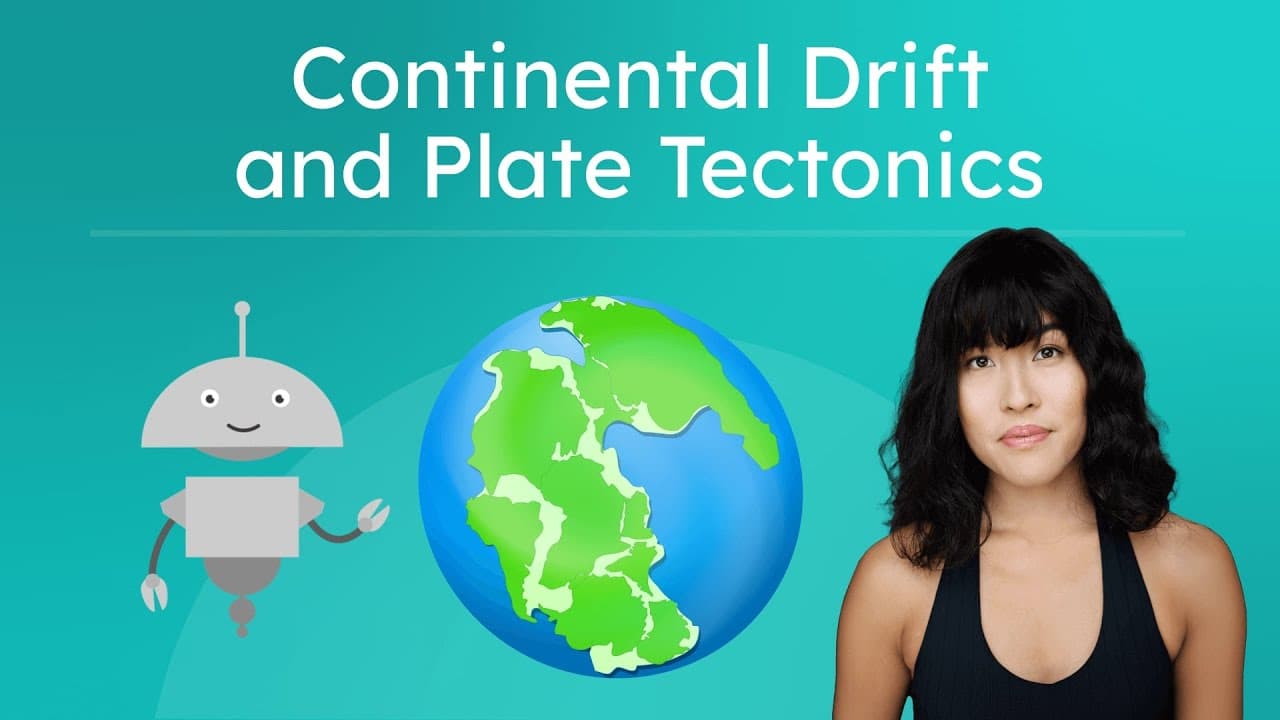
This engaging earth science video explores the fascinating geological history of our planet, specifically focusing on how the Earth's surface has changed over millions of years. It introduces students to the concept of the Earth as a giant puzzle, explaining the connection between the historical theory of Continental Drift and the modern theory of Plate Tectonics. The narrator guides viewers through the scientific journey of Alfred Wegener, whose initial hypothesis about a supercontinent called Pangaea was rejected until fossil and rock evidence later confirmed that continents do indeed move.

Miacademy & MiaPrep Learning ChannelMiacademy & MiaPrep Learning Channel

9mins 36s

Why Mars Has the Solar System's Biggest Volcano

Why Mars Has the Solar System's Biggest Volcano

Join host Jessi and her puppet friend Sam the Bat as they explore the geology of the Red Planet to answer a big question: What is the largest volcano in the solar system? This engaging video introduces students to Olympus Mons on Mars, comparing its massive scale to Earth's volcanoes like Mauna Loa and Mount Everest. Through this comparison, the video simplifies complex geological concepts, specifically focusing on the differences between Earth's active plate tectonics and Mars' stationary crust. The content covers key earth science themes including volcanic formation, the layers of the Earth (crust and mantle), and plate tectonics. It uses clear animations to demonstrate how "hot spots" create chains of islands on Earth due to moving plates, contrasting this with how a stationary crust on Mars allowed a single volcano to grow continuously for millions of years. The video also touches on planetary scale, measurement, and the atmosphere. This resource is highly valuable for elementary science classrooms as it bridges the gap between Earth science and astronomy. It provides a concrete, visual explanation for why planetary landscapes look different, helping students understand that the geological rules they learn about Earth can be tested and compared against other worlds. The friendly banter and clear graphics make abstract concepts like millions of years and tectonic movement accessible and memorable for young learners.

SciShow KidsSciShow Kids

5mins 48s

How the Seafloor Spreads and Recycles Itself

How the Seafloor Spreads and Recycles Itself

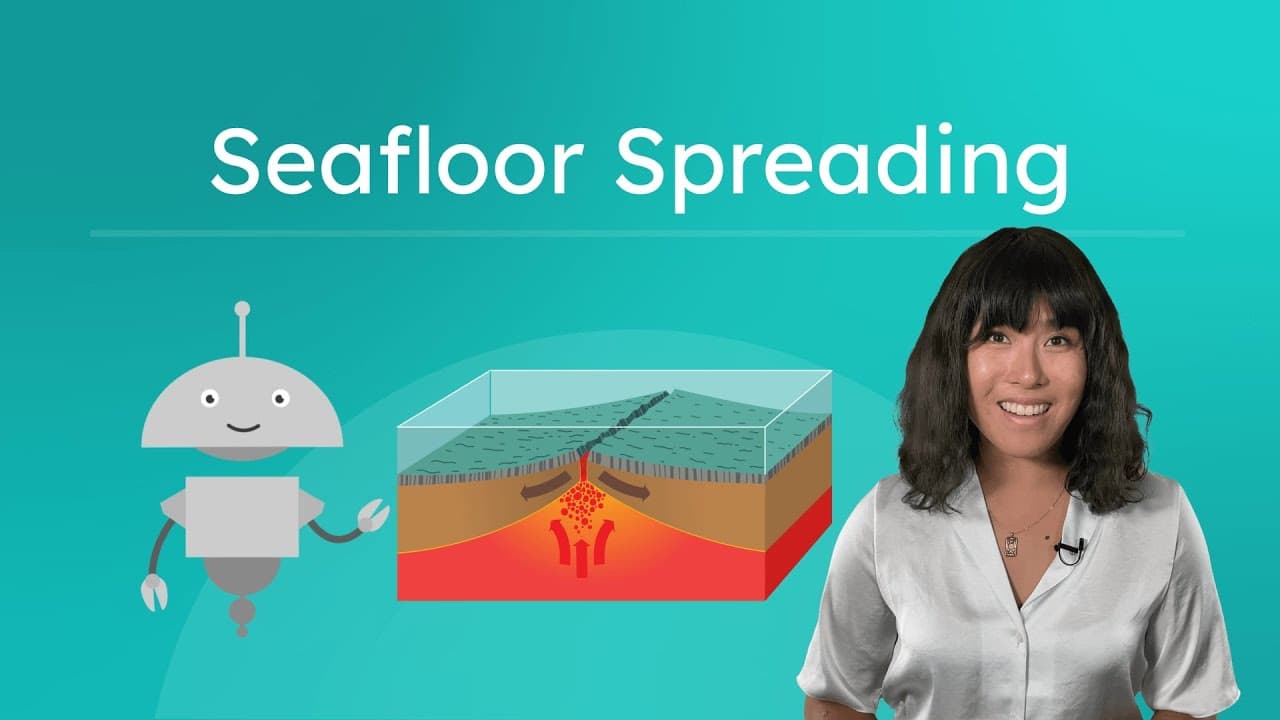
This educational video provides a comprehensive overview of the geological processes occurring beneath the ocean's surface, specifically focusing on plate tectonics, seafloor spreading, and subduction. The presenter explains how Earth's most extreme landscapes, such as the Mariana Trench and mid-ocean ridges, are formed through the movement and interaction of tectonic plates. The video uses clear animations and comparative examples to illustrate how new crust is created at divergent boundaries and destroyed at convergent boundaries.

Miacademy & MiaPrep Learning ChannelMiacademy & MiaPrep Learning Channel

7mins 47s

Exploring Earth's Ocean Zones and Salinity

Exploring Earth's Ocean Zones and Salinity

This comprehensive earth science video takes students on a deep dive into the mysteries and mechanics of Earth's oceans. Starting with the surprising fact that we know more about the surface of Mars than our own ocean floor, the lesson breaks down complex oceanographic concepts into three main sections: the origins of ocean salinity, the five distinct zones of the ocean based on depth and light penetration, and the critical role oceans play in regulating the global climate and providing oxygen.

Miacademy & MiaPrep Learning ChannelMiacademy & MiaPrep Learning Channel

10mins 36s

How Continents Connecting Changed Animal History

How Continents Connecting Changed Animal History

This educational video explores the geological and biological history of the Americas, specifically focusing on the event known as the Great American Interchange. Hosted by Jessi and her robot mouse friend Squeaks, the video explains how the shifting of tectonic plates created the Isthmus of Panama, a land bridge that connected North and South America about 3 million years ago. This connection allowed distinct animal populations from isolated continents to migrate, mix, and adapt in new environments. The video delves into key scientific concepts such as continental drift, extinction, and the study of fossils. It provides detailed profiles of fascinating prehistoric megafauna, including the massive Short-faced Bear, the tank-like Glyptodont, and the Giant Ground Sloth. Through clear animations and comparisons to modern animals, viewers learn how these ancient creatures differed from their living descendants and how scientists use fossil evidence to reconstruct the past. For educators, this resource serves as an engaging bridge between geography and biology. It visualizes abstract concepts like deep time and plate tectonics in a concrete way accessible to elementary students. Teachers can use this video to launch lessons on animal adaptations, the changing Earth, map reading skills, or the difference between extinct and extant species.
SciShow KidsSciShow Kids

7mins 40s

How Heat and Pressure Create Metamorphic Rocks

How Heat and Pressure Create Metamorphic Rocks

Join Savannah and her puppet friend Sam as they explore the fascinating world of metamorphic rocks, using Sam's personal rock collection as a starting point. The video demystifies complex geological processes by comparing rock formation to familiar concepts like cooking and caterpillar metamorphosis. Through clear dialogue and visual examples, the hosts explain how existing rocks—whether sedimentary or igneous—can be completely transformed into new types of rocks through intense heat and pressure deep underground. Key themes include the three main rock types (igneous, sedimentary, metamorphic), the concept of the rock cycle, and the geological forces that drive these changes, such as tectonic plate movement and magma. The video introduces specific scientific vocabulary like "foliation" and "minerals" while showcasing real-world examples of rock transformation, such as limestone turning into marble and granite turning into gneiss. This video is an excellent resource for elementary earth science units. It helps students visualize abstract concepts like geological time and subterranean pressure through accessible animations and physical rock samples. Teachers can use this video to introduce the rock cycle, discuss the properties of matter, or explain how the Earth's surface is constantly changing. The humor and puppet interaction keep engagement high while delivering rigorous scientific content suitable for young learners.

SciShow KidsSciShow Kids

8mins 4s

Materials

Rock Record IEP Assessment

Rock Record IEP Assessment

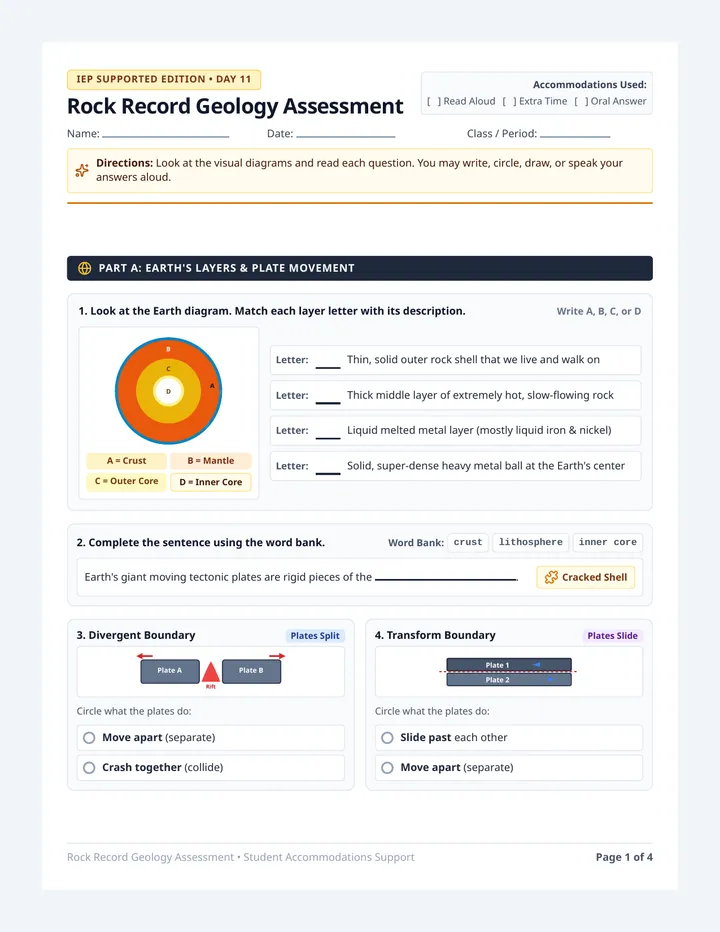
Enhanced 4-page IEP-adapted geology assessment featuring rich visual diagrams: Earth layer cross-sections, tectonic plate boundary arrows, subduction trench illustrations, 3-rock-type formation graphics, rock cycle flow paths, textured strata cross-sections, and earthquake safety icons.

CS

Courtney Scherer

Tsunami Surge Doodle Notes

Tsunami Surge Doodle Notes

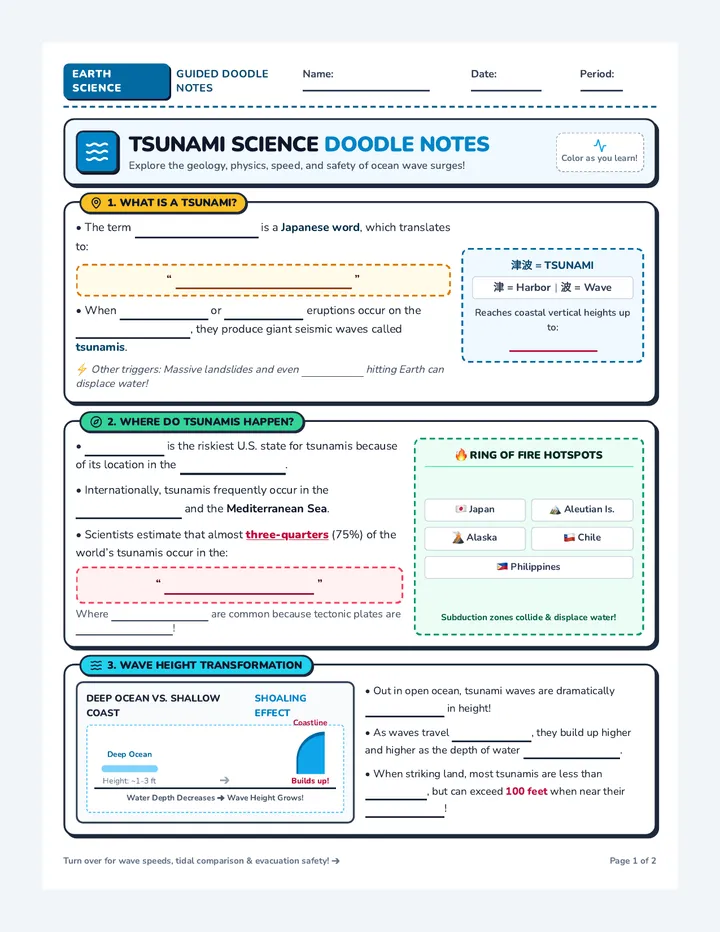
A fun, print-ready two-page doodle notes worksheet covering tsunami origins, triggers, global hotspots, wave height changes, speed physics, differences from tidal waves, detection buoys, and emergency evacuation steps. Features engaging hand-drawn frames, coloring spots, visual diagrams, and clean handwriting blanks.

A

Andrea.Golden

Ocean Realms Test

Ocean Realms Test

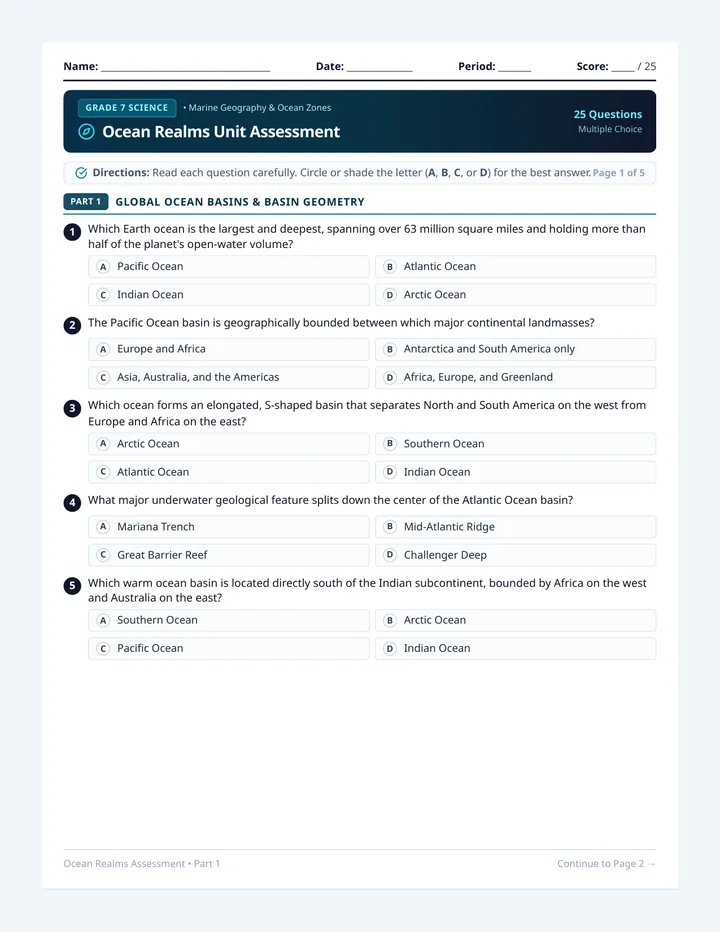
A print-ready 25-question multiple choice assessment evaluating Grade 7 students on marine geography, world oceans, benthic versus pelagic realms, light penetration zones, and vertical ocean layers. Features structured thematic parts, balanced distractors, and clean bubble-ready formatting across 5 well-paced pages.

J

jrand

Ocean Realms Review Slides

Ocean Realms Review Slides

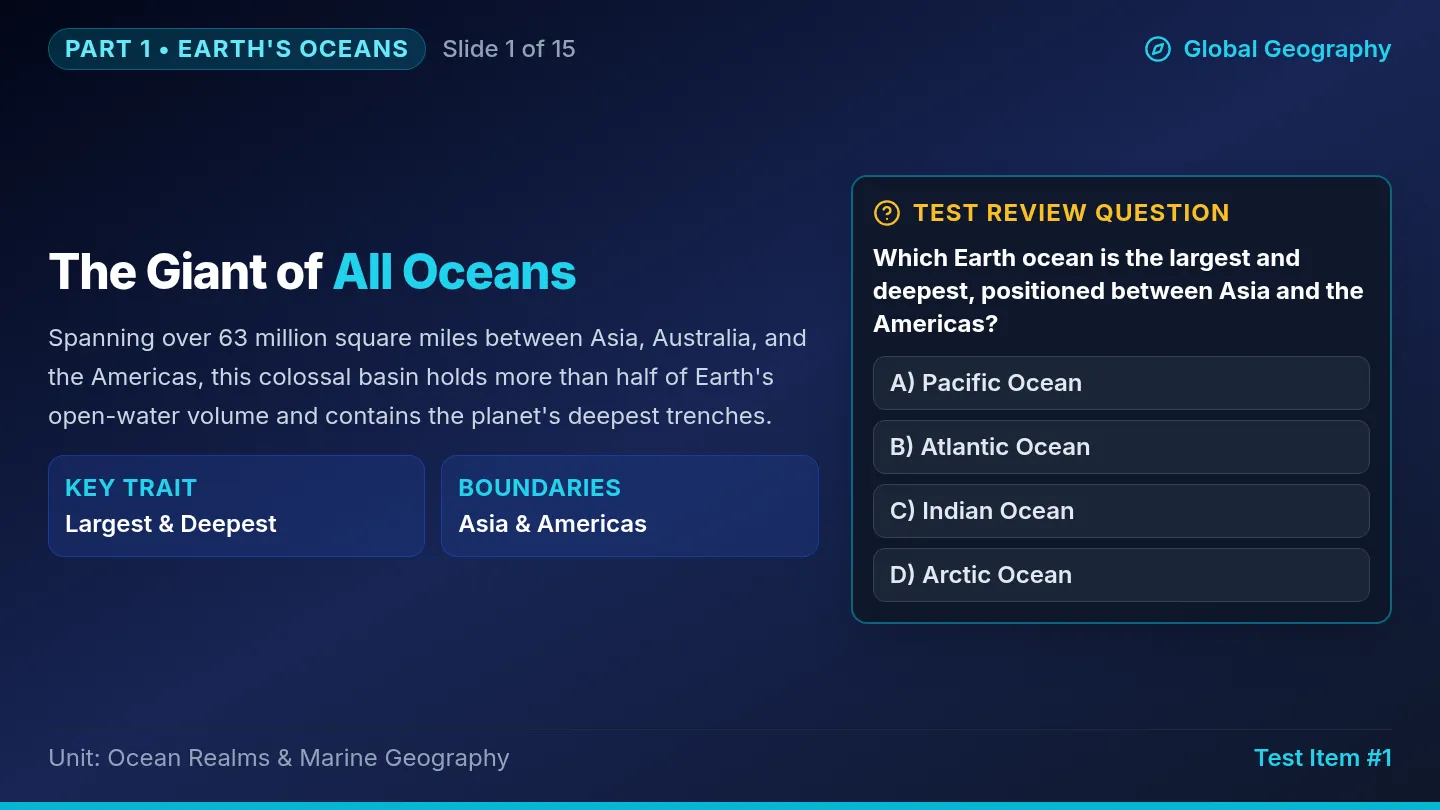
A comprehensive 15-slide review presentation for the Ocean Realms Assessment covering world ocean geography, pelagic vs. benthic realms, photic vs. aphotic divisions, vertical pelagic depth zones, and deep-sea trenches. Each slide concludes with an active, unanswered review question for classroom discussion or student response.

J

jrand

Math Showdown Slides

Math Showdown Slides

A comprehensive 34-question math showdown slide deck with multiple choice options and hidden answer reveal slides. Covers addition, subtraction, multiplication, division, rates, and multi-step word problems.

DH

Dee Henderson

Earth Benchmark Flash Cards

Earth Benchmark Flash Cards

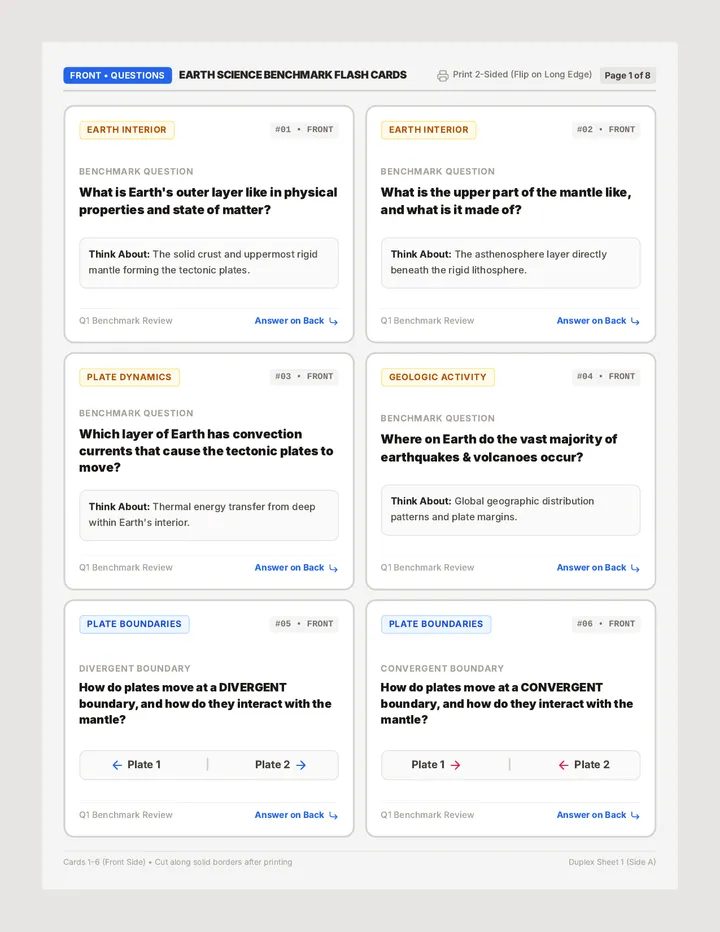
An 8-page ready-to-print double-sided flashcard set (24 cards total) engineered for duplex 2-sided printing (flip on long edge) with perfectly mirrored front-and-back grids so questions print on the front and answers on the reverse with no folding required.

A

Andrea.Golden

Sequences

Water World Slides

Earths Dynamic Systems

A series of lessons exploring Earth's major systems, starting with the hydrosphere and its impact on the planet's processes.

JS

Janette Sullivan

36
Science Squad Student Booklet

Science Literacy Journals

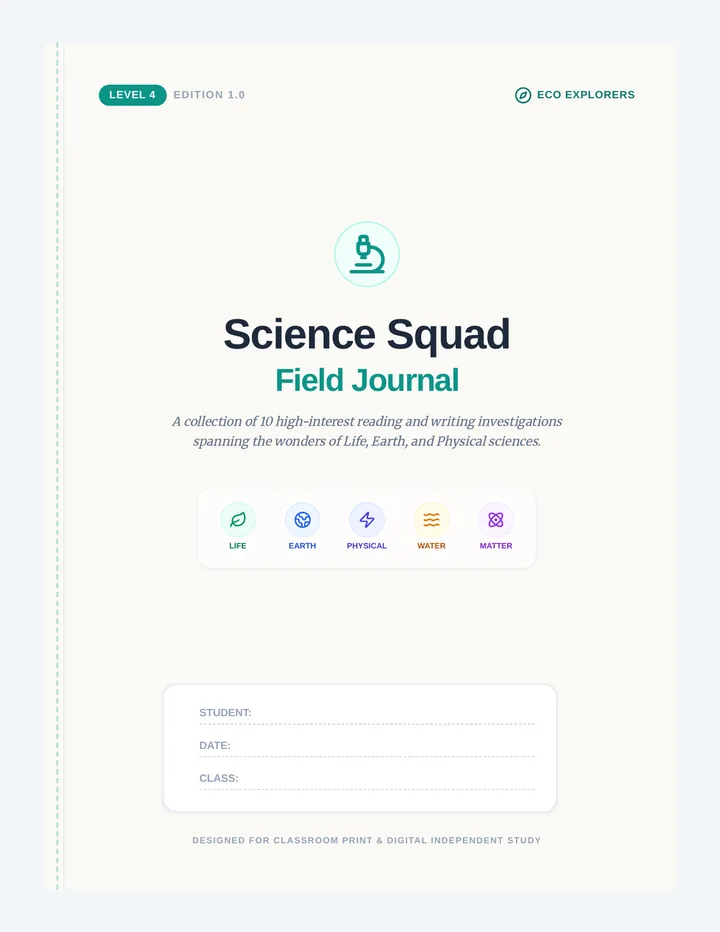
A multi-grade collection of scientific reading comprehension and response booklets designed to build disciplinary literacy in Earth, Life, and Physical sciences across elementary and middle school levels.

N

nmack

4
Earthquake Anchor Chart

Disaster Detectives

A series of lessons focused on understanding different natural disasters, their causes, impacts, and safety protocols through structured writing and investigation.

CO

Catherine Onessimo

18
Volcano Quest Slides

Ring of Fire Detectives

A comprehensive 5E science sequence where students investigate global volcano patterns to discover the 'Ring of Fire' and evaluate the likelihood of volcanic activity in their own region. Students use data mapping, research, and CER (Claim, Evidence, Reasoning) to build their scientific arguments.

AN

Alexis Nelson

6
Scout Mission Slides

Earth System Scouts

A foundational exploration of the four main branches of Earth Science through a multi-day digital scavenger hunt designed for accessibility and engagement.

S

Shelby.Toll

4
TSIA2 Prep Tracker Handout

TSIA2 Science Daily Prep

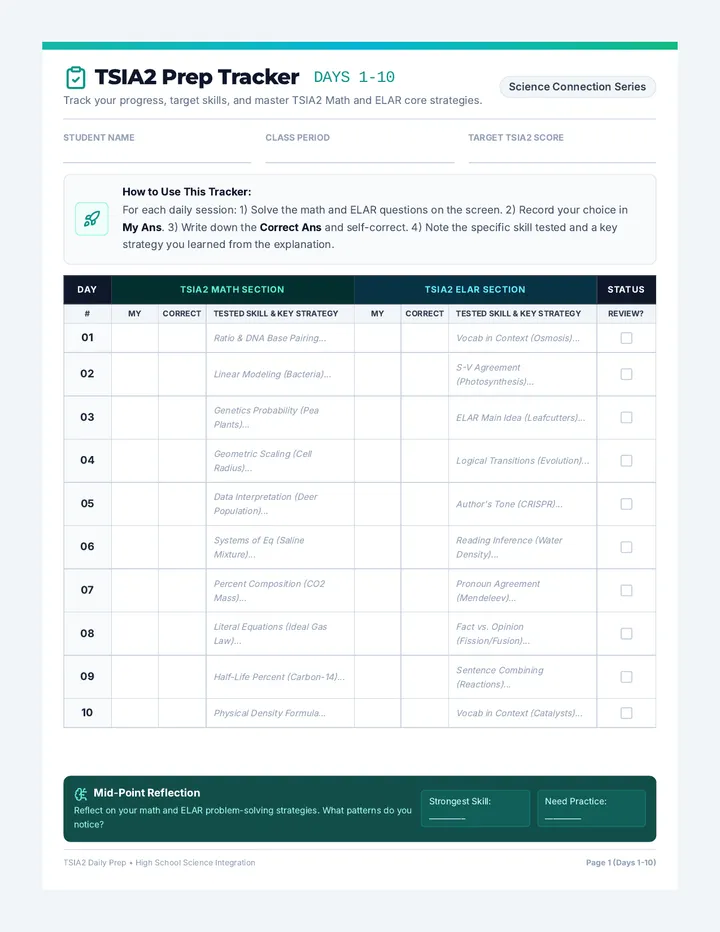
A comprehensive 20-day daily practice sequence designed to prepare students for the TSIA2 Math and ELAR assessments. Each day features high school science-themed questions with detailed explanations, hints, and a robust tracking system.

P

psreed75

5

Lessons

Quake Coords Map Activity

Tectonic Tremors

A comprehensive GED science lesson on tectonic activity, focusing on seismic wave analysis, seismograms, and the Richter scale. Students will learn to calculate S-P intervals and interpret map data to locate epicenters and volcanic hotspots.

CL

Carmela Leone

5
Tableau Progression Annuelle Sciences CM

Progression Sciences CM1 CM2

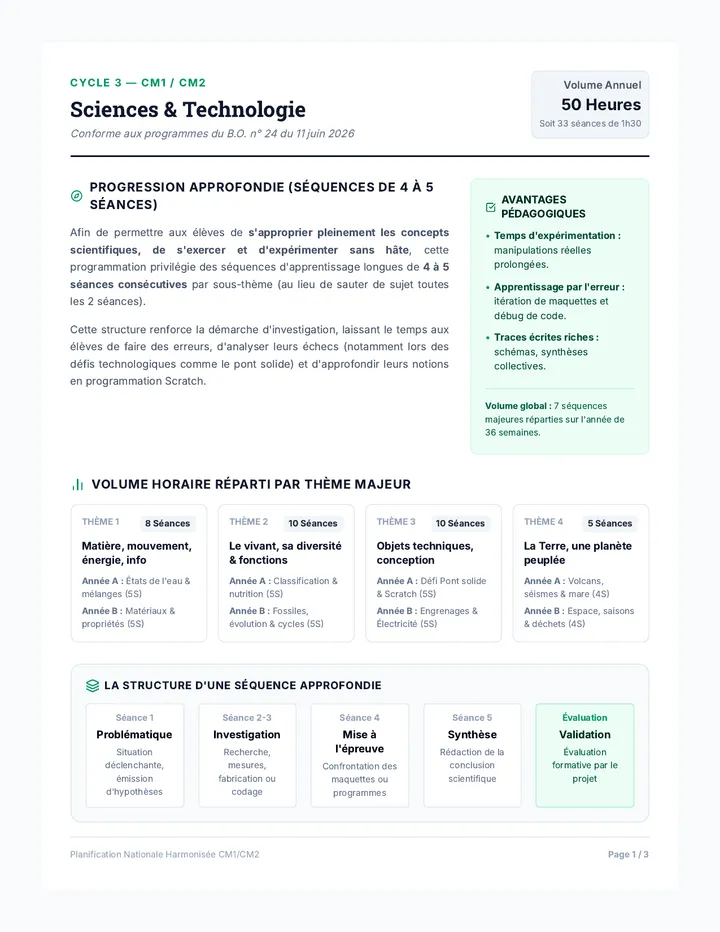
Outil de planification annuelle et de progression pour l'enseignement des sciences et technologies en classe de CM1/CM2, conforme au BO de juin 2026. Ce guide propose une répartition claire des volumes horaires et des thèmes entre l'année A et l'année B pour éviter les redondances dans les classes à double niveau.

LP

LAURENT PERCHE

40
Terra Blueprint Organizer

Terra Blueprint

A high-impact, 10-minute vocabulary introduction exploring Earth's four spheres and the dynamic forces that shape our landscape, separating processes from physical features.

BJ

Brandon Jones

3
Earth Forces Worksheet

Restless Earth

Explore the dynamic geological forces of the Pacific Ring of Fire and how tectonic activity shapes physical geography and human adaptation.

OA

Oumhani Achour

5
Disaster Choice Board and Guide

Disaster Expert Research

A 5th grade research and presentation project based on EL Education Module 4. Students select a natural disaster focus, conduct research using provided expert articles, organize their findings, and choose to present via a Slide Show, Skit, or Newsroom report.

KT

Kimberly Tierney-Honan

6
Tectonic Tempests Slides

Tectonic Tempests

A GED Science lesson focusing on the interpretation of maps, charts, and seismic data through the lens of volcanoes and earthquakes. Students will analyze tectonic movements and volcanic indicators to build data literacy skills.

CL

Carmela Leone

5