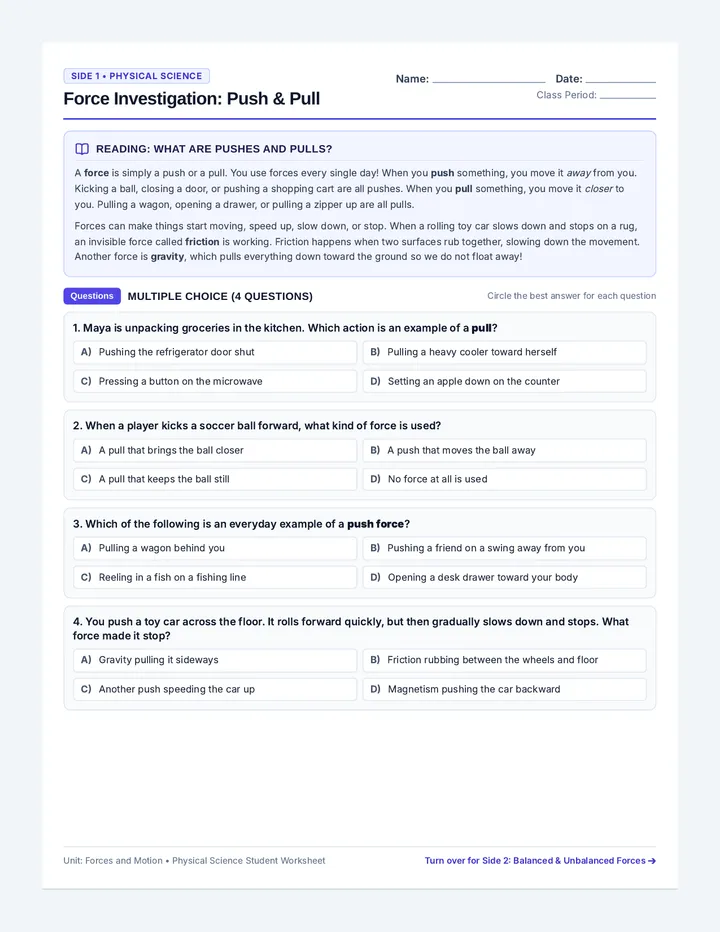
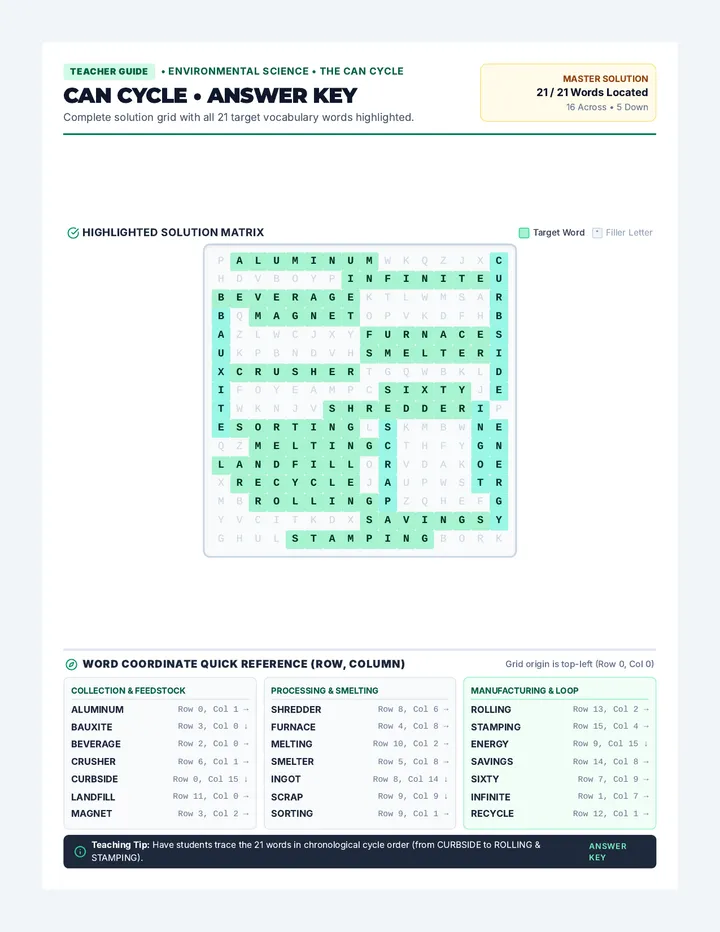
Disaster Expert Research A 5th grade research and presentation project based on EL Education Module 4. Students select a natural disaster focus, conduct research using provided expert articles, organize their findings, and choose to present via a Slide Show, Skit, or Newsroom report.
KT Kimberly Tierney-Honan
Disaster Choice Board and Guide
A 3-page interactive student Choice Board and Project Guide. Page 1 outlines the Slide Show, Skit, and Newsroom presentation options; Page 2 features the comprehensive grading rubric; Page 3 provides team role assignments and a timeline checklist.
Tsunami Research Packet
A 4-page research packet on Tsunamis. Page 1 contains a tailored expert reading article; Page 2 features a clean graphic organizer; Page 3 provides structured writing prompts; Page 4 offers differentiated sentence stems and a draft checklist.
Hurricane Research Packet
A 4-page research packet on Hurricanes. Page 1 contains a tailored expert reading article; Page 2 features a clean graphic organizer; Page 3 provides structured writing prompts; Page 4 offers differentiated sentence stems and a draft checklist.
Tornado Research Packet
A 4-page research packet on Tornadoes. Page 1 contains a tailored expert reading article; Page 2 features a clean graphic organizer; Page 3 provides structured writing prompts; Page 4 offers differentiated sentence stems and a draft checklist.
Earthquake Research Packet
A 4-page research packet on Earthquakes. Page 1 contains a tailored expert reading article; Page 2 features a clean graphic organizer; Page 3 provides structured writing prompts; Page 4 offers differentiated sentence stems and a draft checklist.
Volcano Research Packet
A 4-page research packet on Volcanoes. Page 1 contains a tailored expert reading article; Page 2 features a clean graphic organizer; Page 3 provides structured writing prompts; Page 4 offers differentiated sentence stems and a draft checklist.
Disaster Expert Research A 5th grade research and presentation project based on EL Education Module 4. Students select a natural disaster focus, conduct research using provided expert articles, organize their findings, and choose to present via a Slide Show, Skit, or Newsroom report.
KT Kimberly Tierney-Honan
Disaster Choice Board and Guide EL Education • Module 4 Project Grade 5 Science & Literacy
DISASTER EXPLORERS CHOICE BOARD
Choose your role, analyze your research, and prepare a presentation to teach the community how to survive!
Expert Name(s)
Disaster Topic Focus
The Mission Briefing
Our community needs clear, scientifically accurate survival plans. Use your expert research packet to organize critical facts on causes, physical impact, and safety preparedness . Then, select one of the three formats below to present your expert advice.
Option A: Slideshow
For visual learners and tech lovers. Create a clean digital slide deck illustrating the physics of your disaster.
Minimum 4 slides
Professional charts
Clear visual aids
Deliverable: Google Slides File
Option B: Skit
For writers and actors. Write a live performance about a family navigating the alert systems and seeking safe shelter.
Script with characters
Realistic props
Focus on safety action
Deliverable: Script & Live Play
Option C: Newsroom
For journalists and speakers. Record a breaking news report featuring anchors, field meteorologists, and survivors.
Anchor script
Weather map display
Interactive interview
Deliverable: Video/Audio Recording
Project Milestones
Step 1 Read & Code Sources
Step 2 Graphic Organizer
Step 3 Sentence Pre-Write
Step 4 Build Presentation
EL Education • Module 4 Rubric Expert Panel Evaluation
EXPERT RESEARCH RUBRIC
Criteria Advanced (4 pts) Proficient (3 pts) Developing (2 pts) Scientific Causes Explaining how and why the disaster happens using accurate science. Clear, step-by-step scientific causes are described using rich academic vocabulary from the article. Accurately describes how the disaster is formed. Includes standard academic vocabulary. Causes are missing details or contain minor scientific inaccuracies. Vocabulary is limited. Physical Impacts Describing devastation to the landscape and man-made structures. Provides vivid, specific details of environmental and structural damage. Clearly connects hazard severity to outcomes. Lists specific physical impacts on human areas and natural landscapes with solid factual backup. Describes general damage but lacks specific examples or scientific connections. Safety & Preparedness Outlining critical preparedness actions and warning systems. Presents highly actionable, life-saving strategies, warning signs, and evacuation routines. Provides logical safety tips, basic survival kit items, and clear family safety guidelines. Lists incomplete survival steps or basic, unspecific survival hints. Presentation Quality Performance tailored to format (Slides, Skit, or Newsroom). Presentation is creative, dynamic, clearly organized, and captures audience attention perfectly. Good delivery with clear speech, active role-play or visual alignment, and organized pacing. Delivery is hard to follow, reads directly from papers, or slides/props are unfinished.
Slides Checklist
Clean slides, structured text, readable colors, graphics/labels on each screen.
Skit Checklist
Realistic dialogue, clear characters, simple props representing safety actions.
News Checklist
Professional tone, interview segment with meteorologist, weather graphics.
EL Education • Module 4 Project Research & Design Log
TEAM DESIGN PLANNER
1. Expert Role Assignment
Project Manager & Timeline Lead Ensures checklists are signed off and keeps team on schedule.
Lead Science Researcher Ensures cause-and-effect science is highly accurate.
Safety & Prep Coordinator Focuses on life-saving systems and evacuation guidelines.
Creative Visual Director Oversees slides, script editing, props, or news board graphics.
2. Presentation Action Plan
Briefly map out how you will organize your presentation. Where is the setting? Who is speaking? What props or slide titles are needed?
Our Chosen Presentation Format (Slideshow, Skit, or Newsroom)
Materials/Props/Tech Tools Needed
Main Presentation Scene / Slide Structure Breakdown
Accountability Compact
We agree to work together constructively, listen respectfully to each teammate's ideas, and complete our assigned portions of the research package.
Teammate Signature
Teammate Signature
Teammate Signature
Tsunami Research Packet Expert Reading Article Focus: Tsunamis (Oceanic Surges)
THE RISING WALL: TSUNAMIS
In the deep, vast oceans of our planet, quiet geological energy can build up and suddenly transform into a terrifying and rapid force. A tsunami is not just a single wave, but a series of massive waves generated by the sudden displacement of water.
1. How Tsunamis Form
Most tsunamis are caused by underwater earthquakes at tectonic plate boundaries. When ocean plates grind and suddenly snap, a vertical shift displaces the water column above. Gravity pulls the water back down, causing it to rush outward in all directions at jet-plane speeds (up to 500 mph). As these waves reach shallow water, they undergo wave shoaling —slowing down but rising vertically into walls of water up to 100 feet tall.
2. Impact on People & Places
When a tsunami crashes ashore, it behaves like a fast-moving tide that floods miles inland. The sheer physical power of the surge washes away concrete buildings, sweeps away cars, and destroys ports. Entire communities are displaced instantly, losing homes, schools, and safety networks. A vital warning sign is drawback , where the ocean retreats dramatically, exposing sea life on the ocean floor.
What Happens as a Result (Secondary Disasters)
Tsunamis leave a trail of secondary disasters. Flooding causes severe soil erosion and destroys coastal farmland. Worse, saltwater floods contaminate local freshwater wells and reservoirs, creating drinking water crises. Floating debris acts as moving battering rams, breaking coastal pipelines and starting harbor fires.
3. Stay Safe: Warning Systems & Evacuation
Meteorologists monitor oceans using DART deep ocean sensors , which measure sea floor pressure changes to transmit warnings. Coastal cities establish marked Tsunami Evacuation Routes . If residents feel a strong earthquake near the beach or see the ocean draw back, they must immediately run to designated high ground inland.
Tsunami Secrets: Interesting Facts
The Name's Origin: The word "tsunami" comes from the Japanese words meaning "harbor wave" (tsu = harbor, nami = wave).Barely Noticeable: In the extremely deep ocean, a tsunami wave may be only a few inches high on the surface, making it invisible to ships sailing above it.
Source: NOAA Pacific Tsunami Warning Center & FEMA Emergency Guidelines EL Education Grade 5 Module 4 Project
Step 1: Organizer Student Copy
TSUNAMI RESEARCH ORGANIZER
Name: ______________________
Date: ______________________
Hurricane Research Packet Expert Reading Article Focus: Hurricanes (Tropical Cyclones)
THE TROPICAL GIANT: HURRICANES
In the warm tropical oceans of our planet, quiet breezes can combine with moisture and heat to generate the largest and most destructive storm systems on Earth: hurricanes . These massive storms can span hundreds of miles and bring extreme hazards to human coastal areas.
1. How Hurricanes Form
Hurricanes are giant swirling tropical storms that develop over warm ocean water (at least 80°F). As warm, humid air rises from the ocean surface, it leaves a "low pressure" area below. Higher-pressure air rushes in, warms up, and rises too. This massive, spinning column is fueled continuously by the ocean's heat and moisture. Guided by the Earth's rotation, the winds begin to rotate. Once wind speeds reach 74 mph, the storm is officially declared a hurricane.
2. Impact on People & Places
When hurricanes make landfall, their physical effects alter entire regions. Hurricanes cause storm surges —towering walls of ocean water pushed ashore by wind—which can submerge coastal towns, wash away concrete homes, and erase entire beaches. Thousands of families are displaced, losing houses, businesses, and essential networks like schools and local clinics.
What Happens as a Result (Secondary Disasters)
The hurricane's initial ocean surge is followed by severe secondary disasters. Intense, continuous rain triggers widespread flash flooding and mudslides that swallow major roadways. Water treatment plants are often flooded, contaminating drinking water reservoirs, while high winds snap power lines, leaving entire cities in total darkness for weeks.
3. Stay Safe: Warning Systems & Survival
Meteorologists track hurricanes using satellites and radar systems. When a "Hurricane Watch" is declared, citizens should pack emergency kits with batteries and fresh water. If a "Hurricane Warning" is issued, the storm is close, and citizens must board up windows and follow official evacuation orders to travel inland to safety shelters.
Storm Secrets: Interesting Facts
The Calm Eye: At the very center of a spinning hurricane is the "eye," an area of perfectly calm, clear weather with no rain or wind.Different Names: In the Atlantic Ocean, they are called hurricanes; in the Pacific Ocean, they are called typhoons; and in the Indian Ocean, cyclones.
Source: NOAA National Hurricane Center & FEMA Emergency Management Database EL Education Grade 5 Module 4 Project
Step 1: Organizer Student Copy
HURRICANE RESEARCH ORGANIZER
Tornado Research Packet Expert Reading Article Focus: Tornadoes (Twisters)
THE SPINNING MONSTER: TORNADOES
Across flat plains and open grasslands, severe supercell thunderstorms can suddenly twist into one of the most violent and rapid weather phenomena on Earth: tornadoes . These spinning columns of air pack incredible speed into a small, highly concentrated path.
1. How Tornadoes Form
Tornadoes form rapidly over land during intense supercell thunderstorms. When warm, moist air rising from the south collides with cold, dry air sinking from the north, the atmosphere becomes extremely unstable. Winds blowing at different speeds and heights cause the air to start spinning horizontally. If this spinning column gets pulled into the storm's powerful rising warm air (updraft), it tilts vertically, stretching into a funnel cloud that touches down onto the earth.
2. Impact on People & Places
Because tornadoes form and strike in minutes, the human toll is devastating. Tornado winds (reaching up to 300 mph) rip roofs off homes, collapse school gymnasiums, and uproot massive ancient trees. People living in their paths suffer severe injury, lose all their personal belongings, and experience the terrifying sudden displacement of their entire neighborhoods, leaving landscapes looking like war zones.
What Happens as a Result (Secondary Disasters)
A tornado's destruction triggers severe secondary disasters. The violent ground rotation splits underground natural gas lines, causing massive neighborhood fires . Flying debris punctures chemical storage units on farms, contaminating local soils, while snapped power utility poles completely disable local electrical grids.
3. Stay Safe: Warning Systems & Survival
Meteorologists track supercells using Doppler radar. A "Tornado Watch" means conditions are favorable for a tornado to form. A "Tornado Warning" means a funnel cloud has been spotted on radar or by eye. When a warning sounds, citizens must immediately go to a basement, storm cellar, or a windowless interior room on the lowest floor, covering their heads with mattresses or heavy blankets.
Storm Secrets: Interesting Facts
Tornado Alley: This region in the central United States experiences more tornadoes than anywhere else in the world due to the perfect collision of cold Canadian air and warm Gulf air.Invisible Funnels: A tornado is actually invisible until it picks up dust, debris, and water droplets, making it show up as a dark funnel cloud.
Source: NOAA National Severe Storms Laboratory & FEMA Emergency Guidelines EL Education Grade 5 Module 4 Project
Step 1: Organizer Student Copy
Earthquake Research Packet Expert Reading Article Focus: Earthquakes (Seismic Shifts)
THE SHIFTING SURFACE: EARTHQUAKES
Deep below our feet, the Earth's solid crust is not a single piece. Instead, it is broken into massive puzzle pieces called tectonic plates . As these plates slowly move on the mantle, their rough edges grind past each other, storing terrifying levels of energy that can release in a flash as an earthquake .
1. How Earthquakes Occur
Earthquakes are generated along borders called fault lines . As tectonic plates slide, their rough rocky boundaries get stuck together. The plates continue to push, building massive friction and pressure over decades. When the stress gets too intense, the rocks suddenly shatter and slip. This release of stored energy sends high-speed vibrations called seismic waves radiating through the ground, causing intense shaking.
2. Impact on People & Places
Earthquakes strike with absolutely no advance warning, causing massive structural damage in seconds. The ground vibrations collapse highway overpasses, smash brick buildings, and break water pipes. Families are instantly displaced as their homes become unsafe to enter. Entire communities lose basic public services, including hospitals, roads, and clean running water, causing severe human crises.
What Happens as a Result (Secondary Disasters)
The ground shaking triggers immediate secondary hazards. Tremors rupture underground natural gas lines and electrical cables, igniting massive, unstoppable city fires . Shaking along unstable mountain slopes triggers devastating landslides that bury roads and block rivers, leading to sudden upstream flooding.
3. Stay Safe: Warning Systems & Survival
Scientists measure earthquake strength using devices called seismometers . While we cannot predict them, structural engineers design buildings with shock absorbers and flexible steel to prevent collapses. During shaking, citizens must immediately use the "Drop, Cover, and Hold On" routine under sturdy furniture, keeping away from glass windows and tall bookshelves.
Seismic Secrets: Interesting Facts
The Ring of Fire: A massive horseshoe-shaped boundary around the Pacific Ocean contains 90% of Earth's seismic activity and the majority of active fault lines.Animal Warnings: Many survivors report seeing dogs, cats, and birds behaving strangely or running away minutes before seismic waves actually reach the surface.
Source: US Geological Survey (USGS) & California Earthquake Authority Records EL Education Grade 5 Module 4 Project
Volcano Research Packet Expert Reading Article Focus: Volcanoes (Magmatic Eruptions)
THE FIERY VENT: VOLCANOES
Deep inside the mantle of our planet, temperatures are hot enough to melt solid rock. This molten geological force can rise to the surface of Earth's crust, building immense gas pressure and breaking through as a volcanic eruption .
1. How Volcanoes Erupt
A volcano is an opening, or vent, in Earth's crust that allows hot material to escape. Deep underground, extremely hot liquid rock called magma builds up in chambers. Since magma is lighter than the solid rock around it, it pushes upward. When tectonic plates pull apart or slide, weak zones form in the crust. Magma forces its way up, erupting onto the surface, where it is renamed lava .
2. Impact on People & Places
Volcanic eruptions completely transform geographic areas. Fast-moving, superheated clouds of ash and toxic gas (pyroclastic flows) burn everything in their path. Eruptions bury neighboring towns in thick layers of ash, destroying houses, blocking water systems, and ruining local farmland. Thousands of people are displaced, losing local schools, neighborhoods, and livelihoods.
What Happens as a Result (Secondary Disasters)
Eruptions trigger dangerous secondary disasters. When hot volcanic ash mixes with melting mountaintop snow or heavy storm rains, it produces lahars —devastating, rapid volcanic mudflows that act like wet concrete, burying entire communities downstream. Massive ash clouds rise high, blocking out sunlight and causing global temperature cooling.
3. Stay Safe: Warning Systems & Survival
Volcanologists monitor active vents using gas sensors and seismometers to detect moving magma tremors. When tremors increase, scientists issue immediate volcanic evacuation warnings . If citizens are inside an active zone, they must evacuate immediately. If outside the zone but facing ash fall, they must remain indoors, seal windows, and wear masks to protect their lungs.
Volcanic Secrets: Interesting Facts
Pumice Floats: Pumice is a unique, lightweight volcanic rock filled with tiny air bubbles that actually allow it to float on top of ocean water!The Volcanic Ring: Over 75% of the Earth's active and dormant volcanoes are located in the "Ring of Fire" surrounding the Pacific Ocean basin.
Source: US Geological Survey (USGS) Volcanic Hazard Network & Smithsonian Institution EL Education Grade 5 Module 4 Project
Step 1: Organizer Student Copy
VOLCANO RESEARCH ORGANIZER
Name: ______________________
Date: ______________________
Class Period: ______________
Tsunami Science & Ocean Displacement Explain tectonic displacement, ocean energy buildup, and how waves compress to rise near coasts:
Impact on People & Places Describe how surging waters destroy beach towns, wash away concrete harbors, and displace populations:
Secondary Hazards (Results of Flooding) What else happens (saltwater well contamination, severe coastal soil erosion, harbor debris fires)?
Staying Safe DART ocean floor alarms, drawback signals, and evacuation paths:
Interesting Facts Harbor Wave meaning, deep water ship invisibility, or ocean speeds:
Step 2: Pre-Write Drafting Phase
TSUNAMI RESEARCH PRE-WRITE 1. Effects on People & Places (How Communities are Altered)
Describe how powerful water walls destroy ports, submerge towns, and displace citizens:
2. What Happens as a Result (Secondary Disasters & Consequences)
Detail other disasters triggered (saltwater wells contamination, harbor fuel debris fires, soil erosion):
3. How to Stay Safe during the Event & Interesting Facts
Outline safe locations (evacuation routes, high ground) and include an interesting tsunami fact:
Remember to write in clear, complete 5th grade sentences.
Step 3: Support Writing Scaffolds & QA
TSUNAMI WRITING SUPPORT
Sentence Starters for Expert Researchers How tsunamis affect people and places:
"When a tsunami rushes onto a coastline, the ports and towns experienced suffer because..."
"People living near shorelines are displaced from their homes by the water surge, leading to..."
"If a harbor is hit by a surging wall of water, the physical structures are altered by..."
What can happen as a result (consequences):
"As a direct result of saltwater flooding, local drinking water reservoirs are contaminated when..."
"Once massive waves erode coastal soil structures, it causes secondary disasters like..."
"Debris caught in the receding water surge acts as battery rams, leading to..."
Staying safe and interesting facts:
"To stay safe when warning networks detect sea pressure shifts, residents must immediately..."
"The fascinating meaning of the word 'tsunami' represents Japanese characters that..."
"If people witness the coastline experience ocean pullback, they must escape because..."
Student Research Checklist Rubric Target Criteria Self Peer Teacher I explained how tectonic underwater snaps displace massive water columns. ☐ ☐ ☐ I described the effects of wave shoaling and high walls of water on coastline towns. ☐ ☐ ☐ I listed secondary disasters like saltwater soil contamination and harbor fuel fires. ☐ ☐ ☐ I detailed exact safety warnings (coastal drawback indicators / DART pressure sensors). ☐ ☐ ☐
Name: ______________________
Date: ______________________
Class Period: ______________
Hurricane Science & Ocean Formation Explain how warm ocean water (80°F+), rising moist air, and wind speed (74+ mph) create a spinning storm:
Impact on People & Places Describe how the storm surge and wind damage homes, wash away beaches, and displace families:
Secondary Hazards (Results of the Storm) What else happens (flash floods, mudslides, contaminated drinking water, power outages)?
Staying Safe Watch vs. Warning steps & evacuation rules:
Interesting Facts The eye of the storm or alternate names:
Step 2: Pre-Write Drafting Phase
HURRICANE RESEARCH PRE-WRITE 1. Effects on People & Places (How Communities are Altered)
Describe the damage to beaches, roads, houses, and the displacement of families:
2. What Happens as a Result (Secondary Disasters & Consequences)
Detail what other crises happen after landfall (flash flooding, water contamination, long-term blackouts):
3. How to Stay Safe during the Event & Interesting Facts
Outline the survival plan (evacuations, survival kits) and include an eye-opening fact:
Remember to write in clear, complete 5th grade sentences.
Step 3: Support Writing Scaffolds & QA
HURRICANE WRITING SUPPORT
Sentence Starters for Expert Researchers How hurricanes affect people and places:
"When a hurricane hits a coastline, the high winds and storm surges..."
"Families living in coastal neighborhoods can be displaced because..."
"Hurricanes cause severe physical damage to places by..."
What can happen as a result (consequences):
"As a result of the heavy rains, secondary disasters like..."
"When high winds snap power lines, the community experiences..."
"Water treatment systems can become flooded, which leads to..."
Staying safe and interesting facts:
"To stay safe during a hurricane, the most important rule is to..."
"An interesting fact about hurricanes is that the center of the storm is..."
"A basic survival kit must include items like..."
Student Research Checklist Rubric Target Criteria Self Peer Teacher I explained how warm ocean water fuels the hurricane. ☐ ☐ ☐ I described the effects of the storm surge on people and beaches. ☐ ☐ ☐ I listed secondary disasters like inland flooding and water contamination. ☐ ☐ ☐ I detailed exact survival actions (evacuations/warning kits). ☐ ☐ ☐
TORNADO RESEARCH ORGANIZER Name: ______________________
Date: ______________________
Class Period: ______________
Tornado Science & Land Formation Explain warm vs. cold air collision, severe updrafts, and how funnel clouds touch the ground:
Impact on People & Places Describe how extreme winds damage buildings, destroy schools, and displace families in minutes:
Secondary Hazards (Results of the Storm) What else happens (broken gas pipelines, neighborhood fires, flying debris, soil contamination)?
Staying Safe Watch vs. Warning actions & best interior shelter rooms:
Interesting Facts Tornado Alley statistics or invisible funnel facts:
Step 2: Pre-Write Drafting Phase
TORNADO RESEARCH PRE-WRITE 1. Effects on People & Places (How Communities are Altered)
Describe how violent winds smash structures, destroy schools, and displace families:
2. What Happens as a Result (Secondary Disasters & Consequences)
Detail other disasters triggered (gas line explosions, fires, soil chemical contamination, blackouts):
3. How to Stay Safe during the Event & Interesting Facts
Outline safe locations (basements, interior shelters) and include an interesting tornado fact:
Remember to write in clear, complete 5th grade sentences.
Step 3: Support Writing Scaffolds & QA
TORNADO WRITING SUPPORT
Sentence Starters for Expert Researchers How tornadoes affect people and places:
"When a violent tornado touches down, the places in its path are..."
"Communities and families suffer immense physical damage because..."
"Because tornadoes strike so suddenly, people have only..."
What can happen as a result (consequences):
"As a direct result of strong spinning winds, secondary disasters like..."
"Ruptured gas lines under broken buildings can start massive..."
"Chemical storage tanks on farms can spill, which leads to..."
Staying safe and interesting facts:
"To stay safe when a tornado warning sounds, families must..."
"An interesting fact about tornadoes is that they are invisible until..."
"In 'Tornado Alley,' these storm formations happen because..."
Student Research Checklist Rubric Target Criteria Self Peer Teacher I explained how cold and warm air masses collide to create funnel clouds. ☐ ☐ ☐ I described the sudden destructive effects of winds on homes and communities. ☐ ☐ ☐ I listed secondary disasters like ruptured gas fires and soils chemicals leaks. ☐ ☐ ☐ I detailed exact survival locations (basements / windowless interior rooms). ☐ ☐ ☐
Step 1: Organizer Student Copy
EARTHQUAKE RESEARCH ORGANIZER Name: ______________________
Date: ______________________
Class Period: ______________
Earthquake Science & Fault Friction Explain tectonic plates, fault boundaries getting stuck, and release of seismic waves:
Impact on People & Places Describe how shaking collapses structures, ruins highways, and displaces thousands of families:
Secondary Hazards (Results of Shaking) What else happens (broken gas pipeline fires, landslides, river blockage, broken water systems)?
Staying Safe Seismometer monitoring, Drop Cover Hold, and engineering tricks:
Interesting Facts The Ring of Fire or strange pre-shaking animal behaviors:
Step 2: Pre-Write Drafting Phase
EARTHQUAKE RESEARCH PRE-WRITE 1. Effects on People & Places (How Communities are Altered)
Describe how powerful tremors collapse homes, break bridges, and displace citizens:
2. What Happens as a Result (Secondary Disasters & Consequences)
Detail what other crises happen after the ground shakes (gas fires, mud landslides blocking valleys):
3. How to Stay Safe during the Event & Interesting Facts
Outline the survival plan (Drop Cover Hold on) and weave in a fascinating fact:
Remember to write in clear, complete 5th grade sentences.
Step 3: Support Writing Scaffolds & QA
EARTHQUAKE WRITING SUPPORT
Sentence Starters for Expert Researchers How earthquakes affect people and places:
"When a powerful earthquake shakes a city, the physical buildings..."
"Families experiencing severe ground tremors can lose access to..."
"Earthquakes cause instant geological changes to places by..."
What can happen as a result (consequences):
"As a direct result of ground shaking, secondary disasters like..."
"Underground gas lines can break during earthquakes, which can lead to..."
"When unstable mountain dirt gets shaken violently, it triggers..."
Staying safe and interesting facts:
"To stay safe during active earth shaking, a person must..."
"An interesting fact about earthquakes is that most happen around..."
"Engineers help protect people from collapse hazards by designing..."
Student Research Checklist Rubric Target Criteria Self Peer Teacher I explained how tectonic plates slip along fault lines to create seismic waves. ☐ ☐ ☐ I described the effects of severe ground shaking on roads and families. ☐ ☐ ☐ I listed secondary disasters like ruptured gas fires and landslides. ☐ ☐ ☐ I detailed the immediate survival action ("Drop, Cover, and Hold On"). ☐ ☐ ☐
Class Period: ______________
Volcanic Science & Magma Pressures Explain mantle heat, magma chambers pushing upward, and crust vents erupting lava:
Impact on People & Places Describe how pyroclastic flows and thick ash layers destroy cities, farmland, and displace residents:
Secondary Hazards (Results of Eruptions) What else happens (lahar mudflows mixing with snow/rain, massive sun-blocking atmospheric ash)?
Staying Safe Gas sensors, tremor tracking, evacuation lines, and ash masks:
Interesting Facts Floating pumice rocks or Ring of Fire locations:
Step 2: Pre-Write Drafting Phase
VOLCANO RESEARCH PRE-WRITE 1. Effects on People & Places (How Communities are Altered)
Describe how pyroclastic gas flows and ash blockages damage housing and farmlands:
2. What Happens as a Result (Secondary Disasters & Consequences)
Detail other hazards triggered (concrete-like lahar mudflows downstream, sun-blocking air ash):
3. How to Stay Safe during the Event & Interesting Facts
Outline safe responses (evacuation borders, sealing windows) and include a cool volcanic fact:
Remember to write in clear, complete 5th grade sentences.
Step 3: Support Writing Scaffolds & QA
VOLCANO WRITING SUPPORT
Sentence Starters for Expert Researchers How volcanoes affect people and places:
"When a volcano erupts, the surrounding geographic landscape is..."
"People living in neighboring towns are forced to flee because..."
"Volcanic ash damages human communities by collapsing roofs and..."
What can happen as a result (consequences):
"As a result of volcanic ash mixing with water or snow, dangerous..."
"When hot volcanic gases build up, a secondary hazard like..."
"Massive ash clouds rise high into the atmosphere, which causes..."
Staying safe and interesting facts:
"To stay safe when scientists issue an evacuation warning, residents must..."
"An interesting fact about volcanoes is that pumice rocks can actually..."
"We can monitor active magma chambers below the Earth's crust by using..."
Student Research Checklist Rubric Target Criteria Self Peer Teacher I explained how rising magma vents through the Earth's crust as lava. ☐ ☐ ☐ I described the effects of pyroclastic gas clouds and ash on cities. ☐ ☐ ☐ I listed secondary disasters like concrete-like lahar mudflows. ☐ ☐ ☐ I detailed exact survival procedures (evacuation zones / breathing masks). ☐ ☐ ☐