Lenny.com
Explore
Create
ActivitiesNewMathEnglish Language ArtsScience & EngineeringSocial StudiesGlobal LanguagesHealth & Physical EducationSpecial EducationCounseling & Life SkillsArts & CreativityESL
Lenny.com
Lenny.com
Explore
Create
ActivitiesNewMathEnglish Language ArtsScience & EngineeringSocial StudiesGlobal LanguagesHealth & Physical EducationSpecial EducationCounseling & Life SkillsArts & CreativityESL
Lenny.com
Lenny.com

Solutions

Lenny for EducatorsLenny for SchoolsLenny for Districts

Product

ExploreSign inCreateSupportAbout

Resources

Getting startedMTSS Acceleration Program

© 2026 Lenny Learning Inc.

TermsPrivacyAccessibility
LinkedInInstagramX
Lenny

Periodic Trends

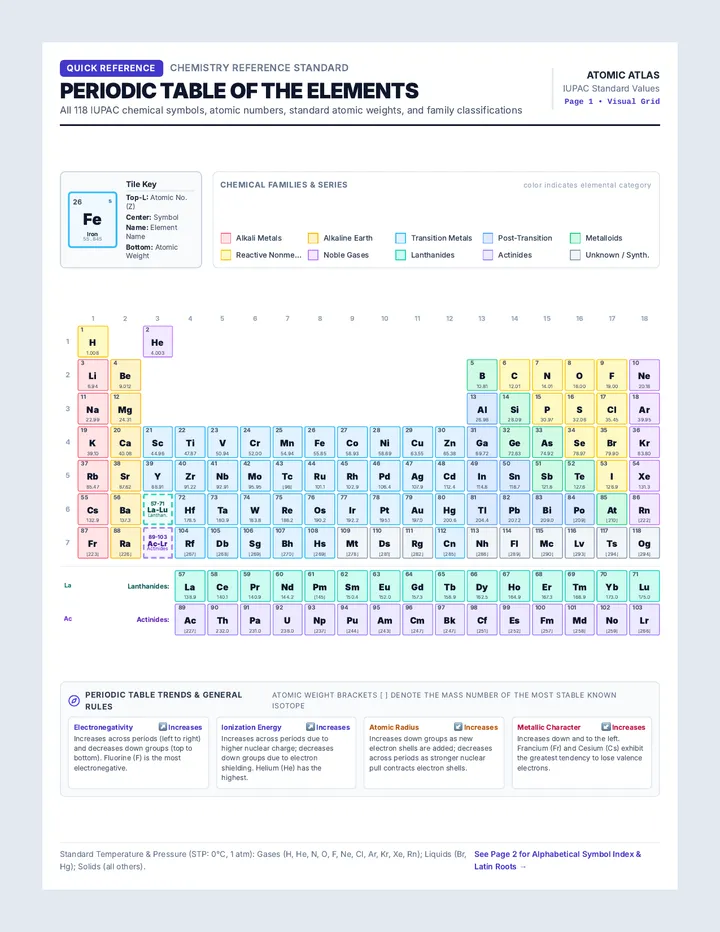
Atomic radius, ionization energy, and electronegativity patterns across periods and groups. Examines how effective nuclear charge and electron shielding dictate elemental properties and reactivity.

Science & EngineeringLife ScienceLiving ThingsAnimalsPlantsBody SystemsTraitsAdaptationsCellsEcosystemsHeredityGenes to TraitsCell DivisionPhysicsComparing MaterialsShapes and PropertiesMagnetsMagnetismLightSoundLight and SoundMatterStates of MatterChanges of StateMixturesPhysical and Chemical ChangeHeating and CoolingHeat and Thermal EnergyEnergyForce and MotionElectrical CircuitsAtoms and MoleculesPeriodic TableMotion in One DimensionMotion in Two DimensionsScalars and VectorsForces and Laws of MotionCircular Motion and GravityMomentum and ImpulseWork, Energy, and PowerWavesElectromagnetic WavesGeometric OpticsElectricity and MagnetismSimple Harmonic MotionThermodynamicsNuclear PhysicsEarth Science & AstronomyWeatherWater CycleRocks and MineralsFossilsEarth's FeaturesEarth's ResourcesEarth's StructureWeather and ClimateEarth EventsFossils and Geologic TimePlate TectonicsHuman ImpactsAstronomyChemistryUnits and MeasurementAtomic StructurePeriodic TrendsChemical BondingNomenclatureMolecular StructureIntermolecular ForcesThe MoleStoichiometryProperties of GasesSolutionsChemical ReactionsBalancing EquationsEnergy ChangesRates of ReactionsEquilibriumAcids and BasesQuantum ModelBiologyClassificationCell StructureThe Chemistry of LifeBiomoleculesCellular TransportCell EnergyCell Growth and DivisionDNAProtein SynthesisMeiosis and Sexual ReproductionPatterns of InheritanceMulticellular OrganismsEvolutionEcologyBiodiversityComputer ScienceAlgorithms and Computational ThinkingProgramming LanguagesComputing SystemsNetworks and InternetData AnalysisCybersecurityAI and Machine LearningSoftware Design and DevelopmentBlockchainEngineering & AIDesigning ExperimentsEngineering PracticesDesign ThinkingEngineering Design ProcessMechanical EngineeringElectrical EngineeringMaterials and StructuresCAD and 3D DesignRoboticsArtificial Intelligence BasicsVibe CodingMachine LearningAI Ethics and SocietySystems ThinkingEntrepreneurship & InnovationEntrepreneurial MindsetBusiness Idea DevelopmentBusiness Plan BasicsMarketing & Customer DiscoveryFinancial Management for Startups

Videos

Chemistry Basics: Periodic Table, Naming Compounds, and Atomic Structure

Chemistry Basics: Periodic Table, Naming Compounds, and Atomic Structure

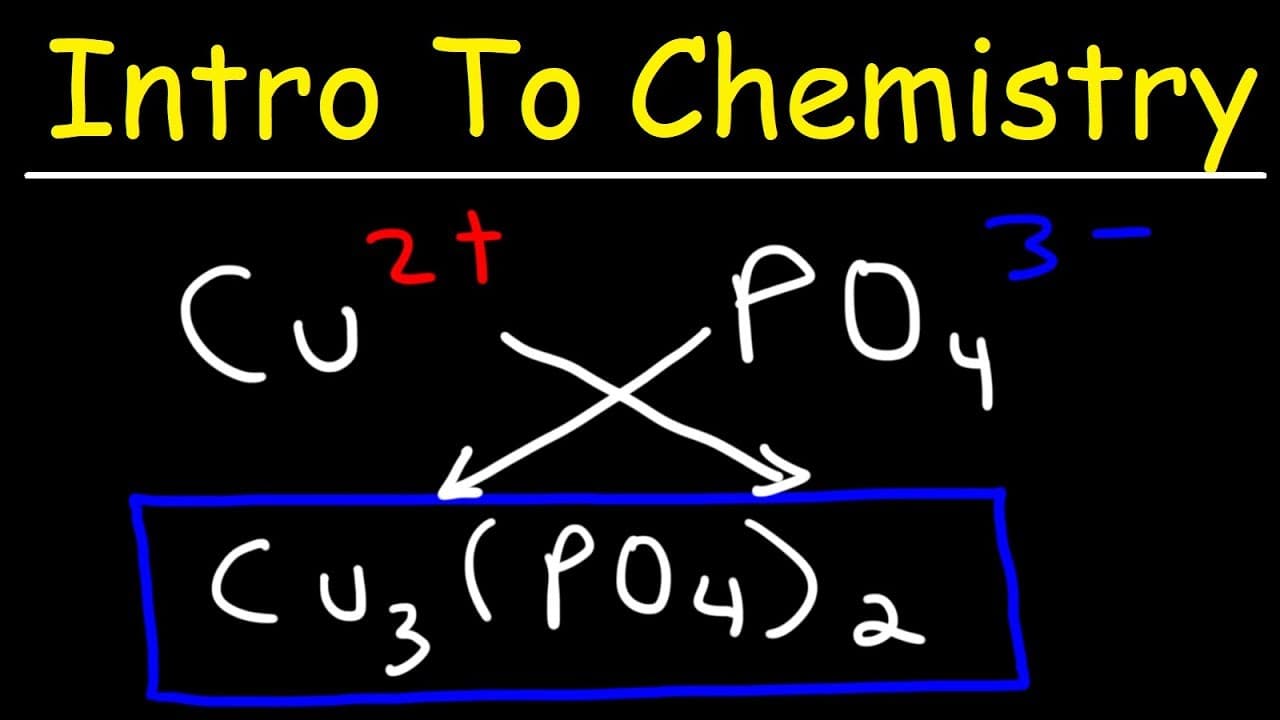
This comprehensive 52-minute video serves as an extensive introduction to K-12 chemistry, covering the fundamental building blocks of the subject. The video begins by touring the periodic table, identifying key groups like alkali metals and halogens, and explaining the charges associated with different columns. It distinguishes between atoms, molecules, elements, and compounds before diving into the crucial skill of nomenclature—teaching viewers how to name ionic and molecular compounds using prefixes and Roman numerals.

The Organic Chemistry TutorThe Organic Chemistry Tutor

52mins 9s

Why We Study Chemistry in Biology

Why We Study Chemistry in Biology

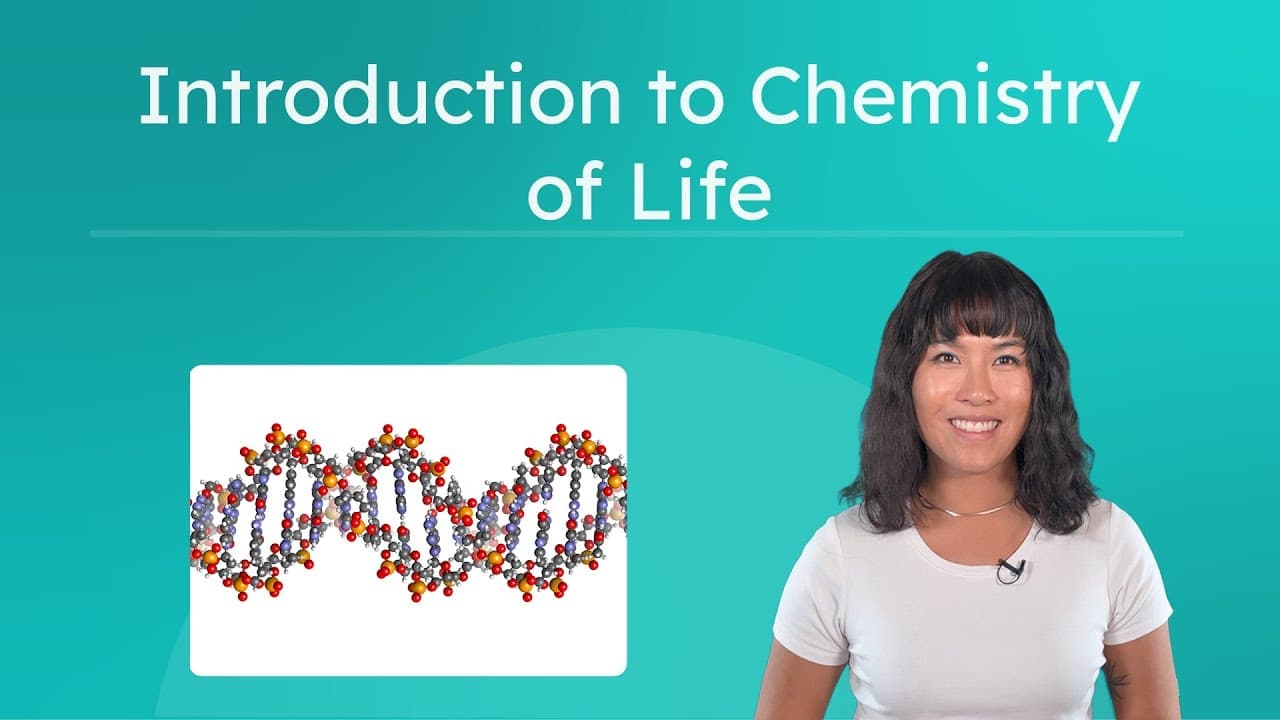
This video serves as an engaging introduction to a biology unit focused on the chemistry of life. The host, Bea, addresses the common student question of why chemistry is being taught in a biology course, explaining that understanding the living world requires knowledge of the chemical building blocks that make up organisms, food, and DNA. The video outlines the scope of the upcoming unit, promising to start at the atomic level and work upward through the levels of biological organization to the biosphere. Key themes include the interdisciplinary connection between biology and chemistry, the hierarchy of life (from atoms to biospheres), and real-world applications of these concepts. The video explicitly connects abstract chemical concepts to familiar items like the Periodic Table of Elements and nutrition facts labels on food packaging. It introduces the idea that fats, carbohydrates, and proteins are chemical substances that play vital roles in living things. For educators, this video is an excellent hook to launch a unit on biochemistry or macromolecules. It provides a clear rationale for interdisciplinary learning and helps students visualize the scale of biological study. While the video mentions specific accompanying PDF notes for a proprietary course, the core content is universally applicable for introducing the relevance of chemistry in biological sciences. It sets the stage for lessons on atoms, molecules, and the flow of energy and matter in ecosystems.
Miacademy & MiaPrep Learning ChannelMiacademy & MiaPrep Learning Channel

2mins 58s

Materials

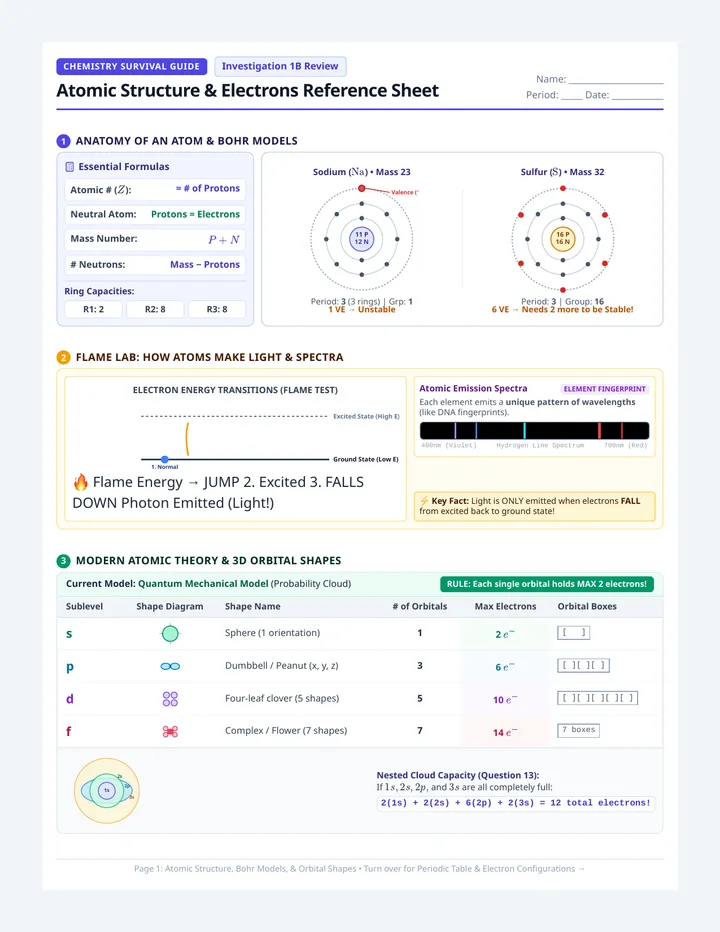
Atomic Structure Reference Sheet

Atomic Structure Reference Sheet

A highly visual 2-page assessment reference sheet for high school sophomore co-taught chemistry students, featuring detailed diagrams of Bohr models, flame test energy transitions, 3D orbital shapes (s, p, d, f), nested orbital shells, a full periodic table block map, electron configuration guides, orbital box diagrams, and Lewis dot structures.

SP

Stephanie Petrucci

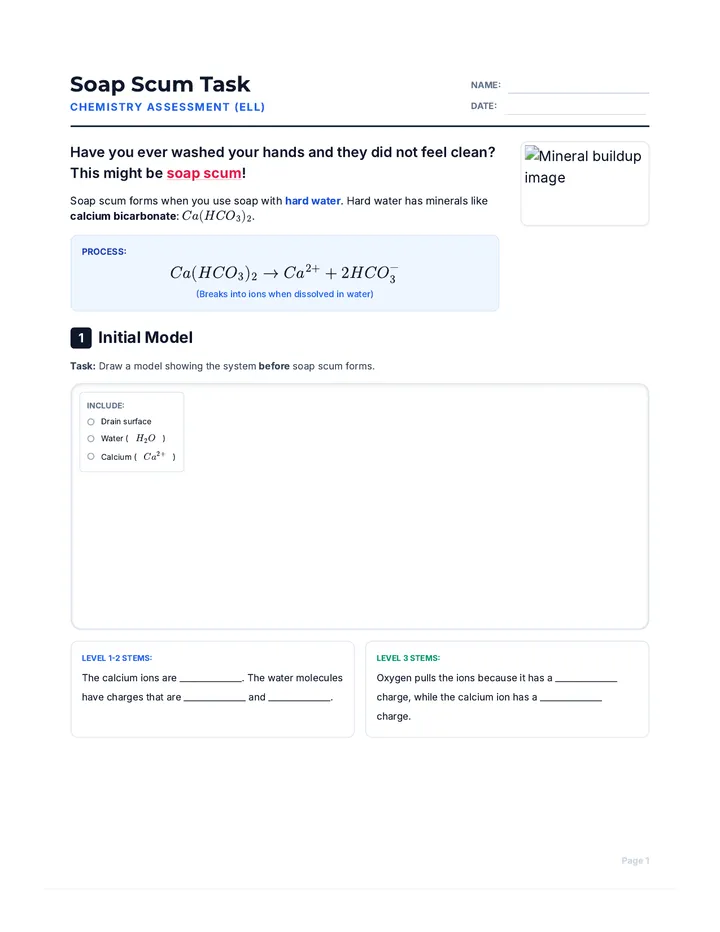
Soap Scum Scaffolded Assessment

Soap Scum Scaffolded Assessment

A 6-page scaffolded chemistry assessment designed for 10-11th grade English Language Learners (Entering, Emerging, Developing). It features simplified language, visual aids, and differentiated sentence stems for modeling, chemical balancing, and reasoning tasks.

AF

Ashley Fienup

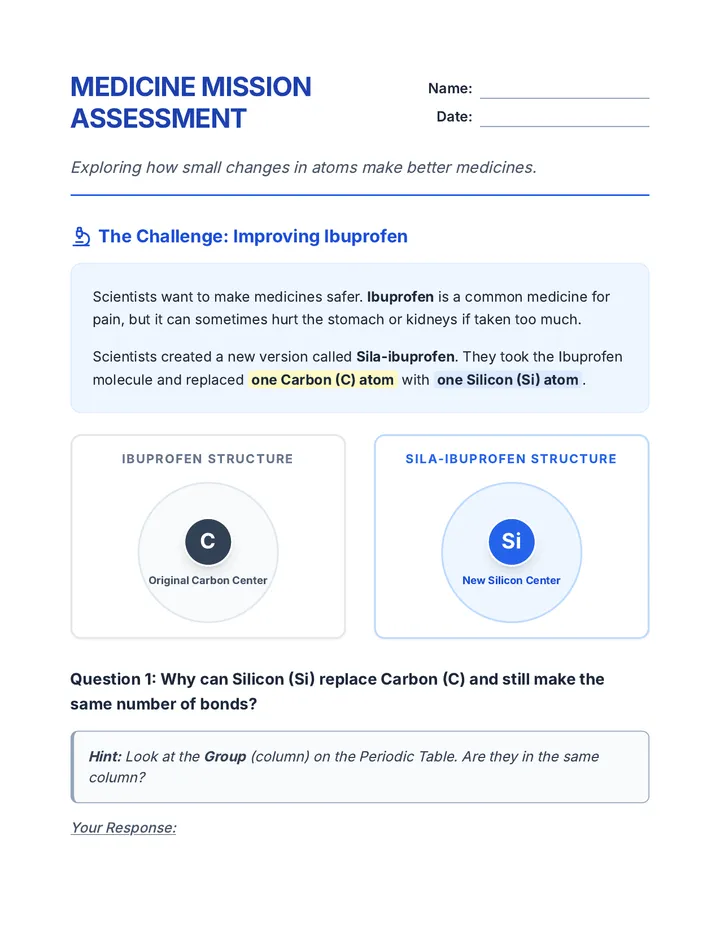
Medicine Mission Assessment

Medicine Mission Assessment

Modified chemistry assessment on Sila-ibuprofen for 10th-grade ESL students, featuring synthesized text, sentence starters, labeled atom diagrams, and a word bank to support scientific communication.

AF

Ashley Fienup

Atomic Blueprint Flashcards

Atomic Blueprint Flashcards

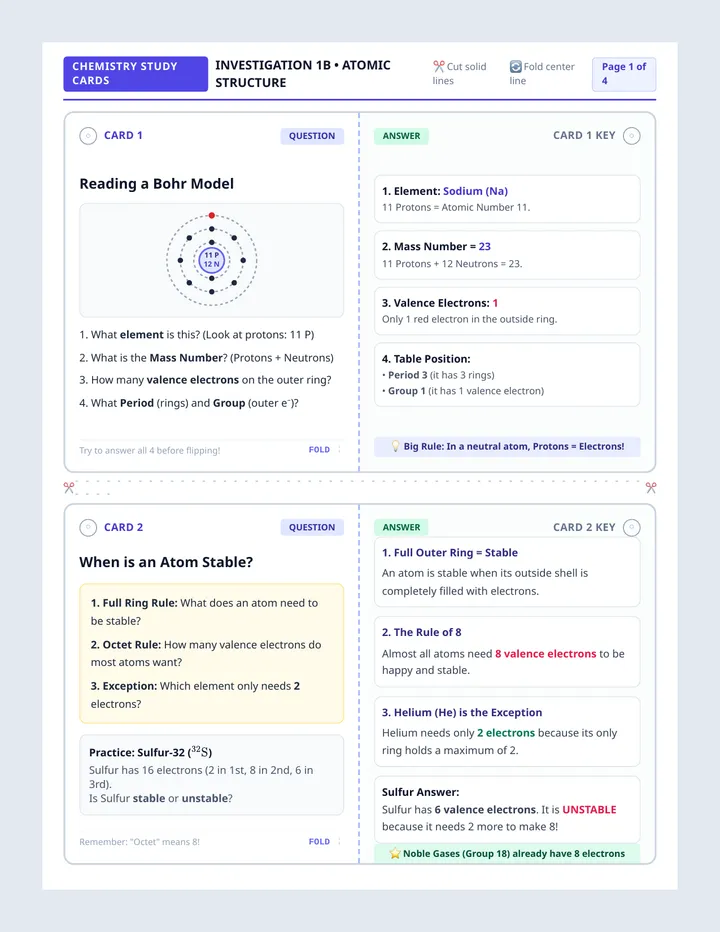
An accessible, dyslexia- and LD-friendly 4-page set of 8 large study flashcards tailored for a high school sophomore with a reading disability. Features 2 large cards per page, 14-16px high-contrast typography, bite-sized bullet points, step-by-step visual arrows, memory analogies, and clear cut/fold guides.

SP

Stephanie Petrucci

Sequences

Climate Crisis Slides

Science Essentials Vault

A comprehensive collection of core science units covering Environmental Science, Biology, and Physical Science. This sequence provides high-impact instructional slides, hands-on lab experiences, guided notes, and differentiated assessments for five major scientific domains.

CB

Chloe Brown

25
Atomic Foundations Teacher Planner

Atomic Foundations

A comprehensive 5-day unit focusing on atomic structure, the periodic table, and chemical reactivity, designed for Integrated Physics and Chemistry students.

MB

Marsha Bolden

14
Chemistry Finals Study Booklet

Molecular Mastery Finals Prep

A comprehensive review package for CHEM 1406, featuring in-depth study guides for key topics and a full practice exam with detailed solutions.

OM

Olutoyin Makinde

3
Atom Atlas Notes

Atom Atlas

A bilingual (English/Spanish) unit exploring the structure and organization of the periodic table, focusing on atomic properties and element classification.

MB

Marsha Bolden

4
Flashcard Fusion Cards

Atomic Architecture

A comprehensive study sequence covering atomic structure, periodic trends, chemical bonding, and nomenclature to prepare students for chemistry assessments.

MB

Marsha Bolden

4
Atomic Reference Sheet

Atomic Mastery Unit

A series of lessons focused on mastering the structure of the atom, radioactive isotopes, and the organization of the periodic table.

D

david.marques

6

Lessons

Atomic Atlas Reference Sheet

Element Explorer Lab

A hands-on physical and conceptual chemistry lesson exploring the periodic table through 3D-printed puzzle tiles, elemental properties, and safety classifications.

DB

Danielle Burham

9
Atomic Blueprint Slides

Atomic Blueprint

A comprehensive introduction to the Periodic Table, exploring how elements are organized by atomic number, the significance of groups and periods, and the distinct properties of metals, non-metals, and metalloids through real-world examples.

CB

Chloe Brown

7
Periodic Table Reference Notes

The Periodic Table

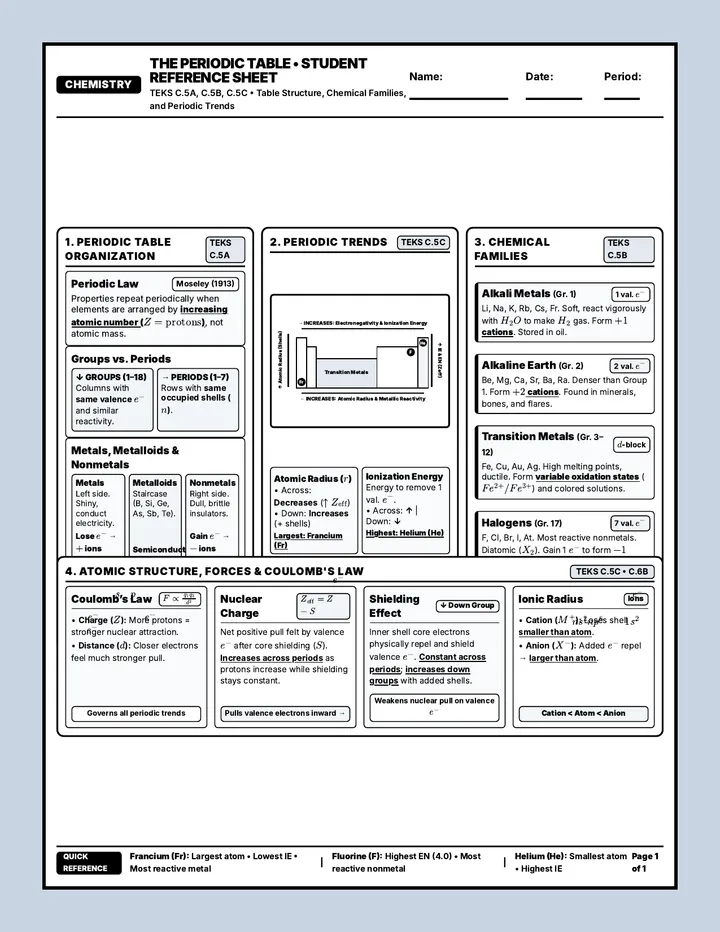
A comprehensive chemistry lesson covering periodic table organization, chemical families, Coulombic forces, and periodic trends using student reference notes and an accompanying scavenger hunt worksheet.

OM

Olutoyin Makinde

3
Atom Secrets Study Guide

Atomic Architecture

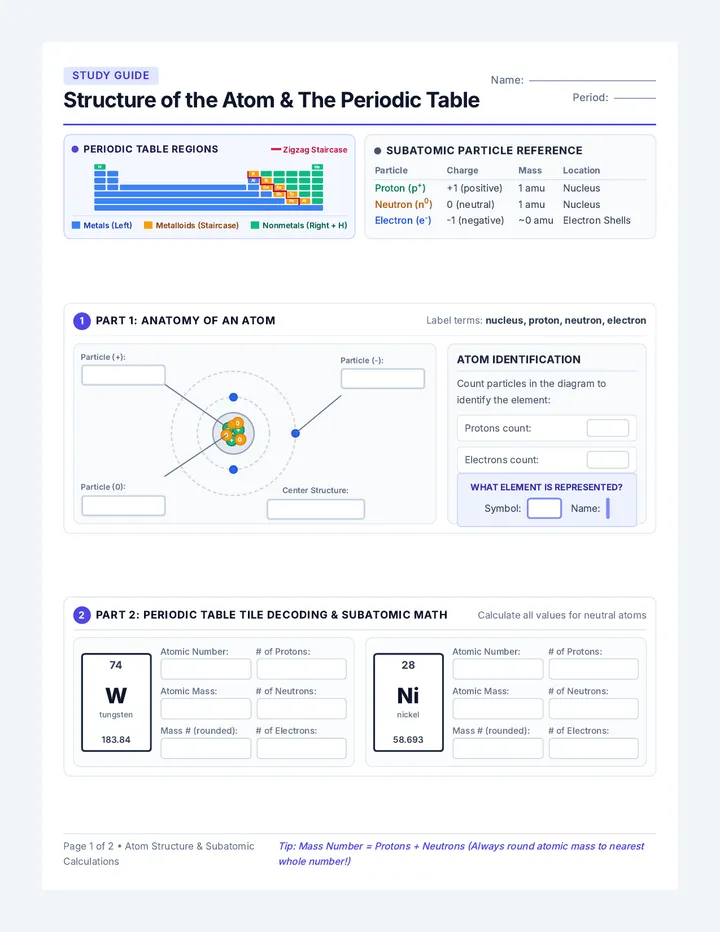
A foundational unit lesson covering atomic structure, subatomic particles, Bohr models, and periodic table trends with study materials and complete answer keys.

SH

Sarah Hale

2
Matter and Atoms Visual Test

Matter and Bonding Assessments

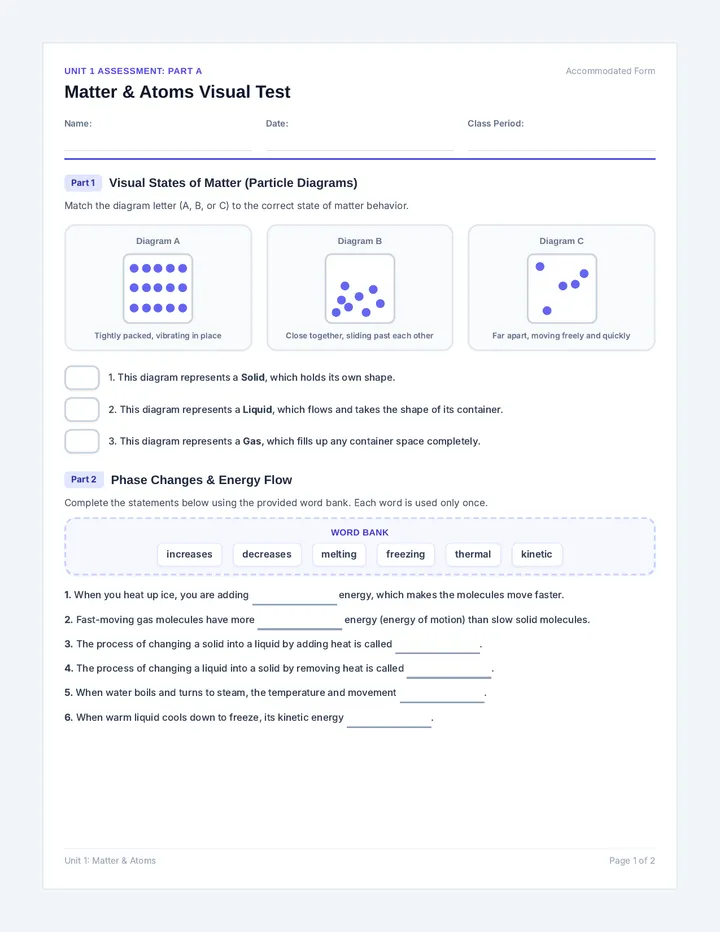
A comprehensive, highly accommodated, and tiered assessment suite covering states of matter, atomic structure, classifications of matter, periodic table trends, ions, and ionic bonding with Coulomb's Law. Built-in diverse learner supports include visual organizers, sentence starters, 2-choice questions, and step-by-step guided calculations.

CB

Chloe Brown

4
Foundations Practice Exam

Chemistry Foundations Prep

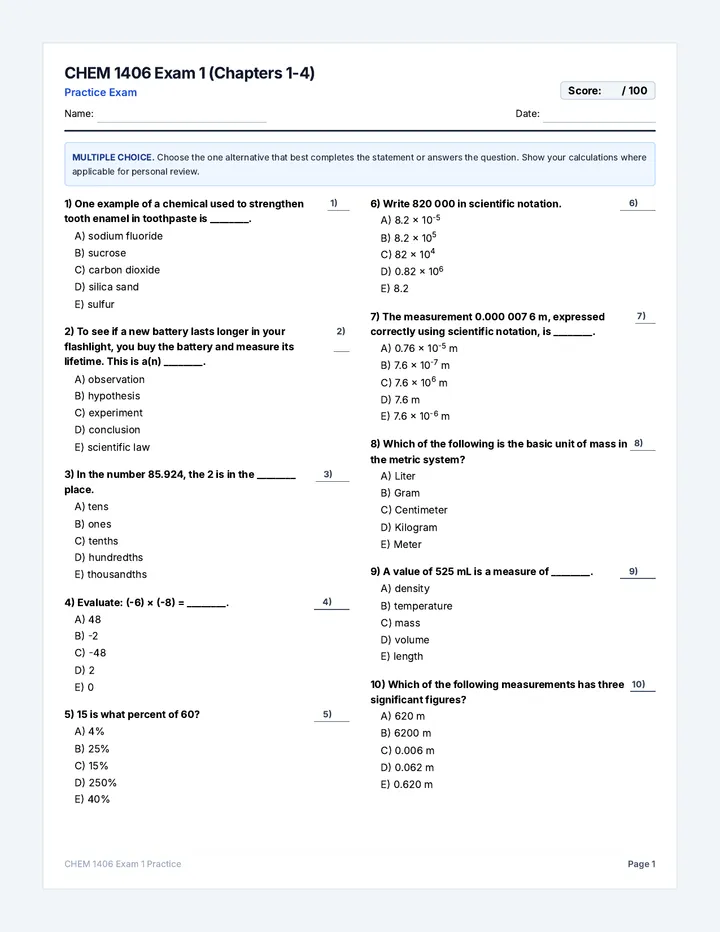
Comprehensive preparation unit covering chemistry fundamentals from Chapters 1 to 4, including scientific measurements, matter, energy, and atomic structure. Contains a parallel practice exam, a detailed study guide, and an answer key with worked solutions.

OM

Olutoyin Makinde

3