Lenny.com
Explore
Create
ActivitiesNewMathEnglish Language ArtsScience & EngineeringSocial StudiesGlobal LanguagesHealth & Physical EducationSpecial EducationCounseling & Life SkillsArts & CreativityESL
Lenny.com
Lenny.com
Explore
Create
ActivitiesNewMathEnglish Language ArtsScience & EngineeringSocial StudiesGlobal LanguagesHealth & Physical EducationSpecial EducationCounseling & Life SkillsArts & CreativityESL
Lenny.com
Lenny.com

Solutions

Lenny for EducatorsLenny for SchoolsLenny for Districts

Product

ExploreSign inCreateSupportAbout

Resources

Getting startedMTSS Acceleration Program

© 2026 Lenny Learning Inc.

TermsPrivacyAccessibility
LinkedInInstagramX
Lenny

Fossils

Fossilization processes, preservation types, and geological time scales. Examines how organic remains transform into rock to reveal the history of life on Earth.

Science & EngineeringLife ScienceLiving ThingsAnimalsPlantsBody SystemsTraitsAdaptationsCellsEcosystemsHeredityGenes to TraitsCell DivisionPhysicsComparing MaterialsShapes and PropertiesMagnetsMagnetismLightSoundLight and SoundMatterStates of MatterChanges of StateMixturesPhysical and Chemical ChangeHeating and CoolingHeat and Thermal EnergyEnergyForce and MotionElectrical CircuitsAtoms and MoleculesPeriodic TableMotion in One DimensionMotion in Two DimensionsScalars and VectorsForces and Laws of MotionCircular Motion and GravityMomentum and ImpulseWork, Energy, and PowerWavesElectromagnetic WavesGeometric OpticsElectricity and MagnetismSimple Harmonic MotionThermodynamicsNuclear PhysicsEarth Science & AstronomyWeatherWater CycleRocks and MineralsFossilsEarth's FeaturesEarth's ResourcesEarth's StructureWeather and ClimateEarth EventsFossils and Geologic TimePlate TectonicsHuman ImpactsAstronomyChemistryUnits and MeasurementAtomic StructurePeriodic TrendsChemical BondingNomenclatureMolecular StructureIntermolecular ForcesThe MoleStoichiometryProperties of GasesSolutionsChemical ReactionsBalancing EquationsEnergy ChangesRates of ReactionsEquilibriumAcids and BasesQuantum ModelBiologyClassificationCell StructureThe Chemistry of LifeBiomoleculesCellular TransportCell EnergyCell Growth and DivisionDNAProtein SynthesisMeiosis and Sexual ReproductionPatterns of InheritanceMulticellular OrganismsEvolutionEcologyBiodiversityComputer ScienceAlgorithms and Computational ThinkingProgramming LanguagesComputing SystemsNetworks and InternetData AnalysisCybersecurityAI and Machine LearningSoftware Design and DevelopmentBlockchainEngineering & AIDesigning ExperimentsEngineering PracticesDesign ThinkingEngineering Design ProcessMechanical EngineeringElectrical EngineeringMaterials and StructuresCAD and 3D DesignRoboticsArtificial Intelligence BasicsVibe CodingMachine LearningAI Ethics and SocietySystems ThinkingEntrepreneurship & InnovationEntrepreneurial MindsetBusiness Idea DevelopmentBusiness Plan BasicsMarketing & Customer DiscoveryFinancial Management for Startups

Videos

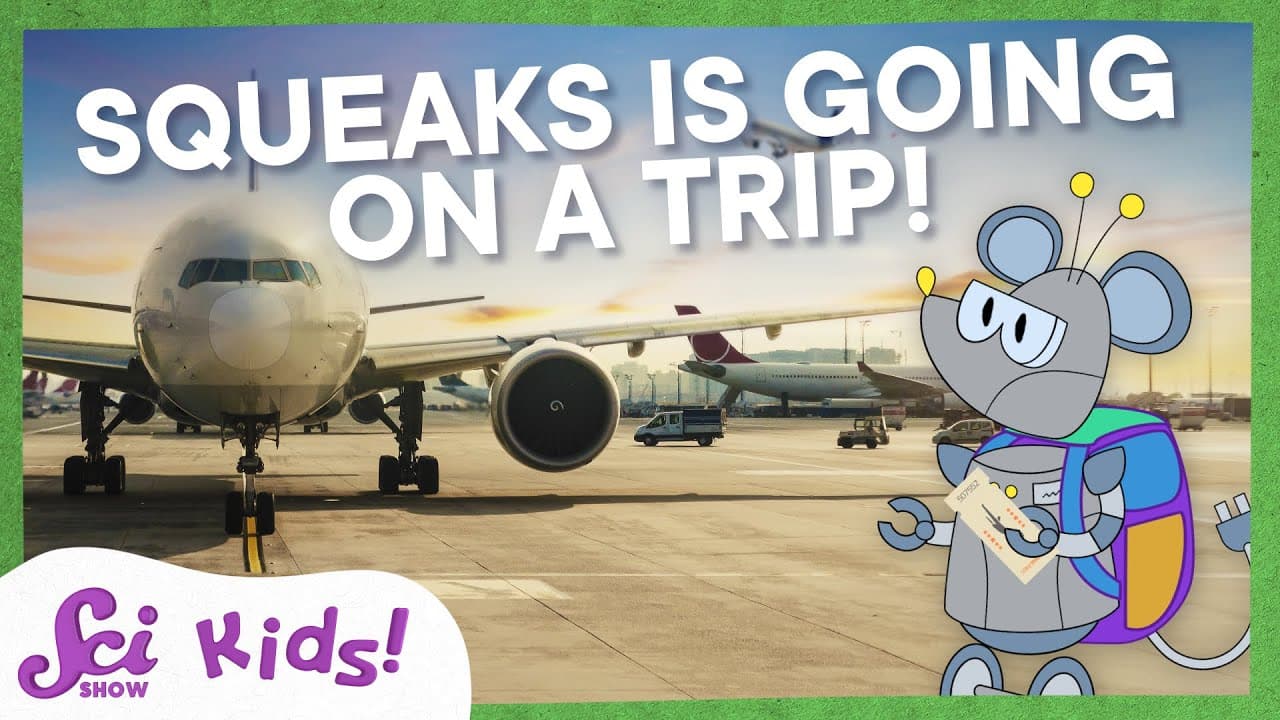
The Science of Flying: Planes, Birds, and Wind

The Science of Flying: Planes, Birds, and Wind

This comprehensive educational video demystifies the science of flight to help alleviate anxiety about flying. Through three distinct segments, hosts Jessi and Anthony explain the physics of how airplanes stay aloft, compare the different wing structures of animals found in nature, and explore how wind patterns affect flight and the Earth itself. The narrative is anchored by Squeaks the robot mouse, who is nervous about his first airplane trip, providing a relatable emotional hook for young viewers. The video covers a wide range of scientific topics including aerodynamics (thrust and lift), biology (comparative anatomy of bird, insect, and penguin wings), meteorology (global and local wind patterns), and paleontology (the extinct Quetzalcoatlus). It uses clear animations and real-world analogies to explain complex concepts like air pressure, the jet stream, and erosion. A key theme throughout is how understanding how things work can help overcome fear. Teachers can use this video to support lessons in physics, life sciences, and earth systems. It offers excellent opportunities to discuss the relationship between form and function in animal adaptations, the physical forces of flight, and the powerful effects of wind. Additionally, the video serves as a strong social-emotional learning tool for discussing travel anxiety and strategies for managing nervousness through knowledge.
SciShow KidsSciShow Kids

22mins 26s

How Plate Tectonics Shape Our Planet

How Plate Tectonics Shape Our Planet

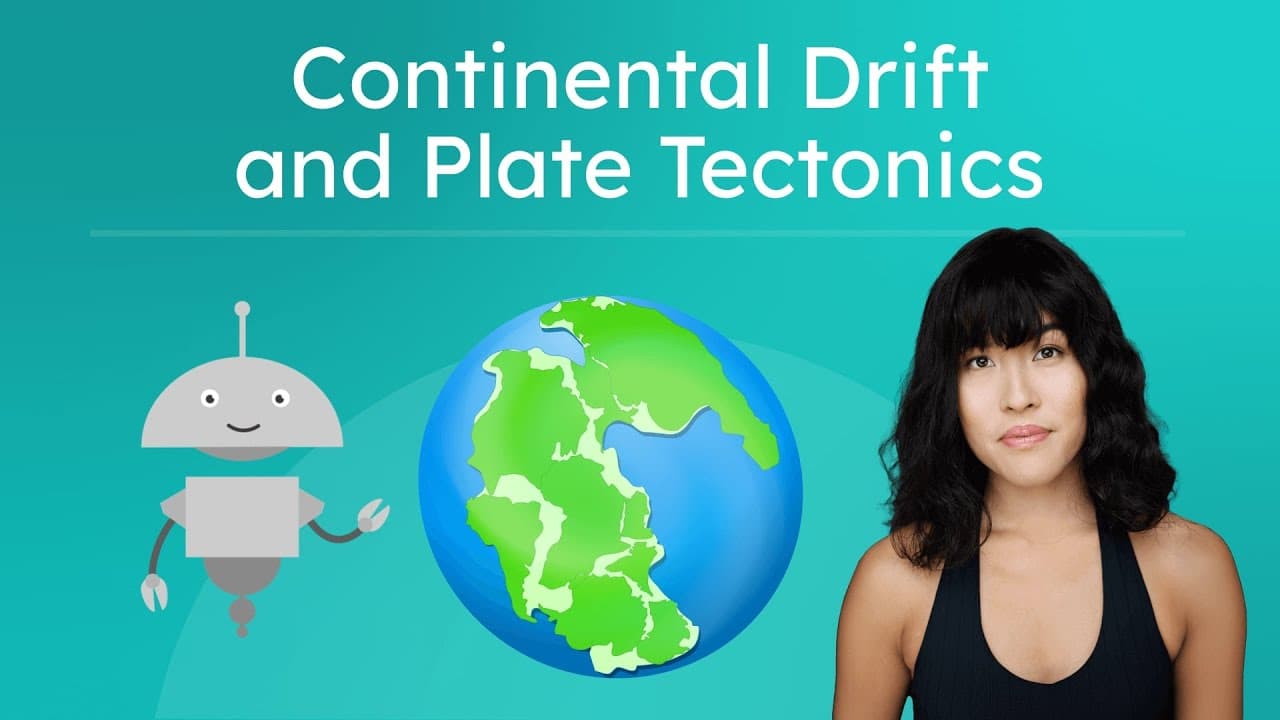
This engaging earth science video explores the fascinating geological history of our planet, specifically focusing on how the Earth's surface has changed over millions of years. It introduces students to the concept of the Earth as a giant puzzle, explaining the connection between the historical theory of Continental Drift and the modern theory of Plate Tectonics. The narrator guides viewers through the scientific journey of Alfred Wegener, whose initial hypothesis about a supercontinent called Pangaea was rejected until fossil and rock evidence later confirmed that continents do indeed move.

Miacademy & MiaPrep Learning ChannelMiacademy & MiaPrep Learning Channel

9mins 36s

How Paleontologists Use Fossils to Study the Past

How Paleontologists Use Fossils to Study the Past

In this engaging episode of SciShow Kids, host Jessi introduces students to the fascinating world of paleontology. The video explains that while many children love pretending to be dinosaurs, there are scientists called paleontologists whose actual job is to study ancient life. Jessi breaks down complex concepts like extinction and fossilization into age-appropriate terms, explaining how scientists use clues left behind in rocks to reconstruct the history of life on Earth. The video moves from the definition of fossils to the practical tools and methods scientists use to find, excavate, and study them. Key themes include the definition and formation of fossils, the concept of extinction, and the scientific process of gathering evidence to draw conclusions. The video emphasizes that paleontology isn't just about dinosaurs; it covers all ancient life including plants, mammals, and even bacteria. It details the step-by-step process of a paleontologist's work: exploring promising sites, carefully digging with specific tools, using advanced technology like CT scanners in the lab, and sharing discoveries with the world through museums. For the classroom, this video serves as an excellent launchpad for units on Earth history, dinosaurs, or scientific careers. It models critical thinking by showing how scientists infer behavior (like diet or living in groups) from physical evidence (like teeth shape or fossil density). The visual metaphors—comparing fossil reconstruction to solving a giant puzzle—help students grasp abstract concepts about deep time and scientific inquiry. It connects natural childhood curiosity about dinosaurs to real-world scientific practice.

SciShow KidsSciShow Kids

4mins 12s

Meeting Our Ancient Relatives: The Story of Neanderthals

Meeting Our Ancient Relatives: The Story of Neanderthals

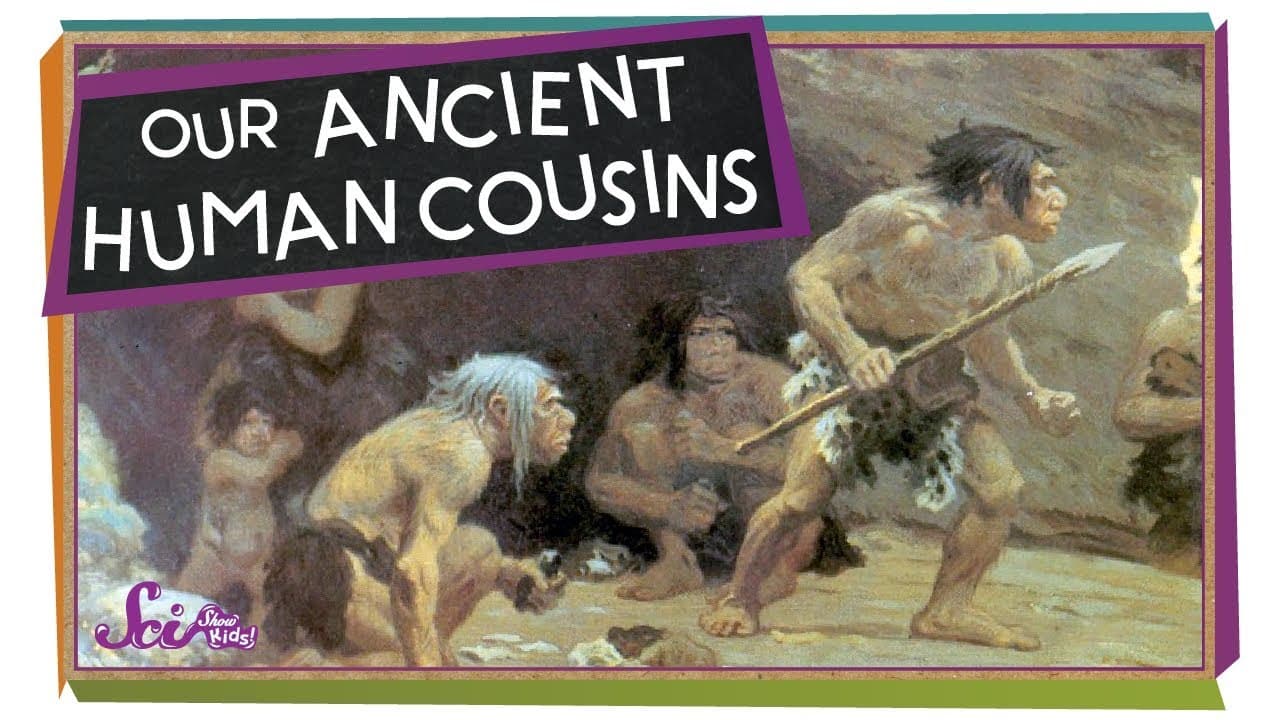
In this engaging episode of SciShow Kids, host Jessi and her robot mouse friend Squeaks explore the concept of the human family tree, moving from biological families to the broader history of the human species. The video introduces the scientific name for humans, *Homo sapiens*, and explains that while we are the only human species alive today, we used to share the planet with other human-like relatives, specifically the Neanderthals. Through colorful animations and clear explanations, the video breaks down complex evolutionary concepts into kid-friendly terms. The content dives deep into who the Neanderthals were, describing their physical adaptations for cold climates—such as shorter limbs and larger noses—and their distinct culture, including tool use, clothing, and care for one another. It also covers the concept of fossils as the scientific evidence that allows us to learn about extinct species. The narrative touches on environmental changes and competition for resources as key reasons why Neanderthals eventually went extinct while *Homo sapiens* survived. This video is an excellent resource for elementary classrooms to introduce topics like adaptation, fossils, and early human history. It simplifies the abstract concept of "species" and "ancestors" using the familiar analogy of a family tree. Teachers can use this video to spark discussions about how animals adapt to their environments, how scientists use fossils to reconstruct the past, and the shared history of living things on Earth.

SciShow KidsSciShow Kids

4mins 29s

How Continents Connecting Changed Animal History

How Continents Connecting Changed Animal History

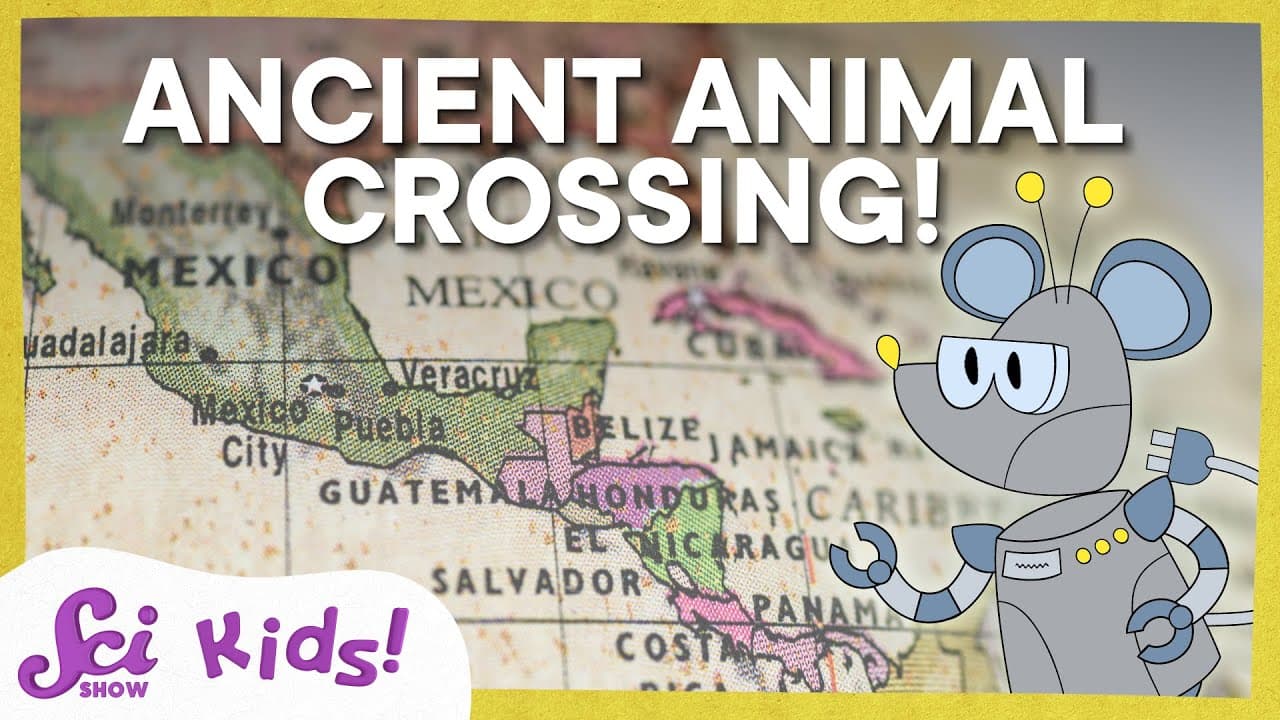
This educational video explores the geological and biological history of the Americas, specifically focusing on the event known as the Great American Interchange. Hosted by Jessi and her robot mouse friend Squeaks, the video explains how the shifting of tectonic plates created the Isthmus of Panama, a land bridge that connected North and South America about 3 million years ago. This connection allowed distinct animal populations from isolated continents to migrate, mix, and adapt in new environments. The video delves into key scientific concepts such as continental drift, extinction, and the study of fossils. It provides detailed profiles of fascinating prehistoric megafauna, including the massive Short-faced Bear, the tank-like Glyptodont, and the Giant Ground Sloth. Through clear animations and comparisons to modern animals, viewers learn how these ancient creatures differed from their living descendants and how scientists use fossil evidence to reconstruct the past. For educators, this resource serves as an engaging bridge between geography and biology. It visualizes abstract concepts like deep time and plate tectonics in a concrete way accessible to elementary students. Teachers can use this video to launch lessons on animal adaptations, the changing Earth, map reading skills, or the difference between extinct and extant species.

SciShow KidsSciShow Kids

7mins 40s

Traveling Back to the First Life on Earth

Traveling Back to the First Life on Earth

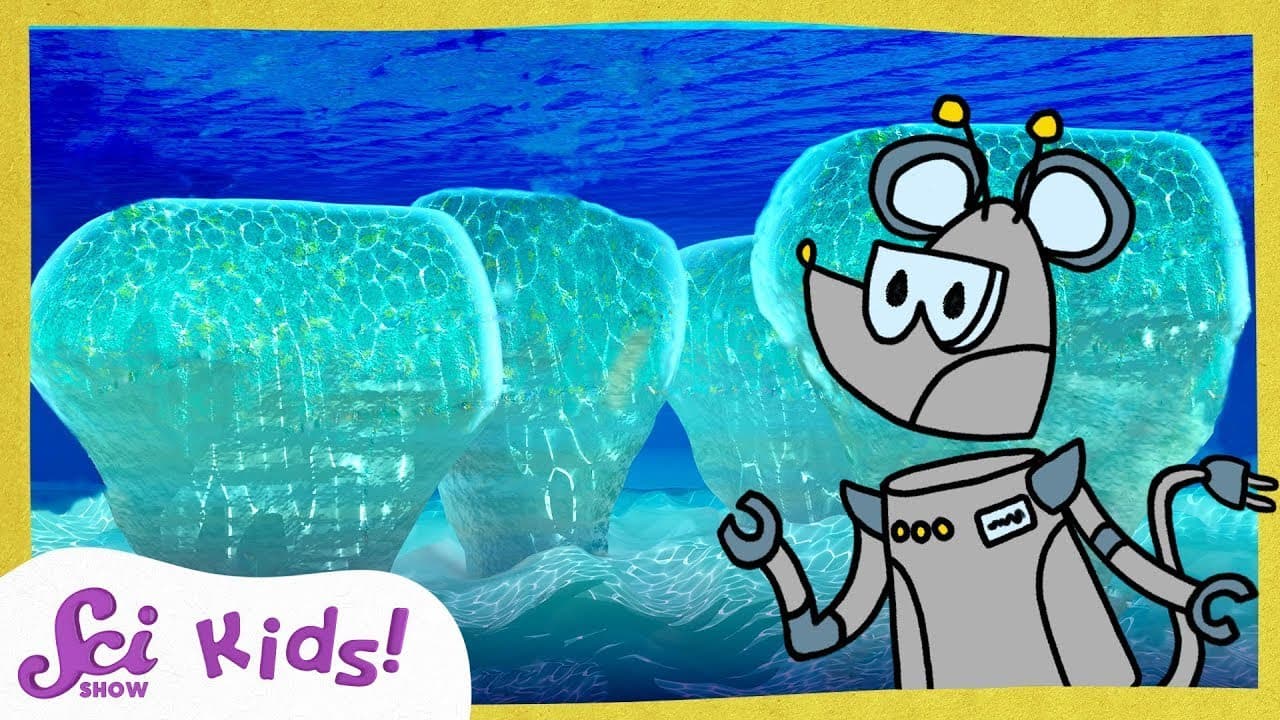
In this engaging episode of SciShow Kids, host Anthony and his robot mouse friend Squeaks explore the history of life on Earth through a pretend time machine adventure. While Squeaks initially wants to visit the dinosaurs, Anthony suggests traveling back even further—3.5 billion years ago—to discover the very first living things on our planet. The video uses this narrative frame to introduce students to the concept of deep time and the vast history that occurred before dinosaurs even existed. The core scientific focus is on stromatolites and cyanobacteria. The video explains how these microscopic organisms use sunlight to create energy (photosynthesis) and build rock-like structures called stromatolites over thousands of years. Through clear animations and analogies, such as comparing rock layers to lasagna, complex geological and biological processes are made accessible to young learners. The video also connects this ancient history to the modern world by showing living stromatolites that still exist in Shark Bay, Australia today. This resource is highly valuable for introducing elementary students to paleontology beyond just dinosaurs. It helps students visualize the timeline of Earth's history, introduces the concept of fossils as clues, and explains the role of microorganisms in shaping our planet. Teachers can use this video to launch units on Earth's history, fossils, rock formation, or the basic needs of living things, effectively bridging the gap between biology and geology.

SciShow KidsSciShow Kids

5mins 44s

Materials

Eco Explorer Flashcards

Eco Explorer Flashcards

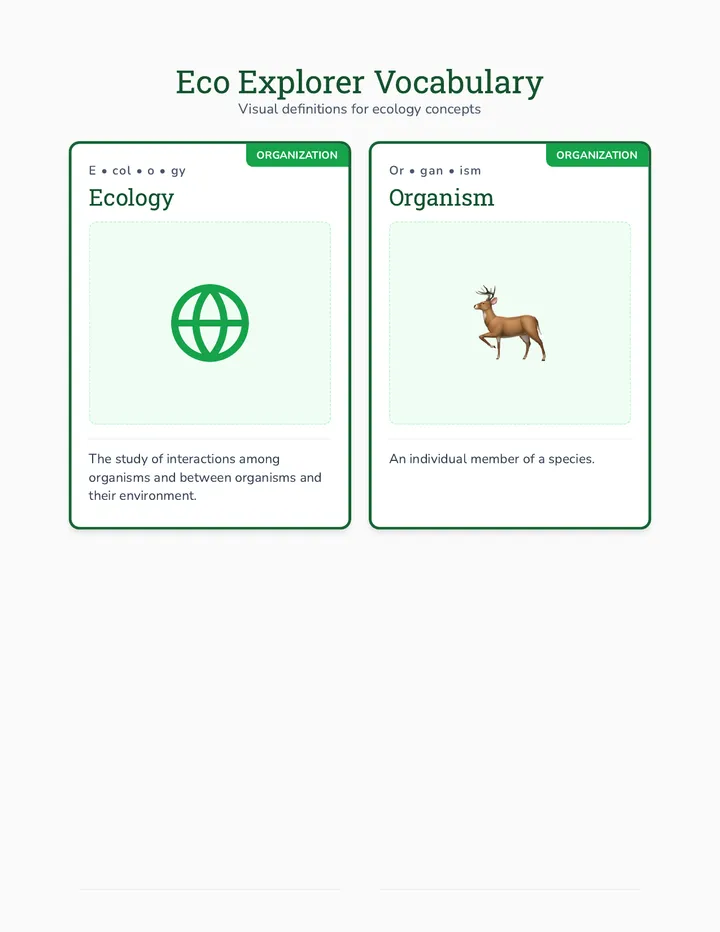
A comprehensive set of 29 visual vocabulary flashcards for Ecology. Each card features the term broken into syllables, a thematic visual icon or emoji, and a clear definition, categorized by Levels of Organization, Energy, and Biogeochemical Cycles. Updated to fix page break issues and chemical formula rendering.

J

Jodi.Denton

Earth Benchmark Flash Cards

Earth Benchmark Flash Cards

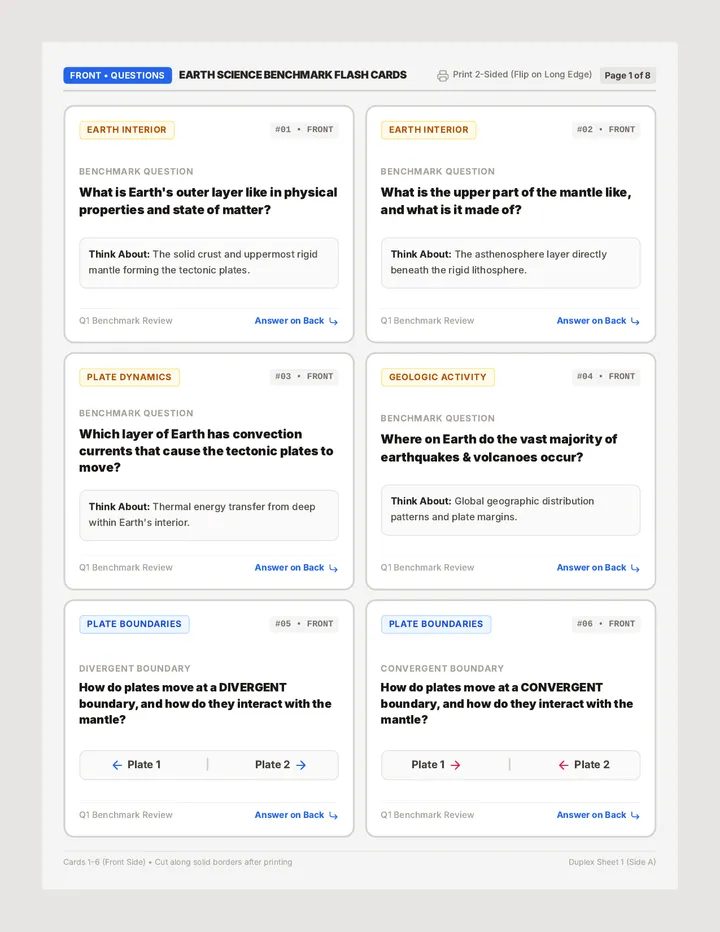
An 8-page ready-to-print double-sided flashcard set (24 cards total) engineered for duplex 2-sided printing (flip on long edge) with perfectly mirrored front-and-back grids so questions print on the front and answers on the reverse with no folding required.

A

Andrea.Golden

Science Explorer Field Journal

Science Explorer Field Journal

A refined 6-page guided research packet for 3rd-grade science projects. It features a standards-aligned topic menu, dedicated sections for scientific explanation with evidence, real-world connections, model planning, and a final mission checklist.

JD

Jillian Danton

Dino Detective Worksheet

Dino Detective Worksheet

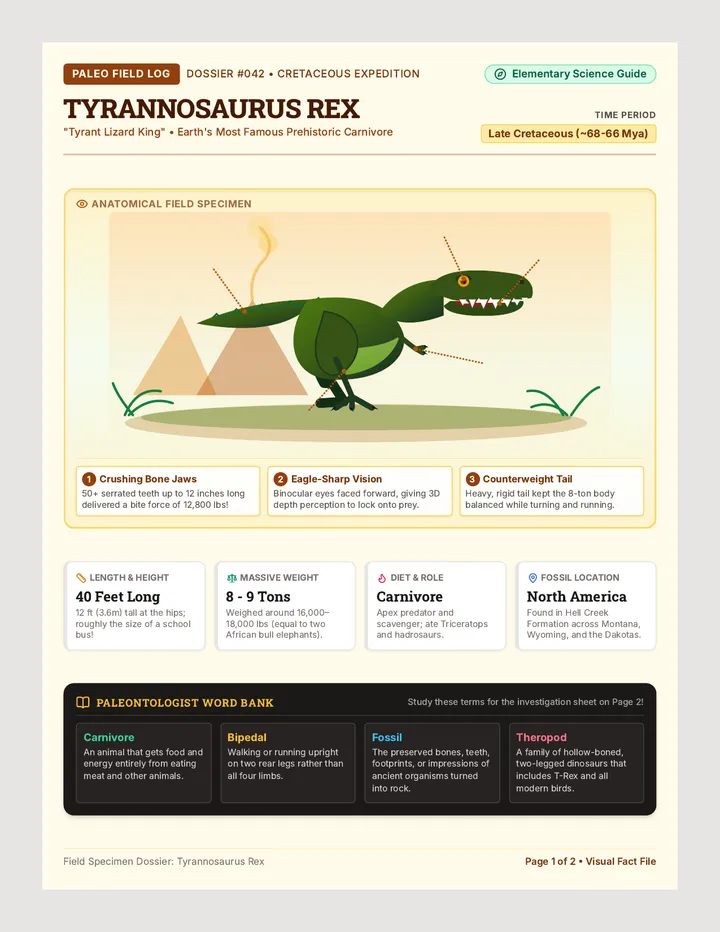
An illustrated paleontological profile and comprehension worksheet featuring the Tyrannosaurus Rex. Includes detailed anatomical callouts, essential prehistoric vocabulary, quick facts, and engaging elementary assessment activities.

Sequences

Scout Mission Slides

Earth System Scouts

A foundational exploration of the four main branches of Earth Science through a multi-day digital scavenger hunt designed for accessibility and engagement.

S

Shelby.Toll

4
Wild Writing Curriculum Overview

Science Scouts Expedition

An inquiry-based science and literacy curriculum for grades 1-3 that combines foundational scientific concepts with high-frequency sight word mastery and precision handwriting practice.

AC

Andrew Casini

41
Rock Origins Slides

Earth Shapers

A comprehensive unit exploring how natural processes like rock formation and erosion work together to shape the Earth's surface over millions of years.

CN

Coleman Newell

19
Fossil Finders Worksheet

Fossil Foundations

A comprehensive unit exploring how fossils form, how they are dated, and what they reveal about Earth's biological and geological history.

A

amanda_raboin

3
Tiny Bits Passage

NC Science Explorer

A comprehensive science curriculum for 8th grade students working at a 1st grade academic level, covering all North Carolina Essential Standards with simplified language, high-interest visuals, and structured support.

KM

Karen McGee

32
Mineral Mashup Slides

Earth Material Explorers

A comprehensive 4th-grade earth science unit aligned with the TERC Earth Materials investigation, focusing on the properties of minerals, types of rocks, the rock cycle, and soil composition through a "Geology Field Lab" lens.

K

kthompson

6