Fundamental biological structures and processes from microscopic cells and genetic inheritance to complex body systems and global ecosystems. Addresses plant and animal adaptations, trait expression, and the cycles of life and cell division.
A 1-page science worksheet for 2nd graders covering the definition of pollen, its importance, and identification of pollinators with writing and sketching sections.
A comprehensive set of 29 visual vocabulary flashcards for Ecology. Each card features the term broken into syllables, a thematic visual icon or emoji, and a clear definition, categorized by Levels of Organization, Energy, and Biogeochemical Cycles. Updated to fix page break issues and chemical formula rendering.
A highly accessible, large-print, high-contrast cut-and-paste matching activity designed for low-literacy and visually impaired students to match freshwater animals and plants to their specific zones (land, surface, underwater) on a pond habitat board.
A spring-themed word search featuring 25 words related to life cycles, baby animals, and weather. Includes a decorative student worksheet and a corresponding answer key.
Set od 11 memorijskih kartica velikog formata (4 po stranici) s doslovnim tekstom odgovora o krvotoku. Dizajnirane su za ispis s jasnim rubovima i numeracijom radi lakšeg snalaženja. Sadrže sav tekst iz izvora bez skraćivanja.
A premium, botanical field-guide themed reading comprehension passage and worksheet about the carnivorous plants of the Carolina bogs. Designed for upper elementary or middle school students to practice identifying main ideas, extracting key details, and interpreting scientific vocabulary.
A highly realistic and visually refined food web worksheet for Christmas Island. It features custom visuals for crab larvae, sea cucumbers, and sea turtles, a distinctly yellow theme for the crazy ant, and accurate energy flow arrows. The layout is optimized for clarity and high-contrast printing on a single page with zero element overlap.
A comprehensive set of 16 bilingual (English/Spanish) visual vocabulary cards covering plant life cycles, plant parts, essential resources, and irrigation/math concepts for a classroom garden project.
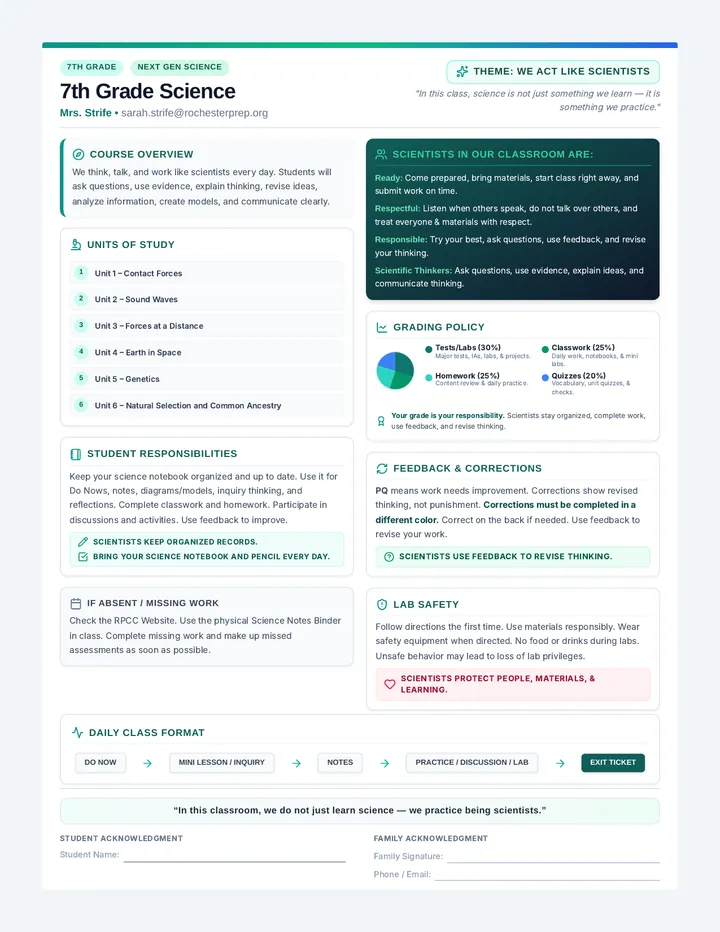
An updated 1-page 7th Grade Science Syllabus for Mrs. Strife. Formatted in a clean, professional, and visually engaging dual-column layout with organized boxes, bold headings, blue/green accent themes, and custom science icons. Includes a newly designed visual 'Grading Policy' section with a clean CSS-based donut chart. Perfect for student and parent onboarding.
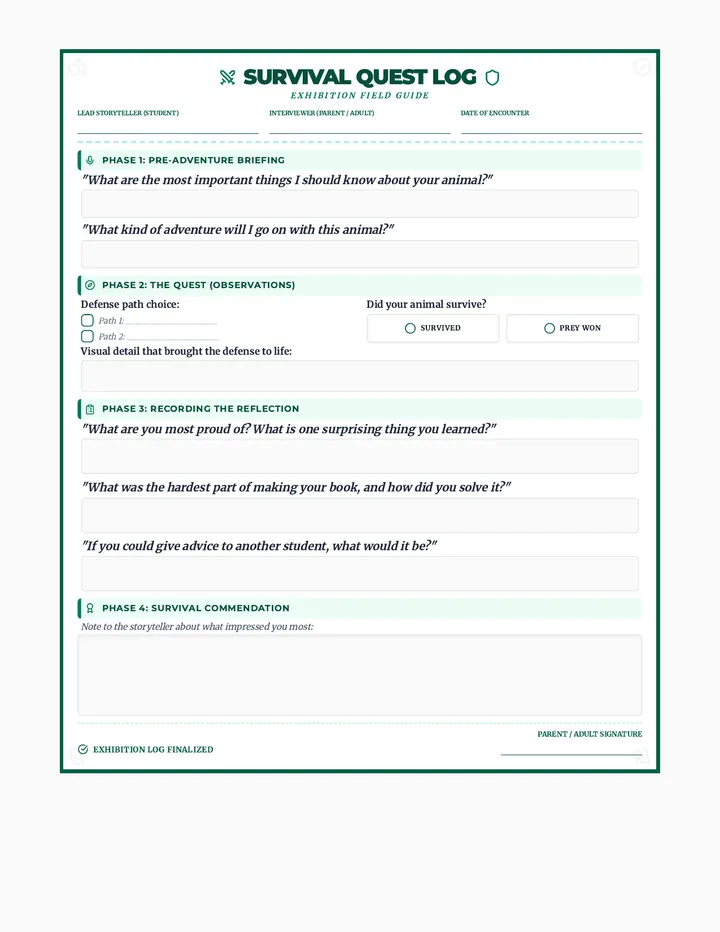
Final one-page Survival Quest parent feedback form. Optimized with a constrained 820px height and tightened vertical spacing to guarantee it fits on a single printed page while maintaining readable font sizes for the interview and reflection questions.
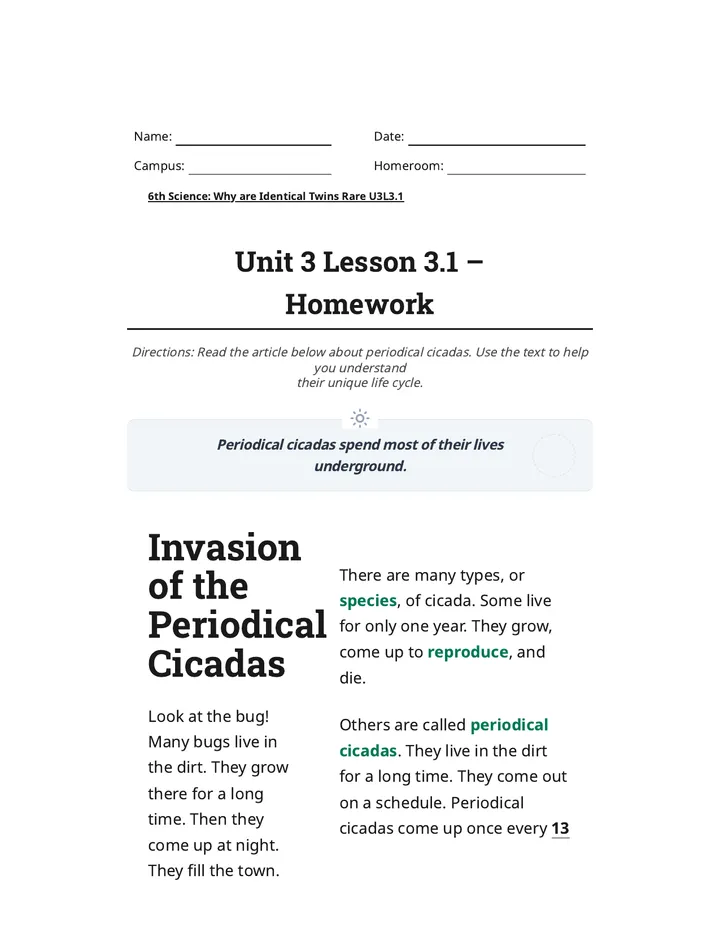
A 2-page homework article about periodical cicadas, adapted for a kindergarten reading level. This version removes the dashed borders and page numbers while maintaining the original layout and 6th-grade vocabulary, designed to be printed front and back on standard paper.
A 2-page age-appropriate guided note-taking document for studying ocean habitats. Features simplified vocabulary (Sunlight Zone, Tide Pools, etc.) and structured writing spaces for Temperature, Light, and Tides. Optimized to fit strictly on two pages.
A finalized creative writing and drawing worksheet for 'The Big Challenge'. Features a spacious drawing box, a student-friendly word bank, and six sets of primary-style handwriting lines with clear top, mid (dashed), and baseline boundaries, all fitted to a single page.
A comprehensive one-page student handout that includes all text from the cave ecosystem case study verbatim. It features the primary article text, the specific Research Activities data for food web construction, and a classification task for ecosystem roles.
An improved honey bee fact sheet for third graders with fixed page breaks and consistent bullet point styling. Features clear sections on anatomy, life cycle, roles, pollination, fun facts, and safety in a warm field-guide aesthetic.
A comprehensive fact sheet poster detailing the biological classification of venomous snakes, highlighting the differences between major families like Viperidae and Elapidae with a professional field-guide aesthetic.
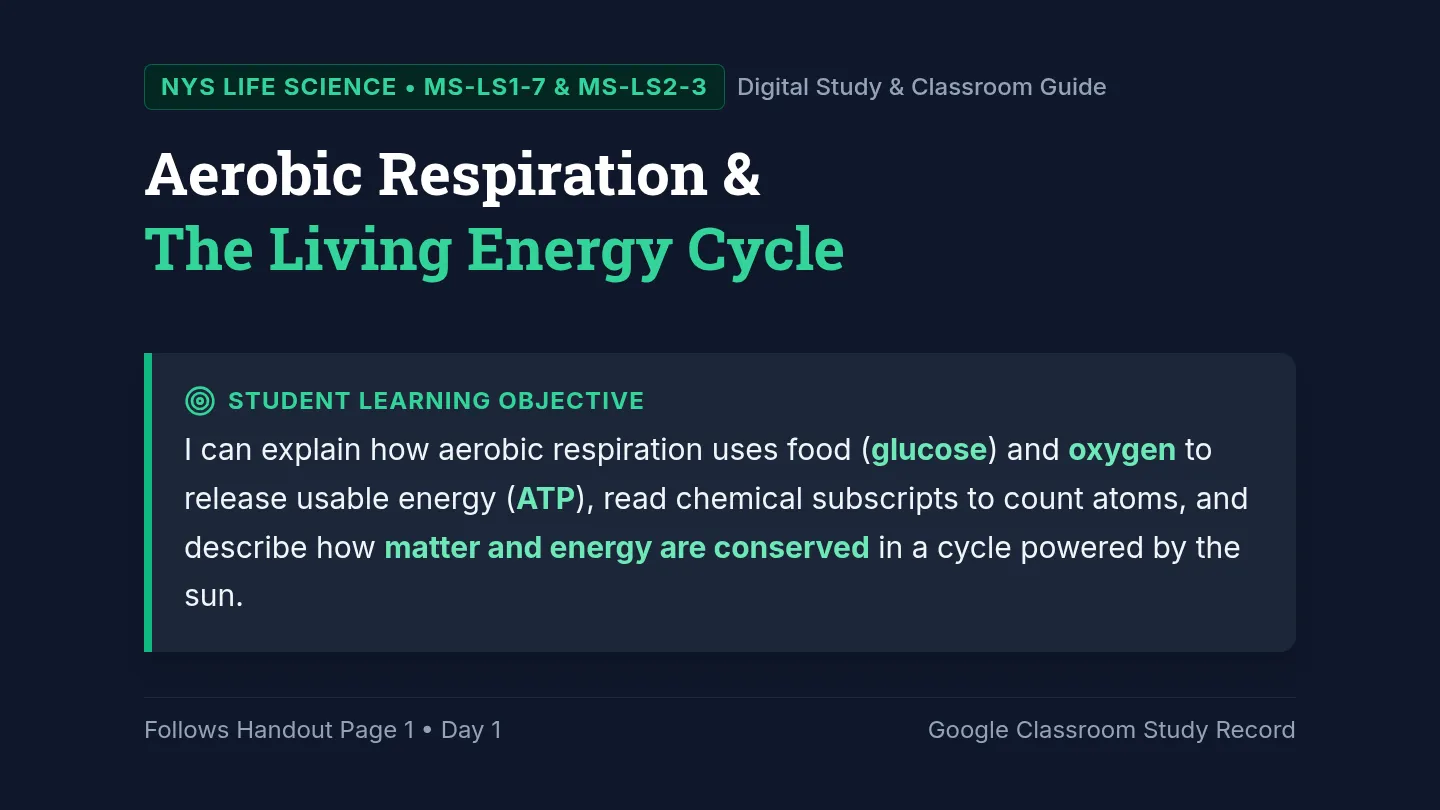
A fully optimized 4-page science study guide for the 8th-grade NYS science exam, featuring tight layout, fixed character encoding for chemical formulas with <sub> tags, improved student self-check areas, and clear domain summaries.
A kindergarten-level adaptation of the periodical cicada homework article. It simplifies the language while retaining essential vocabulary (cicada, periodical, reproduce, predators, species, offspring) and mirrors the original document's visual design, including the header, callout box, and student notes sidebar.
A compact, single-page wildlife scavenger hunt checklist featuring 10 specific animals. Each entry includes a checkbox, a short identification clue, and a dedicated location line. The bottom includes an 'Explorer Challenge' for reflection and sketching.
A comprehensive collection of core science units covering Environmental Science, Biology, and Physical Science. This sequence provides high-impact instructional slides, hands-on lab experiences, guided notes, and differentiated assessments for five major scientific domains.
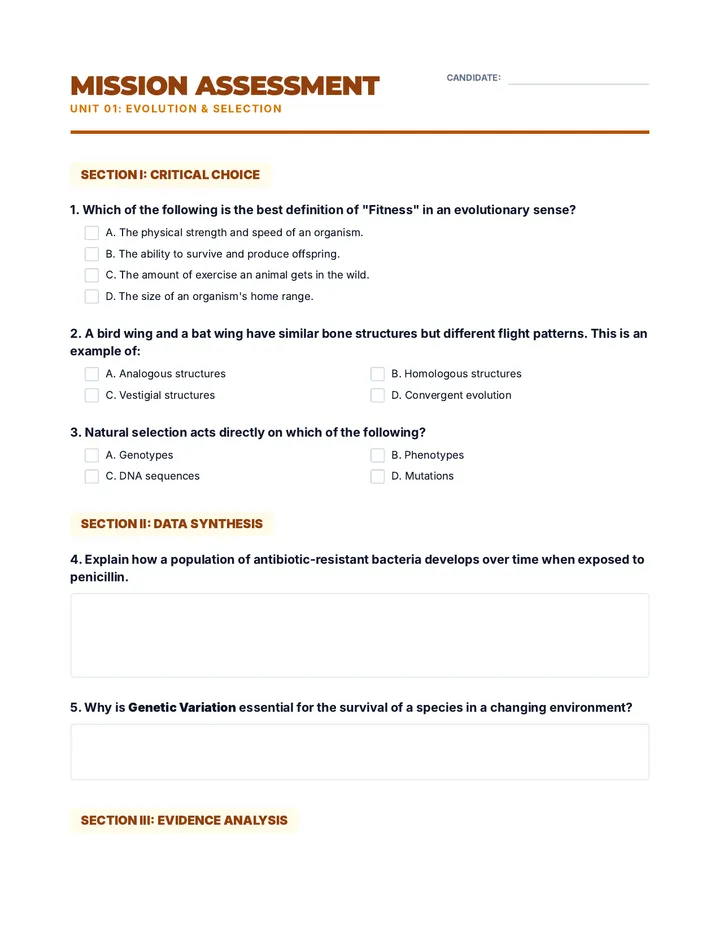
A high-intensity biology credit recovery program focused on high-yield standards: Evolution, Systems, Viruses, and Cellular Genetics.
A four-part immersive crime scene investigation where 7th-grade students act as forensic detectives to solve the mystery of the missing Golden Whistle trophy. This sequence guides students through scene processing, fingerprinting, ink chromatography, and final evidence synthesis.
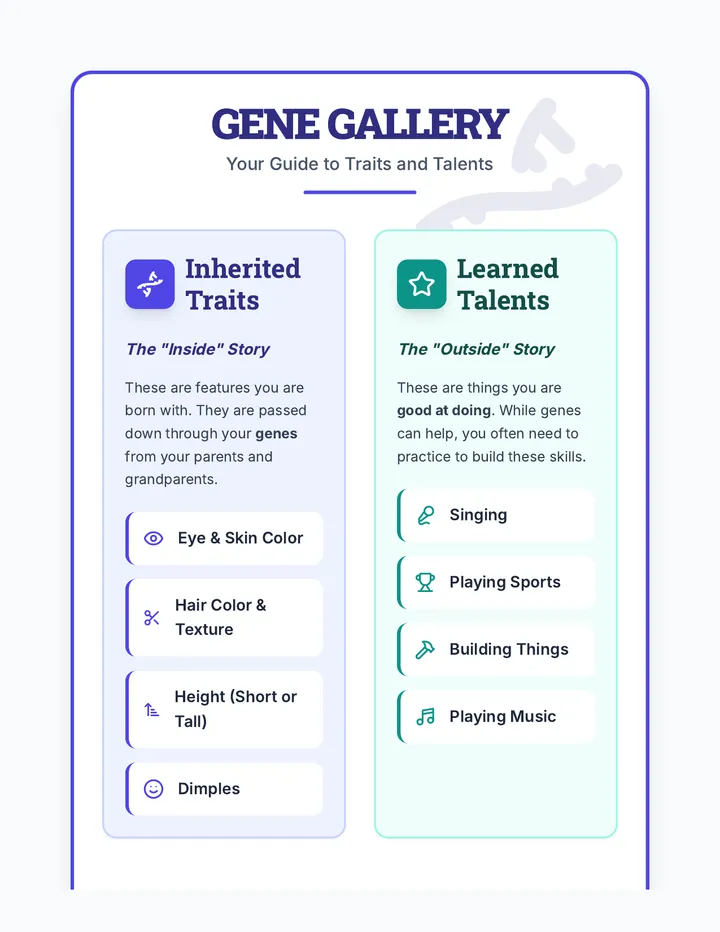
A comprehensive unit exploring inherited traits, talents, and character analysis through the lens of Kamal's story. Students will distinguish between genetic traits and learned talents, analyze character motivations, and document their own unique 'code'.
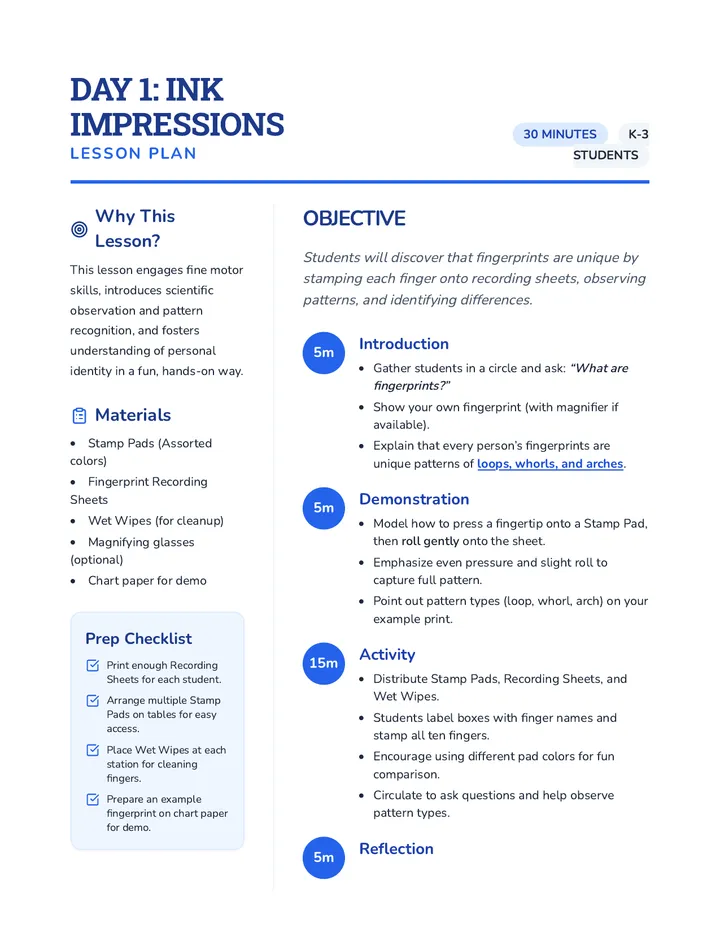
A 4-session hands-on sequence for K-3 students exploring identity and science through fingerprint art. Each session focuses on a different medium—stamp pads, pastels, paint, and markers—to teach pattern recognition and fine motor skills.
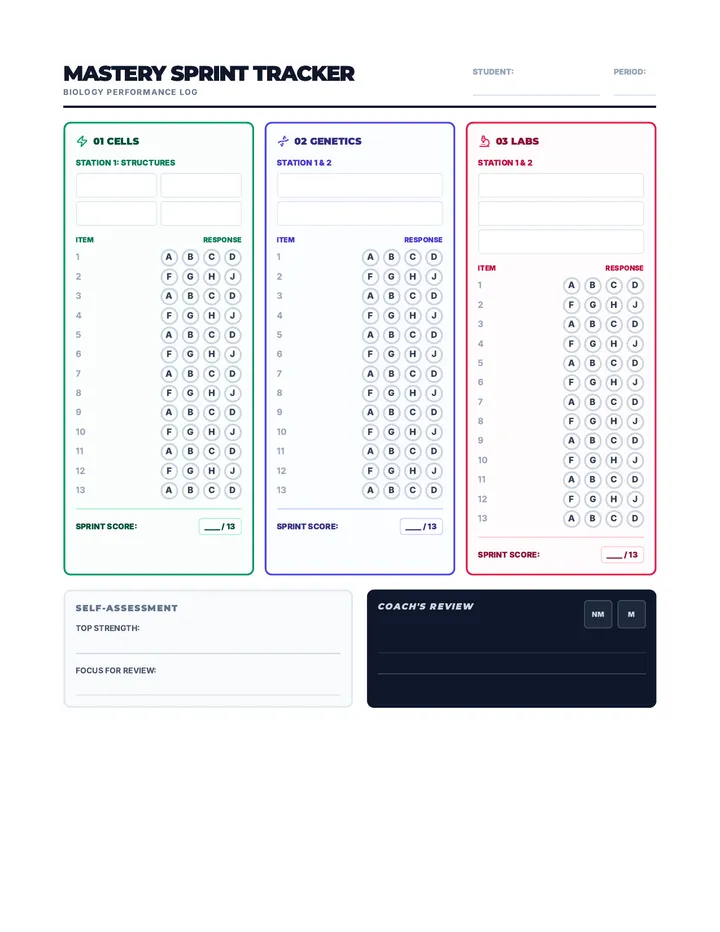
A high-intensity review sequence designed to move students from 'not met' to 'mastery' in Biology through vocabulary immersion and STAAR-style practice.
A comprehensive full-year planning framework for high school Biology, including pacing, unit objectives, lab requirements, and assessment strategies.
This sequence guides students through the Central Dogma of biology, exploring how genetic information flows from DNA to RNA and ultimately to functional proteins. Students will master molecular differences, the mechanics of transcription and translation, and the translation of genetic code into physical traits.
Students will explore the fundamental distinction between biological inheritance and environmental influence in living organisms. The sequence begins by identifying observable physical traits passed from parents to offspring, then shifts to behaviors and physical changes acquired through learning or environmental exposure.
This inquiry-based sequence explores the causal link between genetic mutations and organismal health. Students build from identifying types of mutations (substitution, insertion, deletion) to modeling how these changes alter protein structure and influence survival in various environments.
This project-based sequence explores nucleic acids as the information storage systems of life. Students investigate the historical discovery of DNA structure, the chemical makeup of nucleotides, and the differences between DNA and RNA, culminating in a DNA extraction lab and a 3D modeling project.
This sequence explores how DNA mutations lead to physical traits and diseases. Students move from understanding basic molecular errors to analyzing complex chromosomal abnormalities and the evolutionary implications of genetic variation.
A comprehensive one-week unit covering the foundations of cell theory, the technical mastery of microscopes, and the fascinating structures of unicellular organisms (Amoeba, Paramecium, Euglena, and Volvox).
A comprehensive physics unit covering the behavior of mechanical and electromagnetic waves. Students transition from hands-on slinky exploration to advanced optical modeling and mathematical derivations.
A 10-session Tier 2 intervention for 4th-grade students focused on vocabulary and comprehension, aligned with EL Education Module 2 (Animal Defenses). Students act as 'Defense Detectives' to investigate how animals survive in the wild.
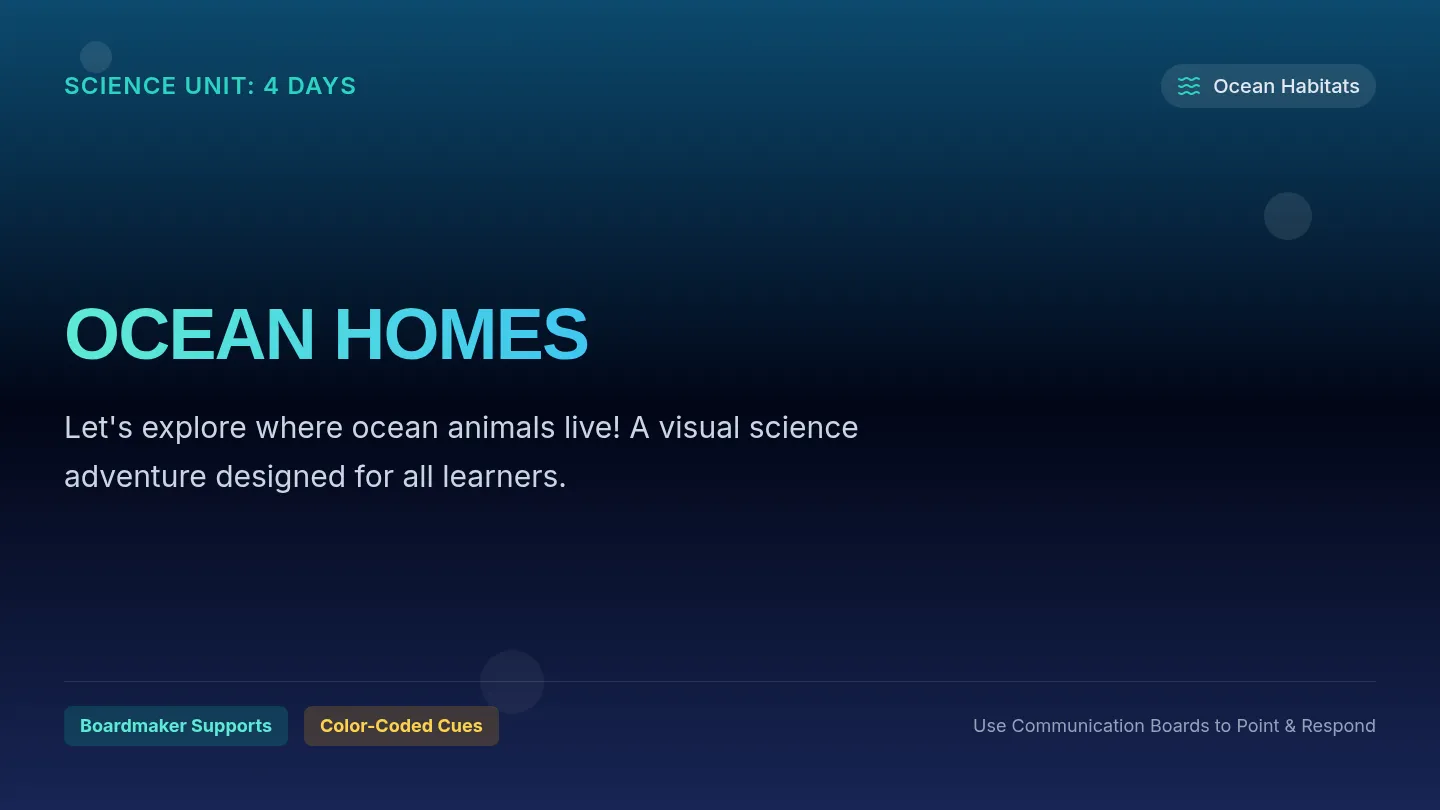
A highly visual 4-day science unit exploring ocean habitats and depth zones. Tailored for differentiated instruction for 3rd grade and nonverbal 7th grade students using Boardmaker-style symbols, color-coded matching, and visual check comprehension.
A series of lessons exploring Earth's major systems, starting with the hydrosphere and its impact on the planet's processes.
A comprehensive kindergarten science unit designed to help students identify and summarize the characteristics of living and non-living things, focusing on structure, growth, changes, movement, and basic needs.
A multi-grade collection of scientific reading comprehension and response booklets designed to build disciplinary literacy in Earth, Life, and Physical sciences across elementary and middle school levels.
A series of introductory lessons exploring different habitats (Arctic, Freshwater, etc.) and the unique animals that live in each, designed for early elementary learners.
A sequence of lessons exploring the specialized anatomy and physical structures of marine organisms, from basic fish biology to the complex adaptations that allow them to thrive in diverse oceanic environments.
A comprehensive biology unit covering the complex interactions of animal and plant systems, the structural nature of viruses, and the application of these concepts to real-world disease outbreaks.
A project-based sequence for 1st grade students exploring how animal habitats provide essential needs for survival. Students learn about terrestrial and aquatic environments, engineering animal shelters, and culminating in a habitat diorama project.
A series of high-stakes science laboratory mysteries designed for middle school students. Each mystery focuses on a specific branch of science (Biology, Physics, Chemistry, Geology, Ecology) and uses 8 forensic clues to solve a case.
A five-day high school chemistry unit exploring thermochemistry, collision theory, enthalpy diagrams, and calorimetry through the lens of body heat and chemical reactions. Students investigate the anchoring phenomenon of exercise-induced heat while mastering TEKS C.13 standards.
A comprehensive end-of-year review for 5th Grade NGSS science standards, organized by domain to ensure mastery of physical, life, and Earth sciences.
A three-day sequence for 6th-grade science focusing on plant adaptations, responses, and survival strategies, including tropisms, defense mechanisms, and gas exchange.
A differentiated science unit exploring the life cycles, parts, and processes of plants for Kindergarten, 2nd, and 4th grade students.
An interactive, visual vocabulary and prefix learning lesson designed specifically for 3rd-grade English Learners. Students explore key ecology terms and prefix combinations through hands-on illustrated cards, speaking scaffolds, and visual charts.
A foundational lesson on the characteristics of life and the factors that shape ecological populations, designed to help students distinguish between living and non-living systems and understand environmental impacts.
A comprehensive lesson exploring the human brain's capabilities and the nature of intelligence, featuring an informational text analysis and a multiple intelligences choice board.
This lesson explores the relationship between structure and function in prokaryotic and eukaryotic cells, and how cells organize into complex organisms. Designed for diverse learners, it uses a 'Blueprint' theme to visualize biological systems as carefully designed structures.
A high school lesson exploring the neuroscience of music, investigating how the brain processes auditory stimuli, triggers emotions, and encodes memories through melodies.
A high-stakes assessment focused on interpreting various scientific data representations, including tables, bar graphs, line graphs, and scatter plots. Students will analyze trends, identify variables, and draw conclusions from realistic scientific scenarios.
An introductory framework establishing course policies, Indiana state biology standards, and the integrated biochemistry roadmap for the academic year.
Une leçon complète et ultra-pédagogique de SVT (niveau 3ème) sur le système immunitaire. Conçue avec des analogies percutantes, des schémas structurés et des outils de révision active pour garantir la compréhension et la mémorisation de tous les élèves.
A comprehensive study of John Green's 'Everything Is Tuberculosis', exploring the history, science, and advocacy surrounding the world's deadliest infectious disease. Students will analyze personal narratives, scientific discovery, and global health equity.
A foundational biology lesson exploring the seven characteristics of life through interactive slides, group classification, and individual reflection. Students will learn to distinguish living systems from non-living ones using standardized scientific criteria.
A comprehensive dive into photosynthesis, covering chloroplast anatomy, the light-dependent and light-independent reactions, and the flow of energy through ATP and NADPH.
A visual-heavy lesson introducing the photosynthesis equation and basic inputs/outputs, specifically designed for emerging level bilingual students (ELLs). The lesson uses a 'Solar Kitchen' metaphor to simplify complex biological processes.
A comprehensive review lesson on the digestive system and enzyme function, focusing on the path of food, mechanical vs. chemical digestion, and enzyme specificity through interactive activities and guided notes.
This lesson explores the fundamental properties of fluids, including the molecular differences between solids, liquids, and gases, the concept of density, and the characteristics of ideal fluids. Students will learn to distinguish states of matter through atomic interactions and apply the density formula to various substances.
A student-led inquiry project exploring the intersection of music and neuroscience. Students choose their own research path to discover how musical training transforms cognitive development and present their unique findings.
A 30-minute 10th-grade lesson exploring the physiological effects of stress on the brain and evidence-based strategies for maintaining neural health under pressure.
Une séance approfondie de 2 heures alignée sur le référentiel de compétences 2024, centrée sur la compétence "Rechercher et traiter des données professionnelles et scientifiques". La séance combine rigueur méthodologique, pratique intensive de la norme APA 7 et analyse critique de sources en soins infirmiers.
An introductory lesson on the unique adaptations of glass frogs, focusing on their translucent skin and rainforest habitat. Students will explore how being 'see-through' helps these tiny amphibians survive.
A 30-minute introductory lesson for 3rd graders about the skeletal system, focusing on major bones and their functions through the lens of being 'Bone Detectives'.
An engaging, collaborative high school anatomy project where students research and design educational communication posters tracking the monthly physical and physiological milestones of human fetal development across gestation.
Focuses on the role of plants and animals in cycling water through ecosystems, specifically looking at transpiration and animal respiration/waste.
A lesson focusing on the states of matter (solid, liquid, gas) and the behavior of particles at the molecular level. Students will model particle motion and arrangement, as well as the energy changes that drive phase transitions.
A digital forensic escape room where students solve the mystery of a missing classroom phone by analyzing fingerprint evidence, identifying patterns, and matching minutiae.
A creative project-based lesson where students research and design an educational poster about a specific global biome, focusing on adaptations, food webs, and conservation. Now expanded to include an informative research paper component.
An interactive, station-based scavenger hunt where students solve ecological mysteries to decode a final ten-letter secret cipher ('ECOSYSTEMS'). Students review core concepts like food webs, trophic levels, symbiosis, succession, biomagnification, and populations.
A comprehensive lesson on butterfly biology and conservation, focusing on citing textual evidence and structured informative writing for 4th-5th grade students.
This lesson focuses on comparing the world's largest mammal, the blue whale, with some of the world's smallest mammals. Students will use the provided informational text and conduct their own research to create a comparative report.
A 30-minute lesson for 2nd graders exploring seed dispersal. Students learn key vocabulary and identify how wind, water, and animals help plants move their seeds to new locations.
A 2nd-grade lesson exploring the survival strategies of camouflage and warning coloration in rainforest animals, featuring a guided video tour and a hands-on butterfly activity.