Lenny.com
Explore
Create
ActivitiesNewMathEnglish Language ArtsScience & EngineeringSocial StudiesGlobal LanguagesHealth & Physical EducationSpecial EducationCounseling & Life SkillsArts & CreativityESL
Lenny.com
Lenny.com
Explore
Create
ActivitiesNewMathEnglish Language ArtsScience & EngineeringSocial StudiesGlobal LanguagesHealth & Physical EducationSpecial EducationCounseling & Life SkillsArts & CreativityESL
Lenny.com
Lenny.com

Solutions

Lenny for EducatorsLenny for SchoolsLenny for Districts

Product

ExploreSign inCreateSupportAbout

Resources

Getting startedMTSS Acceleration Program

© 2026 Lenny Learning Inc.

TermsPrivacyAccessibility
LinkedInInstagramX
Lenny
Science & EngineeringLife ScienceLiving ThingsAnimalsPlantsBody SystemsTraitsAdaptationsCellsEcosystemsHeredityGenes to TraitsCell DivisionPhysicsComparing MaterialsShapes and PropertiesMagnetsMagnetismLightSoundLight and SoundMatterStates of MatterChanges of StateMixturesPhysical and Chemical ChangeHeating and CoolingHeat and Thermal EnergyEnergyForce and MotionElectrical CircuitsAtoms and MoleculesPeriodic TableMotion in One DimensionMotion in Two DimensionsScalars and VectorsForces and Laws of MotionCircular Motion and GravityMomentum and ImpulseWork, Energy, and PowerWavesElectromagnetic WavesGeometric OpticsElectricity and MagnetismSimple Harmonic MotionThermodynamicsNuclear PhysicsEarth Science & AstronomyWeatherWater CycleRocks and MineralsFossilsEarth's FeaturesEarth's ResourcesEarth's StructureWeather and ClimateEarth EventsFossils and Geologic TimePlate TectonicsHuman ImpactsAstronomyChemistryUnits and MeasurementAtomic StructurePeriodic TrendsChemical BondingNomenclatureMolecular StructureIntermolecular ForcesThe MoleStoichiometryProperties of GasesSolutionsChemical ReactionsBalancing EquationsEnergy ChangesRates of ReactionsEquilibriumAcids and BasesQuantum ModelBiologyClassificationCell StructureThe Chemistry of LifeBiomoleculesCellular TransportCell EnergyCell Growth and DivisionDNAProtein SynthesisMeiosis and Sexual ReproductionPatterns of InheritanceMulticellular OrganismsEvolutionEcologyBiodiversityComputer ScienceAlgorithms and Computational ThinkingProgramming LanguagesComputing SystemsNetworks and InternetData AnalysisCybersecurityAI and Machine LearningSoftware Design and DevelopmentBlockchainEngineering & AIDesigning ExperimentsEngineering PracticesDesign ThinkingEngineering Design ProcessMechanical EngineeringElectrical EngineeringMaterials and StructuresCAD and 3D DesignRoboticsArtificial Intelligence BasicsVibe CodingMachine LearningAI Ethics and SocietySystems ThinkingEntrepreneurship & InnovationEntrepreneurial MindsetBusiness Idea DevelopmentBusiness Plan BasicsMarketing & Customer DiscoveryFinancial Management for Startups

Life Beyond Limits

A one-week interdisciplinary astrobiology sequence investigating Earth's habitability, extreme biological adaptations across eleven Earth species, and the plausibility of life on other celestial bodies.

MMegan.Tanner
Earths Habitability Recipe

Students examine the physical and chemical conditions that make Earth a hospitable cradle for life, defining baseline planetary habitability parameters.

Extremophile Dossiers

Students investigate eleven remarkable animals adapted to Earth's harshest environments, uncovering cellular and physiological mechanisms of extreme survival.

Alien Worlds Synthesis

Students apply findings from terrestrial extremophiles to analyze planetary environments across our solar system and exoplanet systems for biological viability.

Life Beyond Limits

A one-week interdisciplinary astrobiology sequence investigating Earth's habitability, extreme biological adaptations across eleven Earth species, and the plausibility of life on other celestial bodies.

MMegan.Tanner

Building Atoms

Carbon, oxygen, and minerals to build living bodies.

3. Power

Energy Source

Sunlight or chemical energy from warm rocks.

4. Temp

Safe Heat

Not hot enough to cook proteins or freeze solid.

5. Shield

Sunscreen Shield

Stops space rays from ripping apart DNA.

3

Do All Animals Need What Humans Need?

The Big Surprise: For a long time, people believed all animals needed fresh air, mild weather, and sunlight. But on Earth, scientists have discovered animals living in boiling acid, pitch-black caves with no oxygen, and freezing ocean trenches!

3. What Kills a Normal Cell? Pick two extreme conditions (for example: boiling heat, crushing water pressure, freezing cold, or zero oxygen). What would each of those do to a human or normal animal body?

4. The Alien Connection: If creatures on Earth can evolve special superpowers to survive without sunlight or air, how does that give us hope for finding life on frozen ice moons like Europa or deep under the rocks of Mars?

Unit: Life Beyond Limits • Module 1: Earth Recipe Page 2 of 2

Where it lives:

Natural Antifreeze Blood: Makes special proteins in its blood that latch onto tiny ice crystals so they can never grow into sharp, deadly ice needles.

Completely Clear Blood: The only backboned animal without red blood cells! Its blood is transparent like water and absorbs oxygen directly from the cold sea.

Ancient Giant

5. Greenland Shark (Somniosus microcephalus)

Lifespan: 250 to 500 Years!

Where it lives: Deep icy waters of the Arctic and North Atlantic, swimming down over 7,000 feet in near-freezing temperatures.

Super Slow-Motion Life: Swims at just 0.7 mph and grows less than an inch a year! Living in slow motion prevents its body cells from wearing out.

Natural Anti-Freeze Juice: Its flesh is full of natural chemicals (urea and TMAO) that stop ice from forming inside its muscles and organs.

Trench Conqueror

6. Mariana Snailfish (Pseudoliparis swirei)

Depth: 26,000 feet down!

Where it lives: Mariana Trench floor—the deepest vertebrate fish ever found! Water pressure here is like having 50 jumbo airplanes stacked on top of you.

Pressure-Shield Molecule: Packed with a special helper molecule (TMAO) that keeps its cellular machines from getting squashed out of shape.

Bendable Cartilage Bones: Has no hard skull bones that could crack; its flexible, squishy cartilage frame easily bends under crushing pressure.

Unit: Life Beyond Limits • Research Dossier Page 2 of 4

Field Research Guide • Module 2 DOSSIER 03: UNDERGROUND & THE STRATOSPHERE

Extreme Animals: Deep Bedrock & Thin Air

Animals living miles inside solid rock or soaring higher than passenger jet planes.

Deep Earth Creeper

7. Devil Worm (Halicephalobus mephisto)

Depth: 2 Miles Deep in Solid Rock

Where it lives: Deep gold mines in South Africa. It is the deepest living animal known to science, swimming in ancient water trapped in bedrock for thousands of years!

Almost No Oxygen Needed: Survives in pitch-black water with less than 1% of the oxygen found at Earth's surface.

Eats Rock Microbes: Endures 118°F (48°C) heat and heavy rock pressure while eating bacteria that live off radioactive rock energy.

Sky Champion

8. Rüppell’s Vulture (Gyps rueppellii)

Flight Altitude: 37,000 Feet (7 Miles Up!)

Where it lives: Soars through the thin, freezing stratosphere over Africa. It was once spotted flying at the exact same height as commercial airline jets!

Oxygen-Magnet Blood: Has specially modified blood that grabs oxygen with super strength, allowing it to breathe thin air that would make humans pass out in seconds.

Sub-Zero Heat Exchangers: Flapping through -58°F (-50°C) air, its blood vessels work like radiators to keep its brain warm and prevent hypothermia.

Astrobiology Clue: The Devil Worm proves animals don't need sunlight or fresh surface air; the Vulture proves animals can breathe super thin atmospheres!

Unit: Life Beyond Limits • Research Dossier Page 3 of 4

Field Research Guide • Module 2 DOSSIER 04: GLASS STASIS & ZERO OXYGEN

Extreme Animals: Space Stasis & Zero Air

Surviving complete drying, outer space vacuum, high radiation, and zero oxygen.

Water Bear

9. Tardigrade (Hypsibius / Milnesium)

Temperature Range: -458°F to 300°F

Where it lives: Mosses, polar ice, and sea sediments. When its puddle dries up, it curls into a dry wrinkled ball called a tun and hits "pause" on life.

DNA Armor Shield: Has a special protein (Dsup) that wraps around its DNA like a suit of armor, protecting it from lethal radiation.

Survives Outer Space: When in its dry tun state, it survived 10 days exposed to the open vacuum and cosmic radiation of outer space on a rocket!

Sugar-Glass Midge

10. Sleeping Chironomid (Polypedilum vanderplanki)

Drying Power: Loses 97% of its water!

Where it lives: Shallow mud pools on African rocks that completely bake dry under the blazing sun for months at a time.

Turns Its Body to Glass: Replaces its lost body water with a protective sugar called trehalose, turning its insides into solid biological glass!

Super Radiation Armor: While turned to glass, it can survive liquid helium (-450°F) and 2,000 times the radiation that would kill a human. Add water, and it swims again!

Zero-Oxygen Animal

11. Loricifera (Spinoloricus cinziae)

Oxygen Level: 0.0% Oxygen!

Where it lives: Deep seafloor brine mud 2 miles under the Mediterranean Sea. The water is totally poisoned with toxic sulfur and has zero dissolved oxygen.

Needs Zero Oxygen: The first animal discovered that spends its whole life without breathing oxygen! It doesn't have mitochondria (the oxygen battery cells).

Hydrogen Energy Pods: Uses special anaerobic power pods called hydrogenosomes to make cellular energy from chemicals without a single breath of air.

Unit: Life Beyond Limits • Research Dossier Page 4 of 4

Active Fighter

Classroom Discussion Tip: The "Pause" vs. "Active" Distinction

Make sure students notice the difference between animals that actively swim, hunt, and reproduce in extreme places (like the Mariana Snailfish or Devil Worm) versus those that curl up into protective glass or a dry ball (Tardigrade, Chironomid) to wait out the storm. Both are amazing ways to conquer harsh environments!

Teacher Guide • Module 2: Adaptations Page 1 of 2

Teacher Key: Student Exemplar Responses TEACHER KEY • PAGE 2

Question 6A Exemplar (Heat vs. Pressure):

Expected student idea: Heat tries to cook and unravel proteins (like frying an egg), while deep ocean pressure tries to squash proteins and crack bones. The Saharan Silver Ant beats heat by wearing shiny silver mirror hairs that bounce sunlight away, plus emergency helper proteins that stop its cells from cooking. The Mariana Snailfish beats deep water pressure by having squishy, bendable cartilage bones that won't crack, and special helper molecules (TMAO) that stop water pressure from squishing its cell machines.

Question 6B Exemplar (No Oxygen Needed):

Expected student idea: Humans believe all animals need fresh oxygen to breathe. But the Loricifera lives in deep Mediterranean seafloor mud with zero percent oxygen and doesn't even have oxygen-breathing mitochondria—it uses special hydrogen power pods to make energy! Also, the Devil Worm lives 2 miles underground in rock aquifers with less than 1% oxygen. These animals prove that complex animal bodies can evolve to live and grow without any fresh air.

Question 6C Exemplar (Europa Ice Moon Match):

Expected student idea: Europa has a deep, pitch-black ocean under 10 miles of ice with boiling underwater volcanoes and crushing pressure. The superpowers of the Yeti Crab and Pompeii Worm are the best clues because they farm bacteria that eat volcanic sulfur without any sunlight! Also, the Mariana Snailfish shows that animals can handle the cold and crushing water pressure.

Common Misconceptions to Address:

  • • "Is a dried tardigrade dead?" No! It is in a temporary "pause" state called cryptobiosis. Its life processes stop, but its cells stay intact. When water returns, it wakes up within hours.
  • • "Do hydrothermal vent crabs eat lava?" No! They eat thick carpets of friendly bacteria that convert volcanic chemicals into organic food.
  • • "Can animals only live in the Goldilocks zone?" While planets need liquid water, life doesn't have to live on the surface—it can thrive in warm underground oceans heated by tidal forces!

Teacher Guide • Module 2: Adaptations Page 2 of 2

It is a rocky world almost the exact same size as Earth, with the right gravity to hold oceans and an atmosphere!

The Star Catch

Day & Night Locked

One side always faces its red star; the other side is in darkness. Creatures could live along the cozy sunset border line!

Animal Lesson

Life Finds a Way

Earth's silver ants survive boiling sands, and icefish survive sub-zero waters. Life adapts to whatever its planet gives it!

Final Mission: Choose your planet and design your search for alien life!

Animal Superpower ClueMatches the world with a real Earth animal and its secret weapon.Names an animal, but doesn't explain how its superpower works.Mentions an animal that wouldn't fit the extreme environment.
Energy & CluesExplains how life survives without sunlight (e.g., volcano chemicals).Mentions an energy source with partial explanation.Claims life can live with zero energy source at all.

Unit: Life Beyond Limits • Module 3: Alien Worlds Page 2 of 2
You might also like

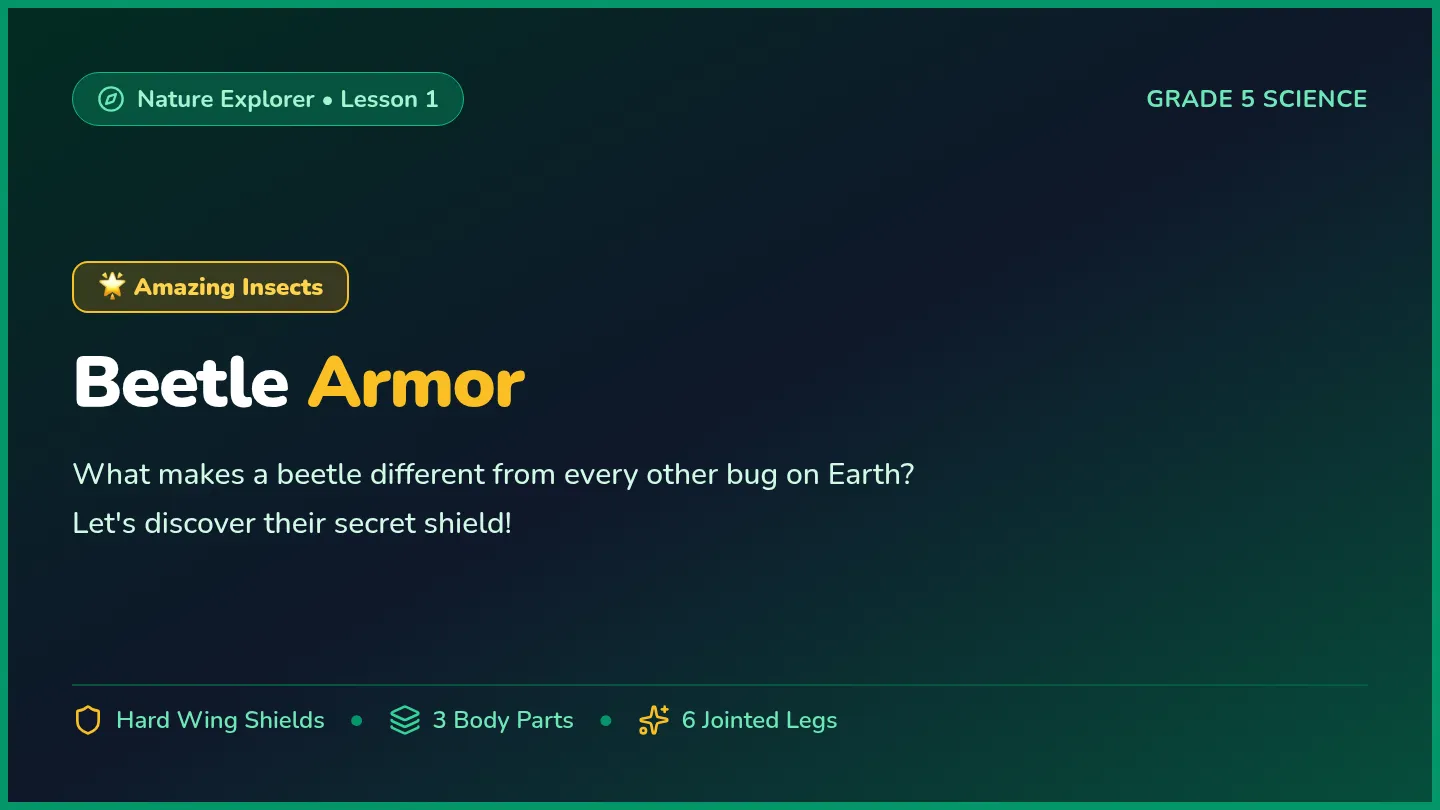
Beetle Armor Slides

Beetle Power

A high-interest, accessible science unit for fifth-grade developing readers exploring beetle anatomy, unique adaptations, and diverse beetle species. Incorporates visual vocabulary, supportive sentence frames, and clear graphic organizers.

A

amy_oshea

9
Floating Science Lab Slides

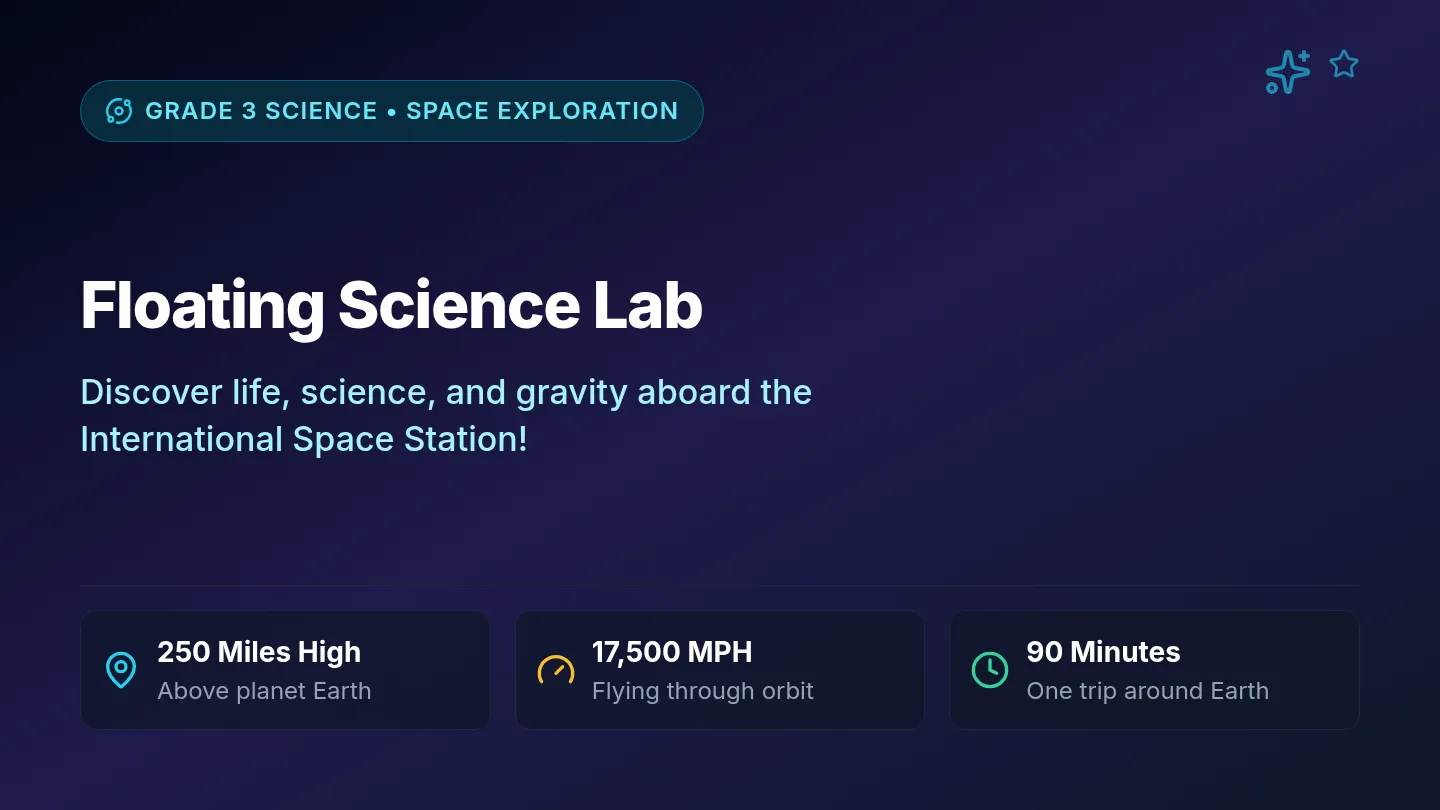
Floating Science Lab

A comprehensive third-grade science lesson exploring the International Space Station, microgravity, astronaut life, and orbital research through structured visuals, simplified text, and engaging activities.

RC

Roni Coleman

3
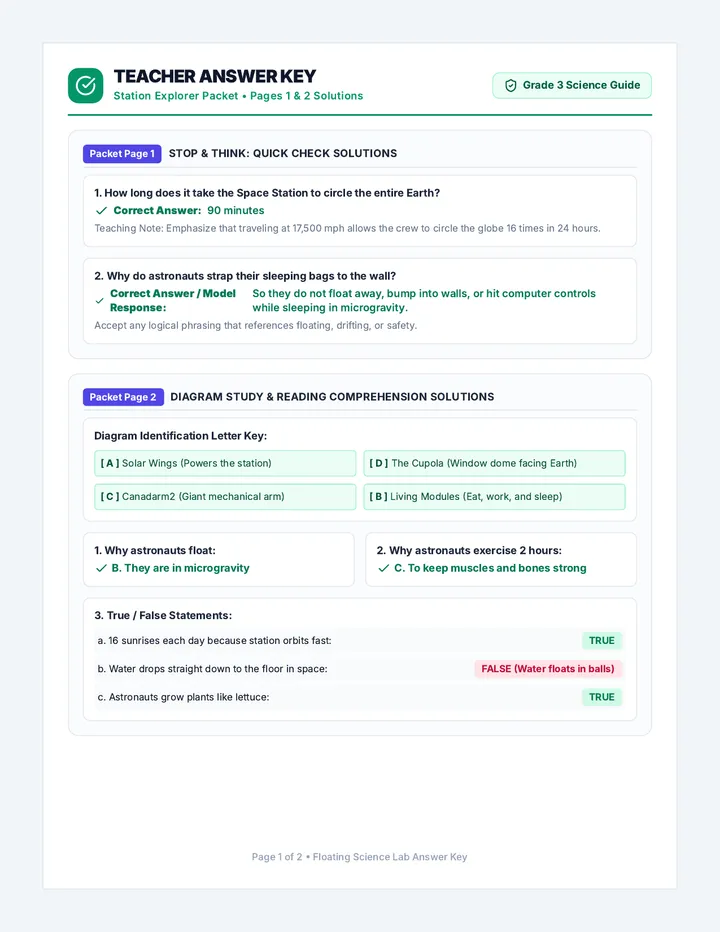
Station Explorer Answer Key

Station Explorer Answer Key

A two-page teacher answer key and facilitation guide for the Station Explorer Activity Packet, featuring complete answers, model student responses, scoring rubrics, and instructional tips.

RC

Roni Coleman

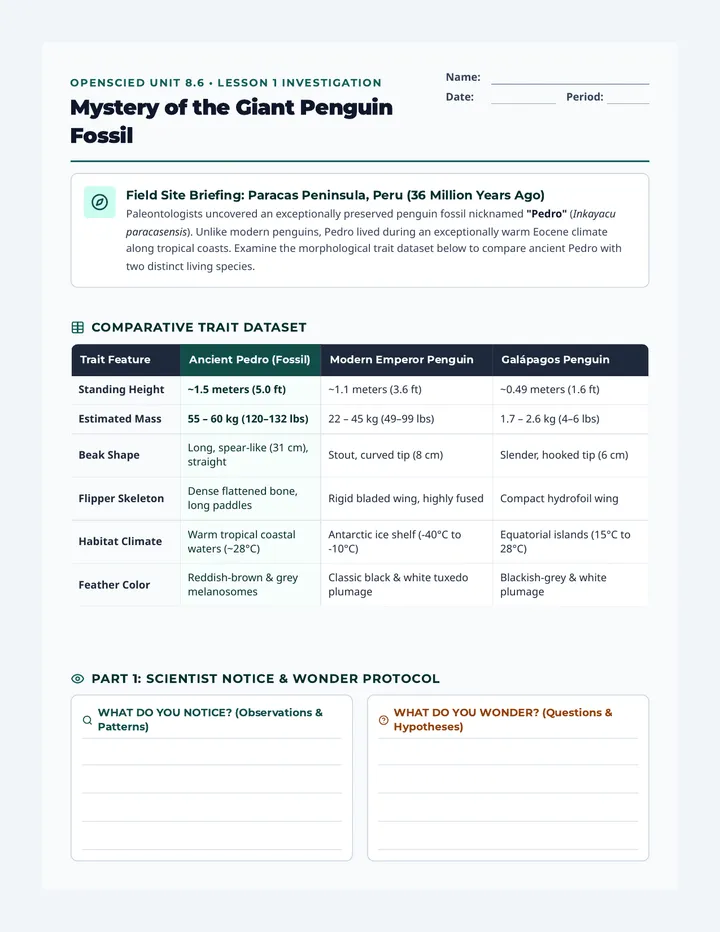
Giant Bones Investigation Handout

Ancient Giants Modern Survivors

An eighth-grade science unit investigating natural selection, adaptations, and evolutionary history through ancient giant penguin fossils and modern species. Students model trait shifts across generations, analyze anatomical and embryological evidence, and construct scientific explanations for how environmental pressures shape biodiversity. Aligned to the OpenSciEd Unit 8.6 storyline.

CS

Chad Sturkie

10
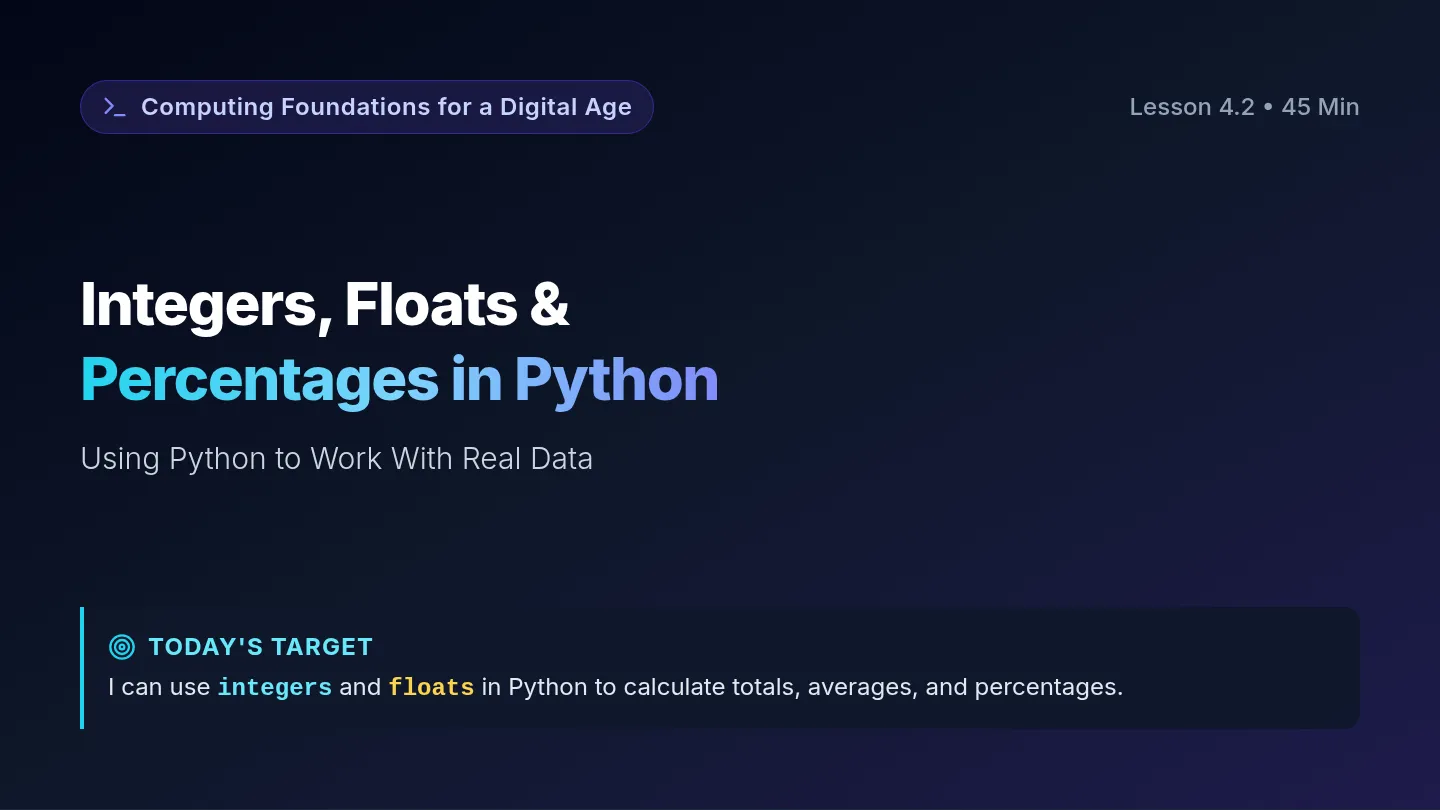
Python Numbers Slides

Python Number Power

Students explore integers and floats in Python to calculate totals, averages, and percentages from real-world survey data. This lesson bridges fundamental numeric data types with practical data science calculations.

BF

Brandi Flanigan

3
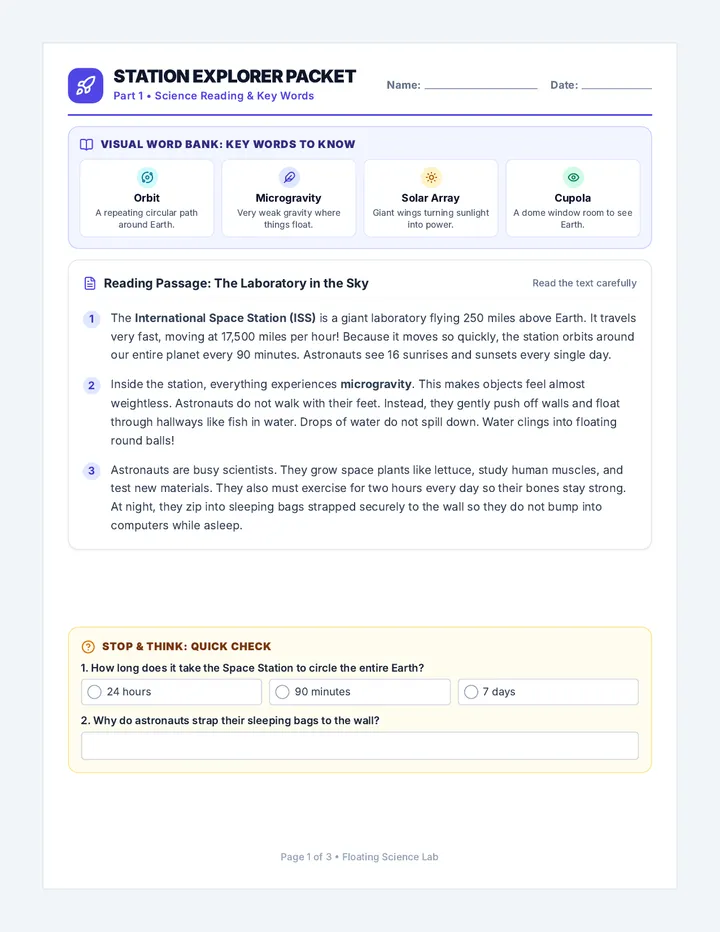
Station Explorer Activity Packet

Station Explorer Activity Packet

A three-page print-ready reading comprehension packet for third graders exploring the International Space Station with simplified text, visual vocabulary cards, a labeled diagram activity, and structured response tasks.

RC

Roni Coleman

Broadcast Breakthroughs Slides

Broadcast Tech Spotlight

A dynamic multimedia project sequence where students investigate cutting-edge sports broadcasting technologies, craft scripted storyboards, and produce professional recorded voiceover presentations.

S

Stacy.Bogart

5
Cell Energy Exam Sheets

Cellular Energy Cycling

A comprehensive lesson on cellular respiration, photosynthesis, and matter conservation. Includes an assessment with NYS-aligned items and a complete teacher answer key with scoring guidance.

JE

Jeffrey Elterman

2
Floating Science Lab Slides

Floating Science Lab Slides

An engaging classroom slide deck introducing third-grade students to the International Space Station, microgravity, astronaut daily routines, station anatomy, and orbital science experiments.

RC

Roni Coleman

Building Blocks Slides

Atomic Foundations

A 3-part comprehensive scaffolded unit exploring matter, atomic architecture, subatomic particles, nuclear calculations, and atomic variations like ions and isotopes.

M

meagan_asp

6
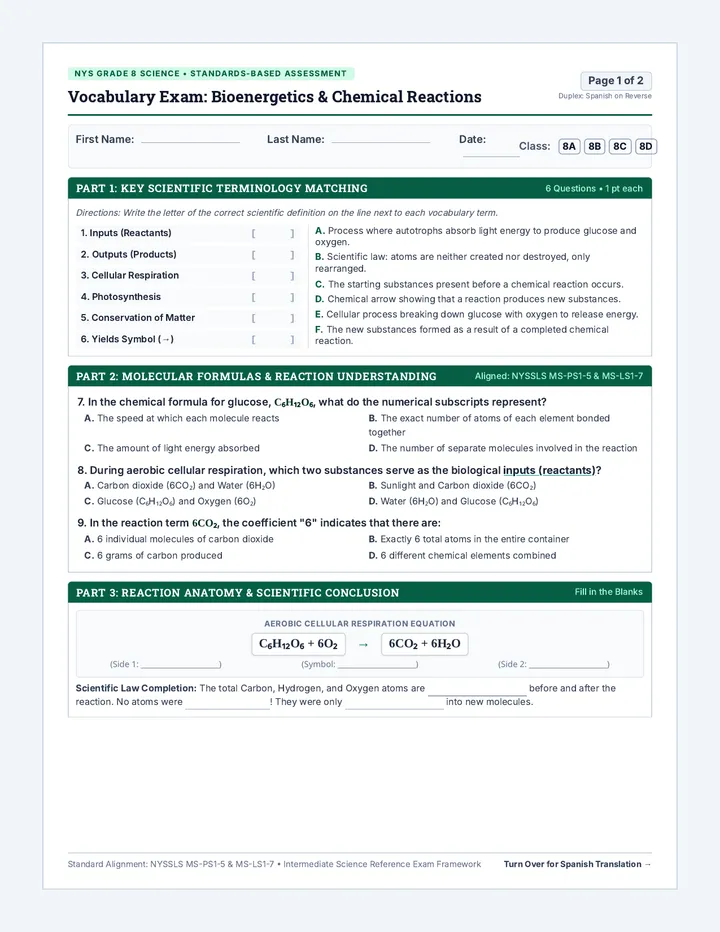
Atom Accounting Vocabulary Exam

Matter and Energy Reactions

An 8th-grade NYS-aligned science unit exploring cellular respiration, photosynthesis, and the Law of Conservation of Matter through chemical reaction formulas and atomic accounting.

JE

Jeffrey Elterman

3
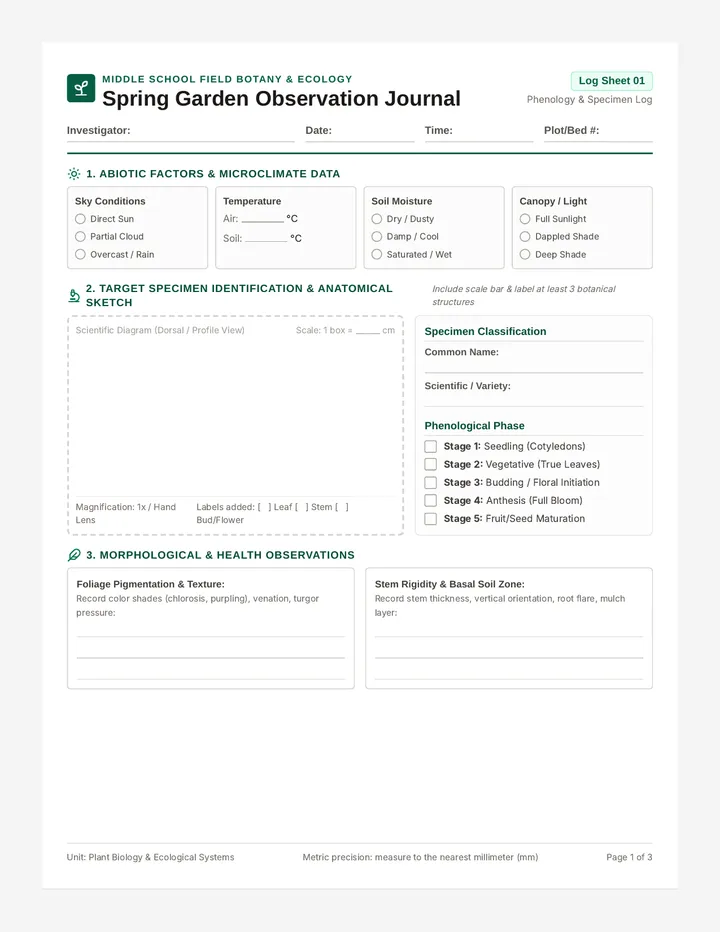
Garden Observation Journal Pages

Garden Observation Journal Pages

A three-page middle school botanical field journal featuring microclimate tracking, botanical specimen sketching, quantitative growth metrics, biotic interaction logs, and a structured Claim-Evidence-Reasoning (CER) reflection.

Lenny Avatar
Lenny