Rock Record IEP Assessment
IEP Supported Edition • Day 11
Rock Record Geology Assessment
Accommodations Used:
[ ] Read Aloud [ ] Extra Time [ ] Oral Answer
Name:
Date:
Class / Period:
Directions: Look at the visual diagrams and read each question. You may write, circle, draw, or speak your answers aloud.
Part A: Earth's Layers & Plate Movement
1. Look at the Earth diagram. Match each layer letter with its description.
Write A, B, C, or D
D C B A
A = Crust B = Mantle C = Outer Core D = Inner Core
Letter:
Thin, solid outer rock shell that we live and walk on
Letter:
Thick middle layer of extremely hot, slow-flowing rock
Letter:
Liquid melted metal layer (mostly liquid iron & nickel)
Letter:
Solid, super-dense heavy metal ball at the Earth's center
2. Complete the sentence using the word bank.
Word Bank: crust lithosphere inner core
Earth's giant moving tectonic plates are rigid pieces of the .
Cracked Shell
3. Divergent Boundary
Plates Split
Plate A Rift Plate B
Circle what the plates do:
Move apart (separate)
Crash together (collide)
4. Transform Boundary
Plates Slide
Plate 1 Plate 2
Circle what the plates do:
Slide past each other
Move apart (separate)
Rock Record Geology Assessment • Student Accommodations Support Page 1 of 4
Student Name:
Part A (cont.) & Part B
5. Look at the sinking plate diagram below. Complete the sentence.
Ocean Plate Continent Sinking Ocean Trench
When one heavy ocean plate bends and sinks downward under another plate, this is called:
Subduction
Deposition
Sentence: Sinking plate movement is called .
Part B: Minerals & The Rock Cycle
6. Look at the scratch test below. Which mineral property does it measure?
Circle one
Mineral Sample Iron Nail
Hardness
(Scratch test)
Luster
(Shininess)
Streak
(Powder color)
7–9. Complete each sentence with the correct rock type from the word bank:
🔥 Igneous Rock
🧱 Sedimentary Rock
🌀 Metamorphic Rock
7. Rock formed when molten magma or lava cools and hardens is rock.
Cooled lava
8. Rock formed when bits of sand and mud are pressed and glued is rock.
Layered sediment
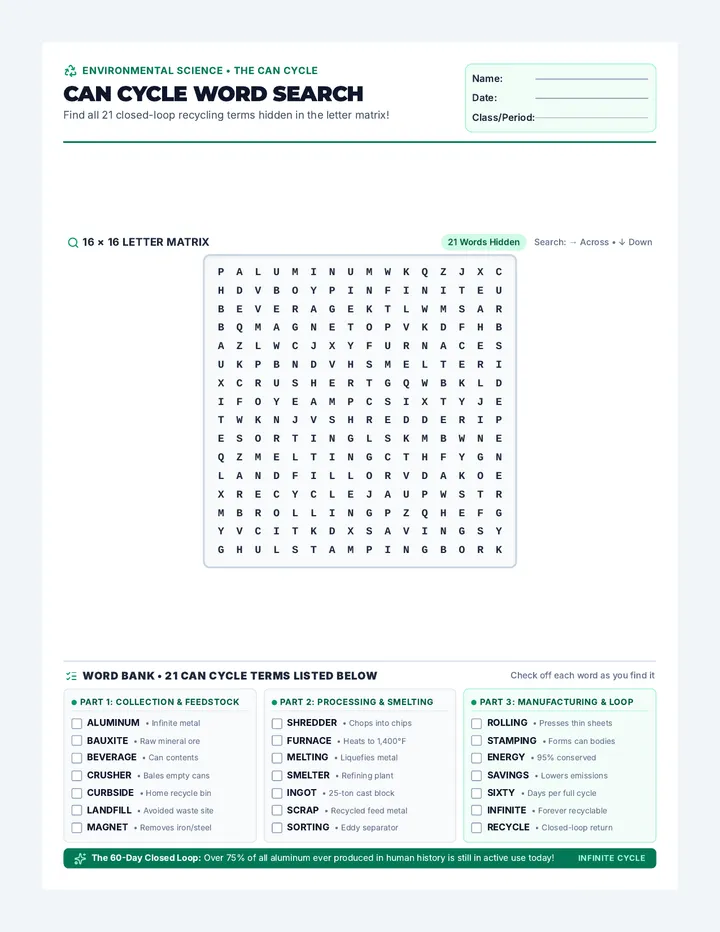
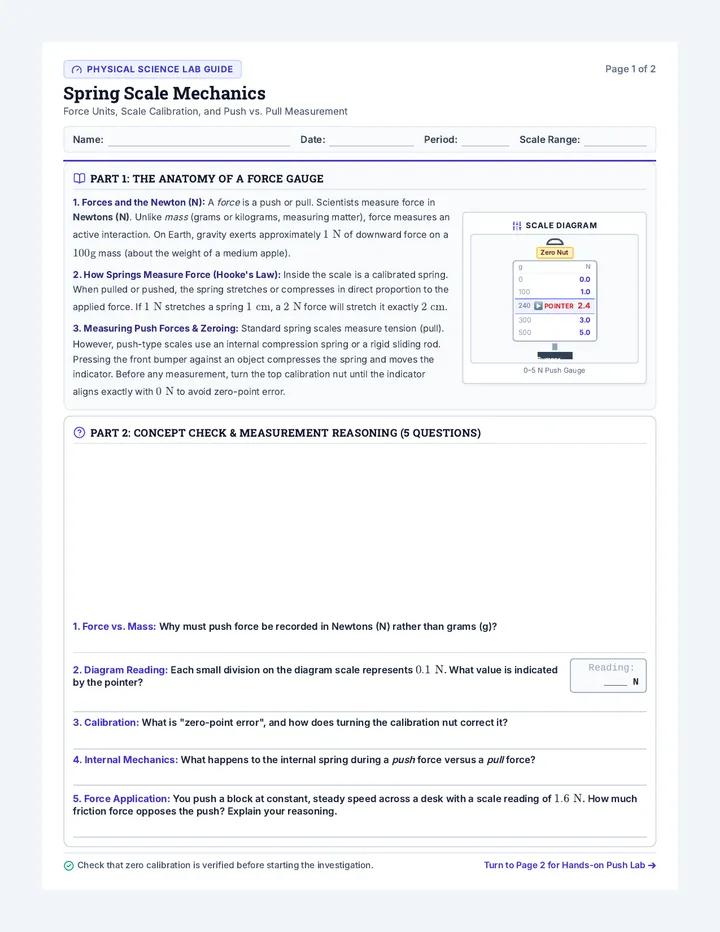
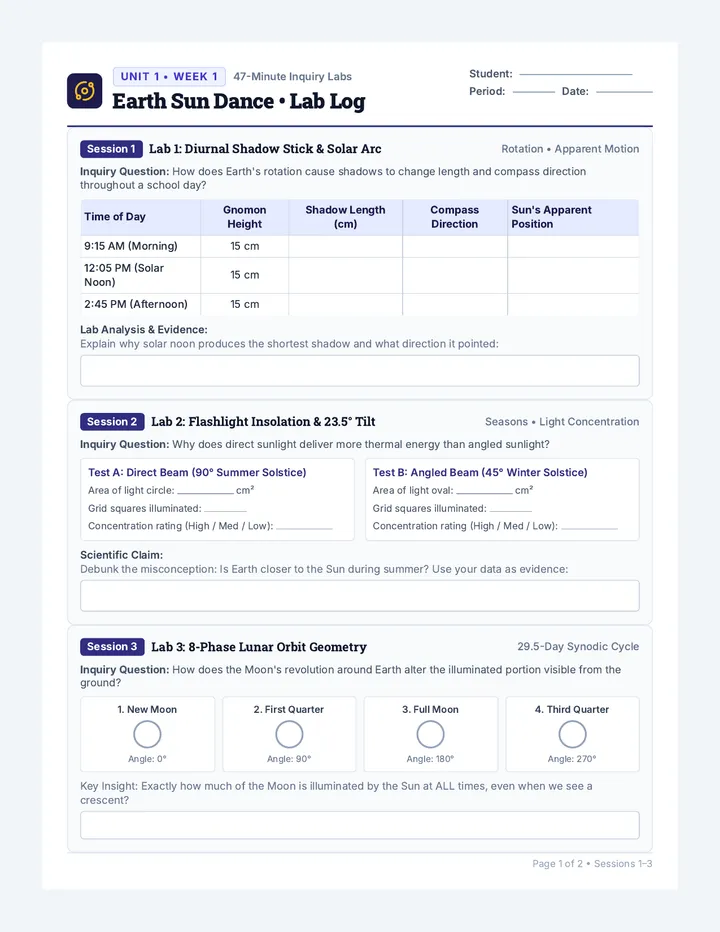
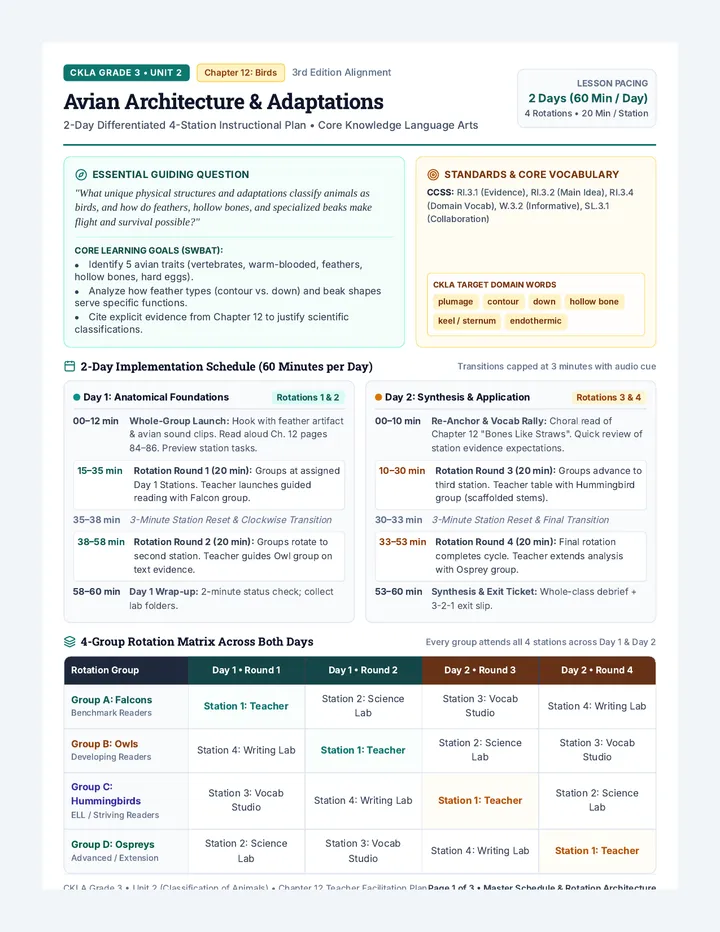
9. Rock changed deep underground by intense heat & pressure is rock.
Baked & squeezed
10. Rock Cycle Path: What turns liquid magma into solid igneous rock?
🌋
Magma
Melted liquid rock
Write what happens:
(Hint: cools and hardens)
🪨
Igneous Rock
Solid cooled stone
Rock Record Geology Assessment • Student Accommodations Support Page 2 of 4
Student Name:
Part C & Part D
Part C: Weathering, Erosion, & Deposition
🔨
1. Weathering
Breaks rocks down
💨
2. Erosion
Moves sediment away
📦
3. Deposition
Drops sediment down
11. Match each real-world example to the correct process.
Write Weathering, Erosion, or Deposition on the line:
❄️ Water freezes in a rock crack and splits the stone in two.
➜
🌪️ Strong wind blows and carries sand dunes across the desert.
➜
🌊 A slow river slows down and drops sand onto a beach bank.
➜
12. Complete the sentence frame.
Choose: moves or melts
Weathering breaks rock into smaller pieces. Erosion those pieces to a new location.
13. Agent of Erosion
Circle what moves sediment:
Wind & Water 🌊
Mineral shine ✨
Part D: Geologic Time & Fossils
14. Complete the sentences using the word bank.
fossil superposition older
• A preserved shell, bone, or imprint of ancient life is called a .
• The law of states that lower rock layers are usually than layers above them.
Stack Rule:
🥞 Newest (Top)
🥞 Middle
🥞 Oldest (Bottom)
First made goes on bottom!
Rock Record Geology Assessment • Student Accommodations Support Page 3 of 4
Student Name:
Part D (cont.) & Part E
15. Study the geological rock layer stack below.
⬆ TOP SURFACE (Newest)
Layer A 🌿 Fern Leaf Fossil
Layer B 🐚 Sea Shell Fossil
Layer C 🐟 Ancient Fish
Layer D 🦴 Trilobite Fossil
⬇ DEEP BEDROCK (Oldest)
a. Which layer is the youngest (formed last)?
Layer
(Hint: Look at the top)
b. Which layer is the oldest (formed first)?
Layer
(Hint: Look at the bottom)
c. Complete the explanation:
Layer D is the oldest because it is at the (bottom / top) of the undisturbed stack.
Part E: Evidence & Explanation
16. River Clues: Smooth, round pebbles and sand are found in rock.
[ ] Oral response given
Jagged
🌊
River roll
Smooth
• The pebbles became round because tumbling (water / fire) wore down the sharp edges.
• The sand settled into flat layers when the water (slowed down / froze).
17. Earthquake Safety: A town sits right near an active fault line.
[ ] Oral response given
Check (✓) TWO actions the town can take to protect people:
🏢 Stronger Buildings
Reinforce walls so they don't fall
🎒 Emergency Drills
Practice drop, cover, & hold on
Why does your chosen action keep people safe?
This protects people because
🎉 Great job finishing your geology assessment! Page 4 of 4