Starter: The inner core is solid because... while the outer...
The inner core is solid because the extreme gravitational pressure at Earth's center compresses the iron and nickel into a solid state, whereas the outer core has slightly lower pressure, allowing the elements to melt into liquid.
Forces That Change the Earth Unit • Teacher Key Page 1 of 3
Forces That Change the Earth • Teacher Key
Teacher Edition
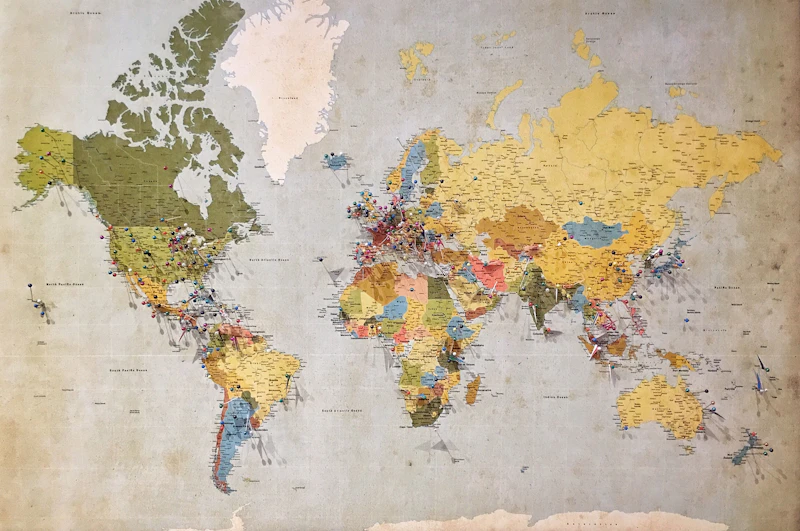
If you had seen the Earth from space 500 million years ago, the planet would not have looked at all like it does today. ★ Many scientists believe that most of the land masses were once part of one gigantic supercontinent called Pangaea. These continents in turn have drifted and, in some places, recombined. The theory that the continents were once joined and then slowly drifted apart is called continental drift.
Soporte en Español: Hace 500 millones de años, los continentes estaban unidos en un supercontinente llamado Pangea. La teoría de que se separaron gradualmente se llama deriva continental.
Stop & Jot #3 Answers
DOK Level 1
Define continental drift and name the supercontinent that existed 500 million years ago.
Starter: Continental drift is... and the supercontinent was...
Continental drift is the theory that the world's continents were once connected and slowly drifted apart over millions of years. The supercontinent was named Pangaea.
The term plate tectonics refers to all physical processes that create many of Earth’s physical features. Plates moving around the globe have produced Earth’s largest features. ★ Most of the time movement is gradual, only about 1 inch per year. As they move, plates may crash into each other, pull apart, or grind and slide. ★ They push up mountains, create volcanoes, and produce earthquakes.
Soporte en Español: La tectónica de placas se refiere a los procesos físicos que crean relieve. Las placas flotan y se mueven lentamente (1 pulgada al año) chocando, separándose o deslizándose.
Stop & Jot #4 Answers
DOK Level 2
State how fast tectonic plates move and list three geological features or events they produce.
Starter: Plates move about... and they produce...
Tectonic plates move extremely slowly, averaging only about 1 inch per year. This gradual movement is responsible for pushing up mountain ranges, creating volcanoes, and causing sudden earthquakes.
Forces That Change the Earth Unit • Teacher Key Page 2 of 3
Forces That Change the Earth • Teacher Key
Teacher Edition
External forces change the Earth’s surface. Wind and water involve two processes: weathering breaks down rocks, and erosion moves them. ★ Physical weathering occurs when rock is physically broken into smaller pieces (e.g., freezing water expanding in rock cracks). ★ Chemical weathering changes the chemical makeup of rocks (e.g., acidic rainwater dissolving limestone to form caves).
Soporte en Español: La meteorización (desgaste) rompe rocas de forma física (agua que se congela y agrieta la roca) o química (lluvias disolviendo caliza).
Stop & Jot #5 Answers
DOK Level 2
Contrast physical weathering with chemical weathering. What is the key difference?
Starter: The key difference is that...
The key difference is that physical weathering breaks rocks into smaller pieces physically (like water freezing), while chemical weathering alters the actual chemical composition of the rock (like acid dissolving limestone).
★ Wind erosion carries sand and soil from one place to another. Another cause is water, through glaciers or flowing water. ★ Glaciers pick up rocks and soil, carving out valleys. Water erosion occurs as rainwater flows downhill, cutting gullies and canyons. Oceans also erode, as pounding waves continually erode coastal cliffs.
Soporte en Español: La erosión transporta sedimentos. El viento mueve arena, los glaciares tallan valles enteros, el agua de lluvia excava barrancos y las olas desgastan acantilados.
Stop & Jot #6 Answers
DOK Level 2
In your own words, explain how wind, water, and glaciers erode and shape the land.
Starter: Wind, water, and glaciers erode...
Wind carries away loose soil, flowing rainwater carves out deep V-shaped valleys and canyons, and massive slow-moving glaciers scrape across the Earth to scoop out whole valleys and wear down mountains.
Model student responses representing a high-performing collaborative student pair.
1. If tectonic plates continue to drift at 1 inch per year, hypothesize what a physical map of Earth might look like in 100 million years. What major geographic changes do you predict?
DOK Level 2
In 100 million years, I hypothesize that the Atlantic Ocean will expand and push the Americas into Asia, closing the Pacific Ocean. New super-mountains will rise where they collide, and existing ranges like the Himalayas will be taller.
2. In your opinion, which external force—physical weathering, chemical weathering, or water erosion—has the power to reshape a landscape most permanently? Explain your reasoning.
DOK Level 2
In my opinion, water erosion has the most permanent impact. While weathering just cracks or dissolves rocks, water erosion actually transports gigatons of sediment away from mountains to oceans, physically carving canyons and permanently changing elevation.
3. Which forces—internal plate tectonics (sudden changes) or external wind/water forces (gradual changes)—do you think have the most profound overall effect in shaping our global societies? Defend your choice.
DOK Level 2
I believe gradual external forces have a more profound effect. Tectonics cause sudden dramatic disasters, but wind and water weathering actively create fertile agricultural river valleys (like the Nile or Ganges) and dictate where 95% of human populations settle, farm, and build cities on a daily basis.
Forces That Change the Earth Unit • Teacher Key Page 3 of 3
Around 500 million years ago, scientists believe the continents were unified as one gigantic supercontinent called Pangaea. Over vast geological eras, these plates slowly split and drifted to their current positions.
Continental Drift: The theory that land masses were once joined and drifted apart.
Curriculum verified via Encyclopædia Britannica
Britannica Plate
Splitting Continents
The jigsaw-like coastlines of matching continents (such as South America and Africa) provide direct physical evidence that the landmasses were once fused.
Earth Forces Instruction Deck Topic 3: Continental Drift History
04. Plate Movement Slide 5 of 7
The physical processes that create Earth's largest physical features. Tectonic plates move gradually (about 1 inch per year) but generate incredible force when they collide, pull apart, or slide past one another.
Collide Pushes up mountains
Pull Apart Generates rifts
Slide Past Triggers quakes
Curriculum verified via Encyclopædia Britannica
Britannica Plate
Tectonic Fury in Action
Volcanoes erupt where oceanic plates dive beneath continental plates (subduction zones), forming mountain arcs and geothermal vents.
Earth Forces Instruction Deck Topic 4: Plate Tectonics & Features
05. Surface Change Slide 6 of 7
The mechanical or chemical process of breaking down solid rock on Earth's surface.
Rock is physically broken apart. Water enters cracks, freezes, and expands, forcing the rock to split.
Rock's mineral structure is altered. Acidic rainwater dissolves soft rocks like limestone over centuries.
Curriculum verified via Encyclopædia Britannica
Britannica Plate
Sculpted by Weathering
Vast natural rock arches and fractured cliffs are slowly broken down particle-by-particle through temperature shifts and chemical exposure.
Earth Forces Instruction Deck Topic 5: Mechanical & Chemical Weathering
06. Landscape Sculpting Slide 7 of 7
While weathering breaks down rock, erosion transports those broken pieces. Liquid water, flowing glaciers, heavy wind, and coastal waves sculpt the landscape by carrying sediment away.
Wind Molds sand dunes
Water Cuts canyons & rifts
Glaciers Carves deep valleys
Waves Wears down shore cliffs
Curriculum verified via Encyclopædia Britannica
Britannica Plate
Water Erosion at Scale
Vast rivers carving through solid rock plateaus over millions of years, wearing down mountain barriers and transporting fertile soil to ocean deltas.
Earth Forces Instruction Deck Topic 6: Erosional Forces & Transport
1. Weathering (Break) Brief definition:
Compare the Sub-types:
Physical (Mechanical):
Chemical:
2. Erosion (Move) Brief definition:
4 Key Agents of Erosion:
Water:
Wind:
Ice:
Gravity:
3. Deposition (Build) Brief definition:
Relationship to Erosion:
Identify 2 Landforms Created:
Restless Earth Series Page 2 of 2
Liquid / Molten
Composition & Notable Elements:
Molten Iron (Fe) and Nickel (Ni)
Unique Features (Generating Earth's magnetic field, flow dynamic):
Extremely high temperature. Thermal convection of liquid iron in outer core, coupled with planetary rotation, creates electrical currents that generate Earth's magnetic field.
INNER CORE ~1,250 km
State of Matter:
Solid / Rigid
Composition & Notable Elements:
Solid Iron (Fe) and Nickel (Ni) alloy
Unique Features (Extreme temperature and immense pressure effects):
Deepest layer. Reaches temperatures matching the sun's surface (~5400°C), but stays solid because of immense pressure exerted by the overlying layers.
Restless Earth Series Page 1 of 2
Teacher Answer Key & Guide
Page 2 Assessment
Continental Drift (Hypothesis)
Proposed by:
Alfred Wegener
In what year:
1912
4 Main Pieces of Evidence:
Puzzle fit of continents
Fossil matches across oceans
Matching mountain chains
Paleoclimate/glacial clues
Plate Tectonics (Modern Theory)
Explains how lithospheric plates move over the asthenosphere.
Primary Driving Force:
Mantle Convection Currents (slab pull, ridge push, magma uplift)
Contrast from Continental Drift (Why is this a theory?):
Wegener had no mechanism. Tectonics explained *how* they moved using seafloor spreading data.
Boundary Type Relative Plate Movement Geological Features & Real-World Examples
Convergent
Toward Each Other
• Creates deep trenches, subduction zones, volcanic mountain ranges, earthquakes.
• Examples: Mariana Trench, Andes Mountains, Himalayan Range.
Divergent
Away From Each Other
• Creates mid-ocean ridges, continental rifts, earthquakes, volcanic crust.
• Examples: Mid-Atlantic Ridge, Great East African Rift Valley.
Transform
Horizontal Sliding
• Creates massive earthquakes, fault lines, lateral displacement of landscape.
• Example: San Andreas Fault (California, USA).
Identify the distinct roles of the breakdown, movement, and rebuilding of rock on Earth's surface.
1. Weathering (Break) Brief definition:
The process of breaking down rock into smaller pieces (sediment) in place on Earth's surface.
Compare the Sub-types:
Physical (Mechanical):
Frost wedging, root expansion, thermal change.
Chemical:
Acid rain, oxidation (rusting), dissolution.
2. Erosion (Move) Brief definition:
The movement of weathered rock, soil, and sediment fragments from one place to another.
4 Key Agents of Erosion:
Water:
Canyons, valleys
Wind:
Carved rock, dunes
Ice:
U-valleys, moraines
Gravity:
Landslide, creep
3. Deposition (Build) Brief definition:
The dropping or settling of eroded sediments in a new resting location.
Relationship to Erosion:
Deposition is the final stage of erosion; once agents lose kinetic energy, materials settle.
Identify 2 Landforms Created:
Delta (river mouth)
Sand Dunes / Beach deposit
Restless Earth Series Page 2 of 2