Invader Impact Slides
Unit 1: Ecological Systems • Lesson 15 Pre-AP Biology
Science Inquiry
Ecosystem Dynamics & Human Disruption
Invader Impact:
Invasive Species & Disrupted Webs
Investigating how human-introduced organisms alter community dynamics, collapse biodiversity, and unravel complex food webs.
Core Competency
Data Analysis & CER
Case Study
Brown Tree Snake (Guam)
Session Pace
50-Minute Inquiry
Arc of the Unit
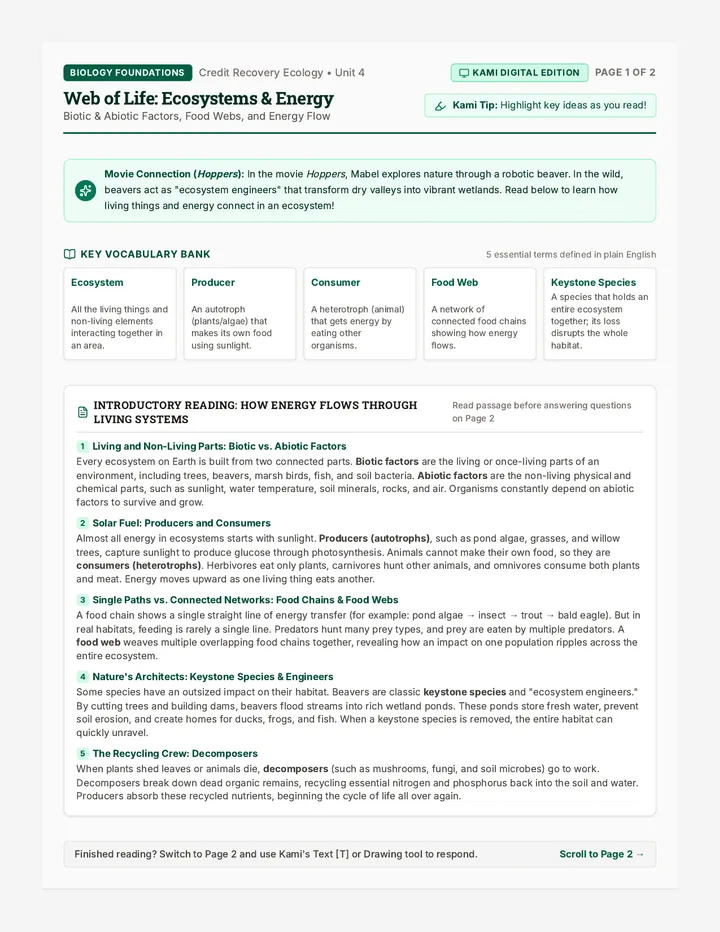
Recap: Bridging Our Knowledge
Lessons 07 & 15 → Today
Prior Masteries
Trophic Energy & Keystone Dynamics
- Lesson 07: Analyzed food webs, trophic levels, and decomposers recycling matter.
- Lesson 15: Defined keystone species and how competition shapes community niches.
Prior Core Takeaway: Stable ecosystems maintain equilibrium through balanced trophic interactions.
Today's Vital Connection
Human-Induced Invasions
What happens when an entirely non-native competitor is introduced by human activity?
Human transport overcomes natural physical barriers like oceans.
Without natural predators, the invader outcompetes native species for food and niches.
Enduring Understanding: Biological systems depend on matter cycling and balanced community interactions.
Unit Essential Question: How are organisms linked in an ecosystem by energy flow and matter cycling?
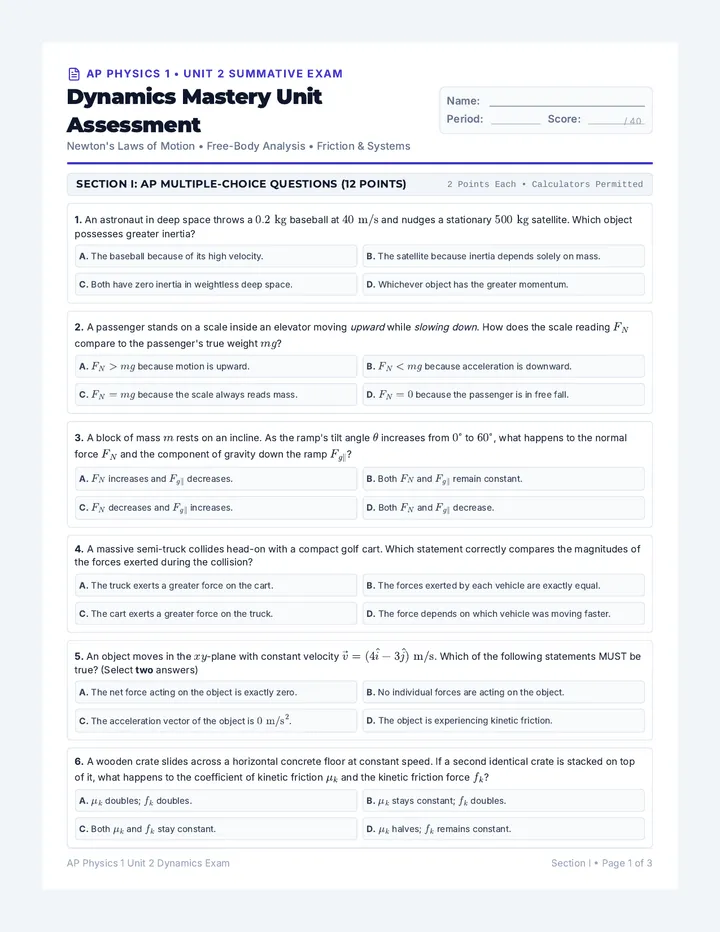
Target & Question
Lesson Target & Inquiry Question
Standard: ECO 5.2.1 • Practice: SP-5
Student Learning Objective (SWBAT)
SWBAT collect and evaluate data to determine the ecological impact of an invasive species on native community dynamics.
Lesson Guiding Question
How do humans influence the introduction of invasive species into an ecosystem?
Data Analysis: Interpret population decline slopes over 25 years.
C.E.R. Framework: Write a claim, cite evidence, and explain the mechanism.
Keep this guiding question in mind: you will write your formal answer on our final stamp slide!
Do Now & Daily Drill
Community Interactions & Unit Review
8 Min Do Now + 5 Min Oral Drill
Concept 1 ( + / + )
Mutualism
Both species benefit and enhance each other's survival (e.g., pollinators and flowering plants).
Invasive threat: Disrupts specialized co-evolution.
Concept 2 ( - / - )
Competition
Organisms vie for the same limiting resource (food, water, nesting sites, sunlight).
Invasive threat: Outcompetes native specialists.
Concept 3 Community
Keystone Species
Has a disproportionate impact on ecosystem structure relative to its biomass.
Invasive threat: Can displace a keystone role.
Oral Drill Protocol: 1 min study notes • 2.5 min rapid-fire cold calls • 30 sec synthesis.
Preparation for Unit 1 Exam
Launch Case Study
Mystery of the Invaded Island: Guam
Western Pacific Ocean • 1940s–Present
Military Cargo Transport Route Post-WWII (~1950)
Native Range Papua New Guinea GUAM Isolated Pacific Island Military Cargo Stowaway
Guam is a remote island whose native wildlife evolved with zero native snakes.
The Invader: Brown Tree Snake
Scientific Name: Boiga irregularis
Arrived accidentally as a stowaway in military cargo shipments after World War II.
Turn & Talk Launch Prompts:
- Why do scientists label this species invasive rather than merely non-native?
- How did human transport breach a natural oceanic barrier?
Teacher Reminder: Species are NOT invasive in their native range; they become invasive only when moved and cause harm!
Scientific Lexicon
Essential Vocabulary: Core Concepts
Unit Planning Vocabulary
Non-Native + Harmful
Invasive Species
Any organism not native to an ecosystem whose introduction causes environmental, economic, or human health harm.
Key: Has no natural predators in the new habitat.
Community Health
Biodiversity
The variety and richness of different living species within an ecosystem. High biodiversity provides ecosystem resilience.
Key: Plummets when invaders wipe out native species.
Anthropogenic
Human-Induced
Ecological changes, introductions, or habitat shifts caused directly or indirectly by human activities such as trade and transport.
Key: Overcomes geographic boundaries like oceans.
Native = Naturally co-evolved | Non-Native = Transported outside range | Invasive = Non-native AND damaging
Scientific Lexicon
Essential Vocabulary: Ecological Drivers
Life History & Niches
Generalist Species
Broad Niche
An organism able to survive in diverse habitats and consume a wide range of prey (eggs, nestlings, lizards, bats, rodents).
Guam Example: Brown Tree Snakes forage across all forest strata—from ground burrows to upper canopy foliage.
Specialist contrast: Needs specific prey and cannot easily switch diets.
r-Selected Strategy
Rapid Growth
Reproductive strategy characterized by high growth rate, early maturity, and large numbers of offspring with low parental care.
Clue Card #1 Connection: Highly successful invaders reproduce rapidly, allowing populations to explode before community resistance forms.
Outcome: Out-reproduces native K-selected birds and bats.
Winning Invader Formula: Generalist diet + r-selected reproduction + Zero natural predators!
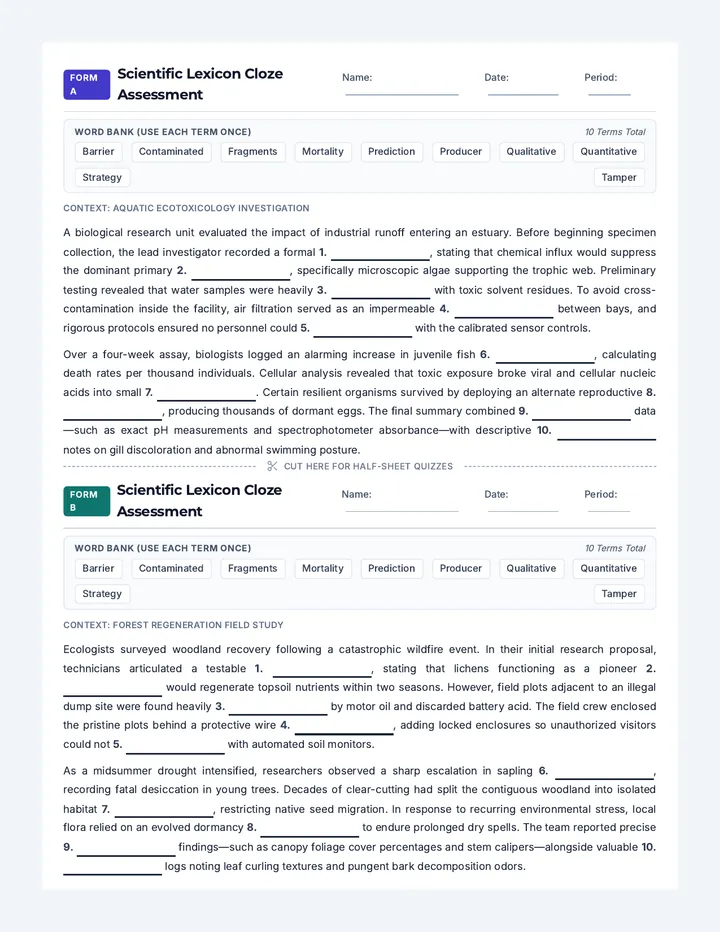
Academic Discourse
Applying Vocabulary in Scientific Writing
Writing Like an Ecologist
Ecologist Sentence Stems
-
"The [human-induced activity] introduced the organism, which functions as an [invasive species] because..."
-
"Because the invader is an [ecological generalist] displaying an [r-selected strategy], it rapidly outcompeted native..."
-
"The sharp decline in bird populations collapsed island [biodiversity], disrupting the food web by..."
Flawed Student Claim: "All non-native species are invasive species that destroy ecosystems."
→ Ecologist Correction: Non-native species are only considered invasive if they cause measurable ecological or economic harm. Many food crops (apples, wheat) are non-native but beneficial.
Tip: Precision with terms separates average biology scores from advanced mastery!
Inquiry: Clue Card #1
Disrupting Guam's Native Food Web
Evidence Analysis (Part 1)
Guam Forest Trophic Transfer Web
BROWN TREE SNAKE Invasive Generalist Predator NATIVE BIRDS Fruit Doves, Rails, Flycatchers LIZARDS & BATS Geckos & Fruit Bats CANOPY TREES & SEEDS Rely on birds for dispersal INSECTS & SPIDERS Populations explode without birds
The Brown Tree Snake has no native natural predators to regulate its population.
Question 2: Life History Strategy
Why is an r-selected species an exceptionally dangerous invader?
Explanation: They reproduce rapidly in high volumes, overwhelming native communities before natural checks can develop.
Control: "Mice by Parachute"
Biologists drop acetaminophen-laced dead mice on cardboard parachutes into canopies to selectively cull snakes.
Common Error: Invasive species do not bring "balance"—they disrupt native energy pathways!
Inquiry: Clue Card #2
Guam Bird Populations (1976–2000)
Skill: SP-5 Data Analysis
Bird Abundance per 100 km Roadside Survey
Negative Slopes
150 100 50 0 1976 1982 1988 1994 2000 Guam Rail Fruit Dove Rufous Fantail Yellow Bittern
Every native bird showed an extreme negative slope down to 0 birds/100 km.
Question 5: Flight & Nesting Habits
Why were flightless birds like the Guam Rail impacted first?
Answer: Ground-nesting flightless birds had zero escape mechanisms from nocturnal terrestrial predators.
Timing of Decline (Q6):
Most species began rapid decline right away in 1976 as the snake colonized the entire island.
Pre-AP Mastery: Always cite specific years and numerical endpoints when interpreting graph evidence!
Inquiry: Clue Card #3
Guam Density Calculation & Cascades
Quantitative Problem Solving
Question 11 Math Check
Dimensional Analysis: Snake Density
At peak density, Guam had 3,000 snakes per square mile. If a typical school campus is 0.004 square miles, how many snakes are on campus?
\[ \frac{3,000\text{ snakes}}{\text{mi}^2} \times 0.004\text{ mi}^2/\text{school} = \mathbf{12\text{ snakes / school}} \]
Ecological Meaning: Imagine 12 venomous nocturnal snakes roaming your school courtyard every single night!
Seed Dispersal Collapse (Q9)
Birds disperse ~70% of native tree seeds. Without birds, native canopy trees fail to regenerate, while spider density exploded to 40x normal levels.
Risks of Biological Controls (Q10)
Introducing another non-native predator to eat the snake risks creating a secondary invasion that attacks non-target organisms!
Trophic Insight: Invasive impacts cascade across trophic levels: from snakes to birds to spiders, trees, and human infrastructure.
Exit Ticket Connection
Comparative Case: Cane Toads in Australia
Biological Control Gone Wrong
Human Action
Intentional Import
In 1935, humans imported Cane Toads to eat greyback beetles destroying Queensland sugar cane crops.
Failure: Toads couldn't climb sugar canes to reach beetles!
Key Adaptation
Bufotoxin Secretion
Cane toads secrete lethal bufotoxins from their skin when attacked or bitten.
Outcome: Native predators (quolls, goannas, snakes) died from eating them.
Ecosystem Collapse
Biodiversity Threat
Toads became voracious generalists, eating native insects, bird eggs, and small reptiles across Australia.
Outcome: Massive decline in Australian native fauna.
1. Human: Imported for pest control • 2. Adaptation: Deadly bufotoxin • 3. Threat: Generalist diet + poisons predators
Writing in Science
How to Construct a C.E.R. Response
Claim • Evidence • Reasoning
STEP 1: CLAIM
Direct Answer
A 1-sentence statement directly answering the prompt without "I think" or "because".
"The introduction of [species] caused [outcome] by..."
STEP 2: EVIDENCE
Data & Numbers
Numerical data, survey trends, graph figures, and recorded observations from the text.
"Survey data from 1976 to 2000 shows populations dropped to..."
STEP 3: REASONING
Biological Principle
Explains the biological mechanism (why the evidence proves the claim using science concepts).
"Because the invader lacked natural predators, its population..."
Key Distinction: Reasoning is NOT just repeating evidence—it explains the ecological mechanism behind the data!
Exemplar Deconstruction
C.E.R. in Action: Claim & Evidence
Question 28 Focus
QUESTION 28 PROMPT:
Explain the ecological impact of the Brown Tree Snake on Guam. Justify your answer using case study data.
CLAIM Clear, testable assertion
The accidental introduction of the invasive Brown Tree Snake devastated Guam’s native biodiversity by driving nearly all native forest bird populations toward extinction.
EVIDENCE Concrete data with dates & numbers
Roadside survey data from 1976 to 2000 demonstrates extreme negative population slopes for all surveyed birds, with species such as the Guam Rail and Fruit Dove dropping to zero birds per 100 km.
Strong evidence includes dates (1976–2000), species names (Guam Rail), and specific measurements (0 birds/100 km).
Exemplar Deconstruction
C.E.R. in Action: Scientific Reasoning
Connecting Data to Biology
REASONING Biological principles & mechanisms
Because Guam’s native birds evolved in isolation without snake predators, they possessed no defense behaviors. The snake, an r-selected generalist with no natural predators to regulate its numbers, overconsumed prey species, severing food-web energy pathways and halting tree seed dispersal.
Exam Transfer: Brazil Nut Tree OER Question 28
Just like Guam's forest trees declining when birds stopped dispersing seeds, if the Brazil Nut Tree population crashes, primary consumers (agoutis) lose food, reducing energy flow to apex predators and destroying dependent orchid bees.
Reasoning connects the dots between: What happened, What data proves it, and Why it occurred biologically.
Class Discourse
Deepening Our Ecological Reasoning
5-Minute Whole Class Discussion
Elicit the Evidence
- What specific biological traits make an organism successfully invasive?
- How did the snake alter the flow of energy between trophic levels?
- Why did secondary consumers fail to switch food sources before crashing?
Ground answers in clue card data and graph trends!
Deepen the Reasoning
- Should humans introduce a new predator to hunt the snake on Guam?
- What unintended consequences happen with biological controls? (Think: Cane Toads!)
- Why are isolated islands far more vulnerable than mainlands?
Analyze human accountability and systemic limits.
Discussion Frame: "I agree with [Peer] because... and the clue card data indicates that..."
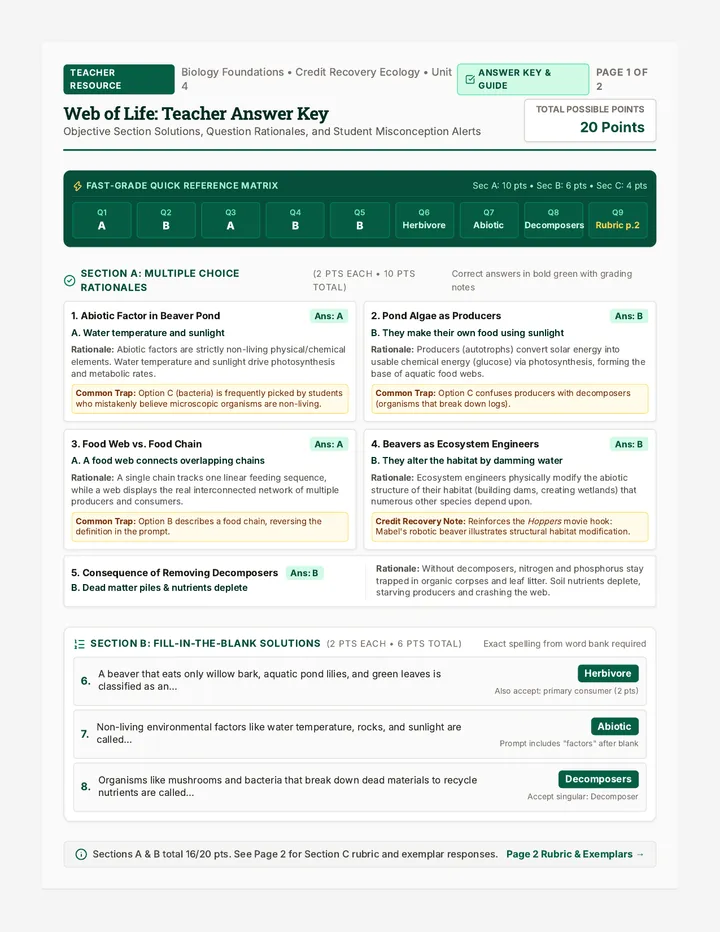
Official Lesson Stamp
Notebook Synthesis Stamp
Record in Biology Notebooks
Lesson Guiding Question:
How do humans influence the introduction of invasive species into an ecosystem?
Key Understanding & Definitive Answer:
1. Human-Induced Transport: Human activities (global shipping, trade, agriculture) breach natural geographic boundaries, introducing non-native organisms both accidentally (cargo stowaways) and intentionally (pest biocontrol).
2. Absence of Natural Controls: In novel habitats, invasive species face no natural predators and exploit broad generalist niches with rapid r-selected reproduction, outcompeting native specialist species.
3. Ecological Disruption: Unregulated population growth triggers trophic cascades, severely reduces native biodiversity, and harms environments, economies, and public health.
Ready for Assessment: Next: 5-Minute Independent Exit Ticket (Cane Toad Case Study) Biology • Uncommon Schools