Lenny.com
Explore
Create
ActivitiesNewMathEnglish Language ArtsScience & EngineeringSocial StudiesGlobal LanguagesHealth & Physical EducationSpecial EducationCounseling & Life SkillsArts & CreativityESL
Lenny.com
Lenny.com
Explore
Create
ActivitiesNewMathEnglish Language ArtsScience & EngineeringSocial StudiesGlobal LanguagesHealth & Physical EducationSpecial EducationCounseling & Life SkillsArts & CreativityESL
Lenny.com
Lenny.com

Solutions

Lenny for EducatorsLenny for SchoolsLenny for Districts

Product

ExploreSign inCreateSupportAbout

Resources

Getting startedMTSS Acceleration Program

© 2026 Lenny Learning Inc.

TermsPrivacyAccessibility
LinkedInInstagramX
Lenny
Science & EngineeringLife ScienceLiving ThingsAnimalsPlantsBody SystemsTraitsAdaptationsCellsEcosystemsHeredityGenes to TraitsCell DivisionPhysicsComparing MaterialsShapes and PropertiesMagnetsMagnetismLightSoundLight and SoundMatterStates of MatterChanges of StateMixturesPhysical and Chemical ChangeHeating and CoolingHeat and Thermal EnergyEnergyForce and MotionElectrical CircuitsAtoms and MoleculesPeriodic TableMotion in One DimensionMotion in Two DimensionsScalars and VectorsForces and Laws of MotionCircular Motion and GravityMomentum and ImpulseWork, Energy, and PowerWavesElectromagnetic WavesGeometric OpticsElectricity and MagnetismSimple Harmonic MotionThermodynamicsNuclear PhysicsEarth Science & AstronomyWeatherWater CycleRocks and MineralsFossilsEarth's FeaturesEarth's ResourcesEarth's StructureWeather and ClimateEarth EventsFossils and Geologic TimePlate TectonicsHuman ImpactsAstronomyChemistryUnits and MeasurementAtomic StructurePeriodic TrendsChemical BondingNomenclatureMolecular StructureIntermolecular ForcesThe MoleStoichiometryProperties of GasesSolutionsChemical ReactionsBalancing EquationsEnergy ChangesRates of ReactionsEquilibriumAcids and BasesQuantum ModelBiologyClassificationCell StructureThe Chemistry of LifeBiomoleculesCellular TransportCell EnergyCell Growth and DivisionDNAProtein SynthesisMeiosis and Sexual ReproductionPatterns of InheritanceMulticellular OrganismsEvolutionEcologyBiodiversityComputer ScienceAlgorithms and Computational ThinkingProgramming LanguagesComputing SystemsNetworks and InternetData AnalysisCybersecurityAI and Machine LearningSoftware Design and DevelopmentBlockchainEngineering & AIDesigning ExperimentsEngineering PracticesDesign ThinkingEngineering Design ProcessMechanical EngineeringElectrical EngineeringMaterials and StructuresCAD and 3D DesignRoboticsArtificial Intelligence BasicsVibe CodingMachine LearningAI Ethics and SocietySystems ThinkingEntrepreneurship & InnovationEntrepreneurial MindsetBusiness Idea DevelopmentBusiness Plan BasicsMarketing & Customer DiscoveryFinancial Management for Startups

Current Connections

A 2-day foundational physics sequence on electric circuits, covering atomic electron movement, hardware anatomy, closed loops, and Ohm's law with self-guided sub work.

LPLeShonda Price
Loop Launch

Day 1 of the electricity sequence introduces 9th-grade students to atomic electrons, conductors vs. insulators, bulb and battery anatomy, and closed circuit loops through teacher-led inquiry.

Push and Flow

Day 2 of the electricity sequence is designed for self-directed student mastery during teacher absence, exploring voltage, current, and resistance through structured guided notes.

Current Connections

A 2-day foundational physics sequence on electric circuits, covering atomic electron movement, hardware anatomy, closed loops, and Ohm's law with self-guided sub work.

LPLeShonda Price

1. Steel Paperclip Material: Metal

Bulb:

2. Plastic Ruler Material: Plastic

Bulb:

3. Wooden Toothpick Material: Dry Wood

Bulb:

Sequence: Current Connections • Day 1: Loop Launch Page 2 of 2

Current must go THROUGH the filament between both contacts!

Now that we know the parts, let's solve the famous 1-wire puzzle! Slide 4 of 9


The Hands-On Puzzle Slide 5 of 9

Can you light a bulb with only 1 wire?

You hold 1 battery, 1 light bulb, and 1 strip of wire in your hands.

What do you think happens if wire only touches one side?

👍 YES, it lights!

👎 NO, it stays dark!

1.5V + ? Wire connects (+) only • no bottom path!

Turn to your neighbor: Why won't this work based on what we just learned? Answer next! →


The Fundamental Law Slide 6 of 9

1 Wire Alone = Bulb STAYS DARK! ❌

Rule #1: Electricity must have a complete loop!

No Complete Circle = Zero Current Flow!

Electrons cannot pile up at a dead end. They must leave the battery, go through the bulb filament, and have an unbroken return path back to the other terminal!

  • - Both Contacts Connected = Closed Circuit = LIGHT!

The word Circuit comes from the Latin word for circle! Slide 6 of 9


Controlling the Loop Slide 7 of 9

Open vs. Closed Circuits: What a switch really does

OPEN CIRCUIT GAP PRESENT

❌ Switch is OPEN • Path is cut by air (insulator) • OFF

CLOSED CIRCUIT CONNECTED

✅ Switch is CLOSED • Metal touches metal • ON

Now let's apply this in our hands-on partner lab! Slide 7 of 9


Partner Practice Lab (12 Mins)

Slide 8 of 9

Open Your Loop Builders Worksheet!

1

Parts 1 & 2

Atomic foundation & naming conductors vs insulators.

2

Part 3

Loop Detectors: Inspect Circuits A, B, and C for hidden gaps.

3

Part 4

Wire Router: Connect both contacts of the bulb back to battery.

Golden test: Can you trace a complete pencil line through the wire, through the bulb, and back home?

Work collaboratively with your partner • raise hands if stuck Slide 8 of 9


Day 1 Mastery Check Slide 9 of 9

Day 1 Complete! 💡

Today's Big Win:

You discovered that electricity is not magic. It is electrons flowing through an unbroken closed loop connecting both contacts of a bulb to both terminals of a battery!

Tomorrow on Day 2:

You will complete a self-guided investigation on Push (Voltage), Flow (Current), and Squeeze (Resistance) with full guided notes!

Ticket to Leave: Loop Check Exit Ticket

Complete your 1-page exit ticket individually and submit it before the bell!

Turn in exit ticket at the door • Great work today! Day 1 Complete!

Early Finishers

Early finishers should complete the "Challenge Scenario" on the back of their notes packet, reviewing the danger of zero-resistance short circuits.

Sequence: Current Connections • Day 2 Sub Plan (40 Min) Neighboring Physics Teacher: Rm 204 Page 1 of 1

3

Concept 3: Resistance (R) — The SQUEEZE

Unit: Ohms (Ω)

What It Is: Any obstacle or narrow constriction that fights and slows down the flow of electrons. Light bulb filaments are made of microscopically thin wire that creates high resistance.

Energy Transformation: The friction of electrons crowding through the filament converts electrical energy directly into thermal heat and glowing light!

💡 Core Rule: More Resistance = Harder for electrons to pass = Slower Current!

🤏 Water Twin: Pinched Hose

If you step on a garden hose or make the pipe thinner, water has to fight through the narrow pinch. That friction and constriction is electrical Resistance!

✍️ Checkpoint 3: Why do we want the light bulb filament to have high resistance, but connecting wires to have almost zero resistance?

4 Concept 4: Putting It Together (Ohm's Relationship)

FLOW RATE (Current) = PUSH (Voltage) ÷ SQUEEZE (Resistance)

Rule A: Push Up → Flow Up!

Push harder (add a battery) with the same resistance → Current speeds up and bulbs glow brighter!

Rule B: Squeeze Up → Flow Down!

Add more obstacles (extra bulbs in a row) with the same push → Current slows down and bulbs glow dimmer!

Concrete Example: A 12V push against a 4Ω squeeze produces 12 ÷ 4 = 3 Amps of flow. If you double the push to 24V with the same 4Ω, 24 ÷ 4 = 6 Amps (Double the flow!).

5 Concept 5: Circuit Scenario Predictions

Use Rule A or Rule B above to explain what happens to Current and Bulb Brightness:

Scenario 1: You add a second identical battery to your circuit. What happens to the bulb's brightness, and why?

Hint: Did the Push increase, or the Squeeze increase?

Scenario 2: You add a second light bulb in the same loop. What happens to the brightness of both bulbs, and why?

Hint: Did you add more Push, or more Squeeze?

Challenge Scenario: A wire connects directly from (+) to (−) without any light bulb (Zero Resistance!). Why does the wire get dangerously hot?

Sequence: Current Connections • Day 2 Guided Notes Page 2 of 2

Full Credit (2 pts): Flow (Current) equals Push (Voltage) divided by Squeeze (Resistance) — or "Voltage pushes electrons, Resistance fights them, and Current is the resulting speed of flow."

Sequence: Current Connections • Day 2 Master Answer Key Confidential Teacher / Sub Resource Page 1 of 1

You might also like

Helix Studio Slides

Candy Code Sequence

A multi-day competency-based biology sequence exploring DNA architecture, complementary base pairing, and semi-conservative replication through tactile candy modeling and evidence-based assessment.

TM

Teri Minami

6
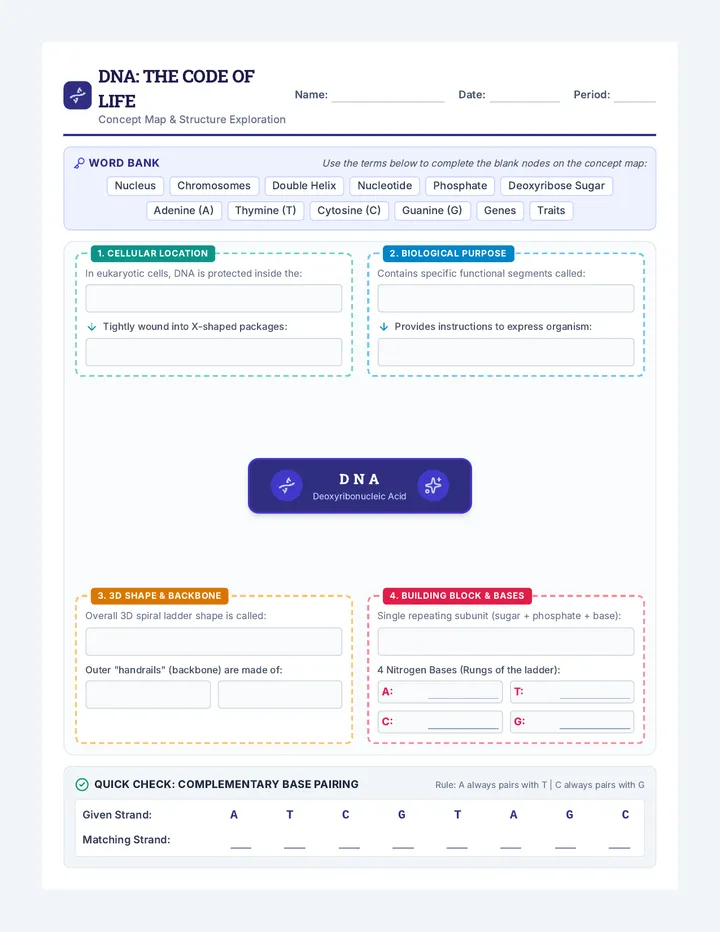
DNA Blueprint Concept Map

DNA Blueprint

An introductory middle school biology lesson exploring DNA structure, location, components, and function using a structured concept map and guided visual lecture slides.

TM

Teri Minami

3
Reverse Genetics Investigation Worksheet

Reverse Genetics Investigation Worksheet

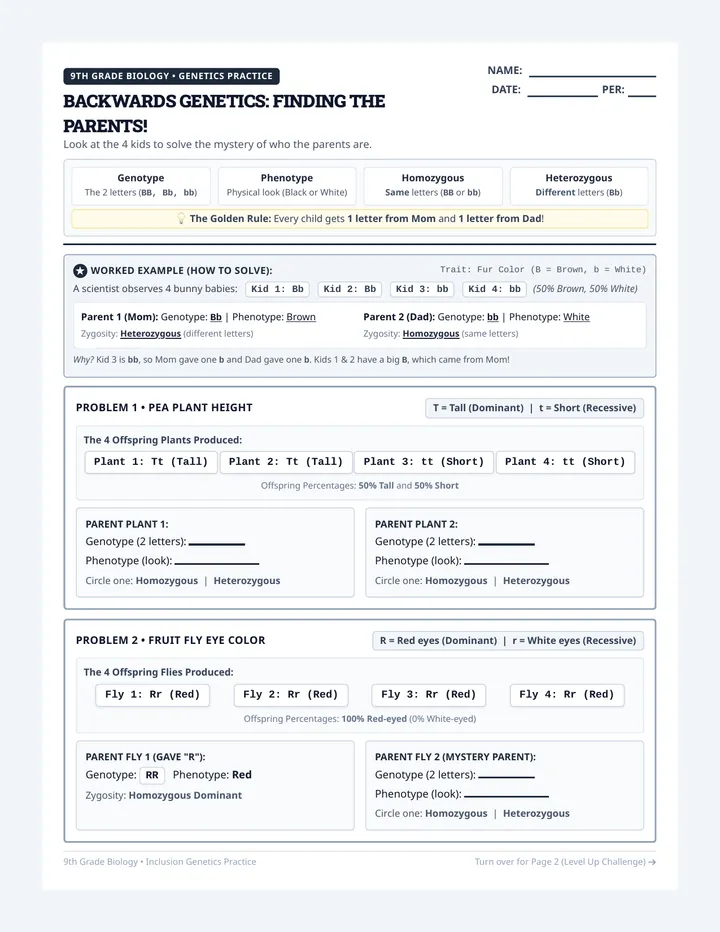
A printer-friendly two-page genetics worksheet for 9th-grade biology focusing on reverse genetics, where students deduce parental genotypes and phenotypes by analyzing offspring traits, ratios, and testcross outcomes.

RA

Richard Alan Frazier

Pesky Biters Slides

Bug Busters

A two-part fifth-grade science sequence investigating how insects can be annoying nuisances, bite and sting, and damage crops and homes. Specially scaffolded with high-visual supports, decodable text chunks, and guided practice for lower-literacy learners.

Lenny Avatar
Lenny
11
Infinite Loop Word Search

Can Cycle Loop

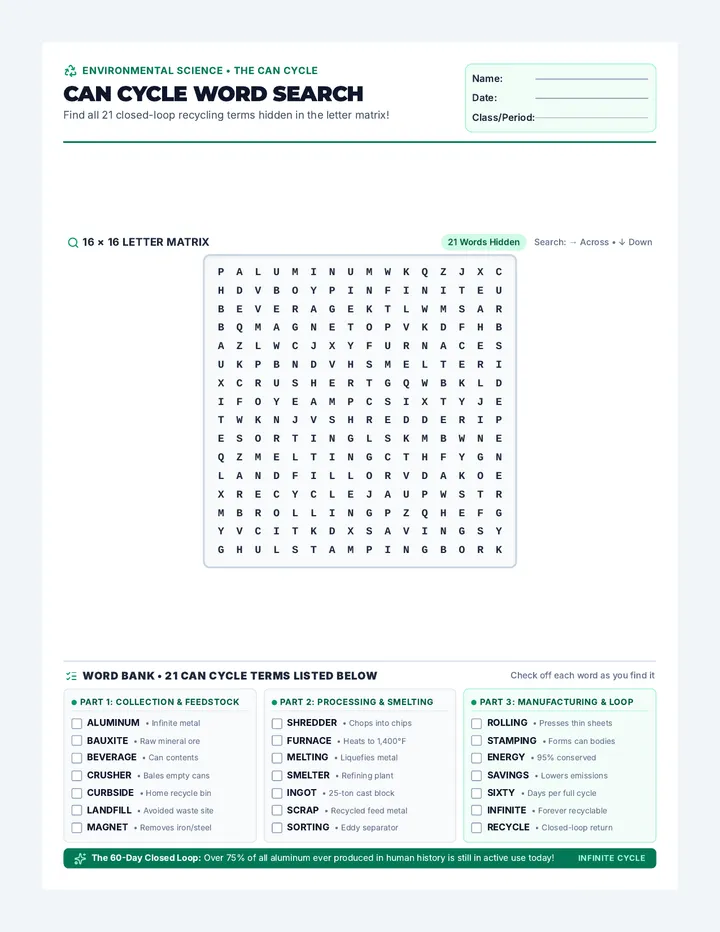
An environmental science lesson exploring closed-loop aluminum recycling, industrial metal sorting, and resource conservation through vocabulary study and puzzle challenges.

JD

Jenny Daniels

2
Property Change Clarified Bank

Property Change Clarified Bank

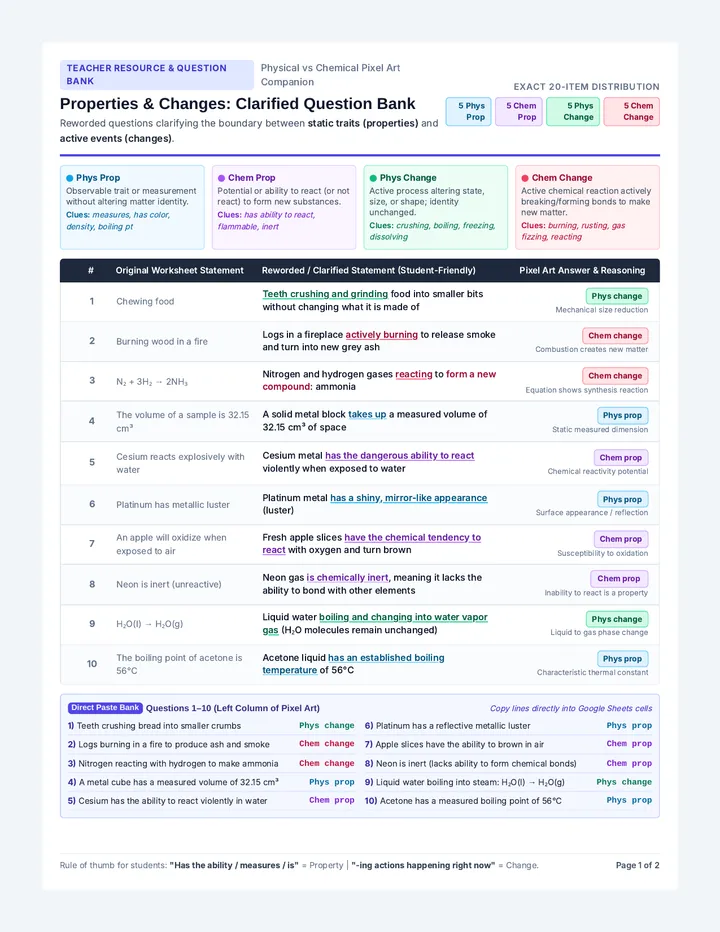
A comprehensive clarification guide and reworded question bank for the 20-item pixel art chemistry worksheet, rewriting ambiguous statements to clearly distinguish properties from changes.

SH

Sarah Hale

Helix Studio Slides

Candy Code Sequence

A multi-day competency-based biology sequence exploring DNA architecture, complementary base pairing, and semi-conservative replication through tactile candy modeling and evidence-based assessment.

TM

Teri Minami

4
Avian Rotations Lesson Plan

Avian Champions Rotations

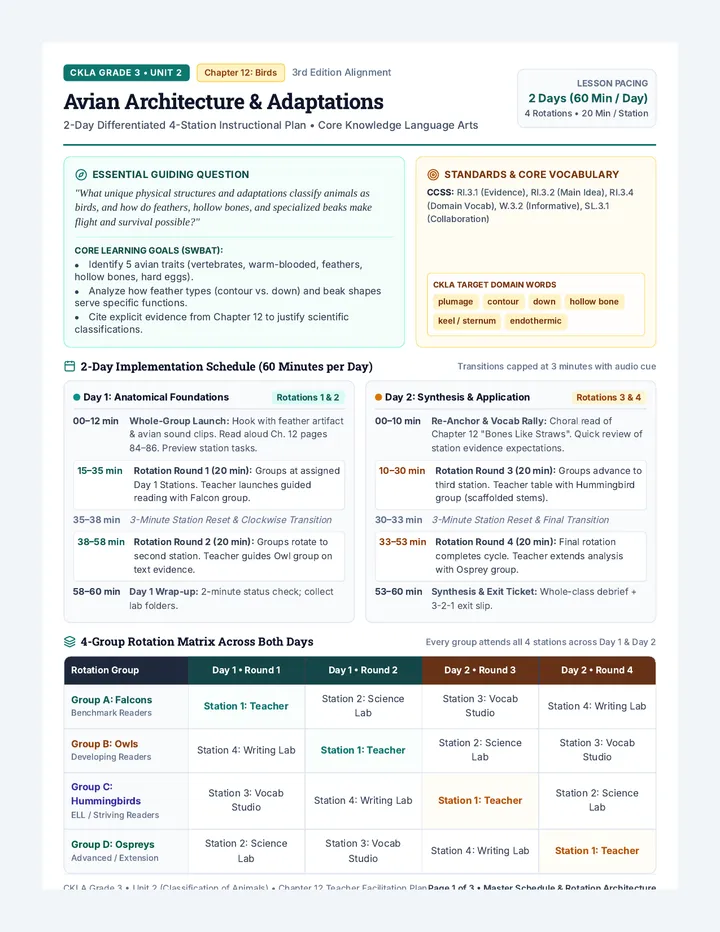
A 2-day CKLA Grade 3 animal classification lesson on birds featuring 4 structured rotation stations covering text analysis, hands-on lab investigation, domain vocabulary, and informative writing.

JR

Janine Rye

3
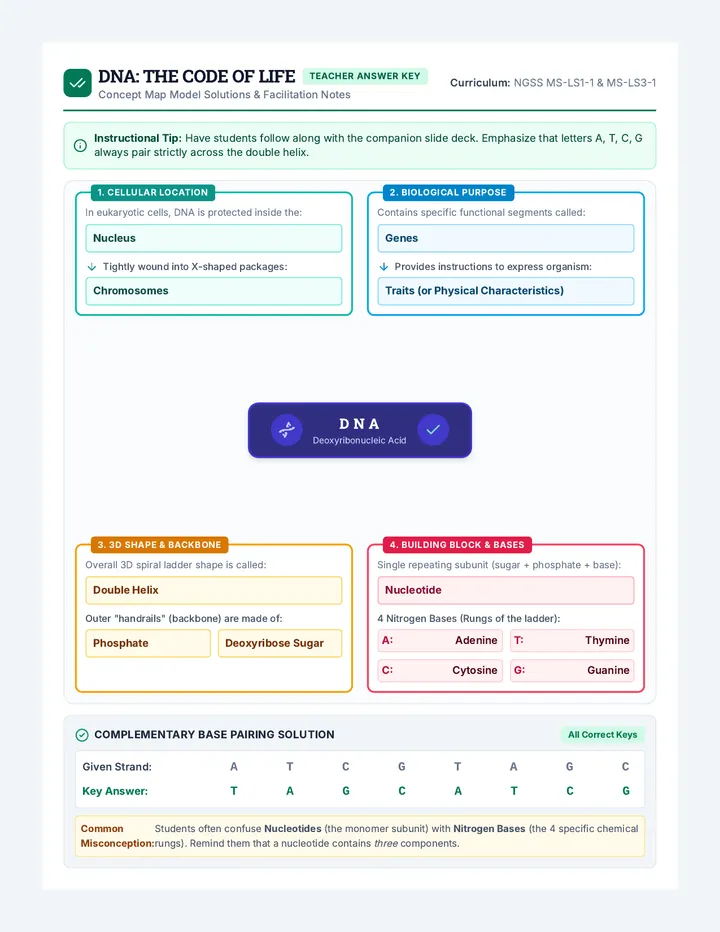
DNA Blueprint Answer Key

DNA Blueprint Answer Key

A teacher answer key and instructional guide for the DNA concept map, including completed nodes, pedagogical notes, and common middle school misconceptions.

TM

Teri Minami

Habitability Blueprint Slides

Life Beyond Limits

A one-week interdisciplinary astrobiology sequence investigating Earth's habitability, extreme biological adaptations across eleven Earth species, and the plausibility of life on other celestial bodies.

M

Megan.Tanner

7
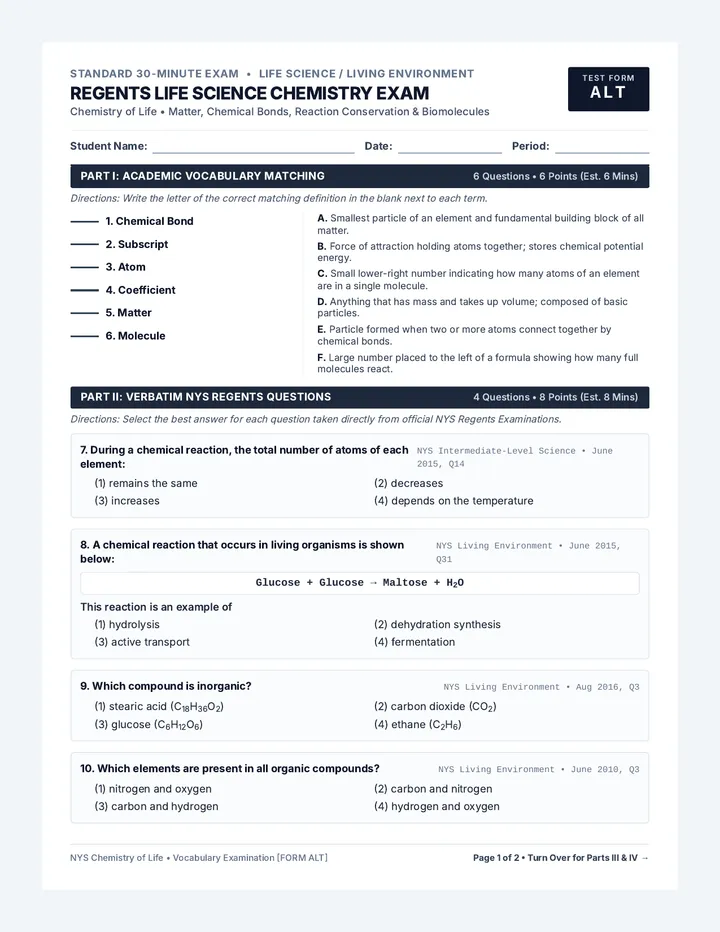
Life Chemistry Exam Alternate Document

Life Chemistry Assessment

Comprehensive assessment resources for high school biology students on matter, chemical formulas, conservation of mass, and organic biochemistry. Includes standard and alternate exam versions alongside an accelerated dual-form answer key.

JE

Jeffrey Elterman

2
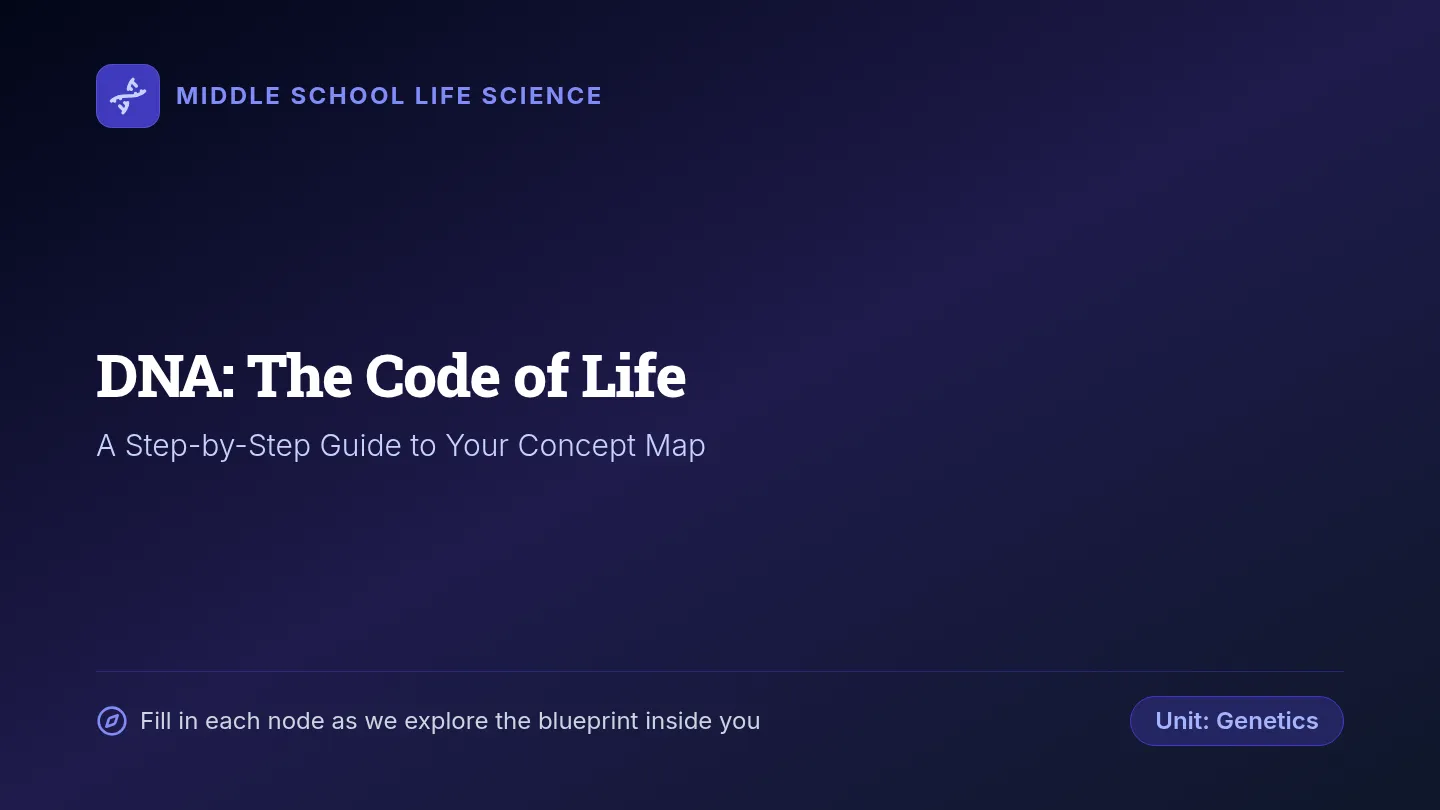
DNA Decoded Slides

DNA Decoded Slides

A nine-slide instructional presentation introducing middle school students to DNA location, structure, nucleotides, base-pairing rules, and genetic function.

TM

Teri Minami